Tag: Broadcast

  • TRAI files appeal against TDSAT’s landing page judgment in Supreme Court

    TRAI files appeal against TDSAT’s landing page judgment in Supreme Court

    MUMBAI: In a move that can have far-reaching implications for India's broadcasting sector, Telecom Regulatory Authority of India (TRAI) on Thursday filed an appeal in the Supreme Court against Telecom Disputes Settlement and Appellate Tribunal (TDSAT) order on landing pages. A bench headed by HMJ Arun Mishra will hear the matter, listed as item 21, today.

    The sector regulator’s action comes in the wake of TDSAT, by virtue of its 29 May order, setting aside TRAI’s 3 December directive to broadcasters and distribution platform operators (DPOs) to refrain from placing registered television channel, TV rating is released by BARC India, on the landing page or boot up screen.

    According to TRAI, its order was aimed at protecting the interest of service providers and consumers while ensuring orderly growth of the sector. This, however, was successfully challenged by Bennett Coleman & Co. and other in TDSAT.

    “In our considered view, the impugned directions are beyond the provisions of the act, which empowers TRAI to issue directions. Therefore, the impugned directions must be set aside on this point alone. We order accordingly,” TDSAT Chairperson Justice S K Singh and Member AK Bhargava said.

    A series of controversies have been triggered post the landmark TDSAT order that resulted in disruption in viewership measurement of channels with a relatively smaller audience like English news.

    Data for week 22, first since the landing page ruling, saw CNN News 18 upset the English news apple cart to top the chart, followed by Republic TV, Times Now, DD India and India Today Television.

    BARC switched back to its previous methodology from week 23 onward claiming it had received multiple representations from stakeholders and the mandate of its board.

    BARC’s flip-flip with its outlier policy implementation further fueled the landing page row, raising concerns among stakeholders.

    Reacting to stakeholders’ issues, the BARC board gave its nod to form a two-member committee to carry out an independent review of BARC’s data validation and outlier policy.

    With opinion divided within the industry, some broadcasters have also written letters, highlighting the negative impact of landing pages, to TRAI and BARC’s technical committee.

    With the matter now landing up in the top court, industry will be hoping to get more clarity on this very controversial issue.

  • Balaji Telefilms group CEO Sunil Lulla steps down

    Balaji Telefilms group CEO Sunil Lulla steps down

    MUMBAI: Balaji Telefilms group CEO Sunil Lulla has stepped down from his post last week. Industry sources confirmed the development to Indiantelevision.com. Lulla was appointed as group CEO last year. Indiantelevision.com reached out to Balaji but they didn’t respond till the time of publication. 

    His experience spans over three decades of experience across media, entertainment and the broadcast industries. He served as chairman and managing director at advertising agency Grey Group India. He also led the rollout of MTV in India and launched the television network for Bennett Coleman & Co, The Times Television Network.

    Moreover, Lulla has been one of the early internet explorers with indya.com in 2000. He also played key role on many boards and forums of the broadcast industry helping to shape policies, set industry standards and best practices.

  • Dish TV pays Star India Rs 55 crore in line with TDSAT order

    Dish TV pays Star India Rs 55 crore in line with TDSAT order

    MUMBAI: Leading direct-to-home (DTH) operator Dish TV paid Star India Rs 55 crore adhering to the Telecom Disputes Settlement and Appellate Tribunal’s (TDSAT) order dated 23 July. The tribunal, in its 29 July order, also noted that Star India has admitted and acknowledged the payment.

    TDSAT had earlier directed Dish TV to pay Rs 55 crore to the broadcaster by 27 July in order to avoid disconnection of signals. Star India issued a disconnection notice against Dish TV on 3 July and also filed a recovery petition in the TDSAT.

    "We had clearly indicated in the last order that further protection to be given to the petitioner against the notice of disconnection will depend upon its commitment to take care of the current outstanding dues of every succeeding month," TDSAT said in its latest order.

    Learned senior counsel for Dish TV also submitted that the company is ready to undertake payment of current invoices as per the agreement. It has also been recorded that the invoices for the month of June has already been raised and is payable by 10 August.

    “Petitioner should pay against that invoices within time. In a similar fashion, the current dues of every succeeding month shall be paid by the petitioner by the due date if it wants to have the interim protection during the pendency of this petition,” the order read.

    While Dish TV wanted to clear the remaining dues of Rs 195 crore in not two but minimum five instalments of Rs 40 crore each, Star India strongly protested against this offer. TDSAT is also of the view that admitted dues should not remain unpaid for such a long time because it is likely to affect the business of the respondent. The tribunal expects the petitioner to clear the outstanding arrears as noted above in approximately equal instalments by the end of this October.

    “By the next date petitioner must show its bonafide by paying Rs 65 crore by end of August towards the liquidation of said arrears.  This is in addition to the payment for the current dues. If the petitioner fulfils this condition and makes the payment within time, the impugned notice shall not be given effect to till the next date,” the order stated. 

    TDSAT posted the matter under the same head to 4 October.

  • Industry experts discuss OTT growth, need for measurement system

    Industry experts discuss OTT growth, need for measurement system

    MUMBAI: To measure or not to measure? Despite the humongous growth of OTT in the country, experts still can’t seem to agree on this question. While some of the experts believe a TV like measurement system will bring more transparency in the ecosystem, other players think third-party tools are already serving the purpose.

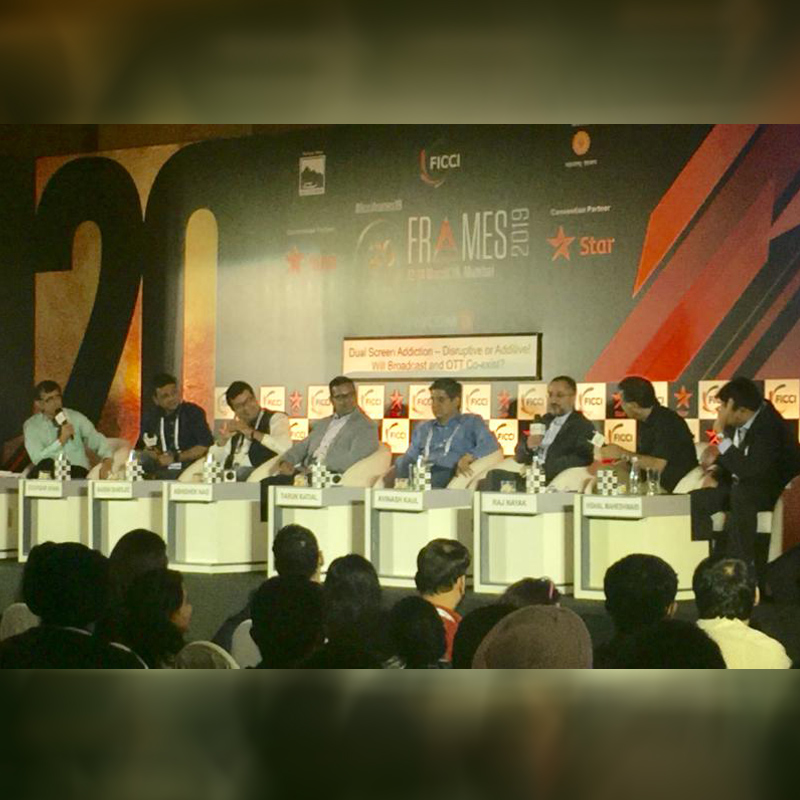
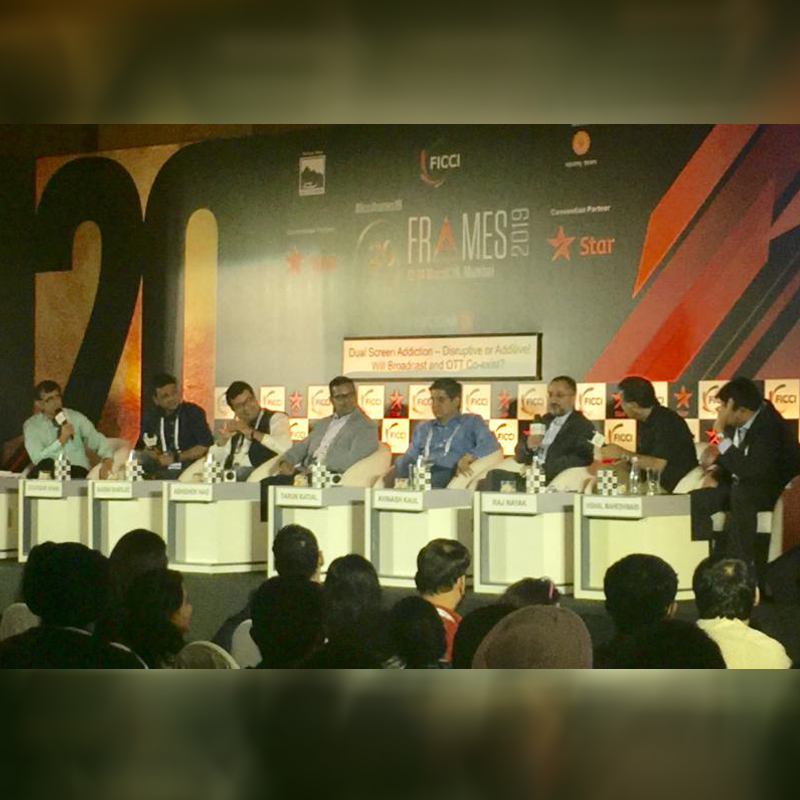
    A session on Dual Screen Addiction saw panellists Star India Hindi GEC president and head Gaurav Banerjee, ZEE5 CEO Tarun Katial, Network 18 COO, A+E Networks MD Avinash Kaul, media veteran Raj Nayak, Netflix partnerships director Abhishek Nag, Hooq India MD Zulfiqar Khan, Vuclip country head Vishal Maheshwari and moderated by Balaji Telefilms group CEO Sunil Lulla.

    Speaking at a session in FICCI FRAMES 2019 Banerjee emphasised on the need of a unified measurement system. “As we have entered into digital, we have not thought of putting in place a measurement system which is extremely robust,” he said. Banerjee thinks it will make assessments of watch-time easier for the advertisers.

    Katial strongly disagreed and argued that there are robust third-party tools in the market. He also cited the example of YouTube and Facebook’s strength in digital advertising. According to him, if there was no credibility in measurement, advertisers would not have put so much money.

    “In the case of TV, when consumers now exercise their choice some channel may lose its base of 198 million and drop to 20 million but that also shows the affluence of the customer who can pay Rs 20 a month. Otherwise, channels on DD Free Dish would have retained revenue three times greater than Star Plus,” Kaul commented.

    Nayak said that advertising money is going to get fragmented and it’s going to get worse with more players coming in. “In the OTT space, the number of players will shrink. I predict that in the next 3-5 years there won’t be more than 10 players in this space. I think then the realisation of value will happen both in terms of subscription and advertising,” he added.

    Talking about monetising on OTT through advertising, Katial said the volume of content on the platform is a necessity. He added that when ZEE5 was launched it kept the faith on three ‘v’s – voice, vernacular and video which worked. According to him, CPM is also rising on the contrary to popular belief in the industry.

    However, the experts agreed to the growing subscription model in the country. Netflix partnerships director Abhishek Nag said this is a great time for subscription business in India. The use of credit cards for online payment without fear of fraud and mobile wallets especially the ones with low bandwidth has opened up revenue channels for the platforms. Nag also thinks bundling of telco or broadband plans with live TV and OTTs can make it stronger.

    ZEE5 CEO said along with B2B2C, the B2C model is growing. According to him, proper bundling and pricing play a major role in B2C revenue. In the case of B2B2C, he said partnerships with e-commerce platforms like MakeMyTrip will add value to the model in future.

  • Broadcasters need to relook at content to cope with OTT platforms

    Broadcasters need to relook at content to cope with OTT platforms

    MUMBAI: With the upsurge in demand for OTT platforms in India, the future of broadcasters has been debated much. TV still has enough headroom to grow thanks to underpenetrated households. While the players in the ecosystem firmly believe that TV is not going to die soon, they also think broadcasters need to rethink their content.

    On the second day of FICCI Frames 2019, experts from the television and OTT industry discussed on ‘Dual Screen Addiction –Disruptive or Addictive! Will Broadcast and VoD Co-exist?’ It had panellists Star India Hindi GEC president and head Gaurav Banerjee, ZEE5 CEO Tarun Katial, Network 18 COO, A+E Networks MD Avinash Kaul, media veteran Raj Nayak, Netflix partnerships director Abhishek Nag, Hooq India MD Zulfiqar Khan, Vuclip country head Vishal Maheshwari and moderated by Balaji Telefilms group CEO Sunil Lulla.

    Banerjee said they are in the business of curating stories where making purposeful stories is important. He thinks it should be left to consumers what stories they want to watch together and on which personal device.

    Agreeing with Banerjee, Katial said, “It’s good to tell stories, eventually you have to make money and yes, we are all trying to monetise content in different formats. What OTT brings to the table is totally different from TV which is a high degree of personalisation and segmentation, and the ability to discover content at your own convenience. That’s not going away. Consumers are going to want more and more of that. I think we all say linear TV should stay, the convenience aspect of digital is huge.”

    Lulla raised the question of how broadcasters should defend their turf with all these changes. Media veteran Raj Nayak said that he is a big believer that television is here to stay. He added that families in small towns, even today, sit together to watch TV in the evening. According to him, OTT and TV will co-exist in India at least for another ten years.

    Banerjee also echoed Nayak’s view that OTT is not going to kill linear TV. According to him, three generations watching TV together and having a conversation is very important in Indian society. He added that TV consumption is only on the upward side in the country.

    But Nayak also reminded the fact that amid ongoing changes in the ecosystem, consumers now compare the quality of TV and OTT content. Hence, Nayak thinks TV channels will have to course correct to give content on linear TV which is as compelling as OTT.

    Hooq India MD Zulfiqar Khan added that streaming services have a direct connection with consumers which helps them to have great knowledge of consumer choice. On the other hand, linear TV has been a consumer facing brand but not consumer facing business. Hence, he said that at a content level as well as business level there has to be a rethink.

    “The households not yet penetrated by TV will continue to be the main stake of linear TV. Most of it is coming from the northern and eastern parts of India. OTT and TV will obviously co-exist. The question is how they will compete with each other and take best practices from each other,” Kaul said while adding that OTT ‘s biggest advantage is its one-on-one relation.

    Vuclip country head Vishal Maheshwari said India is the only country where broadcasters are so well organised on their OTT businesses. According to Katial, broadcasters created a catch-up content environment in the early days and went slow on premium content compared to platforms like Netflix.

    The industry experts agreed that rather than having a debate about TV content and OTT content, the debate should be on linear and non-linear consumption and the need for compelling content.

  • MIB seeks details to simply forex payments for broadcasters, teleport ops

    MIB seeks details to simply forex payments for broadcasters, teleport ops

    MUMBAI: In what it says is aimed at further easing norms for doing broadcast business, the government has asked for particulars from TV channels and teleport operators using services of foreign satellites for uplinking and temporary uplinking so payment of foreign exchange processes could be simplified.

    Broadcasters need to provide the name of the company, name of the service provider, name of the country of the service provider, purpose for bandwidth utilization, service order number and validity of agreement, Ministry of Information and Broadcasting said in a recent advisory.

    In 2014, the Ministry of Information and Broadcasting (MIB) advised all broadcast companies and teleport operators to strictly follow the guidelines under the provisions of the FEMA Act 1999 and a notice by the RBI requiring prior approval of the MIB for making remittance of foreign exchange towards availing transponder services on foreign satellite for up-linking of TV channels/teleport services/DSNG operations/temporary events.

    The TRAI has also urged (http://www.indiantelevision.com/regulators/trai/trai-releases-recommendations-on-easing-broadcast-business-180226) the government to simplify the norms regarding licensing and clearance processes for broadcast companies. It even suggested that satellite spectrum allocation must be done through the year for the convenience of broadcasters.

    It asked for streamlining of process for granting permission, giving security clearances within 60 days and setting up an integrated portal for everyone’s convenience.

    Late last year, the ministry had asked TRAI (http://www.indiantelevision.com/regulators/trai/trai-paper-seeks-to-streamline-uplinking-downlinking-norms-171219 )to come up with a new set of rules for uplinking and downlinking norms since the previous one was six years old and technological advances have changed the broadcast sector. One of the key questions was whether there was a need to redefine the meaning of news and current affairs and non-news channels.

  • Netflix outperforming traditional TV, YouTube in the US

    Netflix outperforming traditional TV, YouTube in the US

    MUMBAI: Netflix is outperforming traditional TV in the US. It has reached the top spot among platforms for watching entertainment on TV leaving traditional cable and broadcast television networks as well as YouTube and Hulu behind. A recent survey of US consumers by Wall Street firm Cowen & Co. has revealed the fact.

    The survey conducted in May included 2,500 US adults. The participants were asked which platforms they use most often to view video content on TV. 27 per cent of the total respondents choose Netflix. Other sources of entertainment like basic cable, broadcast and YouTube stood at 20 per cent, 18 per cent and 11 per cent respectively.

    More importantly, millennials give Netflix higher preference. 40 per cent of adults aged 18 to 34  prefer the platform most often to view video content on their TVs. Only 17 per cent of them use YouTube, 12 per cent basic cable, 7.6 per cent Hulu and 7.5 per cent broadcast.

    “Over the long term, assuming [Netflix] is able to continue to increasingly offer great content, this lead clearly bodes well for further value creation,” Cowen & Co. analysts led by John Blackledge wrote in a research note as quoted by Variety.

    Other than US, Netflix is trying to strengthen its foothold in other countries too. In India, it has recently launched Lust Stories that has been critically acclaimed. It’s also being very bullish about its original content. The company hopes to add five million international subscribers at the end of this quarter.

    “Owning a leading international content-production footprint and ramping relationships across the talent ecosystem should prove beneficial to Netflix’s ability to increase production in those markets, much of which is produced at a lower cost than similar content produced in Hollywood,” the Cowen & Co. analysts wrote.

    Also Read:

    Netflix CCO Ted Sarandos says India is ‘TV starved’

    Netflix announces new Indian original film ‘Lust Stories’

  • Jaipal Reddy calls for doing away with MIB

    Jaipal Reddy calls for doing away with MIB

    MUMBAI: Junk the ministry of information and broadcasting (MIB). That’s the call that once MIB minister Jaipal Reddy – who held the portfolio during the Congress I regime in the previous decade – is giving these days. Writing a column in The Hindu last week, he said “It is important to note that no advanced democracy, be it in western Europe or in North America, has a ministry called I&B. Those democracies instead have independent commissions. In the US, for example, the Federal Communications Commission has been effective in regulating the functions of television companies for more than a half a century.”

    Reddy points out in the column that “Sardar Vallabhbhai Patel briefly handled the home ministry after India attained independence, and he also handled the MIB. He used the MIB portfolio to reach out to the people with urgent messages during the country’s formative and most difficult period.”

    He highlights that the “the political demand for conferring autonomy of DD gained volume only in the 1970s, because of which the BG Verghese Committee went into the question and submitted its recommendations. But it assumed the shape of a specific statute only in 1990 when leaders from all parties, including Rajiv Gandhi as the opposition leader, reached a consensus. It fell on me as the I&B minister in 1997 to notify the Act — the Prasar Bharati (Broadcasting Corporation of India) Act, 1990. At that time, I made a public statement that the time had come for abolishing the I&B Ministry.”

    According to Reddy, Prasar Bharati can truly enjoy independence when it is given financial independence. Says he in the column: “The BBC enjoys financial autonomy as the citizens pay fees compulsorily and directly to it. As a consequence of this freedom, the BBC sometimes takes on the British Prime Minister as well, not to speak of the government.”

    So why garbage the ministry? Reddy has his reasoning. Says he: If a minister is there for the portfolio, he/she cannot sit idle; they poke their nose into the functioning of such institutions by way of self-employment. Hence, the urgency to abolish this portfolio.”

    There’s nothing really new about his yelling about this from the rooftops – he’s done it in the past too – as he mentions in his column. He was instrumental in the drafting of the Broadcasting Regulatory Authority of India Bill in 1998. Nothing came of it then. Will someone in the Modi government listen to him this time?

  • Kalanithi Maran, Sun TV: the evolution

    Kalanithi Maran, Sun TV: the evolution

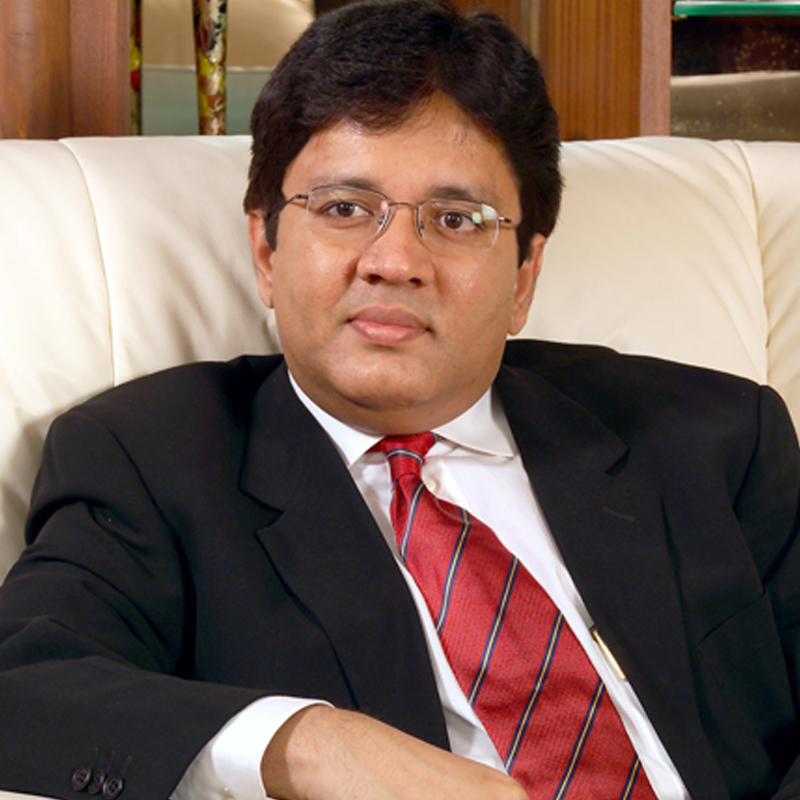
    MUMBAI: In the late eighties, a scrawny young man returned to India from the US having completed his MBA from the University of Scranton. He had lights in his eyes, fascinated as he had become by television in the US during his management freshman and graduation days.

    But television in India was a domain restricted to only state-owned Doordarshan. For a while, he dabbled in the print media that his family owned but the lure of the moving image proved too strong. So, he did the next best thing: he started producing a video magazine in Tamil.

    Kalanithi Maran had bigger ambitions; he wanted to start a TV channel in Tamil; not just a TV channel; TV channels in the various south Indian languages. With that goal in mind, he approached the then-emerging TV baron Subhash Chandra whose Zee TV had caught the imagination of the nation with edgy fast-paced general entertainment programming.

    The young man wanted a slot (one in the afternoon) on Zee TV’s service to start his own TV channel; but a Zee TV executive saw no merit in the plan and turned it down. He never got a chance to meet the goateed Chandra.  It was to prove to be a colossal mistake. However, another cable TV operator–Siddhartha Srivastava–who has the distinction of launching the first Indian private TV channel (not Subhash Chandra as many commonly believe) called ATN was more giving and provided him with a slot.

    Kalanithi cobbled together his savings and also got his father the late Murosali Maran to guarantee a bank loan for him. The same 25 friends who were working on the video magazine–Poomalai (which was by then plagued by piracy) and the cable TV programme Tamizh Maalai–stood by him and drew up the programming for the to-be-launched channel.

    Thus, Sun TV was born on 14 April 1993 beaming off the wobbly Russian satellite called Gorizont. The programming was primarily film entertainment-based. Kalanithi and his team had to work hard to build cable TV distribution infrastructure in the state, coaxing shop owners to become cable TV operators and set up headends and distribute Sun TV  so that it could be seen by Tamilians who had little else to watch in the comfort of their homes.

    His efforts bore fruit: cable TV operators soon thereafter popped up all over Tamil Nadu, courtesy consumer demand for the channel. Both fuelled each other and, by 1996, Sun TV was notching up revenue of Rs 450 million with a penetration of 86 per cent in the state. Apart from Zee TV, it was the only other channel that was sporting a black bottom line at that time.

    Kalanithi went about fulfilling his dream to have a southern Indian language network, just as Chandra was expanding his Zee Network. The aggressive young entrepreneur launched Udaya TV in Karnataka in 1994, took over Gemini TV soon thereafter and Surya TV followed.  There has been no stopping him and, today, the group runs 33 channels and another nine are being added. His portfolio covers the genres of entertainment, news, comedy, music, movies, kids and classic.

    Along the way, Kalanithi appears to have shed his inhibitions of foraying outside his comfort zone of the south–Tamil, Telugu, Kannada and Malayalam. For some time now, the Sun group has been gestating Bengali and Marathi language channels. Six to eight months from now, the two are slated to be launched and teams have been hired in Kolkata and in Mumbai. Hectic parleys are going on to decide the programming, the positioning, the distribution and marketing of the two channels.

    Kalanithi also owns 42 FM radio stations, the second-largest Tamil-circulated daily newspaper in India Dinakaran, and five other magazines, DTH platform Sun Direct and the Sunrisers Hyderabad IPL cricket team. Then, there is the cable TV network SCV, which has presence in Chennai. The Sun group made an ill-informed dash to acquire and run an airline SpiceJet, which Kalanithi found challenging to do and quickly did a volte face and sold it to Ajay Singh who has since been doing a better job. And then there is the network’s new OTT offering Sun Nxt.

    Recently, the group celebrated 25 years of its television existence with full front-page ads across select newspapers and a week of celebrations with its 1,500 employees nationwide. The ads crowed about Sun TV’s no 1 status in India and then went on to thank everyone saying it would not have been possible without “your support.” Silver coins, plates were given out to long-serving employees during the celebrations. Print ads aside, the Sun network did no press or public relations blitz–in the mainline nor the trade media.

    That’s in keeping with Kalanithi’s innate tendency to stay away from the limelight. He and the group have been publicity shy to the T. The company does not have any media relations to speak of or have a structured communications department like the other big four networks do. Star India, Zee, Viacom18, Sony Pictures Networks Television, do. Zee TV, Viacom18 and Sony Pictures all celebrated lavishly during their individual anniversaries inviting important partners, clients, and vendors.

    The shunning of the media probably stems from the fact that his roots are in one of the most important political families in the country. His grand uncle M Karunanidhi heads the DMK party, his uncles are politicians while his late father Murosali Maran held ministerial positions in various political regimes and his brother, Dayanidhi Maran, has been a minister, too.

    This apart, the group also owns powerful print media titles, which serve as a very strong platform to communicate the messaging Kalanithi wants to convey.

    All along, mutters have been doing the rounds that the Sun network got several benefits and favours courtesy Kalanithi’s political lineage. Allegations have also been hurled that Sun TV Network misused the clout and used strong-arm tactics with Tamil film producers demanding movie titles for broadcasting on his network to the exclusion of other television stations. And at surprising prices.

    Additionally, most media went to town alleging that the Sun TV network worked as a strong supporter of the DMK party. But which news channel in India does not have political backing, leaning or favourites? And Kalanithi’s DMK leaning was probably at a time when the AIADMK was going hammer and tongs against the DMK with its own party mouthpiece Jaya TV. Even then, Sun TV’s reportage at times caused heartburn to DMK supporters as Kalanithi worked on maintaining a balance.

    Moreover, over the years, most Indian TV news channels have become more blatant in their support of specific political agendas and parties–whether national or state wise or region wise. So, singling out Kalanithi as a political beneficiary is like the pot calling the kettle black.

    Finally, that myth must have been totally exploded following the distancing of grand-nephew from grand uncle and the launching of a competing television network by the DMK patriarch. Also, oodles of trouble followed with Kalanithi and Dayanidhi in relation to the 2G telecom scandal. Both have been since absolved and freed of the charges by the courts.

    The fact is that it is not political equations that have allowed Kalanithi to build his Sun group. It has been his savvy ability to see opportunity where others don’t, grab it and diligently make it successful. And he has done this fearlessly time and again–with the exception of SpiceJet. His radio stations are some of the more innovative ones and attract a wide demographic with a lot of it being youth. They are profitable. His newspapers give him wide reach and coverage and, in the process, media clout. And they make money.

    What’s above all this is the fact that Sun is highly profitable and its stock price has been holding strong when others have not. That itself speaks highly of the confidence the investor community has in him. As a businessman and as an innovator. No other media enterprise has come even close to breaking the stranglehold he has on viewers in the south; the programmers seem to understand the pulse of the Sun Network viewers. Several have tried including smaller players and the big four. But none has managed to race ahead of the Sun network.

    The Sun TV stock appears to be an investor’s darling, often times being talked of being undervalued. Both investors and shareholders have come to terms and have accepted the high pay cheques Kalanithi hands out to himself and his wife Kavery every year, ranking him among the top-paid CEOs in India.

    Many scions of political leaders have been given similar silver spoons but none have been able to scale up their ventures to the level that Kalanithi and the team Sun TV have. Clearly, credit should be given to his business acumen rather than just the political lineage.

    Clearly, it’s about time–during its silver jubilee year–Kala be given his due place in the media sun as an entrepreneur who has made it big. On his own steam.