Tag: broadcast network

  • News18’s ‘Natkhat Kanha’ proves a roaring success with viewers

    News18’s ‘Natkhat Kanha’ proves a roaring success with viewers

    Mumbai: Krishna Janmashtami, the festival which marks the birth of Lord Krishna, is celebrated annually with much enthusiasm in India. Thousands of devotees spend the day praying and remembering Lord Krishna.

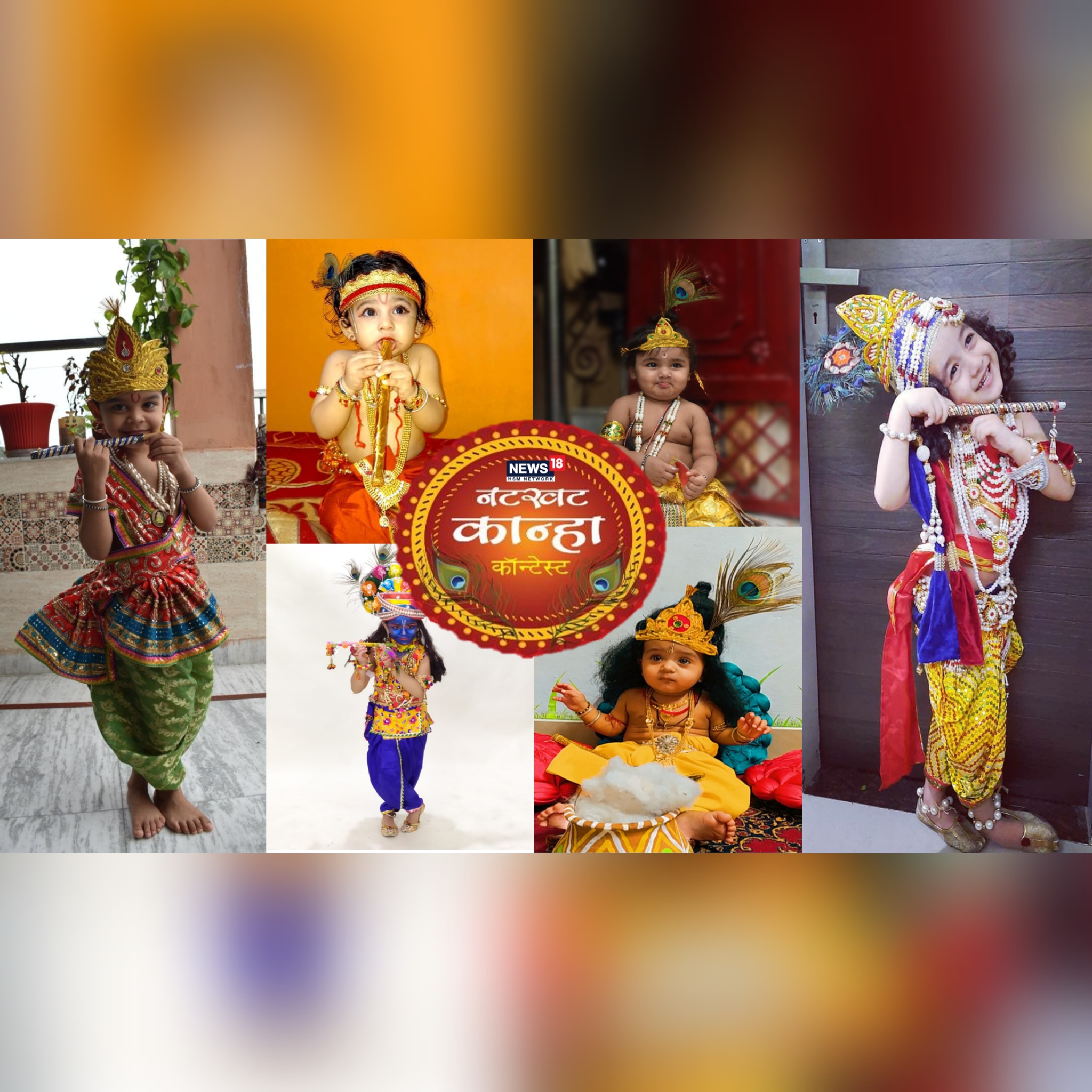
    Like every year, the News18 HSM network also did its part to bring the celebrations alive by organising its hugely popular “Natkhat Kanha” contest on News18 Rajasthan, News18 Madhya Pradesh/Chhattisgarh, News18 Bihar/Jharkhand & News18 Uttar Pradesh/Uttarakhand. The contest entailed asking viewers to share a picture of their children dressed up as Kanha.

    The content was widely promoted across not only the News18 HSM channels but also on social media. “The campaign delivered over six million impressions and an engagement of over two million – a huge testimony to the popularity of the campaign”, said the statement.

    Over 11 thousand viewers participated in this unique way of celebrating Janmashtami, wherein they shared adorable pictures of their tiny ones dressed as Kanha. The winners were announced during the on-air coverage of Janmashtami celebrations.

    As the region’s leading network, this viewer engagement campaign is an integral part of the efforts to bring relevant content that viewers can not only relate to but actively engage with, said the broadcast network in a statement.

    News18 Network India’s largest news network, a part of Network18 operates 17 general news channels in India as well as in other countries. The network’s flagship English general news channel is CNN-News18 and the Hindi general news channel is News18 India. TV18 operates a bouquet of 13 regional news channels namely News18 Urdu, News18 Rajasthan, News18 Bihar/Jharkhand, News18 Madhya Pradesh/Chhattisgarh, News18 Uttar Pradesh/Uttarakhand, News18 Bangla, News18 Kannada, News18 Gujarati, News18 Odia, News18/Punjab/Haryana/Himachal Pradesh, News18 Kerala, News18 Tamil Nadu and News18 Assam/North East.

    TV18 also operates a joint venture with the Lokmat Group which houses the Marathi news channel News18 Lokmat. To cover the global audience & sizable NRI population, TV18 operates News18, a twenty-four-hour television news channel designed to give global audiences a window into the world’s largest democracy.

  • SPN India recognised as one of the best companies for women in India

    SPN India recognised as one of the best companies for women in India

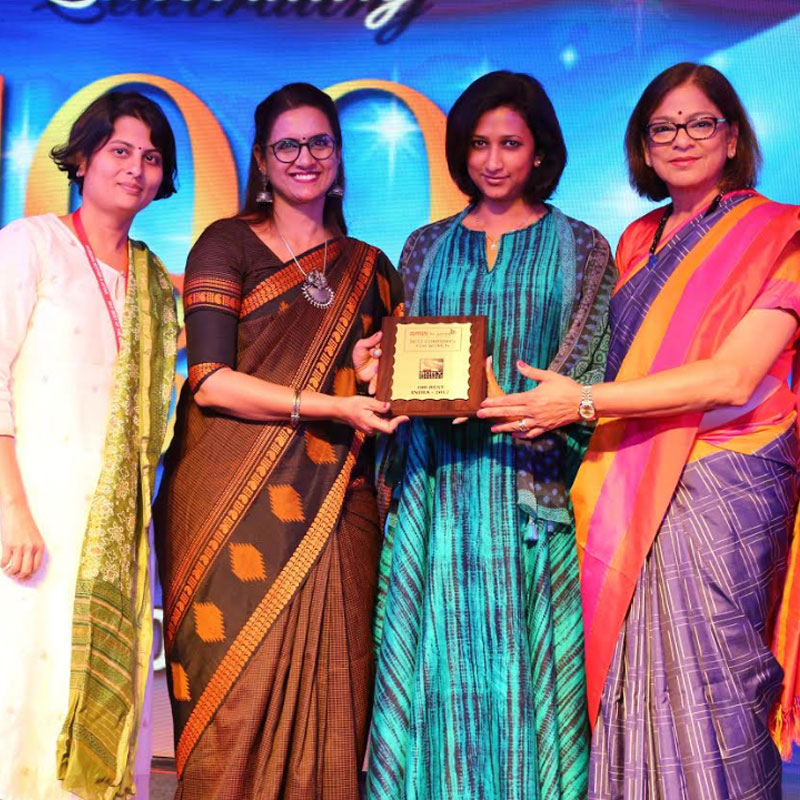
    MUMBAI: Entertainment and sports broadcast network, Sony Pictures Networks India (SPN), has been recognised as one of the best 100 companies for women to work for in India for 2017.

    The award is based on a prestigious study conducted by Working Mother – a global leader on gender equity and Avtar, a pioneer in diversity and inclusion in India. With women comprising 33 per cent of its workforce, the company has undertaken various award-winning initiatives to create a work environment in which they can truly fulfil their potential. Grooming women leaders at various levels and building an equal-opportunity, inclusive culture has one of the key focus areas for SPN.

    The network’s significant progress in this direction has been recognised in the study, making it the only media and entertainment company to be a part of the ranking this year.

    The Working Mother and Avtar Best Companies for Women in India is a one-of-its-kind study to identify, share, showcase and celebrate best practices from India’s best employers to foster women’s career advancement. The top 100 companies were chosen based on performance across seven key policy clusters namely workforce profile, flexible work, women’s recruitment and retention, benefits, paid-time off/parental leave, company culture, safety and security; 360 companies participated in the study, which is India’s largest and most rigorous gender analytics exercise.

    SPN was one of the first organisations in the country to extend maternity, adoption and surrogacy leave to six months well before it became mandated by law. Pregnant women can also avail preferential parking on the office premises. The network has a special provision of a mothers’ room, where a new mother can pump and store milk for her baby, and near-site crèche facilities for employees to avail for their children.

    SPN also priorities women’s safety through practices such as sensitising all employees on prevention of sexual harassment and training women employees on self-defence techniques. SPN CEO NP Singh said, “At SPN, we have an inclusive culture, which delivers fulfilling career experiences and growth opportunities. It is a tribute to our organisation’s culture that we are being recognised as among the top 100 companies for women in India.”

    SPN India CHRO Smriti K. Singh added, “Our people practices are designed to support women employees in the unique challenges they face while balancing and excelling at various roles in and outside the office. Being a part of this list reinforces our standing as an employer of choice.”

  • ‘What we are telling the regulator is that the sheer volume of content this industry generates is impossible to police’ : Paritosh Joshi – Star India advertising, sales and distribution president

    ‘What we are telling the regulator is that the sheer volume of content this industry generates is impossible to police’ : Paritosh Joshi – Star India advertising, sales and distribution president

    It’s nigh on one-and-a-half years since Star India brought in a “media outsider” Paritosh Joshi as president – advertising sales & distribution, thereby consolidating the two major revenue streams of India’s lead broadcast network under one position.

    That it’s not been exactly hunky dory for Joshi since his induction is putting it mildly. His arrival has coincided with the return to the ratings reckonings for the former number one Hindi entertainment network Zee TV while on the distribution side the story has been one of the sector regulator’s increasingly watchful eye on the industry. There is also the government mandated CAS rollout timetable that Star has stated it will fully support.

    Joshi spoke at length on this and a number of other issues in an evening tete-a-tete with Indiantelevision.com.

    Excerpts:

    It’s close to one-and-a-half years since you joined Star. What have you done and managed that made a difference?
    Well, for one my coming to Star challenged many notions, since I had no prior media experience. But it had its advantages in that I came on board carrying no baggage and no preconceived notions.

    Interestingly, your induction also coincided in a time frame sense with Sameer’s pet theory that the entertainment business operates in a four-year cycle…
    The real reason for Sameer’s continuing success is that not only does he challenge his own beliefs but he encourages others to challenge his beliefs.

    As for me, my task was to look at both sides (distribution and ad sales) from above and approach revenue in a derisked sense. What we have realized is that the different parts of our business are not functioning as silos but have a number of linkages that need to be tapped into in a more holistic manner. This involves making decisions on a continuous basis.

    The converged new world is what it sounds like. Could you expand on that?
    We are developing a new understanding of the TV ecosystem. How do all these work in tandem is what we are trying to get a grip on. There are interactions across the businesses as well as new opportunities.

    For instance, we have put in Nanette D’Sa as head of licencing and merchandising; there is the branded entertainment division we have launched.

    Then there is our internet play. We have the online rights for ICC cricket and we’ve launched iccchampionstrophy.indya.com. We will soon be bringing myspace to India. Ajay Vidyasagar is actively involved there.

    On the mobile front we have the 7827 shortcode that works across all networks. A lot is happening on that front, which is Viren Popli’s baby.

    What are the principal challenges that you are confronting?
    There is an extremely complex regulatory environment in place.

    One could say there was hardly any worthwhile regulation earlier, so it’s about time.
    You have a point, but from no regulation to over regulation in one shot is also not the best way to do it either.

    We will have to demonstrate by behaving right that we are willing to work on a collaborative model than an antagonistic model

    Well, if you were to place the kind of content that is put out on our networks before Britain’s Ofcom for instance, I am sure virtually all channels would have quite a few questions to answer.
    That’s not really a correct comparison. We (the Indian television industry) have had to grow from infancy to adulthood in one dozen years while it is a 50-year-old story in Britain. The government should make some allowance for that.

    What we are saying is that we will work with you (the government) in each part of the business to get the system in order. What we are also telling the regulator is that somewhere along the line, the sheer volume of content that this industry generates is impossible to police.

    Look at it this way. We (Star) produce 12 hours of original content every day. And there is virtually no time lag between production and delivery. If our degrees of freedom are circumscribed, our ability to deliver a quality product to our constituency gets diminished.

    Agreed, but the flip side is that whenever you try to bring order into what has been a free-for-all, there will be some amount of pain and chaos involved. That has been shown when PAN cards were introduced, as too VAT. As long as the intent is not malafide, shouldn’t industry leaders be taking the long term view?
    We’ve got too much at stake to think in the short term. And I am sure the same applies for the other big networks like Zee and Sony. The big networks should be and can be trusted to do the right thing.

    We will have to demonstrate by behaving right that we are willing to work on a collaborative model than an antagonistic model. Dialogue across constituencies is important and I am actively involved on this front.

    How many know that Star has substantially contributed to the working of the content code?

    Coming to the specifics of your network, where do you see the biggest upside on revenues coming, going forward?
    DTH will be truly it, over the next couple of years, though in discontinuous spurts. By this time next year we should be looking at between 2.5 to 3 million subscribers between the two networks (Tata Sky and Dish). Even at the Rs 27 per sub that we have been forced into agreeing to (as per the TDSAT order), you can do the math.

    That’s assuming that all subscribers will take your offering.
    As far as our current crop of channels go, we will be on the basic packages across all services so would expect to get those numbers.

    What about addressable cable. Isn’t that where the real big numbers are? More so with CAS getting rolled out?
    The addressable cable rollout is unclear as to its shape at this juncture. I think that what will happen is that while there may be some false starts, it will all settle down in due course.

    If addressable cable rolls out well, then great. We are platform agnostic on addressable systems so it can only benefit us.

    Speaking of CAS, how do you see that impacting revenues?
    We are close to signing all our CAS contracts. Star is ready to roll on CAS. The IBF will work together with other stakeholders to facilitate this in any way we can.

    Another difficulty that has hit both Star Movies and HBO is on the issue of certification of films. The Festival season is here, is there any resolution in sight there?
    We expect some solution but it will take time. We’ve basically written it off for this quarter.

    What does that mean in percentage terms?
    That would mean a write-off of about one third of the revenues we would normally have expected for the quarter.

    The most recent addition to your bouquet has been Neo Sports. Word is that you have committed a massive MG to Harish Thawani.
    I can’t comment on the size of the MG but we have to work on the fundamental premise that cricket played in India will get viewership like nothing else can, which is why Harish made the punt he did…

    What about the regional language story?
    In Bengali, we have already started our activity with a two-hour entertainment band in the afternoons on Star Anando (news channel). You could say that is the test run though we are yet to fix a date on a full fledged Bengali entertainment channel launch.

    We’re looking at the Telugu channel sometime early next year. Probably March or April.

    Are you considering the acquisition route for the Telugu channel?
    Not at all. We will be launching a completely new channel from ground up.
    On the advertising front, what are the issues that are worrisome?
    With no disrespect to LV (Krishnan, CEO of Tam India) meant, considering the heterogeneity of the country, the present ratings system is inadequate. In India we have 5,000 meters, there are 18,500 in the UK where the population is much more homogenous.

    I’ll end this by saying, ‘As providers of content real estate, our value proposition has been reduced to the absurdity called CPRP that determines and assesses everything. We would argue that this obsession with one single metric destroys value rather than creates it.’