Tag: Broadcast India show

  • Challenges we face in the production and broadcast industry are universal: Stefan Pfütze

    Challenges we face in the production and broadcast industry are universal: Stefan Pfütze

    Mumbai: The second day of the Broadcast India Show at the Jio World Convention

    Centre in Mumbai pulsated with the vibrant energy of the broadcast media and

    infotainment sectors. In an industry where technology evolves at lightning speed, the

    impact on broadcast and entertainment is profound. For over 30 years, the Broadcast India Show has served as an interactive platform, showcasing groundbreaking shifts in infotainment technology while connecting attendees with the innovators behind these marvels.

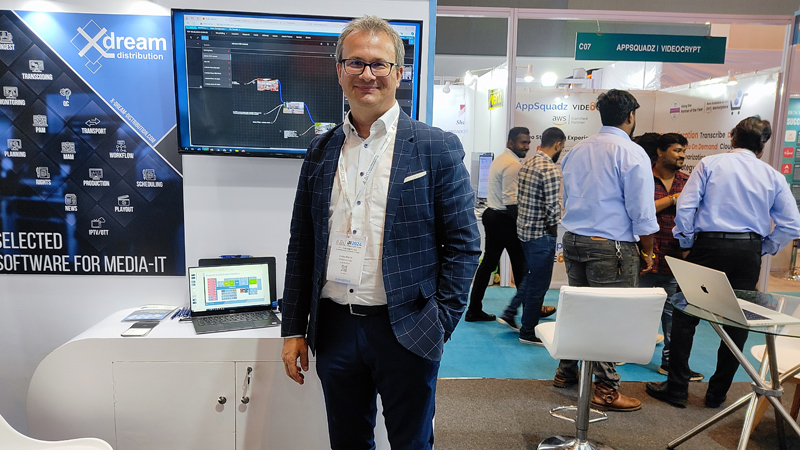
    While exploring the booths, we were particularly drawn to x-dream-group, a full-service provider for the media industry as well as for any commercial or public organisation that utilises audiovisual media. Their clientele includes post-production facilities, broadcasters, telecom operators and public entities.

    Indiantelevision.com’s Rohin Ramesh at the sidelines of this event, caught up with x-dream-group managing director Stefan Pfütze, who shared insights about his organisation with a beaming smile.

    Edited excerpts

    On brief overview of your organisation:

    We are known as x-dream-group, which encompasses three distinct types of activities. One of these is x-media, our company that specialises in software integration, focusing on creating end-to-end solutions using products from other software providers. We are solely dedicated to software and do not engage in hardware manufacturing.

    Through our work at x-dream-media, we’ve identified several established engineering companies that offer excellent products—many now in their second or third generation—but lack international market reach. To address this gap, we established an umbrella organisation called extreme distribution, which serves as a brand ambassador and master distributor for these companies. I am currently representing these various brands at Broadcast India.

    On elaborating some of the productised solutions you have developed for your customers:

    In our journey of development, we began with plugins for transcoders, which have become less relevant over time. From that foundation, we created a business called 1 GUI—a centralised user interface that integrates with various tools such as transcoders, ingest tools, quality control tools, workflow tools, and file transport tools. This interface serves as a cockpit for managing workflow and job queues.

    Over time, we expanded our offerings by adding a workflow starter and a workflow layer. Our latest release is the broadcast suite, a desktop application designed for playback, recording, and multi-viewing—targeted at professional AV users and broadcasters in need of quality control and engineering solutions. While it may not function as a traditional video server in a server room, it provides similar capabilities on a desktop level.

    Our flagship product, extreme fabric, is an end-to-end solution tailored for the media industry. Unlike our software integration approach, which involves customising ecosystems for clients, extreme fabric is a ready-to-go, pre-designed, pre-integrated, and pre-configured solution. Users can simply download and install it to establish a fully functional TV station.

    This may sound ambitious, but our primary target customers are tier one broadcasters who seek custom solutions and want to collaborate closely with us. For tier two and tier three broadcasters, as well as clients from sectors like corporate, banking, insurance, and government, the need is different. These customers often lack broadcast engineering capabilities and require a ready-made solution. When we ask them about their production business processes, they often look at us in confusion—many have little understanding of the necessary workflows.

    We showcase our capabilities on our website and at conferences and trade shows, aiming to enhance the overall process. This challenge is prevalent not only in emerging markets but also in regional TV stations, where organisations may have one or two knowledgeable individuals but lack the capacity to manage large integration projects. They require a more accessible solution. As I travel to various countries, I often hear the excuse that “it’s different in our country” regarding technology, habits, business processes, or even infrastructure. I believe that the challenges we face in the production and broadcast industry are universal whether in India, the Middle East, Europe or America.

    On identifying and addressing the specific needs of your clients:

    To identify and address the specific needs of our clients, we begin with clear demands. For example, when selling individual products, a customer may say they need software to integrate their central ingest desk with their newsroom and post-production systems. From there, we ask probing questions: “Do you also manage remote offices? What about live feeds or social media content?” This often leads to a realisation of additional needs they hadn’t considered.

    When it comes to transcoding, some clients initially believe that open-source solutions are sufficient. However, as they aim for advanced features like 4K Ultra HD, HDR colour spaces, or delivery to professional platforms, they soon realise they must meet strict requirements, such as delivering certified ProRes formats to companies like Apple. This is where we step in to provide the necessary support.

    Monetisation is another crucial area where we see demand for features like ad insertion, graphic overlays, audio track management, and subtitle management—more sophisticated needs than the basics. When we engage with clients, particularly during visits or trade shows, we often hear about inefficiencies in their workflows, such as the inconvenience of using USB devices to transfer content between departments. We can certainly improve these processes, especially for companies with distributed setups that include on-premises installations, cloud services, and multiple facilities across different cities.

    Another significant project category involves managing the business side of operations, particularly through media asset management systems. These systems serve as essential repositories, often involved in both the beginning and end of media business processes. Many vendors offer mini MAM systems for temporary storage, but we approach media management on a larger scale. We focus on publication strategies for marketing, advertising, and B2B or B2C content sales. For B2C, this includes video-on-demand portals, while our B2B offering, called the media market, enables broadcasters and content producers to sell their content online to a global audience.

    Editing is also a critical aspect, where our goal is to manage the bridge between business processes and the editing suite. This includes project management, approval workflows, and remote editing capabilities. Our product portfolio consists of software solutions, allowing customers to select their own hardware, rather than being tied to specific storage systems.

    Additionally, we have introduced a new component we refer to as “storytelling,” which functions as a newsroom system. This terminology resonates with clients outside the media industry, making it more relatable. Our applications are designed to be cross-media, supporting not just TV but also radio, web, and social media. This means that our playout solutions are essentially a form of publication across multiple platforms.

    When it comes to integrating these production systems, aside from editing challenges, we also face issues like ensuring compatibility between various tools and managing different workflows efficiently. We overcome these challenges through thorough assessments of client needs, providing tailored solutions that enhance their overall operations.

    On some common challenges you face when integrating an isolated production system:

    As software developers, it’s natural for us to explore the APIs of various software solutions. Today, most applications typically offer RESTful APIs, though some might have soft APIs, database connections, or file-based integrations. About 99 per cent of software now utilises rest APIs, and when we integrate systems, we prefer this approach because it provides optimal control, monitoring, and failure handling when working with third-party software.

    A common scenario I frequently encounter among system integrators and other vendors involves the use of watch folders. Many systems still rely on a chain of watch folders, where one application drops files into the watch folder of another. This approach is outdated and leads to significant operational overhead, particularly in process management and troubleshooting.

    Another prevalent trend is the transition from on-premises solutions to cloud-based systems. For many of our projects related to publication, we emphasise a hosted approach. However, this doesn’t necessarily mean a public cloud; it could involve dedicated or boutique hosting solutions with either physical servers or virtual machines. While public clouds often rely on virtual machines, they may not be cost-efficient for long-term engagements—though they can be suitable for short-term needs.

    We are witnessing a shift from fully on-premises elements, such as archives and publication systems, to remote data centres. This transition is driven by improved network connections, enhanced security, and better hosting capabilities, including power supply and cooling. Offloading hardware management allows for 24/7 operations without constant oversight, which is a significant advantage of a hosted approach, whether private or public.

    We support this trend through hybrid systems. For instance, high-resolution operations can remain on-premises, where the personnel and content are physically located, and archives may still reside on LTO tapes. Meanwhile, we can move the access components of the system to a hosted solution, connecting both sides to function as a single entity.

    The challenge today is ensuring that these systems operate seamlessly together. Currently, the approach often results in a disruption; the inner system handles publishing to the outer system while the outer system feeds information back to the inner one. Unfortunately, these remain separate systems that do not behave as a unified business process, despite essentially being one.

    On some upcoming trends:

    Discussing trends can be challenging. We’ve seen fads like 3d technology, ultra hd, and hdr come and go. In hindsight, many of these were just hype—something everyone talked about but few actually implemented. Today, most television remains hd and sdr. However, AI is different; it’s here to stay. Currently, we see practical applications like transcriptions and translations being effectively utilised.

    In our portfolio, we offer a product that provides live subtitling with translation capabilities. This tool is actively used in practice, and customers are willing to invest in it because it’s reasonably priced, making it a sensible option.

    One trend I observe is the shift toward on-premises artificial intelligence. Many customers are often unaware of their options and feel compelled to rely on public cloud solutions simply because that’s what vendors are promoting. However, the same software can often be deployed on-premises, which can be advantageous. While it may be challenging to navigate training models and related complexities, the cost savings on data traffic, time, and hosting and processing fees can be substantial.

    Artificial intelligence will also significantly impact storytelling in news, but I view this with some caution. There’s a common misconception that you can simply input a topic into an artificial intelligence and receive a well-formed story. In reality, we still need journalists and reporters in the field, gathering information and engaging with people. Artificial technology can assist in processing and shaping that information into a coherent story, but it cannot create news on its own. While artificial intelligence can generate lyrics or fiction, the essence of news relies on human insight and experience. Ultimately, it is the human mind that remains irreplaceable.

  • Ross Video shines at Broadcast India Show with cutting-edge solutions

    Ross Video shines at Broadcast India Show with cutting-edge solutions

    MUMBAI: The first day of the Broadcast India Show at the Jio World Convention Centre in Mumbai pulsated with the vibrant energy of the broadcast media and infotainment sectors. In an industry where technology evolves at lightning speed, the impact on broadcast and entertainment is profound. Yet, the full spectrum of innovative advancements often feels just out of reach-except for one remarkable occasion each year. For over 30 years, the Broadcast India Show has served as an interactive platform, showcasing groundbreaking shifts in infotainment technology while connecting attendees with the innovators behind these marvels.

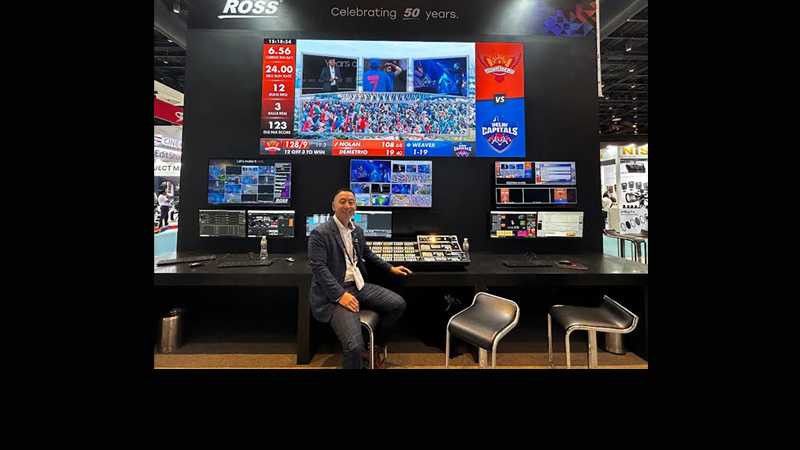
    As we navigated the bustling trade show, overwhelmed by the cutting-edge equipment and technology on display, one booth captured our attention: Ross Video. Initially sceptical, we quickly found ourselves engaged in one of the most enlightening conversations of the day with Ross Video director- sales, Asia, Simon Roehrs along with Ross Video marketing manager, APAC, Irene Siah. Their enthusiasm was infectious and before agreeing upon giving an in depth interview, they provided a brief overview of the company’s journey.

    Founded in 1974 by John Ross in the basement of his Montreal home, Ross Video began with a bold vision. John sold a meticulously restored World War II trainer aeroplane for $3,500, using those funds to launch the company. Remarkably, this initial investment remains the only external funding Ross Video has ever received. Since then, the company has flourished through self-funding and organic growth, reinvesting profits back into the business. In the present, John’s son, David Ross, serves as the chief executive officer, owning over 80 per cent of the company, while dedicated employees hold the remaining 20 per cent.

    Now, Ross Video stands out in the ever-evolving media landscape with an impressive array of products and services. Their offerings include state-of-the-art cameras, real-time motion graphics, advanced production switchers, robotic camera systems and immersive augmented reality and virtual studios. Additionally, the company provides video servers, robust infrastructure and routers, social media management solutions, newsroom systems and comprehensive live event production services.

    Buckle up readers as Indiantelevision.com’s Rohin Ramesh and Sreeyom Sil dived into an in-depth interview with Simon and Irene. Both were eager to tackle a plethora of questions we had lined up.

    Edited excerpts

    On the evolution of the company with the increasing demand for cloud based solutions

    I’ve been frequently asked about our cloud strategy, both by journalists and customers. It’s a great question! At Ross, we recognise that the cloud is a crucial component of the future, and we’re committed to providing a comprehensive broadcast workflow solution for our customers.

    Currently, Ross already offers a substantial range of broadcast-related capabilities in the cloud. This includes video servers, streaming applications like NDI and SOP, as well as graphics, switching, and audio mixing—all the essential elements needed to establish a full broadcast workflow in the cloud.

    Additionally, we provide Software as a Service (SaaS) options for customers, particularly in areas like Media Asset Management (MAM). With our SaaS model, we handle the relationship with AWS and deploy the necessary microservices, allowing customers to simply subscribe to our service. This contrasts with our other model, where the customer manages their own relationship with AWS while we assist in deploying the workflow.

    Our SaaS offerings include not only MAM but also inception, our Newsroom Computer System (NRCS). This dual approach allows us to cater to different customer needs while maintaining a strong commitment to delivering effective cloud solutions.

    On the integrating AI and automation in your product lineup

    That’s another excellent question! Honestly, we don’t focus much on our competition. While they do their thing, we concentrate on how we can best serve our customers today and into the future.

    AI is not new to us; we’ve been working with it for years. Our research lab, which consists of nearly 500 R&D professionals, is dedicated to this effort. For example, we’ve integrated ChatGPT, one of the leading AI technologies, into our Media Enterprise Management System (MEMS) and our Inception Newsroom Computer System (NRCS). This integration helps streamline the daily tasks of journalists.

    Imagine a journalist returning from an assignment with a lengthy story. They may want to create a brief snippet for social media, like an audio or video highlight. ChatGPT can summarise the story into a few concise sentences, which the journalist can then review and approve before publication. This significantly reduces turnaround times for digital content.

    Another exciting development is rossbot, which is available on our website. This chatbot allows customers from countries like Japan or Thailand to ask questions in their native languages. Rossbot accesses our extensive documentation and continually learns to provide accurate answers. For instance, if a user asks about a specific company code, Rossbot can deliver a precise response within 10 to 15 seconds. This is a remarkable improvement compared to traditional support channels, where inquiries often take much longer to resolve.

    Since deploying rossbot, we’ve seen a stabilisation in the volume of support calls, which speaks to its effectiveness in addressing customer queries efficiently.

    On sharing any recent case studies where your company has significantly transformed globally

    One of our most successful products is our hyperconverged solution. A significant trend in the broadcast industry, highlighted during events like IBC, is the growing focus on operational efficiencies. Many countries are facing economic challenges, which impact advertising revenue, especially with the rise of social media platforms. As a result, broadcasters need to operate more efficiently, find synergies, and potentially reduce their workforce.

    Our hyperconverged clusters offer a remedy to these challenges. By combining switching, routing, and a variety of essential features into a single, compact unit, we simplify broadcast operations. This integrated solution eliminates the need for multiple separate devices, reducing cabling and streamlining setups.

    Additionally, our hyperconverged systems significantly lower costs, both in terms of total cost of ownership and deployment speed. For mobile operations, for example, you only need one hyperconverged unit instead of a large truck filled with equipment. This not only saves on costs but also allows for faster on-air readiness. Overall, our hyperconverged solution has tremendous potential for cost reduction in the broadcast industry.

    On the major sport you are targeting in India, given that cricket is already the most established one

    I really appreciate your questions so far! Currently, we cover over 20 different sports, and if you take a look at the screen right there, you’ll see kabaddi. This sport is primarily popular in India, and it’s well-known because of local teams that share their requirements and trends with us. That’s why we’re actively supporting kabaddi today.

    When we identify a trend or demand, we collaborate closely with our product teams to adapt our offerings to fit regional markets. For instance, cricket is incredibly important—not just in India, but also in countries like Australia, England and South Africa. Interestingly, we’ve seen a significant rise in cricket’s popularity in North America.

    Did you know that there are approximately two million Indians living in Canada? This vibrant community is driving interest in the sport, which is why we’ve hosted matches in locations like New York, Texas, and Los Angeles. For example, India faced Pakistan in a match in New York, demonstrating the strong audience demand. When you look at the global audience for cricket, it’s impressive—it dwarfs many other sports.

    On elaborating more on your other vertices besides sports

    As I mentioned earlier, our primary market focus is broadcasting, which encompasses various aspects, especially sports broadcasting. Currently, about half of our revenue comes from this sector, making it a crucial vertical for us. However, we recognise that the broadcasting industry faces increasing challenges.

    We are also looking into live production and sports, as these are two of the most effective ways to capture audience attention. News and live sports are unparalleled in their ability to engage viewers, especially when it comes to thrilling moments like cheering for a cricket team.

    Beyond broadcasting, there is a growing demand for video solutions across other sectors, including government, education, and corporate environments. We see significant potential in corporate markets in India, particularly with large organisations like Tata and Accenture, as well as major banks. These companies are increasingly interested in video solutions for purposes such as video conferencing, board meetings, and town hall events.

    In the U.S., we have a strong customer base that uses our latest Carbonite switchers alongside Microsoft products. For instance, our switchers offer USB-C webcam output, allowing users to easily feed a high-quality video signal into their laptops or PCs. This setup can then be displayed on a TV, providing a professional-grade production quality for executive meetings and other large gatherings.

    On the future of broadcasting in India

    I see a bright future for the Indian broadcast market, and here’s why.

    First, about 50 per cent of broadcasting is still being done in standard definition (SD), which presents significant opportunities for upgrading to high definition (HD) and even ultra high definition (UHD).

    Second, the number of TV channels is steadily increasing. My team informs me that more than 100 new news channels are launched each year. This growth reflects the importance of news in India, a country characterised by its remarkable diversity.

    With distinct differences across the North, South, East, and West, and around 115 languages and dialects spoken, India’s diversity is truly unparalleled. This unique landscape creates a rich environment for broadcasting, with ample opportunities for tailored content that resonates with various audiences.

    On venturing into the post production market in the coming future

    In post-production, creativity is paramount. We are proud to offer a range of creative tools to support this. Additionally, we have a department called Rocket Surgery, which is truly exceptional. This team comprises approximately 40 to 50 talented individuals and is one of our notable acquisitions, showcasing Ross’s commitment to growth.

    Rocket Surgery specialises in bespoke projects tailored to our customers’ needs. When clients come to us with a vision and aren’t sure how to bring it to life, this team steps in to map out their ideas and provide innovative solutions. Some of these solutions are so groundbreaking that they’ve never been seen before in the industry.

    Looking ahead, we certainly see the potential to expand further into the entire production market.

  • Broadcast India show to take place from 12-14 Oct

    Broadcast India show to take place from 12-14 Oct

    MUMBAI: The 27th edition of the annual B2B Broadcast India Show will be held from 12-14 October 2017 at Bombay Exhibition and Convention Centre, Goregaon, Mumbai. The three-day trade fair will witness the leading participants from across the globe present a wide array of products and technologies for the broadcast, television, film, audio and radio industry. For over the last two and a half decades, the Broadcast India Show has positioned itself as the single most interactive platform that showcases on one hand, the paradigm shifts in infotainment technology across the globe and on the other, allows technology seekers to connect with the innovators and experience the marvels first-hand. Below are some companies and the products they will be displaying at Broadcast India Show 2017.

    Aaton Digital and Transvideo

    Aaton-Digital will demonstrate the new CantarMini location sound recorder and the new Cantaress mixing surface, while Transvideo will present its new Stargate high specification monitor and the new CineMonitorHD. Also on show, the StarliteRF-a monitor and the new StarliteHD-e monitor. Transvideo’s Starlite family of 5” HD OLED touchscreen monitor products are designed to be intuitive to the professional. The Starlite family hosts a high-resolution monitor, with built-in tools including waveform monitor, vectorscope, and histogram. The menu is customizable with Smart Corner shortcuts. The legendary CineMonitorHD family has been enhanced with added features and HDR functionalities. New matrices for the CineMonitoHD 8”, 10” and 12” give an improved viewing angle as well an extended color gamut. A new CineMonitorHD8 XSBL for body-rig applications will be demonstrated on the booth. The CineMonitorHD-XSBL is the flagship of Transvideo for Steadicam™ type applications; available in 6” and
    8” sizes.

    Accord Equips

    Accord Equips is India’s leading camera equipment rental and production services company. The company houses the largest range of cameras, DSLRs, lenses and accessories. They have their offices in Mumbai, Pune & Ahmedabad. The clienteles include companies like BBC, Yashraj Films, Aamir Khan Productions, Network18, Star TV, Grey worldwide and more. The brand has recently introduced production support for
    360 VR videos and production and web streaming of videos.

    Blackmagic Design

    Visitors to the Blackmagic Design BI Booth D-401 will be the first in India to try out Ultimatte 12, Fairlight, and the collaboration workflow for DaVinci Resolve 14. With a dedicated green screen scene setup, visitors will be able to understand how Ultimatte 12 works and the requirements needed for it to work for them. Another first for India is the Fairlight 3.3 bay audio panels. Visitors will have the chance to get a feel for the Fairlight panels and explore this powerful audio engineering option. To cater to the fanfare around DaVinci Resolve 14’s release, two DaVinci demo booths will be available for production teams to research preferences and workflow optimization tricks. Blackmagic Design staff will be on-site to answer any questions visitors might have.

    Canon

    Canon, the leader in global imaging industry will showcase its latest in-line imaging technologies and preview of mainstream Cinema Camera EOS C700, Cinema EOS C200 and Professional Video Camera XA 11 at Broadcast India Show 2017. Canon Cinema EOS C700 can shoot up to 4.5K resolution along with 120 fps in 4K and 24 fps in 2K. The camera also comes in EF, PL and PL GS mount with global shutter technology. The dynamic range of camera holds up to 14 stops and 15 stops in two different models of EOS C700. The Cinema EOS C200 is revolutionary camera with inbuilt 4K Raw and high frame rate capabilities. The 8.85 megapixel super 35 mm CMOS sensor, 13 stops of dynamic range, Dual pixel CMOS AF, full compatibility with Canon EF-mount lenses and HDR capability help make the camera ideal for wide range of shooters. The other cameras which will be displayed will be the newly launched XA11 along with prevailing models XA35, XC 10 and XC 15 in professional video camera range and Cinema EOS C300 Mark II in the Cinema EOS range.

    Digital Navigation

    Digital Navigation is a leading software solution provider for the mainstream media houses across all platforms -broadcast, print and digital. They develop a wide range of software for efficient newsroom automation. The products are user-friendly and cater to the entire editorial chain of command. Digital Navigation also offers consultancy, customized services and support for media houses. The product-line includes: NewsGlobe- NewsRoom Automation System, RAPID- Playout Solution, OCRIPT- MOS based Teleprompting Solution, FLUiJO- Playout Automation System, CAPIO- Advanced Ingestion Module, E- ASSEST 365 – MAMS Solution, NewsBuzz – Mobile App for Newsroom and CURATOR- Content Management System

    DVEO

    DVEO®, a well-respected supplier to leading Telco, TV/OTT, and WISP operators around the world, provides Telco-quality video encoding/streaming products, playout servers, and advertising solutions. Their patented “DOZER™” automated error-correction protocol delivers video reliably over public or private internet. At Stand F-605, DVEO will demonstrate the Ad Serter™ IP/ASI/SDI — a Telco-quality multichannel advertising server with scheduled or triggered advertising.  It inserts video clips, ads, graphics, text, and logos into live or stored content. The AD SPOTTER serves targeted ads to mobile and non-mobile users.   All DVEO advertising solutions can be integrated with DVEO’s powerful Atlas™ Live/VOD media distribution servers.

    Empress Media Asset Management (eMAM)

    Empress Media Asset Management, LLC (Empress) will showcase the upcoming release of its flagship eMAM™ platform featuring integrations with Adobe® Premiere® Pro CC, Adobe InDesign® CC, and Adobe After Effects ® CC as part of Adobe Creative Cloud ® at Broadcast India in booth D-450. eMAM also extends the power of Adobe Team Projects with support for non-technical users, for remote users, for media management and sharing, and for any type of cloud system. eMAM is a Media Asset Management system offering customers a feature-rich online digital library with best-of-breed integrations for a complete workflow process solution. eMAM unites different on-premise and cloud storage and archive systems, in different locations into a unified workflow with a single web or tablet-accessible interface. The integrated panel architecture allows different creative staffs to share and collaborate through a complete unified system to maximize the value of their digital assets. The proxy editing and localization features for video editing allow organizations to increase workflow efficiency while saving on infrastructure costs.

    Great Britain & Northern Ireland Pavillion

    A group of seven leading British media technology companies are exhibiting at Broadcast India on the GREAT Britain Pavilion – supported by Department for International Trade, sponsored by techUK and managed by Tradefair. The British broadcast industry has a long history in innovation, and the group taking part at Broadcast India 2017 clearly demonstrate this. Each brings highly specialised products developed for targeted yet practical applications in the rapidly changing world of broadcast. The British exhibitors are showing a wide range of products and services at Broadcast India including digital post production, media asset management, robotic camera systems and technology for archiving.

    I DO IT

    I Do It will be displaying their Auto Skew On-The-Move antenna which can get Broadcast from any satellite at any place on the Trail, bus, car and costal ship. I DO It will also have Spider Web Air on display which helps in live broadcasting system, wireless stream of valuable contents to unlimited audience. This product is for live streaming to over 200 laptops and smart devices.

    Panther

    Panther will showcase the most successful Classic PLUS dolly with the new Hi-Lo-turnstile together with the famous Twister dolly together with useful accessories. The Classic Plus dolly comes with the patented crab & steer mode, with its perfect steering geometry that no one else can offer. The Vario Jib shown together with the Twister dolly is loved for its versatility and the many options in application.

    Promise Technology

    At the Broadcast India Show, leading rich media storage technology provider Promise Technology will introduce a new NAS solution designed for small groups of users editing 4k video- the Vess A3340 Pro. Promise will also be showcasing its Pegasus3, SANLink3 and VTrak A-Class shared SAN appliances at the show, which provide the ideal solution for the entire rich media workflow – from ingest and editing to delivery and processing. Demonstrations will take place in Promise’s booth (D-446) on the show floor.

    Rivera Digitec

    Rivera Digitec will be displaying the VR-4HD is a complete HD studio in a compact and portable package that replaces several different pieces of complex A/ V equipment. Designed with single-person operation in mind, the VR-4HD enables easy switching and mixing of sound and video using advanced video and audio Digital Signal Processing (DSP) along with dedicated hardware controls faders, buttons and touch screen interface. It beautifully integrates a digital audio mixer, video switcher, multi-viewer touch screen and USB video/audio streaming interface into a stand-alone device. This portable live HD production solution is ideal for schools, churches, council meetings, corporate events, sports, training sessions, or any other live event.

    Techinfoplace Softwares Pvt. Ltd.

    Techinfoplace Softwares Pvt. Ltd. offers end to end IT Services including software development, cloud based media processing, cloud backup, hosted exchange and product development. The products that are will be exhibited are Hybrik – a cloud-based media processing system that provides transcoding, media analysis, and quality control to deliver superb video optimized for every screen. Hybrik’s media workflow produces outstanding results, distributing the workload across hundreds of machines to deliver the fastest throughput at the lowest cost. The workflow can be customized through a public API, allowing seamless integration with customer operations. Customers like Sony DADC and Vevo depend on Hybrik for their cloud media workflow because of its superior performance, scalability, and cost-effectiveness. Another product on display is Backup Unlimited which provides backup of data with a wide range of backup types such as File Level Backup, Windows System, Exchange Server, VM ware, MS SQL, Office 365, Cloud to Cloud and many more. Core advantage of the product is that it backups the data on the cloud so it will be secure and easily accessible from anywhere. Every backup set has ability to configure schedule, manage differential and Incremental, Continuous Backup, Retention Policy and many more.  It also provides full audit report of backup jobs. It uses 256-bit SSL transmission & using 128-bit AES encryption algorithm with HIPPA Compliance. We also offer  white  labeling (branding)  of the software where one can use their own name, logo, arts for branding.