Tag: Broadcast Bill

  • Peace TV saga & absence of rule of law

    Peace TV saga & absence of rule of law

    The Peace TV saga after the Dhaka terrorist attack just before Eid and the brouhaha created over availability of an unlicensed channel in Indian television homes highlights yet again rules and regulations have to be applied uniformly and stringently.

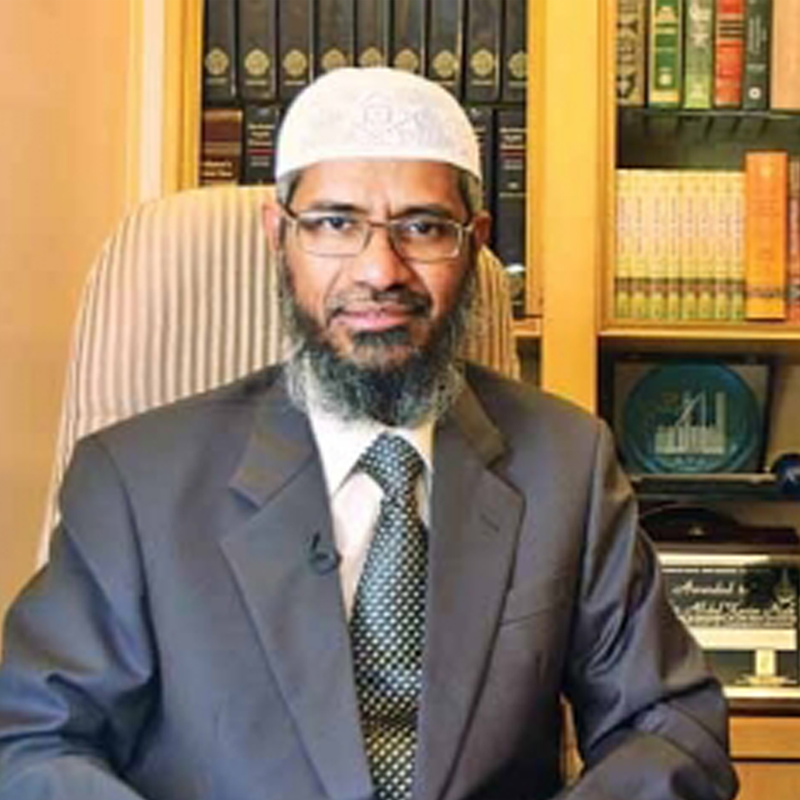
    The Indian government woke up suddenly issuing gag orders on distribution platforms when the general media in the country went to town regarding Peace TV. The media alleged Peace TV and the Mumbai-based Islamic tele-evangelist Zakir Naik’s sermons aired on the channel could have instigated the Bangladeshi terrorists. All these allegations were based on some interpretation of a report in a Bangladeshi newspaper.

    That the Bangla newspaper subsequently clarified its report stating categorically that it had never said the terrorists were `inspired’ by Naik’s sermons is a completely another story because the Indian media, by and large news channels, ignored the clarification.

    However, the fact stands that Peace TV is not licensed to air in India and had been denied landing rights by the Indian government several times in the past. Still, the channel was available on Indian networks and the sermons online.

    Similarly, several Pakistani TV channels too are available in some parts of the country (crackdown on illegal retransmissions do happen from time to time, government officials insist) as also Chinese radio stations in border areas.

    So, the question is: how come an unlicensed TV channel officially denied permission to broadcast in India was still reaching Indian TV homes?

    The answer lies in apparent laxity in implementing and upholding existing regulations on the part of Indian policy-makers, regulators and law enforcing agencies. In some cases it may also be local-level indulgences despite knowing that a certain regulation had been breached.

    Because in India most such issues boil down to majority vs. minority yardstick with the victimisation syndrome kicking in — all in the name of certain democratic rights — regulatory breaches are overlooked or rule of the law not enforced. Until one such breach kicks up crap all round; like the Peace TV affair recently did.

    Historically speaking, as India opened up to satellite TV revolution from early 1990s and rules were lax (downlink licence or landing rights were terms not known to Indian policy-makers then) many TV channels invaded the Indian skies and homes. Some of them were bad (read propagandist), some indifferent, but largely most were entertaining.

    As successive Indian governments woke up to the power of TV propaganda in whipping up unpalatable frenzy and jingoism, Ministry of Information and Broadcasting (MIB) started formulating rules and regulations to isolate TV channels, mostly uplinked from outside India, from entering Indian homes via cable or other distribution platforms, which were perceived as not conducive for India.

    One such historic policy drafting also saw a Broadcast Bill being introduced in Parliament in 1996 where the draft stated that certain categories of organisations (like political parties, NGOs, religious bodies, advertising agencies, etc) would be barred from owning and running TV channels.

    The Bill never got enacted into a law and since then half-hearted attempts by other governments to bring similar Bills in Parliament failed to get necessary traction; mostly owing to a superstitious belief that whichever government tries to regulate the broadcast sector went out of power in New Delhi.

    Historical incidents, notwithstanding, it has also been observed in India that any proposed regulation relating to cable and broadcast sector having the potential to affect powerful lobbies like political parties or religious bodies or their proxies get swept under the carpet.

    Take, for example, broadcast carriage regulator TRAI’s two recommendations on media ownership, made after wide consultations with stakeholders. I am told both the reports are gathering dust in some corner of MIB.

    Apart from suggesting many other things on the ownership issue, TRAI said in a set of recommendations in 2014, “…given that about six years have elapsed without any concrete action being taken by the Government, the Authority strongly recommends that its Recommendations of 12 November 2008 and 28 December 2012 may be implemented forthwith.”

    The regulator’s recommendations came after issues relating to media ownership issue and vertical monopoly were referred to it by MIB.

    Emboldened by the fact that MIB had put its weight behind it, TRAI (again) recommended in 2014 that political bodies, religious bodies, urban, local, panchayati raj, and other publicly funded bodies, Central and State government ministries, departments, companies, undertakings, joint ventures, and government-funded entities and affiliates be barred from entry into broadcasting and TV channel distribution sectors.

    The regulator suggested exit routes for existing entities already into business, adding such a debarment could be implemented through an executive decision by incorporating the disqualifications into rules, regulations and guidelines as necessary.

    But by 2014, MIB had already licensed many news and religious/spiritual TV channels and distribution platforms owned/managed by political parties, religious bodies (in one case a temple’s management committee) and/or their proxies for operation at pan-India and State levels.

    And so, even the 2014 TRAI recommendations remain ignored, while at another level technology has outpaced or threatens to make obsolete the Indian process of policy making.

    A colleague, while outlining the potential of Facebook Live (and other such techs like Twitter’s Periscope), recently commented it’s matter of time when Facebook Live will kick into India, dipping into the country’s smart-phone user base (250 million on last count) to give birth to the possibility of “hundreds of news channels on FB dishing out unadulterated, independent updates of developments.” Very few in Indian government would be tracking developments like FB Live.

    In an age when technology is moving faster than policy-making, flat-footedness of Indian policy-makers and our general apathy towards rule of the law will hasten policy chaos resulting in arbitrary decisions being implemented.

  • Peace TV saga & absence of rule of law

    Peace TV saga & absence of rule of law

    The Peace TV saga after the Dhaka terrorist attack just before Eid and the brouhaha created over availability of an unlicensed channel in Indian television homes highlights yet again rules and regulations have to be applied uniformly and stringently.

    The Indian government woke up suddenly issuing gag orders on distribution platforms when the general media in the country went to town regarding Peace TV. The media alleged Peace TV and the Mumbai-based Islamic tele-evangelist Zakir Naik’s sermons aired on the channel could have instigated the Bangladeshi terrorists. All these allegations were based on some interpretation of a report in a Bangladeshi newspaper.

    That the Bangla newspaper subsequently clarified its report stating categorically that it had never said the terrorists were `inspired’ by Naik’s sermons is a completely another story because the Indian media, by and large news channels, ignored the clarification.

    However, the fact stands that Peace TV is not licensed to air in India and had been denied landing rights by the Indian government several times in the past. Still, the channel was available on Indian networks and the sermons online.

    Similarly, several Pakistani TV channels too are available in some parts of the country (crackdown on illegal retransmissions do happen from time to time, government officials insist) as also Chinese radio stations in border areas.

    So, the question is: how come an unlicensed TV channel officially denied permission to broadcast in India was still reaching Indian TV homes?

    The answer lies in apparent laxity in implementing and upholding existing regulations on the part of Indian policy-makers, regulators and law enforcing agencies. In some cases it may also be local-level indulgences despite knowing that a certain regulation had been breached.

    Because in India most such issues boil down to majority vs. minority yardstick with the victimisation syndrome kicking in — all in the name of certain democratic rights — regulatory breaches are overlooked or rule of the law not enforced. Until one such breach kicks up crap all round; like the Peace TV affair recently did.

    Historically speaking, as India opened up to satellite TV revolution from early 1990s and rules were lax (downlink licence or landing rights were terms not known to Indian policy-makers then) many TV channels invaded the Indian skies and homes. Some of them were bad (read propagandist), some indifferent, but largely most were entertaining.

    As successive Indian governments woke up to the power of TV propaganda in whipping up unpalatable frenzy and jingoism, Ministry of Information and Broadcasting (MIB) started formulating rules and regulations to isolate TV channels, mostly uplinked from outside India, from entering Indian homes via cable or other distribution platforms, which were perceived as not conducive for India.

    One such historic policy drafting also saw a Broadcast Bill being introduced in Parliament in 1996 where the draft stated that certain categories of organisations (like political parties, NGOs, religious bodies, advertising agencies, etc) would be barred from owning and running TV channels.

    The Bill never got enacted into a law and since then half-hearted attempts by other governments to bring similar Bills in Parliament failed to get necessary traction; mostly owing to a superstitious belief that whichever government tries to regulate the broadcast sector went out of power in New Delhi.

    Historical incidents, notwithstanding, it has also been observed in India that any proposed regulation relating to cable and broadcast sector having the potential to affect powerful lobbies like political parties or religious bodies or their proxies get swept under the carpet.

    Take, for example, broadcast carriage regulator TRAI’s two recommendations on media ownership, made after wide consultations with stakeholders. I am told both the reports are gathering dust in some corner of MIB.

    Apart from suggesting many other things on the ownership issue, TRAI said in a set of recommendations in 2014, “…given that about six years have elapsed without any concrete action being taken by the Government, the Authority strongly recommends that its Recommendations of 12 November 2008 and 28 December 2012 may be implemented forthwith.”

    The regulator’s recommendations came after issues relating to media ownership issue and vertical monopoly were referred to it by MIB.

    Emboldened by the fact that MIB had put its weight behind it, TRAI (again) recommended in 2014 that political bodies, religious bodies, urban, local, panchayati raj, and other publicly funded bodies, Central and State government ministries, departments, companies, undertakings, joint ventures, and government-funded entities and affiliates be barred from entry into broadcasting and TV channel distribution sectors.

    The regulator suggested exit routes for existing entities already into business, adding such a debarment could be implemented through an executive decision by incorporating the disqualifications into rules, regulations and guidelines as necessary.

    But by 2014, MIB had already licensed many news and religious/spiritual TV channels and distribution platforms owned/managed by political parties, religious bodies (in one case a temple’s management committee) and/or their proxies for operation at pan-India and State levels.

    And so, even the 2014 TRAI recommendations remain ignored, while at another level technology has outpaced or threatens to make obsolete the Indian process of policy making.

    A colleague, while outlining the potential of Facebook Live (and other such techs like Twitter’s Periscope), recently commented it’s matter of time when Facebook Live will kick into India, dipping into the country’s smart-phone user base (250 million on last count) to give birth to the possibility of “hundreds of news channels on FB dishing out unadulterated, independent updates of developments.” Very few in Indian government would be tracking developments like FB Live.

    In an age when technology is moving faster than policy-making, flat-footedness of Indian policy-makers and our general apathy towards rule of the law will hasten policy chaos resulting in arbitrary decisions being implemented.

  • ‘Any attempt to gag freedom of media in garb of regulation has to be resisted’

    ‘Any attempt to gag freedom of media in garb of regulation has to be resisted’

    But, television viewer has only one option, to change the channel, if he/she doesn’t find the content interesting. Because TV viewers don’t have the option of skipping the news report and watching something else, as they might do with a newspaper. Therefore, at any given time television will have to put the best possible visuals on air. And it has been observed that if the viewer finds the story interesting, he stays on – else he shifts to another channel. So to stay in the rating game a TV channel has to give such content that makes the viewers stick with it.

    Therefore, the point to be noted is that the content on TV is not being controlled by the content maker, i.e, the journalist, but someone else who has the remote control in his hand. Basically the channel surfers, today decides the content and not an avid news watcher.

    Another observation is that news channels behaved like typical Bollywood producers in 2007. That is, if a certain formula was a hit, it was copied and you had a wave of that formula. Likewise in TV news, first came a wave of family drama, matrimonial discord, violence, divorce… People lapped it up. Once the novelty factor was gone, the audience got bored.

    Then came, ghost stories. So one after another channels started showing horror stories. While this content was very short lived, it was also alleged that some of the news reports were concocted. There might be some truth in these allegations, too. Just as it was proved in the Uma Khurana case (where a school teacher from Delhi was made a victim of a fake sting operation). Stories such as these do dent the credibility of the media, but the damage is limited.

    After ghost stories, came the Baba wave. Followed by amazing videos. This was a completely new phenomenon. In these videos, channels showed people doing crazy things. But finally this too seems to be nearing its end.

    Hence I believe that classical news will perhaps never die. Because, it is truly “new”, everyday. It’s unique and touches society. So amazing videos, Baba syndrome, ghost stories are fading in comparison to real news.

    This realisation is both internally generated and induced. Induced, as the government is considering a Broadcast Bill. Yet the handling of the bill raises many questions.

    I have stated earlier – freedom of press comes with some responsibilities. This freedom is critical for nation building. But freedom does not mean anarchy. It is necessary to give deep thought to what impact certain news will have on society. Then why are we opposing the Broadcast Bill? Because when the draft bill was brought out, it became very clear that the government wanted to bring in such a mechanism which can gag the media.

    Amazing videos, Baba syndrome, ghost stories are fading in comparison to real news
    _____****_____

    I strongly feel that self regulation is the need of the hour and to achieve this, we need a truly independent and free media body, with a transparent method of electing its members, which is funded by the media, runs its own independent office, and has some powers to deal with channels that flout guidelines. Currently this responsibility has been undertaken by the News Broadcasters Association, which has brought together editors of all news networks to work on the industry’s content code.

    But one thing is clear. Government can’t gag the media and any ‘regulation mechanism’ which is in the hands of bureaucrats or any such body which is directly or indirectly controlled by the government in any way is not acceptable to us.

    Coming to the issue of the media concentrating on the urban scenario and not doing ‘real’ stories – the rural stories… I do not think this will change vastly. Media will naturally give content that is relevant to the market it addresses. And it is that market which will assess its success or failure. Similarly, the channels will also modify their content as per the market’s needs and response, for instance, it would have been noticed that business content has vanished from most general news channels. While stock market has been hitting the roof, audiences prefer to watch business news channels for this news rather than general news channels. Hence most Hindi news networks did away with their business news bulletins.

    The changed economic reality has tremendously impacted the middle class psyche. Therefore the middle class does not relate to issues that they used to be concerned with a few years ago. So the content mix today cannot be the same as it was a decade ago. The viewer today is different. Plus, we have more than 50 per cent of our population below the age group of 25. Needless to say their taste and psyche is different and this changed reality today dictates the media’s content mix. We found this change quite apparent when Headlines Today showed the wedding of Aishwarya Rai and Abhishek Bachchan. Though it may be termed routine coverage, during these two or three hours, Headlines Today reigned supreme, all other English news channels paled in comparison.

    This changed content mix has dominated Hindi news for a while and we should accept the fact that it is here to stay. Similar will be the scene among English language news channels also, with the growth in audience base. So now we have to cast a new dye for moulding this new content. In today’s world, both technology and market are driving content – just as mobile phones have changed telephony, and sms has changed English.

    As for our channels, it is extremely satisfying that we have retained the number one position despite a virtual dogfight in the TV news market. We are proud to present balanced news content. Though this is a remarkable achievement for Aaj Tak, we are aware of the challenges ahead. A number of new channels coming in the fray and with a growing audience base, it will be our effort to retain our number one position – both in terms of content perfection and market share.

  • Court seeks guidelines on stings, status of Broadcast Bill

    NEW DELHI: Pointing out that it was the responsibility of the Government to act if any television channel concocted a sting operation, the Delhi High Court today sought to know the provisions drawn up in this regard.

    The Court also wanted to know the status of the Broadcasting Bill, on which discussions had been going on for some time. The ministry was asked to file its reply by 17 September. 

    Hearing a public interest litigation by social worker Rahul Verma seeking to regulate sting operations by TV channels, a Division Bench comprising Chief Justice M K Sharma and Justice Sanjeev Khanna noted: “There have been discussions regarding the bill. The Minister (for Information and Broadcasting) has said that the government is bringing the bill. What has come out so far?” 

    Referring to the recent report of the fake sting operation by Live India channel, the court said: “If the sting is concocted, it is your responsibility to take action. Some kind of restriction has to be there. It is not about an individual case but about broader policy.” 

    The court made a reference to the “sting operation” purportedly showing government schoolteacher Uma Khurana as running a prostitution racket, though the police found it to be a fake report. 

    The telecast of the sting by Live India last month triggered mob violence in and around the school in central Delhi where Khurana taught mathematics. She was soon arrested and sacked from the job. However, Khurana was released on bail earlier this week as no evidence was found against her.

    The Centre today informed the Court that the I&B ministry had issued a show cause notice yesterday to ‘Live India’ channel to respond within three days as to why action against it should not be taken for irresponsible reporting in the fake sting operation involving the school teacher. Not satisfied by that reply, the Court asked, ”Under which provision of the law you have issued the show cause notice. If offence is committed, you have to register a case and start criminal proceedings.”

    The Court had in fact taken suo motu notice of the case on 7 September and had issued notice to the Government and the Police. Interestingly, the police has in its reply told the court that it has not given a clean chit to the teacher. The police had arrested reporter Prakash Singh and his associate Rashmi Singh after booking him under various sections of the Indian Penal Code, including those relating to cheating and criminal conspiracy.

    The fake sting reports have come at a time when broadcasters are opposing the ministry’s proposal in the bill to bring in a Content Code to regulate news and current affairs content.

  • Make discussion on Broadcast Bill more inclusive: IFJ

    NEW DELHI: The International Federation of Journalists has urged the Indian government to hold more inclusive consultations and recognise the legitimate interests of journalists in the process of the proposed Broadcast Services Regulation Bill and the Content Code.

    This was stated in a memorandum submitted with the endorsement of the National Union of Journalists (India) an IFJ affiliate, and two local unions from Mumbai and Delhi.

    “We understand that the most recent draft of the Broadcast Bill that has been circulated for public debate is the fourth in a decade”, said IFJ Asia Pacific Director Jacqueline Park. “That its future is still uncertain, speaks of a failure of consensus-building around the purported aims of broadcast law reform”.

    The IFJ has been advised by affiliates and other like-minded organisations in India that the Broadcast Services Regulation Bill in its most recent version is not dissimilar to a draft that was introduced, discussed and abandoned last year. The only respect in which the current legislative proposals differ from those of 2006 is in the introduction of a set of “guidelines” for broadcasters, or a “content code”.

    “While we can appreciate a regulatory regime that seeks to curtail cross-media ownership and ensure that the broadcast spectrum is preserved as a public resource, we do not see the utility of regulating content,” said Park.

    The IFJ has learnt through its affiliates that the Indian Penal Code as it now exists is adequate to deal with instances of gross abuse of media autonomy. Competent legal opinion has held that there is no basis for the prior restraint of the right to free speech, since the punitive powers available are sufficient to sanction all offences post facto.

    “In the circumstances,” said Park, “the purpose of broadcast law reform should be little less than to give effect to the historic judgment of the Indian Supreme Court, that the airwaves are a public resource, which should be allocated in accordance with a broad definition of public interest.”

    The IFJ, in consultation with affiliated unions and other civil society groups, would like to urge the Indian government to broaden its consultations and to explicitly grant the demand of the professional community of journalists, to be heard in the process of broadcast law reform.

  • Broadcast bill may look at news on pvt FM channels

    Broadcast bill may look at news on pvt FM channels

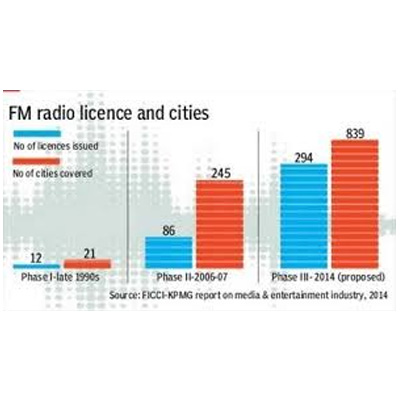
    MUMBAI: The government appears to be veering towards acceding to a long standing demand of private FM radio networks that they be given news broadcasting rights.

    The Broadcasting Bill, to be placed in the next session of Parliament, is likely to contain the provision of giving news broadcasting rights to private FM channels, the Press Trust of India news agency has quoted All India Radio director-general Brijeshwar Singh as saying in Kolkata today.

    Singh, however, said that there was opposition to it already from some political parties, PTI reported.

    Slamming what he termed as the sensationalisation of news by private TV channels, Singh suggested a regulatory mechanism to check this practice. Singh was also quick to point out that AIR “has not been accused of this”.

  • Where goest the broadcast bill?

    Where goest the broadcast bill?

    The fate of the broadcast bill hangs on a razor’s edge, despite Braodcast Minister Arun Jaitley’s pledge to table it in the surrent budget session of parliament.

    Lobbying for the Broadcast bill is expected to reach fever pitch after March during the Budget session recess. The broadcasters lobby group, The Indian Broadcast Foundation has set up three committees for the purpose. Discovery India’s Kiran Karnik, News Television India’s Peter Mukherjee and Urmila Gupta, and Sony Entertainment Television’s Kunal Dasgupta are looking at convergence and spectrum allocation issues. ESPN’s Manu Sawney and Turner International’s Anshuman Misra are reviewing technology convergence, especially the last mile infrastructure.

    Content provider UTV’s Ronnie Screwvala and Khursheeda Mody, Nimbus Communications Harish Thawani and MTV India’s Alex Kuruvilla are looking at Internet regulatory issues. Three government committees are also reviewing critical areas in the bill.

    Jaitley expects to reach a consensus during the recess before tabling the bill in parliament. Some analysts believe that foreign equity in cross media holding and DTH may not form a part of the bill, plagued by opposing political viewpoints. Others indicate that the bill may be tabled, but will go into a sub committee for further review.

  • IMG calls for review of key provisions in the Broadcast Bill

    IMG calls for review of key provisions in the Broadcast Bill

    MUMBAI: Indian Media Group (IMG), the organisation representing Indian media companies in television broadcasting, radio and print media sector, has submitted its recommendations on the proposed Broadcast Services Regulation Bill, 2006. In its proposal, the organisation has asked the government to review certain provisions in the Bill, which it thought needed a “thorough review.”

    “The proposed legislation contains various provisions, which are not only in the public interest but also in the interest of the broadcasting sector as a whole and would definitely trigger off the process of growth and development in the sector in an organised manner. However, there are certain other provisions, which need a thorough review before they are introduced in the form of Bill,” IMG said.

    Pointing out that the interest of various stakeholders is going to be directly affected by these provisions, IMG suggested that after the receipt of inputs /comments from the stakeholders, a detailed consultative process be carried out by the government with various stakeholders by way of meetings and open house discussions before finalisation of formal view in this regard.
    These are the key issues IMG has raised and its comments on the respective provisions:
    LEGISLATIVE VALIDATION:

    IMG asked for effective legislative backing that has been acting as an impediment to the effective implementation of various guidelines and policies. “Accordingly, it would be mandatory for the Broadcasting Organisations and all other stakeholders to discharge their prescribed obligations in such policies / guidelines in public interest. This would not only bring order in the sector but also provide an opportunity to the Broadcasting Sector to grow and develop in a focused manner,” it said.

    Expressing its concern on the post-Bill validity of the various regulations and tariff orders for regulating the broadcasting and cable sector Trai has issued till now, IMG suggested that a suitable provision in this regard should be incorporated in the proposed Broadcasting Bill so that these regulations and tariff orders continue to operate and apply even after the promulgation of this Bill.

    IMG has also said that, the proviso in the Bill which provides exemption to the pubcaster (Doordarshan) or such category of broadcasters from all or any provisions of this Act is inequitable and unfair and needs to be reviewed. “All the provisions of the proposed Broadcasting Bill including content code needs to be applied to Prasar Bharti/Doordarshan as well. Doordarshan is competing with other channels like any other commercial broadcasting organisation,” it said.

    PERIOD OF LICENSE:

    On the validity period of various broadcast-related licenses the government issued such as DTH, teleport and uplinking licenses for 10 years, IMG suggested that the Broadcasting Services license should also be granted at least for a period of five years. ” It is submitted that for the violation of the terms and conditions of the license the necessary powers have already been conferred on BRAI (the proposed Broadcast Regulatory Authority of India) / Licensing Authority to suspend, cancel, revoke the license by following prescribed procedure under the Act. It is therefore, suggested that the validity period of license may please be prescribed as five years instead of one year,” IMG said in its proposal.

    IMG brings it into notice that the Act’s illustrative list of broadcasting services definitions does not contain two already established mode of Broadcasting Network Service as well as content Broadcasting Service viz. IPTV & HITS (Headend in the Sky).

    “In IPTV the content is delivered through cables / optical fibres and as such the channel delivery is akin to the delivery through traditional cable service. The attention is particularly invited to Section 2 (i) of the Bill which defines “Cable Television Network”. The IPTV squarely falls within the said definition. Accordingly, the IPTV services warrant inclusion under Broadcasting Network Service and IPTV service providers are also obliged to comply with the applicable provisions of the Broadcasting Bill including prescribed Content Code. HITS is an internationally recognised and most widely used digital mode of delivery of channels. In the Indian context, HITS is the most cost effective way of implementing digitalisation throughout the country at one stroke. It is therefore, suggested that both IPTV & HITS be included in section 2 (f) as well as section 2 (p),” IMG said.

    On the mention on the definition of Multi System Operators (MSO) in the proposed Bill, IMG said that the definition had been confined to any person who provides cable television service to multiple subscribers. “In section 2 (ss) a subscriber has been defined to mean a person who receives the services at a place indicated by him without further transmitting it to any other person. It may be pointed out that a Multi System Operator (MSO) also provides services to cable operators. It is therefore suggested that in the said definition suitable amendment be carried out so as to include the provision of service to cable operators also.” IMG also suggested that a suitable amendment may be carried out so as to include categories such as hotels/hospitals/guest houses and other similar institutions who obtain the signals for the benefit of their customers, members etc. in the definition of ‘Subscriber’.

    PUBLIC SERVICE BROADCASTING OBLIGATIONS:
    IMG has suggested that the obligation to carry socially relevant programme, for up to 10 per cent of the commercial time, may be left at the discretion of the channels with the additional choice to the channels to fulfil this requirement of 10 per cent time for socially relevant programmes, either as part of its commercial time or as part of its programming content.

    “This would give required flexibility to the broadcasters to adjust their available advertisement time as well as programming interse without compromising the overall obligation of devoting 10 per cent of the telecast time every week towards social messaging and public service programme. IMG is of the view that in this competitive business environment parting with 10% of commercial airtime every week shall have adverse financial impact on the revenues of all the channels, especially free-to-air channels whose main source of revenue is advertisement only,” IMG said

    COMPULSORY TRANSMISSION OF PUBLIC BROADCASTERS’ CHANNELS:

    “It is submitted that in view of severe capacity constraint in the analogue cable distribution, it is inequitable to allow the Prasar Bharti to have the privilege of prime band frequencies and other frequencies on cable network to the detriment of other Indian broadcasters. We are of the view that a level playing field must be created in the broadcasting sector and the privileges and benefits conferred upon Prasar Bharti needs to be reviewed. More so, when cable is a means available to satellite broadcasters for airing, unlike Doordarshan which in addition has the monopoly of terrestrial broadcasting. It is submitted that there are about 250-300 channels available over Indian sky. All the private channels being barred for terrestrial transmission are carried by the satellite, unlike Prasar Bharati. Nowhere in the world the terrestrial transmission is the monopoly of State Broadcaster. Even BBC has sold its terrestrial transmission rights some 10 years ago,” opines IMG on the issue of the compulsory transmisison of public broadcasters’ channels.

    IMG states that a blanket authorisation given to Prasar Bharti under Sub-section 3 of Section 7 to prescribe/notify the additional number and name of Doordarshan channels to be carried on prime and other bands by cable operators in the cable services is unfair and inequitable and is also quite contrary to the accepted principles of propriety. “The very broadcaster whose channels are required to be compulsorily carried has been given the power to notify such channels for re-transmission, which is totally unacceptable. These provisions need to be deleted. Either Brai or any other authority may be empowered to specify the channel (s) of national importance which are required to be compulsorily carried by cable operators and also their respective bands and frequencies. Such stipulation be made on after consulting all the stakeholders in a transparent manner”.

    MANDATORY SHARING OF CERTAIN SPORTS BROADCAST SIGNALS

    IMG pointed out that, there is no provision in the proposed Section regarding requirement of conclusion of commercial contract between the right holder and the Public Broadcaster. “It may be appreciated that broadcaster acquire rights of major sporting events by spending huge amount of money and therefore it is imperative that they should be given the freedom to secure their financial revenues in order to meet the cost of procuring such rights. It is open for the Public Broadcaster also to compete with the private broadcasters by way of participating in the bid process for acquisition of such sporting rights. Accordingly the conclusion of a commercial contract is a pre-requisite for sharing such signals with the Public Broadcaster.”

    IMG also expressed its concern over the stipulation that the right holders shall have to share live broadcast signals without its advertisement. “This is also clearly prejudicial to the event right holder who has invested huge amount of money to procure such rights. Accordingly it should be the prerogative of right holder, that in order to secure subscription and advertisement revenues, whether it shares the live feed or `slightly delayed feed’ with the Public Broadcaster. Similarly the issue of advertisement in the feed also needs to be sorted out through commercial arrangement to be arrived at between right holders and the Public Broadcaster.”

    IMG has suggested that suitable amendment be carried out in Section 6 of the Bill as the stipulation to provide rights to Public Broadcaster without any commercial arrangement, which have been acquired by a broadcaster for a valuable consideration, is clearly arbitrary, unfair and inequitable.

    ESTABLISHMENT OF BROADCASTING REGULATORY AUTHORITY:

    IMG has welcomed the institution of a Broadcast Regulator “in as much as an effective Regulator protects the consumer interest and also protects the industry in question from arbitrariness and interference of the Government of the day.” However it insisted that the Regulator must be autonomous, and independent of the executive.

    APPOINTMENT OF CHAIRPERSONS & MEMBERS:

    IMG has expressed its concern that the powers and functions enumerated in this section clearly imply that it is not the Brai but the Government, which will actually be controlling the industry. “The power to prescribe policy guidelines, power to refuse or revoke licenses, regulating the power to prescribe the norms to evaluate and certify the content code clearly indicate that the government will be the de-facto Authority since it would be able to control the entire industry through the officers appointed by it. This is quite contrary to the view expressed by Hon’ble Supreme Court in its judgement in the case of “Cricket Association of West Bengal vs. secretary, Ministry of Information & Broadcasting.” it points out.

    Listing various international examples in this context, . IMG suggested that it should be obligatory upon central government to consult Brai before formulating and prescribing any policy in the broadcasting sector. “This would ensure that the Regulator with inputs from all stakeholders, would also effectively contribute in the formulation of policies for the growth and development of broadcasting sector,” it said.

    NEWS & CURRENT AFFAIR CHANNELS:

    IMG has pointed out that, all the news and current affair channels qualify to be ‘Public Service Broadcaster” as per the definition in the Bill. “Thus, the Central Govt. is empowered to exempt news and current affair channels from all or any of the provisions of this Act. IMG would request the central government to clarify the above-mentioned intention of the proposed provisions. If it is so, the apprehension of the news and current affairs broadcasters would be allayed to a great extent,” it said.

    POWERS TO FIX TARIFFS:

    IMG also suggested that a suitable provision on the lines of section 11 sub section (2) of Trai Act may “please be incorporated in the proposed Bill” so as to enable the Authority to notify rates of Broadcasting Service / Broadcasting Network Service to effectively regulate the working of the sector.

  • IBF calls for broader consultative participation on Broadcast Bill

    IBF calls for broader consultative participation on Broadcast Bill

    MUMBAI: The Indian Broadcasting Foundation (IBF) is crying foul against the Broadcast Services Regulation Bill, 2006. Submitting a detailed proposal on the Bill to the information and broadcasting (I&B) ministry today, the IBF suggested a broader consultative participation among all the stakeholders before framing the regulations. Its complaint: the proposed regulatory framework would restrict the growth of the broadcasting industry.

    “We welcome the attempts of the ministry of information and broadcasting to consolidate various codes and guidelines under which our members operate, through one umbrella law, and believe that a single window approach would benefit the industry. However, in the interest of ensuring long term sustainability and growth of our industry, any new regulatory framework needs to be preceded by a thorough analysis of the broader issues facing the industry. A consultative process is especially critical since our industry is still in its infancy,” the IBF said.

    Stressing on a law that would also facilitate a self-regulatory process in the industry, the IBF raised some “critical” issues that needed to first be resolved in the interest of all stakeholders, before further steps were taken to regulate the broadcast services.

    1. RESTRICTIONS ON GROWTH, EFFICIENCY AND BENEFITS OF ECONOMIES OF SCALE
    The IBF expressed discontent over proposed regulations on content and commercial time and felt the Broadcast Bill would impose arbitrary restrictions on the expansion of media companies.

    “Media businesses require huge capital investments, with business plans that have long gestation periods, often ranging up to ten years or more. Any impediments, therefore will retard the growth of the media industry, and affect the efficiency of the media business and the ability of consumers to receive high quality programming through a variety of delivery platforms at reasonable prices,” the IBF said.

    As the regulations would require a complete restructuring of India’s broadcasting industry, the IBF feared it would lead to a loss in revenue and downsizing.

    “It is also important to note that there are presently a number of business arrangements between broadcasters and cable operators with shareholding patterns that are in direct conflict with the proposed provision in the Bill. Similarly in the absence of alternative arrangements, and with the knowledge of the government, many broadcasters have set up captive earth stations/ teleports to uplink their own channels, which in practice may run counter to the mandate of the proposed Broadcast Bill,” the IBF said.

    2. PUBLIC BROADCASTING & DOORDARSHAN AS AN INDEPENDENT PLAYER
    The IBF is against the mandatory sharing of sports programming with Doordarshan since it is in conflict with intellectual property rights (IPR) of those who hold the telecast rights. Besides, this is against the trend of recent judicial pronouncements by various courts in India.

    The IBF has recommended that a standalone law be enacted for public broadcasting (PB) after appropriate deliberations, in line with several jurisdictions abroad.

    “Doordarshan should not be allowed to compete commercially with other channels if it is truly to be a public broadcaster. “It should be subject to a PB regulation that needs to be developed under the aegis of the independent sectoral regulator to ensure that it fulfils its role as a public broadcaster,” IBF pointed out.

    The “must carry obligations” should only apply if at all to true PBs. A channel that competes for advertising revenues should definitely be excluded from being further extended the advantage of being compulsorily carried, as this skews a level playing field and is an impediment to the commercial business of broadcasters, cable operators, as well as the consumer’s right to watch channels of choice.

    “The present structure of the Broadcast Bill seems to provide rights to Doordarshan without any reference to the issue of consideration, and is therefore arbitrary, anti competitive, and will impede the free flow of funds available to Indian sports today. This anomaly needs to be addressed especially because Doordarshan has a commercial motive and generates separate revenue from such feed by selling advertising space while re-broadcasting such feed,” the IBF pointed out.

    3. AUTONOMY OF THE BROADCAST REGULATORY AUTHORITY OF INDIA

    The IBF supports the merger of the role of the Broadcast Regulatory Authority of India (Brai) into the Press Council of India which has a significant representation from the members of the industry.

    “It is imperative that any regulator should be independent and not serve any single vested interest, whether the government, the private sector or the consumer. In this regard the process of appointment and the term and tenure of members of such a regulator are critical for ensuring that a regulator serves its purpose of maintaining a balance of interests,” the IBF said.

    The regulatory and adjudicatory powers of any regulator for the broadcasting industry also should be separated and specific.

  • Government allays fears of media industry on Broadcast Bill

    Government allays fears of media industry on Broadcast Bill

    NEW DELHI: Fazed by strident criticism of certain provisions in a proposed Broadcast Bill, the government on Monday agreed to take industry’s concerns into consideration while drafting the legislation.
    Briefing reporters after a meeting with the industry representatives on the eve of India’s Independence Day, information and broadcasting secretary SK Arora said, “We have agreed to take into account the views of the industry when we draft a final Bill on the subject.”

    A Press Trust of India report said Arora also sought to assuage apprehensions of the industry on a provision dubbed “draconian” in certain sections of the media regarding the inspection, search and seizure of equipments.

    “These are just apprehensions and the government has no intention to encroach on the independence of the media,” PTI quoted Arora as saying.

    According to Arora, “This kind of criminal offences clause will be applicable only for three offences — unlicenced activity; telecasting anti-national content and something that may be sensitive from security perspective; and if certain directions of the Government on security and national integrity are not carried out.”

    However, Indiantelevision.com learns that what was billed as a big ticket industry-government interaction did not turn out so as quite a few captains of the industry kept away from the meeting and Delhi, which is reeling under heavy security due to threats of large scale terrorist activity.

    Interestingly, the meeting also got broken up into several smaller interactions with the minister and secretary briefing different people in different rooms.

    Dasmunsi is also said to have expressed his ignorance on TV channels being directed by his ministry to scroll a public apology for three days for breaching advertising code.

    Those who attended Monday’s meeting included Zee group’s Jawahar Goel, Discovery India head Deepak Shourie, India TV CEO Chintamani Rao, NDTV Profit head Vikram Chandra and Business Standard CEO and editor TN Ninan.

    Industry bodies representatives included those from Indian Media Group, Indian Broadcasting Foundation, Indian Newspaper Society and several other media companies.