Tag: Broadcast Audience Research Council

  • Sun Network channels rule ratings in south India

    Sun Network channels rule ratings in south India

    BENGALURU: Despite the setback in the Kannada general entertainment television channel space where the Kalanithi Maran-run Sun TV Network’s Udaya Movies was placed at number 4 and Udaya TV at number 5 in BARC rankings, in the other southern regional space, its channel continue dominance.

    Sun’s Udaya TV which was once numero uno in the Kannada GEC space had to be satisfied with fifth rank among the top five channels with just 89,024 weekly impressions (000s) Sums in week 1 of 2017 (Saturday 31 December 2016 to Friday 6 January 2017). The Kannada GEC space is one of the smallest among the four Southern Sisters (now five with the split up of Andhra Pradesh) – Tamil, Telugu, Malayalam and Kannada languages.

    However in the really big markets – the Tamil and the Telugu space – the Sun Network’s channels Sun TV with 1,178,344 weekly impressions (000s) Sums and Gemini TV 522,890 weekly impressions (000s) Sums were ranked number 1, and in the smaller Malayalam space it’s Surya TV with 90,293 weekly impressions (000s) Sums was placed at number 2. It must be noted that across all genres including Hindi GEC, Sun TV holds rank no 1 with 1,282,328 weekly impressions (000s) Sums.

    Another network whose channels have consistently been among the top five in the Southern regional space is Star India.

    In the Kannada TV space Star India’s Suvarna TV with 189,519 weekly impressions (000s) Sums stood third, behind Colors Kannada which was number 1 with 299,783 weekly impressions (000s) Sums and Subhash Chandra’s Zee Entertainment Enterprises Limited (Zeel) Zee Kannada that had 214,243 weekly impressions (000s) Sums. Udaya Movies was number 4 with 148,557 weekly impressions (000s) Sums.

    In the Tamil GEC space, Star India’s Star Vijay TV with 206,384 weekly impressions (000s) was at number 4, behind Sun TV at pole position, the Sun Network’s KTV with 255, 995 weekly impressions (000s) Sums and Zee Tamil with 222,931 weekly impressions (000s) Sums. Jaya TV stood fifth in the Tamil GEC space with 83,107 weekly impressions (000s) Sums.

    In the Telugu GEC space, Star India’s Maa TV with 383,650 weekly impressions (000s) Sums was ranked fourth behind Gemini TV at number 1, ETV Telugu at no 2 with 438,475 weekly impressions (000s) Sums and Zee Telugu with 402,015 weekly impressions (000s) Sums at third place. The Sun Network’s Gemini movies with 177,922 weekly impressions (000s) Sums was fifth.

    In the Malayalam GEC space, Star India’s Asianet ruled the roost with 323,454 weekly impressions (000s) Sums, followed by Surya TV at second place as mentioned above. Mazhavil Manorama stood third with 78315 weekly impressions (000s) Sums, followed by Flowers TV with 75,451 weekly impressions (000s) Sums and Star India’s Asianet Movies with 73159 weekly impressions (000s) Sums at number 5.

  • BARC India gets thumbs up for 2016…but challenges remain

    BARC India gets thumbs up for 2016…but challenges remain

    In the early part of the 2000 decade, Indians – still trying to settle down under a Bharatiya Janata Party (BJP)-led government at New Delhi with AB Vajpayee as the PM – always expected something unusual. And, journalists on the media beat were no exceptions. But it even took such scribes by surprise when many of them received an unmarked envelope. Inside was a list of all homes in which the then TV audience measurement company had installed peoplemeters to collect data on viewing patterns. The hint was clear: peoplemeter homes can be breached and, hence, viewership data could be manipulated.

    A small caveat and reference to the context needs to be added here: around that time, Star TV India having sunk in millions of dollars over the past decade was riding a wave of stupendous rise in terms of revenue, reach and viewership — all on the back of the success of the Amitabh Bachchan-hosted game-show Kaun Banega Crorepati. Other TV channels not only felt the heat, but had been seeing their bottomlines turn scarlet. And nothing they did on the programming front helped them change that colour. Panicking, they settled on attacking the credibility of the edifice that provided agencies and advertiserswith data to negotiate prices on advertising on the channels. A CEO of one of the top four GECs then called indiantelevision.com and told us that he could provide us the peoplemeter household details, if we were interested.

    The peoplemeter list incident was reported by media in few places and soon everything was forgotten. It was life as usual in an industry that believed then more in status quo rather than push for fresh changes and transparency.

    Cut to 2016. When in the third week of November the barely two-year-old Broadcast Audience Research Council (BARC), India’s current TV audience measurement company, in an unprecedented move conveyed to its subscribers that it was suspending for a four-week period the measurement process of three television channels there were ripples in the industry.

    The shockwaves, medium size on the Richter scale, if one can use that terminology, however, didn’t go unnoticed or unreported. Shock was more because of the fact that such moves by an industry body are few and far between in India and rarer in the television and entertainment industry, which has been the target of various allegations, starting from slush funding of movies, under-reporting of incomes by film and TV stars, the rampant casting couch and manipulation of data, amongst others.

    Why are we getting anecdotal — and being anecdotal and its criticism is a buzzword these days — for a year-ender piece on BARC? Simply because it’s one of the highlights of 2016 — a push, albeit minor, for more transparency, credibility of an organisation and the work it does.

    Though some critics would say BARC may have jumped the gun in show-causing the three news channels, it goes on to impress on the stakeholders of BARC, and the TV industry in general, that the status quo is likely to be shaken up and which could be good for the whole industry. That the three news channels pulled up by BARC got interim relief from the courts is another story.

    That an organisation like BARC India, a joint venture amongst the Indian Broadcasting Foundation, The Indian Society of Advertisers (ISA) and The Advertising Agencies Association of India (AAAI), is holding its ground and trying to be real global in terms of best practices, technology used and data is laudable. However, we think its three stakeholders, probably, would do well to come out openly and more strongly in support of such BARC actions.

    Apart from such actions aimed at transparency, the year 2016 could be termed a usual one for the barely two-year-old BARC when its rural data opened up various opportunities for all stakeholders, its on-ground education initiatives bringing in more organisations within its fold for data (it’s not commonplace for government organisations to subscribe to private sector-generated data) and its weekly data itself generating excitement within the industry.

    But looking forward isn’t it time that BARC and its direct stakeholders start thinking of digital measurement?

    It may be argued that consumption of digital media by Indians is just a blip on the viewership radar vs. traditional TV, which still remains to be fully exploited in terms of numbers and reach, but independent digital data is always more credible than those handed out by individual companies.

    In Jan 2016, BARC India ushered in the terminology Impressions’000. A year down the line, Impressions’000 has become synonymous with TV viewership data. While the terminology was introduced keeping in view the long term perspective of digital measurement, it is now time to ask if 2017 should be the year when industry adopts Impressions’000 not only as the sole metric for public reporting of data, but also as the single, universal measure for judging channel/programme performance. There is sufficient justification for all sections of industry to reference Impressions’000 to understand trends or make comparisons.

    Why we making such suggestions? Firstly, the TV viewership ecosystem is growing. In fact when BARC India unveiled All-India (urban +rural) measurement, the TV universe had doubled. Along with this, there has been a year-on-year growth in the number of TV channels — not just at an absolute level, but also at the genre level like Hindi GECs, English GECs, and English Movies. A quick visit to Ministry of Information and Broadcasting website will reveal the increase in number of licensed TV channels and those standing in the queue. However, while such additions of new TV channels to the existing universe are welcome from the point of view of consumer choice, these, inevitably, lead to viewership fragmentation too.

    With an increase in the denominator of TV universe and fragmentation of viewers, it can be argued that growth in viewership is not captured when the same is represented in percentage terms or Ratings%. In fact, referring to Ratings% may give the mistaken notion of a decline, where if one looks at an absolute number of viewers (as represented by Impressions’000), one sees a healthy growth in viewership. This is also validated by the fact that India has witnessed in 2016 launch of many new channels (as well as addition of HD feeds) even in genres where many claim a “decline” was witnessed when seen from the perspective of Ratings% .

    Looking forward, the industry could move to using Impressions rather than Ratings% as the standard of TV viewership. But, as they say, while observers may have views, it’s the professionals – who are actually carrying out their businesses using BARC data – who know the best.

    Considering BARC is an audience measurement organistaion, what ratings/impressions should it get for 2016? We feel its thumbs up….but many challenges remain.

  • BARC India gets thumbs up for 2016…but challenges remain

    BARC India gets thumbs up for 2016…but challenges remain

    In the early part of the 2000 decade, Indians – still trying to settle down under a Bharatiya Janata Party (BJP)-led government at New Delhi with AB Vajpayee as the PM – always expected something unusual. And, journalists on the media beat were no exceptions. But it even took such scribes by surprise when many of them received an unmarked envelope. Inside was a list of all homes in which the then TV audience measurement company had installed peoplemeters to collect data on viewing patterns. The hint was clear: peoplemeter homes can be breached and, hence, viewership data could be manipulated.

    A small caveat and reference to the context needs to be added here: around that time, Star TV India having sunk in millions of dollars over the past decade was riding a wave of stupendous rise in terms of revenue, reach and viewership — all on the back of the success of the Amitabh Bachchan-hosted game-show Kaun Banega Crorepati. Other TV channels not only felt the heat, but had been seeing their bottomlines turn scarlet. And nothing they did on the programming front helped them change that colour. Panicking, they settled on attacking the credibility of the edifice that provided agencies and advertiserswith data to negotiate prices on advertising on the channels. A CEO of one of the top four GECs then called indiantelevision.com and told us that he could provide us the peoplemeter household details, if we were interested.

    The peoplemeter list incident was reported by media in few places and soon everything was forgotten. It was life as usual in an industry that believed then more in status quo rather than push for fresh changes and transparency.

    Cut to 2016. When in the third week of November the barely two-year-old Broadcast Audience Research Council (BARC), India’s current TV audience measurement company, in an unprecedented move conveyed to its subscribers that it was suspending for a four-week period the measurement process of three television channels there were ripples in the industry.

    The shockwaves, medium size on the Richter scale, if one can use that terminology, however, didn’t go unnoticed or unreported. Shock was more because of the fact that such moves by an industry body are few and far between in India and rarer in the television and entertainment industry, which has been the target of various allegations, starting from slush funding of movies, under-reporting of incomes by film and TV stars, the rampant casting couch and manipulation of data, amongst others.

    Why are we getting anecdotal — and being anecdotal and its criticism is a buzzword these days — for a year-ender piece on BARC? Simply because it’s one of the highlights of 2016 — a push, albeit minor, for more transparency, credibility of an organisation and the work it does.

    Though some critics would say BARC may have jumped the gun in show-causing the three news channels, it goes on to impress on the stakeholders of BARC, and the TV industry in general, that the status quo is likely to be shaken up and which could be good for the whole industry. That the three news channels pulled up by BARC got interim relief from the courts is another story.

    That an organisation like BARC India, a joint venture amongst the Indian Broadcasting Foundation, The Indian Society of Advertisers (ISA) and The Advertising Agencies Association of India (AAAI), is holding its ground and trying to be real global in terms of best practices, technology used and data is laudable. However, we think its three stakeholders, probably, would do well to come out openly and more strongly in support of such BARC actions.

    Apart from such actions aimed at transparency, the year 2016 could be termed a usual one for the barely two-year-old BARC when its rural data opened up various opportunities for all stakeholders, its on-ground education initiatives bringing in more organisations within its fold for data (it’s not commonplace for government organisations to subscribe to private sector-generated data) and its weekly data itself generating excitement within the industry.

    But looking forward isn’t it time that BARC and its direct stakeholders start thinking of digital measurement?

    It may be argued that consumption of digital media by Indians is just a blip on the viewership radar vs. traditional TV, which still remains to be fully exploited in terms of numbers and reach, but independent digital data is always more credible than those handed out by individual companies.

    In Jan 2016, BARC India ushered in the terminology Impressions’000. A year down the line, Impressions’000 has become synonymous with TV viewership data. While the terminology was introduced keeping in view the long term perspective of digital measurement, it is now time to ask if 2017 should be the year when industry adopts Impressions’000 not only as the sole metric for public reporting of data, but also as the single, universal measure for judging channel/programme performance. There is sufficient justification for all sections of industry to reference Impressions’000 to understand trends or make comparisons.

    Why we making such suggestions? Firstly, the TV viewership ecosystem is growing. In fact when BARC India unveiled All-India (urban +rural) measurement, the TV universe had doubled. Along with this, there has been a year-on-year growth in the number of TV channels — not just at an absolute level, but also at the genre level like Hindi GECs, English GECs, and English Movies. A quick visit to Ministry of Information and Broadcasting website will reveal the increase in number of licensed TV channels and those standing in the queue. However, while such additions of new TV channels to the existing universe are welcome from the point of view of consumer choice, these, inevitably, lead to viewership fragmentation too.

    With an increase in the denominator of TV universe and fragmentation of viewers, it can be argued that growth in viewership is not captured when the same is represented in percentage terms or Ratings%. In fact, referring to Ratings% may give the mistaken notion of a decline, where if one looks at an absolute number of viewers (as represented by Impressions’000), one sees a healthy growth in viewership. This is also validated by the fact that India has witnessed in 2016 launch of many new channels (as well as addition of HD feeds) even in genres where many claim a “decline” was witnessed when seen from the perspective of Ratings% .

    Looking forward, the industry could move to using Impressions rather than Ratings% as the standard of TV viewership. But, as they say, while observers may have views, it’s the professionals – who are actually carrying out their businesses using BARC data – who know the best.

    Considering BARC is an audience measurement organistaion, what ratings/impressions should it get for 2016? We feel its thumbs up….but many challenges remain.

  • HC stays India News ratings suspension; BARC hints at continuing crusade

    HC stays India News ratings suspension; BARC hints at continuing crusade

    MUMBAI: Describing the suspension of India News ratings by BARC(Broadcast Audience Research Council India) as ‘arbitrary and illegal’ by an order dated 6 December, 2016, the Bombay High Court stayed the suspension of BARC ratings of India News. The court has stated that the suspension and subsequent communication to all the subscribers has been prima-facie seen as a reputation maligning action, a press release from India News stated.

    Earlier, BARC had temporarily suspended ‘India News’ ratings for a period of four weeks. In a statement, following the court order India News CEO Varun Kohli said, “India News is a credible news channel in the broadcasting business in the country and has grown consistently in the last four years both in the times of BARC ratings and TAM ratings, the predecessor of BARC. As a news channel, we uphold strong journalistic values and have established ourselves as a trustworthy and responsible media house in the country and have enjoyed unconditional support from all the stakeholders over the years. We are very confident that all the stakeholders and our well-wishers will continue to support us as they have done till now and we wish to work more closely with one and all.”

    Reacting to the judgement, BARC India CEO Partho Dasgupta said: “The honourable court has given an ad-interim order and we have no comment as the matter is still sub judice. We are confident about what we have done. We will continue to act as per our board and government guidelines, with the objective of providing the Indian broadcast industry with an accurate, robust and reliable television audience measurement system.”

    Iqbal Chagla, Senior Advocate, along with Sharan]agtiani, Subhashjha, Siddharth Bambha, Shyam D. Nandan, and  Yash Wardhan   Tiwari, instructed by M/s. Law Global, appeared for the plaintiff (India News). Dinyar Madon,  Senior Advocate, along with Yashesh Kamdar, Anand Desai, C. Mitra, Aneesha Jacob and Manasi Vyas, instructed by M/s. DSK Legal, appeared for the defendant (BARC India).

    According to the judgement, the Plaintiffs have also taken out Notice of Motion seeking interim stay with regard to the operation, execution, implementation and/or  effect of the Order of Suspension dated 24 November, 2016.

    The plaintiffs have further prayed that the data and ratings  it is entitled to receive in terms of the End User License Agreement (EULA) dated   24 April, 2015, executed   by and between the  plaintiff and  the defendant, be made available to the plaintiffs. The present application is made by the Plaintiff for urgent ad-interim reliefs, according to the judgement.

    The defendant had issued an email dated 24 November, 2016, addressed to all the subscribers of the defendant’s services, inter alia, stating that the ratings of the said channel  had been suspended  for a period of four weeks for ‘suspected mala fide practices.’ The defendant has also released the information regarding the suspension to the media as well. The defendant  had noted the abnormal and unjustified  high TRPs   of the plaintiff’s channel during the period of week 35-2016 to  44- 2016.  However, the defendant had not earlier disclosed the spiked TRP to the plaintiff, in order to prevent the channel from misusing the said data/TRP   to increase its revenue  with the advertisers.

    Dinyar Madon appearing for the defendant (BARC India) laid emphasis on the graphs produced before the court in support of the defendant’s case, that the same reveals the abnormal and unjustified high TRP during the period of Week 35 to Week 44. When the court pointed out to Madon that during Week 35 to Week 44 too, there does not appear to be a constant rise in the TRPs, but during certain weeks there appears to be a decline, Madon stated that, though the same is true, he is unable to explain the same. This court therefore observed that  if that be so,  there is all the more reason that the ‘conclusive evidence available with the ‘defendant’ ought to have been provided to the plaintiff at the time of issuing the show-cause notice to the plaintiff which till date is not provided.

    Initially, Madon stated on instructions that he is willing to show the evidence to the court, and later agreed to provide the same to the plaintiff. However, this offer is made not only after Chagla (Iqbal Chagla, senior advocate, appearing for the plaintiff – India News) concluded his arguments but even after Madon concluded making his submissions.  

    At that stage, Madon sought to rely upon an unsigned copy of a report of an inquiry with a farmer in U.P., who is stated to have told representatives of the defendant that his mother was approached by representatives of the plaintiff and bribed Rs. 500/- to watch their channel. This, incident is alleged to have taken place in January 2016. In my opinion, for the reasons stated above, the defendant will have to furnish such proof to the plaintiff in terms of the Agreement or in any event to place their conclusive evidence/proof on Affidavit to enable the plaintiff to examine and deal with the same which can be done at the stage of the hearing of the Motion. On the face of it, even if such a report is considered, it raises many queries and the plaintiff is entitled to deal with it.

    In the circumstances the court was prima facie satisfied that the order of suspension issued by the defendant is arbitrary and illegal, without following the procedure prescribed in clause 7 (e) of the Agreement. Though the defendant claimed that ‘conclusive evidence’ was available with the defendant, the same was not provided to the plaintiff depriving them the opportunity to deal with the same. Instead, without providing any evidence to the plaintiff, the defendant has not only suspended the ratings of the defendant’s channel but has immediately forwarded e- mails to their subscribers condemning the plaintiff of ‘suspected mala fide practices’ thereby, prima facie, maligning their reputation.  The balance of convenience is overwhelmingly in favour of the plaintiff and against the defendant.

    In the circumstances, the court passed the following ad-interim order:

    The suspension order dated 24 November, 2016 is stayed and the defendant is restrained from acting upon and/or implementing the same. Needless to add that if at the stage of the hearing of the Notice of Motion, the court holds that the defendant has been able to prima facie establish the breach on the part of the plaintiff, the plaintiff will have to undergo the balance suspension period stayed by this order. There shall be no order as to costs.

  • HC stays India News ratings suspension; BARC hints at continuing crusade

    HC stays India News ratings suspension; BARC hints at continuing crusade

    MUMBAI: Describing the suspension of India News ratings by BARC(Broadcast Audience Research Council India) as ‘arbitrary and illegal’ by an order dated 6 December, 2016, the Bombay High Court stayed the suspension of BARC ratings of India News. The court has stated that the suspension and subsequent communication to all the subscribers has been prima-facie seen as a reputation maligning action, a press release from India News stated.

    Earlier, BARC had temporarily suspended ‘India News’ ratings for a period of four weeks. In a statement, following the court order India News CEO Varun Kohli said, “India News is a credible news channel in the broadcasting business in the country and has grown consistently in the last four years both in the times of BARC ratings and TAM ratings, the predecessor of BARC. As a news channel, we uphold strong journalistic values and have established ourselves as a trustworthy and responsible media house in the country and have enjoyed unconditional support from all the stakeholders over the years. We are very confident that all the stakeholders and our well-wishers will continue to support us as they have done till now and we wish to work more closely with one and all.”

    Reacting to the judgement, BARC India CEO Partho Dasgupta said: “The honourable court has given an ad-interim order and we have no comment as the matter is still sub judice. We are confident about what we have done. We will continue to act as per our board and government guidelines, with the objective of providing the Indian broadcast industry with an accurate, robust and reliable television audience measurement system.”

    Iqbal Chagla, Senior Advocate, along with Sharan]agtiani, Subhashjha, Siddharth Bambha, Shyam D. Nandan, and  Yash Wardhan   Tiwari, instructed by M/s. Law Global, appeared for the plaintiff (India News). Dinyar Madon,  Senior Advocate, along with Yashesh Kamdar, Anand Desai, C. Mitra, Aneesha Jacob and Manasi Vyas, instructed by M/s. DSK Legal, appeared for the defendant (BARC India).

    According to the judgement, the Plaintiffs have also taken out Notice of Motion seeking interim stay with regard to the operation, execution, implementation and/or  effect of the Order of Suspension dated 24 November, 2016.

    The plaintiffs have further prayed that the data and ratings  it is entitled to receive in terms of the End User License Agreement (EULA) dated   24 April, 2015, executed   by and between the  plaintiff and  the defendant, be made available to the plaintiffs. The present application is made by the Plaintiff for urgent ad-interim reliefs, according to the judgement.

    The defendant had issued an email dated 24 November, 2016, addressed to all the subscribers of the defendant’s services, inter alia, stating that the ratings of the said channel  had been suspended  for a period of four weeks for ‘suspected mala fide practices.’ The defendant has also released the information regarding the suspension to the media as well. The defendant  had noted the abnormal and unjustified  high TRPs   of the plaintiff’s channel during the period of week 35-2016 to  44- 2016.  However, the defendant had not earlier disclosed the spiked TRP to the plaintiff, in order to prevent the channel from misusing the said data/TRP   to increase its revenue  with the advertisers.

    Dinyar Madon appearing for the defendant (BARC India) laid emphasis on the graphs produced before the court in support of the defendant’s case, that the same reveals the abnormal and unjustified high TRP during the period of Week 35 to Week 44. When the court pointed out to Madon that during Week 35 to Week 44 too, there does not appear to be a constant rise in the TRPs, but during certain weeks there appears to be a decline, Madon stated that, though the same is true, he is unable to explain the same. This court therefore observed that  if that be so,  there is all the more reason that the ‘conclusive evidence available with the ‘defendant’ ought to have been provided to the plaintiff at the time of issuing the show-cause notice to the plaintiff which till date is not provided.

    Initially, Madon stated on instructions that he is willing to show the evidence to the court, and later agreed to provide the same to the plaintiff. However, this offer is made not only after Chagla (Iqbal Chagla, senior advocate, appearing for the plaintiff – India News) concluded his arguments but even after Madon concluded making his submissions.  

    At that stage, Madon sought to rely upon an unsigned copy of a report of an inquiry with a farmer in U.P., who is stated to have told representatives of the defendant that his mother was approached by representatives of the plaintiff and bribed Rs. 500/- to watch their channel. This, incident is alleged to have taken place in January 2016. In my opinion, for the reasons stated above, the defendant will have to furnish such proof to the plaintiff in terms of the Agreement or in any event to place their conclusive evidence/proof on Affidavit to enable the plaintiff to examine and deal with the same which can be done at the stage of the hearing of the Motion. On the face of it, even if such a report is considered, it raises many queries and the plaintiff is entitled to deal with it.

    In the circumstances the court was prima facie satisfied that the order of suspension issued by the defendant is arbitrary and illegal, without following the procedure prescribed in clause 7 (e) of the Agreement. Though the defendant claimed that ‘conclusive evidence’ was available with the defendant, the same was not provided to the plaintiff depriving them the opportunity to deal with the same. Instead, without providing any evidence to the plaintiff, the defendant has not only suspended the ratings of the defendant’s channel but has immediately forwarded e- mails to their subscribers condemning the plaintiff of ‘suspected mala fide practices’ thereby, prima facie, maligning their reputation.  The balance of convenience is overwhelmingly in favour of the plaintiff and against the defendant.

    In the circumstances, the court passed the following ad-interim order:

    The suspension order dated 24 November, 2016 is stayed and the defendant is restrained from acting upon and/or implementing the same. Needless to add that if at the stage of the hearing of the Notice of Motion, the court holds that the defendant has been able to prima facie establish the breach on the part of the plaintiff, the plaintiff will have to undergo the balance suspension period stayed by this order. There shall be no order as to costs.

  • Which TV content grabs south India’s eyeballs?

    Which TV content grabs south India’s eyeballs?

    MUMBAI: When we talk about the television industry, everyone is aware that the Hindi-speaking market is vast. However, a significant part of the industry is concentrated in another part of India — the southern market. Its a highly influential market for advertisers.

    A recent newsletter released by the television ratings body Broadcast Audience Research Council (BARC) India ‘South Special Edition’ seeks to answer all the questions as to how the southern India is different from HSM w.r.t. important audience metrics? How southern states differ from each other in terms of programme theme preferences.

    Avg. Time Spent (ATS) vs Opportunity to See (OTS) and performance of product categories? How does the popular Hindi content dubbed in southern languages perform? And, most importantly, what the southern market watches on its television sets?

    As per the BARC study, south India has a lower share in the movies genre as compared to GEC. On the other hand, its share in GEC and news channels is higher than HSM. Also, within the regions, the relative ranking for most genres remains constant across HSM and South.

    public://barc3.jpg

    Surprisingly, programme themes and channel genres do not show the same trends across HSM and South. Serials, which are the staple of GEC channels (which saw the highest share in terms of channel genre), sees a drop in share for South as compared to the share for channel genre.

    Similarly, while movie channels are viewed lesser than HSM, in South, the trend is reversed when it comes to film-based programs i.e. South has a higher share compared to HSM.

    public://barc4.jpg

    The study also shows that South Indian viewership seems to begin earlier in the day than HSM and also end up earlier. South has a higher viewership than HSM only during  early morning hours (05:00-08:00).

    public://barc1.jpg

    Tile the gap between HSM and South reduces marginally during 18:00-21:00  hrs. South seems to have an earlier prime¬ time than HSM. It is clear that South and HSM do not have the same viewership trends.

    public://barc2.jpg

    BARC studies showed that the Southern Market shows the highest inclination towards film-based content followed by serials driven by AP/Telangana and Kerala, respectively. Kerala watches less movies as compared to other markets.

    public://barc5.jpg

    On the other hand, AP/Telangana watches less serials and more of news than other southern markets. In most of the markets, the most watched TV content is film-based followed by serials. Content based on music and tourism is the least popular in southern markets.

    How different are southern states in terms of rural and urban?

    The urban and rural viewership is comparable throughout the day with both seeing a peak during the prime-time. However, as opposed to the rest of the day, during prime-time hours, it is mainly the rural markets which seem to be driving the viewership and not urban markets.

    public://barc8.jpg

    When we look at states within urban and rural markets,  while rural markets have similar viewership trends across states, it is not the same case with urban markets. In urban markets, the viewership among markets differs between prime time hours and non-prime time hours. During non-prime time hours, AP/Telangana has a maximum viewership. After AP/Telangana, the maximum viewership alternates between TN/Pondicherry and Karnataka markets with Kerala having the lowest viewership for most day parts.

    public://barc9.jpg

    However, during prime time hours, this order is completely changed. Urban Karnataka has the maximum viewership post 21:00 hrs and this lead continues into late night  hours as well.

    What is interesting is that even among the rural markets, Karnataka displays similar behaviour with respect to prime time viewership. During late night  hours, Kerala, which is a relatively smaller market, sees the highest viewership.

    public://barc10.jpg

    Conversely, TN/Pondicherry, which is one of the bigger markets during non-primetime hours, shows the least viewership during prime time hours in both rural and urban markets.

    How is Hindi content dubbed in south languages performing?

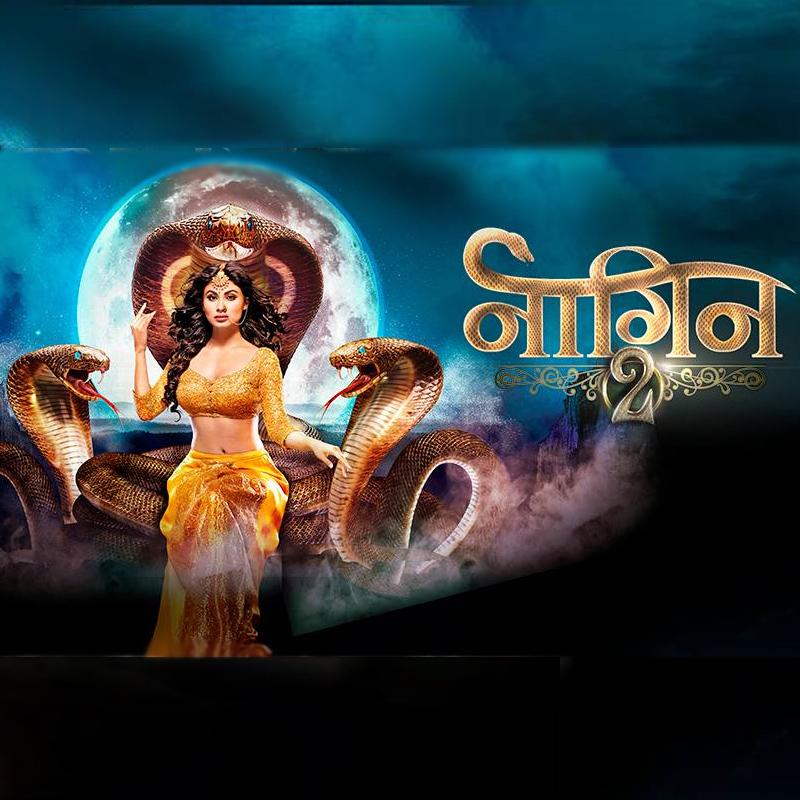
    Popular content from Hindi GECs is now being dubbed and shown on southern GECs. This phenomenon is seen across all southern states with the exception of Karnataka. Shows from leading channels such as Star Plus (Diya Aur Baati Hum. Siya Ke Ram. etc.), Colors (Naagin. Sasural Simar Ka, Balika Vadhu, etc.), Zee TV (Gangaa, Kumkum Bhagya, Ek Mutthi Aasman, etc.) and Sony (CID, Bade Achhe Lagte Hai, etc.), have been dubbed.

    Interestingly, in AP/Telangana market, none of the channels sees an increase in viewership for Hindi dubbed content. In the other two markets, viz. Kerala and TN/Pondicherry, Hindi dubbed content sees a mixed response with some channels seeing a higher viewership than the original content in regional language.

    In the Kerala market, the highest spike is seen by Asianet Plus. Similarly, in TN/Pondicherry market, maximum growth is seen by Polimer, where the viewership for Hindi dubbed content is more than double that of the original content. This is on the back of several popular shows.

    public://barc11.jpg


  • Which TV content grabs south India’s eyeballs?

    Which TV content grabs south India’s eyeballs?

    MUMBAI: When we talk about the television industry, everyone is aware that the Hindi-speaking market is vast. However, a significant part of the industry is concentrated in another part of India — the southern market. Its a highly influential market for advertisers.

    A recent newsletter released by the television ratings body Broadcast Audience Research Council (BARC) India ‘South Special Edition’ seeks to answer all the questions as to how the southern India is different from HSM w.r.t. important audience metrics? How southern states differ from each other in terms of programme theme preferences.

    Avg. Time Spent (ATS) vs Opportunity to See (OTS) and performance of product categories? How does the popular Hindi content dubbed in southern languages perform? And, most importantly, what the southern market watches on its television sets?

    As per the BARC study, south India has a lower share in the movies genre as compared to GEC. On the other hand, its share in GEC and news channels is higher than HSM. Also, within the regions, the relative ranking for most genres remains constant across HSM and South.

    public://barc3.jpg

    Surprisingly, programme themes and channel genres do not show the same trends across HSM and South. Serials, which are the staple of GEC channels (which saw the highest share in terms of channel genre), sees a drop in share for South as compared to the share for channel genre.

    Similarly, while movie channels are viewed lesser than HSM, in South, the trend is reversed when it comes to film-based programs i.e. South has a higher share compared to HSM.

    public://barc4.jpg

    The study also shows that South Indian viewership seems to begin earlier in the day than HSM and also end up earlier. South has a higher viewership than HSM only during  early morning hours (05:00-08:00).

    public://barc1.jpg

    Tile the gap between HSM and South reduces marginally during 18:00-21:00  hrs. South seems to have an earlier prime¬ time than HSM. It is clear that South and HSM do not have the same viewership trends.

    public://barc2.jpg

    BARC studies showed that the Southern Market shows the highest inclination towards film-based content followed by serials driven by AP/Telangana and Kerala, respectively. Kerala watches less movies as compared to other markets.

    public://barc5.jpg

    On the other hand, AP/Telangana watches less serials and more of news than other southern markets. In most of the markets, the most watched TV content is film-based followed by serials. Content based on music and tourism is the least popular in southern markets.

    How different are southern states in terms of rural and urban?

    The urban and rural viewership is comparable throughout the day with both seeing a peak during the prime-time. However, as opposed to the rest of the day, during prime-time hours, it is mainly the rural markets which seem to be driving the viewership and not urban markets.

    public://barc8.jpg

    When we look at states within urban and rural markets,  while rural markets have similar viewership trends across states, it is not the same case with urban markets. In urban markets, the viewership among markets differs between prime time hours and non-prime time hours. During non-prime time hours, AP/Telangana has a maximum viewership. After AP/Telangana, the maximum viewership alternates between TN/Pondicherry and Karnataka markets with Kerala having the lowest viewership for most day parts.

    public://barc9.jpg

    However, during prime time hours, this order is completely changed. Urban Karnataka has the maximum viewership post 21:00 hrs and this lead continues into late night  hours as well.

    What is interesting is that even among the rural markets, Karnataka displays similar behaviour with respect to prime time viewership. During late night  hours, Kerala, which is a relatively smaller market, sees the highest viewership.

    public://barc10.jpg

    Conversely, TN/Pondicherry, which is one of the bigger markets during non-primetime hours, shows the least viewership during prime time hours in both rural and urban markets.

    How is Hindi content dubbed in south languages performing?

    Popular content from Hindi GECs is now being dubbed and shown on southern GECs. This phenomenon is seen across all southern states with the exception of Karnataka. Shows from leading channels such as Star Plus (Diya Aur Baati Hum. Siya Ke Ram. etc.), Colors (Naagin. Sasural Simar Ka, Balika Vadhu, etc.), Zee TV (Gangaa, Kumkum Bhagya, Ek Mutthi Aasman, etc.) and Sony (CID, Bade Achhe Lagte Hai, etc.), have been dubbed.

    Interestingly, in AP/Telangana market, none of the channels sees an increase in viewership for Hindi dubbed content. In the other two markets, viz. Kerala and TN/Pondicherry, Hindi dubbed content sees a mixed response with some channels seeing a higher viewership than the original content in regional language.

    In the Kerala market, the highest spike is seen by Asianet Plus. Similarly, in TN/Pondicherry market, maximum growth is seen by Polimer, where the viewership for Hindi dubbed content is more than double that of the original content. This is on the back of several popular shows.

    public://barc11.jpg


  • Colors leads Hindi GEC; Zee Anmol regains in rural HSM

    Colors leads Hindi GEC; Zee Anmol regains in rural HSM

    MUMBAI: Colors continues to lead the Hindi GEC and Urban GEC markets whereas Zee Anmol regained its pole position this week. Backed by Super Dancer and The Kapil Sharma Show, Sony Entertainment Television maintained the third position in Urban HSM this week, according to Broadcast Audience Research Council (BARC)

    Hindi GEC

    Colors maintained its leadership position with 651395 Impressions (000s) followed by Star Plus on the second position with 627412 Impressions (000s). Zee TV has climbed up to the third spot with 468175 Impressions(000s). Zee Anmol retained its fifth position with 453971 Impressions (000s).

    Sony Pal fell to number five from number three this week and registered 452344 Impressions (000s) followed by Star Utsav on number six with 423923 (000s) and Sony Entertainment Television with 408526 Impressions (000s) stood at number seven.

    Sab TV bagged the eighth spot with 384296 Impressions (000s). Life OK maintained its ninth spot with 384296 Impressions (000s) while Rishtey dropped drastically to the tenth spot with 329705 Impressions (000s).

    Hindi GEC Rural

    Zee Anmol has made a comeback in the rural Hindi-speaking market and grabbed the leadership position with 348360 Impressions (000s) followed by Sony Pal with 331593 Impressions (000s) and Star Utsav on the third position with 324767 Impressions (000s). Rishtey stood at number four with 254621 Impressions (000s).

    Colors bagged the fifth spot with 209295 Impressions (000s). Star Plus stood at the sixth spot in Rural HSM with 204429 Impressions (000s) followed by Zee TV at number seven with 191762 Impressions (000s). Big Magic climbed one spot to reach eighth spot with 156836 Impressions (000s) and Sony Entertainment climbed up at nine with 130605 Impressions (000s) followed by Life OK with 128801(000s).

    Hindi GEC Urban

    Colors garnered the pole position again in Urban HSM with 442099 Impressions (000’s) followed by Star Plus on second with 422982 Impressions (000’s). Sony Entertainment Television maintained its third spot with 277921 Impressions (000s) and Zee TV stood at number four with 276412 Impressions (000s).

    Sony Sab was at the fifth spot with 265566 Impressions (000s). Life OK bagged the sixth spot with 235210 Impressions (000s) as &TV retained its number seven spot with 143986 Impressions (000s).

    Sony Pal, Zee Anmol and STAR Utsav grabbed the last three spots with 120751 Impressions (000s),105611 Impressions (000s) and 99155 Impressions (000s), respectively.

  • Colors leads Hindi GEC; Zee Anmol regains in rural HSM

    Colors leads Hindi GEC; Zee Anmol regains in rural HSM

    MUMBAI: Colors continues to lead the Hindi GEC and Urban GEC markets whereas Zee Anmol regained its pole position this week. Backed by Super Dancer and The Kapil Sharma Show, Sony Entertainment Television maintained the third position in Urban HSM this week, according to Broadcast Audience Research Council (BARC)

    Hindi GEC

    Colors maintained its leadership position with 651395 Impressions (000s) followed by Star Plus on the second position with 627412 Impressions (000s). Zee TV has climbed up to the third spot with 468175 Impressions(000s). Zee Anmol retained its fifth position with 453971 Impressions (000s).

    Sony Pal fell to number five from number three this week and registered 452344 Impressions (000s) followed by Star Utsav on number six with 423923 (000s) and Sony Entertainment Television with 408526 Impressions (000s) stood at number seven.

    Sab TV bagged the eighth spot with 384296 Impressions (000s). Life OK maintained its ninth spot with 384296 Impressions (000s) while Rishtey dropped drastically to the tenth spot with 329705 Impressions (000s).

    Hindi GEC Rural

    Zee Anmol has made a comeback in the rural Hindi-speaking market and grabbed the leadership position with 348360 Impressions (000s) followed by Sony Pal with 331593 Impressions (000s) and Star Utsav on the third position with 324767 Impressions (000s). Rishtey stood at number four with 254621 Impressions (000s).

    Colors bagged the fifth spot with 209295 Impressions (000s). Star Plus stood at the sixth spot in Rural HSM with 204429 Impressions (000s) followed by Zee TV at number seven with 191762 Impressions (000s). Big Magic climbed one spot to reach eighth spot with 156836 Impressions (000s) and Sony Entertainment climbed up at nine with 130605 Impressions (000s) followed by Life OK with 128801(000s).

    Hindi GEC Urban

    Colors garnered the pole position again in Urban HSM with 442099 Impressions (000’s) followed by Star Plus on second with 422982 Impressions (000’s). Sony Entertainment Television maintained its third spot with 277921 Impressions (000s) and Zee TV stood at number four with 276412 Impressions (000s).

    Sony Sab was at the fifth spot with 265566 Impressions (000s). Life OK bagged the sixth spot with 235210 Impressions (000s) as &TV retained its number seven spot with 143986 Impressions (000s).

    Sony Pal, Zee Anmol and STAR Utsav grabbed the last three spots with 120751 Impressions (000s),105611 Impressions (000s) and 99155 Impressions (000s), respectively.

  • BARC India suspends three errant channels’ review

    BARC India suspends three errant channels’ review

    MUMBAI: Broadcast Audience Research Council (BARC), the only television audience measurement body in India, has temporarily suspended the review of viewership of three news channels.

    An industry source confirmed the news to Indiantelevision.com that BARC has communicated to all the broadcasters that ratings for India News, TV9 Telegu and V6 News have been suspended owing to suspected mala fide practices. These news channels will not be seen in latest ratings as well.

    BARC India neither confirmed nor denied the information when Indiantelevision.com got in touch with the ratings agency.

    The weekly review of the three channels has been suspended for four weeks, and their review will not be published from the current BARC Week 46 to BARC Week 49.

    Contacted by Indiantelevision.com on the BARC India notice, V6 News CEO Ravi Ankam communicated through chief technical officer Kishore Kumar, “We ourselves are shocked at this. I’m sure there has been a mistake and we are talking about this with the BARC management. V6 News is known for its uniqueness in responsible journalism and is popular among the masses. V6 management would never depend on such unnecessary manipulation.”

    Bangalore-based TV 9 head of marketing (who is in-charge of the media department) Clifford Pereira chose not to receive calls from Indiantelevision.com. (BARC India’s ratings in Week-38 reiterated the undisputed dominance of Ravi Prakash’s TV 9 in Telugu news channel segment with 210.5 Gross Rating Point. )

    India News CEO Varun Kohli, via an email response, said, “We are shocked to hear this and are seized of the decision taken by BARC. We are trying to talk to all the stakeholders, including BARC, to resolve the matter and address any misgivings. We are confident that the matter will be sorted out soon. We are a credible network in the broadcasting business for the last eight years and have shown consistent growth for the last five years in TAM and BARC ratings. We believe in the transparency of the system and intend getting to the bottom of the matter and exploring all options available to us.”

    ITV Media Network managing director Kartikeya Sharma chose not to speak on this issue. Someone else picked up his mobile phone when Indiantelevision.com dialled him, excused himself, and never got back when asked to react to the development related to BARC.

    It may be recalled that, in October, BARC India and Kerala TV Federation (KTF) had filed a joint police complaint with the director-general of Kerala Police after receiving complaints regarding attempts to retrieve addresses of BARC India panel homes and alleged efforts made to influence viewing trends.

    The basis of the police complaint was BARC India vigilance team’s collation of conclusive evidence of more than one effort to tamper with BARC’s audience measurement system in favour of a couple of channels. Preliminary scrutiny by on-ground vigilance team confirmed that attempts were made by some individuals to not only find out addresses of BARC India panel homes but also to incentivise them and influence their viewership patterns.

    BARC’s predecessor TAM India too had been plagued with allegations of such manipulations. In the late 1990s and early 2000s even a list of TAM India meter homes were circulated to media houses hinting that the measurement was not foolproof.

    Learning from such lapses, BARC during its formative stages, undertook measures such as resorting to water-marking technology to plug loopholes.