Tag: Broadcast Asia

  • Broadcast Asia 2025 brings the heat to Singapore with AI, cloud and channel chaos control

    Broadcast Asia 2025 brings the heat to Singapore with AI, cloud and channel chaos control

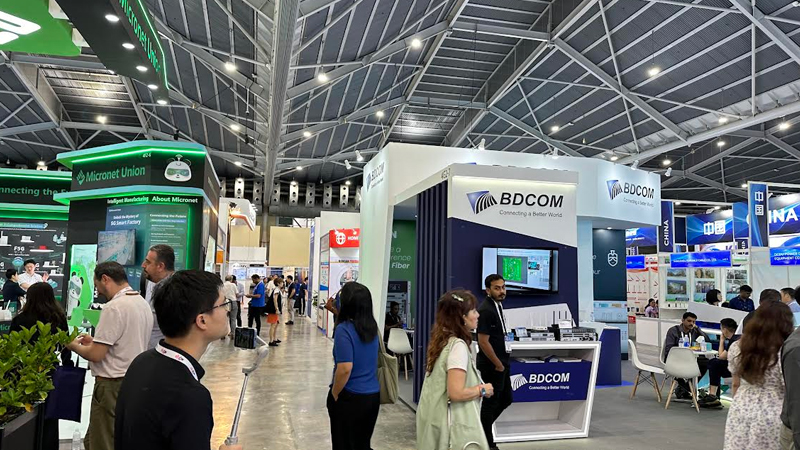
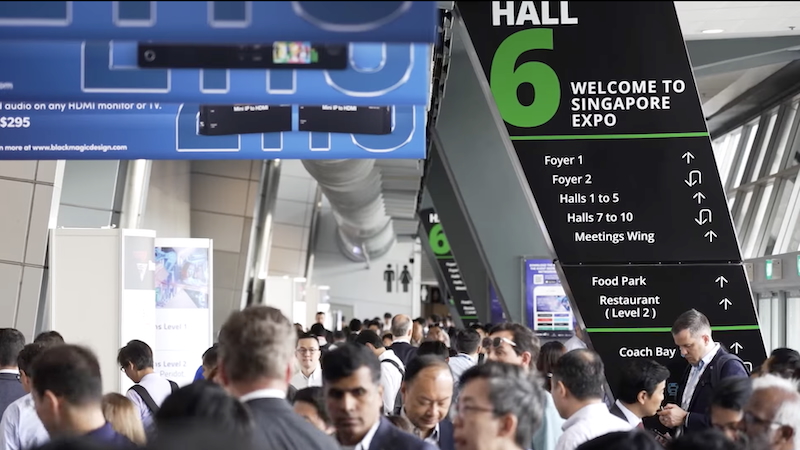
    SINGAPORE: The lights are on, the mics are hot, and the future of broadcasting is rolling live from the Singapore Expo as Broadcast Asia 2025 kicks off from 27–29 May. Touted as Asia’s answer to IBC and NAB, the event expects close to 10,000 visitors and will be the centre stage for the latest in AI-driven tech, streaming disruption, and next-gen media delivery.

    Topping the charts is PlayBox Neo, making noise at booth 5A2-5 with its award-winning PlayBox Neo Suite. The modular solution bundles AirBox, Ingest, Media Gateway and the flagship Channel-in-a-Box, offering seamless playout, scheduling, graphics, and centralised control.

     “We’re redefining what ‘channel-ready’ means,” said Desmon Goh, md Asia-Pacific.
     CEO Pavlin Rahnev added, “From terrestrial to OTT, we power it all — stable, scalable, and smart.”

    Not far behind is Veset, the cloud playout powerhouse. Its Nimbus platform is currently being used to migrate ten channels of Telekom Malaysia to AWS. Meanwhile, its JPEG XS + Multicast integration and the AdWise contextual ad solution are pushing the envelope for live TV workflows and viewer-friendly monetisation.

    Bitmovin is bringing developer cred to the floor with fresh insights from its 8th Annual Video Developer Report. Expect new features like SSAI Analytics and Real-Time Observability, plus a tie-up with Ad Insertion Platform. It’s already powering Japan’s public sector via Akamai Cloud and partnering with 24i to serve Revry’s advanced ad formats.

    Accedo is flexing its streaming smarts with the newly minted One Design Studio, XR consultancy upgrades, and a new partnership with FloSports. With clients from Paramount to Tata Play, it’s all about boosting UX across screens.

    CDNetworks is delivering the goods at booth 5J3-1, offering media delivery that’s fast, secure, and globally scalable. Neighbouring partner The Northern Alliance is showcasing everything from Ecreso FM AiO Series transmitters to the Audemat MC6 — the Swiss Army knife for FM & DAB measurement.

    Meanwhile, TSL (on booth 5D1-1) is serving serious control-room swagger: think software-driven control, market-leading audio monitoring units, and intelligent power distribution. Their recent role in helping Sony Pictures Networks India nab Tier 4 certification is earning applause.

    Strawberry (yes, that’s the name) is sweetening post-production with its Skies platform. Real-time teamwork, cloud-on-prem integration, and an exclusive €100/month pilot offer make it a tempting pick for creative teams tired of workflow gridlock.

    Broadpeak is serving adtech with bite — personalised SSAI, Click2® formats, and mABR-powered EdgePeak™ to scale streaming without breaking the bank. MediaPrima and K+ are already on board.

    SES is taking it to the skies at booth 4B3-1 with demos on multi-orbit orchestration, satellite case studies, and a clear mission: deliver performance and reliability, wherever your broadcast ambitions lie.

    Elsewhere, Actus Digital is showcasing its all-in-one Intelligent Monitoring Platform, Cobalt Digital is flaunting IPMX-compliant gear at booth 5F1-1, AxelTech is revealing updates to its XRadio automation system, and Magna Systems is hosting a flurry of action with its stacked stand.

    Broadcast Asia 2025, part of Asia Tech x Singapore, remains the crown jewel for broadcasters, creators, and tech providers across the region. Whether it’s cloud-native control, AI in playout, or rethinking ad delivery, Singapore is where the future of media gets its next big upgrade — no buffering required.

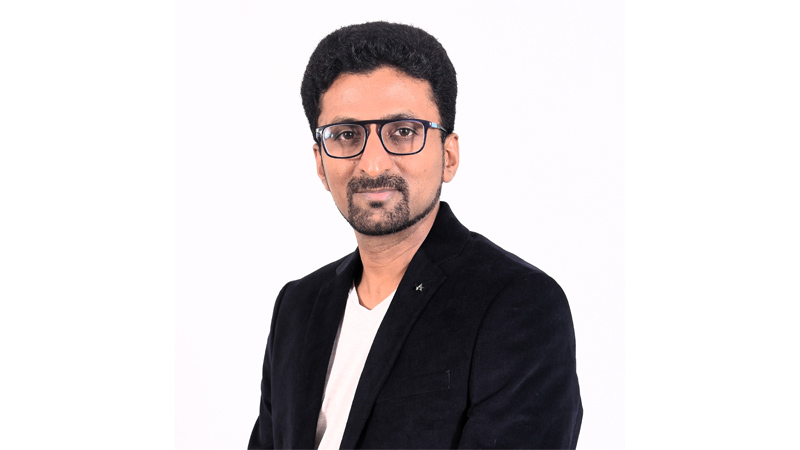
  • “AI is poised to revolutionise video editing and visual effects:” Workflowlabs’ Sunil Gangappa

    “AI is poised to revolutionise video editing and visual effects:” Workflowlabs’ Sunil Gangappa

    Mumbai: In the dynamic world of media and entertainment, staying ahead means embracing cutting-edge technology. Workflowlabs, with its expert engineering team boasting decades of experience, leads the way in innovation. Their solutions are designed to tackle the unique challenges of the industry, offering products like the Fusion Asset Management System for seamless media organization, Nitro Video Servers for top-tier video performance, Newsflow Media Gathering System for efficient news production, and the versatile Cobalt Transcoder for flawless media conversion. Workflow Labs is redefining productivity and efficiency, ensuring media professionals can deliver exceptional content with ease.

    Indiantelevision.com in conversation with Workflowlabs co-founder Sunil Gangappa delved into a range of discussions from their experience at CabSat Dubai and Broadcast Asia to the evolving needs of Indian broadcasters and more…

    Edited Excerpts:

    On your experience at CabSat Dubai and Broadcast Asia in Singapore this year

    At Cabsat and Broadcast Asia, Workflow labs garnered significant interest from visitors. The standout feature was the Workflowlabs Fusion AI module, which accelerates automated media enrichment. Its seamless integration and efficiency captivated attendees, making it a highlight of the event.

    On Workflow Labs, including its various offerings for the media and entertainment ecosystem, the factors behind its success, and the reactions of global majors to this success.

    Workflowlabs has rapidly gained traction, serving customers across multiple countries in South East Asia and the MENA region. Our success is attributed to our comprehensive media lifecycle management, which covers ingest, automation, media management, and archival processes.

    By providing end-to-end solutions, Workflowlabs ensures seamless handling of media content from acquisition to preservation. Our commitment to excellence and efficiency resonates with clients, making us a trusted partner in the industry.

    On the major advancements that you see in technology for the media & entertainment ecosystem in the next three years

    The convergence of AI, machine learning, and cloud technologies is set to revolutionise the media industry. This pivotal moment represents a significant shift in overall technology, and Workflowlabs is thrilled to be at the forefront of this transformation.

    Our commitment lies in embracing AI within our solutions. By harnessing the power of artificial intelligence, we aim to deliver cutting-edge solutions that optimize every facet of media management. From content ingest to seamless automation, intelligent media management, and efficient archival processes, Workflowlabs is dedicated to elevating industry standards.

    On the other applications that you have seen or predicted could be automated with AI in the media & entertainment industry, with generative AI, AI dubbing, AI anchors making rounds in the media & entertainment ecosystem

    AI is poised to revolutionise video editing and visual effects. In the past, artists’ creativity was constrained by technology, but now, with AI, they can bring their exact visions to life.

    On the evolving needs of Indian broadcasters, particularly in news and live sports workflows, and the ways you are meeting those demands

    In the past, advertisements were primarily limited to linear TV. However, with the rise of OTT platforms and web applications, television now offers multiple avenues for content monetisation. Workflowlabs provides an extensive ad replacement solution that caters to these evolving needs.

    On the challenges that you see the media & entertainment industry faces and how can your company help overcome those challenges

    The exponential growth in media content production, coupled with the escalating risk of malware attacks, presents significant challenges in managing and securing media assets. Workflowlabs aims to be a leader in media management and archival solutions, placing a strong emphasis on security.

  • BroadcastAsia 2024 gets mixed reviews

    BroadcastAsia 2024 gets mixed reviews

    Mumbai: Was Broadcast Asia, Communicasia or Asiatch x Singapore– the annual confab of the content technology industry which was held from 29-31 May  in the Singapore Expo – a great success? The jury is out as the reviews were mixed from those attending – right from it being a fabulous event to it being  slow.

    For starters, there were four halls – Halls 3,4,5,6. But they were not packed with booths; there were empty areas in which table top games were placed. Stands too seemed to have shrunk with exhibitors veering towards caution during a touch year financially. AWS was conspicuous by its absence in the large format stand that we were used to, though it had chosen to be a sponsor of one of the conference tracks. The innovation zone did not seem to have too many innovative ideas, with small pods and students exhibiting their professor’s or their own inventions for start ups.

    The conferences too did not have a full house, with some being half full or even less, though tracks focused on generative AI, the space satellite segment, fast channels et al.

    For those who chose to exhibit and be a part of it, there were networking opportunites, and even better still, prospects of new clients. The tidings are looking good, said many an exhibitor.

    “We are seeing green shoots,” said one of the exhibitors, unwilling to be identified. “Hopefully, the market for hardware and software services sector targeted at content creation should pick up in the next three to four months.”

    For the new tech seekers, there were hardly any major announcements of new products and services. For that, it will be over to IBC in September.

  • Blackmagic Design makes presence felt at Broadcast Asia

    Blackmagic Design makes presence felt at Broadcast Asia

    MUMBAI: It’s that time of the year again – where the leaders of the industry present the newest and most innovative technologies for film, television and digital advertising under one roof. It’s Broadcast Asia time. All the world’s leading broadcasters have descended on Singapore to keep pace with technology that can help them improve their processes, quality and output.

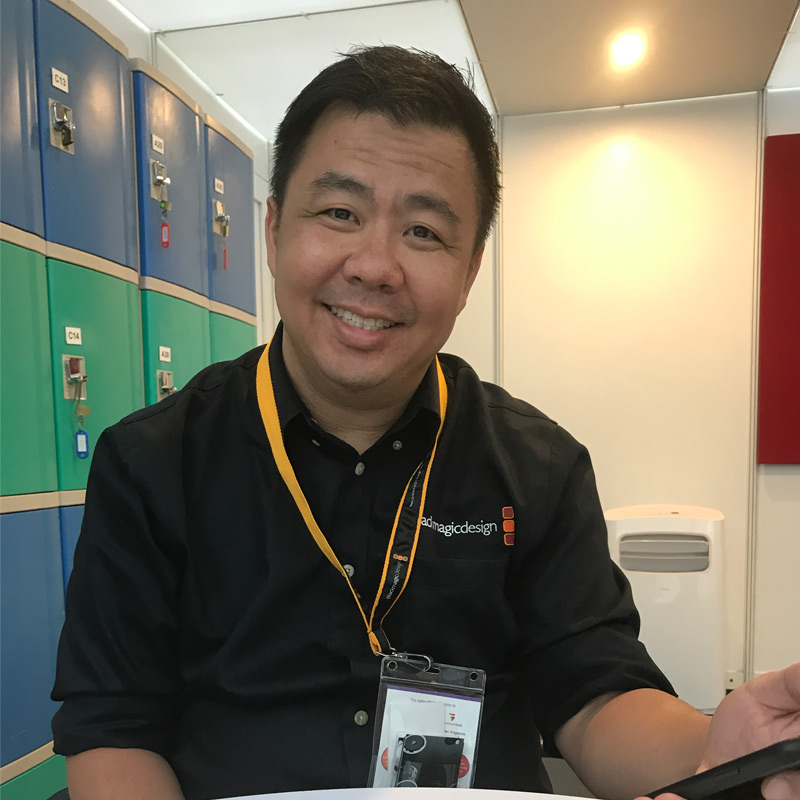
    One of the companies that has made its presence felt at the event is Blackmagic Design, a leading innovator and manufacturer of creative video technology. Blackmagic has created some of the most talked about products in the industry like codecs, professional cameras, Cintel Scanner among others. In order to gain a better perspective on and understanding of the Blackmagic software and hardware, Indiantelevision.com caught up with Blackmagic designs director Richard Lim at the event, excerpts follows.  

    You were saying that you have over 200 products, cameras and other equipments. Tell us more about it? 

    We established ourselves initially as a video capture company I/O card company for post production and since then after several acquisitions of companies, we have now become a full-fledged end-to-end solutions (provider) where we provide equipment and technology for different industries. This could be education, audiovisual, broadcast, production, post production, military, hospitality, simulation – all sorts of industry use our product as long as they need to work with video content, transport video content y,, (switch)  around video content, record video content, post produce video content and we should have technology and products that helps them. By end-to-end we mean that now it is possible to establish an entire facility workflow based on Blackmagic design products and technology. I think thats not one company in the industry that can do it except for us. 

    Basically you work as System Integrator (SI)?

    SI will be our customer, we provide all this to people who actually put together systems and they will serve maybe Doordarshan and Zee TV or any other platform requiring our services.

    Who have been your customer so far on the broadcast side?

    Almost all the tv stations, they are adopting more and more products, Nowadays, you see tv channels setting up faster in India, especially away from first tier cities. Mushrooms of local channels, most of these channels are using our products, mainly because our products are cost effective and reliable and we use the latest technology as well , so they do not suffer a loss of quality and yet they can do the same as any other big tv stations. We are working with traditional and new broadcasters.

    Can you name some broadcasters who are buying your products?

    Zee TV and Doordarshan are using our products. We have two guys is India one for tech and other for sales. Both are based out of Delhi but they are always on the move. We serve India through two distributors, one for the south and other for the west and north west region for the last two years. Most of the times you find that two distributors in a country are enemies of each other but not for us.

    But why would the companies working in North west and south be enemies?

    Because broadcasters don’t do business in one state, they will do project across states which usually tends to cause conflicts of interest. But our guys are collaborating with each other very well.  We also cater to the film making industry as they are kind of costumers who focus on one range of products and cameras.

    Which camera models are doing well for you?

    We have the Blackmagic Ursa Mini Pro, our flagship product for filmmaking. If you pick any of our cameras, it is good enough to make a cinematic movie, yet it is cost effective for you to own the product and technology. The company believes in empowering creativity by democratising technology, so you can own the technology and not rent it. Arri owners mostly rent their cameras. Ditto with Red. The sticker price is way beyond the reach of filmmakers which makes ownership challenging.

    What is your customer base in India?

    We haven’t really counted that but we have a healthy unique sale in India. I will fairly say that we have the most filmmaking cameras in India owned by people not by rental companies. Rental companies don’t like us. Because they cannot make money out of us,. In India, we have customers who don’t maintain equipment and they always cite environment as the culprit. But we also have customers who manage to take care of the equipment very well because they understand the environmental issues. Generally, we have experienced double digit growth in India for many years.

    Which area is stronger for you in India? Is it the north or southern market?

    Generally, the north has always been doing better, but actually not so from the last couple of years. For the last couple of years, the south is doing well for now..

    So is the east is going to explode now for you?

    Yes, absolutely! If you consider the growth rate between India and other south east Asian markets like China and Korea, India is a bit slower but it is getting there. The volume in China is multiple of India. The per capita income in India is far less than China and Korea as people here still have their basic needs to fulfil. 

    Why are your products so expensive in India as compared to Singapore?

    The difference is due to the import duties. Now with the GST rollout, things will become better. Our margins are already negligible. 35 per cent of our prices includes duties and taxes which we pay to the government. The duties are more than margins. We have really done our best to keep the prices as competitive as possible but the fixed rate of the duties makes buying from Singapore more attractive for an average Indian.

    Have you done any end-to-end solutions in the last six years? From pre-production to proaction to post-production?

    Usually we have customers who want to build a studio – like a three camera set up with acquisition (camera system), monitoring (display ssytems), recording, switching, storage, streaming. We have customers who say I am a rental company – I do concerts, I do shows, I do weddings, so we provide them with the whole system for that too. But lately, we are also seeing some post production companies who don’t want to concentrate only on post production but want to work with  ad agencies as well. They usually want to shoot commercials,  music videos, and do postproduction for you as well. . Our products are well equipped to do that as well. Some of our technology users are now moving towards extending more services. Now, if I am an advertising agency, I don’t need to go to several people for a video but I can directly go to an Prasad or  Prime Focus and ask them to shoot something, do post production and distribute it for me.

    Which  products are giving you volumes and value in India?

    As far as our products go, if you would look at  the footprint they have, then our no 1 product is video I/O cards, because we have been selling them for 16 years and they continue to be our bread and butter. We sell a lot of cards to India. of our productsOur cards are the highest sellers for us in India; we have been in cards for 16 years. 

    Convertors are also the bread and butter products which is not very expensive and we sell a lot of them. Displays are also doing well. Also in the last four years has been to make make DaVinci resolve – our color correction and editing tool – more affordable to consumers. At one time, daVinci used to cost $500,000, today it is in the hundreds of dollars only for the full version, whereas the free version has 80 per cent functionality. 

    It’s difficult to tell you which really is our best seller because they are all evenly spread out in terms of customers. 

    How do you market the brand across customers in India? Do you attend trade shows?

    In India, we only attend Broadcast India, but our partners attend local shows. As a company, we do a lot of workshops with our distributors. This year we did two series of workshops for our cameras. Our distributors go and visit the end customers and do various workshops and visits to customers. 

    What about 4K offtake in India… 

    We are probably one of the few companies who have pushed 4K work right from the start. Most of our products are 4K enabled, but priced as HD. The advantage for us in pushing 4K work for last four years is that our staff and our resller channels are fairly familiar with 4K requirements.

    What is the way forward for Blackmagic Design? Do you see more acquisitions happening?

    If we have to look at acquisitions, it has to be the technology that can make the company stronger. We are always on the look out for a good acquisition opportunity. 

    The company was created by three people and we fund it  ourselves from internal accruals. It  started 18 years ago from scratch and it has grown tremendously ever since. The revenue funds the expense of the company and we have good margins. We are a medium sized global company. We  like to focus more on our technology and products to make them  accessible for average consumers – the average creative guy who wants to make great content.

  • The more or less challenge – the role of outsourcing

    The more or less challenge – the role of outsourcing

     SINGAPORE: With the broadcast industry rapidly going digital, broadcasters need to provide new services on their existing cost bases to achieve operational efficiencies to drive in business changes.

    So, besides other seminars on going digital, the third day’s afternoon session at Broadcast Asia focused on how broadcasters need to focus on their core competencies by outsourcing in other areas.

    Some of the important issues that were raised included – why outsourcing is relevant to the broadcast industry and what benefits it can bring. And most importantly what are some of the ways in which outsourcing can be delivered.

    Throwing light on the rapidly accelerating changes in the broadcast industry, Siemens Business Services Media head Saleha Williams said, “Broadcasters have to grow out of their traditional operating models which are no longer working, because of rapid technological changes and business models. Outsourcing can also save us from various revenue pressures which have come in with lots of competition with more platforms, audience fragmentation and increasing churn and new advertising models.”
    The seminar brought out five core elements to the technology change

    o Broadband

    o Mobile

    o PVR

    o HDTV

    o Increasing competition from gaming and other forms of non broadcast entertainment

    Some of the regulatory-led change are:

    o Digital broadcasting (analogue switch off)

    o Deregulation

    Willaims gave out some pointers on how outsourcing can help broadcasters

    o Outsourcing in broadcast markets as much about innovation as cost savings.

    o Solving new problems, such as distribution to emerging platforms.

    o Outsourcers act as a catalyst, enabling broadcasters to transform ways of working. At heart of every outsourcing relationship.

    o Economies of scale, improved operational effectiveness and off shoring.

    o Typically savings of 20-30%, but depends totally on the nature of the service.

    Williams also listed out some of the benefits achieved by outsourcing other parts of the world.

    o Outsourcing in broadcast markets as much about innovation as cost savings.

    o Solving new problems, such as distribution to emerging platforms.

    o Outsourcers act as a catalyst, enabling broadcasters to transform ways of working.

    · Significant technology investment needed to compete in changing broadcast market.

    o Outsourcers can help broadcasters smooth their investment profile.

    o Pay an annual charge i.e. from capex to opex.

    o Outsourcers and their partners provide greater specialisation.

    o Apply learning from working with other broadcast organisations.

    o Sometimes easier to measure and incentivise services provided externally.

    o At heart of every outsourcing relationship .Economies of scale, improved operational effectiveness and off shoring.

    o Typically savings of 20-30%, but depends totally on the nature of the service.

    o Allows broadcaster to concentrate more effectively on its business strategy.

    o Reduces the level of management attention required for non core activities.

    o Hands problem over to a third party.

    · Driven by cost savings and risk transfer / reduction.

    · Embeds outsource provider in broadcaster’s organisation.

    o Provides transformational change.

    o Driven by risk sharing / reduction and cost savings.

    o Flexibility

    Three Principal Issues

    o Not understood initial cost base or level of savings achievable in house

    o Not factored all costs into deal e.g. transition, management and termination

    o Maintain outsourced services in house (pay twice over)

    o Efficiencies change over time i.e. cost efficient process in 2006 may be an expensive one by 2010

    Reasons and Observations

    o Both actual falls and perception that service levels have fallen are important

    o Broadcaster culture – problems need solving at once even if not “on air”

    o Require realistic service levels to be agreed and communicated to all users

    o Broadcaster and outsourcer need to understand each other’s business drivers

    o Need to protect competitive strengths and strategic identity. For instance, a company outsourcing technology may decide to keep enough of its technology strategists in house to be in control of its technology vision.