Tag: broadband

  • Broadband optical fiber access solution to be launched for cable ops by Alcatel-Lucent

    Broadband optical fiber access solution to be launched for cable ops by Alcatel-Lucent

    NEW DELHI: A new broadband optical fiber access solution is being launched soon by Alcatel-Lucent for cable multiple-system operators (MSOs).

    The Ethernet Passive Optical Networking (EPON), solution can be integrated into existing cable access networks to deliver greater capacity to more businesses at a lower cost. This will enable MSOs, particularly those in North America, to expand their service offerings to meet the growing data bandwidth needs of businesses.

    Bright House Networks, the sixth largest owner and operator of cable systems in the US has selected Alcatel-Lucent’s EPON solution for its commercial services network, Alcatel-Lucent said in a statement.

    “Compared with competing alternatives, EPON has clear advantages in capital efficiency, vendor interoperability, bandwidth scalability and standardised provisioning,” said Bright House Networks, Network Engineering/Operations & Enterprise Solutions – SVP Craig Cowden.

    North American businesses are estimated to spend over $140 billion per year in total on communications services, yet MSOs are currently only capturing a small percentage of this market.

    “The business communications market segment is growing rapidly and cable operators in North America have a real opportunity to address it,” said Alcatel-Lucent Fixed Networks head Federico Guillen.

    Revenue from fixed broadband services providing connections between 100 megabits-per-second (100Mbps) and 1 gigabit-per-second (1Gbps) is predicted to more than double between 2013 and 2017.

    Alcatel-Lucent’s EPON solution for MSOs is based on the highest capacity fiber platform on the market – the Alcatel-Lucent 7360 ISAM FX with 1G EPON and 10G EPON linecards.

    The solution supports DOCSIS provisioning of EPON (DPoE), EPON Small Form-factor Pluggable (SFP) Optical Network Units (ONU), and a 10G EPON ONU. This enables it to integrate smoothly with existing networks, provisioning systems, and customer premises equipment, allowing MSOs to provision new services.

    EPON delivers more bandwidth (up to 1G or 10G upload and download speeds) than today’s DOCSIS networks and supports three to four times the number of customers per fiber as existing point-to-point coarse wavelength division multiplexing (CWDM) solutions.

  • Broadband base up in July, with monthly growth at rate of 0.33%

    Broadband base up in July, with monthly growth at rate of 0.33%

    NEW DELHI: The total Broadband subscriber base in the country has increased from 15.19 million at the end of June 2013 to 15.24 million at the end of July 2013. This is a monthly growth of 0.33 per cent. The yearly growth in broadband subscribers is 3.79 per cent during the last one year (July 2012 to July 2013).

    The top five internet service providers in terms of market share (based on subscriber base) are: BSNL (9.97 million), Bharti Airtel (1.43 million), MTNL (1.10 million), Hathway (0.37 million) and You Broadband (0.32 million).

    According to the latest telecom subscription data as on 31 July 2013 released by the Telecom Regulatory Authority of India, there are 161 internet service providers (ISPs) which are providing broadband services in the country. Out of these, 121 ISPs (having 98.48 per cent market share) have provided broadband subscription data for the month of July 2013, for the rest of the ISPs data from previous month has been retained.

    Meanwhile, Indian rural telecom has faced downturn – despite service providers’ special packages – as mobile user base declined by two million in July 2013. TRAI said net mobile additions declined 0.57 per cent or by 2 million to 349.09 million from 351.10 million in June.

    In July – according to TRAI data – Indian urban mobile user base increased by 3.52 million or 0.67 per cent to 525.78 million from 522.27 million in June.

    The share of urban wireless subscribers has increased from 59.80 per cent to 60.10 per cent whereas share of rural wireless subscribers has decreased from 40.20 per cent to 39.90 per cent.

    TRAI statistics says total wireless subscriber base increased from 873.36 million in June to 874.88 million in July 2013, registering a monthly growth of 0.17 per cent. The overall wireless Teledensity in India has reached 71.13 per cent in July from 71.08 per cent of previous month. Wireless subscription in urban areas increased to 525.78 million in July.

    The urban wireless teledensity has increased from 139.16 to 139.87 whereas rural teledensity has decreased from 41.14 per cent to 40.88 per cent.

    Wireline subscriber base declined from 29.73 million in June 2013 to 29.58 million in July. The net reduction in wireline subscriber base was 0.15 million at the rate of 0.50 per cent.

    The share of urban subscribers has decreased from 78.11 per cent to 78.0 per cent whereas share of rural subscribers has increased from 21.89 per cent to 22.0 per cent. The overall wireline Teledensity has decreased from 2.42 per cent in June 2013 to 2.40 per cent in July 2013, with urban and rural Teledensity being 6.14 per cent and 0.76 per cent respectively.

    BSNL and MTNL, the two PSU operators hold 78.65 per cent of the Wireline market share.

  • Hathway Broadband launches Docsis 3.0 Ultra High speed network

    Hathway Broadband launches Docsis 3.0 Ultra High speed network

    MUMBAI: Hathway Cable and Datacom, the largest cable broadband company in India, has launched the Docsis 3.0 ultra High speed network. Docsis 3.0 is a widely deployed technology and is the dominant technology powering leading Broadband markets like USA, Korea and Europe. Docsis 3.0 is capable of delivering speeds upto 1 Gigabit.

    We are the first Company to launch a Docsis 3.0 network in the country,” said Hathway Cable & Datacom MD & CEO Jagdish Kumar. “With our Docsis 3.0 network supplied by Cisco we are ready to deliver Ultra High Speed Broadband upto 50 Mbps to every retail customer in South Mumbai. We see Broadband as a key part of our business portfolio and we will soon be launching the Docsis 3.0 networks in other parts of the country. We are enabling our network for delivering a superior HD video experience on our Cable TV as well as on Broadband.”

    Hathway Broadband business head Kunal Ramteke added, “True High speed retail Broadband delivered on Docsis 3.0 will be a game changer in the market. In today’s video led internet consumption these speeds are absolutely vital for a superior consumer experience. The south Mumbai customers will be able to enjoy YouTube in HD and lightning fast responses in internet gaming. TV is also being consumed across multiple screens. With our new Docsis 3.0 plans starting at Rs 599 you will not break the bank to start enjoying these benefits.”

    Cisco service provider software solutions VP – sales Sue Taylor said, “Cisco is excited to be playing a crucial role in shaping this industry and leading it to a transformative stage with technology. Hathway has been a pioneer in its willingness to adopt technology that benefits its subscribers and we congratulate them on this important milestone.”

    To cater to this demanding high speed segment, Hathway will also be launching a dedicated Service Desk exclusively for the Docsis 3.0 customers. These desks will have fully trained staff to handle any service requirements pertaining to High speed internet access through multiple devices. Hathway is also geared to deliver 99.9 per cent network availability and service issue resolution within 24 hours recognising the criticality of a high speed connection in the connected world of today.

    Hathway Docsis 3.0 plans start from monthly Rs 599 and go upto Rs 1499 for the 50 Mbps plan which offers 50 GB of download data.
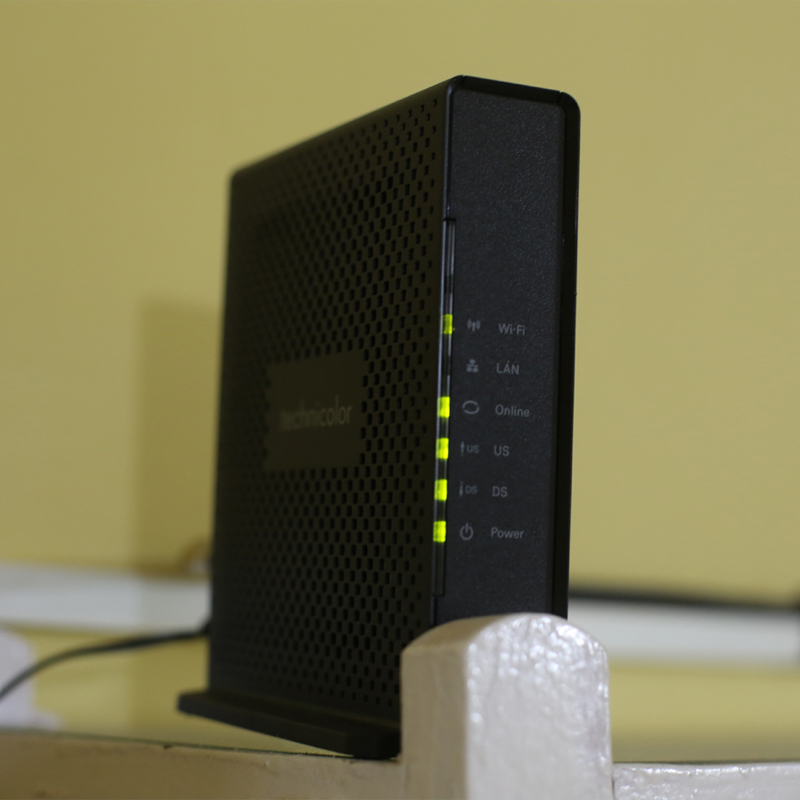
    The network is initially being deployed in south Mumbai and has been extensively tested. All existing and new customers of Hathway Broadband in south Mumbai can upgrade to the Docsis 3.0 plans. The customers will be provided a Docsis 3.0 Modem by Hathway which will be capable of supporting the Ultra High Speed Plans.

  • DEN Networks appoints Yugal Kishore Sharma as president, Broadband

    MUMBAI: Broadband and value added services are expected to be manna for india‘s rapidly digitising cable TV sector. And showing its intent to stash away some of the god sent food from heaven is Delhi-Headquartered MSO DEN Networks. It today announced the appointment of telecom vet Yugal Kishore Sharma as president, broadband to spearhead its foray into broadband internet services. Yugal will be reporting directly to DEN CEO S.N. Sharma.

    Yugal joins DEN from Tikona Digital Networks, a wireless broadband company with a 4G licence where he was the COO. Prior to Tikona, he has worked with Polycom Inc. as regional director – India and southeast Asia. He has previously been associated with leading Indian and global firms like TATA Telecom, SIEMENS India, LG Electronics and PARSEC Technologies.
     

    Yugal brings with him his vast experience in the field of Consumer Technology. He has handled product businesses like Mobile Phones, VoIP CPEs, Wi-Fi, DECT, Bluetooth, Video endpoints and enterprise solutions such as Unified Communications (UC), Video-Collaboration (VC) & Tele-Presence.


    Commenting on the appointment, DEN Networks chairman and MD Sameer Manchanda said, “We are delighted to welcome Yugal to the DEN team. Following the unprecedented success of digitisation with addressability, the focus for our industry now expands to providing true high speed broadband services and bundled double and triple play offerings to consumers. High bandwidth wired broadband is the next game changer for India and has the potential to revolutionise both media and communications industries in the country.”


    Yugal brings with him his vast experience in the field of Consumer Technology

    DEN Networks CEO S.N. Sharma said, “It is our pleasure to have a seasoned broadband professional like Yugal at the helm of the broadband vertical. DEN has been gearing up for its broadband foray over the last few months. We have already carried out proof of concept tests on DOCSIS 3.0 platforms and achieved speeds of 100 Mbps in controlled conditions which is far higher than what most broadband platforms are able to offer today. We now plan to take broadband across our digital subscriber base and offer consumers an unbeatable high speed data experience.”


    DEN’s expertise in cable television coupled with its strong nationwide presence in an estimated 13 million homes and with five million digital cable subscribers provides it a strong platform to rapidly grow its broadband services. With the vision of offering double and triple play services to its subscribers, DEN has been investing heavily over the last few years to build a large fibre optic backbone through a combination of owned and leased fibre. Moreover, the existing cable going into the consumer home for digital cable TV is versatile enough to also provide high speed broadband giving the Company massive operating leverage for quick of deployment of its internet service.

  • Manthan’s Rs 120 crore SMS deal with IBM

    KOLKATA: As part of its ambitious plan to install nearly 3,000,000 set top boxes in the eastern region by end-2014, Kolkata-headquartered cable TV multi-system operator (MSO) Manthan Broadband Services has inked a long-term contract with IBM India for the maintenance of its subscriber management system (SMS).


    Sources close to the deal peg its value at approximately Rs 120 crore where IBM has been developing the software for Manthan’s SMS for the past one and a half years.


    Indiantelevision.com has learnt that apart from IBM, firms like Magna Quest and Ericsson were also part of the race to win the coveted 10-year contract with Manthan.


    When contacted, Manthan director Sudip Ghosh confirmed the news and said: “The system will enable subscribers to exercise their choice of services and budget their bills accordingly. It will also help us manage their accounting and billing of services rendered more effectively in the long term.”


    The investment would ensure the best infrastructure including network, encryption, ERP, SMS and call centre, Ghosh said.


    An IBM official too concurred: “We are offering a lot of solutions to the company. Yes, we have signed the deal.”


    deally, the Digital Addressable Cable TV System (DAS) requires all MSOs to establish a SMS where details of subscribers, including their choice of services like channels and bouquets are maintained. In reality however, many MSOs were not implementing this feature effectively. Also, local cable operators (LCOs) were not providing completed subscriber application forms to their linked MSOs. Reason why the Telecom and Regulatory Authority of India (TRAI) directed all registered MSOs and their associated LCOs to ensure SMS was made fully operational. “This would bring in addressability and consequently, complete transparency in the whole system,” opined several cable and entertainment analysts.


    Manthan, created back in 2002 through a merger of the operations of nine cable TV operators, today caters to 30 lakh households in the east. The MSO has penetration in areas like Kolkata, Howrah, Hooghly, Baraipur and Chandannagar among others.

  • BSNL continues to top the list of ISPs in country with share of over 60%

    BSNL continues to top the list of ISPs in country with share of over 60%

    NEW DELHI: The Bharat Sanchar Nigam Limited (BSNL) continues to top the list of broadband service providers in the country with a market share of 60.74 per cent in the first quarter of 2013.

    The state-run BSNL has 13.12 million internet subscribers at the end of March 2013, according to the report for the first quarter by the Telecom Regulatory Authority of India (TRAI).

    Reliance Communications is the second highest provider with 2.49 million internet users followed by MTNL with 1.96 million.

    TRAI says the total number of internet subscribers including internet access by wireless phone subscribers at the end of March 2013 was 164.81 million. This telecom statistics does not include internet accessed by mobile phones

    There were 21.61 million internet subscribers excluding those subscribers accessing internet through wireless phone at the end of March 2013 as compared to 21.57 million at the end of December 2012, registering a quarterly growth of 0.16 per cent.

    In the internet subscription (excluding internet access through wireless phone), the share of broadband is 69.65 per cent and share of narrowband subscription is 30.35 per cent at the end of March 2013.

    TRAI says the number of broadband subscribers increased from 14.98 million at the end of December 2012 to 15.05 million at the end of March 2013, registering a quarterly growth of 0.45 percent and year-on-year growth of 8.98 percent.

    The number of narrowband subscribers decreased from 6.59 million to 6.56 million.

  • 18-34 year olds in the US becoming ‘broadbanders’: Pivot Study

    18-34 year olds in the US becoming ‘broadbanders’: Pivot Study

    MUMBAI: Pivot, which is Participant Media‘s new cable network, launching in over 40 million homes in the US on 1 August 2013 has released its first annual Industry Report about millennials‘ consumption of TV content.

    Among broadband subscribers 18-34 years old, 13 per cent (8.6 Million) are currently broadband-only customers. 27 per cent (17.9 million) of millennial pay TV/broadband subscribers – aka ‘Cross-Platformers‘ – are at risk of cutting their pay TV subscriptions.

    The study examined how the current pay TV ecosystem could be impacted if programmers and MVPDs provided consumers with a new distribution alternative that speaks specifically to this demographics lifestyle and viewing habits.

    Pivot, Participant Television president Evan Shapiro, who unveiled the data during The Cable Show in Washington, DC said, “Our goal with this study was to start a conversation about attracting a new generation of MVPD customers. The future of our industry isn‘t just about staving off decline, but growing the video business by showing the 100 million plus audience under 30 that our products can fit their media lifestyle.”

    “The data clearly shows that a bundled next-gen TVE offering – with both Live streamed channels plus VOD TV content, anywhere/anytime – would be a Killer App for keeping many millennials at risk of leaving our ecosystem and wooing those college kids and recent grads we‘re now losing,” he added.

    Many Cross-Platformers are looking to stray from the ecosystem (17.9 million 18-34s as well as 32 million 18-49s). However, data indicates that they can be attracted to TV through new offerings. 87 per cent of at-risk Cross-Platformers (aka ‘Strayers‘) would consider keeping their Pay TV Subscriptions if offered programming streamed Live and On Demand anywhere/everywhere, while 58 per cent of Broadbanders would consider subscribing to TV for a bundle of networks from their broadband provider, streamed Live and On Demand.

    Miner and Co. Studio president Robert Miner said, “Research indicates that offering customers bundles of services including VOD and live streaming where they want, when they want, and at a price point that is acceptable to their life stage could keep a number of Cross-Platformers at the table with the potential of bringing Broadbanders into the fold.”

    Data shows that if offered channels that streamed not just VoD content but Live programming anywhere/anytime, 85 per cent of Cross-Platformers ages 18-34 noted they would feel better about MVPDs. Among 18-34 year olds, 51 per cent of Broadbanders say they would consider paying as much as $20 per month for such a bundle (that includes the Pivot APP).

    In March, Pivot had announced a distribution model, offering pay TV subscribers TV Everywhere Live and On Demand, on any device, anywhere, anytime; as well as offering Broadband-Only Subscribers the channel Live and On Demand through their Pivot APP, via subscriptions, which will be available only through their broadband providers.

    Ramspacher said, “It is clear from our study that the industry at large could make a substantial dent in the attrition of Pay TV subscribers by offering VOD and live streaming products that would retain and attract this specific group of video customers.”

    Additional results below for 18-34 year olds:

    · 92 per cent want VoD streamed everywhere and anywhere
    · 86 per cent want Live streaming TV everywhere
    · 94 per cent would feel more positively about networks that offer VOD streamed everywhere
    · 91 per cent would feel more positively about networks that offer Live streaming TV everywhere
    · 89 per cent of Cross-Platformers are more likely to keep their cable, satellite, or telco TV subscription if they were offered TV networks/channels that provided VOD streamed everywhere
    · 85 per cent of Cross-Platformers are more likely to keep their cable, satellite, or telco TV subscription if they were offered TV networks/channels that provided Live streaming TV everywhere
    · 87 per cent of at-risk Cross-Platformers (aka “Strayers”) would consider keeping their Pay TV subscriptions if offered programming streamed Live and On Demand anywhere/everywhere
    · 55 per cent of Loyal Cross-Platformers intend to keep Pay TV primarily because they like the option of watching Live TV
    · 44 per cent of Pay-TV-Craving Broadbanders miss their favorite Live shows, while only 19% say they miss Live sports
    · 31 per cent of Pay-TV-Craving Broadbanders miss watching Live TV as an option
    · 58 per cent of Broadbanders say they are likely to subscribe to a bundle of TV networks from their ISP if offered
    · 51 per cent of Broadbanders and 85% of potentially straying Cross-Platformers say they would consider paying as much as $20 per month for such a bundle (that includes the Pivot APP)
    · 84 per cent are interested in Pivot, Participant Media‘s new network
    · 52 per cent of Cross-Platformers and 41 per cent of Broadbanders are very interested in the Pivot APP

  • Indians among top operators providing broadband in 2012

    Indians among top operators providing broadband in 2012

    NEW DELHI: China, India and the US accounted for 50 or nearly half of the 106 top operators, with 27 entities based in China and 12 in India.

    Media and communications analysis specialist SNL Kagan has compiled a database of 106 major operators serving no fewer than two million video subscribers or one million fixed-line broadband subscribers at year-end 2012 to facilitate a global comparison of the world‘s largest video and broadband providers.

    The United States came third with 11 operators, followed by France, Germany, South Korea, Brazil and Mexico, each with five.

    American cable giant Comcast Corp remained the world‘s largest pay TV provider as of year-end 2012 with 22 million video subscribers, while Chinese telco incumbent China Telecom was the top fixed broadband provider, reaching 90.1 million high-speed internet customers.

    On a regional level, China‘s ongoing cable consolidation and India‘s continued DTH surge have produced many top pay-TV operators in the Asia Pacific region with gigantic subscriber bases.

    At end-2012, the top 10 Asia Pacific operators each served more than 10 million video subscribers and still are on track for further growth.

    Strong DTH uptake has also taken place in Latin America, where top providers SKY Brasil, Sky Mexico and America Movil‘s Claro made the most aggressive subscriber net additions in 2012 in the region. In the advanced territories of North America and Western Europe, telecom providers are outpacing incumbent cable operators in terms of subscriber growth, with IPTV services from AT&T Inc, Verizon Communications Inc, France Telecom Group and Deutsche Telekom AG registering the most net additions, while cable giants such as Comcast Corp, Rogers Cable Inc, Kabel Deutschland GmbH and Numericable SAS continued to suffer subscriber loss.

  • IPTV version launched by PTCL in Pakistan

    IPTV version launched by PTCL in Pakistan

    NEW DELHI: A new website mytv.com.pk has been launched in Pakistan akin to Internet Protocol Television (IPTV) which has a number of movies and TV shows for grown ups and a complete entertainment package that includes kids corner as well.

    The entertainment portal has been launched by the Pakistan Telecommunications Company Limited (PTCL) for its web customer.

    Other items in its entertainment package include updates of important events in Pakistan, fashion news, horoscope, sports, books, culinary and general news. Users of any broadband service can utilize this entertainment service though it is paid content.

    Users are required to SMS MYTV from a Ufone number to 9479 which will give a passkey to enter at the site to watch the video.

  • Ortel files for Rs 1 bn IPO amid digitisation

    Ortel files for Rs 1 bn IPO amid digitisation

    MUMBAI: After tossing between a public float and a rights issue for nearly two years, Ortel Communications Ltd, Odisha‘s leading multi-system operator (MSO), is gearing up tap the market. And unlike last time, private equity fund New Silk Route will not totally exit the company.

    Ortel has filed a draft prospectus for an initial public offer (IPO) to raise Rs 1 billion to fund development and expansion of cable television, broadband and internet telephony services.

    The public offer also includes an offer for sale by NSR – PE Mauritius LLC to sell, a private equity fund, to sell half of its holding in the MSO. NSR holds 35.15 per cent stake (or 8.18 million shares) in Ortel and is offering for sale 4.09 million shares. As per the agreement with NSR, Ortel was to get listed on the exchanges by March 2012 but could not do so.

    The MSO and the private equity fund are considering a private placement of up to 3.5 million equity shares for about Rs 215 per share to raise Rs 750 million prior to the filing of the Red Herring prospectus. This pre-IPO private placement would set the benchmark for fixing the price band for the Ortel public issue to be conducted on a book building basis.
    If the private placement goes through, the MSO will reduce the offering – both fresh shares and offer for sale — in the IPO proportionately, while at the same time ensuring that the post-IPO equity share capital is held by the public (non-promoter).

    A preferential issue of 0.9 million shares was made to promoters last in April 2010 at Rs 79 per share and 16,650 shares to NSR at Rs 105 per share in August 2012.

    As of 30 September 2012, Ortel had outstanding debt of Rs 1.51 billion with respect to the secured facilities availed by it from certain banks and financial institutions.

    As of September 30, 2012, 87.81 per cent of Ortel’s customers are based in Odisha, and its revenues are primarily derived from the sale of cable television and broadband services in Odisha. It has expanded to the states of Andhra Pradesh, West Bengal and Chhattisgarh over the last five years.

    “We plan to scale up and expand our business operations in these states. We also plan to expand our business beyond our current areas of operations. Our growth strategy may involve identification of potential high-growth areas, future strategic acquisitions and partnerships,” Ortel said.

    Ortel’s business model entails control over the ‘last mile’ which requires significant capital investment. The MSO said in fiscal years 2009-10, 2010-11, 2011-12 its loss after taxation was Rs 37.38 million, Rs 172.96 million and Rs 181.36 million, respectively. Its loss after taxation for the six months ended 30 September 2012 was Rs 128.77 million, which is 71 per cent of the loss in the whole of 2011-12. The company had a net negative cash flow of Rs 218.12 million in 2011-12.

    The company also operates a teleport at Bhubaneswar. It uplinks certain channels of Odisha Television Limited, one of the group companies of Ortel, from the teleport. Both Teleport and digital satellite news gathering (DSNG) services are ancillary to Ortel’s core business and accounted for 2.41 per cent of its total income, for the six month period ended 30 September 2012.

    Ortel’s revenue generating units (cable TV, broadband and internet telephony subscribers) have grown to 480,328 in September 2012 from 319,749 in April 2010.

    The MSOs total income has grown to Rs 1,211.07 million in 2011-12 from Rs 785.31 million in 2009-10 at a CAGR of 24.18 per cent, while its profit before depreciation, interest and tax has increased to Rs 374.75 million in 2011-12 from Rs 214.66 million in 2009-10, a CAGR of 32.13 per cent.

    Ortel said, “The focus of our growth strategy has been to acquire cable television subscribers of MSOs and LCOs. Since
    April 1, 2010 to September 30, 2012, we have acquired 161,285 cable television subscribers through acquisition of 259 MSOs/ LCOs.”

    Ortel also plans to further enhance its digital cable services by offering more value-added services such as pay-per view, digital recording devices, mosaic viewing, and interactive educational offerings.

    Also read:
    IPO gone sour, Ortel eyes rights issue & PE funding