Tag: broadband

  • Govt sending wrong signals to foreign investors by delaying digitisation: Rahul Khullar

    Govt sending wrong signals to foreign investors by delaying digitisation: Rahul Khullar

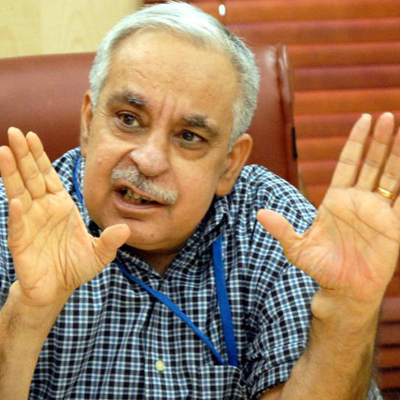
    MUMBAI: Recently, a letter written by Telecom Regulatory Authority of India (TRAI) chairman Rahul Khullar pointed out that the government was committing a mistake by extending the deadline for digitisation. Khullar has many more points to present on the regulator and the industry.


    In a conversation with Bloomberg, he said that his views on digitisation were very clear. “It is a very bad decision to defer it. It is bad for digital India, broadband delivery and not in public interest,” he said.


    While the government says that its main aim is to push indigenous production of seven crore set top boxes (STBs) in two years, Khullar feels that this is a ‘pipe dream.’


    Khullar said that last year several investors met him and conveyed that it was a miracle that they managed to get two crore boxes digitised. They also asked that by when will digitisation be completed because they are desperately interested in investments in cable. “By delaying digitisation, you are sending a signal to foreign investors that India isn’t ready for investment yet. This does great harm to public credibility,” he said.


    Meanwhile, rumours are afloat that the government is mulling creation of a ‘super regulator’ that will oversee the communications sector. Khullar believes that it is necessary to keep content and carriage separate. “If your aim is to strengthen TRAI then you don’t need a super regulator, just empower the existing one. But if it is to regulate carriage and content, this is an experiment that hasn’t succeeded in the world,” he said.


    According to him, issues concerning content immediately ‘stir up a hornet’s nest’ that usually involves freedom of speech. “My own sense would be to keep carriage and content separate and ensure that the content regulator has nothing to do with the government. Then you have some sort of fighting chance of regulatory survival,” he said.


    Broadband is a growing medium of revenue that is catching the attention of all in media space. The TRAI is due to come out with a paper on ‘policy issues relating to broadband’ in the next 10 days. “Broadband and convergence is still five to 10 years away. If we are to deliver broadband we need to know how to do it in the cheapest way, who should be involved, what to be done in terms of application and software development,” he highlighted. It will focus on building infrastructure and delivering content.

  • Siti Cable to roll out DOCSIS 3 broadband in Delhi and NCR in Q2-2015

    Siti Cable to roll out DOCSIS 3 broadband in Delhi and NCR in Q2-2015

    MUMBAI: Siti Cable, the multi system operator (MSO) from the Essel group is looking at expanding its business in other parts of the country. In a document given to investors, it has asked shareholders for approval to increase its authorised share capital, give authority to the board of directors to create charges/mortgages in respect of borrowings and issuance of equity shares or securities convertible into equity share of up to $100 million.


    The company says that the reason for loss was under declaration of subscriber base and low average revenue per user (ARPU). With digital addressable system (DAS) being implemented, the MSO hopes to generate higher revenue from subscription. Siti Cable also has already become EBIDTA positive this year.


    For digitisation implementation, it has procured and deployed large number of set top boxes (STBs), leading to periodical amortization, leading to inadequate profits.


    In order to improve its situation, the MSO has proposed a few measures. It is looking at expanding its business in north, south and central India, apart from its stronghold of east India. It is preparing strategies for increasing its digital market share and becoming a strong player in DAS areas. The company is rolling out its value added services (VAS) plans across the country in phased manner. Broadband services are intended to be rolled out on advance DOCSIS 3 technology in Delhi and NCR in Q2-2015, besides having broadband subscriber base in eastern region.


    Meanwhile, the increase in productivity will be measured in terms of EBIDTA margin, rationalisation of expenses, standardisation of process and systems to shift focus from individual centric approach to system driven approach and additional incremental profit by rolling out VAS.


    The BOD is asking for approval to “create such charges, mortgages and hypothecations on all or any part of assets or immovable properties of the Company wherever situated, both present and future, and/or whole or part of the undertaking(s) of the Company of every nature and kind whatsoever together with power to take over the management of the business and concern of the Company in certain events, to or in favour of banks, financial institutions, any other lenders or other investing agencies and trustees for the holders of debentures, bonds, other instruments to secure rupee/foreign currency loans hereinafter collectively referred to as “loans”) to secure the amount(s) borrowed or to be borrowed by the company from time to time for due repayment of the principal together with interest, charges, costs, expenses and all other monies payable by the company in respect of such borrowings.”


    It is also seeking approval for authorisation of loan and investments by the company. The BOD is asking approval for “giving any loan to any person or other body corporate, giving any guarantee or providing security in connection with a loan taken by any other body corporate or person; and/or acquiring whether by way of subscription, purchase or otherwise, the securities of any other body corporate; up to financial limit of Rs 1000 crore over and above limits available under Section 186 of the Companies Act, 2013, notwithstanding that the aggregate of the investments and loans so far made or to be made and the guarantees so far given or to be given by the company and securities so far provided and to be provided, exceeds the limits/will exceed the limits laid down under Section 186 of the companies act, 2013 read with companies (meeting of board and its powers) rules 2014.”


    For issuing shares, it is seeking approval to “offer, issue and allot in one or more tranches, to investors whether Indian or foreign, including foreign institutional investors, financial institutions, non-resident Indians, corporate bodies, mutual funds, banks, insurance companies, pensions funds, individuals or otherwise whether shareholder(s) of the company or not, through an issue of equity shares or bonds, debentures and/or any other securities including foreign currency convertible bonds or depository receipts convertible into equity shares of the company at the option of the company or the holder of such security, including by way of qualified institutional placement (QIP) to qualified institutional buyers (QIB) in terms of chapter VIII of the SEBI regulations, through one or more placements of equity shares (hereinafter collectively referred to as ‘Securities’), in domestic and/or one or more international markets whether by way of private placement or otherwise, in one or more tranches, so that the total amount raised through such issue(s) of securities shall not exceed Rupee equivalent of $ 100 million.”


    It has also appointed VD Wadhwa as the executive director for a period of three years from 12 August 2014.
  • Ortel Communications files DRHP with SEBI for IPO worth Rs 360 crore

    Ortel Communications files DRHP with SEBI for IPO worth Rs 360 crore

    MUMBAI: Odisha based last mile owner (LMO) Ortel Commnications has filed its draft red herring prospectus (DRHP) for its proposed initial public offering (IPO) with the securities and exchange board of India (SEBI). Ortel Communications CEO BP Rath confirmed the news to indiantelevision.com.


    The LMO is looking at a public issue of 14,182,598 equity shares of face value of Rs 10 each. The IPO may raise as much as Rs 360 crore.


    It consists of 60 lakh shares from the company and an offer for sale of up to 81.82 lakh shares by New Silk Route (NSR) that currently owns a 35 per cent share in the LMO. This would mean Ortel ending up with nearly Rs 150 crore and NSR exiting with Rs 200 crore.


    The deal is being handled by Kotak Mahindra Capital. It also has the option for a pre IPO sale of up to 25 lakh equity shares to generate up to Rs 65 crore.


    NSR has been keen to exit the business for quite some time. With this fresh infusion that Ortel is expecting, the LMO plans to grow its cable and broadband business in Odisha as well as neighbouring states such as Andhra Pradesh, Chhattisgarh, West Bengal etc.

  • Not much growth in broadband in July: TRAI

    Not much growth in broadband in July: TRAI

    NEW DELHI: Broadband subscribers grew by a mere 2.87 per cent in the month of July to 70.81 million in the country.


    The Telecom Regulatory Authority of India (TRAI) said the number of subscribers at the end of June were 68.83 million.


    For the second month in a row, the largest growth was seen in mobile device users (Phones + Dongles) with a growth of 3.56 per cent. The change in wired subscribers was a mere 0.45 per cent and the growth in fixed wireless (Wi-Fi, Wi-Max, Point-to-Point Radio & VSAT) was 1.54 per cent.


    The top five broadband service providers constitute 85.12 per cent market share of total broadband subscribers at the end of July. They are BSNL (18.14 million), Bharti (15.61 million), Vodafone (11.23 million), Idea Cellular (9.06 million) and Reliance Communications Group (6.23 million).


    The top five Wired Broadband Service providers are BSNL (9.98 million), Bharti (1.40 million), MTNL (1.13 million), Beam Telecom (0.40 million) and YOU Broadband (0.40 million).


    The top five Wireless Broadband Service providers are Bharti (14.21 million), Vodafone (11.23 million), Idea Cellular Ltd (9.06 million), BSNL (8.16 million) and Reliance Communications Group (6.12 million).


    Wireless subscribers with less than 1MB data usage in a month are not considered as internet/broadband subscribers by Reliance Communication Group and Idea Cellular.

  • Eros International partners with Home Cable Network for movies on broadband

    Eros International partners with Home Cable Network for movies on broadband

    MUMBAI: After announcing a partnership with India’s leading multi system operator (MSO) Hathway Cable & Datacom, Eros International has announced another deal with MSO Home Cable Network.


    The deal involves Home Cable and ErosNow, the online entertainment service of Eros International. The subscription-based broadband streaming service of the MSO will enable its subscribers to view content from the Eros library of films and music on multiple devices such as TVs, PCs, laptops, tablets and mobiles.


    ErosNow CEO Rishika Lulla said, “ErosNow is the only unique online streaming service in the world to offer both current and classic Bollywood blockbusters, music videos and popular television shows. We are pleased to be partnering with a leading player like Home Cable and make our extensive film content available to their vast subscriber base. With this pairing we continue to extend the reach of ErosNow as a leading digital entertainment brand.”


    The online platform currently offers thousands of new and catalogue movies from Eros as well as other Bollywood studios. This includes a large selection of premium TV content syndicated from TV studios as well as thousands of music videos and audio tracks.


    Home Cable has services in the Delhi-NCR region and delivers 50mbps broadband to its subscribers. The service will be offered at a monthly subscription price with a base price for unlimited viewing of movies.


    Prior to this, ErosNow teamed up with Hathway Broadband for making its content available to its customers on smart TVs, PCs, laptops, tablets and mobiles.

  • Just over 37 million of the 65 million DTH subscribers active: TRAI

    Just over 37 million of the 65 million DTH subscribers active: TRAI

    NEW DELHI: The six private direct-to-home (DTH) operators were serving a total of 64.82 million registered subscribers at the end of the first quarter of the calendar year 2014.

    However, the number of active subscribers was 37.19 million, according to a report by the Telecom Regulatory Authority of India (TRAI).

    Apart from this, a large number of subscribers are served by Doordarshan’s DTH service.

    A total of 187 satellite television channels were encrypted (pay) out of the total 793 permitted by the Information and Broadcasting Ministry at the end of the first quarter ending March 2014. The number of pay channels is as reported by the broadcasters for which the rates have been taken on record.

    The maximum number of TV channels being carried by any of the reported MSOs was 387 in DAS areas, whereas the maximum number of channels carried is 100 in conventional analogue form.

    Apart from All India Radio, there are 242 private FM Radio stations in operation at the quarter ending March 2014. The status of operationalised private FM Radio stations is listed on the website of the I and B Ministry.

    The total number of internet subscribers has increased from 238.71 million at the end of December 2013 to 251.59 million at the end of March 2014, showing a quarterly growth of 5.4 per cent. Of these, the wired internet subscribers are 18.50 million and wireless internet subscribers are 233.09 million.

    The number of broadband internet subscribers increased from 55.2 million at the end of December 2013 to 60.87 million at the end of March 2014, showing a quarterly growth of 10.28 per cent.

    The number of narrowband internet subscribers increased from 183.51 million at the end of December 2013 to 190.72 million at the end of March 2014 with quarterly growth of 3.93 per cent.


  • Cable companies need to provide compelling video experience along with broadband: Moody’s

    Cable companies need to provide compelling video experience along with broadband: Moody’s

    MUMBAI: A new report by Moody’s Investors Service claims that value propositions for cable providers are changing as broadband becomes even more necessary than TV. The report titled ‘Couch potatoes are switching screens as high-speed data cable subscribers overtake video’ states that most companies in the US are well positioned to reap the benefits and manage the risks of transition.


    “Cable providers’ largely upgraded networks and high-speed capabilities can make them the first call for consumers seeking fast internet connection. But if cable companies want to sell their video product as well, the onus is on them to provide a compelling video experience at an attractive price,” says Moody’s Investors Service vice president senior analyst Karen Berckmann.


    High speed data subscriber numbers will overtake video subscribers for Moody’s- rated cable companies in the next year, she adds. Fewer video customers means lower programming costs that are paid on a per subscriber basis and servicing the video product tends to be the most challenging and costly part of the business, so margins could benefit from the mix shift.


    However, the report also warns that a magnifying customer base for video also has risks. Companies that have declining number of video subscribers lose economies of scale when it comes to technicians and customer service, driving up costs per customer. At the same time the brand may be affected if it gives up on video in favour of broadband.


    The report states, “Companies with significant overlap with Verizon’s FiOS and AT&T’s uVerse, such as Cablevision Systems and Time Warner Cable, will need to invest in a competitive video product to survive while those with a less intense competitive footprint will find it easier to thrive as primarily broadband companies. An operator that loses a customer to FiOS or uVerse is likely to lose that customer entirely, whereas one losing a customer to Dish Network or DirecTV could still maintain a broadband relationship.”


    Moody’s says that Comcast is one company that is both large as well as diverse enough to invest in video as well as showing that it can sustain its video position. Cox Communications and Cablevision could struggle to grow while Grande Communications Networks and RCN Telecommunciations Services have shown that cable ops can build sustainable business on video penetration of about 20 per cent. For smaller operators, partnering with Tivo would be ideal for the next couple of years.

  • Reduced ceiling tariffs for Domestic Leased Circuits to boost broadband and e-governance

    Reduced ceiling tariffs for Domestic Leased Circuits to boost broadband and e-governance

    NEW DELHI: In a step aimed at boosting usage of broadband, Telecom Regulatory Authority of India (TRAI) has reduced ceiling tariffs for Point-to-Point Domestic Leased Circuits (P2P-DLCs) of E1 (2Mbps), DS3 (45 Mbps) and STM-1 (155 Mbps) capacities and has brought DLCs of STM-4 (622 Mbps) capacity under tariff regulation.


    The tariffs for a Domestic Leased Circuit (DLC) of less than E1 capacity have been left under forbearance. The revised tariff regime for DLCs will come into effect from 1 August.


    A leased circuit is a two-way link for the exclusive use of a subscriber regardless of the way it is used by the subscriber. A leased circuit having both its end-links within India is termed as DLC. Since DLCs provide the backbone for not only the telecommunication services sector but also a host of knowledge based industries, these are arguably key inputs for the economic growth of the country.


    Under the present licensing regime, both national long distance operators (NLDOs) and access service providers (ASPs) can provide DLCs. The DLCs form crucial building blocks for the delivery of various services like e-commerce, e-governance, Internet access for the masses and knowledge based industries like business process outsourcing (BPO), information technology (IT) and information technology enabled eervices (ITES) industries. Enterprises, having their offices spread out in the country, lease-in bandwidth capacities (i.e. DLCs) from the TSPs to carry their data and voice traffic.


    Besides, telecom service providers (TSPs) who do not own sufficient transmission infrastructure in any geographical area also lease-in DLCs in order to provide various telecommunication services to their customers.


    Since 1999, the tariffs for P2P-DLCs have been regulated in the form of ceiling tariffs on the basis of capacity and distance. The tariffs for DLCs were last revised in the year 2005. The present exercise to review tariffs for DLCs was initiated by TRAI earlier this year in the context of decline in per unit costs of providing DLCs due to (i) increase in demand, (ii) increase in transmission infrastructure and (iii) increase in the bandwidth carrying capacity of transmission media, and signs of lack of competition in some parts of the country.


    After following a comprehensive consultation process, the Authority, through the TTO (57th Amendment), 2014, has brought about the following changes in the tariff regime for DLCs:


    (a) Tariffs for DLCs of less than E1 capacity have been kept under forbearance.


    (b) Ceiling tariffs for DLCs of E1, DS-3 and STM-1 capacities have been reduced.


    (c) The DLCs of STM-4 capacity, tariff for which was under forbearance, have been brought under tariff regulation by way of prescription of ceiling tariffs.


    With the implementation of the reduced ceiling tariffs, the customers seeking DLCs on the thin routes connecting small cities, remote and hilly areas etc. (i.e. the routes which are not sufficiently competitive) would be benefited.

  • Mobile usage shows increase in broadband subscribers between April-May

    Mobile usage shows increase in broadband subscribers between April-May

    NEW DELHI: There was an increase of 5.82 per cent in the number of broadband subscribers in May, as against a mere 1.45 per cent in the number of broadband subscribers between March and April this year.


    Data released by the Telecom Regulatory Authority of India (TRAI) shows that the total number of subscribers between April and May went up from 61.74 million to 65.33 million in all segments: wired subscribers, mobile device users (Phones + Dongles), and fixed wireless (Wi-Fi, Wi-Max, Point-to-Point Radio & VSAT).


    The largest change of 7.66 per cent was in the mobile segment, whereas wired subscribers showed an increase of 0.25 per cent and fixed wireless segment showed a change of 0.16 per cent.


    Top five broadband service providers constitute 84.35 per cent market share of total broadband subscribers at the end of May-14. They are BSNL (17.70 million), Bharti Airtel (13.84 million), Vodafone (8.23 million), Idea (8.19 million) and Reliance Communications Group (7.15 million).


    The top five Wired Broadband Service providers are BSNL (9.98 million), Bharti Airtel (1.40 million), MTNL (1.13 million), Beam Telecom (0.39 million) and YOU Broadband (0.39 million).


    The top five Wireless Broadband Service providers are Bharti Airtel (12.43 million), Vodafone (8.23 million), Idea (8.19 million), BSNL (7.72 million) and Reliance Communications Group (7.04 Million). 

  • DEN selects Cisco DOCSIS 3.0 technology for broadband

    DEN selects Cisco DOCSIS 3.0 technology for broadband

    NEW DELHI: After multi system operator (MSO) Hathway Cable and Datacom launched DOCSIS 3.0 technology in October 2013, it is now DEN Networks that has selected Cisco’s DOCSIS 3.0 technology for its newly launched broadband service in India.


    DOCSIS 3.0 is a key component of the Cisco IP NGN architecture, which promises speeds of up to 300 Mbps per subscriber. With this, the MSO will be able to provide ultra-high-speed internet to deliver more content as compared to the existing telecom Internet service providers (ISPs).


    DEN currently reaches out to 13 million homes in over 200 cities. The MSO also offers digital cable TV services in India, using Cisco’s conditional access and middleware (set-top box software) and presently reaches over six million digital pay-TV homes.


    To begin with, DEN soft-launched its ultra-high-speed broadband service in one of its biggest markets and its home base, Delhi, and intends to expand the offering to other cities. The adoption of DOCSIS 3.0 is a strategic decision by the MSO to provide its subscribers with a seamless online experience with no buffering, lightning-fast downloads and higher-quality video content compared with existing telecom ISPs.


    Despite a population of 1.27 billion, according to TRAI’s latest Telecom Performance Indicators Report (October–December 2013), India has only 238.71 million Internet subscribers, out of which 18.33 million subscribers are wired Internet subscribers. The remaining 220.38 million access the internet though wireless connections like smartphones and data cards. The country’s major MSOs are preparing to capture this wireline broadband market using DOCSIS technology, giving a much-needed boost to broadband penetration in India, with each MSO also aware of the untapped 100 million cable TV homes in India. Therefore, the deployment of DOCSIS 3.0 across its existing cable networks is a significant step by DEN to capitalise on the enormous business potential of the broadband market.


    DEN COO Mohammad Ghulam Azhar said: “We are excited by the high-speed internet opportunity in India. With this superior technology, we are aiming to provide our broadband subscribers with a fast and consistent online experience.”


    Cisco India and SAARC president, sales Dinesh Malkani added: “Cisco’s vision is to be the leading enabler of ICT (Information and Communications Technology) and broadband acceleration in India through innovative, scalable, high-value technology offerings and solutions. We believe our engagement with DEN has the potential to transform the cable and broadband industry in India by offering high-speed services to millions of subscribers and connecting those who previously were unable to access premium broadband services.”