Tag: broadband

  • Rs 18000 crore worth investments received for ‘Digital India’: Prasad

    Rs 18000 crore worth investments received for ‘Digital India’: Prasad

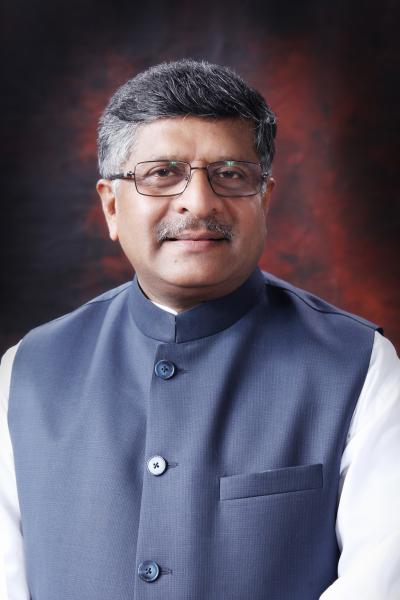
    NEW DELHI: The Prime Minister Narendra Modi’s mandate of ‘Digital India’ will be a game changer for the country and will have a cascading effect on the entire system said Communications and Information Technology Minister Ravi Shankar Prasad.


    Chairing the consultative committee meeting attached to his Ministry, he informed the members that about 700,000 kilometer of cable for broadband is proposed to be laid in the next three years as against one million kilometers already laid in the country, so far.


    The Minister informed members that 50,000 gram panchayats will be provided broadband facility in the first tranche and 2.5 lakh in the next three years. Prasad also assured the members that the government is giving priority to the production of electronic goods as part of the ‘Make in India’ programme.


    Reacting to the concern of some of the members about poor services of the BSNL network in the country, he said more funds are proposed to be provided to the public sector telephone service providers during the VII phase to improve their functioning and make them commercially active.


    The Department of Electronics and Information Technology secretary RS Sharma, made a presentation on the ‘Digital India’ programme before the members of the consultative committee. Earlier at the FICCI, Prasad said Rs 18000 crore worth investments proposals have been received till now for the ‘Digital India’ programme, of which Rs 4000 crore worth have been approved and more are in the pipeline.


    Speaking at the session on ‘The role of ICT and ‘Digital India’ initiative in India’s growth’ at the 87th AGM of FICCI, Prasad said that while there are issues of spectrum to provide high speed connectivity and regulatory control, India will become an exciting place as far as ‘Digital India’ is concerned. E-commerce, he said, was worth billions of dollars and will help increase India’s GDP in a big way.


    Prasad said that the huge postal network can be used for various services like banking, insurance etc. The postal services earn Rs 280 crore from e-commerce, he said, and urged the private sector to take the initiative to develop India digitally.


    Stating that digital connectivity is needed for good governance, Prasad said India had more than $100 billion turnover in IT industry. All fortune companies connect with India’s IT. India has the potential of becoming number two after China and surpass the United States.


    Spelling out the initiatives that have already been taken under the Digital India Programme, the Minister said mygov.in portal has been launched to allow India to interact on various government programmes. Suggestions received on various programmes like ‘Clean Ganga’, ‘Swachh Bharat’ through the portal and designing, logo, slogan etc have been prepared. Under the ‘Jan Dhan Yojna’ – name for the programme was coined with the help of suggestions received through the portal, eight crore bank accounts have been opened till now with a total deposit amount of Rs 8000 crore. This is an ideal example of financial inclusion through digital technology.


    Additionally, programmes such as ‘Jeevan Pramaan’, a  biometric-enabled digital service for pensioners has been launched. Besides, through IT, two lakh schools were connected (two crore children) on the eve of Teacher’s Day.


    Prasad said the digital divide between those who have and those who don’t needs to be plugged. For this the government has initiated the programme – National Optical Fibre Network (NOFN) – which proposes to connect seven lakh kilometers optical fiber to be laid to connect 250 gram panchayats in three years. Wi-fi spots will be provided around the clusters after that and all villages to be provided with internet connectivity.


    He said that to promote ‘Digital India’ it is proposed to set up a broadband duct which is a pre-requisite for getting sewer, water and electricity connections.
  • Broadband target by government needs to be evaluated, says Khullar

    Broadband target by government needs to be evaluated, says Khullar

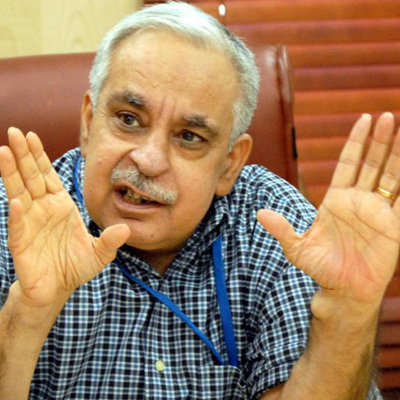
    MUMBAI: Telecom Regulatory Authority of India (TRAI) chairman Rahul Khullar said the target set by the government for providing broadband network for all was unrealistic and called for evaluating it. He said it would be simpler to first connect the metros and then look at connecting cities and talukas in a gradual manner.

     “Right now we are sort of deluding ourselves by saying we will achieve 100 per cent and all of you know exactly what has been achieved,” said Khullar. “This can’t be an infrastructure project. Focus on just building the infrastructure is wrong. The entire ecosystem – from applications to services — needs to be developed. The approach should be more practical and realistic,” Khullar added.

     The government plans to link 2.5 lakh village panchayats across the country by December 2016 through the national optical fibre network (NOFN) programme, while promoting initiatives like e-governance, e-education and e-health. The project also aims to ensure that all villages in India have high speed internet.

     In an interview with the Economic Times in August this year, telecom minister Ravi Shankar Prasad had said the government of Prime Minister Narendra Modi wants to ensure a smartphone in the hands of every citizen by 2019. Currently, nearly 74 per cent of the population has mobile phones, most of which though are in the hands of urban Indians.


  • Minimal growth in September in broadband usage: TRAI

    Minimal growth in September in broadband usage: TRAI

    NEW DELHI: Even as there was growth of just 1.92 per cent in broadband between the end of August and the end of September, there was a decline of 4.31 per cent in the fixed wireless subscribers (Wi-Fi, Wi-Max, Point-to-Point Radio & VSAT).

     
    According to reports received by the Telecom Regulatory Authority of India (TRAI) from the service providers, the number of broadband subscribers increased from 74.31 million at the end of August to 75.73 million at the end of September.

     
    There was marginal increase in mobile devices users (Phones and dongles) of 2.32 per cent from 58.82 million to 60.19 per cent, and a minimal growth in wired subscribers of just 0.53 per cent from 15.05 million to 15.13 million.

     
    The top five wired broadband service providers by September-end were BSNL (9.98 million), Bharti Airtel (1.40 million), MTNL (1.13 million), Beam Telecom (0.42 million) and YOU Broadband (0.41 million).

     
    The top five wireless broadband service providers were Bharti Airtel (15.44 million), Vodafone (13.55 million), Idea Cellular (10.52 million), BSNL (7.94 million) and Reliance Communications Group (6.40 million).


  • South-based independent MSOs come together as South Indian Federation

    South-based independent MSOs come together as South Indian Federation

    MUMBAI: The independent multi system operators (MSOs) from the southern part of the country are working towards getting their act right in order to be able to successfully complete digitisation and also reap maximum benefits from it.

    In the latest, the independent MSOs from Bengaluru, Telangana, Andhra Pradesh, Tamil Nadu and Kerala met in the IT city to discuss issues relating to digitisation, deals with broadcasters and the carriage fees.  

    In the same meeting, the independent MSOs decided to form a South Indian Federation, which will be officially launched in Kerala in December.

    “The broadcasters deal differently with national MSOs and the regional independent MSOs. So, we have decided to come together as one team,” informs Sagar E Technologies executive director Sudhish Kumar.

    The federation will have 20 headends under it, currently catering to 30 lakh subscribers across Bengaluru, Telangana, AP, Tamil Nadu and Kerala.  “We have realised that coming together will not only help us get better deals from the broadcasters, but we can have representation even in the DAS task force,” he says.

    This group of independent MSOs is also looking at getting the value added services (VAS) on one platform, using one middleware. “A technical team has already been formed for this and they are working on getting the service in place,” says Kumar adding that having small number of VAS is not profitable. “If we come together, then we can attract bigger partners for VAS, which is an added revenue stream,” he informs.

    The independent MSOs in the south have realised that broadband is the biggest revenue spinner. “The ultimate goal of coming together is having a strong broadband infrastructure and consumer base,” concludes Kumar.


  • Hathway reports 19.6 per cent y-o-y revenue growth, lower loss in Q2-2015

    Hathway reports 19.6 per cent y-o-y revenue growth, lower loss in Q2-2015

    BENGALURU: Indian multi system operator (MSO) Hathway Cable and Datacom Limited (Hathway) reported 5.3 per cent growth in Q2-2015 with total Income from Operations (TIO) of Rs 263.51 crore versus the Rs 250.22 crore in Q1-2015 and 19.6 per cent more than the Rs 220.28 crore in Q2-2014. HY-2015 TIO at Rs 513.73 crore was 11.9 per cent more than the Rs 459.23 crore in HY-2014.

     
    The company reported loss of Rs 39.26 crore in Q2-2015, as compared to the loss of Rs 0.927 crore in the immediate trailing quarter. The current quarter’s loss was lower than the loss of Rs 44.45 crore for Q2-2014. The company’s HY-2015 (year to date) loss increased slightly to Rs 40.19 crore from Rs 39.13 crore in HY-2014.

     
    Note: 100,00,000 = 100 lakh = 10 million = 1 crore

     
    Hathway’s EBIDTA calculated based on the figures submitted by the company in Q2-2015 fell 8.8 per cent to Rs 40.03 crore (15.2 per cent of TIO) from Rs 43.87 crore (17.5 per cent of TIO) in Q1-2015 and was 4.2 per cent more than the Rs 38.41 crore (17.4 per cent of TIO) in Q2-2014. EBIDTA for HY-2015 fell 30.6 per cent to Rs 83.9 crore (16.3 per cent of TIO) from Rs 120.80 crore (26.3 per cent of TIO) in HY-2014.

     
    Let us look at the other figures reported by Hathway:

     
    Total Expenditure (TE) in Q2-2015 at Rs 274.27 crore (104.1 per cent of TIO) was 7.9 per cent more than the Rs 254.1 crore in Q1-2015 and was 17.6 per cent more than the Rs 233.19 crore in Q2-2014. HY-2015 TE at Rs 528.37 crore (102.9 per cent of TIO) was 22.5 per cent more than the Rs 431.29 crore in HY-2014.

     
    A major fraction of TE is the pay channel cost for Hathway. The company’s pay channel cost in Q2-2015 at Rs 96.81 crore (36.7 per cent of TIO) was 12.8 per cent more than the Rs 85.81 crore (34.3 per cent of TIO) in Q1-2015 and 41.7 per cent more than the Rs 68.30 crore (31 per cent of TIO) in Q2-2014. HY-2015 pay channel cost at Rs 182.61 crore (35.6 per cent of TIO) was 44.1 per cent more than the Rs 126.75 crore in HY-2014.

     
    The company reported 6.3 per cent higher depreciation and amortization expense (depreciation) in Q2-2015 at Rs 50.78 crore versus the Rs 47.75 crore in Q1-2015 and was 1.1 per cent lower than the Rs 51.32 crore in Q2-2014. Depreciation in HY-2015 at Rs 98.54 crore was 6.1 per cent more than the Rs 92.86 crore in HY-2014.

     Hathway’s finance cost in Q2-2015 at Rs 30.39 crore (11.5 per cent of TIO) was 4.2 per cent more than the Rs 29.17 crore (11.7 per cent of TIO) and was 28.2 per cent more than the Rs 23.71 crore (10.8 per cent of TIO) in Q2-2014. Finance cost for HY-2015 at Rs 59.56 crore (11.6 per cent of TIO) was 31.4 per cent more than the Rs 445.32 crore (9.9 per cent of TIO) in HY-2014.

     
    Employee Benefit Expense (EBE) in Q2-2015 was Rs 16.03 crore, for Q1-2014 it was 14.55 crore and for Q2-2014 it was Rs 14.58 crore.

     
    Hathway says that it is continuing aggressive plans to digitise its CATV customer base and has further seeded 250,000 boxes in the current quarter taking its digital subscriber base to 84 lakh and has seeded nearly 72 per cent of its subscriber base. It says that it has nearly 700,000 STB’s in stock.

     
    The company says that its content deals with the major broadcasters is in place now and it will use the stability in its content contracts to push for an increase in the ARPU realised from the markets it serves. While ARPU increase took a pause in current quarter, phase 1 ARPU remained close to Rs 90, while it was close to Rs 55 in the phase 2 areas.

    Hathway has informed BSE that the Board of Directors of the Company at its meeting held on 13 November 2014, inter alia, has considered and approved the Subdivision of face value of Equity Shares into Equity Shares of smaller amount than is fixed in the Memorandum of Association; i.e. to subdivide 1(One) equity share of Rs. 10/- each to 5 (Five) equity shares of Rs. 2/- each, subject to approval of shareholders.

     
    Click here to read the full financial report


    Click here to read the unaudited financial release


  • Obama wants FCC to remove roadblocks on internet, private sector disagrees

    Obama wants FCC to remove roadblocks on internet, private sector disagrees

    NEW DELHI: President Barack Obama has urged the American telecom regulator Federal Communications Commission (FCC) to keep the internet open and free.

     
    But this plea will give a blow to top US wireless carriers who are looking to control price and quality of internet services.


    The FCC is already in the process of considering new rules for how to safeguard competition and user choice. “Ensuring a free and open internet is the only way we can preserve the internet’s power to connect our world,” Obama said.

     
    “We cannot allow internet service providers (ISPs) to restrict the best access or to pick winners and losers in the online marketplace for services and ideas. I am asking the FCC to answer the call of 4 million public comments, and implement the strongest possible rules to protect net neutrality,” said Obama.

     
    However, the Telecommunications Industry Association (TIA), an association representing the manufacturers and suppliers of high-tech communications networks, said: “We are concerned over President Obama’s endorsement of reclassifying the internet as a Title II utility-like telecom service. Such a move would set the industry back decades, and threaten the private sector investment that is critically needed to ensure that the network can meet surging demand.”

     
    “We saw a significant negative impact on investment the last time restrictive Title II regulation was in place, and no one will benefit from returning to that failed policy.  As manufacturers and suppliers who build the internet backbone and supply the devices and services that ride over it, our companies strongly urge regulators to refrain from reclassification that will guarantee harm to consumers, the economy, and the very technologies we’re trying to protect,” said TIA CEO Scott Belcher.

     
    Four years ago, the FCC tried to implement rules that would protect net neutrality with little to no impact on the telecommunications companies that make important investments in the economy.

     
    Earlier, the court reviewing the rules agreed with the FCC that net neutrality was essential for preserving an environment that encourages new investment in the network. The court ultimately struck down the rules because it believed the FCC had taken the wrong legal approach.

     
    Obama said there should be no blocking and throttling by ISPs. There should be more increased transparency. Some sites should not get more treatment.

     
    Some companies should not enjoy paid prioritisation. Wireless carriers should not keep some services in “slow lane” because it does not pay a fee. “That kind of gatekeeping would undermine the level playing field essential to the internet’s growth. I am asking for an explicit ban on paid prioritisation and any other restriction that has a similar effect,” Obama said. FCC should reclassify consumer broadband service under Title II of the Telecommunications Act — while at the same time forbearing from rate regulation and other provisions less relevant to broadband services.

     
    Referring to the White House proposal, AT&T senior executive VP, external & legislative affairs Jim Cicconi said, “If the FCC puts such rules in place, we would expect to participate in a legal challenge to such action.”

     
    Time Warner Cable, a top cable company, remains committed to an open internet, but disagrees with President Obama’s statement that an open internet can only be achieved by reclassifying broadband as a public utility.

     
    “Regulating broadband service under Title II, as the President proposes, will create uncertainty, lead to years of litigation and threaten the continued growth and development of the internet. The FCC has sufficient tools without reclassifying broadband to protect the openness of the internet, while at the same time encouraging continued investment and innovation in the internet ecosystem,” said Time Warner Cable chairman and CEO Rob Marcus.

  • Cisco powers Siti Cable’s DOCSIS 3.0 technology for broadband

    Cisco powers Siti Cable’s DOCSIS 3.0 technology for broadband

    MUMBAI: Siti Cable, that controls nearly 4.3 million digital cable TV subscribers, has chosen Cisco to boost its broadband. The tech company will provide DOCSIS 3.0 technology for its broadband service in the country.

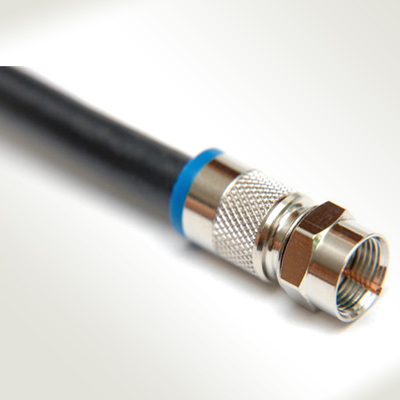
    Through this, the MSO will be offering speed of up to 100 mbps. DOCSIS 3.0 can offer download speed of upto 300 mbps per subscriber and the upload capacity up to 100 mbps. As earlier reported by indiantelevision.com, this technology has been launched in Delhi and NCR.

    Speaking on the association, Siti Cable CEO VD Wadhwa said, “It is an absolute pleasure to be introducing our broadband service. We plan to accelerate the deployment to capitalise on the enormous business potential this market currently holds. With the deployment of this technology, we are uniquely positioned to offer superior Internet browsing, video streaming, video surveillance and rich media content on the same coaxial cable that delivers high-quality digital cable TV signals. We will offer much higher speed at highly competitive price. We are confident that Cisco’s technological expertise will help us in the achievement of this goal.”

    Cisco India and SAARC service provider sales managing director Sanjay Kaul said, “It is commendable to see Cisco’s vision, to be the leading enabler of ICT (Information and Communications Technology) and broadband acceleration in India, coming closer to reality. We believe that the cable TV industry has the potential to transform the broadband industry in India and would like to congratulate Siti Cable for marking an important milestone on this roadmap.”


  • TRAI to host open house meet on broadband issues and how this can be speeded

    TRAI to host open house meet on broadband issues and how this can be speeded

    NEW DELHI: An Open House Discussion (OHD) will be held next week on how broadband can be delivered quickly and what the stakeholders or the government needs to do for this. The OHD is being organised in the capital on 30 October by the Telecom Regulatory Authority of India (TRAI) on a Consultation Paper issued earlier by it on this subject.


    It had earlier sought comments by 14 October and counter-comments by 21 October on the questions raised by it. In the paper, TRAI had asked what immediate measures were required to promote wireline technologies in access networks and how the cost per line for various wireline technologies can be minimised.


    It also wanted to know the impediments to the deployment of wireless technologies in the access network. Referring to its recommendations on Microwave backhaul, it asked whether there were any other issues which needed to be addressed to ensure availability of sufficient Microwave backhaul capacity for the growth of broadband in the country.


    The pricing of Domestic Leased Circuits (DLC) was reviewed in July 2014 and the Regulator wanted to know if there were any other issues which can improve availability of DLC. It sought the specific reasons that Internet Service Providers are proactively not connecting with NIXI, the National Internet Exchange of India.


    It asked if the hosting of content within the country help in reduction of the cost of broadband to a subscriber. It also wondered if public sector units were ideal choices for implementing the National Optical Fibre Network (NOFN) project.


    It also wanted to know if it is possible to piggyback on the existing private sector access networks so as to minimize costs in reaching remote rural locations. In this connection, it sought views on the major issues in obtaining right of way for laying optical fibre.


    TRAI wondered if the Government should consider framing guidelines to mandate compulsory deployment of duct space for fibre/telecommunications cables and space for telecommunication towers in all major physical infrastructure construction projects such as building or upgrading highways, inter-city metros, railways or sewer networks.


    What were the impediments to the provision of Broadband by Cable operators, the regulator asked and whether there were any regulatory issues in providing internet facility through Wi-Fi Hotspots.


    TRAI, which recently gave its views on spectrum and also sought some clarifications from the Department of Telecom, asked how much spectrum would be required in the immediate future and in the long term to meet the target of broadband penetration.


  • TRAI seeks to exempt small Internet Service Providers from tariff reporting requirement

    TRAI seeks to exempt small Internet Service Providers from tariff reporting requirement

    NEW DELHI: The Telecom Regulatory Authority of India (TRAI) has proposed exempting any Internet Service Provider (ISP) from the reporting requirement during a financial year if the total number of its subscribers is less than 10,000 on the last day of the preceding financial year.


    In a draft amendment to the Telecommunication Tariff Order 1999 for comments of the stakeholders, it has also sought to extend the existing exemption given to access providers in respect of tariff schemes offered to bulk customers in response to a tender process or as a result of negotiations between the access provider and such bulk customer to the ISPs also.


    Stakeholders have been asked to send in their responses by 14 October.


    TRAI is concerned that only 60.87 million broadband connections had been achieved against a target of 175 million connections by 2017. It says the country is nowhere near meeting the target for a service which is considered almost a basic necessity in many developed countries. Broadband is helping to deliver a wide range of services, from services directly related to the Millennium Development Goals set by the United Nations, to services in support of broader citizen participation or services leveraged across different sectors to bring more people into the formal economy. Therefore there is an urgent need to review the present policies and its implementation initiated to build infrastructure required for penetration of broadband in the country.


    The Digital India project aims to offer a one-stop shop for Government services which would use the mobile phone as the backbone for its delivery mechanism. The Rs 1,13,000-crore initiative seeks to transform India into a connected knowledge economy offering world class services at the click of a mouse. Plans to digitally connect the country will be supported by modules on digital literacy in regional languages which the Government plans to run in the next few years.

  • Concerned at slow growth of broadband in India, TRAI wants stakeholders to give suggestions

    Concerned at slow growth of broadband in India, TRAI wants stakeholders to give suggestions

    NEW DELHI: Concerned that only 60.87 million broadband connections had been achieved against a target of 175 million connections by 2017, the Telecom Regulatory Authority of India (TRAI) has issued a Consultation Paper to probe the reasons for this slow growth.


    One of the questions posed in the 78-page paper is to know the specific reasons that Internet Service providers are proactively not connecting with the National Internet Exchange of India (NIXI) set up in 2002 and what measures are required to achieve this.


    TRAI wants to know if the hosting of content within the country helps in reduction of the cost of broadband to a subscriber and what measures are required to encourage content service providers to host content in the data centre situated within India.


    It has also sought to know if public sector undertakings are ideal choices for implementing the National Optical Fibre Network (NOFN) project.


    The regulator has asked the stakeholders to send their comments 14 October and counter comments by 21 October. TRAI has also said that no further extension will be given.


    In its initial remarks, the Paper noted that the country is nowhere near meeting the target for a service which is considered almost a basic necessity in many developed countries. Broadband is helping to deliver a wide range of services, from services directly related to the Millennium Development Goals set by the United Nations, to services in support of broader citizen participation or services leveraged across different sectors to bring more people into the formal economy. Therefore there is an urgent need to review the present policies and its implementation initiated to build infrastructure required for penetration of broadband in the country.


    The objective of the Paper is to discuss issues contributing to the poor broadband penetration in India and solicit stakeholders’ views on actions required to be taken both by the Government and the service providers to accelerate the proliferation and use of broadband in the country.


    It says India has the intrinsic strengths for an Internet transformation, but concerted efforts are required to address key gaps in the Internet ecosystem.


    Consumers, entrepreneurs, enterprises and the Government can play a pivotal role in building a strong Internet ecosystem driven by the country’s young Internet-savvy population and strong local consumption, entrepreneurship and innovation, and a large pool of technically trained human capital. Identification of the impediments to expansion of this ecosystem and addressing these impediments to create an environment to encourage broadband growth is the need of the hour.


    The Digital India project aims to offer a one-stop shop for Government services which would use the mobile phone as the backbone for its delivery mechanism. The Rs 1,13,000 crore initiative seeks to transform India into a connected knowledge economy offering world class services at the click of a mouse. Plans to digitally connect the country will be supported by modules on digital literacy in regional languages which the Government plans to run in the next few years.


    But to be successful, a broadband policy needs to reflect the requirements of different communities across the country. This means taking a holistic approach and leveraging the opportunities provided by wireline and wireless technology in each part of the network i.e. backbone, backhaul and local access. The implementation of broadband plans and strategies needs to be monitored. Monitoring should be an integral part of broadband plans and strategies – providing an information base for the initial development of plans and strategies as well as for checking the progress of particular policies and programs, and for the evaluation and reassessment of priorities and strategies.


    The regulator wants to know what immediate measures are required to promote wireline technologies in access networks and what is the cost per line for various wireline technologies and how can this cost be minimised.


    What are the impediments to the deployment of wireless technologies in the access network and how these deployments can be made faster, it wants to know.


    TRAI recently released recommendations on Microwave backhaul and it wants to know if some issues were left out to ensure availability of sufficient Microwave backhaul capacity for the growth of broadband in the country.


    The pricing of Domestic Leased Circuits (DLC) had been reviewed in July 2014. Apart from pricing, TRAI has asked if there are any other issues which can improve availability of DLC.


    Should the awarding of EPC turnkey contracts to private sector parties through International Competitive Bidding (ICB) be considered for the NOFN project, the regulator wants to know.


    It also asked if there are any ways in which infrastructure development costs can be reduced and is it possible to piggyback on the existing private sector access networks so as to minimize costs in reaching remote rural locations.


    It wonders if the private sector can do something to reduce delivery costs.


    It wants to know the major issues in obtaining right of way for laying optical fibre and the applicable charges/ constraints imposed by various bodies who grant permission of right of way.


    It wants to know if the Government should consider framing guidelines to mandate compulsory deployment of duct space for fibre/ telecommunications cables and space for telecommunication towers in all major physical infrastructure construction projects such as building or upgrading highways, inner-city metros, railways or sewer networks.  


    Do cable operators face impediments to the provision of Broadband by them, it wants to know.


    TRAI has asked what measures are required to reduce the cost and create a proper eco system for deployment of FTTH in the access network.


    It wonders if there are any regulatory issues in providing internet facility through Wi-Fi Hotspots and the business model for these.


    What other spectrum bands which can be unlicensed for usage of Wi-Fi technology or any other technology for provision of broadband, it seeks to know, also wondering how much spectrum will be required in the immediate future and in the long term to meet the target of broadband penetration and what initiatives are required to make available the required spectrum.


    How can Government agencies be encouraged to surrender spectrum occupied by them in IMT bands and what should be the time frame for auctioning the spectrum in 700 MHz band, it asks.