Tag: broadband

  • Q1-2016: Ortel PAT at Rs 2.44 crore; on track for 1 million RGUs target

    Q1-2016: Ortel PAT at Rs 2.44 crore; on track for 1 million RGUs target

    BENGALURU: The Bibhu Prasad Rath led regional cable television and high speed broadband services provider Ortel Communication Limited (Ortel) reported profit after tax (PAT) of Rs 2.44 crore (six per cent margin) in the quarter ended 30 June, 2015 (Q1-2016) as compared to a loss of Rs 1.16 crore in the corresponding year ago quarter. However, the company’s Q1-2016 PAT was less than half (lower by 56.8 per cent) the PAT of Rs 5.65 crore (12.6 per cent margin) in the immediate trailing quarter.


    Ortel reported 20.5 per cent growth in Total Income from Operations (TIO) at Rs 40.60 crore in Q1-2016 as compared to the Rs 33.69 crore in Q1-2015, but 9.6 per cent lower than the Rs 44.91 crore in Q5-2015.


    Notes: 100,00,000 = 100 lakh = 10 million = 1 crore


    The numbers mentioned in this report are standalone.


    Subscription numbers and ARPU


    The company reported a 2.1 per cent growth in cable revenue generating units (RGU) in Q1-2016 at 481,317 as compared to the 471,592 in the immediate trailing quarter. In Q1-2015, the company had 462,328 RGU, hence the number grew by 4.1 per cent in Q1-2016.


    Ortel’s q-o-q digital cable RGUs grew six per cent to 1,13,653 in the current quarter from 1,07,175 in Q1-2015, while its analogue cable RGUs grew 0.9 per cent to 3,67,664 as compared to the 3,64,417 in the same period.


    The company reported a slight drop in average revenue per user (ARPU) in cable subscription – ARPU for digital cable dropped by Re 1 to Rs 184 and for analogue cable also the ARPU dropped by Re 1 to Rs 144 in the current quarter as compared to the immediate trailing quarter.


    Broadband RGUs in the current quarter grew 4.1 per cent to 60900 from 58519 in Q4-2015. Ortel announced the launch of up to 50 Mbps DOCSIS 3.0 Broadband Internet in Odisha. The company’s Broadband ARPU in the current quarter also declined by Re 1 to Rs 393 from Rs 394 in Q4-2015.


    LCO Buyout


    Ortel signed network buy out agreements with multiple LCOs during the quarter taking the total RGUs to 542,217. The company said that another 33,000 RGUs are in the pipeline and would be added to total RGUs in the forthcoming months.


    Company speak


    Ortel president and CEO Bibhu Prasad Rath said, “We have begun the year on a healthy note with 25 per cent increase in revenues and 44 per cent improvement in EBITDA during Q1-2016. EBITDA margins enhanced to 37 per cent from 32 per cent in Q1-2015 and profit after tax stood strong at Rs 2.4 crore compared to Rs 5.6 crore reported in full year FY-2015. Thus the trend remains encouraging. Overall growth was delivered on the back of steady contribution from cable TV and broadband segments supported by continued momentum in the infrastructure leasing segment. Significant growth in subscriber base, deeper penetration, enhanced product offerings and a strong team, should enable us to notably improve our performance going forward.


    I am also pleased to share that over and above the 542,217 RGUs as on 30 June, 2015, we have signed buy out agreements with multiple LCOs with total estimated RGUs of 33,000, which would be integrated into Ortel’s last mile network going forward. So we remain on track and are confident of achieving our target of one million RGUs (10 lakh) by March 2017 backed by our LCO buy out strategy and focus on organic growth both in broadband and cable TV.”


    Let us look at the other numbers reported by Ortel


    Total Expenditure in Q1-2016 at Rs 34.42 crore (84.8 per cent of TIO) was 14.8 per cent more than the Rs 29.99 crore (89 per cent of TIO) in Q1-2015 and 4.1 per cent more than the Rs 33.08 crore (73.6 per cent of TIO).


    Ortel paid Rs 8.91 crore (22 per cent of TIO) towards programming cost, which was 3.6 per cent more than the Rs 8.60 crore (18.9 per cent of TIO) in Q1-2015 and was 4.9 per cent more than the Rs 8.49 crore (18.9 per cent of TIO) in the immediate trailing quarter.


    Bandwidth cost in Q1-2016 at Rs 1.78 crore (4.4 per cent of TIO) was 6.9 per cent more than the Rs 1.67 crore (4.9 per cent of TIO) in the corresponding year ago quarter and was 2.3 per cent more than the Rs 1.74 crore in Q4-2015.


    Employee Benefit Expense (EBE) in Q1-2016 at Rs 4.89 crore (12 per cent of TIO) was 19.3 per cent more than the Rs 4.09 crore (9.8 per cent of TIO) in Q1-2015 and was 11.4 per cent more than Rs 4.39 crore (12.2 per cent of TIO) in the immediate trailing quarter.


    Ortel has introduced free broadband option for all Ortel Cable TV subscribers in the states of Odisha, West Bengal and Chhattisgarh as a complimentary special value added service in order to target to deeper penetrate into markets by making internet affordable. The company says that its offer includes a free data limit every month for a year. The subscriber will be charged a nominal amount after exceeding the free data usage for the month. 
     

    Click here to read the unaudited financial statement 

  • BSNL partners Bangladesh cable co. to bolster broadband reach in NE India

    BSNL partners Bangladesh cable co. to bolster broadband reach in NE India

    NEW DELHI: In an effort to strengthen Digital India, Bharat Sanchar Nigam Ltd (BSNL) has partnered with a Bangladesh company to improve internet connectivity in the northeast part of the country.


    BSNL will provide international bandwidth for internet from Cox’s Bazar in Bangladesh to Agartala, while the Bangladesh Submarine Cable Company Ltd (BSCCL) will provide the international port (IP) transit service from Cox’s Bazar Cable Landing Station.


    The terrestrial route in Bangladesh will be Cox’s Bazar-Chittagong-Comilla-B.Baria-Akhaura for primary link and Cox’s Bazar-Chitagong-Comilla-Dhaka-Narshindi-Bhairab-Akhaura the secondary link.


    The Bangladesh Telecommunications Company has to lay optical fibre cable (OFC) of the 30 km approximate distance from Brahmanbaria to Akhaura, which adjoins Tripura.


    BSNL will set up international long distance (ILD) gateway at Agartala along with associated equipment.

  • Hathway ropes in Sania Mirza as brand ambassador for broadband service

    Hathway ropes in Sania Mirza as brand ambassador for broadband service

    MUMBAI: It was in October 2013, when multi system operator (MSO) Hathway Cable & Datacom rolled out its Docsis 3.0 service, with ultra high speed internet connectivity of 50mbps. Now, in order to promote it, the MSO has roped in sports personality Sania Mirza as its brand ambassador.


    Hathway MD & CEO Jagdish Kumar said, “We are extremely proud to associate with Sania Mirza, the Indian sports icon as she perfectly illustrates the attributes of the new Docsis 3.0 platform–speed, consistency and high- performance. Hathway has aligned with one of the major visions of the Indian government to develop digital infrastructure in the country that will boost productivity in all sectors. In a way to contribute towards this big vision and to provide better user experience, we at Hathway have launched the Docsis 3.0 service that will provide users – fast internet up to 50 mbps speed.”


    “With the impending data consumption explosion in India, Hathway’s high-speed internet service is a game changer in India. It is vital to have a disruption free service at affordable prices. Docsis 3.0 will create a revolution in the market. We shall continue to invest in expanding the high speed broadband network and deliver plans with lightning fast speeds that is crucial for superior consumer experiences,” he added.


    Speaking on the fast exploding internet consumption in the country, Hathway president Rajan Gupta said, “The digital change is not only sweeping across gen-next but also among the older generation. Today the internet has come a long way, to become a household product that is synonymous with utility, functionality, fun, entertainment, knowledge and much more. With multiple high-tech gadgets being connected to the internet, the time spent on the medium is increasing at a galloping rate. The bustling e-commerce phenomenon, online shopping, social networking, online surfing, audio & video streaming, gaming, cloud computing, all go on to emphasize the momentum and traffic internet has gathered in the recent years in India.”


    According to Gupta, the phenomenon of internet adoption is expected to leapfrog in the next five years. “In such a scenario speed and cost plan has always been the constant benchmarks for choosing broadband connection. With Hathway Docsis 3.0, that provides 10 times the internet speed, we aim to democratize broadband making it accessible to all at affordable price points. The benchmark we have set in terms of our 50 mbps speed is much comparable with the advanced broadband markets across the world. While we introduce the new network plan, we think this is the right time to establish our footprint in the internet broadband industry,” he concluded.

  • Ravi Shankar Prasad to inaugurate free Wi-fi connection for tourists at Taj Mahal

    Ravi Shankar Prasad to inaugurate free Wi-fi connection for tourists at Taj Mahal

    NEW DELHI: Within days of Telecom Minister Ravi Shankar Prasad’s announcement about strengthening broadband base throughout the country, BSNL has said visitors to the Taj Mahal in Agra will get free Wi-Fi internet facility across the sprawling campus for 30 minutes from 16 June.


    However, any browsing or usage like downloading, surfing after this period would invite charges at Rs 30 an hour, a Bharat Sanchar Nigam Limited official said.


    The trials have been completed and the service will be launched by Prasad in Agra on 16 June.


    While the bandwidth is being provided by BSNL, the system integrator – Bengaluru based Quadgen – is providing the wireless support.


    Due to security and other reasons, the ASI has only permitted the Wi-Fi availability in a radius of 30 metres from the main gate of the Taj Mahal, officials further said.


    Millions of domestic and foreign tourists visit the Taj Mahal, often considered as the epitome of love as it was built by Mughal emperor Shah Jahan in memory of his beloved wife Mumtaz Mahal.


    The Archaeological Survey of India (ASI) had requested the BSNL to work on the project to start the facility in the complex. Wi-Fi internet facility at public places in Agra is currently available only at the Agra Cantonment railway station.


    If the trials are successful, BSNL may extend the facility to Fatehpur Sikri as well.

  • Ortel appoints Jiji John as vice president – broadband

    Ortel appoints Jiji John as vice president – broadband

    MUMBAI: Ortel Communications has appointed Jiji John as vice president of broadband business with effect from 1 June, 2015.


    John has more than 18 years of experience in strategic planning, sales, marketing and business development.


    Prior to joining Ortel, John was vice president at Asianet Broadband, which is a division of Asianet Satellite Communications.


    During his career, he has held various positions with telecom and ISP companies like Escotel Mobile Communications (currently Idea Cellular) and Sify Technologies amongst others.


    Ortel Communications president & CEO Bibhu Prasad Rath said, “We are delighted to welcome Jiji John as VP of our Broadband Business. His rich experience and deep understanding of the sector would help Ortel strengthen its position in the segment where the Company is targeting a notable increase in the number of broadband subscribers over the next few years. Jiji will play a crucial role in driving growth and profitability of the Broadband Business which remains a key focus for Ortel.”

  • Ofcom to auction more 4G spectrum; outlines next steps

    Ofcom to auction more 4G spectrum; outlines next steps

    MUMBAI: Ofcom plans to release valuable new airwaves that will improve 4G coverage and be used to meet the growing demand for mobile broadband services in the UK.


    Decisions announced today will help Ofcom set the groundwork for the spectrum award, including how these frequencies will be licenced and the mechanics of the auction.


    Potential bidders are also being asked for their views on how to best proceed with the auction.


    While no specific uses for this spectrum have been prescribed, it is likely to interest the mobile industry, which relies on spectrum to offer internet services to consumers’ smartphones and tablets.


    The 2.3 GHz and 3.4 GHz spectrum bands are being released for civil use and could be suitable for providing very high data capacity.


    Since Ofcom’s last consultation on the auction, BT has announced plans to buy EE, while Hutchison Whampoa – the owner of Three – has reached agreement to acquire O2 from its current owner Telefonica. If the latter merger goes ahead it would reduce the UK wholesale mobile market from four major operators to three.


    Ofcom’s objective is to award the frequencies in a way that will allow consumers to enjoy greater access to high-capacity mobile internet without undue delay.


    The consultation invites potential bidders to comment on an option where Ofcom would award most of the newly available spectrum later this year, or early in 2016. The remaining frequencies would be held back for award at a later date.


    This approach may be preferable to the alternatives of either awarding all of the spectrum, or delaying the award – although both those options remain open. Ofcom will determine later in the year the best approach to making the spectrum available, following stakeholder responses and the condition of the market.


    Under decisions announced today, Ofcom would issue licences for the 2.3 and 3.4 GHz bands for an indefinite period, but with an initial term of 20 years after which licence fees may be payable.


    There will be no coverage obligations placed on this spectrum. This is because the frequencies being auctioned are better suited for high capacity and faster speeds, rather than achieving wide geographical coverage.


    The closing date for this consultation is 26 June.

  • Ortel reports respectable maiden numbers for FY-2015 & Q4-2015

    Ortel reports respectable maiden numbers for FY-2015 & Q4-2015

    BENGALURU: At the time of its IPO earlier in March 2015, Ortel Communications had to withdraw a part of the promoter’s quota to prevent undersubscription. In its maiden financial numbers, Ortel reported fairly respectable numbers for FY-2015 as well as Q4-2015 and hence justified the faith that investors put in it. The company was listed on 19 March, 2015.


    For FY-2015, Ortel reported total income from operations (TIO) of Rs 154.79 crore for FY-2015, 20.5 per cent more than the Rs 128.50 crore in the preceding financial year. The company reported a profit after tax (PAT) of Rs 5.65 crore in FY-2015 as compared to a loss of Rs 11.28 crore in FY-2014.


    Notes: 100,00,000 = 100 lakh = 10 million = 1 crore

    The numbers mentioned in this report are standalone.


    Cable subscription fees in FY-2015 grew four per cent to Rs 79 crore from Rs 75.7 crore in FY-2014, while internet subscription fees grew five per cent to Rs 27 crore from Rs 25.8 crore in FY-2014.


    In Q4-2015, the company’s TIO at Rs 44.91 crore was a healthy 34.4 per cent more than the Rs 33.41 crore in the corresponding quarter of last year and 13.9 per cent more than the Rs 39.44 crore in Q3-2015. The company reported a PAT of Rs 5.65 crore in Q4-2015, as compared to a loss of Rs 1.23 crore in Q4-2014 and more than 20 times (20.64 times) the PAT for Q3-2014 which was reported as Rs 0.27 crore.


    Revenue generating units (RGU)


    Two main segments add to the company’s numbers – Cable TV and Broadband, with a big chunk of numbers also being added by unallocated segments.


    Ortel reported total RGUs of 530,111 in FY-2015 as compared to 515,835 in FY-2014 and 486,255 in FY-2013. Of these, total cable RGUs in FY-2015 were 471,592, in FY-2014 they were 461,408, and in FY-2013 they were 435,628.


    Correspondingly, Broadband RGUs were 58,519 in FY-2015, 54,427 in FY-2014 and 50,627 in FY-2013.


    Cable TV segment


    In FY-2015, Cable TV segment reported 11.5 per cent growth in revenue from Rs 97.35 crores in the previous year to Rs 108.52 crore in FY-2015. Cable TV segment reported 12.1 per cent growth in operating profit to Rs 49.32 crore in FY-2015 from Rs 43.98 crore in FY-2014.


    Within this segment, besides subscription fees, cable connection fees grew 161 per cent to Rs 3.1 crore in FY-2015 from Rs 1.2 crore in FY-2014. Channel carriage fees grew 29 per cent in FY-2015 to Rs 26.4 crore from Rs 20.5 crore from FY-2014.


    Cable TV reported 9.7 per cent y-o-y growth in revenue to Rs 27.87 crore from Rs 25.41 crore in Q4-2014 and 2.2 per cent growth from Rs 27.27 crore in Q3-2015. The segment reported more than triple the operating profits in Q4-2015 at Rs 11.21 crore as compared to the Rs 3.61 crore in the corresponding quarter of last year and 8.3 per cent more than the Rs 10.36 crore in Q3-2015.


    Broadband segment


    Broadband segment revenue grew 5.2 per cent during the corresponding period to Rs 28.89 crore in FY-2015 from Rs 27.47 crore in FY-2014. Operating profit from Broadband segment grew a healthy 43.3 per cent to Rs 20.89 crore from Rs 14.57 crore in FY-2014. Within this segment, internet connection fees grew 12 per cent in the current year to Rs 1.9 crore from Rs 1.7 crore in FY-2014.


    Broadband segment reported revenue of Rs 7.44 crore in Q4-2015, which was 5.9 per cent more than the Rs 7.02 crore in Q4-2014 and 4.5 per cent more than the Rs 7.12 crore in Q3-2015. The segment reported almost eight times (7.61 times) operating result of Rs 7.95 crore in Q4-2015 as compared to the Rs 1.04 crore in Q4-2014 and 68.9 per cent more than the Rs4.71 crore in the immediate trailing quarter.


    Unallocated


    Revenue from unallocated segment grew almost four fold (3.73 times) to Rs 17.38 crore in the current year from Rs 3.67 crore in FY-2014. Operating profit credited to unallocated segment grew 3.7 per cent from Rs 3.07 crore in FY-2014 to Rs 3.19 crore in FY-2015.


    In Q4-2015, revenue from unallocated revenue grew almost tenfold (9.79 times) to Rs 9.61 crore from Rs 0.98 crore in Q4-2014 and 90.1 per cent more than the Rs 5.06 crore in Q3-2015. Unallocated operating profit grew 4.2 per cent in Q5-2015 to Rs 0.81 crore from Rs 0.78 crore in Q4-2014 and grew 2.8 per cent from Rs 0.79 crore in Q3-2015.


    Average revenue per user (ARPU)


    The company has reported a slight reduction in average revenue per user (ARPU) in all cases when compared to the previous year, except for digital cable. Analog TV ARPU in FY-2014 was 145 per month as compared to Rs 147 in FY-2014 and Rs 136 in FY-2013.


    Digital TV ARPU in FY-2015 was Rs 186 as compared to Rs 177 in FY-2014 and Rs 157 in FY-2013.


    Retail broadband ARPU stood at Rs 356 in FY-2015 as compared to Rs 373 in both FY-2014 and FY-2013. Corporate broadband ARPU had the highest fall. In FY-2015, corporate broadband ARPU was Rs 2851 as compared to Rs 3487 in FY-2014 and Rs 3998 in FY-2013. Data usage per month has gone up relatively, hence indicating lowering of charges for data – in FY-2015, it was 3143 MB, in FY-2014 it was 3126 MB and in FY-2013 it was 2666 MB.


    Ortel President and CEO Bibhu Prasad Rath said, “I am pleased to report that the company delivered healthy performance during the quarter and full year on the back of growth in Revenue Generating Units (RGUs) in Cable and Broadband businesses and robust contribution from Infrastructure Leasing segment. Our EBITDA margins stood strong at 37 per cent in FY-2015 as compared to 31 per cent in FY-2014. We anticipate further improvement in margins going forward as a result of deeper penetration in the Cable business along with our continued focus on the high-margin Broadband segment. Ortel Communications’ Direct-to-Consumer offering with full control over the ‘last mile’ network has enabled us to emerge as a dominant regional player in the cable TV and broadband business. With increasing penetration in our core and emerging markets along with the inorganic LCO (Local Cable Operator) buy out strategy, we believe we are well-positioned to achieve our immediate target of ~1 million RGUs by the end of FY-2017. I am also proud to share that we successfully concluded the Initial Public Offering (IPO) of the company by raising Rs 108.6 crore during the quarter. The capital infusion will also enable us to accelerate growth and deliver much stronger financial and operational performance in the coming years.”


    Click here to read the investor presentation

  • TRAI sees role of local cable operators in helping broadband grow

    TRAI sees role of local cable operators in helping broadband grow

    NEW DELHI: The Telecom Regulatory Authority of India (TRAI) has called for an audit by an independent agency of all allocated spectrum, both commercial as well as spectrum allocated to various PSUs/Government organizations. Stressing the urgency, it has said this ought to be a national priority and must be undertaken within three months.


    In its recommendations on “Delivering Broadband Quickly: What do we need to do?” prepared after consultations with stakeholders, TRAI has noted that current availability of spectrum in local service areas (LSAs) is about 40 per cent of that available in comparable countries elsewhere. There is therefore ‘a crying need for assignment of additional spectrum for commercial telecom services.’ There is need to align spectrum bands with globally harmonized bands to achieve interference-free coexistence and economies of scale.


    There is a need to lay down a clear roadmap for spectrum management, which should state the requirement and availability of spectrum for each LSA as well as for the whole country. This roadmap should be made available publicly to ensure transparency.


    Wireless Planning Commission


    In a far reaching recommendation, it has said that Wireless Planning Commission (WPC) should be converted into an independent body by de-linking it from the present Department of Telecom ‘hierarchy and either converting it into a statutory body responsible to Parliament or transferring it to an existing statutory body.’ 


    ‘Even in a more limited role of assigning solely commercially available spectrum, there is a strong case for an institutional overhaul of WPC to realise goals of institutional efficiency, transparency in decision-making and full disclosure of decisions,’ it says.


    Right of Way


    There is a need for enunciating a National Right of Way Policy to ensure uniformity in costs and processes. 


    Role of Local Cable Operators (LCOs)


    In another major recommendation, it said cable television operators should be allowed to function as resellers of Internet Service Provider (ISP) license holders to enable them to take advantage of their cable network to provide broadband. Implementation of digitisation of cable services to Phase II and III cities should be done in a time-bound manner.


    Satellite Regulations


    There is need to separate Licensor, Regulator and Operator functions in the satellite space domain to conform to best international practices of free markets. The issue of coordination of additional spectrum in the 2500-2690 MHz band with the Department of Space needs to be addressed urgently, so that this band can be optimally utilised for commercial as well as strategic purposes.


    NOFN


    The ‘multi-layered structure for decision making’ for national project NOFN for laying optic fibre is ‘just not suitable for a project that needs to be executed in mission-mode’ and the structure needs immediate overhaul.


    There is need for Project implementation on Centre State Public-Private Partnership (CSPPP) mode by involving State Governments and the private sector. The award of EPC (turnkey) contracts by BBNL to private parties through international competitive bidding needs to be planned. Such contracts can be given region-wise with clear requirements for interconnection with other networks, as well as infrastructure sharing with other operators who would like to utilise this network. A commercial model around this will need to be suitably deployed.


    Telecom Towers


    Referring to towers, it said single-window, time-bound clearance should be encouraged for installation of towers to ensure the rapid development of national networks. Extensive consumer awareness and education programmes should be organised so that consumers fully understand the latest scientific information on EMF radiation and its potential impact on health.


    Referring to Right of Way, it said single-window clearance is an imperative for all Right of Way proposals at the level of the States and in the Central Government. All such clearances have to be time-bound so that Telecom Service Providers and infrastructure providers can move rapidly to project execution. Ideally, single-window clearance should be administered online with a defined turnaround time. The reasons for denial of RoW permission should be recorded in writing.


    To promote fixed line BB, the license fee on the revenues earned from fixed line broadband should be exempted for at least five years. The infrastructure of PSUs is lying unutilised and thus they should be mandated to unbundle their network and allow sharing of outside plant (OSP).


    The Government needs to encourage local and foreign companies to build ‘Data Centre Parks’ on the lines of industrial parks, SEZs etc. by providing them land, infrastructure and uninterrupted power supply at affordable rates.


    Both Central and State Governments will have to act as model users and anchor tenants through delivery of e-Government services including e-education, e-governance, m-health, m-banking and other such services. Schools are the ideal and convenient point for early initiation to broadband services. Government schools in the rural and remote areas can be provided subsidy from the USOF for broadband connectivity. The cost of CPE (desktop/laptop/tabs etc) is a major barrier to the adoption of broadband services. TSPs may be allowed to offer CPE bundled tariff schemes. Revenues from such offers ought to be exempted from the applicable license fee at least for a certain number of years (say for three years). 


    In addition, there are a large number of recommendations of the Authority on which decisions of the Government are still awaited. The Government needs to act quickly on these recommendations as we have already lost too much time. These include, inter alia, on Spectrum Trading, Spectrum Sharing, Open Sky Policy, Infrastructure Sharing, Microwave Access and Backbone Spectrum.


    The Authority had issued the Consultation Paper on “Delivering Broadband Quickly: What do we need to do?” on 24 September last year to discuss issues contributing to broadband penetration in India and to solicit stakeholders’ views on action required to be taken both by the Government and the private sector to accelerate the proliferation and use of broadband in the country. The comments and counter-comments received from the stakeholders were placed on the TRAI’s website. An Open House Discussion was held on 30 October 2014 in New Delhi with the stakeholders. 


    The Authority noted with serious concern the slow penetration and adoption of broadband in the country.  India ranks 125th in the world for fixed broadband penetration with only 1.2 per 100 inhabitants having access to fixed broadband; the global average is 9.4 per 100 inhabitants. In terms of household penetration within developing countries, India is ranked 75th with a penetration of 13 per cent. In the wireless broadband space too, India is ranked 113th with a penetration of 3.2 per 100 inhabitants. In terms of ‘ICT access, ICT use and ICT skills’, India ranks 129th out of total 166 countries. Indonesia (106), Sri Lanka (116), Sudan (122), Bhutan (123), Kenya (124) are ranked above India. India is categorised in the Least Connected Countries Group of 42 countries that fall within the low IDI group.


  • Broadband usage in India sees just over 5% growth between Jan-Feb

    Broadband usage in India sees just over 5% growth between Jan-Feb

    NEW DELHI: At a time when the government is stressing on Digital India and using social media over the Internet to the full, there was a growth of a mere 5.11 per cent in the number of broadband subscribers between January (94.49 million) and February (97.37 million).


    The number of subscribers using mobile devices (phones and dongles) went up from 78.66 million to 81.49 million, showing the largest growth of 3.59 per cent.


    In comparison, the growth of wired subscribers was 14.45 million in February as against 15.39 in January and the growth of fixed wireless subscribers (Wi-Fi, Wi-Max, Point-to- Point Radio & amp; VSAT) went up from 440,000 to just over that same figure, thus signifying an increase of just 0.63 per cent.


    The top five service providers constituted 83.53 per cent market share of total broadband subscribers at the end of February. These service providers were Bharti Airtel (20.88 million), BSNL (20.67 million), Vodafone (17.93 million), Idea Cellular Ltd (14.08 million) and Reliance Communications Group (7.78 million).


    The top five Wired Broadband Service providers were: BSNL (9.98 million), Bharti Airtel (1.43 million), MTNL (1.14 million), Atria Convergence Technologies (0.65 million) and YOU Broadband (0.44 million).


    The top five Wireless Broadband Service providers were Bharti Airtel (19.45 million), Vodafone (17.92 million), Idea Cellular (14.08 million), BSNL (10.69 million) and Reliance Communications Group (7.67 million).


    Wireless subscribers with less than 1MB and 5MB data usage in a month have not been considered as internet/broadband subscribers by Reliance Communication Group and Idea Cellular Ltd respectively. 


  • Tata Sky awaits MIB approval for Rs 250 crore investment

    Tata Sky awaits MIB approval for Rs 250 crore investment

    MUMBAI: Direct to home (DTH) operator Tata Sky has been applying a wait and watch policy not only for transponder space, but also for an approval from the Information and Broadcasting Ministry (I&B), for an additional Rs 250 crore investment.


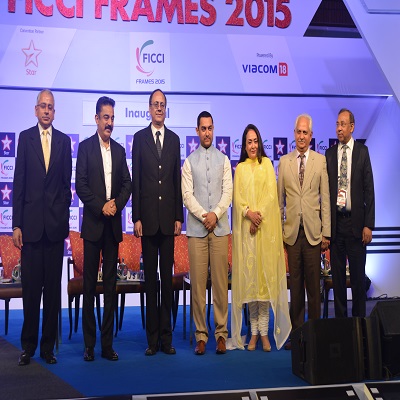
    “The money for the project has already come. But, if the approval doesn’t come in the next 48 hours, I will have to return that money to the foreign investors,” said Tata Sky MD & CEO Harit Nagpal, while addressing the inaugural session at FICCI FRAMES 2015.


    Responding to this, I&B Ministry additional secretary JS Mathur said, “Well, we had granted the approval a month back, and then Tata Sky realized that for the route it wanted to take with the investment, it had to reapply and this is the reason it is taking time.”


    Taking cue from Prime Minister Narendra Modi’s ‘Digital India’ campaign, Nagpal said, “The enabler of connectivity is broadband.”


    As per Nagpal, with low Average Revenue Per User (ARPU), putting fresh wires in the country would not give any return on investment. “Otherwise, there are enough hungry entrepreneurs, who would have used the opportunity. And if they haven’t, means that conditions are not viable in the country,” opined Nagpal.


    The country, though has hundreds miles of wires all over, which can carry broadband, and all it’s waiting for is an enabling and uniform environment, to use this infrastructure and deliver broadband to the consumer. “The rest as has happened in telecom, will happen,” he added.


    According to Nagpal, the industry lacks new thinking. “If anybody finds a successful format, 20 others follow and copy. I have seen general entertainment channels (GECs) being launched as pay TV, churning out the same content, and then either vanishing or becoming free to air (FTA). They lose viewership and distribution and then they are forced to carry 20-22 minutes of advertisement, which the regulator starts questioning and they are then seen sitting in courts,” he said.


    The problem, as per Nagpal, is not the producers, but the economics of the business, the restrictions and the permissions needed to do business. “All this restricts the producer from taking risks and choosing a safe and successful path,” he said.


    Nagpal, further went on to say, “I don’t think there is room for more Stars, Zees and Sonys. Also there is one Arnab and one Barkha, you can’t have too many of them. It is the niche, which will take us forward, and they are low investment and high return product.”


    Flair of creativity and new ideas is the key ingredient in the media and entertainment sector. “The deeper I travel, the more gems I see, but the production centres in the country are all located in the big cities. There is need to take production centres in smaller towns, where the talent is and create more self employed professionals in those areas,” he added.


    According to Nagpal, while the rules for setting up, funding and running the business are in place, one still needs to follow rules and ask for permission at every step. “Things have improved in the past few months and the government is keen to clear files, faster than ever before,” he said.


    The only way the industry can grow, as per Nagpal, is by allowing the businesses to inform and not seek approvals and also by self regulation. “In case we violate the law, issue penalties, cancel the licence,” he announced.


    Touching upon the movie business, Nagpal said that while we make the highest number of films, the industry is still not making money. “We have reached a choking point in terms of adding screens and it is marred by either high cost of real estate or the long list of approvals,” he said.


    According to Nagpal, the increasing number of digitized homes will help more producers to monetize their production. “This has already started, a lot of films are breaking even only on the basis of selling their rights to cable and satellite,” he said.


    The country has seen digitisation of 42 cities. Touching upon the condition in the digitized cities, Nagpal said, “The local cable operators are running the digitised area and the multi system operators (MSOs) are watching. Customers are not getting packages they want and neither are they getting value added services. The customers are willing to pay, unlike what is being projected by LCOs.”


    Digitisation is equal to automation. “The new role of the LCO is to be of a service provider to the MSO and not a partner. I think this needs to be thought about,” concluded Nagpal.