Tag: broadband

  • OTTplay partners with Connect Broadband

    OTTplay partners with Connect Broadband

    Mumbai: OTTplay, an OTT app and AI-based recommendation platform has partnered with Quadrant Televentures (Connect Broadband), a major internet service provider in North India, to enhance digital entertainment access. Through this alliance, users can access 25 popular OTT platforms via broadband plan subscriptions.

    Quadrant Televentures’ extensive FTTH network across Punjab, Chandigarh, and parts of Haryana and Jammu & Kashmir supports this initiative, delivering high-speed internet alongside premium entertainment. Newly launched plans cater to various internet speed needs, with seamless access to OTT platforms such as Sony Liv, Zee5, Chaupal, LionsgatePlay, Fancode, PTC, Shemaroo, and Cinemaworld, all available in a single subscription.

    The partnership includes five broadband plans with access to all 25 OTT apps: ₹519 (30 Mbps), ₹619 (60 Mbps), ₹719 (100 Mbps), ₹819 (150 Mbps), and ₹919 (200 Mbps).

    OTTplay CEO & co-founder Avinash Mudaliar said, “Our latest partnership with Quadrant Televentures Limited reflects OTTplay’s commitment to delivering the best digital experiences to our customers and viewers in Punjab. With Quadrant Televentures Limited reliable high-speed internet, we’re bringing an impressive selection of entertainment options to households, tailored for the rapidly growing demand for quality regional and international content. We are hopeful that this partnership will further enable us in reaching a larger audience and enable the best of OTT entertainment for them in this digital era.”

    A Quadrant Televentures’ management added, “We’re pleased to partner with OTTplay to bring an enhanced entertainment experience to our existing and new subscribers. We are confident that this partnership will strengthen our offerings with bundled plans that provide high-speed broadband, unlimited voice, and a rich OTT content package all under one umbrella, which is designed to deliver excellent value and meet the evolving needs of our customers in the region.”

    Through their partnership, OTTPlay and Quadrant Televentures offer access to 25 popular streaming platforms, including Sony Liv, Zee5, Shemaroo, Playflix, Fancode, PTC, Stage, Distro, VROTT, Chaupal, OTTPlay TV, CinemaWorld, OM TV, RunnTV, ShortsFndly, Dollywood, PowerKids, PrimeFlix, BhaktiFlix, Sanskar TV, Alt Balaji, Lionsgate, Ultra Jhakaas, and Dangal. This wide selection brings diverse, high-quality content to homes across Punjab.

    Users in Punjab can enjoy seamless streaming with a variety of content options, catering to different preferences and budgets.

  • Hathway Cable Q2 FY2025: Revenues rise, profits too

    Hathway Cable Q2 FY2025: Revenues rise, profits too

    MUMBAI: The cable TV sector is under pressure in India is known to many and  a lot has been written about the rampant cord cutters and cord-nevers. But this is one multisystem operator which seems to be bucking the trend – the Reliance Industries-owned Hathway Cable & Datacom. 

    At least that’s the first perception you get when you look at its financials for Q2FY2025 ended 30 September 2024, which were filed with the Bombay stock exchange on 11 October.

    Revenue from operations is up to Rs 5127.4 million as against Rs 4837.9 million in the previous year’s corresponding quarter. Profit before tax  is at Rs 398.8 million compared to Rs 339.3 million (Q2 FY 2024). Net profit too has  risen to Rs 257.8 million (Rs 200.3 million) a 28.4 per cent increase. EBITDA during the quarter showed a bit of an uptick at Rs 859.9 million (Rs 826.3 million).

    The company’s revenue from the broadband business for H1 FY2025 ended 30 September has slipped to Rs 3027.8 million (Rs  3132.2 million), even as it has risen for its cable TV business to  Rs 6801.5 million (Rs 6698 million).

    On a quarterly basis for Q2 FY2025  there has been a drop in its broadband revenues to Rs 1515.9 million (Rs 1564.6 million in Q2FY 2024) while cable TV has shown an increase to Rs 3440.1 million (Rs 3273.3 million). However, margins seem to be getting squeezed in both these segments with its cable TV business turning up negative segment results at Rs 143.2 million (negative Rs 138.1 million in Q2 FY2024). Its broadband segment too has reported  lower results  at Rs 56 million (Rs  115.8 million). 


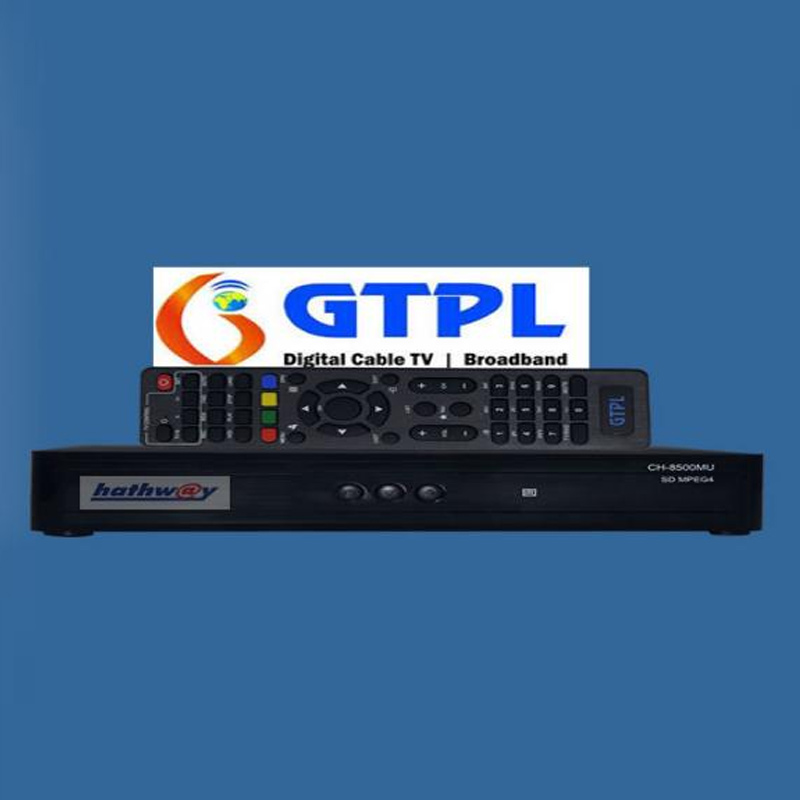
    Picture courtesy Hathway Cable & Datacom Annual Report
     

  • GTPL Hathway: net profit plummets, revenue rises nine per cent in Q2 FY 2025

    GTPL Hathway: net profit plummets, revenue rises nine per cent in Q2 FY 2025

    MUMBAI: Ahmedabad-hqed GTPL Hathway Ltd’s results for Q2 FY 2025 ended on 30 September 2024 are a bit of a mixed bag, according to the company’s filings with the Bombay stock exchange.

    Total consolidated income rose nine per cent to Rs 8,620 million as against Rs 7,900 million in the corresponding quarter of the previous year. Net profit however plunged 62 per cent at Rs 129 million as against Rs 344 million (Q2 FY2024). EBITDA for Q2 FY25 stood at Rs 1,138 million (Rs 1,351 million); EDITDA margin was at 13.2 per cent (17.1 per cent), operating EBITDA margin was at 22 per cent (25.2 per cent).

    GTPL Hathway’s active digital cable TV subscribers rose by 100,000 over the previous year’s corresponding quarter to touch 9.50 million, even as paying subscribers rose by a similar number reaching  8.80 million.

    Its broadband subs also jumped by 50,000 to get to 1.04 million with home passes standing at 5.95 million, a pole vault of 400,000 year on year.  Of the 5.95 million, 75 per cent are FTTX conversion ready, the MSO says. Average revenue per user for broadband stood at a chunky Rs 460 while data consumption per user was 350 GB per month, an increment of 13 per cent year on year.

    According to GTP Hathway managing director Anirudhsinh Jadeja what helped the cable TV MSO retain its no 1 position as the largest operator in the country in Q2 2025 is its sharp focus on innovation and enhancing customer experience. 

    Anubhai (as he is called in the trade) added: “Broadband business is witnessing healthy subscriber growth, propelled by both direct customer additions and with strategic use of our extensive partner network to expand. In the cable business, our efforts are focused on growing our subscriber base through a mix of organic growth and industry consolidation via acquisitions of existing operators and MSOs. This dual strategy strengthens our market position and builds on our success.”

    He explained that the company added the customer app GTPL Buzz, relaunched its website (gtpl.net), introduced TV everywhere, Blacknut cloud gaming, Distro TV, while integrating its AI-enabled app Giva for sales as well as support during the quarter.

    “These customer touchpoints have been designed for a consistent user experience and to deliver seamless interaction across platforms and devices,” said Anubhai.

    GTPL’s shares rose Rs 2.65 to end the day at Rs165.65.

  • ACT Corp launches next-gen enterprise solutions

    ACT Corp launches next-gen enterprise solutions

    Mumbai: ACT Fibernet (Atria Convergence Technologies Ltd), a fiber-focused wired broadband internet service provider, has announced its comprehensive suite of enterprise solutions designed to support and connect small, medium, and large enterprises. With a presence in key cities across India, ACT Fibernet is committed to empowering businesses with reliable, secure, and high-speed internet connectivity.

    ACT Fibernet offers a range of products tailored to meet the diverse needs of businesses. These include managed internet leased line, corporate broadband, managed Wi-Fi solutions, and a starter pack for small startups. Each product is designed to enhance business operations by providing seamless, secure, and scalable internet connectivity. By leveraging cutting-edge technology and a customer-centric approach, ACT Fibernet ensures that enterprises of all sizes can achieve their digital transformation goals.

    In today’s fast-paced business environment, connectivity is key. ACT Fibernet’s managed internet leased line service provides dedicated, symmetric, and uncontended internet connectivity backed by guaranteed SLAs. This service ensures a stable and consistent internet connection, minimising downtime and disruptions. High speeds support bandwidth-intensive applications and data transfers, enhancing productivity and enabling seamless video conferencing. As businesses grow, the scalable solutions offered by ACT Fibernet ensure that internet capabilities keep pace with evolving needs. With 24/7 monitoring and robust security measures, businesses can enjoy uninterrupted operations and peace of mind.

    ACT Fibernet’s corporate broadband plans offer ultra-fast speeds of up to 1 Gbps, making them ideal for modern office environments. With superior web hosting, direct peering with major cloud providers, and managed business continuity through advanced data centers, ACT Fibernet ensures that businesses experience low load times and high reliability. The managed Wi-Fi solutions provide fast and reliable connectivity with 99.9 per cent uptime, robust security protocols, and remote management capabilities. This results in increased productivity, significant cost savings, and enhanced customer satisfaction. By offering features such as WPA-3-compliant wireless security and AI-based dashboards, ACT Fibernet delivers a seamless and secure internet experience for businesses.

    For startups looking for a comprehensive internet solution, ACT Fibernet’s starter pack offers managed, secure internet access, 100 per cent managed Wi-Fi, and a dedicated account manager to support growing businesses. This one-stop solution ensures that startups can focus on innovation and growth without worrying about connectivity issues. The enterprise-grade internet on fiber and managed security services included in the starter pack provide a robust foundation for small businesses to thrive.

    ACT Fibernet’s enterprise operations are present in multiple cities across India, including Ahmedabad, Eluru, Hyderabad, Bengaluru, Jaipur, Chennai, Kakinada, Coimbatore, Lucknow, Delhi, Tirupati, Bhimavaram, Kanchipuram, Ongole, Ghaziabad, Guntur, Hosur, Machilipatnam, Madurai, Nellore, Polachi, Pune, Rajahmundry, Tadepalligudem, Tenali, Tiruvallur, Trichy, Tumkur, Visakhapatnam, Vijayawada, and Warangal. This extensive presence ensures that businesses across the country can benefit from ACT Fibernet’s high-quality internet services.

    “We understand that in today’s fast-paced world, dynamic and consistent internet speeds are crucial for enterprises to reach their peak performance and gain ascendancy in the corporate race,” said ACT Fibernet CMO Ravi Karthik. “Our comprehensive suite of enterprise solutions is designed to meet the diverse needs of businesses, from startups to large corporations. With our industry-leading service, guaranteed SLAs, and extensive presence across key cities in India, we are committed to being a trusted partner in our clients’ growth and success.”

    ACT Fibernet is dedicated to providing industry-leading service and uptimes with promised SLAs, ensuring businesses stay connected and productive. As a partner in their success, ACT Fibernet’s reliable and high-speed internet connectivity helps businesses thrive in a competitive market.

  • ACT Fibernet unveils exciting broadband plans for Hyderabad users

    ACT Fibernet unveils exciting broadband plans for Hyderabad users

    Mumbai: In a thrilling development for internet enthusiasts in Hyderabad, ACT Fibernet (Atria Convergence Technologies Ltd), a fiber-focused wired broadband internet service provider, has unveiled a variety of new plans meticulously crafted to cater to the increasing demand for high-speed internet and digital entertainment. Utilising the cutting-edge ACT SmartFiber technology, the company has introduced a selection of cost-effective broadband packages, commencing from a mere ₹525 for 50 Mbps and reaching up to ₹1325 for 500 Mbps. With this technology, users can relish dedicated virtual speed pathways, ensuring uninterrupted bandwidth tailored for diverse online pursuits such as streaming, gaming, and extensive downloading.

    ACT Fibernet’s new subscription plans in Hyderabad include plans like ACT Max 525, ACT Max 799, ACT Max 1075 and ACT Max 1325, reflecting the company’s dedication to providing high-speed internet connectivity at competitive prices. Embracing the shift towards digital entertainment, ACT Fibernet enriches its broadband plans with bundled subscriptions to leading OTT platforms such as Netflix, Disney+ Hotstar, Sony Liv, Zee5, and Yupptv.

    The entertainment-centric plans start with the ACT Max 650 Plus at ₹650 per month, offering 50 Mbps speed along with access to Disney+ Hotstar, Sony Liv, ZEE5, and Yupptv, designed for users who desire a wide range of content. The ACT Max 899 plan at ₹899 per month provides 100 Mbps and a subscription to Disney+ Hotstar, Sony Liv, ZEE5, and Yupptv.

    For those with a preference for Netflix, the ACT Max 1199 plan at ₹1199 per month provides 150 Mbps and a Netflix and Sony LIV subscription along with the others. The ACT Max Giga, available for ₹1999 per month, features a one Gbps speed bundled with subscriptions to Netflix, Disney+ Hotstar, Sony Liv, ZEE5, and Yupptv, catering to households seeking the ultimate entertainment package. These plans are meticulously crafted to provide uninterrupted access to a wealth of digital content, ensuring that subscribers are always at the cutting edge of entertainment.

    Focusing on smoother streaming and video calls, ACT Fibernet’s SmartFiber tech guarantees a lag-free video experience. This tech cuts down delays, making things like watching movies, video chatting, and online gaming much smoother and fun. It’s made to work well with big screens and smart TVs, managing internet use efficiently to keep 4K viewing smooth all day long. Apart from great internet and entertainment, ACT Fibernet prioritizes digital safety and home security too. They’ve introduced ACT Shield and ACT Home Camera with their broadband, giving extra security against online threats and real-time monitoring for home safety. These services showcase that ACT Fibernet not only connects people to the online world but also keeps them safe there.

    With various plans to fit different needs and budgets, plus bundled entertainment and security, ACT Fibernet keeps leading the way in changing how Hyderabad uses the internet. For more details on these exciting broadband plans and services, check out ACT Fibernet’s website or contact their support team. With ACT Fibernet, people in Hyderabad can expect not just faster internet, but also a safer, richer, and more fun digital life.

  • Telcos’ gross revenue slips 0.01% to Rs 76,408 cr  in Apr-Jun’2022: Trai

    Telcos’ gross revenue slips 0.01% to Rs 76,408 cr in Apr-Jun’2022: Trai

    Mumbai: The Telecom Regulatory Authority of India (Trai) has released the latest edition, for the quarter ending 20 June 2022, of its report “Indian Telecom Services Performance Indicator” on Wednesday.

    The report provides a broad view of telecom services, including key parameters and growth trends, as well as cable TV, DTH, and radio broadcasting services in India from April 1 to June 30.

    According to the report, the number of telephone subscribers has increased from 1,166.93 million at the end of March 22 to 1,172.96 million at the end of June 22, registering a growth rate of 0.52 per cent over the previous quarter. This reflects a year-on-year (YoY) decline rate of 2.46 per cent over the same quarter of the last year. Overall teledensity in India increased from 84.88 per cent on March 22 to 85.13 per cent on June 22.

    Trends in Telephone subscribers and Tele-density in India

    Telephone subscribers in urban areas increased to 649.09 million at the end of Jun-22, in comparison to 647.11 million at the end of Mar-22. During the same time period, however, urban tele-density fell from 134.94 per cent to 134.72 per cent.

    Rural telephone subscribers increased from 519.82 million at the end of Mar-22 to 523.27 million at the end of Jun-22 and rural tele-density also increased from 58.07 per cent to 58.46 per cent during the same period.

    Out of the total subscriptions, the share of rural subscriptions increased from 44.55 per cent at the end of Mar-22 to 44.66 per cent at the end of Jun-22.

    Composition of Telephone Subscribers

    With a net increase of 5.30 million subscribers during the quarter, the total wireless subscriber base increased from 1,142.09 million at the end of Mar-22 to 1,147.39 million at the end of Jun-22, registering a growth rate of 0.46 per cent over the previous quarter. On Y-O-Y basis, wireless subscriptions decreased at the rate of 2.83 per cent during the year. 

    Wireless tele-density increased from 83.07 per cent at the end of Mar-22 to 83.27 per cent at the end of Jun-22 with quarterly growth rate of 0.24 per cent.

    Wireline subscribers increased from 24.84 million at the end of Mar-22 to 25.57 million at the end of Jun-22, representing a quarterly growth rate of 2.92 per cent, and wireline subscriptions increased by 17.62 per cent year-on-year at the end of quarter ended Jun-22.

    Wireline tele-density increased from 1.81 per cent at the end of Mar-22 to 1.86 per cent at the end of Jun-22 with quarterly growth rate of 2.69 per cent.

    Total number of internet subscribers increased from 824.89 million at the end of Mar-22 to 836.86 million at the end of Jun-22, registering a quarterly growth rate of 1.45 per cent. Out of 836.86 million internet subscribers, the number of wired subscribers is 28.73 million, and the number of wireless subscribers is 808.13 million.

    Composition of internet subscription

    There are 800,94 million broadband internet subscribers and 35.92 million narrowband internet subscribers in the internet subscriber base.

    The broadband internet subscriber base increased by 1.60 per cent from 788.30 million at the end of Mar-22 to 800.94 million at the end of Jun-22. The narrowband internet subscriber base declined by 1.84 per cent from 36.59 million at the end of Mar-22 to 35.92 million at the end of Jun-22.  

    Monthly average revenue per user (ARPU) for wireless service increased by 5.02 per cent, from Rs 127.17 in Mar-22 to Rs 133.55 in Jun-22. On a YoY basis, monthly ARPU for wireless service increased by 27.61 per cent in this quarter.

    Prepaid ARPU per month increased from Rs 121.91 in Mar-22 to Rs 128.61 in Jun-22, however, postpaid ARPU per month decreased from Rs 200.56 in Mar-22 to Rs 197.55 in Jun-22.

    On an all-India average, the overall MOU per subscriber per month decreased by 4.38 per cent from 955 in March 2022 to 914 in June 2022.

    Prepaid MOU per subscriber per month fell from 972 in March to 936 in June. Postpaid MOU per subscriber per month fell from 721 in March to 621 in June.

    The telecom service sector’s gross revenue (GR) and adjusted gross revenue (AGR) for the quarter ended June 22 were Rs 76,408 crore and Rs 60,530 crore, respectively. GR decreased by 0.01 per cent and AGR increased by 2.79 per cent in Jun-22, as compared to the previous quarter.

    The YoY growth in GR and AGR in Jun-22 over the same quarter last year has been 17.91 per cent and 17.91 per cent, respectively.

    Pass-through charges decreased from Rs 13,568 crore in Mar-22 to Rs 13,415 crore in Jun-22, with a quarterly decline rate of 1.12 per cent. Pass-through charges for the quarter ended June 22 have decreased by 0.38 per cent YoY.

    The licence fee increased from Rs 4,712 crore to Rs 4,844 crore for the QE Mar-22 to QE Jun-22. The quarterly and the YoY growth rates of the licence fee are 2.79 per cent and 18.05 per cent, respectively, in this quarter.

    Service-wise composition of Adjusted Gross Revenue

    Access services contributed 80.95 per cent of the total adjusted gross revenue of telecom services. In access services, gross revenue (GR), adjusted gross revenue (AGR), license fee, spectrum usage charges (SUC) and pass through charges increased by 1.67 per cent, 5.55 per cent, 5.53 per cent, 3.82 per cent and -3.41 per cent, respectively in QE Jun-22.

    The performance of cellular mobile service providers in terms of quality of service performance in all the parameters remains the same, i.e., neither performance has improved nor deteriorated in this quarter as compared to the previous quarter.

    A total of approximately 892 private satellite TV channels have been permitted by the ministry of information and broadcasting (MIB) for uplinking only/downlinking only/both uplinking & downlinking.  

    As per the reporting done by broadcasters in pursuance of the tariff order dated 3 March 2017 as amended, out of 879 permitted satellite TV channels which are available for downlinking in India, there are 347 satellite pay TV channels as on 30 June 2022. Out of 347 pay channels, 249 are SD satellite pay TV channels and 98 are HD satellite pay TV channels.

    Since the introduction of the DTH sector in 2003, Indian DTH (direct-to-home) services have displayed phenomenal growth. There were four pay DTH service providers in the country during the quarter that ended in June 2022.

    As of June 30, 2022, Pay DTH had approximately 67.04 million active subscribers. This is in addition to the DD Free Dish (free DTH services from Doordarshan) subscribers.

  • NxtDigital launches its flagship integrated solution ‘OneDigital’

    NxtDigital launches its flagship integrated solution ‘OneDigital’

    Mumbai: Hinduja Group’s NxtDigital has announced the introduction of its flagship integrated solution, OneDigital. This customised customer solution provides a wide range of services, including wi-fi, digital TV, OTT, voice/intercom, broadband, and CCTV.

    When compared to broadband packages, which range in speed from 10 mbps to 1 gbps, the TV solution offers clients up to 650 TV channels in both standard and high definition.

    Customers can access over 3,00,000 hours of OTT content from top global and regional platforms through OneDigital on any device.

    Customers can still be reachable over an IP or telecom network and have a personalised landline number with the help of its partners’ VOIP (voice over internet protocol) service, which is available nationwide. ONEDigital may offer customised CCTV solutions and wi-fi-enabled internet access in public spaces as part of the solution.

    Speaking at the launch of OneDigital at SCAT 2022, NxtDigital’s broadband subsidiary OneOTT Intertainment chief operating officer and OneDigital project lead Sanjeev Agarwal said, “Consumer preferences are radically changing in the way they not only consume but also access and engage digital services at home or at work. OneDigital has been designed specifically based on that premise to give customers access to all digital solutions for their home and office through a single business conduit  facilitating true digital convergence and much needed convenience.”

    He further added, “The USP is that this is a bespoke end-to-end solution and can be tailored based on a customer’s specific needs—whether for home or a small, medium, or large business. This is the start and we will, of course, continue to add more products to the OneDigital portfolio over time.”

    The company also unveiled its future OTT content aggregator app, which will enable users to access OTT content from leading local and international platforms.

    The app, which will soon be accessible online, will allow users access to over 3,00,000 hours of international and local material at first and pave the way for the integration of education, gaming, and other apps within the solution.

    The company has already built an ecosystem of partners to provide quality VOIP and CCTV hardware and software solutions. In order to fulfil customer demands from pre-sales and installation to service support and troubleshooting, NXTDIGITAL has started training its digital franchisees throughout its TV and broadband businesses. OneDigital is now being introduced in Mumbai and will be made available in additional significant cities by the end of the year.

    NxtDigital chief operating officer NK Rouse said, “We have over the years built a robust infrastructure, a strong subscriber base, and a national network of franchisees, all backed by best-in-class technology, including our HITS platform and our award-winning NxtHubs.”

    He further added, “OneDigital and NxtPlatly are extensions of our solutions portfolio, focusing on emerging technologies and the need to develop solutions with an eye on the future. We have also commenced training our franchisee partners to make the paradigm shift to digital solutions providers, ready for the next decade of growth that will also include broadband over satellite.”

    The award-winning NxtHubs that NxtDigital owns and operates, which just passed 100 locations and already provide digital TV, broadband, and OTT solutions in the majority of locations, will try to offer one digital solution.

    NxtDigital is hoping to leverage the strength of its planned broadband-over-satellite service to augment the solution in countries where terrestrial connectivity may be an issue.

  • GUEST ARTICLE: 5G and IoT-The beginning of a new era

    GUEST ARTICLE: 5G and IoT-The beginning of a new era

    Mumbai: Meta Description: The integrated ecosystem of 5G and IoT (internet of things) has the potential to revolutionise business fortunes if these new technologies are coupled in a synergistic manner.

    What do the numbers say about 5G and IoT integration?

    Take a look at the data below to see the great potential that 5G technology integration in IoT devices offers:

    • According to Cisco, in the near future, 500 billion IoT devices will be integrated with 5G technology. This figure comprises, among other things, sensors, actuators, scanners, and medical devices.

    • Ericsson AB, another reputable brand in the IT business, forecasts that by the end of 2022, 550 million 5G customers will be part of the current iteration of mobile broadband. According to the analysis, 5G integration in IoT devices will see an unparalleled hike in the next few years.

    • Asia Pacific will become the 5G network’s second-fastest expanding hub, accounting for around 10 per cent of worldwide customers. This change in the customer segment will spread to the industrial sector, catalysing the use of 5G in IoT devices.

    What exactly are IoT and 5G technologies?

    The potential of 5G technology and its ramifications for IoT devices have piqued the imagination of information technology professionals. Given the projected increase in the number of IoT devices from 16.4 billion to 30.9 billion units by 2025, the growth of 5G technology is essential for flawless communication among these vast numbers of devices.

    The fifth-generation network, or 5G technology, is the next version of the broadband cellular network. It can provide larger bandwidths and data speeds of up to 20 gigabytes per second (20 Gbps). The 5G network, when combined with IoT devices, has the potential to revolutionise the faces of many organisations across industries. Healthcare, transportation, energy and power, and education are just a few of the industries that stand to benefit greatly from the combination of 5G and IoT devices.

    Data aggregation and information extraction from IoT devices

    IoT devices are critical for gathering, aggregating, and analysing data from a wide range of sources. This data is subsequently analysed, resulting in the extraction of actionable information that may be used to make critical organisational strategic and tactical decisions.

    Consider the application of IoT devices in the healthcare industry. Today, IoT devices record a wide range of customer data at hospitals, health centres, infirmaries, and other facilities. The acquired data is then used to extract information about patients’ various health factors, such as age, gender, health concerns, and so on. As a result, this data is used by a variety of stakeholders, including doctors, patients, pharmaceutical companies, and medication marketers, to develop policy frameworks, action plans, and market strategies.

    IoT and 5G: complementary forces

    All data collection and aggregation can now be done more efficiently if IoT devices are seamlessly connected with one another, which is where the importance of a fast and reliable 5G network comes into play. Because of the 5G network’s high-speed data transfer, IoT devices can work significantly more efficiently than they can with 4G networks. To summarise, for IoT devices to reach their full potential, a fully matured and evolved 5G network is required.

    In terms of benefits, 5G technology and IoT devices have the potential to transform the fortunes of numerous companies. The following are some concrete highlights that demonstrate the great potential that integrating these technologies can provide businesses:

    1) 5G technology has made a name for itself due to its unique efficiency, speed, and latency characteristics. Furthermore, 5G technology provides superior safety and security, which, when combined with next-generation IoT devices, can enable significant leaps forward in autonomous driving, drone operations, virtual reality, digital finance, and a variety of AI applications in various sectors.

    2) 5G networks will primarily benefit enterprises in the healthcare, education, transportation, supply chain, and manufacturing industries. The adoption of 5G-enabled IoT devices in the healthcare industry is already increasing at an exponential rate. The convergence of 5G and IoT in the education industry will result in a more interactive virtual learning and immersive experience for students. Transportation and logistics will profit from the convergence of these new technologies as well, through the use of real-time tracking, electronic data interchange, and automatic stock replenishment. The manufacturing industry may use the concept of remote access, repair, and maintenance in IoT devices via high-speed internet, which will be truly transformative for the business.

    The need for a comprehensive 5G and IoT ecosystem

    We need to establish an integrated ecosystem of 5G networks and IoT devices to achieve the full potential of 5G and IoT devices. Only with the seamless integration of both of these technologies will industries be able to make huge leaps across the value chain. From raw material procurement to product manufacture, and from sales and marketing to actual client purchasing, we must endeavour to create a comprehensive ecosystem. As a result, businesses across their value chain and participating stakeholders will benefit from synergies.

    The author of the article is Altorum Leren co-founder and CEO Prateek Shukla.

  • DTH business continues to see headwinds: Airtel CEO Gopal Vittal

    DTH business continues to see headwinds: Airtel CEO Gopal Vittal

    MUMBAI: At Bharti Airtel’s fourth quarter 2022 results CEO Gopal Vittal noted that the DTH business continues to see headwinds.

    During the company’s Q4 FY22 earnings conference call, Vittal said, “While the category continues to see a significant long-term opportunity for upgradation from cable, it’s also a classic case of an industry that has been brought to its knees due to excessive regulation”.  

    “The new tariff order brought about by TRAI a few years ago mandated every miniscule aspect of pricing in an industry which was managed until then very simply through forbearance. This created an overwhelming amount of complexity for the DTH players and even more importantly for the customer with no benefit to any stakeholder”, he further elaborated.

    Vittal added, “The second aspect of skewed regulation is to do with the very same content being made available for free. This is what happens on free-to-air channels and there is, mind you, very good content in many cases here with just windowing or it is being made available on the same screen through a broadband pipe at unregulated prices. This is what happens on OTT platforms. As a result, the DTH industry has been crippled.”

    “We are glad to see that TRAI has just come out with a new consultation paper on tariffs and we hope that at the end of this consultation, regulations will be lightened so that we can focus on what we do best, keep things simple and serve customers,” he added.

    Further, talking about the results he said, “during the year the company added Rs 13,440 crores to the top line and just under Rs 8,150 crores of earnings before interest, taxes, depreciation, and amortization to our India business alone. Beyond these numbers, what was even more satisfying is that we grew competitively in every part of our business; mobility, broadband, DTH and Airtel business grew market share to reach lifetime highs.”

    Vittal also explained the reason behind increasing tariffs. “We challenged ourselves to find a way to expand the reach of our home broadband presence after Covid and cracked an extremely innovative partnership with thousands of local cable operators using our digital promise. We strengthened our portfolio in airtel business through innovations in cPaaS and Airtel Secure. We continue to invest over Rs 20,400 crores into CapEx across our network, data centers, submarine cable capacities, and digital. Finally, we strengthened our partnerships. Use Airtel JV, the investment into level for SD-WAN, which is a software-defined wide-area network, for blockchain, Oracle for data centers, and Google as a strategic equity partner,” he added.


  • We aim to double our current subscriber base: OIL CEO Yugal Kishore Sharma

    We aim to double our current subscriber base: OIL CEO Yugal Kishore Sharma

    Mumbai: OneOTT Intertainment Ltd (OIL), the broadband subsidiary of NxtDigital Ltd (NDL), the media vertical of the Hinduja Group crossed one million wired home broadband subscribers. OIL added over 200,000 subscribers in the fourth quarter of FY22 recording a growth of 65 per cent over FY21.

    In an interaction with IndianTelevision.com, OIL CEO Yugal Kishore Sharma speaks about the progress made and the goals for the broadband subsidiary.

    What targets has OneOTT Intertainment set for the year?

    OIL has achieved a robust growth clocking a CAGR of close to 75 per cent in the last six years and we hope to continue this momentum in fiscal 2023. Whilst we remain on track to add over half a million customers, if not more, in this fiscal; we do have an ambitious plan to double our current subscriber base. This will propel us into India’s top three private internet service providers.

    What is the game plan to get there?

    At OIL, the success mantra has been our focused approach to extend a consistent customer experience bundled with ‘predictable & proactive customer responsiveness and care.’ The success of this mantra is reflected in our performance; in Q4 of FY22, we added over 200,000 customers, a milestone achievement by any yardstick.

    We launched a FTPD or ‘faster-than-pizza-delivery’ initiative that challenges our customer responsiveness to be faster and more efficient than that of QSR brands. This has led OIL to enhance its SLAs resulting in lowest-customer-Churn well below the industry average of one per cent.

    What is the USP of OneOTT Intertainment versus competition?

    The USP is embedded in one of our groups principle ‘Partnership for Growth.’ This is a model that is driven actively by NxtDigital across the digital distribution space; and as a subsidiary of NxtDigital we have adapted the model effectively in the broadband industry. OIL has evolved an industry first and innovative ISPs Aggregator Model that has contributed to rejuvenating India’s passionate entrepreneurs running small and medium ISPs.

    The model continues to successfully consolidate and unify the MSO ISP Industry as a strategic alliance partner. We’re pleased to state that we should have more than 50 such ISPs or alliance partners within our OIL umbrella in the first half of this fiscal.

    What growth in digital consumption was seen during a lockdown? How were you able to capitalise on it?

    Team OIL, along with its parent digital platforms company NxtDigital, introduced the industry to its vision of providing an always-on-high-speed-internet-access to transform the lives of the customers for their on-demand entertainment. In fact, we have aptly coined a new term for such a service demand – Intertainment.

    OIL is better prepared to offer its Intertainment services across OTT, live TV, VOD, movies, and gaming. At the onset of the first lockdown, our customers and their family members had to work, study and play from home, thereby, increasing the bandwidth consumption by almost 50 per cent. OIL through its Intertainment platform along with an innovative product-mix and promotional bundles was able to meet customer demands without passing any incremental cost.

    Which are the key cities and towns where you see the most potential?

    Our vision is a reflection of our groups mission – to facilitate digital inclusion in India through innovative technology, keeping alive the entrepreneurship spirit of small and medium ISPs. We aspire to serve as many as citizens as possible across the country. We will continue to leverage the vast network of over 1,500 cities and towns that NxtDigital currently delivers digital television and other services to.

    What is the big challenge in delivering high speed to consumers?

    There are challenges, but we’re also grateful to the government for bringing in appropriate guidelines to help the industry accelerate and grow. We are sure that two key issues that do often serve as stumbling blocks viz Right of Way (RoW) permissions and the need for standardisation on concurrency and contention ratios across ISPs and TSPs will be addressed soon.

    Could you talk about the tie-ups that you have with companies like Facebook, Nokia?

    OIL’s strategic alliance with Facebook India has made fast internet not just available but also reliable and affordable on Wi-Fi and other last-mile-access technologies at Dharavi and other such areas.

    We are very conscious about best-in-class technology and have partnered with leading technology companies like Nokia, Juniper, Huawei and others across core, aggregate, access, analytics and security solutions. OIL’s Technology Partners have also come up with innovative ‘Enterprise-5G’ solutions that can be leveraged extensively.

    Finally what is your view on 5G and how it will revolutionise data consumption?

    With 5G, the world will be much faster connected on mobile internet with 10 times data speeds as compared to current networks. This newfound capability could see the emergence of cutting-edge solutions to benefit users.

    The top ISPs along with ‘Enterprise-5G’ spectrum could have the capability and resources to build large campus-wide connectivity solutions for enterprise networks powered on a common 5G backhaul. 5G rollout topology is on a ‘small-cell-architecture’ network which is in a radius of half a kilometre vis-à-vis 1.5~2 Kms of a cellular network architecture. This would complement OIL’s Fibre-To-The-Home (FTTH) network roll-out and related services.