Tag: broadband

  • RIL AGM to be streamed live from 11 am onwards 1 Sept

    RIL AGM to be streamed live from 11 am onwards 1 Sept

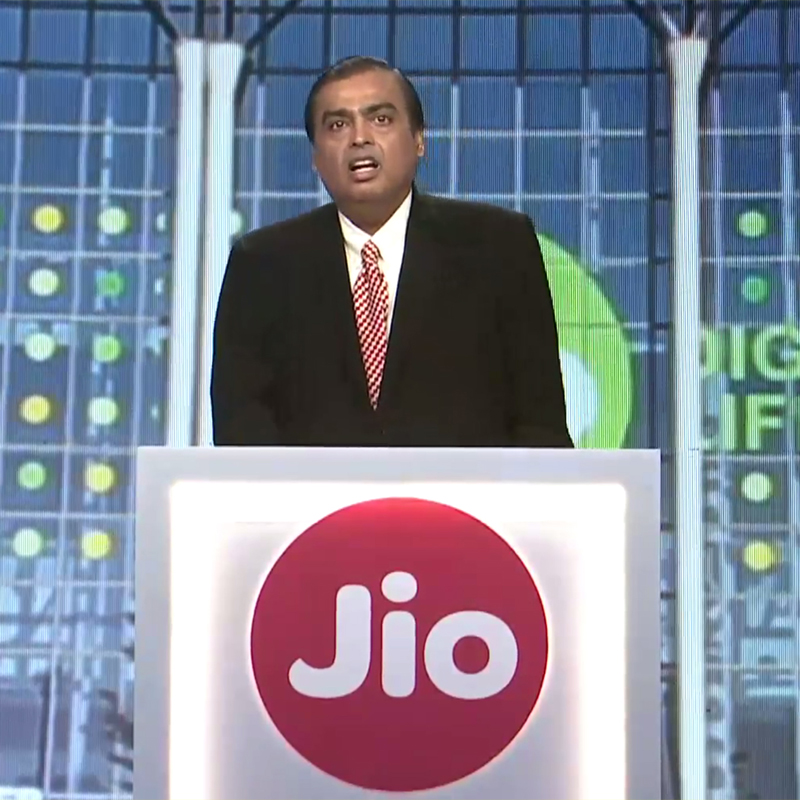
    MUMBAI: A lot is expected to be revealed about Reliance Jio progress and rollout plans during the course of Reliance Industries Ltd’s 42 annual general meeting with its shareholders on 1 September.

    Punters are betting that its tariffs will be disclosed as well as the plans it has VoLTE, IPTV and broadband.
    RIL has reportedly spent over Rs 29,000 crore over Jio and is expected to invest more. And while the profits are not expected to start rolling out during its investment and growth phase, RIL would still like to know what chairman Mukesh Ambani has in store. As Jio is expected to revolutionise the way Indians consume data and engage on their mobiles.

    Keeping this in mind, RIL has decided to stream the AGM live on its various online digital channels from 11 am when Mukesh Ambani is slated to begin his speech.

    YouTube

    o   Flame Of Truth channel (https://www.youtube.com/user/flameoftruth2014)

    o   Jio Digital Life channel (https://www.youtube.com/channel/UCuXlQvucItKHNH4b0ega0DA)

    ·        Facebook

    o   Reliance Industries Limited (https://www.facebook.com/RelianceIndustriesLimited/)

    o   Jio (https://www.facebook.com/Jio/)

    ·        Twitter

    o   @FlameOfTruth (https://twitter.com/flameoftruth)

    o   @RelianceJio (https://twitter.com/reliancejio)

    ·        Jio Chat

    ·        Jio Play

  • Verizon Digital Media  partners with Airtel for POPs

    Verizon Digital Media partners with Airtel for POPs

    MUMBAI: Verizon Digital Media Services, the next-generation digital media platform, and Bharti Airtel Limited (“Airtel”), India’s largest telecommunications services provider, have partnered to launch new points of presence (PoPs) in four cities in India: Mumbai, Chennai, Bangalore and New Delhi.

    The four PoP installations mark Verizon Digital Media Services’ significant investment into expanding throughout the country, leveraging Airtel’s digital infrastructure as a gateway to India. This partnership will ensure that content on the Verizon Digital Media Services platform can be accessed by digital media consumers in a fast, seamless and reliable way and will improve the experience for users in India.

    “We are expanding our content delivery network in strategic markets that our customers care about, and we have found a long-term partner in Airtel Business,” said Verizon Digital Media Services Chief Technology Officer Rob Peters. “The launch of these strategic PoPs marks the beginning of a strong partnership between Verizon and Airtel Business and further cements our commitment to providing consumers in India, one of the fastest-growing markets for digital media consumption, with exceptional services and quality.”

    In addition to Airtel’s world-class data center services and unparalleled network across the country, this move enables Verizon Digital Media Services to provide superior digital media experiences to millions of internet users in India.

    The newly installed PoPs have already yielded exceptional outcomes. Using third-party Cedexis measurement tools, Verizon Digital Media Services has observed significant network improvements when comparing its network performance in India before and after the PoP installations. The amount of time required on Verizon Digital Media Services’ servers to receive users’ requests, respond and deliver results has significantly decreased.

    “India is fast emerging as a large regional IP Hub and we are excited to enable Verizon Digital Media Services to provide best-in-class digital services in India. This collaboration ensures superior user experiences and seamlessly handles traffic spikes as connected devices, subscribers and content size continue to grow. We are delighted by the positive results seen in a very short time and we are confident that in the long term, Indian mobile Internet users are going to immensely benefit from this partnership,” said Bharti Airtel director & CEO-global voice & data business Ajay Chitkara.

    Airtel has a presence that spans 18 countries, including India, Bangladesh, Sri Lanka and 15 countries in Africa. It offers both B2C and B2B telecom services, including wireless and fixed line technology, national and international long-distance connectivity, Digital TV and IPTV services, and complete integrated telecom solutions to enterprise customers. Airtel’s global network runs across 225,000 Rkms, covering 50 countries and five continents.

    Verizon Digital Media Services has points of presence in North America, South America, Europe, Australia and Asia. More than 3,000 interconnections help to ensure that content is delivered reliably and securely — anytime, anywhere, on any device.

    The company’s exclusive end-to-end platform also provides a variety of solutions, including the Video Lifecycle Solution, the Web Acceleration Solution and the Commerce Acceleration Solution, for broadcast, enterprise and commerce businesses, respectively.

    Some of the clients which are using Verizon Digital Media’s services include: ABC, SoundCloud, Hearst Television, tumblr, twitter, Pintrest,among many others.

  • Verizon Digital Media  partners with Airtel for POPs

    Verizon Digital Media partners with Airtel for POPs

    MUMBAI: Verizon Digital Media Services, the next-generation digital media platform, and Bharti Airtel Limited (“Airtel”), India’s largest telecommunications services provider, have partnered to launch new points of presence (PoPs) in four cities in India: Mumbai, Chennai, Bangalore and New Delhi.

    The four PoP installations mark Verizon Digital Media Services’ significant investment into expanding throughout the country, leveraging Airtel’s digital infrastructure as a gateway to India. This partnership will ensure that content on the Verizon Digital Media Services platform can be accessed by digital media consumers in a fast, seamless and reliable way and will improve the experience for users in India.

    “We are expanding our content delivery network in strategic markets that our customers care about, and we have found a long-term partner in Airtel Business,” said Verizon Digital Media Services Chief Technology Officer Rob Peters. “The launch of these strategic PoPs marks the beginning of a strong partnership between Verizon and Airtel Business and further cements our commitment to providing consumers in India, one of the fastest-growing markets for digital media consumption, with exceptional services and quality.”

    In addition to Airtel’s world-class data center services and unparalleled network across the country, this move enables Verizon Digital Media Services to provide superior digital media experiences to millions of internet users in India.

    The newly installed PoPs have already yielded exceptional outcomes. Using third-party Cedexis measurement tools, Verizon Digital Media Services has observed significant network improvements when comparing its network performance in India before and after the PoP installations. The amount of time required on Verizon Digital Media Services’ servers to receive users’ requests, respond and deliver results has significantly decreased.

    “India is fast emerging as a large regional IP Hub and we are excited to enable Verizon Digital Media Services to provide best-in-class digital services in India. This collaboration ensures superior user experiences and seamlessly handles traffic spikes as connected devices, subscribers and content size continue to grow. We are delighted by the positive results seen in a very short time and we are confident that in the long term, Indian mobile Internet users are going to immensely benefit from this partnership,” said Bharti Airtel director & CEO-global voice & data business Ajay Chitkara.

    Airtel has a presence that spans 18 countries, including India, Bangladesh, Sri Lanka and 15 countries in Africa. It offers both B2C and B2B telecom services, including wireless and fixed line technology, national and international long-distance connectivity, Digital TV and IPTV services, and complete integrated telecom solutions to enterprise customers. Airtel’s global network runs across 225,000 Rkms, covering 50 countries and five continents.

    Verizon Digital Media Services has points of presence in North America, South America, Europe, Australia and Asia. More than 3,000 interconnections help to ensure that content is delivered reliably and securely — anytime, anywhere, on any device.

    The company’s exclusive end-to-end platform also provides a variety of solutions, including the Video Lifecycle Solution, the Web Acceleration Solution and the Commerce Acceleration Solution, for broadcast, enterprise and commerce businesses, respectively.

    Some of the clients which are using Verizon Digital Media’s services include: ABC, SoundCloud, Hearst Television, tumblr, twitter, Pintrest,among many others.

  • Separate Broadcasting Policy, use last mile operator for broadband spread: TDSAT seminar

    Separate Broadcasting Policy, use last mile operator for broadband spread: TDSAT seminar

    NEW DELHI: There should be a separate Broadcasting Policy analogous to the National Telecom Policy, and the existing laws and regulations should be enforced more stringently before drafting new ones.

    This was one of the recommendations on regulatory issues in broadcasting and distribution sector at a seminar by the Telecom Disputes Settlement and Appellate Tribunal (TDSAT) held early this year.

    The last mile cable network should be leveraged to provide broadband services, according to the recommendations placed on the website of TDSAT yesterday.

    A general consensus also said the government needs to ensure that the amendments in existing regulations do not lead to confusion and ambiguity with regard to the original objectives of the legislations.

    A more effective consultation process should be designed so that the stakeholders do not need to resort to the adjudicatory system, and there should be a more pro-active approach on the implementation of recommendations of the policy makers, the recommendations relating to broadcasting said.

    The seminar on the ART (Adjudication, Regulation, Telecommunication) of Convergence on 6 and 7 February 2016 was attended by government, policy makers, adjudicatory body, and service providers to deliberate suggestions to prepare for challenges that arise with a converging digital environment.

    The seminar was inaugurated by Information and Broadcasting Minister Arun Jaitley, Supreme Court’s Justice J. Chelameswar presided over the function, and Attorney General Mukul Rohatgi was the guest of honour.

    Jaitley stressed the need for an adjudicatory mechanism for telecommunications and broadcasting which is agile and responsive to deal with emerging challenges.

    The seminar was held with the support of Department of Telecommunications (DoT), Department of Telecommunications and Information Technology (DeitY), Telecom Regulatory Authority of India (TRAI), Justices from the Supreme Court and High Court, and representatives of the industry. Ernst and Young was the knowledge partner for the seminar.

    Regulatory and Licensing Regime in a converged environment

    The conclusion was the need to frame a simplified, resilient and comprehensive convergence law and regulation encompassing all activities and sections of the industry, which are currently governed by myriad laws and regulations.

    Separate mechanisms are needed for content and carriage regulation, with independent bodies for each of them. There needs to be converged licensing regime for telecommunications and broadcasting.

    It was also stated that there needs to be a clear and well-defined separation of regulatory and adjudicatory powers, with the adjudicatory powers vested in an independent authority. Strategic spectrum should be under the control of the government, while the commercial spectrum should be under the control of the regulator.

    The governance mechanism should be digitized and the processes should be made simpler to use. The existing laws should be amended keeping in mind their compatibility with other regulations and processes. Legislations should be made technology agnostic to provide a level playing field for all the stakeholders.

    Adjudicatory mechanism — issues and way forward

    It was stated that the law needs to be amended to bring more clarity regarding jurisdictional powers of TDSAT mandated in the TRAI Act apropos writ jurisdiction of the High Courts.

    A separate mediation centre is required for resolving minor cases, both pre-trial as well as post-trial, which do not require the specialized expertise of the judges of the Supreme Court.

    The original character of the TDSAT needs to be restored; in addition whether certain types of disputes should be entrusted to TRAI for resolution in order to improve the efficacy of the overall adjudicatory mechanism.

    There should be a fully integrated electronic tribunal and innovative technologies should be used to deal with cases rapidly and efficiently, the recommendations said.

    Training should be provided to all the stakeholders in the sector to eliminate the digital divide. Regulations need to be updated in accordance with the changing technology.

    Content distribution in next generation networks

    There should be clear, defined and uniform regulations for broadband, net neutrality, advertising, patents, and competition and pricing matters.

    There was unanimity that net neutrality should be ensured to safeguard the interest of all stakeholders in the internet ecosystem.

    A suitable patents and copyright system should be developed for India keeping in mind the specific concerns of the domestic industry.

    It was felt that the industry should not be over-regulated as this would dis-incentivize stakeholders and hamper the interests of both the content creators and the consumers.

    The behaviour of the stakeholders in the industry should be regulated instead of the economics of the industry, since regulation of the latter destroys business models while the former adds to both the consumers’ and the industry’s welfare.

    “I-way of the Future”

    It was felt that the challenge of slow implementation should be overcome through enhanced co-ordination among the stakeholders and the policy makers.

    A broadband highway needs to be built that ensures accessibility of high speed internet for everyone.

    Cyber security and privacy issues that arise due to the cross sector convergence and have standardized legislations for dealing with it needs to be addressed.

    A pro-active approach needs to be followed in policy making to speed up the creation and adoption of the next generation highway infrastructure.

    There should be a conducive business environment through policies that incentivize entrepreneurs and private participation. The expertise of the private sector should be leveraged. Start-ups needs to be encouraged to develop their capabilities and help build a compact, connected and coordinated network of smart cities.

  • Separate Broadcasting Policy, use last mile operator for broadband spread: TDSAT seminar

    Separate Broadcasting Policy, use last mile operator for broadband spread: TDSAT seminar

    NEW DELHI: There should be a separate Broadcasting Policy analogous to the National Telecom Policy, and the existing laws and regulations should be enforced more stringently before drafting new ones.

    This was one of the recommendations on regulatory issues in broadcasting and distribution sector at a seminar by the Telecom Disputes Settlement and Appellate Tribunal (TDSAT) held early this year.

    The last mile cable network should be leveraged to provide broadband services, according to the recommendations placed on the website of TDSAT yesterday.

    A general consensus also said the government needs to ensure that the amendments in existing regulations do not lead to confusion and ambiguity with regard to the original objectives of the legislations.

    A more effective consultation process should be designed so that the stakeholders do not need to resort to the adjudicatory system, and there should be a more pro-active approach on the implementation of recommendations of the policy makers, the recommendations relating to broadcasting said.

    The seminar on the ART (Adjudication, Regulation, Telecommunication) of Convergence on 6 and 7 February 2016 was attended by government, policy makers, adjudicatory body, and service providers to deliberate suggestions to prepare for challenges that arise with a converging digital environment.

    The seminar was inaugurated by Information and Broadcasting Minister Arun Jaitley, Supreme Court’s Justice J. Chelameswar presided over the function, and Attorney General Mukul Rohatgi was the guest of honour.

    Jaitley stressed the need for an adjudicatory mechanism for telecommunications and broadcasting which is agile and responsive to deal with emerging challenges.

    The seminar was held with the support of Department of Telecommunications (DoT), Department of Telecommunications and Information Technology (DeitY), Telecom Regulatory Authority of India (TRAI), Justices from the Supreme Court and High Court, and representatives of the industry. Ernst and Young was the knowledge partner for the seminar.

    Regulatory and Licensing Regime in a converged environment

    The conclusion was the need to frame a simplified, resilient and comprehensive convergence law and regulation encompassing all activities and sections of the industry, which are currently governed by myriad laws and regulations.

    Separate mechanisms are needed for content and carriage regulation, with independent bodies for each of them. There needs to be converged licensing regime for telecommunications and broadcasting.

    It was also stated that there needs to be a clear and well-defined separation of regulatory and adjudicatory powers, with the adjudicatory powers vested in an independent authority. Strategic spectrum should be under the control of the government, while the commercial spectrum should be under the control of the regulator.

    The governance mechanism should be digitized and the processes should be made simpler to use. The existing laws should be amended keeping in mind their compatibility with other regulations and processes. Legislations should be made technology agnostic to provide a level playing field for all the stakeholders.

    Adjudicatory mechanism — issues and way forward

    It was stated that the law needs to be amended to bring more clarity regarding jurisdictional powers of TDSAT mandated in the TRAI Act apropos writ jurisdiction of the High Courts.

    A separate mediation centre is required for resolving minor cases, both pre-trial as well as post-trial, which do not require the specialized expertise of the judges of the Supreme Court.

    The original character of the TDSAT needs to be restored; in addition whether certain types of disputes should be entrusted to TRAI for resolution in order to improve the efficacy of the overall adjudicatory mechanism.

    There should be a fully integrated electronic tribunal and innovative technologies should be used to deal with cases rapidly and efficiently, the recommendations said.

    Training should be provided to all the stakeholders in the sector to eliminate the digital divide. Regulations need to be updated in accordance with the changing technology.

    Content distribution in next generation networks

    There should be clear, defined and uniform regulations for broadband, net neutrality, advertising, patents, and competition and pricing matters.

    There was unanimity that net neutrality should be ensured to safeguard the interest of all stakeholders in the internet ecosystem.

    A suitable patents and copyright system should be developed for India keeping in mind the specific concerns of the domestic industry.

    It was felt that the industry should not be over-regulated as this would dis-incentivize stakeholders and hamper the interests of both the content creators and the consumers.

    The behaviour of the stakeholders in the industry should be regulated instead of the economics of the industry, since regulation of the latter destroys business models while the former adds to both the consumers’ and the industry’s welfare.

    “I-way of the Future”

    It was felt that the challenge of slow implementation should be overcome through enhanced co-ordination among the stakeholders and the policy makers.

    A broadband highway needs to be built that ensures accessibility of high speed internet for everyone.

    Cyber security and privacy issues that arise due to the cross sector convergence and have standardized legislations for dealing with it needs to be addressed.

    A pro-active approach needs to be followed in policy making to speed up the creation and adoption of the next generation highway infrastructure.

    There should be a conducive business environment through policies that incentivize entrepreneurs and private participation. The expertise of the private sector should be leveraged. Start-ups needs to be encouraged to develop their capabilities and help build a compact, connected and coordinated network of smart cities.
  • TRAI gives more time for responses on infrastructure sharing for TV distribution

    TRAI gives more time for responses on infrastructure sharing for TV distribution

    NEW DELHI: Even as the Telecom Regulatory Authority of India extended to 4 July the deadline for its pre-consultation paper on infrastructure sharing in broadcasting TV distribution sector, it is yet to receive a single response on its paper on ‘Net Neutrality to ensure National Security and Customer Privacy’ despite an extension of date to 5 July.

    However, a reproduction of a summary of the pre-consultation paper on Net Neutrality on mygov.in has elicited around 80,000 responses from consumers.

    The paper on infrastructure sharing assumes greater importance with the regulator having issued a paper on opening up the Digital Terrestrial Transmission – a domain so far of Doordarshan – to private television channels.

    While the pre-consultation on Infrastructure sharing was issued on 23 May and the deadline for responses was 23 June, the paper on Net Neutrality was issued on 30 May seeking conments by 21 June.

    In its paper on Infrastructure sharing, the regulator wanted to know from stakeholders what could be the operational, commercial, technical and regulatory issues which require to be addressed at the time of developing policy and regulatory framework for enabling infrastructure sharing in the broadcasting TV distribution space.

    TRAI also asked whether stakeholders envisage any requirement for change in the existing licensing/registration framework laid for DTH, DAS and HITS broadcasting services.

    The regulator wants to know what more can be shared by the distributor platform operators (MSOs, HITS, DTH) for better utilization of infrastructure.

    TRAI said the pre-consultation paper had been issued with an aim to solicit stakeholder’s views on issues related to sharing of infrastructure on voluntary basis and separation of network and service provider functions so as to reduce cost of distribution of services and enhance competition in respect of all type of TV distribution platforms.

    With mounting pressure from different quarters for and against net neutrality, TRAI in its paper on Net Neutrality wants to know what India’s policy should be and/or regulatory approach in dealing with issues relating to net neutrality

    India is one of the fastest growing information and communication technologies markets in the world, fuelled largely by the cellular mobile revolution. Starting from a few million connections in 1997, there are more than a billion connections, with 97.5% of them being wireless subscribers. With this, the overall teledensity in India at the end of 2015 stood at 81.83%.

    India has also witnessed tremendous growth in terms of the total number of Internet users. At the end of December 2015, there were over 331 million Internet subscribers in the country, of which about 94% (over 311 million) were wireless Internet users.

    The current nature of telecommunications and internet access services in India is therefore largely wireless. The number of broadband users has also been increasing steadily over the years. At present, India has approximately 136.5 million broadband subscribers, a figure that is expected to rise significantly in the coming years, particularly in light of the Government’s ‘Digital India’ initiative.

    This initiative emphasizes the electronic delivery of services to all citizens as an urgent national priority, with ‘Broadband for All’ as one of its fundamental pillars. Providing broadband to all will require a significant expansion of service providers’ networks, with substantial investments in infrastructure development.

  • TRAI gives more time for responses on infrastructure sharing for TV distribution

    TRAI gives more time for responses on infrastructure sharing for TV distribution

    NEW DELHI: Even as the Telecom Regulatory Authority of India extended to 4 July the deadline for its pre-consultation paper on infrastructure sharing in broadcasting TV distribution sector, it is yet to receive a single response on its paper on ‘Net Neutrality to ensure National Security and Customer Privacy’ despite an extension of date to 5 July.

    However, a reproduction of a summary of the pre-consultation paper on Net Neutrality on mygov.in has elicited around 80,000 responses from consumers.

    The paper on infrastructure sharing assumes greater importance with the regulator having issued a paper on opening up the Digital Terrestrial Transmission – a domain so far of Doordarshan – to private television channels.

    While the pre-consultation on Infrastructure sharing was issued on 23 May and the deadline for responses was 23 June, the paper on Net Neutrality was issued on 30 May seeking conments by 21 June.

    In its paper on Infrastructure sharing, the regulator wanted to know from stakeholders what could be the operational, commercial, technical and regulatory issues which require to be addressed at the time of developing policy and regulatory framework for enabling infrastructure sharing in the broadcasting TV distribution space.

    TRAI also asked whether stakeholders envisage any requirement for change in the existing licensing/registration framework laid for DTH, DAS and HITS broadcasting services.

    The regulator wants to know what more can be shared by the distributor platform operators (MSOs, HITS, DTH) for better utilization of infrastructure.

    TRAI said the pre-consultation paper had been issued with an aim to solicit stakeholder’s views on issues related to sharing of infrastructure on voluntary basis and separation of network and service provider functions so as to reduce cost of distribution of services and enhance competition in respect of all type of TV distribution platforms.

    With mounting pressure from different quarters for and against net neutrality, TRAI in its paper on Net Neutrality wants to know what India’s policy should be and/or regulatory approach in dealing with issues relating to net neutrality

    India is one of the fastest growing information and communication technologies markets in the world, fuelled largely by the cellular mobile revolution. Starting from a few million connections in 1997, there are more than a billion connections, with 97.5% of them being wireless subscribers. With this, the overall teledensity in India at the end of 2015 stood at 81.83%.

    India has also witnessed tremendous growth in terms of the total number of Internet users. At the end of December 2015, there were over 331 million Internet subscribers in the country, of which about 94% (over 311 million) were wireless Internet users.

    The current nature of telecommunications and internet access services in India is therefore largely wireless. The number of broadband users has also been increasing steadily over the years. At present, India has approximately 136.5 million broadband subscribers, a figure that is expected to rise significantly in the coming years, particularly in light of the Government’s ‘Digital India’ initiative.

    This initiative emphasizes the electronic delivery of services to all citizens as an urgent national priority, with ‘Broadband for All’ as one of its fundamental pillars. Providing broadband to all will require a significant expansion of service providers’ networks, with substantial investments in infrastructure development.

  • TRAI advocates help of cable operators to spread broadband

    TRAI advocates help of cable operators to spread broadband

    NEW DELHI: Telecom Regulatory Authority of India chairman R S Sharma said connectivity was vital for digital India and Aadhaar had built the foundation for online linkages, adding that cable digital television systems could be used to enable delivery of broadband.

    Speaking as the chief guest at the 2nd International Summit ‘India Satcom – 2016’ on the theme of Broadband for all using NextGen Satellite Technologies. Sharma admitted that certain ‘policy constraints have to be crossed.’

    He said internet connectivity in India was barely fifteen per cent, though wireless connectivity was growing at a fast pace through smartphones. There were only twenty million phones in the country but almost the entire country was connected through mobile phones. He also suggested the introduction of wi-fi at all public places.

    Referring to the Ka Band on satellite as earlier speakers had said the C-Band and Ku-band were already exhausted, Sharma said that the Telecom Regulatory Authority of India had issued a paper in this connection in April last year.

    The summit organized by the Broadband India Forum was aimed at showcasing the scope of catalysing achievement of socio-economic objectives with the use of innovations in Satellite Communications technology. It was supported by the Department of Electronic and Information Technology.

    Department of Telecom Secretary and Telecom Commission chairman J S Deepak stressed the need of satellites for reaching difficult terrains and said that a new network in ten states using 2,200 towers had been put into operation for this purpose. Twelve per cent of the communication in these states was through satellite.

    He said the Bharat Net Optic Fibre aimed to reach 2,50,000 gram panchayats in the next few years and 1,00,000 will be reached in the first phase by next year.

    Phase II aimed to reach the rest through underground optic fibre, towers, radio and satellite which had already connected ten to 12 per cent of the country.

    He also said that the country had adopted an liberal foreign direct investment regime with 74 per cent FDI being allowed in this sector. He claimed that India had received $ 200 billion in the last two years.

    He said 90 per cent of the 6,00,000 villages in the country were covered by mobile phones and he wanted internet proliferation to growth on the same path. He said that Internet had grown from 300 to 400 million (from 30 to 40 crore) in fourteen months. The only way to reach all villages was a combination of broadband and smartphones.

    All services that benefit people were expected to be online in the next two years, he said.

    He said all this presented great opportunities for satellite communications and said the policy environment was conducive for this and was being further changed for migration to new technologies.

    He said that even virtual network operator licences were not available in the country, he concluded, adding that ‘satcom is an idea whose time has come.’

    In a message read out in absentia, Indian Space Research Organisation chairman and secretary in the Department of Space A S Kiran Kumar said it was necessary to set up robust growth technology and the networks to receive this.

    Hughes Networks Systems president Pranav Roach said, “We know broadband penetration levels are extremely low in India. High throughput satellites are a natural fit to help improve broadband penetration. Satellite broadband is a proven technology, delivering high-speed services to users worldwide. Ka-band satellite-based networks are able to deliver affordable, immediate and ubiquitous broadband access to users.”

    He said it was ironic that India was the largest exporter of software but lagged behind in consumption, and therefore government had to step in to help the industry.

    BIF chairman M F Farooqui said “Broadband in India will have to be delivered not by one technology but through a mix of technologies. Satellite communication is one of the more important means of achieving broadband to the rural and remote areas and for fulfilling the goals of Govt’s Digital India initiative.”

    Phases X and V Satcast, USA, Chairman and CEO Ven Fotheringham said the cost of distribution, the increasing demand for more content through video and OTT, and the need for newer and better set top boxes were some of the problems that had to be grappled with. He said in the United States, 72 per cent of the content was generated by just 30 per cent experts within the country.

    The summit in different sessions deliberated on the deployment of satellite communication (satcom) technologies – existing and next generation – to expedite penetration of affordable Broadband in India, especially in remote, rural regions, to complement other broadband technologies such as optical fibre, mobile, cable etc.

    BIF president T V Ramachandran said “India has much to gain once broadband penetration, currently at a low 10 per cent or so, picks up momentum from new technology innovations and investments. Satellite sommunication technologies with its manifold innovations & applications could lead the country to the cusp of a digital revolution with associated boost to the efforts of other initiatives like Make in India, Skilling India and a spurt in FDI.”

    The summit deliberations also covered policy and regulatory issues to drive deployment of satcom technologies in support of national socio-economic programs such as Digital India, Make in India and Broadband for all. But such flagship programs need billions of dollars in annual funds – a huge challenge due to misconceptions surrounding satcom technologies. Though one of the fastest means to ensure Internet and Broadband connectivity across India, satcom is erroneously termed as unaffordable, inaccessible and, therefore, unavailable for deployment in India’s highly price-sensitive market. This is as erroneous as the early 1990s’ perception that mobile phones were expensive technology toys not needed by common people.

    The summit speakers stressed broadband service over satellite needed to be affordable (consumer price), accessible (all across India) and available 24×7 (both fixed location and mobile). Affordability is crucial because Broadband Satellite services in India are far more expensive than in the US (284 times on a normalized scale of package capacity, services price and pricing parity). Innovation, long-term commitment of public projects, liberalised policies that attract more local private players and foreign companies were important measures to curb costs and ensure affordability. These measures could also boost accessibility and availability.

  • TRAI advocates help of cable operators to spread broadband

    TRAI advocates help of cable operators to spread broadband

    NEW DELHI: Telecom Regulatory Authority of India chairman R S Sharma said connectivity was vital for digital India and Aadhaar had built the foundation for online linkages, adding that cable digital television systems could be used to enable delivery of broadband.

    Speaking as the chief guest at the 2nd International Summit ‘India Satcom – 2016’ on the theme of Broadband for all using NextGen Satellite Technologies. Sharma admitted that certain ‘policy constraints have to be crossed.’

    He said internet connectivity in India was barely fifteen per cent, though wireless connectivity was growing at a fast pace through smartphones. There were only twenty million phones in the country but almost the entire country was connected through mobile phones. He also suggested the introduction of wi-fi at all public places.

    Referring to the Ka Band on satellite as earlier speakers had said the C-Band and Ku-band were already exhausted, Sharma said that the Telecom Regulatory Authority of India had issued a paper in this connection in April last year.

    The summit organized by the Broadband India Forum was aimed at showcasing the scope of catalysing achievement of socio-economic objectives with the use of innovations in Satellite Communications technology. It was supported by the Department of Electronic and Information Technology.

    Department of Telecom Secretary and Telecom Commission chairman J S Deepak stressed the need of satellites for reaching difficult terrains and said that a new network in ten states using 2,200 towers had been put into operation for this purpose. Twelve per cent of the communication in these states was through satellite.

    He said the Bharat Net Optic Fibre aimed to reach 2,50,000 gram panchayats in the next few years and 1,00,000 will be reached in the first phase by next year.

    Phase II aimed to reach the rest through underground optic fibre, towers, radio and satellite which had already connected ten to 12 per cent of the country.

    He also said that the country had adopted an liberal foreign direct investment regime with 74 per cent FDI being allowed in this sector. He claimed that India had received $ 200 billion in the last two years.

    He said 90 per cent of the 6,00,000 villages in the country were covered by mobile phones and he wanted internet proliferation to growth on the same path. He said that Internet had grown from 300 to 400 million (from 30 to 40 crore) in fourteen months. The only way to reach all villages was a combination of broadband and smartphones.

    All services that benefit people were expected to be online in the next two years, he said.

    He said all this presented great opportunities for satellite communications and said the policy environment was conducive for this and was being further changed for migration to new technologies.

    He said that even virtual network operator licences were not available in the country, he concluded, adding that ‘satcom is an idea whose time has come.’

    In a message read out in absentia, Indian Space Research Organisation chairman and secretary in the Department of Space A S Kiran Kumar said it was necessary to set up robust growth technology and the networks to receive this.

    Hughes Networks Systems president Pranav Roach said, “We know broadband penetration levels are extremely low in India. High throughput satellites are a natural fit to help improve broadband penetration. Satellite broadband is a proven technology, delivering high-speed services to users worldwide. Ka-band satellite-based networks are able to deliver affordable, immediate and ubiquitous broadband access to users.”

    He said it was ironic that India was the largest exporter of software but lagged behind in consumption, and therefore government had to step in to help the industry.

    BIF chairman M F Farooqui said “Broadband in India will have to be delivered not by one technology but through a mix of technologies. Satellite communication is one of the more important means of achieving broadband to the rural and remote areas and for fulfilling the goals of Govt’s Digital India initiative.”

    Phases X and V Satcast, USA, Chairman and CEO Ven Fotheringham said the cost of distribution, the increasing demand for more content through video and OTT, and the need for newer and better set top boxes were some of the problems that had to be grappled with. He said in the United States, 72 per cent of the content was generated by just 30 per cent experts within the country.

    The summit in different sessions deliberated on the deployment of satellite communication (satcom) technologies – existing and next generation – to expedite penetration of affordable Broadband in India, especially in remote, rural regions, to complement other broadband technologies such as optical fibre, mobile, cable etc.

    BIF president T V Ramachandran said “India has much to gain once broadband penetration, currently at a low 10 per cent or so, picks up momentum from new technology innovations and investments. Satellite sommunication technologies with its manifold innovations & applications could lead the country to the cusp of a digital revolution with associated boost to the efforts of other initiatives like Make in India, Skilling India and a spurt in FDI.”

    The summit deliberations also covered policy and regulatory issues to drive deployment of satcom technologies in support of national socio-economic programs such as Digital India, Make in India and Broadband for all. But such flagship programs need billions of dollars in annual funds – a huge challenge due to misconceptions surrounding satcom technologies. Though one of the fastest means to ensure Internet and Broadband connectivity across India, satcom is erroneously termed as unaffordable, inaccessible and, therefore, unavailable for deployment in India’s highly price-sensitive market. This is as erroneous as the early 1990s’ perception that mobile phones were expensive technology toys not needed by common people.

    The summit speakers stressed broadband service over satellite needed to be affordable (consumer price), accessible (all across India) and available 24×7 (both fixed location and mobile). Affordability is crucial because Broadband Satellite services in India are far more expensive than in the US (284 times on a normalized scale of package capacity, services price and pricing parity). Innovation, long-term commitment of public projects, liberalised policies that attract more local private players and foreign companies were important measures to curb costs and ensure affordability. These measures could also boost accessibility and availability.

  • Den Network‘s broadband subscribers quadrupled in FY-16

    Den Network‘s broadband subscribers quadrupled in FY-16

    BENGALURU: Den Networks Ltd (Den) reported 413 percent growth in broadband customers in the fiscal ended 31 March 2016 (FY-16, current year) as compared to FY-15. The company reported 95,000 in the current year as compared to 23,000 in the previous year. For the quarter ended 31 March 2015 (Q4-16, current quarter) Den add 19,000 broadband (20 percent quarter-over-quarter or q-o-q growth), it had 76,000 subscribers in Q3-16. Its Broadband segment operating revenue increased to fivefold in FY-16 as compared to FY-15. Broadband segment’s revenue in FY-16 was Rs 40.62 crore as compared to Rs 8.08 crore in the previous year. Broadband average revenue per user (ARPU) in Q4-16 was Rs 780, Rs 20 more than the ARPU of Rs 760 in the immediate trailing quarter and Rs 21 more than the ARPU of Rs 759 in the corresponding year ago quarter.

    Note: The unit of currency in this report is the Indian rupee – Rs (also conventionally represented by INR). The Indian numbering system or the Vedic numbering system has been used to denote money values. The basic conversion to the international norm would be:
    (a) 100,00,000 = 100 lakh = 10,000,000 = 10 million = 1 crore.
    (b) 10,000 lakh = 100 crore = 1 arab = 1 billion.

    Den’s broadband segment’s operating loss in the current year increased to Rs 78.26 crore as compared to an operating loss of Rs 47.06 crore in the previous year.
    Post Activation Broadband revenue in Q4-16 also more than quadrupled (450 percent) year-over-year (y-o-y) at Rs 15.23 crore as compared to Rs 3.43 crore and increased 27.3 percent q-o-q from Rs 11.96 crore.

    Broadband segment’s operating loss in the current quarter was higher y-o-y as Rs 16.12 crore as compared to Rs 15.46 crore, but lower q-o-q as compared to Rs 19.57 crore

    For other financials from Den, please click here: http://www.indiantelevision.com/cable-tv/multi-system-operators/den-networks-cable-business-reports-op-profit-broadband-op-revenue-up-fivefold-160530