Tag: broadband

  • Opening DTT to private sector; discussion planned

    Opening DTT to private sector; discussion planned

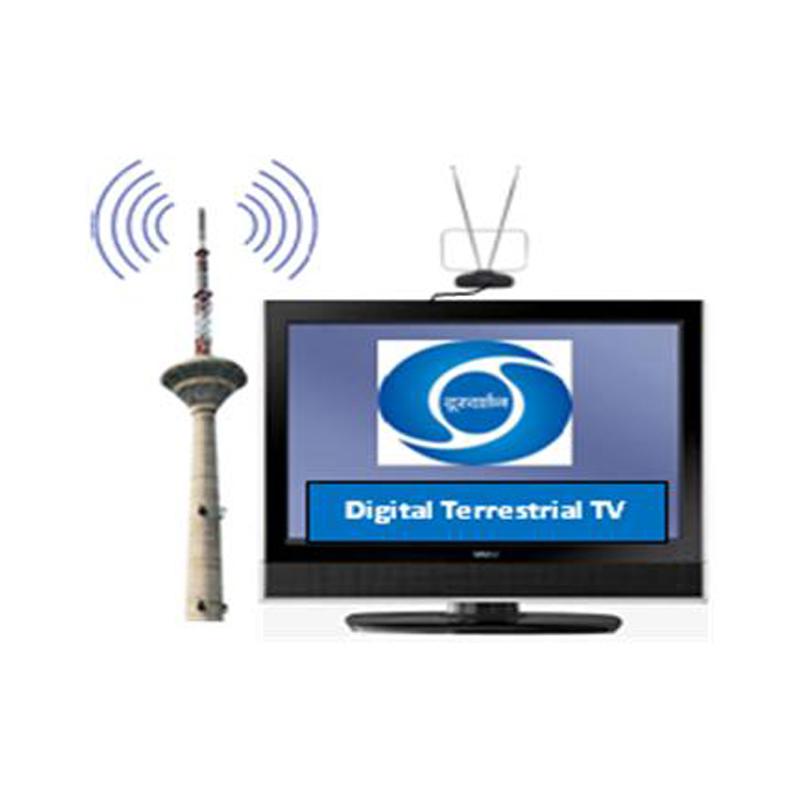
    NEW DELHI: An open house discussion will be held on 19 October 2016 on a Consultation Paper on “Opening Up Digital Terrestrial Transmission.” The OHD will be held in the PHD Chamber near Sirifort Auditorium at 10.00 am.

    The Paper by the Telecom Regulatory Authority of India was issued on 24 June 2016, about a year after Prasar Bharati – which is the only terrestrial broadcaster in the country – unanimously recommended that DTT should be opened up to the private channels. Apart from Prasar Bharati, several private channels have already responded to the paper, which was followed by a linked paper on sharing infrastructure issued on 21 September 2016.

    In its response to the DTT paper, the pubcaster said even as it supports the move, it feels that the potential of available distribution options need to be critically analysed to fulfill their requirements (for example coverage, capacity, reception mode, and type of service etc).

    The public broadcaster has also said that the terrestrial broadcast platform will be relevant in the long term if its usage offers veritable benefits to the broadcasters, the audiences and the society as a whole. Even in countries where cable, satellite or broadband hold a significant market share, terrestrial broadcasting is usually regarded as an essential, flexible and reliable way of delivering broadcast content to a mass audience.

    In its response to 11 questions asked by TRAI in its Consultation Paper on ‘Issues related to Digital Terrestrial Broadcasting in India,’ the pubcaster says that the terrestrial platform must be digital to remain viable in the long term.

    Prasar Bharati CEO Jawhar Sircar, who had told indiantelevision.com in an interview earlier that it had cleared DTT for the private sector more than a year ago, said at the recent Indian Digital Operators Summit (IDOS) that it was willing to give its infrastructure to the private TV and radio channels.

    Also read:
    http://www.indiantelevision.com/television/tv-channels/terrestrial/idos-2016-prasar-bharati-could-share-infra-with-private-players-sircar-161001

    http://www.indiantelevision.com/videos/event-coverage/one-on-one-discussion-with-jawhar-sircar-ceo-prasar-bharati-161004


  • Shareholders to meet on 15 Oct for Hathway demerger approval

    Shareholders to meet on 15 Oct for Hathway demerger approval

    MUMBAI: The court has convened meeting of Hathway Cable and Datacom Ltd equity shareholders and Hathway Broadband Private Limited and their respective shareholders and creditors on 15 October, 2016, in Mumbai.

    The meeting is for the purpose of considering and, if thought fit, approving with or without modification(s), the demerger of the broadband business of Hathway Cable and its transfer to Hathway Broadband, Ajay Singh, head, legal, company secretary and chief compliance officer, at Hathway Cable, stated in a communiqué to the BSE and the NSE.

    The court appointed Jagdiskumar G. Pillai, Hathway Cable managing director and CEO, to be the chairman of the said meeting. The voting period begins on 11 0ctober, 2016 , at 10.00 am and ends on Friday, 14 0ctober, 2016, at 5.00 pm. Himanshu S. Kamdar, practicing company secretary, has been appointed as the scrutinizer. The results shall be declared on 17 0ctober, 2016.

    The proposed demerger of the ISP Business (defined below) from Hathway Cable to Hathway Broadband may happen upon payment of Rs. 98.05 crore by the latter to the former. The plan is to demerge the ISP Business from Hathway Cable and transfer it to vest in Hathway Broadband.

    Hathway Cable is a multi-system operator (MSO) engaged in the business of distribution of television channels. Hathway Broadband is a private limited company incorporated under the Companies Act, and a wholly owned subsidiary of Hathway Cable.

  • Shareholders to meet on 15 Oct for Hathway demerger approval

    Shareholders to meet on 15 Oct for Hathway demerger approval

    MUMBAI: The court has convened meeting of Hathway Cable and Datacom Ltd equity shareholders and Hathway Broadband Private Limited and their respective shareholders and creditors on 15 October, 2016, in Mumbai.

    The meeting is for the purpose of considering and, if thought fit, approving with or without modification(s), the demerger of the broadband business of Hathway Cable and its transfer to Hathway Broadband, Ajay Singh, head, legal, company secretary and chief compliance officer, at Hathway Cable, stated in a communiqué to the BSE and the NSE.

    The court appointed Jagdiskumar G. Pillai, Hathway Cable managing director and CEO, to be the chairman of the said meeting. The voting period begins on 11 0ctober, 2016 , at 10.00 am and ends on Friday, 14 0ctober, 2016, at 5.00 pm. Himanshu S. Kamdar, practicing company secretary, has been appointed as the scrutinizer. The results shall be declared on 17 0ctober, 2016.

    The proposed demerger of the ISP Business (defined below) from Hathway Cable to Hathway Broadband may happen upon payment of Rs. 98.05 crore by the latter to the former. The plan is to demerge the ISP Business from Hathway Cable and transfer it to vest in Hathway Broadband.

    Hathway Cable is a multi-system operator (MSO) engaged in the business of distribution of television channels. Hathway Broadband is a private limited company incorporated under the Companies Act, and a wholly owned subsidiary of Hathway Cable.

  • China, India world’s largest Internet markets

    China, India world’s largest Internet markets

    NEW DELHI: India has overtaken the United States to become the world’s second largest Internet market, with 333 million users, trailing China’s 721 million.

    A new report released by the UN Broadband Commission for Sustainable Development also confirms that just six nations – including China and India – together account for 55% of the total global population still offline.

    While Internet access is approaching saturation in richer nations, connectivity is still not advancing fast enough to help bridge development gaps in areas like education and health care for those in poorer parts of the world, according to the 2016 edition of The State of Broadband report.

    Globally, an estimated 3.9 billion people are not using the Internet. But, the report estimates that, between them, China, India, Indonesia, Pakistan, Bangladesh and Nigeria account for 55% of all unconnected people, while 20 countries – including the US – account for a full 75% of those not using the Internet.

    These findings suggest that targeted efforts in just a few key markets could help enormously in redressing the gaping ‘digital divide’ between those who are online and those still offline.

    India also recently overtook the US to become the world’s second-largest smartphone market, with an estimated 260 million mobile broadband subscriptions.165 countries have deployed ‘4G’ high-speed mobile networks. As smartphone penetration reaches near-saturation in the US, Europe and mature markets in Asia like Japan and Korea, India and Indonesia in particular are expected to drive future growth.

    According to latest ITU figures, by end 2016 3.5 billion people will be using the Internet, up from 3.2 billion last year and equating to 47% of the global population. The top ten developing countries for household Internet penetration are all located in Asia or the Middle East.

  • China, India world’s largest Internet markets

    China, India world’s largest Internet markets

    NEW DELHI: India has overtaken the United States to become the world’s second largest Internet market, with 333 million users, trailing China’s 721 million.

    A new report released by the UN Broadband Commission for Sustainable Development also confirms that just six nations – including China and India – together account for 55% of the total global population still offline.

    While Internet access is approaching saturation in richer nations, connectivity is still not advancing fast enough to help bridge development gaps in areas like education and health care for those in poorer parts of the world, according to the 2016 edition of The State of Broadband report.

    Globally, an estimated 3.9 billion people are not using the Internet. But, the report estimates that, between them, China, India, Indonesia, Pakistan, Bangladesh and Nigeria account for 55% of all unconnected people, while 20 countries – including the US – account for a full 75% of those not using the Internet.

    These findings suggest that targeted efforts in just a few key markets could help enormously in redressing the gaping ‘digital divide’ between those who are online and those still offline.

    India also recently overtook the US to become the world’s second-largest smartphone market, with an estimated 260 million mobile broadband subscriptions.165 countries have deployed ‘4G’ high-speed mobile networks. As smartphone penetration reaches near-saturation in the US, Europe and mature markets in Asia like Japan and Korea, India and Indonesia in particular are expected to drive future growth.

    According to latest ITU figures, by end 2016 3.5 billion people will be using the Internet, up from 3.2 billion last year and equating to 47% of the global population. The top ten developing countries for household Internet penetration are all located in Asia or the Middle East.

  • Q1-17: Den Networks reports higher standalone revenue, operating profits

    Q1-17: Den Networks reports higher standalone revenue, operating profits

    BENGALURU: Multiple-systems operator Den Networks Limited (Den) reported 21.2 percent increase in standalone Total Income from operations (TIO) for the quarter ended June 30, 2016 (Q1-17, current quarter) as compared to the corresponding year ago quarter (Q1-16). The company also reported a standalone operating profit (EBIDTA) of Rs 4.58 crore (1.9 percent margin) in the current quarter as opposed to a standalone operating loss (negative EBIDTA) of Rs 26.44 crore. Den’s standalone TIO for the current quarter was Rs 238.67 crore as compared to Rs 196.89 crore. EBIDTA including other income was Rs 15.45 crore (6.2 percent margin) in Q1-17 as opposed to an operating loss (including other income) of Rs 6.01 crore in Q1-17.

    However the company reported higher standalone losses for the current quarter as compared to the corresponding year ago quarter. Net loss after tax (PAT) increased to Rs 57.40 crore in Q1-17 as compared to loss of Rs 53.49 crore in Q1-16. Standalone Total Comprehensive Income (TCI) was lower at a negative Rs 56.93 crore in Q1-17 as compared a negative Rs 51.74 crore in Q1-16.

    Segment numbers

    The company has two operating segments – Cable Distribution Network (Cable) and Broadband. Both segments reported improved operating numbers.

    Cable segment reported 15.1 percent growth in standalone operating revenue in Q1-17 at Rs 220.88 crore as compared to Rs 191.87 crore in Q1-16. Standalone operating loss in the current quarter was lower at Rs 31.19 crore as compared to a standalone operating loss of Rs 37.29 core in Q1-16.

    Broadband segment standalone revenue more than tripled (over 3.5 times) in the current quarter to Rs 17.79 crore as compared to Rs 5.02 crore in Q1-16. The segment reported lower standalone operating loss in Q1-17 of Rs 14.26 crore as compared to an operating loss of Rs 19.24 crore in the corresponding year ago quarter.

    Let us look at the other numbers reported by Den

    Standalone Total Expenditure in the current quarter was 12.1 percent higher at Rs 284.12 crore (119 percent of TIO) as compared Rs 253.43 crore (128.7 percent of TIO) in Q1-16.

    As percentage of TIO, Total expenditure in the current quarter was lower as compared to Q1-16. Most major standalone cost heads decreased in the current quarter as compared to the corresponding year ago quarter except for Content Costs, Other Expenses and Depreciation and Amortisation and hence wiped away the increase in TIO and resulted in higher loss. Other factors that contributed to higher loss were lower Other Income and higher Finance costs in Q1-17.

    As mentioned above, a major cost head for Den is Content Costs which increased by a massive Rs 30.70 crore or 35 percent to Rs 107.28 crore (44.9 percent of TIO) in Q1-17 from Rs 79.47 crore (40.4 percent of TIO). Standalone

    Other Expenses increased 5.4 percent in the current quarter to Rs 62 crore (26 percent of TIO) as compared to Rs 58.84 crore (29.9 percent of TIO) in Q1-16.

    Standalone Placement fees declined 21.8 percent in the current quarter to Rs 43.69 crore (18.3 percent of TIO) as compared to Rs 55.89 crore (28.4 percent of TIO).

    Standalone Employee benefits expense in Q1-17 declined 14.3 percent to Rs 19.57 crore (8.2 percent of TIO) as compared to Rs 22.83 crore (11.6 percent of TIO) in Q1-16.

    Standalone Finance costs in the current quarter increased 31.2 percent to Rs 22.82 crore (9.6 percent of TIO) as compared to Rs 17.39 crore (8.8 percent of TIO) in Q1-16.

    Standalone Other Income in Q1-17 was almost half (declined 46.8 percent) to Rs10.87 crore as compared to Rs 20.43 crore in Q1-16.

    Note: (1) All numbers mentioned in this report are standalone unless stated otherwise.

  • Q1-17: Den Networks reports higher standalone revenue, operating profits

    Q1-17: Den Networks reports higher standalone revenue, operating profits

    BENGALURU: Multiple-systems operator Den Networks Limited (Den) reported 21.2 percent increase in standalone Total Income from operations (TIO) for the quarter ended June 30, 2016 (Q1-17, current quarter) as compared to the corresponding year ago quarter (Q1-16). The company also reported a standalone operating profit (EBIDTA) of Rs 4.58 crore (1.9 percent margin) in the current quarter as opposed to a standalone operating loss (negative EBIDTA) of Rs 26.44 crore. Den’s standalone TIO for the current quarter was Rs 238.67 crore as compared to Rs 196.89 crore. EBIDTA including other income was Rs 15.45 crore (6.2 percent margin) in Q1-17 as opposed to an operating loss (including other income) of Rs 6.01 crore in Q1-17.

    However the company reported higher standalone losses for the current quarter as compared to the corresponding year ago quarter. Net loss after tax (PAT) increased to Rs 57.40 crore in Q1-17 as compared to loss of Rs 53.49 crore in Q1-16. Standalone Total Comprehensive Income (TCI) was lower at a negative Rs 56.93 crore in Q1-17 as compared a negative Rs 51.74 crore in Q1-16.

    Segment numbers

    The company has two operating segments – Cable Distribution Network (Cable) and Broadband. Both segments reported improved operating numbers.

    Cable segment reported 15.1 percent growth in standalone operating revenue in Q1-17 at Rs 220.88 crore as compared to Rs 191.87 crore in Q1-16. Standalone operating loss in the current quarter was lower at Rs 31.19 crore as compared to a standalone operating loss of Rs 37.29 core in Q1-16.

    Broadband segment standalone revenue more than tripled (over 3.5 times) in the current quarter to Rs 17.79 crore as compared to Rs 5.02 crore in Q1-16. The segment reported lower standalone operating loss in Q1-17 of Rs 14.26 crore as compared to an operating loss of Rs 19.24 crore in the corresponding year ago quarter.

    Let us look at the other numbers reported by Den

    Standalone Total Expenditure in the current quarter was 12.1 percent higher at Rs 284.12 crore (119 percent of TIO) as compared Rs 253.43 crore (128.7 percent of TIO) in Q1-16.

    As percentage of TIO, Total expenditure in the current quarter was lower as compared to Q1-16. Most major standalone cost heads decreased in the current quarter as compared to the corresponding year ago quarter except for Content Costs, Other Expenses and Depreciation and Amortisation and hence wiped away the increase in TIO and resulted in higher loss. Other factors that contributed to higher loss were lower Other Income and higher Finance costs in Q1-17.

    As mentioned above, a major cost head for Den is Content Costs which increased by a massive Rs 30.70 crore or 35 percent to Rs 107.28 crore (44.9 percent of TIO) in Q1-17 from Rs 79.47 crore (40.4 percent of TIO). Standalone

    Other Expenses increased 5.4 percent in the current quarter to Rs 62 crore (26 percent of TIO) as compared to Rs 58.84 crore (29.9 percent of TIO) in Q1-16.

    Standalone Placement fees declined 21.8 percent in the current quarter to Rs 43.69 crore (18.3 percent of TIO) as compared to Rs 55.89 crore (28.4 percent of TIO).

    Standalone Employee benefits expense in Q1-17 declined 14.3 percent to Rs 19.57 crore (8.2 percent of TIO) as compared to Rs 22.83 crore (11.6 percent of TIO) in Q1-16.

    Standalone Finance costs in the current quarter increased 31.2 percent to Rs 22.82 crore (9.6 percent of TIO) as compared to Rs 17.39 crore (8.8 percent of TIO) in Q1-16.

    Standalone Other Income in Q1-17 was almost half (declined 46.8 percent) to Rs10.87 crore as compared to Rs 20.43 crore in Q1-16.

    Note: (1) All numbers mentioned in this report are standalone unless stated otherwise.

  • Q1-17: Siti revenue, EBIDTA up

    Q1-17: Siti revenue, EBIDTA up

    BENGALURU: The Dr Subhash Chandra led newly renamed Siti Networks Limited (Siti) formerly known as Siti Cable Network Limited, reported 22.7 percent and 28.7 year-over-year growth in operating revenue and EBIDTA for the quarter ended 30 June 2106 (Q1-17, current quarter). Siti’s revenue in the current quarter was Rs 281.97 crore as compared to Rs 229.72 crore in the corresponding year ago quarter. EBIDTA (including other income) in Q1-17 was Rs 47.41 crore (16.8 percent margin) versus Rs 36.84 crore (16 percent margin). Loss however was higher in Q1-17 at Rs 52.61 crore as opposed to a loss of Rs 36.68 crore in Q1-16.

    The company says that its digital subscriber base has grown to 84 lakh during the current quarter from 79 lakh in the immediate trailing quarter. For Q1-16, the company had reported a digital subscriber base of 55.80 lakh. It says that it has expanded its footprint to 387 cities across the country in Q1-17 as compared to 312 cities at the end of the immediate trailing quarter. Broadband subscriber base has increased quarter-over-quarter in Q1-17 to 1.67 lakh from 1.32 lakh in Q4-16. HD Services: Siti says that it has strengthened its SITI HD+ services by expanding its bouquet to 57 HD channels. SITI HD+ customer base increased 65,140, up 29.8 percent over Q4-16 (50,170).

    Let us look at the other numbers reported by the company for Q1-17

    Subscription revenue in the current quarter increased 8 percent in Q1-17 y-o-y to Rs 139.3 crore from Rs 129 crore. Carriage revenue declined slightly to Rs 72 crore from Rs 79 crore, while activation charges almost tripled (2.93 times) to Rs 36.6 crore from Rs 12.5 crore. Broadband revenue more than doubled in the current quarter to Rs 19.5 crore from Rs 9 crore in Q1-16.

    Other Income more than doubled to Rs 4.92 crore in Q1-17 from Rs 2.44 crore in Q1-16.  Finance costs in the current quarter reduced to Rs 29.67 crore from Rs 34.39 crore in the corresponding year ago quarter. Total Expenditure increased to Rs 294.20 crore from Rs 231.16 crore in the corresponding year ago quarter. Employee Benefit Expense increased to Rs 19.12 crore in the current quarter from Rs 13.33 crore in Q1-16.  Carriage sharing, pay channel and related costs in Q1-17 increased to Rs 148.44 crore from Rs 135.70 crore in Q1-16.

    Company speak

    Siti executive director & CEO, V D Wadhwa said, “We expanded our reach further by branching out to 387 cities in line with our strategy of select market expansion. We have established our broadband presence in Haryana and expect to significantly expand our subscriber base this year.

    Recurring cash flows were sluggish due to delays in Phase 3 monetization on account of legal bottlenecks. However, we expect a time bound resolution by the second half of the year and limited long term impact of this issue. We are well prepared for improved monetization of our subscriber base.”

    Note: The unit of currency in this report is the Indian rupee – Rs (also conventionally represented by INR). The Indian numbering system or the Vedic numbering system has been used to denote money values. The basic conversion to the international norm would be:

    (a) 100,00,000 = 100 lakh = 10,000,000 = 10 million = 1 crore.

    (b) 10,000 lakh = 100 crore = 1 arab = 1 billion.

  • Q1-17: Siti revenue, EBIDTA up

    Q1-17: Siti revenue, EBIDTA up

    BENGALURU: The Dr Subhash Chandra led newly renamed Siti Networks Limited (Siti) formerly known as Siti Cable Network Limited, reported 22.7 percent and 28.7 year-over-year growth in operating revenue and EBIDTA for the quarter ended 30 June 2106 (Q1-17, current quarter). Siti’s revenue in the current quarter was Rs 281.97 crore as compared to Rs 229.72 crore in the corresponding year ago quarter. EBIDTA (including other income) in Q1-17 was Rs 47.41 crore (16.8 percent margin) versus Rs 36.84 crore (16 percent margin). Loss however was higher in Q1-17 at Rs 52.61 crore as opposed to a loss of Rs 36.68 crore in Q1-16.

    The company says that its digital subscriber base has grown to 84 lakh during the current quarter from 79 lakh in the immediate trailing quarter. For Q1-16, the company had reported a digital subscriber base of 55.80 lakh. It says that it has expanded its footprint to 387 cities across the country in Q1-17 as compared to 312 cities at the end of the immediate trailing quarter. Broadband subscriber base has increased quarter-over-quarter in Q1-17 to 1.67 lakh from 1.32 lakh in Q4-16. HD Services: Siti says that it has strengthened its SITI HD+ services by expanding its bouquet to 57 HD channels. SITI HD+ customer base increased 65,140, up 29.8 percent over Q4-16 (50,170).

    Let us look at the other numbers reported by the company for Q1-17

    Subscription revenue in the current quarter increased 8 percent in Q1-17 y-o-y to Rs 139.3 crore from Rs 129 crore. Carriage revenue declined slightly to Rs 72 crore from Rs 79 crore, while activation charges almost tripled (2.93 times) to Rs 36.6 crore from Rs 12.5 crore. Broadband revenue more than doubled in the current quarter to Rs 19.5 crore from Rs 9 crore in Q1-16.

    Other Income more than doubled to Rs 4.92 crore in Q1-17 from Rs 2.44 crore in Q1-16.  Finance costs in the current quarter reduced to Rs 29.67 crore from Rs 34.39 crore in the corresponding year ago quarter. Total Expenditure increased to Rs 294.20 crore from Rs 231.16 crore in the corresponding year ago quarter. Employee Benefit Expense increased to Rs 19.12 crore in the current quarter from Rs 13.33 crore in Q1-16.  Carriage sharing, pay channel and related costs in Q1-17 increased to Rs 148.44 crore from Rs 135.70 crore in Q1-16.

    Company speak

    Siti executive director & CEO, V D Wadhwa said, “We expanded our reach further by branching out to 387 cities in line with our strategy of select market expansion. We have established our broadband presence in Haryana and expect to significantly expand our subscriber base this year.

    Recurring cash flows were sluggish due to delays in Phase 3 monetization on account of legal bottlenecks. However, we expect a time bound resolution by the second half of the year and limited long term impact of this issue. We are well prepared for improved monetization of our subscriber base.”

    Note: The unit of currency in this report is the Indian rupee – Rs (also conventionally represented by INR). The Indian numbering system or the Vedic numbering system has been used to denote money values. The basic conversion to the international norm would be:

    (a) 100,00,000 = 100 lakh = 10,000,000 = 10 million = 1 crore.

    (b) 10,000 lakh = 100 crore = 1 arab = 1 billion.

  • RIL AGM to be streamed live from 11 am onwards 1 Sept

    RIL AGM to be streamed live from 11 am onwards 1 Sept

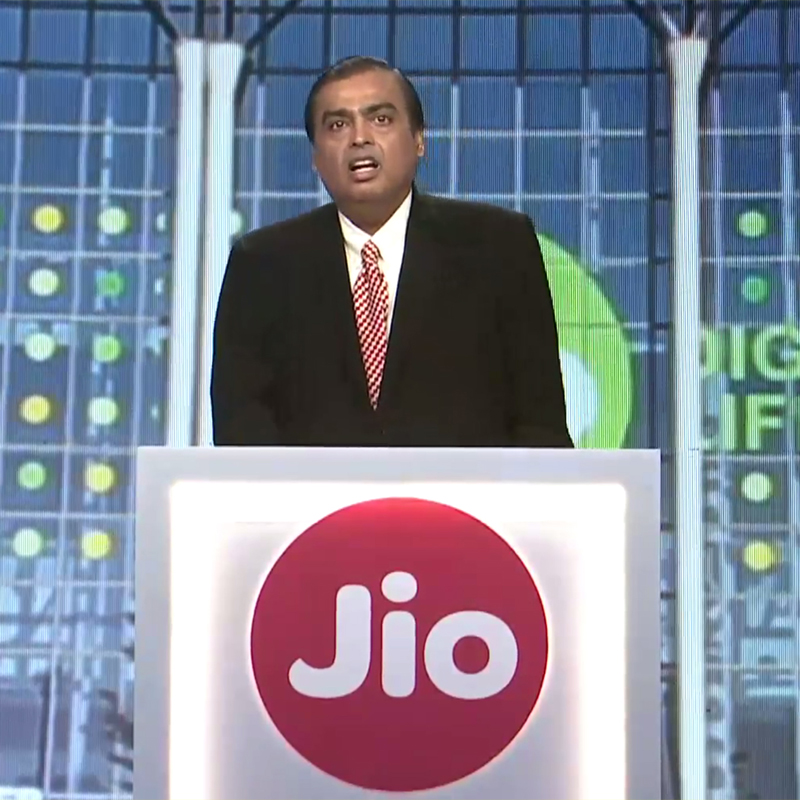
    MUMBAI: A lot is expected to be revealed about Reliance Jio progress and rollout plans during the course of Reliance Industries Ltd’s 42 annual general meeting with its shareholders on 1 September.

    Punters are betting that its tariffs will be disclosed as well as the plans it has VoLTE, IPTV and broadband.
    RIL has reportedly spent over Rs 29,000 crore over Jio and is expected to invest more. And while the profits are not expected to start rolling out during its investment and growth phase, RIL would still like to know what chairman Mukesh Ambani has in store. As Jio is expected to revolutionise the way Indians consume data and engage on their mobiles.

    Keeping this in mind, RIL has decided to stream the AGM live on its various online digital channels from 11 am when Mukesh Ambani is slated to begin his speech.

    YouTube

    o   Flame Of Truth channel (https://www.youtube.com/user/flameoftruth2014)

    o   Jio Digital Life channel (https://www.youtube.com/channel/UCuXlQvucItKHNH4b0ega0DA)

    ·        Facebook

    o   Reliance Industries Limited (https://www.facebook.com/RelianceIndustriesLimited/)

    o   Jio (https://www.facebook.com/Jio/)

    ·        Twitter

    o   @FlameOfTruth (https://twitter.com/flameoftruth)

    o   @RelianceJio (https://twitter.com/reliancejio)

    ·        Jio Chat

    ·        Jio Play