Tag: broadband

  • Spectranet enters next phase of broadband expansion in south India

    MUMBAI: Spectranet has announced its next phase of expansion in south India by launching in Bengaluru.

    One of the first 100 per cent optical fibre broadband service provider , Spectranet company offers truly unlimited usage with symmetric speed of 100 mbps which means that the users will get both 100mbps upload and download speeds. The company offers next generation fiber broadband services with a capability of offering 1 Gbps speeds for residential and 10 Gbps for business customers.

    Spectranet claims to be India’s only end to end pure optical fiber network enabled Internet service provider, capable of delivering speeds of 1 Gbps and more for both home & business segment. With headquarters in Gurgaon, its fiber network presence is currently spread across eight major cities.

    Spectranet’s unique 100mbps unlimited offering will enable consumers to do so much more such as enjoy services like Netflix, use smart TV features, connect more devices. This will be an enabler for the masses as they now will be able to utilize products and services which they were unable to use because of non-availability of good quality broadband.

    The company has invested heavily in its customer support team and have very robust mechanisms to service customer requests. By purchasing the initial launch phase offer, customers will be secured of any changes in launch offer plan for the next 24 months which is only available for the 30 days and after that it would be moved to the regular plan.

    Spectranet managing director & CEO Udit Mehrotra said “Bengaluru being the IT hub of the country was our natural choice to begin our foray into the southern markets. With tech-savvy residents who have a preference for quality services, we are very excited to unleash the third age of connectivity from here. Fibre being the most advanced technology enables broadband to work years on years without the customers needing to upgrade their cables. This enables us to potentially provide speeds 100 times beyond what the customers are experiencing now and enhance their experience. In US, minimum broadband speed is 25 mbps, we want to bring our customers at par with the global broadband users.”

    The company has started off by providing broadband connectivity to the prominent addresses in the city like Bannerghatta, Electronic City, Kundalhalli, Bellandur and will be adding more areas in a phased out fashion.

    Also Read

    http://www.indiantelevision.com/cable-tv/multi-system-operators/msos-among-top-5-fastest-net-providers-telco-airtel-leads-the-pack-170217

    http://www.indiantelevision.com/cable-tv/people/den-networks-appoints-sanjay-jain-as-group-cto-150519

  • Exponential OTT growth: Shemaroo inks licensing deal with Viu

    MUMBAI: Shemaroo Entertainment Ltd, one of the leading content houses in the country, has inked a content licensing deal with Vuclip’s premium OTT video on demand service, Viu.

    Through this deal, Shemaroo Entertainment’s catalogue of contemporary full length Hindi movies like Sarkar, Black, Ishqiya, Traffic Signal, Bheja Fry 2, and The Dirty Picture can be enjoyed by subscribers of Viu which can be accessed from www.viu.com or by downloading Viu’s Android and iOS apps.

    Shemaroo director Jai Maroo said, “OTT services are growing exponentially in India. Given the dynamics of the OTT space, content has become the key driver for subscriber acquisition and growth. We are pleased to join hands with Vuclip’s premium OTT video on demand service. Viu in our ongoing efforts to reach out to the digital consumer.”

    Commenting on the partnership, Vuclip India head Vishal Maheshwari said, “Our subscribers see great value in content that is high in quality and freshness. Our content partnership with Shemaroo plays a part in delivering this value to our highly engaged viewers.”

    Shemaroo Entertainment is an established Filmed Entertainment “Content House” in the country, active in Content Ownership, Creation, Aggregation and Distribution with a large content library of over 3000 titles. Shemaroo is engaged in the distribution of content for satellite channels, physical formats and emerging digital technologies like the Mobile, Internet, Broadband, IPTV and DTH among others. Vuclip, a PCCW Media Company, is a leading premium video-on-demand service for emerging markets with 10 million subscribers per quarter. The company’s premium OTT service Viu is currently enjoyed by consumers in Hong Kong, Singapore, Malaysia, Indonesia, Egypt and India.

    Also Read:

    http://www.indiantelevision.com/cable-tv/multi-system-operators/premium-vas-shemaroo-hathway-tie-up-170216

    http://www.indiantelevision.com/dth/dth-services/powered-by-shemaroo-ptc-videocon-d2h-adds-two-vas-services-170117

  • MSOs among Top 5 fastest net providers, telco Airtel leads the pack

    MUMBAI: Cable TV companies have begun featuring in the country’s top five companies that lead in providing the fastest internet speed and downloads.

    Although lead by the top telecom company Bharti Airtel, the cable TV companies in the fast-net list are — 7 Star Digital and Hathway, according to the Netflix ISP Speed Index.

    For the third time since September 2016, the average download speed on Bharti Airtel’s mobile network was measured to be the highest in January at 8.42 megabit per second (mbps), according to the latest data published by TRAI, the telecom regulator. Netflix Index also rated Airtel as the fastest ISP with 2.25 Mbps Speed.

    Also, a Credit Suisse report published this month stated that Airtel 4G offered the best download speeds in general at around 12Mbps based on its study conducted across 30 cities, and that Vodafone, Jio and Idea were close to 7-8Mbps.

    The average mobile data speed per month published by TRAI showed that the download speed on Airtel almost doubled in January from 4.68 mbps in the preceding months, PTI reported. The monthly average speed on India’s largest broadband service-provider Jio however reduced by over half to 8.34 mbps from 18.14 mbps peak speed that it registered in December 2016.

    TRAI collects information and calculates on a real-time basis the speed of mobile data from subscribers across India with the help of MySpeed application.

    The Netflix ISP Speed Index meantime also rated Airtel as the fastest Internet Service Provider with 2.25 Mbps Speed. The Index announced Airtel to be the fastest internet service provider followed by Spectranet, 7 Star Digital and ATRIA Convergence. While Airtel gives broadband services via cable, DSL, wireless and fiber, Spectranet provides its broadband services through fiber.

    7 Star offers cable TV, digital Media, broadband and entertainment services. It holds an ISP license to offer broadband in Mumbai and is also the first HD content provider across India. ATRIA speed fell below 2.18 Mbps, and Hathway climbed a spot higher to pocket the fifth position with 1.93 Mbps speed, followed by YOU with 1.84 Mbps speed.

    Meantime, in an attempt to check mobile service quality, TRAI has begun operator-assisted tests that capture real-time data to monitor the level of call drops and voice quality across multiple cities. The tests involves the telcos’ equipment and costs, with TRAI supervising the process.

    The tests have already taken place in Mathura (UP-West circle), Ujjain (Madhya Pradesh), Jaisalmer, (Rajasthan), and Mangalore (Karnataka), among other. Tests are under way or slated to be conducted over the coming weeks in locations include Kalyan, Noida, Jammu, Guwahati-Dispur, Mysore, Hyderabad, Rajkot, Bhopal, and Jhansi, as per the schedule drawn up by the regulator.

  • Ortel 9M FY17: Cable TV rev grew by 35pc, broadband by 18pc, income by 12pc

    MUMBAI: Ortel Communications Limited (Ortel), one of the leading cable television and high speed broadband service providers focused in the Indian states of Odisha, Chhattisgarh, Andhra Pradesh, Telengana, West Bengal and Madhya Pradesh, announced its financial results for the quarter and nine-months ended 31 December, 2016.

    Ortel has built a two-way communication network for ‘Triple Play’ services (video, data and voice capabilities) with control and focus over the ‘Last Mile’ network. Ortel has pioneered the primary point cable business model in India by offering digital and analog cable television, broadband and VAS services. It covers an addressable market of close to five million homes.

    9M FY2017 performance overview compared with 9M FY2016

    •    Total Income increased to Rs. 1,590million, from Rs. 1,416 million, up by 12.3%
    •    EBITDA stood at Rs. 428 million compared to Rs. 519 million
    o    EBITDA margin came in at 26.9%
    •    Profit After Tax came in at Rs. 6 million compared to Rs. 92 million
    •    EPS amounted to Rs. 0.21per share Q3 FY2017 performance overview compared with Q3 FY2016
    •    Total Income increased to Rs. 518 millionfrom Rs. 502 million, up by 3.2%
    •    EBITDA stood at Rs. 118 millioncompared to Rs. 187 million
    o    EBITDA margin came in at 22.8%
    •    Net Loss stood at Rs. 28 million compared to Net Profit of Rs. 39 million
    •    EPS amounted to Rs. -0.92per share

    Commenting on the performance, Ortel Communications president & CEO Bibhu Prasad Rath said, “Our performance during the quarter was impacted due to a combination of factors which weakened some of our key operating parameters. In spite of this, we have demonstrated a healthy growth in revenues from both Cable TV and Broadband Business on a Y-o-Y basis both for Q3 and 9M FY17. I am also happy to inform that our Business outside Odisha which turned EBIDTA positive last quarter has remained so during this quarter,” he said.

    “Overall, we have demonstrated that a strong B2C focused last mile business model in our core market can be profitable and remain confident of replicating the same across newer markets. We continue to believe that this is a sustainable model as we can capture the entire revenue stream across the value chain,” Rath added.

    Ortel’s business is broadly divided into cable television services comprising of analog cable television services, digital cable television services including other value added services such as HD services, near video on demand (NVoD), gaming and local content. Other focused business segments include broadband services, leasing of fibre infrastructure and signal uplinking services.

  • Hathway revenue and operating profit up in third quarter

    BENGALURU: Indian multi system operator (MSO) Hathway Cable and Datacom Limited (Hathway) reported 25.5 per cent growth in Total Income from operations (TIO) and 46 percent growth in operating profits (EBIDTA) for the quarter ended 31 December 2016 (Q3-17, current quarter). The company reported TIO of Rs 337.6 crore in Q3-17 as compared to Rs 281.2 crore in the corresponding quarter of the previous year.

    The company’s EBDITA (earnings before depreciation, interest, taxes and amortisation or operating profit) including other income in the current quarter was Rs 66.6 crore (20 percent EBIDTA margin) and was Rs 45.4 crore (16 percent EBIDTA margin) in Q3-16. The company’s loss as per IND-AS in the current quarter increased to Rs 44.4 crore from a loss of Rs 41.2 crore in Q3-16.

    Hathway reported high growth in Cable subscription revenue, Activation fees and Broadband revenue, while placement revenue declined. The company’s broadband segment has been performing very well, as a matter of fact, among the national level MSOs’ Hathway has the highest subscription and revenue numbers among all of them. Like in the immediate trailing quarter, within Hathway, in Q3-17, Broadband subscription had the highest contribution to revenue, even more than Cable TV subscription revenue

    Hathway’s broadband subscriber base increased by 0.4 lakh in Q3-17 to 8.6 lakh from 8.2 lakh in the immediate trailing quarter. Consolidated broadband revenue in the current quarter as per IND AS increased 62 percent to Rs 127.8 crore from Rs 78.7 crore in the previous year. Consolidated Broadband ARPU in Q3-17 was Rs 654 as compared to Rs 631 in Q3-16 and Rs 643 in the immediate trailing quarter.

    Reported CATV subscription revenue as per IND AS in the current quarter increased 17 percent to Rs 114.1 crore from Rs 97.7crore in Q3-16 Hathway says that it has deployed 4 lakh STBs at a consolidated level. Standalone CATV ARPU in DAS Phase I was Rs 105, in Phase II areas was Rs 95. ARPU from phase III areas was Rs 45.

    Placement revenue as per IND AS in the current quarter declined 14 percent to Rs 70.4 crore from Rs 82.2 crore in Q3-16.

    Activation revenue as per IND AS increased 49 percent y-o-y in Q3-17 to Rs 21 crore from Rs 115 crore in Q3-16.

    Other revenue as per IND AS declined 43 percent in Q3-17 to Rs 4.3 crore from Rs 7.6 in Q3-16.

    Hathway’s Standalone Total Expenditure (without depreciation and amortization) in Q3-17 increased 14 percent to Rs 27.52 crore from Rs 239.4 crore in the previous year.

    Standalone Pay channel cost in the current quarter increased 10 percent to Rs 104.3 crore from Rs 94.5 crore in Q3-16. Standalone Employee Benefit expense in Q3-17 increased 19 percent y-o-y to Rs 23.3 crore from Rs 19.6 crore.

    Note: The unit of currency in this report is the Indian rupee – Rs (also conventionally represented by INR). The Indian numbering system or the Vedic numbering system has been used to denote money values. The basic conversion to the international norm would be:
    (a) 100,00,000 = 100 lakh = 10,000,000 = 10 million = 1 crore.
    (b) 10,000 lakh = 100 crore = 1 arab = 1 billion.

  • Zubin Dubash joins Shemaroo as COO – new media biz

    Zubin Dubash joins Shemaroo as COO – new media biz

    MUMBAI: Shemaroo Entertainment Ltd. has appointed Zubin Dubash as the COO – New Media Business. He will be responsible for driving the New Media business and scaling it up.

    Founded in 1962, Shemaroo is an established filmed entertainment “Content House” active in content ownership, creation, aggregation and distribution with a content library of over 3000 titles. Shemaroo is engaged in the distribution of content for satellite channels, physical formats and emerging digital technologies like the Mobile, Internet, Broadband, IPTV and DTH among others.

    Zubin Dubash has 20 years of experience in managing businesses in mobile applications, telecom, and digital domains. Before joining Shemaroo, he was working in the core team of Apps Daily Solutions, as Chief Product & Strategy Officer and played an active role in product creation/innovation, strategy and Strategic partnerships. Prior to this he was at Tata Docomo as Vice President/Group Head- New Businesses. He has also worked with companies like Vodafone etc earlier.

    Shemaroo Entertainment director Jai Maroo said, “Zubin has handled both revenue and new business development roles earlier in businesses of scale. He has also been through the entrepreneurial journey as part of the core team of a startup of taking it from idea to execution.”

    Dubhash shares his thoughts on the occasion, “We are at an exciting juncture in the evolution of digital content consumption, and with Shemaroo’s rich spread of content there are a lot of opportunities that will emerge.”

  • Zubin Dubash joins Shemaroo as COO – new media biz

    Zubin Dubash joins Shemaroo as COO – new media biz

    MUMBAI: Shemaroo Entertainment Ltd. has appointed Zubin Dubash as the COO – New Media Business. He will be responsible for driving the New Media business and scaling it up.

    Founded in 1962, Shemaroo is an established filmed entertainment “Content House” active in content ownership, creation, aggregation and distribution with a content library of over 3000 titles. Shemaroo is engaged in the distribution of content for satellite channels, physical formats and emerging digital technologies like the Mobile, Internet, Broadband, IPTV and DTH among others.

    Zubin Dubash has 20 years of experience in managing businesses in mobile applications, telecom, and digital domains. Before joining Shemaroo, he was working in the core team of Apps Daily Solutions, as Chief Product & Strategy Officer and played an active role in product creation/innovation, strategy and Strategic partnerships. Prior to this he was at Tata Docomo as Vice President/Group Head- New Businesses. He has also worked with companies like Vodafone etc earlier.

    Shemaroo Entertainment director Jai Maroo said, “Zubin has handled both revenue and new business development roles earlier in businesses of scale. He has also been through the entrepreneurial journey as part of the core team of a startup of taking it from idea to execution.”

    Dubhash shares his thoughts on the occasion, “We are at an exciting juncture in the evolution of digital content consumption, and with Shemaroo’s rich spread of content there are a lot of opportunities that will emerge.”

  • Budget 2017 Wish-list: MSOs demand industry status, rationalisation of entertainment & services taxes

    Budget 2017 Wish-list: MSOs demand industry status, rationalisation of entertainment & services taxes

    NEW DELHI: Annually various sectors of the Indian industry draw wish-list and hope that the government will grant them some relief during the presentation of the annual Budget of the country. MSOs are no exception and the All India Digital Cable Federation (AIDCF) has not only demanded an industry status, which will give it related financial incentives, but also rationalisation of various other taxes, including service and entertainment taxes.

    “Grant us infrastructure status for the (distribution) industry and remove the 8 per cent AGR applicable for MSOs offering broadband via cable,” said AIDCF Secretary-general Saharsh Damani when asked by indiantelevision.com about what the organisation would like Finance Minister Arun Jaitley to announce during his Budget presentation on February 1, 2017.

    AIDCF has also exhorted the government to grant them parity with manufacturing sector vis-a-vis u/s 2A as a disparity between the service and the manufacturing sectors is “adversely affecting” the growth and consolidation of service sector of which the MSOs are part of.

    “The tax benefits under Section 72A of the Income-tax Act, 1961 in respect of amalgamation or demerger (carry forward and set off of accumulated loss and unabsorbed depreciation allowances) are currently limited to industrial undertakings or a ship, hotel, aircraft or banking. The definition of industrial undertaking should be widened to include service industry, broadcasters and content production companies,” Damani said.

    The AIDCF, which is said to be a new and digital avatar of MSO Alliance, would also like removal of dual applicability of service and entertainment taxes on the cable TV.

    According to the apex body of MSOs, till the time GST (Goods and Services Tax) comes in place, entertainment tax paid to a state government may also be made creditable against the service tax liability of the cable TV sector. What does it mean? When a cable TV network, for example, pays an entertainment tax of Rs 100, then it should be able to adjust the same against the service tax payable and get a credit there on, AIDCF said.

    “This will be a short term measure, but will give higher declaration of entertainment tax and will bring in sufficient numbers to ensure that (overall revenue) collection of the government on service tax does not drop,” AIDCF’s Damani explained.

    Originally GST was supposed to have rolled out from April 1, 2017, but because of political wrangling and some states raising doubts on their share of the tax collected under a GST regime, Finance Minister Jaitley, according to media reports, has opined the new tax regime could be rolled out some time middle of 2017.

    Apart from that, AIDCF has also urged the government to rationalise indirect taxes like import duties on network equipment. Further, the organisation has suggested allowing use of USO (Universal Service Obligation) Funds for broadband infrastructure expansion would greatly benefit the industry.

    Also Read:

    Broadcasters bat for parity with print medium under GST

    India, US should resolve IPR issues at earliest: IACC

  • Budget 2017 Wish-list: MSOs demand industry status, rationalisation of entertainment & services taxes

    Budget 2017 Wish-list: MSOs demand industry status, rationalisation of entertainment & services taxes

    NEW DELHI: Annually various sectors of the Indian industry draw wish-list and hope that the government will grant them some relief during the presentation of the annual Budget of the country. MSOs are no exception and the All India Digital Cable Federation (AIDCF) has not only demanded an industry status, which will give it related financial incentives, but also rationalisation of various other taxes, including service and entertainment taxes.

    “Grant us infrastructure status for the (distribution) industry and remove the 8 per cent AGR applicable for MSOs offering broadband via cable,” said AIDCF Secretary-general Saharsh Damani when asked by indiantelevision.com about what the organisation would like Finance Minister Arun Jaitley to announce during his Budget presentation on February 1, 2017.

    AIDCF has also exhorted the government to grant them parity with manufacturing sector vis-a-vis u/s 2A as a disparity between the service and the manufacturing sectors is “adversely affecting” the growth and consolidation of service sector of which the MSOs are part of.

    “The tax benefits under Section 72A of the Income-tax Act, 1961 in respect of amalgamation or demerger (carry forward and set off of accumulated loss and unabsorbed depreciation allowances) are currently limited to industrial undertakings or a ship, hotel, aircraft or banking. The definition of industrial undertaking should be widened to include service industry, broadcasters and content production companies,” Damani said.

    The AIDCF, which is said to be a new and digital avatar of MSO Alliance, would also like removal of dual applicability of service and entertainment taxes on the cable TV.

    According to the apex body of MSOs, till the time GST (Goods and Services Tax) comes in place, entertainment tax paid to a state government may also be made creditable against the service tax liability of the cable TV sector. What does it mean? When a cable TV network, for example, pays an entertainment tax of Rs 100, then it should be able to adjust the same against the service tax payable and get a credit there on, AIDCF said.

    “This will be a short term measure, but will give higher declaration of entertainment tax and will bring in sufficient numbers to ensure that (overall revenue) collection of the government on service tax does not drop,” AIDCF’s Damani explained.

    Originally GST was supposed to have rolled out from April 1, 2017, but because of political wrangling and some states raising doubts on their share of the tax collected under a GST regime, Finance Minister Jaitley, according to media reports, has opined the new tax regime could be rolled out some time middle of 2017.

    Apart from that, AIDCF has also urged the government to rationalise indirect taxes like import duties on network equipment. Further, the organisation has suggested allowing use of USO (Universal Service Obligation) Funds for broadband infrastructure expansion would greatly benefit the industry.

    Also Read:

    Broadcasters bat for parity with print medium under GST

    India, US should resolve IPR issues at earliest: IACC

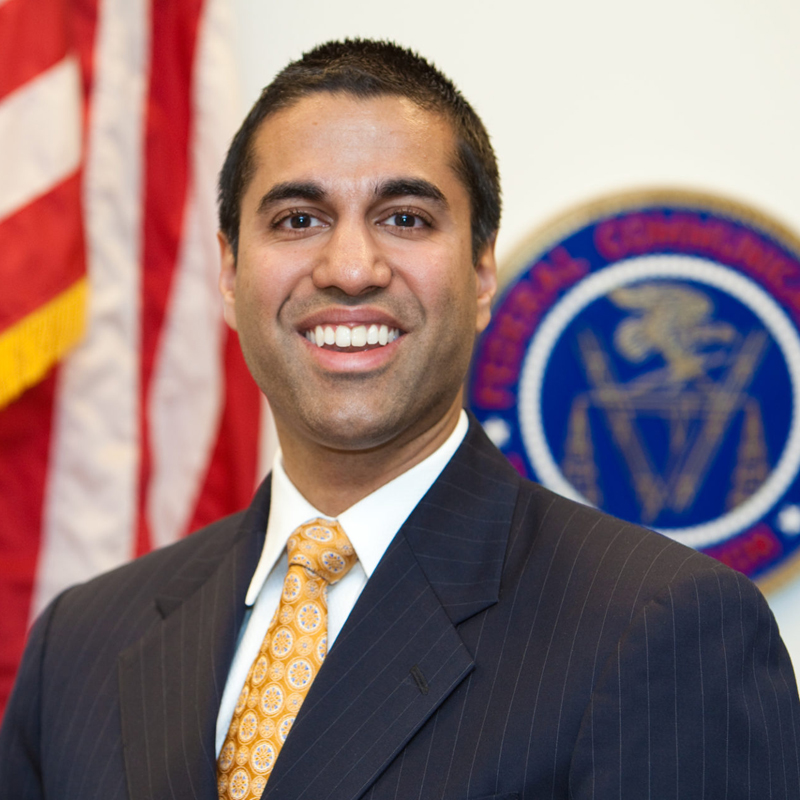
  • FCC gets Indian origin Ajit Pai as its chairman

    FCC gets Indian origin Ajit Pai as its chairman

    MUMBAI: Indians are familiar with Ajit Pai who addressed Ficci Frames as a keynote speaker just three years ago. But Pai is the point man designated by US president Donald Trump as the 34th chairman of the Federal Communications Commission (FCC) who will be drawing up communications policy in one of the most highly networked and communications heavy nations on earth.

    Pai, a senior republican on the FCC, was appointed as a commissioner in 2012 by the then President Barack Obama and later confirmed by the senate. He replaces outgoing chairman Tom Wheeler.

    “I look forward to working with the new administration, my colleagues at the Commission, members of Congress and the American public to bring the benefits of the digital age to all Americans,” Pai said in a statement.

    Ajit Pai had credited his family for his successful rise as communications regulator during his Ficci Frames speech: Said he: “I was born and brought up in the United States, but my family’s roots are here in India. My mother grew up in Bangalore, and my father was raised in Hyderabad. In 1971, they came to the United States with just a radio and ten dollars in their pockets. Now, forty-three years later, here I am, in the country of my forefathers, speaking to you as the first Indian-American to serve on the FCC. The credit for this goes to my parents, who, like many immigrants, sacrificed to give me opportunities not available to them as children. It goes to my grandparents, who instilled in my parents the value of hard work and the vision to dream big.”

    According to the FCC website Pai’s rules on communication regulations are as follows:

    * Consumers benefit most from competition, not preemptive regulation. Free markets have delivered more value to American consumers than highly regulated ones.

    * No regulatory system should indulge arbitrage; regulators should be skeptical of pleas to regulate rivals, dispense favors, or otherwise afford special treatment.

    * Particularly given how rapidly the communications sector is changing, the FCC should do everything it can to ensure that its rules reflect the realities of the current marketplace and basic principles of economics.

    * As a creature of Congress, the FCC must respect the law as set forth by the legislature.

    * The FCC is at its best when it proceeds on the basis of consensus; good communications policy knows no partisan affiliation.

    Pai as the commissioner had proposed a:

    * Comprehensive plan to promote broadband deployment to all Americans. The federal government must make it easier to for broadband providers to retire increasingly obsolete copper lines in favor of next-generation technologies like fiber.”

    • It must enable rural residents to have the same choice for stand-alone broadband typically found in cities.

    • It must create a roadmap for state and local governments so that companies that want to compete in the broadband market don’t have to jump through unnecessary regulatory hoops in order to lay fiber to consumers.

    • It must promote common-sense policies like “Dig Once” and reform pole attachment rules to reduce the costs of building digital networks.

    • It must streamline the process for deploying wireless infrastructure, from big towers to small cells.

    • It must free up more licensed spectrum for use by wireless carriers and more unlicensed spectrum for things like Wi-Fi.

    • And it must preserve Internet freedom here and abroad, so that the online world can flourish free from heavy-handed government intervention.

    Additionally, Pai ai was the first member of the FCC in over two decades to call for revitalizing the AM radio band; the basic reforms he proposed were adopted in 2015. He also urged the FCC to create a task force to study the “Internet Protocol Transition” and report on obsolete rules that could be repealed; that task force was created.

    He is likely to undo the net neutrality regime that the FCC had been pursuing under outgoing chairman Wheeler.