Tag: broadband

  • Trai to make recommendations on net neutrality today

    Trai to make recommendations on net neutrality today

    New Delhi: The Telecom Regulatory Authority of India (Trai) will issue its much-awaited recommendations on net neutrality today.

    “We will issue the recommendations on net neutrality tomorrow,” Trai chairman RS Sharma told reporters on Monday.

    Trai, which has so far adopted a pro-net neutrality stand, is expected to stick to its stand of ensuring a free and open internet for all.

    Net neutrality requires telecom service providers to treat all internet traffic equally, without regard for the type, origin, or destination of the content or the means of its transmission.

    The recommendations are expected to include the definition of what constitutes reasonable traffic management practices by ISPs. A likely negative list of non-reasonable traffic management practices could also emerge.

    The issue has been debated upon globally as well as in India, with activists arguing the case for an open internet without any restrictions on speed.

    The recommendations that the regulator releases on Tuesday will assume significance, especially at a time when the US plans to repeal its existing rules on net neutrality, which will essentially allow telecom companies in the US to restrict broadband speeds and favour their own services if they want.

    Trai had in January floated a consultation paper on the topic, seeking views on issues such as how to ensure non-discriminatory access to content on internet, among others.

    This was followed up by an open house discussion in August which saw participation by representatives from telecom and ISPs, consulting firms, activists, and policy experts.

  • After telecom, Jio to bite into broadband and TV

    After telecom, Jio to bite into broadband and TV

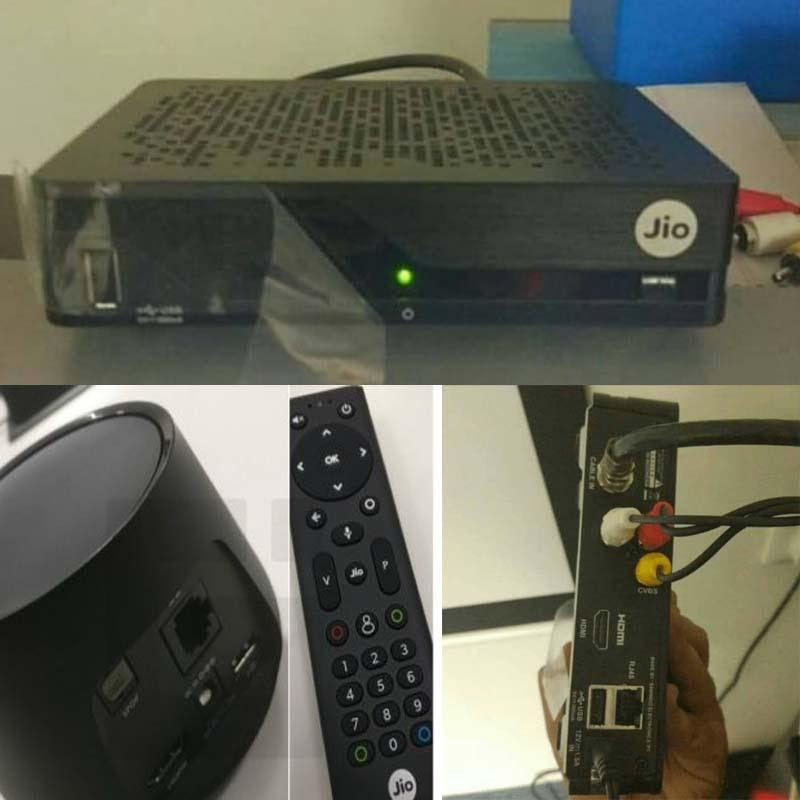
    MUMBAI: After disrupting the telecom sector, Muskesh Ambani led Reliance Jio is now heading towards the fixed broadband and television space.

    The company will launch high speed fibre to the home (FTTH) broadband in more than 30 cities early next year, to offer TV as well as internet to subscribers, it is learnt.

    As reported by Business Standard, Jio has mapped out a plan to address over 100 million TV households across these cities, including tier II and III, by ensuring dense fibre presence for last-mile connectivity to homes. In the first phase itself, at least 50 million households will be offered the service, according to sources in the know.

    Jio has already spread out over 300,000 kilometres of optic fibre (half of which is through a long-term contract with Anil Ambani’s Reliance Communications).

    In his annual speech, Reliance Industries chairman Mukesh Ambani indicated that Jio was on track to offer high-speed broadband services. The infrastructure was in place and it would be the next big monetisation opportunity for the company, he had said.

    According to the news report, Jio is expected to woo customers with premium offers such as ultra-high speed of up to 1 gigabit per second. The set-top box, as part of the package, will be a home entertainment hub – offering TV channels, high-end gaming and video on demand, among others.

    Jio is eyeing an average revenue per user of around Rs 1000 to Rs 1500 per month from subscribers (which includes internet and TV), as their usage of data goes up, a source said.

    Trials are being conducted in Mumbai and Delhi with only internet services at speeds of 100 megabits per second and 100 gigabytes of data free of cost. It is providing a special router, which connects multiple devices at a refundable deposit of Rs 4500. With a multi-service operator (MSO) licence in place, it will also offer TV services.

    Representatives of conventional TV industry cite numbers to back their claim that this is a tough game. While there are 180 million TV households in the country, subscribers fork out an average of only Rs 300- 400 a month for as many as 400 to 500 channels currently, they say.

    Competitors also say that currently, only three million subscribers cough up over Rs 1000 for high-speed broadband internet and only two million rustle up a similar amount per month for DTH or cable. So, the market that Jio is looking to address is currently niche and a small one.

    “Deploying FTTH is an expensive business and obviously Jio is making large investments. So, they have to get an adequate return on their investments. They might offer free broadband like they are doing currently and as they did earlier in the mobile space,” said a top industry executive to BS. But they will have to increase tariffs to make money and that might not translate into mass adoption.

    If the experiment succeeds, the number of households with TV and broadband, currently growing very slowly, could just explode, he said.

  • Broadband ops remain with Tata as it sells mobile biz to Airtel; may be merged with DTH

    Broadband ops remain with Tata as it sells mobile biz to Airtel; may be merged with DTH

    MUMBAI: The telecom industry in India, especially the small operators such as Tata Teleservices, has been facing a debilitating price war since Reliance Jio came onto the scene.

    Bharti Airtel is now buying Tata Teleservices’s consumer mobile business in a cash-free, debt-free deal but the latter plans to stay connected with the broadband and landline businesses. The proposed deal will leave out Tata’s enterprise, fixed-line and broadband operations.

    No doubt, consolidation of this kind is common in the western markets — for example, Liberty merged its Netherlands cable TV and broadband business with Vodafone’s mobile services.

    With a subscriber base of 44 million and revenue market share (RMS) of five per cent at June quarter-end, Tata is selling the mobile business to India’s largest telecom operator almost for free as part of the chairman’s plan to exit operations which had been a prolonged drag on group profitability.

    Tata Sons is also in initial stages of exploring a combination of the enterprise business with Tata Communications Ltd and its retail fixed line and broadband business with Tata Sky. Any such transaction will be subject to respective boards and other requisite approvals, the companies said in a statement.

    Airtel’s acquisition of Tata business will give the former spectrum as well as a larger subscriber base so as to vie with Jio and the Idea-Vodafone combine. It will strengthen Airtel’s position as compared to Jio, as the former will get access to 178.5 MHz spectrum (of which 71.3 MHz is “free to trade”) in the 850 MHz , 1,800 MHz and 2,100MHz bands.

    Tata’s enterprise business, which caters to SMEs, could be combined with the listed Tata Communications, which is in a similar space but caters to big corporates.

    Airtel will now absorb Tata’s mobile phone operations across India in 19 circles. On merger, Airtel’s subscriber base is expected to expand to 350 million as against the combined Idea-Vodafone’s projected 390 million. Airtel’s RMS is also expected to reach 40 per cent in September, a little short of the combined 42 per cent of Idea-Vodafone.

    “The acquisition of additional spectrum made an attractive business proposition. It will further strengthen our already solid portfolio and create substantial long-term value for our shareholders given the significant synergies,” Airtel chairman Sunil Bharti Mittal said in the statement.

    ALSO READ :

    Wireline broadband subs base falls, overall broadband subs base grows

    June: Jio & ACT lead wireless, wired broadband subs growth

    ACT still leads in wired sub addition, Idea & BSNL lose wireless subs

    Jio Fiber & Airtel gear up for broadband plans

  • Brands bullish this festive season but not for Navratri

    Brands bullish this festive season but not for Navratri

    MUMBAI: Marketing mavens are aware that a majority of brand spending in India takes place between August and December every year because of a range of festivals that dot this period. It begins with Raksha Bandhan and chugs ahead with Ganesh Chaturthi and gathers steam in September with Navratri, Durga Pooja and Dussehra, only to move at a superfast speed during Diwali, until the calendar year ends. Indian consumers are in a celebratory mood, flush with cash, courtesy employment bonuses.

    The past 10 months have, however, been different. The reason: the double whammy of demonetisation and the rollout of goods and services tax (GST) put the brakes on optimism. Both forced brand custodians to zip up their ad purses and postpone any spends until customers had money to splurge and the entire GST process – which commenced on 1 July 2017 – panned out.

    Net result: even the months of August 2017 and early September 2017 have seen sedate brand activity. Questions are being asked whether marketers are ready to let their hair down during Navratri 2017 to get consumers back to spending on goodies ostentatiously?

    Indiantelevision.com got in touch with a clutch of marketers and agency heads and the consensus was that a majority of national brands are going to go easy on both, Navratri and Dussehra, but they are going to go hell for leather during Durga Pooja and Diwali, allocating a large chunk of their ad and promotional budgets during these two periods.

    Even in Gujarat, which normally goes into marketing overdrive during Navratri,  there will be some amount of softness this year between 21-29 September.

    “Navratri is clearly the biggest festival in Gujarat which is bigger than Diwali in terms of activations and promotions. It is a big period for Gujarati channels (national and local) as all major FMCG brands, automobile brands and local retailers want to make the most of this season but the spends will be soft this year because of GST and demonetisation,” says a media expert.

    Navratri event organisers in Mumbai and Gujarat had to struggle this year to find sponsors mainly due to the fact that real estate and telecom categories, which otherwise are heavy advertisers during the nine-day festival, shied away, unlike previous years.  The real estate sector was relatively cold as a majority of the developers are busy getting their houses in order to comply with the stringent requirements that new real estate regulations that have been thrust on them by RERA. Adding to developers’ relative lack of enthusiasm is the GST rollout.

    Says a media buyer from a leading agency: “Navratri this year will see a lot of local and retail advertising rather than multinational players. This is a great opportunity for local and small brands to promote themselves on the venue or via various BTL activations at a reasonable cost which otherwise would be priced very high.”

    Indeed, some savvy companies are stepping in to take advantage of the opportunity and spend on the various garba events that have been organised across Mumbai and Gujarat. Thousands gather on various grounds in these two states to dance to the rhythms of dandiya stars — Falguni Pathak, Parthiv Gohil, Preeti Pinky, among other. These events are normally aired on the local cable TV channels as well as on some of the handful Gujarati language channels.

    Consider:

    * ONE Broadband, Hinduja Group’s Flagship Company for Telecom Data Services for Consumer & Enterprise Segments will be offering unlimited 10mbs free Wi-Fi service to the devotees during Navratri season across Maharashtra and Gujarat.

    * Residential, commercial and real estate company Ruparel Realty is the title sponsor for Mumbai’s Navratri Mahotsav 2017 while Colors Gujarati is the television partner for the event. Gujarati queen Falguni Pathak will be seen performing at the event for nine days.

    * Ride hailing app Uber will provide lucky customers with a free gift hamper which consists of free passes for Radio Mirchi Rock n Dhol garba event in Gujarat along with two dandiya sticks.

    * Online e-commerce platforms  Flipkart, Amazon and Ebay have also announced their big sales to commence the festive season encouraging people to buy more products online. The sale on these platforms began yesterday and will go on for a week.

    Dentsu Aegis Network chairman and CEO – South Asia Ashish Bhasin told Indiantelevision.com that there’s no reason to worry, however, as overall he sees the festive season spends this year growing 20 per cent over the last year even as the advertising budgets for the whole year will expand 10-12 per cent. What this means is that the last quarters of this year should contribute heavily, and help make up for the losses during the previous quarters.

    Bhasin notes that consumer goods, automobiles and FMCG  sector are going to go all-out with campaigns to seduce India’s fast-burgeoning middle class.

    A media planner adds that brands are actually drawing up massive plans and there’s actually going to be a shower of spending (mainly by categories like automobiles, real estate, jewelry, electronics along with e-commerce)  this festive season as most of them have got over the demonetisation and GST issues.

    That should be music to most media and TV ad sales professionals who have been toiling away, struggling to meet their ad sales targets.

  • Wireline broadband subs base falls, overall broadband subs base grows

    Wireline broadband subs base falls, overall broadband subs base grows

    BENGALURU: India’s wireline broadband internet subscriber fell further by 1.04 percent in the month ended 31 July 2017 (Jul-17) as compared to the previous month (Jun-17, month ended 30 June 2017). Earlier, the wireline broadband internet subscriber base had eroded by 0.11 percent in the month ended 31 May 2017 (May-17) as compared to the previous month (Apr-17). On both occasions, among the major contributors to the shrinkage of the overall subscriber base was the loss of subscribers by the two government telephone companies – Bharat Sanchar Nigam Limited (BSNL) and its smaller and metro-centric peer Mahanagar Telephone Nigam Limited (MTNL). At the same time, ACT Broadband, probably the largest private wired internet service player in South India, continued to lead subscriber acquisitions in calendar year 2017 (CY-17, since 31 December 2016 or Dec-16) to July-17  with the addition of about  110,000 (0.11 million) broadband internet subscribers.

    It must be noted that TRAI reports indicate data in millions of numbers up to 2 decimal places. Hence it is assumed in this report that a figure of 0.51 million (5.1 lakh) subscribers for You BB for Dec-2015 would be granular to the nearest 10,000. While percentages have been mentioned up to two decimal places, the accuracy may vary, depending upon the exact number of subscribers.

    Overall Broadband Internet Subscribers

    The good news is that the overall broadband internet subscriber base in the country which includes wired, wireless by mobile device users and fixed wireless subscribers (Wi-Fi, Wi-Max, Point-to-Point Radio & VSAT) increased 3.17 percent to 300.84 million in Jul-17 from 291.61 million in Jun-17. The growth was led by a growth in wireless internet subscribers that access the internet on their mobile devices, with Reliance Jio Infocom Ltd once again leading in the growth.

    The top five service providers constituted 89.79 percent market share of the total broadband subscribers at the end of Jul-17. These service providers were Reliance Jio Infocom Ltd (128.58 million), Bharti Airtel (58.91 million), Vodafone (42.50 million), Idea Cellular (27.70 million) and BSNL (21.45 million).

    Wired Broadband Internet Subscribers

    As per data published by the Telecom Regulatory Authority of India (TRAI) broadband wireline subscriber base in India declined in Jul-17 to 18.14 million from 18.33 million in Jun-17. Among the top five wireline broadband internet services providers in the country, BSNL and MTNL lost 70,000 and 10,000 subscribers respectively in the month of Jul-17. Airtel, the second largest wireline broadband internet player did not gain or lose any subscriber, while the minnows- Atria Convergence Technologies – ACT Broadband and You Broadband each added 10,000 subscribers. This implies that the other wireline broadband internet service providers in the country besides those mentioned above lost about 0.11 million subscribers in the month of Jul-17. Amongst the other wireline broadband internet service providers are Multi-system operators (MSOs’) and Local cable operators (LCOs’) that provide internet services through their video cables using technology that includes various versions of DOCSIS technology.

    As per TRAI data, as on 31 July 2017, the top five Wired Broadband Service providers were BSNL (9.66 million), Bharti Airtel (2.10 million), Atria Convergence Technologies (1.23 million), MTNL (0.97 million) and You Broadband (0.66 million).

    Please refer to the figure below for the total wireline subscriber base and subscriber base of the top 5 wired broadband internet service providers in India in calendar year 2017.

    public://111111111111111_2.jpg

    Wireless Broadband Internet Subscribers

    As mentioned above, Mukesh Ambani’s Reliance Jio juggernaut still continued to lead growth in wireless broadband internet subscriber growth in the country ten months after its commercial launch on 5 September 2016. Jio has added 56.42 million subscribers in calendar year 2017 (CY-17) until Jul-17.

    Wireless broadband numbers grew 10.23 million or 3.36 percent month-on-month (m-o-m) to 292.22 million in Jul-17 from 281.99 million in Jun-17 according to TRAI) data for the month of July 2017. As on 31 July, 2017, the top five Wireless Broadband Service providers were Reliance Jio Infocomm Ltd (128.58 million), Bharti Airtel (56.80 million), Vodafone (42.49 million), Idea Cellular (27.70 million) and Reliance Communications (12.75 million).

    Please refer to the figure below for the top 5 Wireless Broadband Internet Service Providers in India.

    public://22222222222.jpg

    As mentioned above, MSOs’ and (LCOs’) or cable video service providers also provide broadband internet services in the country. These cable service providers have a number of subsidiaries and alliances, hence broadband numbers are split as applicable. The consolidated subscription numbers of these entities could be larger than the numbers of some of the wired internet services providers mentioned above.

  • Singtel’s CAST adds HOOQ to OTT content line-up, three-month trial offered

    Singtel’s CAST adds HOOQ to OTT content line-up, three-month trial offered

    MUMBAI: Singtel’s OTT video portal app CAST is bringing a new world of entertainment to Singtel postpaid mobile, fibre broadband and Singtel TV customers with the addition of HOOQ.

    HOOQ’s extensive library of over 20,000 movies and TV series can be viewed on mobile, tablets, and even big TV screens enabled with Android TV and Google Chromecast. Customers will be spoilt for choice with programmes by HOOQ’s network of studio partners such as Sony Pictures, Warner Bros., Disney, DreamWorks, Lionsgate and over a hundred Asian studios. From Hollywood blockbusters such as Captain America: the First Avenger, Guardians of the Galaxy Vol. 2 and Thor, to popular shows such as The Flash and Supergirl, HOOQ is the only video-on-demand service in Singapore to offer selected Hollywood movies from 90 days of cinema release and TV series with same-day telecasts as the U.S.

    Singtel MD – home, at consumer Singapore Goh Seow Eng said, “Hollywood, Asian and kids’ content is extremely popular with our customers. We are pleased to offer HOOQ’s vast selection in the palm of their hands or comfort of their own homes. We will continue to expand CAST’s content library for our customers’ enjoyment.”

    HOOQ CEO Peter Bithos said, “We are very excited about our partnership with Singtel and proud to bring Singaporeans more of the latest! Binge now on Supergirl, The Flash and Lucifer before catching the latest season the same day as the U.S.! Soon, HOOQ will be bringing three of Marvel’s latest series – Marvel’s Inhumans, Marvel’s Runaways and Marvel’s Cloak and Dagger – the same day as the U.S. telecast! We are always looking for new ways and new titles to keep Singaporeans HOOQ’d month after month!”

    As an introductory offer, Singtel postpaid customers can get a three-month trial on HOOQ with a 12-month contract and pay only S$4.90/month subsequently.

    For customers who opt for a non-contract subscription, they will pay only S$7.90/month.

    HOOQ is the latest addition to CAST’s wide range of content such as Aneka Plus, Asian Plus, Fox+, Variety Plus, Viu Premium and more.

    Singtel postpaid customers can subscribe to HOOQ and enjoy:

    · The best of Hollywood – movies available from 90 days of cinema release and the latest TV series on the same day telecast as the U.S.

    · The largest selection of the best hits – 20,000 movies and TV series for the price of one movie ticket

    · Entertainment for the whole family – including younger kids who can catch their favourite animated series such as Transformers: Robots in Disguise, Mr. Bean and more

    · Unlimited online viewing using up to five devices – download anytime, anywhere

    · An ad-free experience – uninterrupted viewing without ads

  • Cable & b’band solutions co C & D Tech acquired by KPS Capital

    Cable & b’band solutions co C & D Tech acquired by KPS Capital

    MUMBAI: KPS Capital Partners has announced the acquisition of C & D Technologies, Inc. and its affiliates through a newly created subsidiary. The financial terms of the transaction were not disclosed. Paul, Weiss, Rifkind, Wharton and Garrison LLP acted as legal advisor to KPS and its affiliates.

    Blue Bell, Pennsylvania-based C & D manufactures, designs, supplies and services fully integrated standby power systems to regulate and control power flow and provide standby power. It is a leader in solutions and services for the utility, telecommunications, uninterruptible power supply, cable, broadband and renewable energy markets.

    C & D operates four manufacturing plants located in the United States, Mexico and China , with sales and distribution in Canada, Latin America, Europe, the Middle East and India. The Company has approximately 1,400 employees.

    KPS managing partner David Shapiro said: “We are proud to acquire C & D and look forward to working closely with CEO Armand Lauzon and the Company’s management team to aggressively develop the C & D platform both organically and through strategic acquisitions. Is a leading global provider of energy storage solutions and services, with a long history of innovation, quality and service to its customers. As a result of the acquisition of KPS, C & D is now well capitalized, with a solid and Access to strategic, operational and financial resources of KPS “.

    C & D CEO Armand Lauzon said: “We are very excited about this partnership with KPS for the next stage of growth and evolution of C & D. C & D strives to offer its customers quality, technology and services of unparalleled quality. Focus and commitment, as evidenced by its 26 years of successful investments in global manufacturing and industry businesses. KPS’s focus on manufacturing excellence and its commitment to investment in research and development, accompanied by significant capital resources, will accelerate the Numerous C & D growth initiatives.”

  • Wireless b’band data speed ideas date extended

    NEW DELHI: With stakeholders saying that various technical and network issues are involved, the Telecom Regulatory Authority of India has once again extended the last date for views on ensuring transparency and customer awareness regarding data speeds under wireless broadband plans.

    Stakeholders can now give their comments by 10 August and counter-comments by 24 August 2017.

    In a Consultation Paper on ‘Data Speed under Wireless Broadband Plans’ early last month, TRAI had also suggested various tools that may be deployed for measuring data speeds.

    At the outset, it had said the National Telecom Policy of 2012 (NTP-2012) has the vision of Broadband on Demand and envisages leveraging telecom infrastructure to enable all citizens and businesses, both in rural and urban areas, to participate in the Internet and web economy thereby ensuring equitable and inclusive development across the nation. It provides the enabling framework for enhancing India’s competitiveness in all spheres of the economy.

    The questions raised in the paper, which discusses the various initiatives that have been taken by the Authority in relation to broadband speeds in India and their current status and provides a summary of the international experience on similar issues, are:

    Q1: Is the information on wireless broadband speeds currently being made available to consumers is transparent enough for making informed choices?

    Q2: If it is difficult to commit a minimum download speed, then could average speed be specified by the service providers? What should be the parameters for calculating average speed?

    Q3: What changes can be brought about to the existing framework on wireless broadband tariff plans to encourage better transparency and comparison between plans offered by different service providers?

    Q4: Is there a need to include/delete any of the QoS parameters and/or revise any of the  benchmarks currently stipulated in the Regulations?

    Q5: Should disclosure of average network performance over a period of time or at peak times including through broadband facts/labels be made mandatory?

    Q6: Should standard application/ websites be identified for mandating comparable disclosures about network speeds?

    Q7: What are the products/technologies that can be used to measure actual end-user experience on mobile broadband networks? At what level should the measurements take place (e.g., on the 26 device, network node)?

    Q8: Are there any legal, security, privacy or data sensitivity issues with collecting device level data?

    a) If so, how can these issues be addressed? b) Do these issues create a challenge for the adoption of any measurement tools?

    Q9: What measures can be taken to increase awareness among consumers about wireless broadband speeds, availability of various technological tools to monitor them and any potential concerns that may arise in the process?

    Also read:

    Wireless b’band speed: TRAI invites transparency & customer awareness ideas

  • Broadband: Futuristic policy to deal with communication & entertainment challenges

    NEW DELHI: The communications ministry has initiated a move to relook at the current telecom policy as data is going to drive the industry rather than voice in view of the exponential increase in broadband usage and smartphones which were vehicle of both communication and entertainment.

    The minister Manoj Sinha said over the weekend that this will be done through public consultation, as the need of the hour is to ramp up for the Digital era.

    Sinha said his ministry was dealing with an extremely dynamic industry and progressive market which is evolving at an extremely rapid rate.

    Speaking at the 10th Anniversary Celebrations of IPTV Society here, Sinha said whether it is broadband spectrum, Internet adoption/availability, data protection, or cyber security, what was applicable five years back is no more relevant in today’s context, and new policies will need to be futuristic.

    They will also need to be capable of dealing with India’s challenges and figuring out ways to deal with those challenges, he added.

    The minister said while the buzz today is 4G, the government is already gearing for introduction of 5G. and so “we need to think of and prepare for an ecosystem where Internet of Things (IoT) and Artificial Intelligence (AI) are mainstream, and connectivity is seamless, designed to improve the quality of e-governance and education, as well as to enable financial inclusion, smart cities, and an intelligent transportation system amongst other things”.

    Quoting experts, Sinha said India along with North America, will lead the way in numbers of 5G subscriptions by 2022, and that 5G will speed up the digital transformation in a number of industries, enabling new use cases in areas such as IoT, automation, transport and big data.

    He said broadband is of vital importance to India, as indeed to all customers globally, to ensure digital connectivity as this is the stepping stone to higher productivity as is proven in many developed economies. “It enhances commerce, improves banking facilities, improves administrative facilities and empowers the public as a whole. Broadband development is the cornerstone of Digital India and every Indian and remotest location will be empowered through the Digital India initiative.”

    He lauded the Broadband India Forum for bringing out credible research documents from time to time in the form of white-papers and reports, independently or in combination with reputed research agencies on relevant issues which are of value to all stakeholders and for the future of broadband in India.

    The minister released a paper by Broadband India Forum and ICRIER which he described is of economic significance for the digital economy concerning ICT Applications.

  • Broadband speed: TRAI extends ideas date to 20 July

    NEW DELHI: The Telecom Regulatory Authority of India has extended the date for inputs of stakeholders on ensuring transparency and customer awareness regarding data speeds under wireless broadband plans to 20 July with counter-comments by 5 August 2017.

    TRAI had issued a consultation paper on Data Speed under Wireless Broadband Plans for which the last date was 29 June for responses.

    However, TRAI said it was extending the date as this issue involved several technical, network and business issues.

    The paper issued on 1 June 2017 had said wireless access networks are the main source of delivering broadband in the country. Global mobile subscriptions are growing around 5 percent year-on-year. The Ericsson’s mobility report said India grew the most in terms of net additions during the third quarter of 2016 by adding 15 million connections. These figures have increased substantially in the last few quarters. Out of the total 236.09 million broadband subscribers in the country as of 31 December, 2016 approximately 92.32% i.e. 217.95 million subscribers are through wireless access.

    According to a GSMA report titled ‘The Mobile Economy, India, 2016’, at the end of June 2016, 616 million unique users subscribed to mobile services in India, making it the second largest mobile market in the world. Almost half the country’s population now subscribes to a mobile service.

    The report suggests that improving affordability; falling device prices and better network coverage aided by operator investment will help deliver over 330 million new unique subscribers by 2020, taking the penetration rate to 68 per cent. It further adds that as more users migrate to high-speed broadband, mobile data traffic is expected to grow 12-fold between 2015 and 2020, at a CAGR of 63 per cent.

    Data usage by GSM users has already shown an unprecedented growth in the recent months from an average usage of 236MB per month in September, 2016 to 884 MB per month in December, 2016. Along with this, the composition of revenues earned by operators is also changing. Mobile operators in India have so far reported limited revenue contribution from data services, generating 17 per cent of service revenues at the end of 2015. This is forecast to increase to 23 per cent by 2020.

    The paper listed nine questions for the stakeholders:

    Q1: Is the information on wireless broadband speeds currently being made available to consumers is transparent enough for making informed choices?

    Q2: If it is difficult to commit a minimum download speed, then could average speed be specified by the service providers? What should be the parameters for calculating average speed?

    Q3: What changes can be brought about to the existing framework on wireless broadband tariff plans to encourage better transparency and comparison between plans offered by different service providers?

    Q4: Is there a need to include/delete any of the QoS parameters and/or revise any of the benchmarks currently stipulated in the Regulations?

    Q5: Should disclosure of average network performance over a period of time or at peak times including through broadband facts/labels be made mandatory?

    Q6: Should standard application/ websites be identified for mandating comparable disclosures about network speeds?

    Q7: What are the products/technologies that can be used to measure actual end-user experience on mobile broadband networks? At what level should the measurements take place (e.g., on the device, network node)?

    Q8: Are there any legal, security, privacy or data sensitivity issues with collecting device level data?

    a) If so, how can these issues be addressed?

    b) Do these issues create a challenge for the adoption of any measurement tools?

    Q9: What measures can be taken to increase awareness among consumers about wireless broadband speeds, availability of various technological tools to monitor them and any potential concerns that may arise in the process?