Tag: broadband

  • DEN expands broadband services; plans Rs 100 cr capex

    DEN expands broadband services; plans Rs 100 cr capex

    MUMBAI: DEN Broadband Pvt Ltd (DEN) has expanded its hi-speed internet services to 100 cities across India. After an encouraging response to the pilot project in five cities, DEN has already started its first phase of expansion in 15 cities.

    DEN’s expansion plan is in sync with the massive growth in the internet consumption in the country. Data usage in India has already jumped by 144 per cent (y-o-y) with average consumption per user in 4G broadband reaching 11 GB per month. The rise in data consumption has not been matched by a corresponding increase in the speed of connection. While India globally ranks 67 in fixed broadband speeds with an average download speed of 20.72 Mbps, mobile broadband speeds still lags at 109th rank with an average download speed of 9.01 Mbps, as per Ookla’s speedtest Global Index, February 2018 report.

    DEN Networks CEO SN Sharma said: “This is a game changing moment not just for DEN but also for the Internet users in the country. Our hard work and investment in transforming our Co-ax cable trunk routes into fiber optics will now yield tangible results. For DEN it will mean a minimum investment whereas for our users it will mean best in class Internet speed.”

    The company intends to tap this high-potential market by capitalising on its existing cable TV infrastructure and providing hi-speed fixed broadband internet. With speeds upto 1Gbps at affordable prices, DEN Broadband will cater to the future needs of Internet while penetrating further into the untapped markets.

    DEN’s fibre cable infrastructure is already present across 13 states. The company plans to roll out through a franchisee model, which will leverage its strength as a leading national MSO with an established on-ground Cable LMO network to usher in a broadband revolution in the entire country. Its 14,000 plus LMO network would use its technology while adhering to the operational standards set by DEN. Being the franchisor, DEN will bill the subscribers directly and collect tariffs from them directly. The franchisee would get paid based on their agreement and size of their investment.

    The MSO’s fixed broadband infrastructure is being built using a mix of GPON/FTTX and metro ethernet technologies enabling download speeds from 20 Mbps till 1 Gbps. It estimates a capital expenditure of Rs 100 crore over the next three years. This expansion plan is targeted towards 100 cities across states where DEN has a strong foothold such as UP, Karnataka, Jharkhand and Uttarakhand.

  • Ortel to issue shares worth Rs 8.75 cr to promoters

    Ortel to issue shares worth Rs 8.75 cr to promoters

    MUMBAI: The board of directors of Ortel Communications, the multi-system operator (MSO), has approved the issue of equity shares to promoter group entities.

    According to the release issued to the BSE, the company has proposed to issue 25 lakh equity shares at an issue price of Rs 35 per share to the promoters on a preferential basis for an aggregate amount of Rs 8.75 crore.

    Furthermore, the board has also approved the issue of 9 per cent cumulative, non-convertible, redeemable preference shares for an amount not exceeding Rs 10 crore by way of private placement for a period of five years.

    It has also approved the acceptance of fresh inter-corporate loan of Rs 8 crore at 9 per cent per annum for a period of five years.

    The board has convened an extraordinary general meeting of the company on 9 April to approve the issue of equity shares and redeemable preference shares.

  • ISRO, DoT turf wars delaying connectivity reach: govt official

    ISRO, DoT turf wars delaying connectivity reach: govt official

    MUMBAI: India builds low-cost satellites but has the most expensive bandwidth, a senior Indian government official said on Tuesday, blaming turf wars between ISRO and Department of Telecoms (DoT) for delays in taking connectivity to far-flung areas.

    DoT special secretary N Sivasailam also flagged issues of costs and said that the Indian Space and Research Organisation (ISRO) should do more in order to take the charges at par with global experience.

    “Here is the paradox. We produce the cheapest satellite but the costliest bandwidth,” Sivasailam was quoted by PTI as saying in a report, adding that India required more transponders on satellites. He was speaking at the ongoing FICCI-Frames 2018 here at a session on ‘Digital India: Sparking the Access Revolution.’ The session also had a talk by ISRO director for the satcom and navigation programme office, K Sethuraman, who dwelled on the agency’s vision for satellite programme of India.

    Sivasailam said there is a “problem of domains” between the DoT and the ISRO that has impacted, for the last 20 years, the roll-out of connectivity in the far flung areas of the country. 

    “The problem is of domains. We [DoT] don’t want to leave our domain [of spectrum allocation]. ISRO doesn’t want to leave its domain. It is a domain related problem…I do not see people coming together and negotiating this aspect out,” he said. Admitting that there is “politics”, which “makes things difficult”, PTI reported, adding that Sivasailam pitched for both the agencies getting over the problems for an overall benefit. 

    “It is time it stopped because it is hurting business development and ultimately people are not getting [benefited],” he said. On the critical issue of pricing, he asserted it will cost around Rs 150 to serve one user with the current cost structure in the country, whereas in the US, it costs $1 or Rs 65. “If the US is getting it for $1 for the same bandwidth for the life of the satellite, I should be getting it at the same rate. There is no reason why it should not happen in India. That is my refrain,” he said.

    Conceding that ISRO helps take satellite connectivity to 5240 far-flung locations in the country, including 4300 in North-East India, Sivasailam elaborated that the cost of satellite, bandwidth and spectrum makes “operations unviable”. 

    “If you have the volume of business, we should be able to provide at the rates internationally available and that is a matter of some concern for us. We have been working on it, but not necessarily successful on this,” he said, stressing that the industry will have to find solutions on this and DoT and ISRO also need to work together on this issue.

    Speaking of self-regulation in over the top (OTT) services, he said it cannot substitute regulation. “When you talk of regulator’s way of looking at regulations, it lies on consumer side and that’s where self-regulation in itself will fail,” he said, pointing out that while it is particularly important in the telecom sector with issues of call drop and number portability, it may not be applicable too much in the broadcasting sector.

    Sivasailam also spoke of the Telecom Regulatory Authority of India (TRAI) recommendation on in-flight connectivity, which will be taken to the Telecom Commission “sooner than later” and it “could be a reality soon”. On 20 January 2018, the TRAI came out with recommendations suggesting that airlines should be allowed to offer in-flight connectivity over Indian airspace, including broadband services. The Civil Aviation Ministry, Department of Space and DoT now have to act on the suggestions to make it a reality. 

    The Telecoms Ministry official said there are discussions within the department on whether to allow both voice and data on flights or restrict it to voice connectivity alone. The new telecom policy will also be out “very soon,” he said.

    Also Read :

    M&E stakeholders need to collaborate for growth: Sudhanshu Vats

    Broadcasters see positive future for TV in India

  • TRAI bats for converged regulator & renaming of NTP’18

    TRAI bats for converged regulator & renaming of NTP’18

    NEW DELHI: The Telecom Regulatory Authority of India (TRAI) has not only suggested that the National Telecom Policy 2018 should be renamed as the Information and Communication Technologies Technology Policy – 2018 but also the regulator’s own restructuring so it can function as a converged regulator for the ICT (information and communications technology) and broadcasting sector.

    TRAI has batted for an “integrated regulation of ICT and broadcasting sector led by economic and social policy goals of the country” suggesting delivery of broadcast services using converged wire line and wireless networks be allowed.

    The regulator, in its inputs to the National Telecom Policy 2018 formulation, has also suggested “review of [the] satellite communications (SATCOM) policy” for communication services “keeping in view the international developments” and social and economic needs of the country.

    It has advocated simplification of telecom licensing and regulatory frameworks and rationalisation of high taxes and levies by 2019 to attract a whopping USD100 billion in investments into the financially beleaguered telecom industry by calendar year 2022 and as much as USD 60 billion in the next two years itself.

    “Digital communication has presented India an opportunity to overcome the impediments posed by deficiencies in its brick and mortar based physical infrastructure and opened doors to new paradigms in all sectors of economy whereby the common man at the bottom of the pyramid is being served much more efficiently and at a fraction of the cost as compared to earlier days,” TRAI stated explaining the rationale behind its suggestion to rename the National telecom Policy 2018 (NTP2018) as the ‘Information and Communication Technology Policy 2018’.

    The lengthy submission to the government for consideration, which some broadcast industry observers felt was an attempt to gain more regulatory control over the sector even though a parliamentary panel had suggested a separate broadcast regulator, encompasses a wide range of inputs to NTP 2018.

    What’s TRAI’s vision while submitting the inputs to NTP 2018? To develop a competitive, sustainable and investor-friendly ICT market for rollout of state-of-the-art ubiquitous digital communication infrastructure to provide resilient, reliable, affordable, and consumer-friendly products and services to meet local as well as global needs that will transform India’s knowledge economy, support inclusive development, foster innovation and stimulate job creation.

    TRAI’s recommendations on the vision, mission and objectives for NTP 2018 include the following:

    — Leveraging the cable TV sector and power sector assets (for broadband and related services)

    — Upgrade of cable TV networks for delivery of converged broadcast and broadband services

    — Facilitating development of content delivery networks for improved quality of experience

    — Prescription of a simple and enabling regulatory framework for application service providers in order to promote innovation in application services

    — To fulfill the information and communication needs of individuals, including persons with disabilities, governments, enterprises, and industries with high quality of experience at affordable prices on a sustainable basis

    — To facilitate growth of state-of-the-art, secure and energy-efficient digital communication infrastructure for delivering ubiquitous, resilient, reliable and ultra-high speed connectivity with extremely low latency for objects, machines and devices

    — To stimulate the environment for innovation and entrepreneurial opportunities making India a global centre for research and development, patent-creation, and standardisation in ICT and services

    — To develop indigenous technologies, equipment, platforms and applications ecosystem for providing digital services to local and global markets

    — To establish India as a global hub for cloud computing, content hosting and delivery and data communication systems and services in a net-neutral environment

    — To protect consumers’ interests by increasing awareness and putting in place an effective grievance redressal mechanism, improving quality of experience, ensuring network, communication and data security, encouraging adoption of environment and safety standards for ICT and modernising public safety and emergency communications  networks

    — To attract investments by enhancing ease of doing business through simplification of licensing and regulatory frameworks, rationalisation of taxes, levies and related compliances and facilitating availability of resources including spectrum

    — To enable access at affordable prices for wireless broadband services, including through satellite to 90 per cent population by 2022

    — To ensure availability of bandwidth on demand through wire line, including cable TV and optical fibre networks to 30 per cent households by 2020 and 50 per cent households by 2022

    —  To provide at least 1 gbps data connectivity to all gram panchayats (village administrations) to enable wireless broadband services to inhabitants by 2022

    —  To achieve 900 million broadband subscriptions supporting download speed of 2 mbps, out of that at-least 150 million broadband subscriptions supporting download speed of 20 mbps and 25 million at a download speed of 50 mbps by 2022

    —  To achieve ‘unique mobile subscriber density’ of 55 by 2020 and 65 by 2022 by enhancing mobile network coverage to 95 per cent of inhabitants by 2020 and 100 per cent by 2022

     — To deploy 2 million public WLAN, including Wi-Fi hotspots in the country by 2020 and 5 million by 2022

    — To leapfrog India into the top-50 nations in the ICT Development Index (IDI), released by ITU every year, by 2022

    — To enable access for connecting to 1 billion IoT/ M2M sensors/ devices by 2020 and 5 billion by 2022

    — To attract an investment equivalent to USD 60 billion in the communication sector by 2020 and USD 100 billion by 2022

    — To become net positive in international trade of communication systems and services by 2022

    — To put in place an online platform for all government to business (G2B) activities, including spectrum and licence-related information, applications, clearances, compliances and payments by 2019

    — To simplify licencing and regulatory frameworks and rationalise taxes, levies and related compliances by 2019

    — To put in place a flexible, robust data protection regime powered by a strong encryption policy by 2019

    — To establish a policy framework for facilitating setting up of data centers by 2019

    ALSO READ:

    Zee, Star, NBA oppose converged regulator for broadcast and telecoms

    TRAI seeks to regulate online streaming platforms

    Parliamentary panel pushes for TRAI’s empowerment

    MIB reverts to earlier norms of seeking nod from ISRO on uplink/downlink of TV channels

  • Operating margin, sub revenue prop up Siti financials

    Operating margin, sub revenue prop up Siti financials

    BENGALURU: Backed by higher subscription and carriage revenue, Indian multi-systems operator (MSO) Siti Networks Ltd (Siti) has posted 19.4 percent higher consolidated total income for the quarter ended 31 December 2017 (Q3 2018, the quarter under review) as compared with the corresponding year ago quarter. Total comprehensive loss (TCL) for the quarter was slightly lower as compared to the year ago and the immediate trailing quarters. Siti’s consolidated total income in Q3 2018 was Rs 364.85 crore as against Rs 305.54 crore for Q3 2017. TCL, including non-controlling interest during the quarter under review, was Rs 32.51 crore as compared with Rs 33.15 crore in Q3 2017.

    Siti’s subscription revenue in Q3 2018 increased by 43.6 percent year-on-year (yoy) to Rs 211.8 crore from Rs 147.5 crore. Carriage income for the period improved by 14.2 percent to Rs 82.9 crore from Rs 72.6 crore. The company’s activation and broadband revenue, however, declined yoy. Activation revenue in Q3 2018 at Rs 27.7 crore was 40.8 percent lower yoy than the Rs 46.8 crore in Q3 2017.

    Siti’s overall EBIDTA, including other income during the quarter under review, increased by 24.9 percent yoy to Rs 77.56 crore from Rs 62.09 crore. Operating EBIDTA (EBIDTA excluding activation) in Q3 2018 more than doubled yoy (increased by 2.26 times) to Rs 49.86 crore from Rs 15.29 crore.

    Siti’s cable TV (video) subscriber base increased by 22,000 in Q3 2018 to 1.132 crore from 1.110 crore in Q3 2017. The company added 4.6 lakh digital subscribers during the quarter. Its HD subscriber base increased by 46,000 to 2.90 lakh whereas the broadband subscriber base grew by 9,000 to 2.47 lakh in Q3 2018.

    While commenting on the results, Siti chief business transformation officer, Rajesh Sethi, said, “Our sustained focus on building operating efficiencies at SITI, coupled with an agile and process-driven work force, has driven our EBITDA growth this quarter to Rs 77.5 crore. Our operating EBITDA margin has expanded 2.5 times yoy to 14.8 percent, which is a testament to the successes we have been achieving in this transformation.”

    “We are hopeful about the impending implementation of the new tariff order, which will give our customers the right to choose while improving profitability through cost optimisation,” added Sethi.

    Let us look at the other numbers reported by Siti

    Total expenditure increased by 17.6 percent yoy to Rs 402.11 crore from Rs 341.97 crore. Finance costs reduced by 13.1 percent yoy to Rs 31.26 crore from Rs 35.97 crore. Carriage sharing, pay channel and related costs rose by 18.2 percent yoy to Rs 1170.62 crore in Q3 2018 from Rs 144.40 crore. Employee benefits expense in the quarter under review increased by 18 percent yoy to Rs 22.50 crore from Rs 19.07 crore in the corresponding year ago quarter. Other expenses grew by 16 percent y-o-y in Q3 2018 to Rs 92.79 crore from Rs 79.96 crore.

  • TRAI clears path for broadband, voice services aboard planes

    TRAI clears path for broadband, voice services aboard planes

    NEW DELHI: Broadband connectivity and making voice calls from 32,000 feet above sea level while flying may soon become a reality over Indian space if broadcast and telecom regulator TRAI’s recommendations are accepted by some other government organisations, including ISRO.

    TRAI, while giving an in-principle green signal to in-flight connectivity (IFC), has suggested use of both domestic and foreign satellite systems for providing such services onboard airplanes and has dangled as an incentive levying of a token annual license fee of Re 1 on the service provider that could be reviewed at a later stage.

    TRAI has also recommended that the gateway for providing the IFC be located in India and that such a deployment will provide an effective mechanism to lawfully intercept and monitor the in-cabin internet traffic while the aircraft is in Indian airspace.

    Pointing out that onboard Internet traffic’s routing must be made obligatory via a satellite gateway on Indian soil, TRAI on Friday in a series of guidelines said, “The IFC service provider should be permitted to use either (Indian) INSAT systems or foreign satellite capacity leased through Department of Space (DOS) or foreign satellites outside INSAT systems in the Indian airspace (coordinated by ITU).”

    The Telecom Ministry had requested TRAI to furnish recommendations on licencing terms and conditions for provision of IFC for voice, data and video services, including those related to entry fee, licence fee and spectrum allocations.

    Making a case for creating and registration with the government a “separate category” for IFC service provider, TRAI said the operation should be permitted with minimum height restriction of 3,000 meters in Indian airspace for its compatibility with terrestrial mobile networks. Internet services through wi-fi onboard should be made available when electronic devices are permitted to use only in flight/ airplane mode, it added highlighting the IFC provider need not necessarily be an Indian entity.

    According to TRAI, the IFC service provider should be permitted to provide services after entering into an arrangement with unified licensee(s) having appropriate government authorisation.

    “If IFC service provider partners with… the licencee (that) also has commercial VSAT CUG service authorisation, it can provide the satellite links also. Alternatively, unified licencee with national long distance service authorisation can provide the satellite links,” the regulator suggested, adding, the regulatory requirements should be same for both India and foreign-registered airlines for offering IFC services in Indian airspace.

    https://ssl.gstatic.com/ui/v1/icons/mail/images/cleardot.gif

    Some of the other recommendations include the following:

    — Spectrum neutral approach should be adopted, subject to the condition that the frequency bands have been harmonized and coordinated for their use at the ITU.

    — It would facilitate the IFC services in all the bands (L, Ku and Ka) in which IFC services are currently being provided.

    — The framework recommended for IFC services in Indian airspace should be made applicable to all types of aircrafts such as commercial airlines, business jets, executive aircrafts etc.

    — There should not be any difference in the charges to be levied for domestic and foreign airlines in Indian Airspace

    — Satellite operators should be permitted to use of bandwidth already assigned to satellite operators for the use of IFC services also.

    — In case of multiple spot beam satellite, an aircraft may pass through many beams. In such a scenario, DOS should consider not charging for individual beams, but evolve the charging mechanism based upon the actual usage of the bandwidth.

    Also Read:

    TRAI says all stakeholders responsible to protect user data

    Trai to make recommendations on net neutrality today 

    TRAI releases recommendations on net neutrality 

  • Ortel to move broadband business to new entity

    Ortel to move broadband business to new entity

    MUMBAI: Multi-system operator Ortel Communications Ltd plans to incorporate a new wholly owned subsidiary, Ortel Broadband Ltd, in order to operate the broadband business separately. 

    In a release to the Bombay Stock Exchange today, Ortel Communications stated that the board of directors had approved the decision. The company will transfer the broadband business to this new entity subject to requisite approvals.

    The restructuring of the business comes on the back of the company facing severe competition in its core market Odisha and a shortfall in collections and repayment of debt.

    Ortel, with its operations focused in Odisha, Chhattisgarh, Andhra Pradesh, Telengana, West Bengal, and Madhya Pradesh, has been a trendsetter in offering customer-centric broadband plans. 

    Taking a big step towards recovery, the company unveiled its new unlimited data plans starting from Rs 99 per month last week.

    Also read:

    Ortel takes on competition with new broadband plans

    Multiple challenges weaken Ortel numbers in second quarter

  • FCC outvotes 2015 net neutrality rules

    FCC outvotes 2015 net neutrality rules

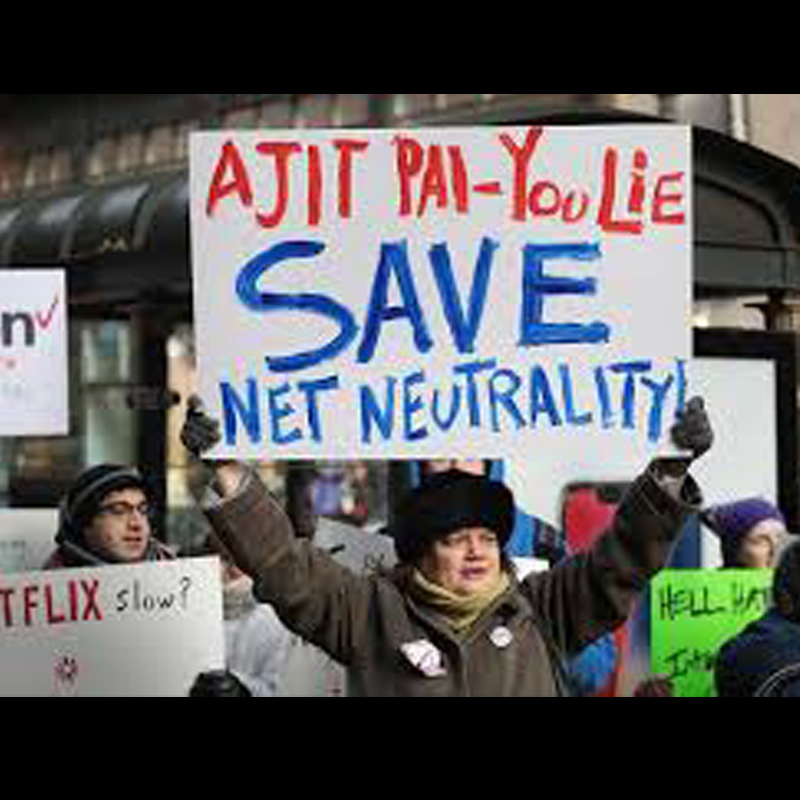
    NEW DELHI: American telecoms and broadcast regulator FCC on Thursday voted out the 2015 Obama government’s regulations relating to net neutrality, which, some critics said, put too much power in the hands of broadband companies to influence consumers’ online experiences.

    According to the FCC, it voted to restore the “longstanding, bipartisan light-touch regulatory framework” that had fostered rapid internet growth, openness, and “freedom for nearly 20 years”.

    Following detailed legal and economic analysis, as well as extensive examination of comments from consumers and stakeholders, the commission reversed the FCC’s 2015 “heavy-handed utility-style regulation” of broadband internet access service, which imposed substantial costs on the entire internet ecosystem.

    “In place of that heavy-handed framework, the FCC is returning to the traditional light-touch framework that was in place until 2015.  Moreover, the FCC today also adopted robust transparency requirements that will empower consumers as well as facilitate effective government oversight of broadband providers’ conduct,” the commission said in a statement, adding, “In particular, the FCC’s action today has restored the jurisdiction of the federal trade commission to act when broadband providers engage in anticompetitive, unfair, or deceptive acts or practices.

    “The framework adopted by the commission today will protect consumers at far less cost to investment than the prior rigid and wide-ranging utility rules. And restoring a favourable climate for network investment is key to closing the digital divide, spurring competition and innovation that benefits consumers.”

    New York Times, which has often criticised FCC chief Ajit Pai’s stand on some issues, including net neutrality, reported Mignon Clyburn, one of the Democratic commissioners who voted against the action, accused the three Republican commissioners of defying the wishes of millions of Americans. She was quoted by the newspaper as saying, “I dissent because I am among the millions outraged. Outraged because the FCC pulls its own teeth, abdicating responsibility to protect the nation’s broadband consumers.”

    Brendan Carr, a Republican commissioner, was quoted as having said it was a “great day” and dismissed “apocalyptic” warnings.

    Before the voting on net neutrality took place, Pai said, “We are helping consumers and promoting competition. Broadband providers will have more incentive to build networks, especially to underserved areas.”

    What do the FCC’s new rules mean, as and when they come into effect? In simple terms: it would allow walled garden of content and also help broadband companies and telcos to prioritise services and have different price structures for services.

    Tech magazine Wired observed that broadband providers say the public has nothing to worry about and that AT&T, Comcast and Verizon, among others, have promised not to block or throttle content. But those promises leave internet providers with quite a bit of room to prioritise their own content, or from their partners, the magazine commented.

    “AT&T, for example, already allows its DirecTV Now video-streaming service to bypass mobile subscribers’ data limits. Verizon does much the same with its Go90 video service. Sling TV and Netflix, on the other hand, still count towards customers’ data caps. The end of the FCC’s current rules will allow companies to expand the ways they prioritise certain services over others,” Wired said.

    However, some observers in the US, including the NYT, also were categorical that in the new year the FCC regulation most likely will be challenged in courts.

    The full text of the FCC statement could be accessed at https://www.fcc.gov/document/fcc-takes-action-restore-internet-freedom.

    ALSO READ:

    TRAI releases recommendations on Net Neutrality

    TRAI & FCC sign agreement on accelerating broadband deployment

    Restoring Net freedom: FCC seeks public participation

  • TRAI sees merit in using satcom for broadband delivery

    TRAI sees merit in using satcom for broadband delivery

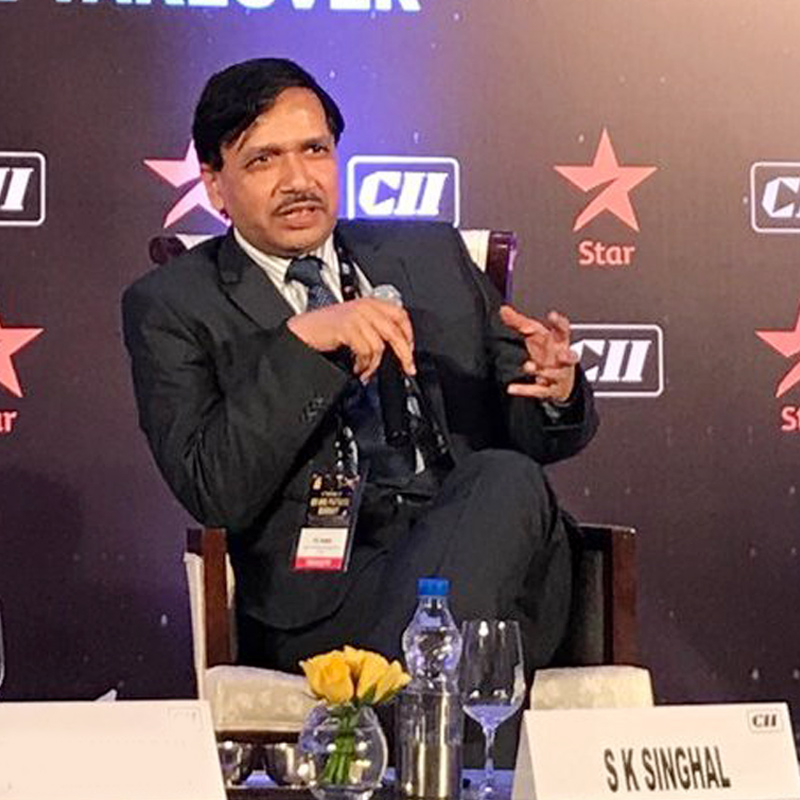
    NEW DELHI: India needs to create digital platforms, pushed by government policies and private sector entrepreneurship, which are specific to India and address its specific needs, telecom and broadcast regulator TRAI advisor SK Singhal said on Wednesday, adding that affordable broadband and allied services like television form the backbone of NTP 2018.

    “We need to create policies (including those pertaining to the digital world) that address our specific needs,” Singhal said at the CII Big Picture Summit 2017, adding that optimal usage of capacity created by cable networks is a must to deliver broadband services to every corner of India as envisioned by PM Modi.

    Singhal, along with Broadcast Engineering Consultant India Ltd (BECIL) CMD George Kuruvilla were speaking on the theme of `Connected India is Digital India’ and how for digital India to be truly implemented broadband access had to be made affordable, including all mediums of delivery like satellite communications (satcom) and cable.

    Pointing out that a stronger ‘collaboration’ is needed between operators of cable networks and those who use the pipe to deliver services, Singhal said that TRAI has already recommended to the government to use cable networks’ broadband delivery potential to fulfil the goals of the New Telecom Policy 2018.

    However, he officially admitted that to fully realise the digital potential of cable networks, some “policy hiccups” also need to be ironed out along with proper guidance in entrepreneurial skills of people who operate such networks.

    Economic Times, in September, had quoted telecoms minister Manoj Sinha as saying that the NTP 2018, expected by March 2018, will focus on providing affordable internet access to 1.3 billion Indians and facilitate domestic manufacturing to curb dependence on imports. He had added that NTP will address sector issues and make them future-proof with the onset of disruptive technologies such as fifth-generation (5G) and AI.

    Dwelling further on building broadband capacity and fully “unleash the potential” of cable networks, Singhal said set top boxes too need to be unbundled or made interoperable. TRAI has an interaction going on with all stakeholders on the issue and some field tests have also been conducted on interoperable boxes.

    Asked how the draft space policy, presently being reviewed by various stakeholders, could facilitate increased use of satellite communications to give a fillip to delivery of broadband services, Singhal skirted a direct answer as space related policies were handled by ministries of telecoms and space (department of space falls within the ambit of prime minister’s office).

    ALSO READ: MIB, TRAI allay industry fears on sat capacity leasing & content regulations

    Prasar Bharati, Dish TV, Star, Zee and BES bat for KU-band open-sky policy

    ISRO stresses on indigenization; TRAI for Open Sky policy

  • Siti bullish on broadband: Rajesh Sethi

    Siti bullish on broadband: Rajesh Sethi

    Mumbai: Despite uncertainty in many quarters, these are interesting times for people following the multi-system operator (MSO) industry. Recently, Siti Networks Ltd (Siti) released its Q2 and H1 results for 2017-18, reigniting the hope for growth in the industry. Announcing growth in operating EBITDA, the company outperformed the competition in set-top box (STB) seeding by adding nearly 2.3 million boxes in the first half of the year as against near flat growth by other companies in the industry.

    For Siti, this forms the bedrock for future growth as monetisation of these boxes in H2 will bring incremental revenue benefit to the company. In the cable television distribution business, STB seeding, monetisation of seeded STBs, and collection efficiency are the core performance metrics.

    The broadband space is exploding with Reliance Jio having announced its impending entry and trial runs across various cities in the country. Siti is looking to leverage existing infrastructure and improve extraction levels. The company will look at a number of business models to ascertain what is the right fit in this business.

    In an email interaction, Rajesh Sethi spoke to Indiantelevision.com on a wide range of issues. Here’s what he had to say:

    What is the direction you are taking to turn around the fortunes of Siti Networks?

    We are one of the largest distribution platforms in the country and are working on the ethos of ‘demand more.’ We will leave no stone unturned to deliver the best to our customers while ensuring enhanced shareholder value. On the video front, this is going to be the last year of major seeding as we consolidate our market dominance. The focus will be on improving monetisation, collection efficiency, and prepaid implementation. We are well prepared to execute the tariff order as soon as the judgment is passed on the same.

    On the broadband front, we are looking to leverage our existing infrastructure and improve extraction levels. We will be selective in our broadband expansion and will look at a range of business models to ascertain what suits us best. The focus is on four pillars of people, process, product, and corporate governance with emphasis on compliances, systems and processes, harnessing inbuilt operating leverage, and making the organisation more agile and lean.

    What is your strategy to prune losses in the time to come?

    In the video business, seeding to capture the opportunity offered by digitisation, subsequent monetisation improvement, and enhanced collection efficiency will be the key priorities. These factors will form the bedrock for strong sustainable growth and ensure recurring cash flows.

    Broadband is a field that we are quite bullish on. Uptake in broadband is dependent on 4G pricing, which definitely is now looking to increase. Broadband growth will come from primarily form Tier 2 and 3 cities rather than the bigger cities. Broadband revenue performance will also see uptick with increasing customer base, churn, and fault rate control.

    Cost optimisation is a major lever in coming back to profitability and we are looking to rationalise our bandwidth, general and administrative, content, and HR costs to drive increased savings. The tariff order is expected to come by end of this fiscal and will substantially moderate content cost growth; content cost is expected to become a pass through.

    These actions are expected to contribute towards improved recurring cash flows and better profitability.

    How soon do you see a revival in the cable industry?

    The revival you speak of is already underway as Phase 3 and 4 monetisation has started happening and this will only move up, eventually being at par with monetisation levels in Phase 1. The bulk of Phase 4 seeding will be completed this fiscal and you will see strong subscription revenue growth lead by volume and monetisation increases. Thereafter, it is a steady state perpetuity business.

    The tariff order will moderate content cost growth as customer choice will dictate the content they view. At the same time, broadband is a big opportunity that will spur long-term growth and drive convergence. The industry is in a transitory phase and things will improve significantly in a year’s time.

    Why hasn’t digitisation helped the dynamics of the industry as envisioned?

    Ever since the announcement of digitisation, there were multiple delays due to a variety of factors. Phase 3 and 4 deadlines were delayed by more than a year due to multiple petitions, regulatory uncertainty, and other factors. As we speak, the tariff order is pending in the Chennai high court. Most DPOs incurred huge capital expenditure in upgradation of the network and purchasing STBs. The costs were incurred upfront and, therefore, monetisation got delayed.

    In addition to these delays, regulatory guidelines such as MIA/SIA also faced delays in enforcement. You are seeing this turbulence as we are in transition right now…once things settle down, you will witness strong recurring cash flows. The content delivery value chain will become more streamlined and the balance of power will shift to the DPOs.

    How important is it to have a lean workforce? Do you have a retrenchment strategy in place?  

    We have been focusing on areas where we can bring efficiencies into the system and one such effort in right sizing was executed in Q2 of 2017-18. This is a regular practice in most mature industries and allows the organisation to become leaner and agile. With this, we have given more latitude to our current employees by adding joint responsibilities in the video and broadband space in terms of delivery. We are focussed on employee growth with regular training sessions being held to upgrade skill sets and clearly delineating what is expected from them. Recently, we also rolled out our seven core values that define our DNA and influence behavior. We want to inculcate and sustain a high-performance culture in this company. These are the guiding principles in our efforts to take SITI to greater heights.

    What is your vision for Siti Networks?

    We are the leading content provider in the country and will continue to sustain our preponderance in video. Simultaneously, broadband is a natural transition for an entity like ours. Customers have already shown indication towards moving to non-linear on-demand entertainment and we expect broadband penetration to see a huge increase. Hence, we are moving towards delivering non-linear content. This will be the future of content consumption and Siti is preparing earnestly for it.

    We are also working with our technology partners to bring innovative products to the market. Our vision is that we should be at the forefront of providing world-class technology to customers.

    How do you see the company evolving over the next two years?

    Siti will have consolidated its primary growth lever of video with strong recurring cash flows taking place. We will be offering substantial HD, OTT, and other VAS services. In addition, we intend to push the pedal on broadband and ensure we have sizeable presence in the high-speed-wired broadband space. We could go in for some inorganic expansion as well.