Tag: Broadband India Forum

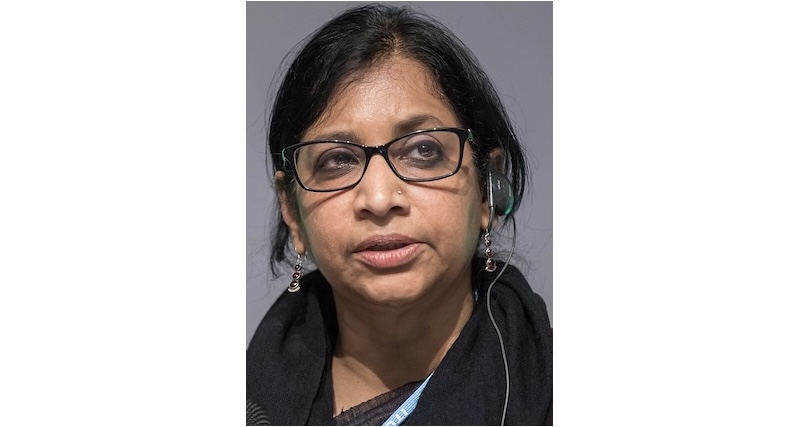
  • Truecaller dials up policy muscle, taps Aruna Sundararajan for board role

    Truecaller dials up policy muscle, taps Aruna Sundararajan for board role

    MUMBAI: Truecaller is adding some serious regulatory firepower to its boardroom. The Stockholm-based caller ID giant has nominated Aruna Sundararajan—former telecom policy chief and digital transformation architect—for a seat on its board, ahead of the company’s annual general meeting (AGM) scheduled for 23 May.

    The nomination comes as part of a broader recommendation from the Truecaller AB nomination committee, which also proposed the re-election of all existing board members—Nami Zarringhalam, Alan Mamedi, Annika Poutiainen, Helena Svancar, and Shailesh Lakhani.

    Sundararajan is no stranger to tech and governance. The former secretary at India’s ministry of electronics and IT and department of telecommunications has steered some of the country’s most ambitious digital infrastructure and policy initiatives. She now chairs the Broadband India Forum and sits on the boards of Delhivery, Info Edge, L&T Technology Services, and India’s National Bank for Infra Financing and Development (NaBFID).

    “We are very pleased with the nomination of Aruna Sundararajan as a new board member of Truecaller. She possesses extensive experience in policy and regulatory matters within technology and has board experience from several listed companies in India. Her appointment as a new board member is expected to significantly enhance the board’s collective expertise and competence in these areas. With this addition the Board will consist of six board members with well diversified competences and experiences,” said Truecaller’s nomination committee chair Kamjar Hajabdolahi. “Her addition will level up the board’s strategic depth at a time when digital trust and global expansion are front and centre.”

    The committee, comprising reps from top shareholders and co-founder Alan Mamedi, will publish its full slate of proposals and justifications alongside the AGM notice.

    Founded in 2009 and listed on Nasdaq Stockholm since 2021, Truecaller has become a default defence against spam and scam calls globally. With over 450 million active users, the app blocked nearly 56 billion unwanted calls in 2024—making it one of the world’s most widely used caller ID platforms.

    With Sundararajan’s potential onboarding, Truecaller is ringing in not just experience—but influence that matters.

  • Consumers subscribe to TV channels in bouquets rather than paying for individual channels: Study

    Consumers subscribe to TV channels in bouquets rather than paying for individual channels: Study

    Mumbai: There are gaps in the effective exercise of consumer choice in TV channel selection, according to a study on the TV consumer market, released on Wednesday.

    The key findings of the report suggest that most consumers avail TV channels via bouquets or packages and rely on distributors’ basic packages to make their choice. Based on the findings, the report states that the Telecom Regulatory Authority of India (Trai) could review the charges for Network Capacity Fee (NCF), which is a flat fee, and instead consider a Network Access Fee (NAF), which is charged on a per-channel basis.

    The nationwide survey of over 10,000 TV consumers was commissioned by Consumer Unity and Trust Society (CUTS) and Broadband India Forum (BIF) in the months of April and May 2022. The study evaluated consumers’ perception of TV channel selection and overall satisfaction.

    This is a first-of-its-kind evidence-based study conducted in India which captures the consumers’ perspective and level of satisfaction regarding TV viewership.

    TV consumers prefer bouquets/packages

    The study found that 54 per cent of consumers surveyed buy TV channels via bouquets or packages, and 35 per cent do so via a combination of bouquets and individual channels. With an effective total of 89 per cent of consumers surveyed preferring bouquets, the survey highlighted that it was the preferred choice of channel selection.

    According to 70 per cent of survey respondents, television provides good value for money, compared to only 27 per cent for digital/OTT platforms and only three per cent for TV apps.

    Most consumers factor in the price of a TV package when selecting a TV subscription, and a majority subscribe to the distributors’ basic package, which includes between 100 and 200 channels. The survey found that consumers typically pay between Rs 200 and Rs 400 for their subscriptions.

    40 per cent of survey respondents felt that their TV subscriptions catered to the viewing needs of the entire family. However, consumers felt that there was room for levels of satisfaction to grow, as they may want to watch new channels that they think they may like, highlighted the study.

    Quality of Service (QoS) found wanting

    The study pointed out that a majority of consumers, 75 per cent, were unaware of Trai’s channel selector app, launched in June 2020. Only 31 per cent were aware that they could add/remove TV channels from their subscription packages, 51 per cent were hesitant to add/remove channels themselves, and only 43 per cent of those who eventually added TV channels found the process convenient.

    The majority of consumers, 60 per cent, relied on manual channel addition and removal & required direct intervention from distribution, it found.

    In 2017, Trai issued quality of service (QoS) regulations requiring itemised billing, quick and convenient grievance redressal, and assistance with customer premises equipment.

    The study found that one in five consumers believes there has been a decline in grievance redressal, assistance with set-top-boxes (STBs), freedom to choose which channels to watch, and an increase in the number of advertisements.

    Furthermore, three out of every four customers claim to have never received an itemised bill. All of these are required by the current regulatory framework, and non-compliance with this framework is reflected in insufficient enforcement at the last mile of distribution, it said.

    Empower last mile service providers

    As per the conclusions of the study, the mismatch between consumer preferences and channel subscriptions could be reduced if more efforts are made to raise consumer awareness, e.g., capacity building through regional consumer cells, and if consumers have more say in deciding their bouquets.

    The study suggested that the charges for Network Capacity Fee (NCF) could be reviewed to ensure that subscriptions reflect consumer choice. Alternatively, a per-channel Network Access Fee (NAF) could be considered instead of a flat NCF charge.

    “Distributors could be incentivised to assist customers by providing appropriate channels and bouquets of their choice using this method,” said the statement.

    The regulator could also assist credible consumer organisations in raising awareness, developing capacity and acting as watchdogs for QoS compliance, channel selection availability, quality of content, viewing experience and quality of service.

    Last-mile service providers/distribution platform operators continue to be the primary point of contact for TV subscriptions, and it is crucial that QoS requirements and transparency mandates are accomplished.

    CUTS International secretary general Pradeep S. Mehta said, “The major findings indicate that there are gaps in the effective exercise of consumer choice as well as channel selection. Efforts to enhance consumer awareness around their rights as well as methods of channel selection are imperative. However, any further regulatory intervention should follow a detailed cost-benefit analysis.”

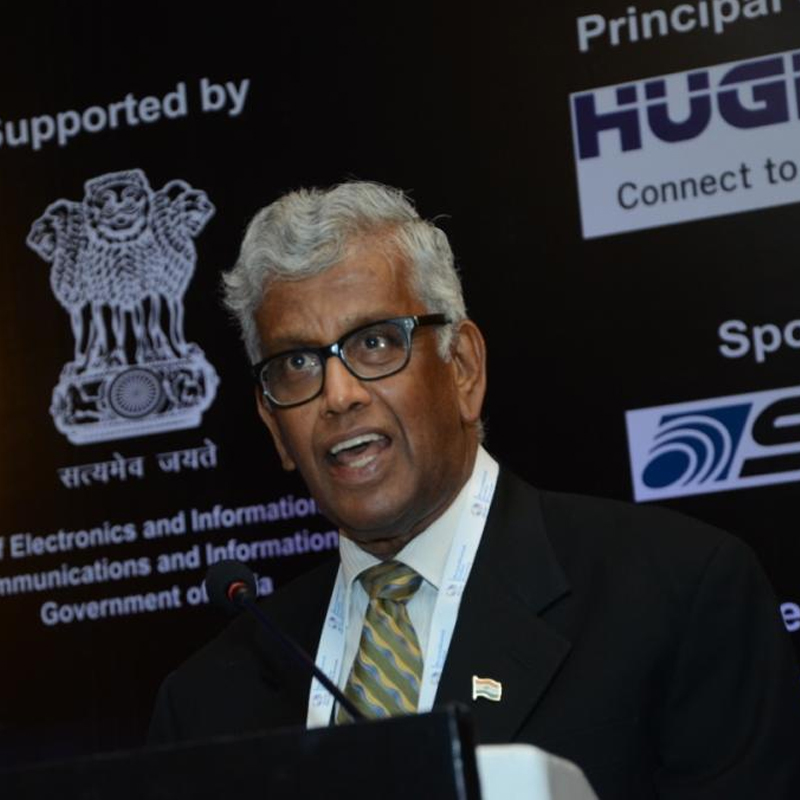
    Broadband India Forum president T.V. Ramachandran said, “The study assumes great significance and relevance, especially in the present times, when the general notion is that digital media and content are impacting the popularity of legacy and linear TV. The report indicates possible areas for regulatory and policy focus to help in the overall improvement of quality of services and consumer satisfaction.”

  • DoT & TRAI officials feel satcom policy needs ‘fundamental rethink’

    DoT & TRAI officials feel satcom policy needs ‘fundamental rethink’

    NEW DELHI: Two top Indian government officials from Telecom Ministry and TRAI feel the country must have a "fundamental rethink" on satellite communication policy to meet rising connectivity needs that are being fuelled by mobile data growth, digital aspirations, demand from the country’s broadcasting sector and advent of new-age technologies.

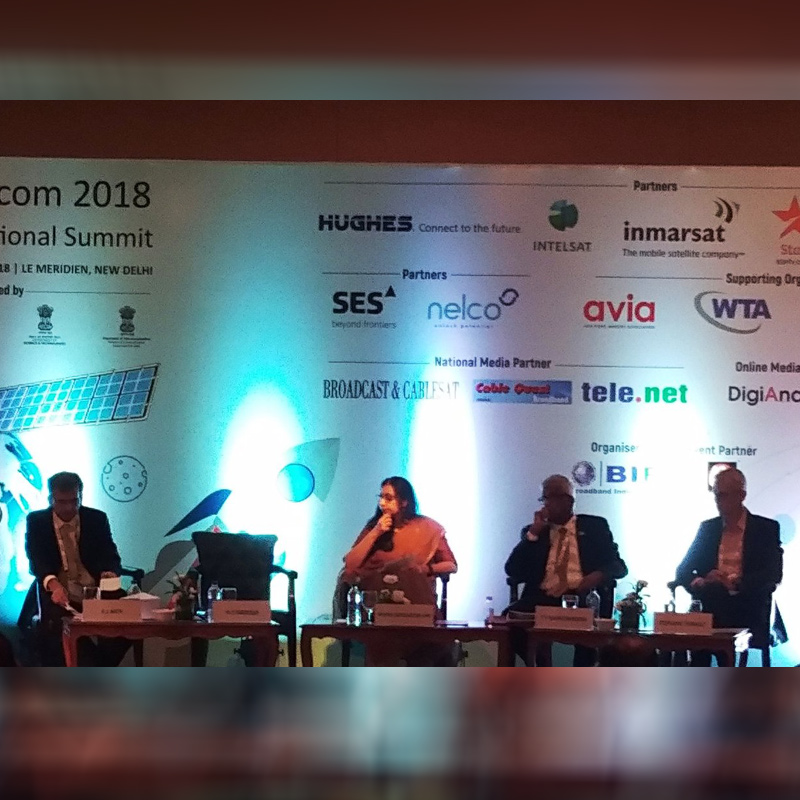
    Telecom secretary Aruna Sundararajan on Wednesday outlined the massive growth in mobile data consumption, driven by first-time users, and India's increasing digital clout, and said there is "no looking back" for the country when it comes to strengthening its communications infrastructure.

    She said that in an era of 5G and Internet of Things (IoT), the demand for communication infrastructure "far from slowing down, will increase exponentially".

    "We must have digital communications infrastructure that facilitates all this…We really must have a fundamental rethink on India's satcom policy in light of what are the emerging requirements and India's aspirations," Sundararajan said addressing the annual satcom summit 'India SatCom-2018' organised by Broadband India Forum (BIF), a PTI report stated.

    She further said that the demand for communication network is also being propelled by financial service industry, digital payment companies, smartphone usage and social media.

    Sundararajan noted that the draft national digital communications policy aims to provide universal broadband connectivity at 50Mbps to every citizen by 2022, create four million additional jobs, and also talks of enhancing the contribution of digital communications sector to eight per cent of India’s GDP from approximately 6 per cent now.

    "If we are to achieve robust modern digital communications infrastructure that the country needs…it has estimated the need for investment at USD 100 billion. Often, we in government are asked if that is a high figure, but I don't think so…I think this is realistic investment number in sync with our infrastructure requirements," PTI quoted her as saying.

    Stating that the country must embark on comprehensive review of its satellite communications policy, she stressed on the need to strike a balance between autonomy, security and the country's communications demand. "…it is possible to find a sweet spot between these three aspects. Other countries have done so, and I don't think it is impossible for India to strike a calibrated position keeping these three imperatives in mind…Keeping our strategic capabilities and requirements in mind, we need to look at how we can bridge the deficit in term of communication requirements," she pointed out.

    The summit also delved on various aspects of communications, including broadband connectivity to the remote parts of the country, satellite mobility, inflight connectivity, new technologies and innovations.

    Echoing sentiments similar to Sudararajan, telecom and broadcast regulator TRAI secretary SK Gupta, while addressing the valedictory session of the event, opined that “mainstreaming of satcom” issues was heartening.

    Pointing out that satellite transponder allocation process in India “needs a review” and the mechanism an “overhaul”, Gupta said that no regulatory hurdle should be created against use of any technology as satellite communication is very important for various applications and services.

    The one and half day satcom conference saw the convergence of not only ideas and trends, but also of representatives from the industry and government, including those from India’s space agency ISRO, Ministry of Information and Broadcasting and BECIL.

  • CASBAA lauds India; calls for more broadcast, satellite reforms

    CASBAA lauds India; calls for more broadcast, satellite reforms

    NEW DELHI: Asian pay TV industry organisation CASBAA, while applauding the Indian government for ease of doing business, exhorted policy makers to further streamline norms relating to the broadcast and satellite industries as it led to procedural delays impacting business.

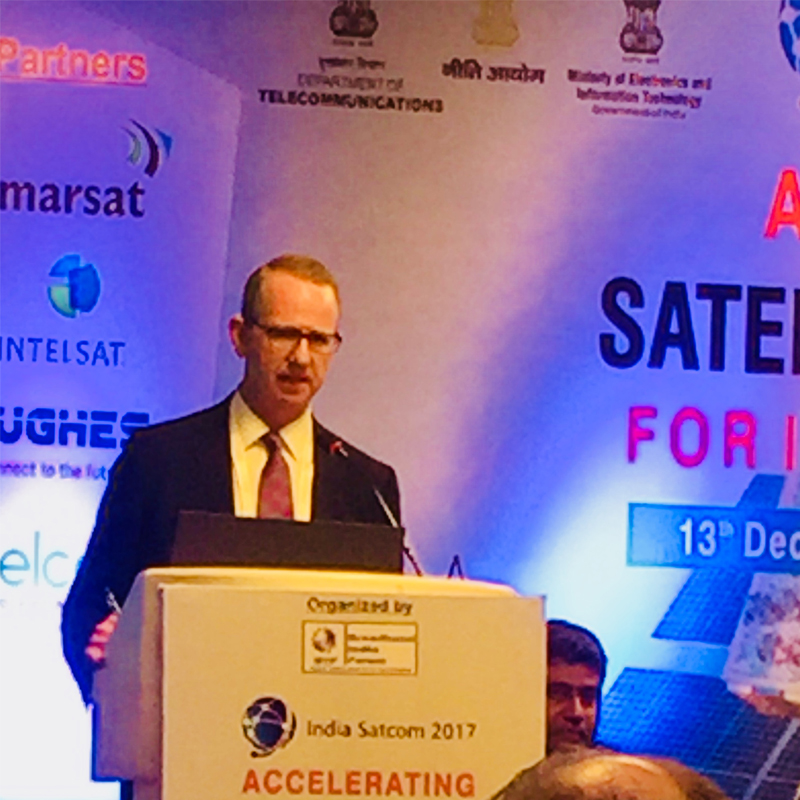
    Speaking at the India Satcom 2017 forum here on Wednesday, Hong Kong-based CASBAA chairman Joe Welch said a great deal of attention has been paid to the power and infrastructure sectors, but “the key to … realisation of the prime minister’s vision of taking India up to a top-50 ranking (in ease of doing business) lies in improving business conditions in other sectors of the economy”, specifically satellite communications and broadcasting.

    Welch, who was chairing a session relating to ease of doing business in the broadcast and satellite sectors, observed that broadcasting business is heavily dependent on satellite links, and that “the single most crucial measure the government could take … would be to create conducive conditions for both the satellite operators and the broadcasters to be able to enter into long-term service agreements”.

    Currently, contracts for satellite capacity for DTH broadcasters are limited to a three-year term by Indian government regulation.

    “Striking long-term commercial deals in a marketplace that is less government-constrained would help increase business certainty for all the stakeholders”, he said.

    Satellite services are also important to achieving the Digital India dream – championed by prime minister Modi – as satellite services can help bring broadband and other related services to the hinterland of India, digitally connecting thousands of villages where cable or other modes of broadband delivery may pose logistic and financial challenges.

    Also Read:

    Govt assures ease in licensing norms to TV channels, satellite operators

    CASBAA forms ‘Coalition Against Piracy,’ hires content protection veteran Neil Gane

    Louis Boswell appointed CASBAA CEO 

    Fox’s Asia SVP Joe Welch named CASBAA board chairman

  • Prasar Bharati, Dish TV, Star, Zee and BES bat for KU-band open-sky policy

    Prasar Bharati, Dish TV, Star, Zee and BES bat for KU-band open-sky policy

    NEW DELHI: A number of stakeholders in the Indian broadcast and satellite industry, including the country’s first DTH service provider Dish TV, Star India, Zee, the pubcaster Prasar Bharati, and industry organisations such as Broadband India Forum and CASBAA are batting for an open-sky policy relating to KU-band transponders.

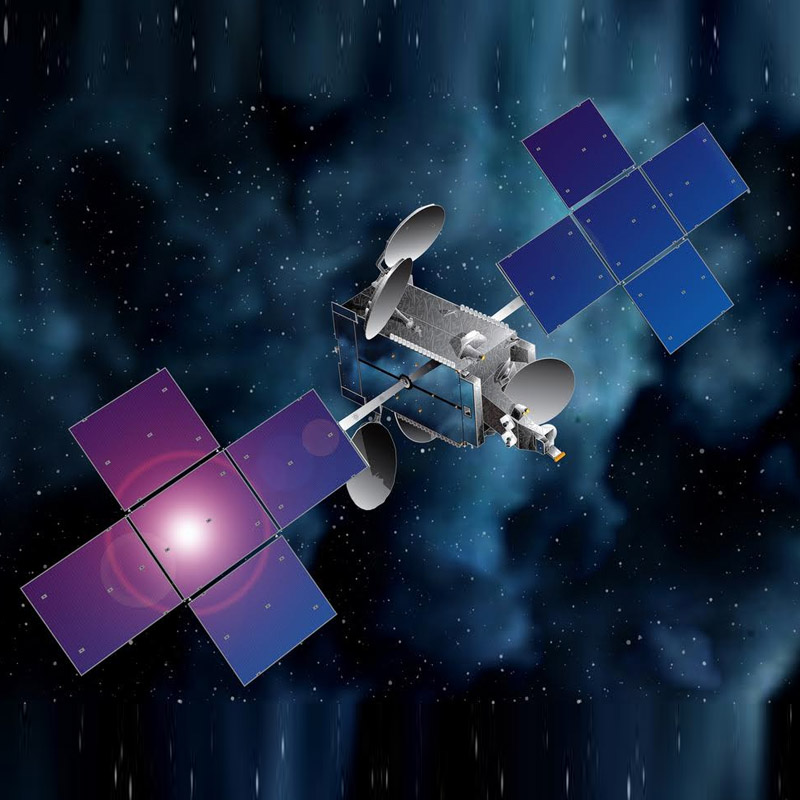
    The reason for this support for an open-sky satellite policy is rooted in the need for increasing KU-band transponder capacity. The allotment of KU-band transponder on foreign satellites is regulated by the country’s space agency Indian Space and Research Organisation (ISRO) when it is unable to provide space on Indian satellites to domestic customers.

    While Dish TV does not see “any justification” in the closed-door or regulated policy regime followed for KU-band transponder capacity, Star India is of the opinion that absence of such a policy is limiting DTH platforms’ capacity to provide additional services. Though Prasar Bharati, managers of Doordarshan and All-India Radio, gets preference on Indian satellites, it has also supported an open policy.

    “At present, KU-band is permitted for HITS, DTH, uplinks and DSNGs/VSATs. These applications should be enabled for open-sky policy, which will allow the broadcasters/DTH operators to negotiate long-term contracts. As satellite life is 15-17 years, operators give benefit in long-term contracts to the extent of 50 per cent,” Dish TV has said, adding that, at present, ISRO executes only three-year contracts.

    According to Star India (its parent 21 Century Fox has a minority in DTH operator Tata Sky), “With the introduction of new satellite TV channels, DTH operators require more KU-band capacity with footprint over India to enable to uplink all such channels on such DTH platforms… (but), owing to the lack of open-sky policy in KU-band, DTH platforms are restricted to provide limited value-added services. The open-sky policy for DTH will unlock such value-added services and enable viewers to consume such immersive and interactive content.”

    Why is this clamour for an open-sky policy regarding KU-band transponder?

    At present, any request for additional KU-band capacity on foreign satellites to expand business by Indian customers is hampered as they are unable to negotiate directly, and have to go through ISRO’s commercial arm Antrix that acts as a gate-keeper and, after a deal is concluded with a foreign satellite for KU-band transponders, also charges a commission.

    This happens when ISRO is unable to provide space on Indian satellites, which are increasing in number but have failed to keep pace with the demands of the domestic companies. Incidentally, there is no restriction on leasing C-band transponder capacity on a foreign satellite.

    “For DTH services, acquisition of KU-band transponder capacity is highly regulated and is done through an intermediary (Antrix that is a government organisation). As a result, there has been considerable delay in acquiring KU-band transponders…and also due to non-availability of adequate transponders, DTH service-providers are unable to chalk out their business plans. This is necessitated as the current procedures are fraught with restrictive practices,” said Broadband Forum India, an industry organisation comprising member-companies providing services via satellites.

    Hong Kong-based Asian industry body CASBAA, pointing that it has been seeking a “less restrictive policy” for KU-band for over a decade, has said a PwC-researched paper for it mid-2016 concluded that the policy for KU-band was “in effect a very restrictive satellite policy as presently operated in India,” which “artificially suppress(es) demand, which in turn leads directly to a reduction in growth, profits, and therefore lower tax revenues.”

    Though the bogey of national security is often raised when liberalisation of satellite policies are talked about, CASBAA, while discounting such fears, suggested following medium-term policy tweaks to ease KU-band capacity crunch, which were also listed out by some other stakeholders too:

    i) ISRO/Antrix can regularly publish a list of pre-cleared satellites and operators who are permitted to supply transponders to the Indian market. Indian DTH operators should be free to negotiate and contract capacities directly from them.

    ii) An efficient procedure can be established for DTH operators to obtain security clearance from ISRO before contracting the transponder capacity directly from foreign satellites.

    iii) Contracting for incremental capacity or extending the contracts of existing suppliers can and should be completely left for DTH operators without any need to seek additional, duplicative approvals from ISRO/Antrix. DTH operators would need to keep the ISRO updated with the contracted capacities and contract durations.

    The issue of freeing up KU-band transponder lease regime has been discussed for years, but its gaining momentum as the present PM Modi-led government in New Delhi has been talking about furthering economic liberalization and easing norms for doing business in India.

    Broadcast Engineering Society (BES), a government organisation, too is in favour of  an open-sky policy. “Keeping in view the growing number of TV channels and their carriage on various platforms, it has become inevitable for the government to go for an open-sky policy for KU-band,” BES stated, adding technological advancement and growth of HD channels, apart from experimental 4K services, has necessitated this.

    The stakeholders were expressing their views on KU-band satellite capacity vis-à-vis an open-sky policy as part of a consultation process initiated by sector regulator TRAI on ease of doing broadcast business in India. Incidentally the regulator has been recommending in vain an open-sky policy for several years now.

    ALSO READ :

    ISRO stresses on indigenization; TRAI for Open Sky policy

    ISRO’s ‘South Asia Satellite’ to carry 12 ku-band transponders

    Could India blocking ABS’ FTA TV signals lead to breach of ITU norms?

    MIB: No DPO request for infra sharing, DTH ops’ transponder demand up

  • Broadband: Futuristic policy to deal with communication & entertainment challenges

    NEW DELHI: The communications ministry has initiated a move to relook at the current telecom policy as data is going to drive the industry rather than voice in view of the exponential increase in broadband usage and smartphones which were vehicle of both communication and entertainment.

    The minister Manoj Sinha said over the weekend that this will be done through public consultation, as the need of the hour is to ramp up for the Digital era.

    Sinha said his ministry was dealing with an extremely dynamic industry and progressive market which is evolving at an extremely rapid rate.

    Speaking at the 10th Anniversary Celebrations of IPTV Society here, Sinha said whether it is broadband spectrum, Internet adoption/availability, data protection, or cyber security, what was applicable five years back is no more relevant in today’s context, and new policies will need to be futuristic.

    They will also need to be capable of dealing with India’s challenges and figuring out ways to deal with those challenges, he added.

    The minister said while the buzz today is 4G, the government is already gearing for introduction of 5G. and so “we need to think of and prepare for an ecosystem where Internet of Things (IoT) and Artificial Intelligence (AI) are mainstream, and connectivity is seamless, designed to improve the quality of e-governance and education, as well as to enable financial inclusion, smart cities, and an intelligent transportation system amongst other things”.

    Quoting experts, Sinha said India along with North America, will lead the way in numbers of 5G subscriptions by 2022, and that 5G will speed up the digital transformation in a number of industries, enabling new use cases in areas such as IoT, automation, transport and big data.

    He said broadband is of vital importance to India, as indeed to all customers globally, to ensure digital connectivity as this is the stepping stone to higher productivity as is proven in many developed economies. “It enhances commerce, improves banking facilities, improves administrative facilities and empowers the public as a whole. Broadband development is the cornerstone of Digital India and every Indian and remotest location will be empowered through the Digital India initiative.”

    He lauded the Broadband India Forum for bringing out credible research documents from time to time in the form of white-papers and reports, independently or in combination with reputed research agencies on relevant issues which are of value to all stakeholders and for the future of broadband in India.

    The minister released a paper by Broadband India Forum and ICRIER which he described is of economic significance for the digital economy concerning ICT Applications.

  • Broadband Forum report links incentives under GST to Digital India success

    Broadband Forum report links incentives under GST to Digital India success

    NEW DELHI: As online media consumption in India has shown growth over the past few years with mobile devices having taken over as the preferred medium of consuming online media, the government needs to incentivise further mobile handset manufacturing under the proposed Goods and Services Tax (GST), according to a new study.

    The Broadband India Forum (BIF), in association with knowledge partner Ernst & Young (EY), in a research paper unveiled yesterday said that it becomes important to grant incentives to domestic manufacturing in order to set off the “local disabilities” in manufacturing, including the booming mobile handset manufacturing.

    Wider deployment of 4G networks along with affordability and indigenisation, smartphones are going to drive mobile broadband to the next level of penetration, the BFI-EY report stated, adding that mobile handset manufacturing in India has gained fresh momentum in the past two years with a number of OEMs and third-party contract manufacturers setting up facilities in the country. The number of mobile handset manufacturing facilities reached 40 in August 2016 from just three in 2014 driven by the increase in duty differential in Union Budget 2015 to 11.5 per cent from five per cent, the report highlighted.

    According to Partner EY Bipin Sapra, “(Mobile) Handset manufacturing industry has seen a tremendous growth in past few years driven by government’s ‘Make in India’ initiative and policy changes such as duty reduction on domestically manufactured handsets. It is expected that the adoption of smartphones in India will go up to 688 million by 2020 as compared to 238 million in 2015. With the introduction of GST, most of the current central and state taxes/duties will be subsumed under GST. Thus, it is expected that the incentives available to domestic manufacturers under the current regime would decrease and there is need to continue the incentives under the GST regime to meet the increasing demand through domestic production.”

    The report, which notes the country has embarked on one of the world’s most ambitious broadband project with the `Digital India’ programme seeking to transform India into a digitally empowered society and knowledge economy, suggested the government may walk the extra mile to extend similar benefits to the component manufacturers that would encourage more investment in India and give a boost to the handset manufacturing eco-system.

    Pointing out that once the eco-system is created, the prices of parts and components may also become more competitive that in turn will reduce the cost of mobile handsets and make Indian handset manufacturers more competitive globally, BIF president T.V. Ramachandran said, “The broadband device today is a smartphone. We need to increase smartphone penetration as India today has less than 30 per cent smartphone penetration. This can only happen through local manufacturing and by further increasing local value addition.”

    The GST alone will by itself not be the driver for incentivising manufacturing in a country and some of the essential factors for a sustained manufacturing environment in the country are infrastructure, a robust manufacturing ecosystem, skilled manpower, technology, R&D facilities, etc., the report said.

    The report has also come out with a formula that may be adopted to hand out incentives to domestic manufacturing under GST.

    Electronics and Information Technology secretary Aruna Sundararajan, who was present during unveiling of the report, said, “This complementary study by EY-BIF, providing how incentives can be continued under GST to the domestic handset industry, will be helpful for the government to frame a better policy and boost local handset manufacturing.”

  • Broadband Forum report links incentives under GST to Digital India success

    Broadband Forum report links incentives under GST to Digital India success

    NEW DELHI: As online media consumption in India has shown growth over the past few years with mobile devices having taken over as the preferred medium of consuming online media, the government needs to incentivise further mobile handset manufacturing under the proposed Goods and Services Tax (GST), according to a new study.

    The Broadband India Forum (BIF), in association with knowledge partner Ernst & Young (EY), in a research paper unveiled yesterday said that it becomes important to grant incentives to domestic manufacturing in order to set off the “local disabilities” in manufacturing, including the booming mobile handset manufacturing.

    Wider deployment of 4G networks along with affordability and indigenisation, smartphones are going to drive mobile broadband to the next level of penetration, the BFI-EY report stated, adding that mobile handset manufacturing in India has gained fresh momentum in the past two years with a number of OEMs and third-party contract manufacturers setting up facilities in the country. The number of mobile handset manufacturing facilities reached 40 in August 2016 from just three in 2014 driven by the increase in duty differential in Union Budget 2015 to 11.5 per cent from five per cent, the report highlighted.

    According to Partner EY Bipin Sapra, “(Mobile) Handset manufacturing industry has seen a tremendous growth in past few years driven by government’s ‘Make in India’ initiative and policy changes such as duty reduction on domestically manufactured handsets. It is expected that the adoption of smartphones in India will go up to 688 million by 2020 as compared to 238 million in 2015. With the introduction of GST, most of the current central and state taxes/duties will be subsumed under GST. Thus, it is expected that the incentives available to domestic manufacturers under the current regime would decrease and there is need to continue the incentives under the GST regime to meet the increasing demand through domestic production.”

    The report, which notes the country has embarked on one of the world’s most ambitious broadband project with the `Digital India’ programme seeking to transform India into a digitally empowered society and knowledge economy, suggested the government may walk the extra mile to extend similar benefits to the component manufacturers that would encourage more investment in India and give a boost to the handset manufacturing eco-system.

    Pointing out that once the eco-system is created, the prices of parts and components may also become more competitive that in turn will reduce the cost of mobile handsets and make Indian handset manufacturers more competitive globally, BIF president T.V. Ramachandran said, “The broadband device today is a smartphone. We need to increase smartphone penetration as India today has less than 30 per cent smartphone penetration. This can only happen through local manufacturing and by further increasing local value addition.”

    The GST alone will by itself not be the driver for incentivising manufacturing in a country and some of the essential factors for a sustained manufacturing environment in the country are infrastructure, a robust manufacturing ecosystem, skilled manpower, technology, R&D facilities, etc., the report said.

    The report has also come out with a formula that may be adopted to hand out incentives to domestic manufacturing under GST.

    Electronics and Information Technology secretary Aruna Sundararajan, who was present during unveiling of the report, said, “This complementary study by EY-BIF, providing how incentives can be continued under GST to the domestic handset industry, will be helpful for the government to frame a better policy and boost local handset manufacturing.”

  • TRAI-COAI spar on interconnect charges consultation paper

    TRAI-COAI spar on interconnect charges consultation paper

    MUMBAI: Telco watchdog  the Telecom Regulatory Authority of India (TRAI) has garbaged allegations by the Cellular Operators Associaiton of India (COAI) that its latest consultation paper on call connect charges was “unfair” on incumbent operators and favouring newer entrants. TRAI chairman RS Sharma told PTI that the allegations against the regulator are “baseless.”

    TRAI maintained that it will continue to work according to its mandate. “Trai will continue to work in the areas in which it is mandated to work…We will continue to perform functions assigned in the Trai Act, with regard to consumer protection, Quality of Service, encouraging competition, fair play and growth of industry,” Sharma said.

    COAI had questioned the regulator’s urgency in initiating the process of  reviewing interconnect charges – paid by one operator to another for connecting calls, which the association claimed “favours new entrants.” TRAI  said it had undertaken this review in the backdrop of 4G and internet telephony changing the way consumers communicate.
    Currently, termination charges for a mobile to mobile local and national long distance call is pegged at 14 paise per minute while the termination charges for international incoming call to wireless and wired line stands at 53 paise per minute.

    Trai had sought fresh views on whether this should be continued or whether a new way of computing could be considered which is Bill and Keep (BAK) – to maximize consumer welfare, adoption of more efficient technologies and growth of the telecom sector. Under the BAK method, each telco bills its own subscribers for outgoing traffic that it sends to the  other interconnecting network and keeps the revenue received from its subscribers.

    COAI has finger pointed at the regulator’s suggestion, saying it essentially favours new operators as they would  not have to pass any payments to existing older operators, while the latter would end up incurring costs. “This is a misguided effort from the TRAI that will help new entrants at the cost of the incumbent. We are extremely disturbed by this, this further tilts the level playing field,” COAI director general Rajan Matthews had stated yesterday.

    This is not the first time that India’s private sector telecom operators have tried to put pressure on the regulator.
    Even in the case of net neutrality and zero-rating plans of telecom operators, the telcos had termed certain orders of TRAI without any basis that did not give the telcos a level playing field against new technologies (OTT services like WhatsApp, Skype, etc) and their backers.

    Matthews told PTI that his association   had sought a meeting with the telecom minister and secretary “so that the matter can be debated in a transparent manner.”

    The Mukesh Ambani-led Reliance Industries Ltd, which has a pan-India licence for providing telecom services by a subsidiary company under Reliance Jio brand name, is slated to launch its services formally later this year. Reliance Jio is also slated to offer its consumers hi-speed 4G broadband services on low-priced Lyf handsets at  monthly subscription rates, telecoms observer opine, that are likely to start a blood-bath in the telecoms sector.

    RIL also controls the Network18 media group, founded by Raghav Bahl, which owns several TV channels and online and digital properties.

    In recent times, incumbent telecoms operators have been severely criticised within and outside the government for the low quality of services and rampant call-drops that TRAI had tried to rectify by proposing fines to benefit consumers.

    This move and other such regulatory initiatives too were criticised by telecos and various telecom industry bodies like COAI and Broadband India Forum.

    Interestingly, Reliance Jio  is also a member of COAI, though, according to media reports, its position on the present round of TRAI bashing by telcos is not known and unclear.

    ALSO READ:

    BIF bats for OTT regulations & level-playing field for all in Net Neutrality debate

  • TRAI-COAI spar on interconnect charges consultation paper

    TRAI-COAI spar on interconnect charges consultation paper

    MUMBAI: Telco watchdog  the Telecom Regulatory Authority of India (TRAI) has garbaged allegations by the Cellular Operators Associaiton of India (COAI) that its latest consultation paper on call connect charges was “unfair” on incumbent operators and favouring newer entrants. TRAI chairman RS Sharma told PTI that the allegations against the regulator are “baseless.”

    TRAI maintained that it will continue to work according to its mandate. “Trai will continue to work in the areas in which it is mandated to work…We will continue to perform functions assigned in the Trai Act, with regard to consumer protection, Quality of Service, encouraging competition, fair play and growth of industry,” Sharma said.

    COAI had questioned the regulator’s urgency in initiating the process of  reviewing interconnect charges – paid by one operator to another for connecting calls, which the association claimed “favours new entrants.” TRAI  said it had undertaken this review in the backdrop of 4G and internet telephony changing the way consumers communicate.
    Currently, termination charges for a mobile to mobile local and national long distance call is pegged at 14 paise per minute while the termination charges for international incoming call to wireless and wired line stands at 53 paise per minute.

    Trai had sought fresh views on whether this should be continued or whether a new way of computing could be considered which is Bill and Keep (BAK) – to maximize consumer welfare, adoption of more efficient technologies and growth of the telecom sector. Under the BAK method, each telco bills its own subscribers for outgoing traffic that it sends to the  other interconnecting network and keeps the revenue received from its subscribers.

    COAI has finger pointed at the regulator’s suggestion, saying it essentially favours new operators as they would  not have to pass any payments to existing older operators, while the latter would end up incurring costs. “This is a misguided effort from the TRAI that will help new entrants at the cost of the incumbent. We are extremely disturbed by this, this further tilts the level playing field,” COAI director general Rajan Matthews had stated yesterday.

    This is not the first time that India’s private sector telecom operators have tried to put pressure on the regulator.
    Even in the case of net neutrality and zero-rating plans of telecom operators, the telcos had termed certain orders of TRAI without any basis that did not give the telcos a level playing field against new technologies (OTT services like WhatsApp, Skype, etc) and their backers.

    Matthews told PTI that his association   had sought a meeting with the telecom minister and secretary “so that the matter can be debated in a transparent manner.”

    The Mukesh Ambani-led Reliance Industries Ltd, which has a pan-India licence for providing telecom services by a subsidiary company under Reliance Jio brand name, is slated to launch its services formally later this year. Reliance Jio is also slated to offer its consumers hi-speed 4G broadband services on low-priced Lyf handsets at  monthly subscription rates, telecoms observer opine, that are likely to start a blood-bath in the telecoms sector.

    RIL also controls the Network18 media group, founded by Raghav Bahl, which owns several TV channels and online and digital properties.

    In recent times, incumbent telecoms operators have been severely criticised within and outside the government for the low quality of services and rampant call-drops that TRAI had tried to rectify by proposing fines to benefit consumers.

    This move and other such regulatory initiatives too were criticised by telecos and various telecom industry bodies like COAI and Broadband India Forum.

    Interestingly, Reliance Jio  is also a member of COAI, though, according to media reports, its position on the present round of TRAI bashing by telcos is not known and unclear.

    ALSO READ:

    BIF bats for OTT regulations & level-playing field for all in Net Neutrality debate