Tag: Britain

  • The TV Formats business is doing very well, thank you!

    The TV Formats business is doing very well, thank you!

    MUMBAI: The production volume generated by the TV format business globally was in excess of 9 billion euros as estimated by a FRAPA study in 2009.  Estimates are that this could have crossed euros 10 billion by now.


    Indiantelevision.com calculations place the size for the business in India at around Rs 950 crore nationally, for shows which are produced from international, indigenous formats and even format TV show imports.


    Dance India Dance,  one of the most popular original Indian formats in recent times, and has now branched out and in its four season run, spawning three spin-offs’ viz., Dance India Dance: Super MomsDance India Dance: Li’l Masters and Dance India Dance DoublesCadbury Bournvita Quiz Contest remains India’s oldest original format to be still in production, since its inception back in 1972; and still remains India’s longest running quiz contest. India has adapted quite a few international reality formats, namely, Who Wants to Be a Millionaire, MasterchefBig BrotherBritain’s Got Talent, American Idol, Dancing with the Stars and Road Rules, along with adaptations of scripted formats such as 24 and The Killing currently in production.


    Earlier this month, UK research firm Madigan Cluff released its annual state of the union update and report on the business titled TV Formats in Europe 2014. It states that despite the global prolonged advertising recession and the fact that several major titles have peaked, the TV formats market in Europe is showing remarkable resilience. The value created by the top 100 formats was $2,931 million in 2013 for 84 European channels across the 16 territories and 21 distributors, according to the TV Formats in Europe report. The value created by formats for UK broadcasters was $600 million in 2013, down from $677 million in 2012. The number of hours broadcast reached 28,386 in 2013. France’s TF1 ($332 million) was the leader with Italy’s Rai 1 at No 2 and the UK’s BBC1 at third spot. Russia’s 1TV entered the top 10 in 2013 —by more than doubling its formats revenues in the year.


    The UK, followed by France is the TV formats leader in Europe. France recorded $599 million in 2013, up from $547 million in 2012. The UK, France, Germany and Italy accounted for 72 per cent of Europe’s total value created in 2013.


    The total number of hours broadcast in Europe for the 100 formats was 28,386 in 2013 with the UK coming up as the leader again, despite its 2013 total was estimated at 3,935 being considerably lower than in 2012, which was estimated at 4,623. Romania took third place, having added 645 hours to its total in 2013. 

     

  • Helen Mirren crowned top actress at top UK theatre awards

    Helen Mirren crowned top actress at top UK theatre awards

    NEW DELHI: Dame Helen Mirren was crowned best actress at Britain‘s Olivier awards on Sunday for her portrayal of the Queen Elizabeth. A stage version of a novel about a boy with autism was on track to be the top winner of the Olivier awards.
     
    Mirren, 67, has won stellar reviews for starring in "The Audience", Peter Morgan‘s play about the private weekly meetings between Queen Elizabeth and the 12 British prime ministers during the six decades of her reign.
     
    She is no stranger to royalty having won an Academy award for the same role in the 2006 film "The Queen".
     
    The actress said the queen certainly deserved an Olivier award after receiving one of Britain‘s most prestigious entertainment honours, a BAFTA, earlier this month for her support for the film and television industry.
     
    "I think she deserves one for the most committed and consistent performance of the 20th century and probably the 21st century," said Mirren on accepting the award from Harry Potter actor Daniel Radcliffe.
     
    Her co-star, Richard McCabe, won the award for best supporting actor for playing the prime minister Howard Wilson.
     
    But the biggest winner of the 37th Olivier awards was the play "The Curious Incident Of The Dog In The Night-Time" that opened at the National Theatre in London in 2012 and transferred to London‘s West End theatre district this year.
     
    The play, based on Mark Haddon‘s 2003 award-winning novel, was nominated for eight awards and picked up several in the first half of the glitzy awards ceremony at London‘s Royal Opera House.
     
    Luke Treadaway won the best actor award for playing 15-year-old Christopher, a maths prodigy with autism who sets out to solve the mystery of who killed his neighbour‘s dog.

  • MipTV: ITVS to launch two factual series

    MipTV: ITVS to launch two factual series

    MUMBAI: ITVS Global Entertainment (ITVS GE) will debut two new factual series from The Garden at next month’s television trade event MipTV as part of their distribution agreement with the UK-based Indie.


    ‘Keeping Britain Alive’ and ‘Baby Makers’ will launch at the market as both finished shows and format.


    Keeping Britain Alive is a medical ob doc that tells the story of 24 Hours in the life of the world’s biggest free health care system – the NHS. Using over a hundred camera crews to shoot across Britain in hospitals, doctor’s surgeries, ambulances and helicopters – all captured at and connected by, a specific moment in time. With nothing off limits, it takes a fresh look at everything from life or death emergencies, to controversial topics like plastic surgery and weight loss.


    ITVS GE will launch this ob doc as a format titled ‘Keeping Your Nation Alive’ at MipTV. ‘Keeping Britain Alive’ is produced by The Garden for BBC TWO.


    ‘Baby Makers: The Fertility Clinic’ is a look at the fertility frontline. With exclusive access to The Hewitt Centre – one of the largest IVF clinics in Britain, the patients are met. Through candid accounts from staff that deal with the endless sperm and egg collections, to patients facing low sperm counts and ticking biological clocks, this documentary reveals the moral minefield of IVF.Baby Makers: The Fertility Clinic is produced by The Garden for BBC FOUR.


    ITV Studios Global Entertainment director of global acquisitions and co-productions Ruth Clarke said, “Hot on the heels of The Audience, we are delighted to be unveiling two new shows from The Garden at MIPTV. Known for their ground-breaking and thought-provoking series, we look forward to continuing our partnership with them to represent both of these new factual offerings at the international marketplace.”


  • Sacha Baron Cohen edges out Tom Hanks and Brad Pitt to be Britain‘s highest-paid star

    Sacha Baron Cohen edges out Tom Hanks and Brad Pitt to be Britain‘s highest-paid star

    MUMBAI: Comedian Sacha Baron Cohen, who played President Prime Minister Admiral General Haffaz Aladeen, in the 2012 film The Dictator has been named Britain‘s highest paid Hollywood star.

    He drew over 20 million pounds in 2012 thanks to box office success of The Dictator and Les Miserables.

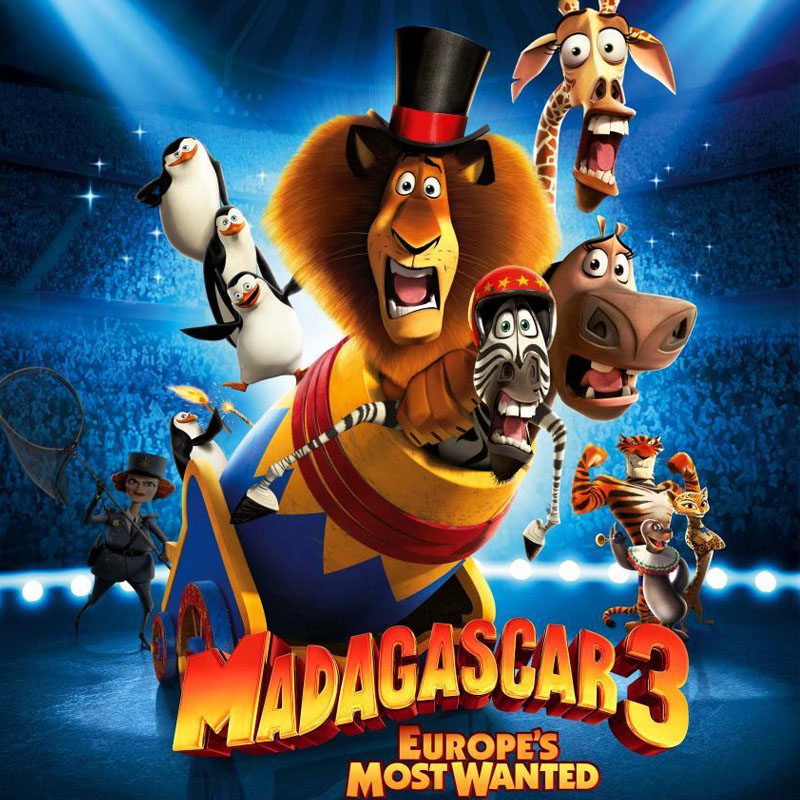
    The 41-year-old also added to his earnings with payment for his role as the voice of the lemur King Julien in Madagascar 3. This helped him earn more than fellow countryman Robert Pattinson.

    The actor outran Tom Hanks (17 million pounds) and Brad Pitt (16 million pounds).

    The list was topped by the 50-year-old Tom Cruise whose films like Jack Reacher and Mission: Impossible – Ghost Protocol earned him 48 million pounds in 2012.

  • Changing the branding game

    MUMBAI: Britain based brand consultancy Wolff Olins has released a report titled ‘Game Changers’ that talks about the five behaviours that are changing the future of the business.

    Conducted across 500 people and 14 countries, the study examines today’s high-growth businesses and tries to understand what sets them apart. It also explores how some companies like Tata, Unilever, Hero, Adani, Ashok Leyland, Google, Skype, General Electronics, Microsoft and Tata Docomo are changing the way the game is played and thereby shaping the future of business.

    The Game Changers report talk about how five laws of branding have been morphed to cater to the contemporary paradigm based on five new realities based on the consumer-brand relationship.

    While according to the old methods of branding ‘the mission of branding is to defend a positioning’, the new law states that a brand needs to ‘define its purpose beyond profit.’ This new definition is based on the reality that there is a shift in attidues from businesses being ‘corporate citadels’ to becoming ‘corporate citizens’. The Edelman Good Purpose study conducted in 2010 also revealed that 86 per cent global citizens gave equal importance to the business interests of a company and it contribution to the society.

    Similarly, the role of branding in persuasion is also changing. While earlier branding was meant to persuade people to buy the product/service, the present day TG has transformed into a creator from his role as a consumer. According to the Game Changers study, 25 per cent of leaders believe that the the company’s usefulness is more important than the growth factor while 40 per cent believe in offering consumers flexibility and personalization options in order to be more useful to them.

    In other words, the thrust has shifted from making people want things to making things people want. Thus, from a persuasion tool, the focus is now on making the brand a useful platform where people can come and do things and interact.

    The third guideline of branding that is now seen as obsolete is ‘the essence of branding Is consistency.’ The new reality is that brands are now changing from steady state to constant revolution. The study also states that the developing markets are more adventurous when it comes to experimentation. Thirty four per cent Asian market leaders are confident that experimenting with the brand will result in growth.

    Take for example Google. The search engine’s homepage is in a state of flux as the ‘Google doodle’ changes from time to time to commemorate events, remember people and celebrate occasions. A similar thing is observed in case of retail as a tweak in the store design or the brand communication is sure to grab eyeballs and initiate conversations about the brand. The new law, thus, states, ‘use your brand to constantly innovate.’

    The fourth postulate of branding that has evolved through time deals with ownership. The old concept of ownership of brand stated that branding is about asserting ownership. The new age branding mantra, however, reads, ‘share your brand and be boundayless.’

    This shift can be attributed to the fact that brands are increasingly adopting the constellation model of organization from the corporate model. Be it Amazon or the Android technology, these companies are made of clusters of small to medium sized entrepreneurs who are also users and the combined efforts of these entities make the brand strong. The survey states that highly networked enterprises have 50 per cent more chances of gaining market share as opposed to their less networked competitors and also report higher profit margins.

    Lastly, the idea of controlling the brand is becoming disregarded with speed. The evolved notion with regards to control of the brand is that creativity is more important than strategy. Fifty four per cent of CEOs said that creating new business models is a priority in their company’s innovation portfolios. This model is already followed by the likes of microblogging site Twitter and Lego. In case of the former, many features on the site have been developed by users. Hence, the new law with regards to controlling the brand is to use it to inspire new ways to be value creative.

    In summary, the old concept of using a brand for positioning, persuasion, consistency, ownership and control is now being replaced by making it purposeful, useful, experimental, boundaryless and value-creative. In other words, many terms related to branding will see a sea change. For example has been has become could be, differentiation is being replaced by relevance, positioning has taken a back seat and the role a brand plays in the society has take center stage and cost is secondary and value is important.

  • It’s Chaplin’s birthday today

    It’s Chaplin’s birthday today

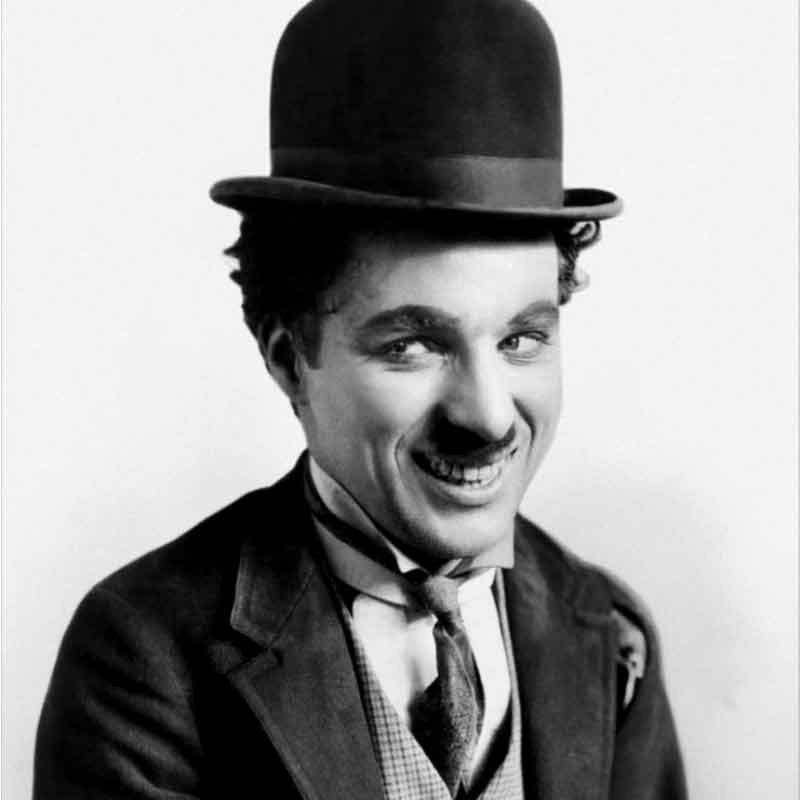
    MUMBAI: Today is Charlie Chaplin‘s birthday. He would have been 123 today. Best known for his role as The Tramp, Chaplin wrote, directed and starred in a series of silent films that commented on the politics, economy and social structure of the day through slapstick, mime and comedy.
     
    Born in Britain in 1889, Chaplin was born in Britain in 1889 and moved to Hollywood in 1910 to make a celluloid career. He became one of the most influential artistes of his time with films such as The Kid, City Lights, Modern Times, The Gold Rush and The Great Dictator, his only ‘talking‘ film.
     
    In 1919 he founded United Artists with fellow stars Mary Pickford, Douglas Fairbanks and D. W. Griffith all of whom were seeking to escape the growing power consolidation of film distributors and financiers in Hollywood.
     
    Chaplin was a famous ladies‘ man, marrying four times. His fourth wife was Oona, daughter of American playwright Eugene O‘Neill. Of his twelve children, daughter Geraldine is a well known and acclaimed actress in her own right.
     
    Chaplin was made a Knight Commander of the British Empire in 1975. He was also given a star at the Hollywood Walk of Fame in 1970. He received three Academy Awards in his lifetime: Best Original Score for the movie Limelight, and two Honorary Awards.
     
    Charlie Chaplin died in his sleep in Switzerland on 25 December 1977 at the age of 88.

  • BBC establishes an editorial standards board

    MUMBAI: UK pubcaster the BBC has established an editorial standards board, chaired by the BBC’s Deputy DG Mark Byford, and comprising the BBC’s most senior output directors, has been established and is undertaking a major programme of work in this area. This group has met weekly and has overseen the work. BBC DG Mark Thompson made this announcement while providing an update to the BBC Trust in which he reported substantial progress in delivering a package of tough and rigorous measures to address concern over recent editorial breaches in competitions and voting.

    Thompson says, “The BBC-wide review of our output since 2005 is now completed, and four further serious editorial breaches had been found. None of the further editorial breaches involved premium rate telephone lines. An unprecedented programme of editorial training, Safeguarding Trust, will begin in November. It is expected that all 16,500 BBC production and content staff will participate in the mandatory training programme. This programme is not simply about reinforcing the imperative to understand and comply with all of the BBC’s values and editorial standards, including truth and honesty, but in that context will enable staff to debate the right production techniques in light of the current debate about artifice in programmes. Training materials will be made available to other broadcasters and independent producers.”

    A phased and controlled return of competitions on BBC programmes and online, which are currently suspended, is also expected to begin in November following a strengthening of editorial guidance and control. Competitions will now be approved and supervised at a senior level within each output area. Thompson reported to the Trust that he expected a significant reduction in the number of competitions being broadcast by the BBC, but he recognised that audiences very much enjoyed taking part in BBC programmes in this way.

    A full independent inquiry into the incident involving the BBC One autumn season launch and Her Majesty The Queen, which is being conducted by Will Wyatt CBE, is expected to report to Thompson next month. The findings of this inquiry will be made public once they have been considered by the BBC Trust. 

    Thompson also informed the Trust that he has commissioned a new online project which will enable the public to explore how contemporary media content is produced. The BBC believes this will be a major contribution to media literacy in Britain.

    A BBC working party on the use of premium rate telephony in programme and content areas has made progress Thompson says. This includes the development of new editorial and operational guidance which will form part of the overall management response on strengthening editorial compliance. The group is also revising the BBC’s policy on the use of premium rate tariffs and is looking to set up a system of approved service providers of telephony.

    Thompson will meet his counterparts in the commercial public service broadcasters later this month to discuss ways of working together to build and restore public confidence and trust in the light of editorial issues across the industry.

  • Ofcom reviews the role of public service broadcasting on kid’s TV in UK

    Ofcom reviews the role of public service broadcasting on kid’s TV in UK

    MUMBAI: With the exploding children’s media landscape in UK, Britain’s content regulator Ofcom has announced a project to review the future of children’s programming with specific reference of public service broadcasting (PSB).

    The project will look at the state of children’s media in the UK and examine the role of television within this.

    The research will commence this month and a research report will be published in summer 2007.

    A full PSB Review is expected early in 2008.

    Currently, 18 dedicated children’s channels are available on multi-channel platforms hence, the review will examine the extent to which the purposes of PSB on television have been fulfilled. “It is proposed that the final focus of the project be on children’s television programming across PSB and non PSB channels; we ultimately aim to assess the desirability and scope of any public service interventions in this market.”

    The project, will also attempt to address some of the geographical issues relating to children’s programming like “the role of PSB children’s programming in reflecting the cultural diversity of the different nations and regions of the UK.”


  • Simon Cowell becomes Britain’s highest paid TV star

    Simon Cowell becomes Britain’s highest paid TV star

    MUMBAI: Simon Cowell is going from strength to strength. The acerbic judge of American Idol has signed a £20 million-a-year deal with UK broadcaster ITV to continue hosting the music based reality show The X Factor.

    Cowell will host the show for three years. He says, “After two and a half years of The X Factor, I’d pondered whether we were going to carry on. But this series has been fantastic… I think there is even more we can do with The X Factor. I couldn’t be happier.”

    Media reports add that Cowell will also produce and star in a series of prime-time ventures. His company, Syco Tv, has finalised an extended five-year deal to appear on American Idol.

    Cowell also stipulates in his contract that his record company, Sony BMG, is allowed to release records by the winning contestants.

  • Britain does well at Rose d’Or awards nominations

    Britain does well at Rose d’Or awards nominations

    MUMBAI: British television shows and stars fared well at the nominations announced for the Rose d’Or Best Performance Awards.

    The awards, which take place in Switzerland on 29 April, recognise work in the comedy, sitcom, soap opera and game show genres. Britain got 10 out of the 21 nominations.

    Funny man Steve Carell stars in the American version of The Office, that got a nomination in the sitcom categeory. He will face off against Peter Capaldi for The Thick of It and Germany’s Bastian Pastewka.

    Ricky Gervais who created the sitcom will receive an honorary Rose d’Or Award. Stephen Fry is nominated for his role in hosting BBC Four’s show QI quiz. Extras and The Office are competing for best sitcom.

    The awards aim to reward originality, quality and creativity in entertainment programming from around the world.