Tag: Britain

  • Trump to slap 100 per cent tariff on foreign films?

    Trump to slap 100 per cent tariff on foreign films?

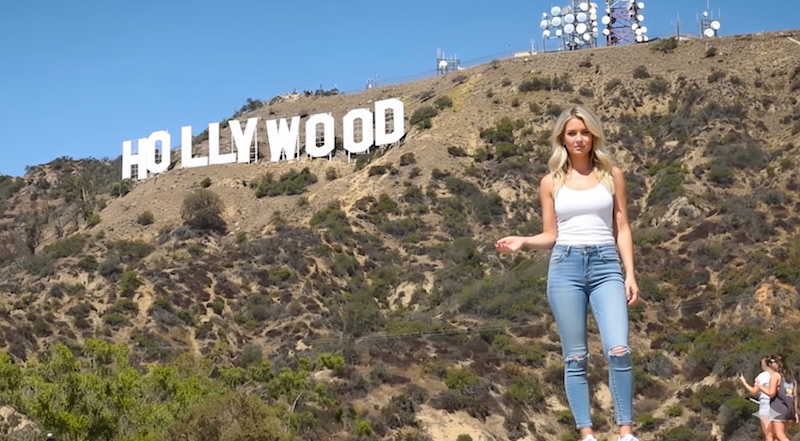
    WASHINGTON: Donald Trump has declared war on foreign-made movies. The American president announced on Monday that he would impose a 100 per cent tariff on all films produced outside the United States, threatening to blow up Hollywood’s international operations. As well as possible revenues that Indian films make in Uncle Sam. 

    The move, posted on Trump’s Truth Social platform, marks an audacious expansion of his protectionist trade agenda into cultural industries. “Our movie making business has been stolen from the United States of America, by other Countries, just like stealing candy from a baby,” he wrote, taking a swipe at California’s “weak and incompetent” governor Gavin Newsom.

    Yet the announcement left crucial questions unanswered. The White House offered no details on the legal authority Trump would invoke or how such tariffs would work in practice. Studio executives are baffled: modern filmmaking splices together production, financing, post-production and visual effects from multiple countries. How would a film shot in New Zealand with British money and American stars be classified?

    Legal experts are equally sceptical. Films are intellectual property traded as services—a category where America typically runs a surplus. That raises doubts about whether tariffs can even be applied. Co-productions with foreign studios have become routine, further muddying the waters.

    Trump first floated the idea in May, calling foreign productions a “national security threat” that imports “messaging and propaganda.” Entertainment executives were flummoxed then and remain so now.

    The industry has increasingly decamped from Hollywood to chase tax breaks in Britain, Australia and New Zealand. California is scrambling to compete: Newsom has pushed to expand the state’s film tax credits. But some productions film abroad simply because their stories demand it. Directors like Denis Villeneuve and Christopher Nolan favour shooting on location rather than on soundstages.

    The major American studios declined to comment to Reuters. Netflix shares, however,  slipped 1.5 per cent in early trading.

    The silence from studios suggests an industry still trying to parse whether Trump’s threat is bluster or genuine policy. Either way, it signals fresh uncertainty for an entertainment business already grappling with streaming upheaval and rising costs.

  • Bharti Enterprises completes 24.5 per cent stake acquisition in UK’s BT group

    Bharti Enterprises completes 24.5 per cent stake acquisition in UK’s BT group

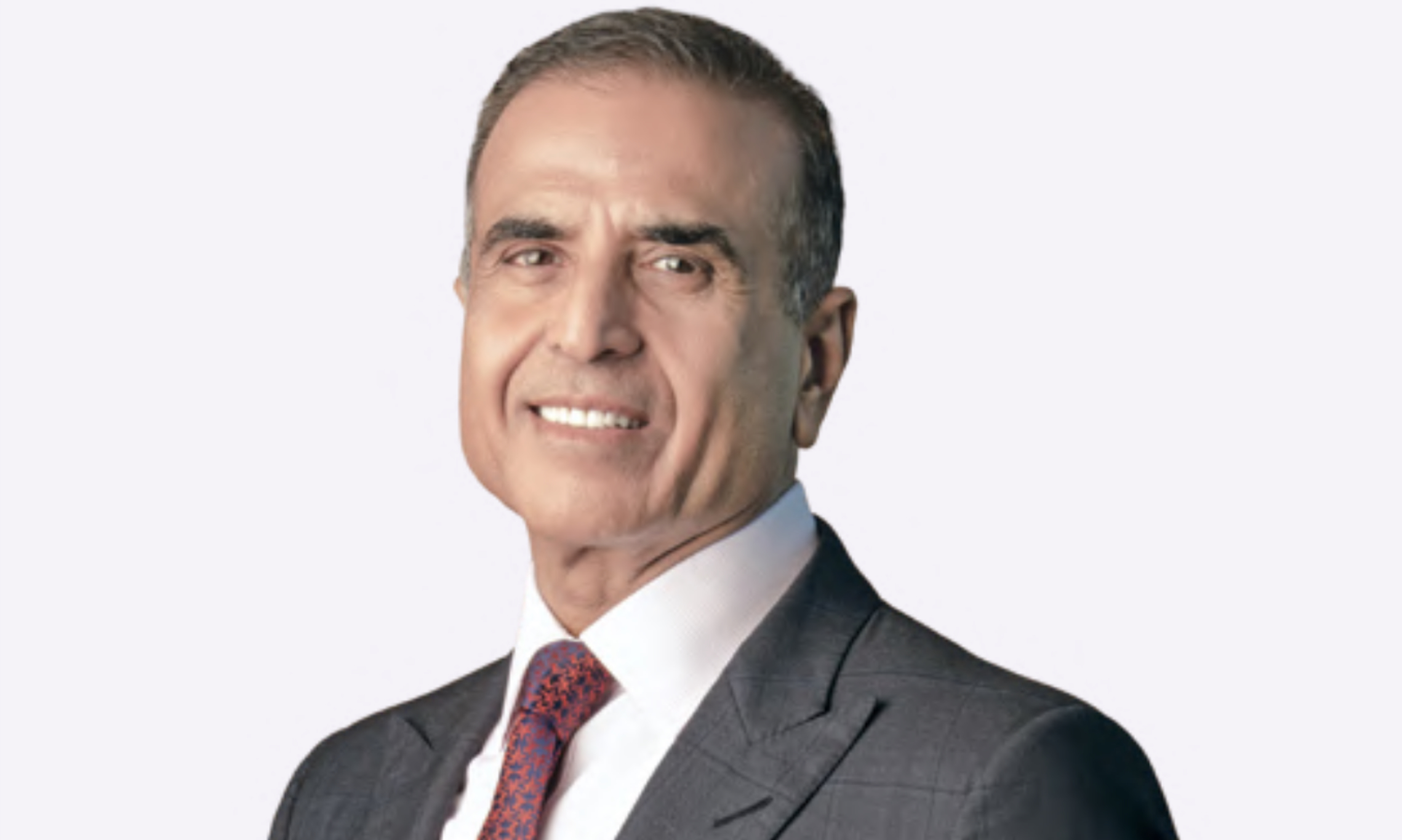
    MUMBAI: Bharti Airtel’s  Sunil Mittal has planted his company’s flag on the Britain’s biggest broadband and mobile company, the BT group. Earlier this week, Bharti Global, the international investment arm of Bharti Enterprises, completed the acquisition of a 24.5 per cent stake in BT from businessman Patrick Drahi. The stake was sold via Altice UK in two parts, the second of which is now completed.

    Mittal had announced in August 2024 that he would be buying a 9.9 per cent stake immediately, and would buy the remainder later after his group gets the necessary regulatory approvals. The purchase of the remainder shareholding makes Bharti Enterprises the single largest shareholder in BT group. The entire transaction cost Bharti 4.32 billion Euros. 

    In a statement Mittal said he was delighted to have “completed our investment into BT. Bharti has long recognised the enormous potential of the business. BT’s renewed focus on optimisation, strengthening networks and driving consumer growth makes it well placed to consolidate its position as a leading global telecom company that delivers long-term value for investors.”

  • Comcast topples Murdoch’s offer for Sky with $31 bn bid

    Comcast topples Murdoch’s offer for Sky with $31 bn bid

    MUMBAI: The big-name mergers are getting bigger in value with Comcast dropping a bomb that it is ready to pay $31 billion to takeover Sky. Its offer was 16 per cent higher than that of rival 21st Century Fox that had wanted to acquire 61 per cent in Sky.

    “We think Sky is an outstanding company. It has 23 million customers and leading positions in the UK, Italy and Germany. Sky has been a consistent innovator in its use of technology to deliver a fantastic viewing experience and has a proud record of investment in news and programming. It has great people and a very strong and capable management team,” said Comcast Corporation chairman and CEO Brian L Roberts.

    The acquisition will help Comcast for better distribution and technology leadership and expand its international reach to new territories.It believes that together they can create compelling opportunities for growth and innovation.

    Sky’s company secretary Chris Taylor noted that the company had got an offer from Comcast. It called it a ‘possible offer’ and because there was nothing firm, it will make an announcement later.

    Comcast said it will pay all cash for the deal to get a firm hold on the huge UK pay TV market. Fox said that it stays committed to the offer it previously made.

    Last year Comcast bet $60 billion to buy Fox, ultimately losing to Disney.

    Sky reaches 23 million homes in Britain, Ireland, Germany, Italy and Austria.

    Also Read :

    Now, Comcast in talks to buy 21st Century Fox

    Murdoch pledges funding to Sky News

    Comcast may renew bid for 21st CF

  • European trust in media: radio outshines social networks, TV falls steeply

    European trust in media: radio outshines social networks, TV falls steeply

    NEW DELHI: This one will make radio fans go ga-ga with delight.

    Radio still remains the number one trusted source of news for European citizens even as the overall perception of the trustworthiness of the media has decreased over the last five years.

    The European Broadcasting Union (EBU) also found that social media, increasingly the primary source of news, is the least trusted, and even a distrusted medium in Europe.

    The annual Eurobarometer survey showed that although trust has decreased for radio as well, it remains by far the most trusted source of information. Most countries show a positive attitude towards radio and it came out as the primary trusted source in 20 countries, with an average of 55% positive response. Particularly high scores came from Sweden (74%), Finland (66%) and Denmark (57%).

    Television, the second most trusted medium, is still the number one source in 11 countries but trust in television has decreased much more rapidly over the last year than the other media – with 10 points as opposed to radio, which only fell by three points, and the written press, the internet, and social media which decreased by only one point.

    In only one out of 33 countries surveyed, Albania, the number of people who trusted social media as a source of news outweighed those who tended not to. In all other countries people “tend not to trust” social networks, with those in Sweden, Luxembourg, and Britain having the least trust in social networks as a source of information.

    The internet also scored particularly low, as in the majority of countries, people “tend not to trust” it. Only 12 countries had positive results, most of which are in Southeast Europe.

    The written press is not perceived to be much more trustworthy than the internet.

    Only 13 countries showed positive results, mostly in Nordic and Benelux regions where people have more trust in the press. In 14 countries it is regarded as the least trusted medium.

    Roberto Suárez Candel, head of Media Intelligence Service at EBU, told The Guardian that the results did not come as a surprise: “People maintain a strong relationship with radio and TV, which are still their primary sources of information and entertainment.”

    “It is also not surprising that in countries with a high level of funding for public service TV and radio there tends to be more trust in the media in general – they produce good quality content and provide valuable information for society,” he told The Guardian.

  • European trust in media: radio outshines social networks, TV falls steeply

    European trust in media: radio outshines social networks, TV falls steeply

    NEW DELHI: This one will make radio fans go ga-ga with delight.

    Radio still remains the number one trusted source of news for European citizens even as the overall perception of the trustworthiness of the media has decreased over the last five years.

    The European Broadcasting Union (EBU) also found that social media, increasingly the primary source of news, is the least trusted, and even a distrusted medium in Europe.

    The annual Eurobarometer survey showed that although trust has decreased for radio as well, it remains by far the most trusted source of information. Most countries show a positive attitude towards radio and it came out as the primary trusted source in 20 countries, with an average of 55% positive response. Particularly high scores came from Sweden (74%), Finland (66%) and Denmark (57%).

    Television, the second most trusted medium, is still the number one source in 11 countries but trust in television has decreased much more rapidly over the last year than the other media – with 10 points as opposed to radio, which only fell by three points, and the written press, the internet, and social media which decreased by only one point.

    In only one out of 33 countries surveyed, Albania, the number of people who trusted social media as a source of news outweighed those who tended not to. In all other countries people “tend not to trust” social networks, with those in Sweden, Luxembourg, and Britain having the least trust in social networks as a source of information.

    The internet also scored particularly low, as in the majority of countries, people “tend not to trust” it. Only 12 countries had positive results, most of which are in Southeast Europe.

    The written press is not perceived to be much more trustworthy than the internet.

    Only 13 countries showed positive results, mostly in Nordic and Benelux regions where people have more trust in the press. In 14 countries it is regarded as the least trusted medium.

    Roberto Suárez Candel, head of Media Intelligence Service at EBU, told The Guardian that the results did not come as a surprise: “People maintain a strong relationship with radio and TV, which are still their primary sources of information and entertainment.”

    “It is also not surprising that in countries with a high level of funding for public service TV and radio there tends to be more trust in the media in general – they produce good quality content and provide valuable information for society,” he told The Guardian.

  • Long-term negative impact of Brexit on India negligible; short-term challenges remain

    Long-term negative impact of Brexit on India negligible; short-term challenges remain

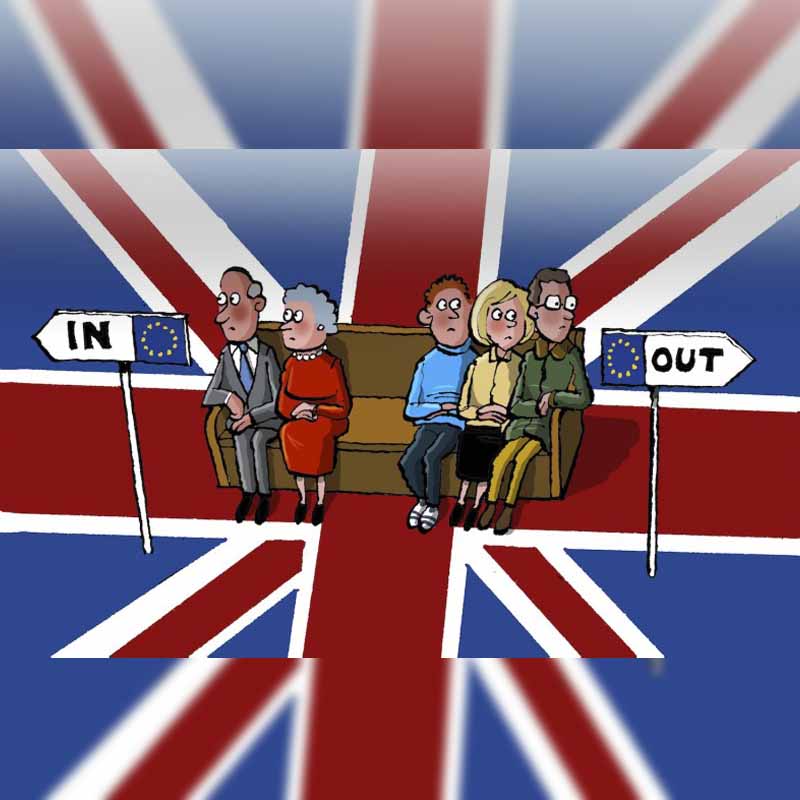
    NEW DELHI/MUMBAI: Britain’s politically controversial referendum last week to exit from the European Union, a unique economic and political union between 28 European nations, has created ripples globally, but in India the general feeling is long term impact may be negligible.

    While the British media and entertainment industry, having major exposure to European market(s), are wringing their head in dismay at possible long-term financial fallout and increased bureaucracy and paperwork, Indian media industry has been subdued in its reaction.

    Sources in both BBC World and Star India said that they were still studying the fine prints of Brexit — as Britain’s EU exit has been popularly dubbed — but added they don’t see any short to medium-term impact (except, of course, the currency exchange valuations).

    Some Indian media companies like Zee, Star, and Times TV Network do have fairly big exposure to the European markets in terms of their TV channels’ distribution and sale of Indian content and formats.

    Similarly, Hindi and increasingly Indian language film industry are shooting more in various European countries in sharp contrast to yesteryears few fav foreign locales like Holland, London and Paris.

    While organisations like The Film & Television Producers Guild of India had no statement put out on Brexit, European media & entertainment players have been very active.

    Forbes magazine quoted a statement on Brexit from Britain Stronger in Europe campaign, signed by the likes of Patrick Stewart, Benedict Cumberbatch and Keira Knightley amongst hundreds of celebrity-signatories, as saying: “Our global creative success would be severely weakened by walking away.”

    Such sentiments and falling markets and currencies, coupled with media conjectures on future of multi-billion dollar budget TV programmes like the popular Game of Thrones, made its producer HBO to issue clarifications.

    “We do not anticipate that the result of the EU Referendum will have any material effect on producing Game of Thrones,” HBO said in an official statement late last week

    Variety magazine reported that HBO had confirmed GoT received financial support from the EU’s European Regional Development Fund when it first began, but there has been no contribution to its massive $10 million per episode budget in recent years.

    That everybody is scrambling to assess the political and economical fallout of Brexit, while remaining cautiously optimistic at present, is reflected in the opinions of some industry chambers too.

    Pointing out that the “way forward, and timelines to achieve negotiated agreements with the EU and other trade partners is not yet known”, UK India Business Council said, “What is clear, though, is that the UK’s trade and economic engagement with the world’s leading countries, including India, will become more important to the nation’s future, not less.”
    Motion Picture Association of America in a statement said, “While it will take time to understand the full implications of the referendum result, we urge the UK Government to prioritize a stable environment for the film and television sector.”

    Closer home in India, some reactions did come forth on Brexit.

    Ashish Bhasin, chairman and CEO, Dentsu Aegis Network, South Asia discounted any mid or long term impact of Brexit on India.

    Pointing out short term uncertainty may lead to a “depressed business sentiment,” Bhasin said advertising gets directly influenced and often suffers when business sentiment weakens.

    According to Frost & Sullivan’s senior partner and managing director for Europe Sarwant Singh, “It is important to note that during this interim period, Britain will still be subject to existing EU treaties and laws, but will be barred from decision-making processes. Therefore, existing regulations are likely to continue until negotiations are completed.”

    The National Association of Software and Services Companies (NASSCOM), whose member-companies have billions of dollars of exposure in the European and UK market, termed the Brexit announcement as a phase of uncertainty in the near term but a mix of challenges and opportunities in the longer term.

    Meanwhile, the Indian government has assured that the Indian economy is fundamentally strong enough to withstand any immediate impact of Brexit.

  • Long-term negative impact of Brexit on India negligible; short-term challenges remain

    Long-term negative impact of Brexit on India negligible; short-term challenges remain

    NEW DELHI/MUMBAI: Britain’s politically controversial referendum last week to exit from the European Union, a unique economic and political union between 28 European nations, has created ripples globally, but in India the general feeling is long term impact may be negligible.

    While the British media and entertainment industry, having major exposure to European market(s), are wringing their head in dismay at possible long-term financial fallout and increased bureaucracy and paperwork, Indian media industry has been subdued in its reaction.

    Sources in both BBC World and Star India said that they were still studying the fine prints of Brexit — as Britain’s EU exit has been popularly dubbed — but added they don’t see any short to medium-term impact (except, of course, the currency exchange valuations).

    Some Indian media companies like Zee, Star, and Times TV Network do have fairly big exposure to the European markets in terms of their TV channels’ distribution and sale of Indian content and formats.

    Similarly, Hindi and increasingly Indian language film industry are shooting more in various European countries in sharp contrast to yesteryears few fav foreign locales like Holland, London and Paris.

    While organisations like The Film & Television Producers Guild of India had no statement put out on Brexit, European media & entertainment players have been very active.

    Forbes magazine quoted a statement on Brexit from Britain Stronger in Europe campaign, signed by the likes of Patrick Stewart, Benedict Cumberbatch and Keira Knightley amongst hundreds of celebrity-signatories, as saying: “Our global creative success would be severely weakened by walking away.”

    Such sentiments and falling markets and currencies, coupled with media conjectures on future of multi-billion dollar budget TV programmes like the popular Game of Thrones, made its producer HBO to issue clarifications.

    “We do not anticipate that the result of the EU Referendum will have any material effect on producing Game of Thrones,” HBO said in an official statement late last week

    Variety magazine reported that HBO had confirmed GoT received financial support from the EU’s European Regional Development Fund when it first began, but there has been no contribution to its massive $10 million per episode budget in recent years.

    That everybody is scrambling to assess the political and economical fallout of Brexit, while remaining cautiously optimistic at present, is reflected in the opinions of some industry chambers too.

    Pointing out that the “way forward, and timelines to achieve negotiated agreements with the EU and other trade partners is not yet known”, UK India Business Council said, “What is clear, though, is that the UK’s trade and economic engagement with the world’s leading countries, including India, will become more important to the nation’s future, not less.”
    Motion Picture Association of America in a statement said, “While it will take time to understand the full implications of the referendum result, we urge the UK Government to prioritize a stable environment for the film and television sector.”

    Closer home in India, some reactions did come forth on Brexit.

    Ashish Bhasin, chairman and CEO, Dentsu Aegis Network, South Asia discounted any mid or long term impact of Brexit on India.

    Pointing out short term uncertainty may lead to a “depressed business sentiment,” Bhasin said advertising gets directly influenced and often suffers when business sentiment weakens.

    According to Frost & Sullivan’s senior partner and managing director for Europe Sarwant Singh, “It is important to note that during this interim period, Britain will still be subject to existing EU treaties and laws, but will be barred from decision-making processes. Therefore, existing regulations are likely to continue until negotiations are completed.”

    The National Association of Software and Services Companies (NASSCOM), whose member-companies have billions of dollars of exposure in the European and UK market, termed the Brexit announcement as a phase of uncertainty in the near term but a mix of challenges and opportunities in the longer term.

    Meanwhile, the Indian government has assured that the Indian economy is fundamentally strong enough to withstand any immediate impact of Brexit.

  • FremantleMedia UK launches digital label Shotglass Media

    FremantleMedia UK launches digital label Shotglass Media

    MUMBAI: FremantleMedia UK has launched a new digital media company called Shotglass Media.


    The new digital entity will sit alongside FremantleMedia UK labels Talkback, Thames, Retort, Boundless, Newman Street and Euston Films and focus on creating innovative digital experiences for fans and brands. Kat Hebden will head up the operation as managing director, reporting to interim FremantleMedia UK CEO Richard Holloway. Hebden was previously head of FremantleMedia UK Interactive.


    The investment in Shotglass Media will accelerate the growth of the company’s digital content initiatives in the UK, including the slate of original digital content, which already includes Munchies, a multi-channel food brand co-produced with Vice Media, and football fan channels Full Time Devils, Chelsea Fan Channel and Blue Moon Rising. Hebden and her team will grow the slate of food and sports content, and will also develop and produce in other key verticals like gaming, travel, music, entertainment and automotive.


    Shotglass Media will also encompass all digital and social media activity for FremantleMedia UK’s programmes including Britain’s Got Talent, The X Factor, Celebrity Juice, The Apprentice, Take Me Out and more, and will work closely with all FremantleMedia UK labels to create new experiences for fans across the range of programming within the group. 


    The new company will be a key partner for brands and advertisers who are looking for creative digital advertising solutions: with the FremantleMedia UK Commercial team, Shotglass Media will offer the full scope of integrations from bespoke funded content to sponsorships and advertising.


    Holloway said, “This is a very exciting time for FremantleMedia UK, the media landscape is changing so rapidly and while we’ve already been at the forefront of these changes, we’re now making even more investment in digital media to increase our activity. Kat is an unstoppable force and in her hands, Shotglass will become the benchmark for digital content companies.”


    Hebden’s senior team will include head of business development Audrey Lang, executive producer of original programming James Cooper and head of sport Neil Smythe. The team will work in tandem with FremantleMedia and RTL Group digital companies including Divimove, the leading European MCN the company acquired earlier this year, as well as RTL Group’s MCNs StyleHaul and Broadband TV.


    Hebden added, “FremantleMedia has become a key player in digital content and I’m delighted to be leading the next push in the UK. Not only do we have a strong team here in the UK, but FremantleMedia as a group has an impressive digital presence and we’ll continue the heritage of producing locally whilst using our global network to share best practices, relationships and where appropriate, cross-border content for fans and brands.”


    Shotglass Media joins the growing number of regional digital entities under the FremantleMedia umbrella including Tiny Riot!, the US digital studio launched last year, UFALab, its German transmedia company, and Spring, part of FremantleMedia Australia.


  • Vh1 turns 10; to focus on content acquisition

    Vh1 turns 10; to focus on content acquisition

    MUMBAI: English entertainment music channel, Vh1 has had quite an interesting journey. As it completes 10 years in India, the channel plans to focus its energies on content acquisition with renewed vigour.

    The channel’s roller-coaster bumpy ride began exactly a decade ago on 1 January, 2005, when MTV India and Zee-Turner teamed up to usher in this English channel.

    Likening himself to an old fossil, Viacom18 EVP and business head, English Entertainment, Ferzad Palia says, “There were around 175 competing channels when we launched. We had to differentiate our product from the rest and we had to simultaneously build the genre, so that the seeds of investment would start bearing fruit.”

    The channel started off fairly low key, with 40 English music videos in three cities, and had to re-popularize a variety of English music throughout the country. On the other hand, MTV changed its course and programming content to Hindi. Vh1, thus, catered to audiences, who had grown up and thrived on English music.

    Right from its launch, audiences often mistook the brand name for Vhr. Hence, it was tough going for the channel to captivate audiences initially. Multiple approaches ensued. The first one being print ads, wherein the name of the channel was literally spelt out below the logo for people to comprehend the brand well. Secondly, the channel began launching live events such as music festivals to create brand recall. Thirdly, radio and BTL promos along with constant verbalizing on the channel, helped differentiate the channel as well as its name. Finally, it captured youthful audiences in places like salons, had tie-ups with popular branded cafes, gyms and similar set-ups.

    This was followed by integrating the brand with its first on-ground event in 2005 called the Hip Hop Hustle where VH1 roped in Nokia as the presenting sponsor. The next move was to scale up on the content, wherein long format shows like Pimp My Ride, Buried Life and Fabulous Life were introduced. As part of its weekend programming for mature and older audiences, melodious Vh1 Classics were aired.

    The channel then aggressively decided to acquire prestigious award shows like the American Music Awards, Billboard Music Awards, Video Music Awards, and the Grammy’s amongst a host of others.

    Palia adds, “Currently we showcase one award show every month and through our ‘Vh1 Ticket To Ride’ contest, winners are sent abroad to actually witness the awards live.”

    The genres consumed the most on the channel are Electronic Dance Music (EDM) and soulful pop music. In 2014, VH1 bagged the rights to exclusively air two immensely popular talent shows – none other than Britain’s Got Talent and X-Factor.

    The two English-speaking metros namely Mumbai and Bengaluru, were the first two markets, which performed well for the channel. However, the channel caught the fancy of audiences in Delhi and the NCR region soon enough.

    In 2008, the presence of the channel had grown beyond the eight metros as cities like Pune and Ahmedabad surprisingly also started witnessing growth. Palia credits the DTH phenomenon at that time to have aided the growth in smaller markets.

    Talking about the opportunities offered by the channel for various brands, Palia said, “Instead of just a 10 second slot, we offer customization for various brands in categories such as jewellery, chewing gum, automobiles and FMCG through our on-ground events and shows.”

    Palia roughly places the ad revenue for the category at approximately Rs 175 crore, informing that the channel took eight long years to first break even, and only then did it see profits trickling in.

    “Currently, the channel has a very mixed viewership share of 20-22 per cent in the English music and entertainment category,” informs Palia. Age-wise, urban audiences in the age group of 15 – 24 contribute to 55 per cent of the audience share, while the age group of 25+ also devour and view the channel avidly.

    On social media, the Facebook page of Vh1 has approximately 31,18, 576 likes while its Twitter handle has as many as 234,000 followers. An in-house team closely follows and monitors the content on these platforms. The channel uses them to not only harness instant and real-time feedback, but also to create the necessary buzz ahead of aggressive launches.

    Vh1 has lined up a host of exciting activities as it celebrates its tenth year in India. As a part of this initiative, the top 100 videos of all time played over the last 10 years are being showcased. Secondly, the most played and popular videos on the channel of all time are being aired to cater to its audiences. Thirdly, it has decided to go down memory lane and telecast its first local show called Vh1 Music Diaries, which tracks the nostalgic journey of the channel.

    The celebrations commenced at the recently concluded Vh1 Supersonic Festival, which was held in Goa where almost 15,000 fans sang ‘Happy Birthday’ with gusto. This was followed by multiple anniversary bashes hosted on New Year’s Eve across six metros namely Mumbai, Delhi, Bengaluru, Kolkata and Hyderabad. Various contests giving out prizes for winners are also a part of the celebration plans.

    Palia signs off saying, “Our aim is to keep evolving as we follow a similar aggressive, focussed strategy for content acquisition. In the years ahead, we will surely set innovative trends and let our audiences enjoy the best content.”

  • ‘Algorithms’ shortlisted for Britain’s Grierson Awards

    ‘Algorithms’ shortlisted for Britain’s Grierson Awards

    NEW DELHI: Algorithms, Ian McDonald’s award-winning documentary on India’s young blind chess players, is among films shortlisted for the prestigious Grierson Award in the Best newcomer documentary category.


    The final nominations for the Grierson awards will be announced on 16 September prior to the awards ceremony in London on 3 November.


    Excited about the nomination, the British filmmaker said, “We are really thrilled to make the shortlist. It is a great honour and it also means it will bring the story of India’s blind chess community to the attention of an audience in the UK and beyond.”


    Directed by McDonald and produced by Indian producer Geetha J, the documentary has been screened at over twenty international film festivals and won six awards, including Best Film at Film SouthAsia in Kathmandu.  It is the first ever feature documentary on Blind Chess. 


    Filmed over three years from just before the World Junior Blind Chess Championship in Sweden in 2009 to just after the next championship in Greece in 2011, it follows three talented boys from different parts of India and a totally blind player turned pioneer, who not only aims to situate India on a global stage but also wants all blind children to play chess


    The New York based First Run Features, a leading distributor of independent films in America, acquired the North American rights to the film early this year.


    Established in 1972, the Grierson Awards commemorate the pioneering Scottish documentary filmmaker John Grierson, widely regarded as the father of the documentary.