Tag: Breaking News

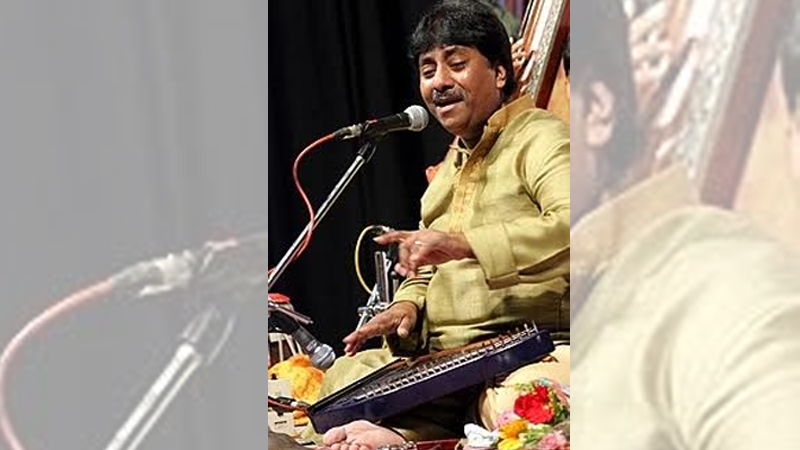
  • Breaking: Music Maestro Rashid Khan is no more

    Breaking: Music Maestro Rashid Khan is no more

    Mumbai: In a shocking development, music Maestro Rashid Khan passed away on Wednesday. He was battling with cancer on a ventilator and oxygen support for a few days.

    Rashid Khan is the nephew of Ustad Ghulam Mustafa Khan and his mentor and maternal uncle was Ustad Bissar Hussain Khan who passed away in 1993. Rashid Khan had a cerebral attack last month.

    He belongs to Rampur-Sahaswan Gharana and received multiple awards including the prestigious citizenship award ‘ Padmashri and Padmabhushan’.

    Reacting to the news West Bengal Chief Minister Mamta Banerjee expressed, ‘ This is a great loss for the entire country and music fraternity. I am in a lot of pain as I still can’t believe that he is no more.’

    Rashid Khan gave his first concert at the age of 11. He also experimented with music concerts in different styles. He passed away at the age of 55.

  • Aaj Tak sets a new record with breaking news

    Aaj Tak sets a new record with breaking news

    Mumbai : According to a recent Barc report, Aaj Tak saw a significant increase in viewers during the recent major events in the month of October ’22, most notably the solar eclipse, the opening of the Mahakal Temple Corridor, and the India vs. Pakistan T20 World Cup cricket match update.

    It has been conclusively proven that viewers have always preferred the networks’ in-depth reporting over that of other channels based on the enormous growth in viewership during any important newsworthy event.

    As seen on 25 October, right in the middle of the Diwali celebrations, the upward trend of soaring viewership and market share remained positive. Among other news channels, Aaj Tak held the highest market share of 19.5 per cent and received the most AMAs, topping No. 2 by a margin of 42 per cent. The audience once more relied solely on Aaj Tak to provide accurate information about the timings, effects, and spectacles of Suryagrahan.

    Notably 93 per cent of growth registered in India beating Pakistan celebration special. The news coverage of the thrilling match between India and Pakistan on 23 October once again reached 1000 AMA (000’s) in HSM, 15+.

  • ReshaMandi bolsters leadership team, appoints Abhishek Kumar as SVP – Marketing

    ReshaMandi bolsters leadership team, appoints Abhishek Kumar as SVP – Marketing

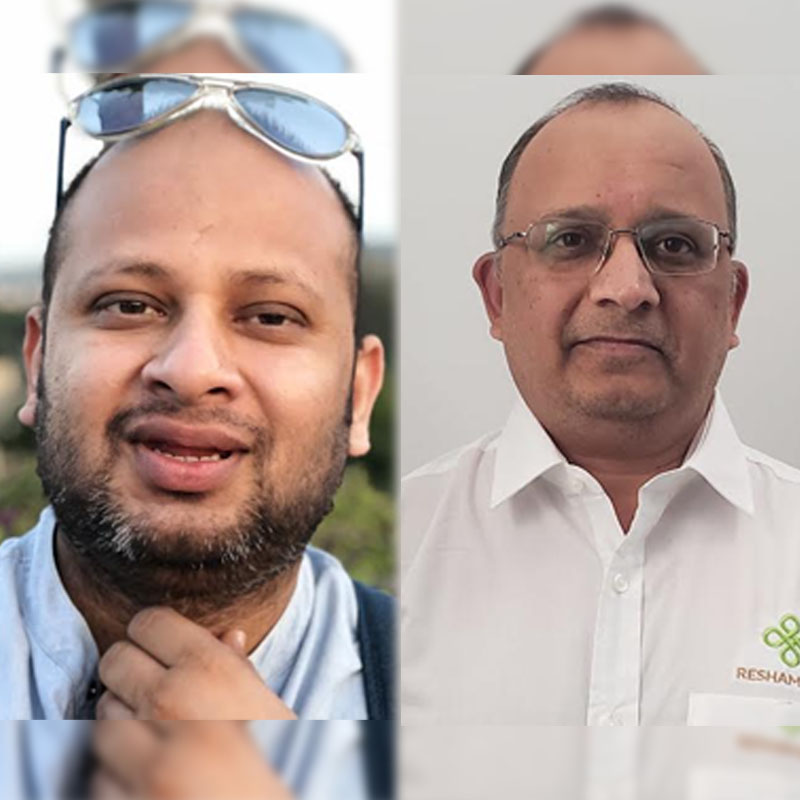
    Mumbai: ReshaMandi, B2B marketplace digitising the natural fiber supply chain has appointed Abhishek Kumar as SVP – marketing and Subramanya Srikant as head of Human Resources.

    The company aims to extend operations, as well as move closer to its broader goal of shaping the ecosystem of natural fibres in India, it said in a statement.

    According to the company, Kumar will drive the end-to-end marketing strategy for the Group as well as all the brands under its umbrella. He carries a diverse experience of over 17 years and will be responsible for modernising marketing and advertising strategies to suit the post-pandemic era of digital and traditional media.

    “Our decision to strengthen the leadership team is a major step in our quest to expand ReshaMandi’s footprints across India,” said ReshaMandi founder and CEO Mayank Tiwari. “They bring with them a wealth of experience that will help us in driving our value proposition with the right blend of functionality, commitment and expertise.”

    In his previous stint as VP- Digital at Edelman, Kumar has worked with brands such as Lakme, Flipkart, PayPal, among others. Prior to that, he was associated with Aviva Life Insurance, Yahoo!, Radio Mirchi & Ogilvy in various capacities but primarily focused on communication strategy, content & branding, stated the brand. “We have a solid business model in place that’s weaving an incredible story around availability, accessibility and profitability for all the stakeholders. Telling this story to a larger audience is a privilege and I am humbled to market a brand like this both from the point of view of the B2B and B2C audiences. We are here to create a definitive brand that we hope will be a part of our pop culture too,” said Kumar.

    Meanwhile, Subramanya Srikant carries two decades of industry experience in the execution of employee strategy, end-to-end HR initiatives/programs and service delivery management to align with major organisational priorities. Previously, Subramanya was the head of HR at Riversand Technologies, a Data management company. He started his career working as an IT developer for Telecom giant AT&T and spent the first 12 years of his career working for fortune 100 companies mainly in the Technical domain, said the brand.

    “I am excited to join Reshamandi as it is a company focussed to helping farmers and small-time rural businessmen enabling Technology,” he said.

  • Zee Entertainment hires Amrit Thomas as chief data officer

    Zee Entertainment hires Amrit Thomas as chief data officer

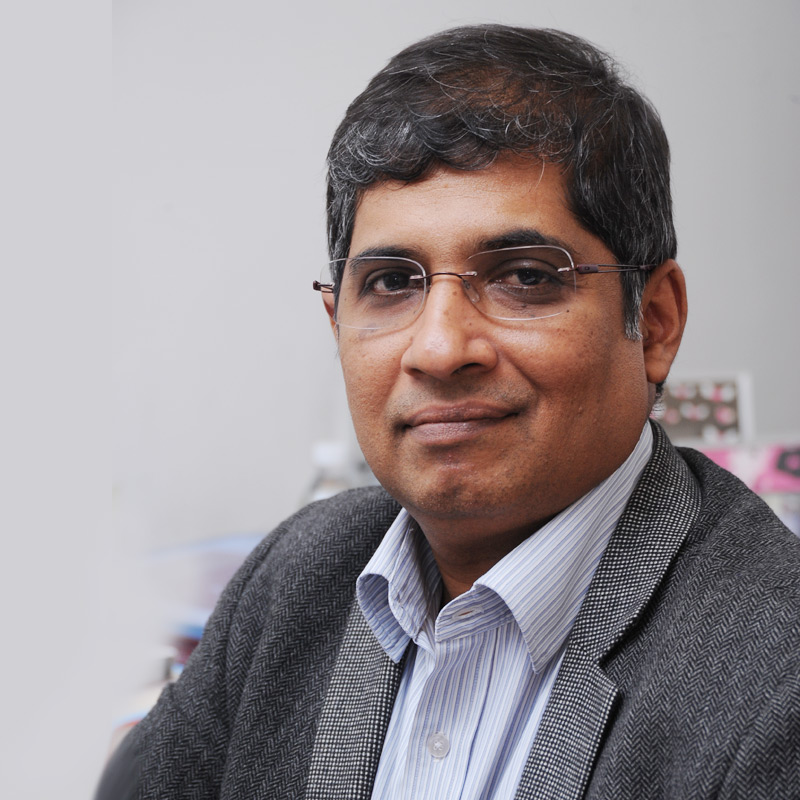
    Mumbai: Zee Entertainment Enterprises on Tuesday appointed Amrit Thomas as chief data officer to strengthen its overall capabilities in data analytics across all aspects of decision making.

    In this new role, Thomas will report into Zee president- technology and data Nitin Mittal and will be based out of the Technology & Innovation Centre in Bengaluru.

    “Digital transformation has been a key focus area for the company, and it is committed to building robust and innovative capabilities that redefine the entertainment industry experience for viewers across formats and screens,” said Zee in a statement. “Amrit’s appointment is in line with this approach, aiming to build out the central data & analytics function, democratising information and through that, sharply improving the company’s capability to anticipate, understand and meet the needs of its consumers and customers, thereby creating repeatable, insight-led revenue models.”

    A business and marketing professional, Thomas carries experience in driving transformation across categories like personal products, skincare, beverages, and sports across emerging and developed markets.

    In his previous stint, he was the CEO, strategic advisor, and investor for a retail-tech start-up. He was also associated with Diageo for 13 years, where he was responsible for the digital and marketing transformation of the organization. His previous stints include Hindustan Unilever, where he led the western region personal product sales team and later, the beverages business of the Company. He also spearheaded a direct-to-consumer start-up venture setting up and scaling phone-commerce home delivery service.

    Thomas is an alumnus of Harvard Business School, Indian Institute of Management, Bangalore, and Indian Institute of Technology, Madras.

  • Demystifying news television viewership in 2017

    Demystifying news television viewership in 2017

    BENGALURU: On 9 November 2016, a day after Prime Minister Narendra Modi announced demonetisation, the share of news television viewership shot up to 21 percent as compared to the 11 percent during the previous eight weeks. This unscheduled event made news the second most watched genre on television after GECs on that day as stunned Indians grappled to understand the new and unknown tomorrow suddenly thrust upon them by the powers that be. Over the long term, news has grabbed about 8 percent of eyeballs glued to television and is generally the third most watched genre after GECs and movies.

    This and other data was shared by the Broadcast Audience Research Council of India (BARC) in a newsletter titled ‘Breaking the News Story.’ Divided into three parts, the newsletter delves into the contribution of the news landscape to television viewership; viewership analysis of a scheduled event; and viewership analysis of an unscheduled event.

    BARC has used its own and BMW data from week 8 to week 48 of 2017, the target group being all India. It says that it has considered all the news channels in India.

    The news landscape

    News in India is a dynamic and an extremely diversified genre. It has witnessed a 15 percent increase in the number of channels from 142 channels in 2017 to 163 channels in 2017.

    In terms of the number of news channels, viewership numbers are skewed in favour of Hindi news–36 percent of the news channels are in Hindi whereas news in the language attracts 47 percent of the eyeballs (total impressions) that watch the news genre. Regional channels, of which there were 93 regional news channels in 2017 spread across multiple regional languages, (eight percent more than in 2016) or 57 percent of the total, had a 52 percent share of the total impressions in the genre. English news channels made up 7 percent of the total number of 163 news channels in the country in 2017. Their combined viewership share of the genre was, however, a measly 1 percent. Despite this, the number of English news channels have grown by 33 percent to 12 active channels in 2017 as compared with 2016.

    People like to know of events and incidents happening around them that have a direct impact on their lives. BARC says that this is probably why the largest share of the viewership takes place on regional channels. BARC explains the large consumption of Hindi language news to the large number of Hindi-speaking markets in the country with 58 news channels catering to them currently versus 47 channels in 2016.

    Viewership by state markets

    Across zones in the country, consumption of news was highest in South India–its share of viewership was 36 percent, followed by the North with 26 percent, the West with 23 percent and the East with 15 percent.

    Among states, Uttar Pradesh, Uttarakhand and Delhi had the highest relative market share for the news genre. The Punjab, Haryana, Chandigarh, Himachal Pradesh, Jammu & Kashmir, Assam, North East, Sikkim and Kerala markets also showed a higher preference towards the news genre.

    Two states–Maharashtra and Goa–accounted for more than 50 percent of the news viewership in the West but contributed a relatively less share of eyeballs for news content as compared to total television.

    Audience profile

    Looking at the audience profile of the news genre, the gender ratio is skewed towards males–54 percent male to 46 percent female as against an even split of 50 percent for both males and females for total
    TV consumption.

    News viewership is quite fragmented between all age groups. The share of viewership at 14 percent for news is far higher for kids between 2 to 14 years as compared to that of mature people between 51 and 60 years at 12 percent and seniors who are 61 years or older at 9 percent. BARC attributes this anomaly to the fact that most households own a single TV set and hence there is co-viewing and also because kids form the largest age group in India.

    NCCS A and B show a marginally higher preference for news channels as compared to total TV while the preference among NCCS C, D and E is relatively lower.

    On an all-India level, the news genre audience is skewed towards males, age group of 22+ and NCCS A and B as compared to total TV viewership. Hence, further analysis in BARC’s newsletter has been done on the target group of males 22+ years of age.

    Viewership trends in the context of events

    BARC has looked at viewership trends from October 2015 to October 2017. Over the two-year period, BARC concludes that news is a dynamic genre with viewers moving in and out depending upon the stories and events being covered with some events leading to a higher spike in viewership than others. The biggest spike in viewership during the period under consideration took place at the time of the demise of Tamil Nadu’s chief minister Jayalalitha on 5 December 2016. The next bigger spike was demonetisation as stated earlier. Politically significant events such as elections also lead to spikes in viewership.

    Viewership analysis of a scheduled event–state elections

    BARC has considered state elections from 2016 and 2017 and shared all-day time-band trends for viewership data for pre-election week versus election-day versus results day for West Bengal, Kerala, Tamil Nadu/Pondicherry and Uttar Pradesh/Uttarakhand.

    According to BARC data, election results day received significantly high viewership throughout the day across all markets as compared to election day as well as the days leading up to the event.

    The importance of election day and result day varied across markets. Growth was highest for Kerala on result day as compared to the pre-election days and least for Uttar Pradesh/Uttarakhand. The difference in viewership in pre-election day and election day was the maximum in the case of Tamil Nadu/Pondicherry indicating the importance of election day for this market, while the other markets were predominantly results oriented. Viewership in the Tamil Nadu/Pondicherry market had a more fluctuating trend through the day with viewership peaking in the morning and then again in the afternoon between 1400 and 1430 hours.

    The viewership trendline for pre-election weeks and election-day was similar for Uttar Pradesh/Uttarakhand with very minor deviations indicating that election did not hold too much significance for this market.

    West Bengal/Kerala registered high viewership in the morning hours between 0730 and 1030 hours on results day. After this time period, viewership in case of Kerala dropped down steeply, while in the case of West Bengal the decline was gradual.

    On election day, viewership on regional channels was significantly higher for each of the state markets. It may be noted that BARC has considered the respective news channel for each market as the regional channel. This means that Bangla news channels in the West Bengal market, Malayalam news for Kerala, Tamil for Tamil Nadu and Hindi for Uttar Pradesh/Uttarakhand have been considered regional channels for each market respectively. The two southern markets of Kerala and Tamil Nadu did not register any viewership on Hindi language news. The viewership on national news channels (English news channels) also remained negligible because the event was very local and state specific in nature.

    BARC says that its data reveals that news bulletins were the most popular formats of news consumption on election result day for various markets. The next most popular format was interviews and discussions. The share of news viewing was comparable for West Bengal and Tamil Nadu/Pondicherry. While audiences in West Bengal also had some preferences for talk shows/chat shows, in Tamil Nadu/Pondicherry, the viewership was only split between the bulletins and interview formats.

    Reviews/reports were popular in only market–Kerala while Uttar Pradesh/Uttarakhand had a preference for only one story format–news bulletins—and other formats accounted for very little viewership there.

    On election result day, the break duration on the channels on average went down and the programming increased. In all likelihood, the channels were trying to ensure viewer stickiness by covering the results from various perspectives and angles and, hence, taking fewer breaks.

    Viewership analysis of unscheduled events

    Unscheduled events cannot be predicted and can happen at any time and, hence, are very immediate and sudden in nature and are covered by channels as the story breaks.

    BARC analysed trends on 8 November 2016, the day the Prime Minister announced demonetisation. Television viewership did not vary significantly from previous weeks until 2000 hours as this was when Narendra Modi announced demonetisation. In the aftermath of the announcement, on 9 November 2016, viewership of the news genre remained substantially higher through the day than the previous weeks’ average as people tuned in for updates and implications of the situation. While the overall viewership trend of news channels across various hours was the same across various day parts in line with the regular viewership pattern, a lot more people watched the news on 9 November 2016.

    On 9 November 2016, though GEC remained the most preferred genre, its viewership impressions declined by 5 percent to 49 percent from the previous 8-week average of 54 percent. Movie genre viewership impressions declined by 4 percent and brought the genre down to third place from second with a viewership share of 18 percent on that day as compared to the previous 8-week average of 22 percent. As mentioned above, viewership impressions of the news genre climbed up to second place from the third place to 21 percent from the previous 8-week average of 11 percent. Viewership impressions of the music genre declined by a percentage point to 3 percent from the previous 8-week average of 4 percent. The kids, sports, infotainment, business news and other genres retained their 8-week average viewership shares of 4 percent, 2 percent,1 percent, 0 percent and 1 percent, respectively.

    News bulletins were the most popular formats of news consumption on 9 November with 78 percent viewership, followed by interviews and discussion, while the other story formats seeing a relative decline in share.

    BARC has surmised that in the case of unscheduled events, viewers preferred quick takeaways while viewers were also interested in more detailed formats in the case of scheduled events.

    BARC has analysed the impact of demonetisation on advertisement by considering the 15-day periods before and after demonetisation. It says that the difference between total advertising FCT pre and post demonetisation was a staggering decline–10 percent down in the case of total television and an even higher 13 percent decline in the case of news television.

    Post demonetisation, ad insertions for anywhere banking, ATM services/debit cards went up significantly as compared to pre-demonetisation.

    Also read:

    BARC ratings: BBC World, News Nation enter top 5 in news genre

    Star Bharat leads Hindi GEC (U+R) in BARC week 52

  • India TV’s ‘Breaking News’ showcases German company marketing tissues bearing images of Lord Krishna and Rama

    India TV’s ‘Breaking News’ showcases German company marketing tissues bearing images of Lord Krishna and Rama

    New Delhi, February 22, 2006: India TV has brought to light a German company marketing tissues with pictures of Lord Rama and Krishna on it. India TV took up this issue in its program ‘Breaking News’ on February 21, 2006 at 9:00 p.m. The story has evoked tremendous response from viewers and also within the Parliament.

    The company, Sniff Tissues Paper Products Design (PPD), is based in Germany. Sniff Tissues Paper Products Design (PPD), is manufacturing novelty tissues bearing the images of Lord Shri Rama/Krishna and the Virgin Mary and distributing them worldwide. The manufacturers have refused to pull them from the shops because they believe they appeal to people for “fashion reasons.” The National Council of Hindu Temples complained to the company that the products were very unacceptable and offensive, and encouraged people to “blow their nose on holy images.”


    The German company replied that in their opinion these tissues are used as accessories and for fashion reasons and furthermore many young people, Christians as well as people from other religions, are interested in the Hindu belief and the tissue might support this interest. “We have a great response for these products. Young people really like It because Virgin Mary and Lord Krishna have become cult characters, not because they make fun of them. On the contrary they start to think about religious things again. So we attract attention but in a positive way.”

    Sniff tissues acknowledged that the products may have caused offense. “We’d like to express our apology if we hurt anybody’s feelings, but because of the reasons above-mentioned we won’t stop producing or selling these products.”

    The travel-size tissues were pulled from sale in the Victoria and Albert Museum gift shop (London) recently after pressure from various Hindu organizations. The tissues were also found in South America, Wales and other parts of the world.


    Viewers have entrusted India TV to responsibly take up issues pertaining to day-to-day lives. In response to that trust, India TV has consistently been examining issues that touch people’s live. Past undercover operations conducted by the channel include one on the casting couch in Bollywood; on blood banks; on the illicit trade in human eyes; on the cloning of mobile phones; and on police brutality.


    The details of the company as we understand are as follows:
    Paper Products Design (PPD)
    PR Department
    Michael Neunfinger
    Am Hambuch 4
    53340 Meckenheim
    Tel: 02225-9935-45; Fax: 02225-9935-35
    E-Mail: m.neunfinger@paperproductsdesign.de ; http://www.ppd.tv


    For Further Information please contact:


    Santanu Gogoi
    Corporate Voice | Weber Shandwick
    212, Second Floor,
    Okhla Industrial Estate, Phase III
    New Delhi – 110020, INDIA
    Tel: +91-11-26936834 (main)
    Fax: +91-11-26936836
    Mobile: +91-98-104-24271
    santanu@corvoshandwick.co.in
    www.webershandwick.com

  • How not to break news

    How not to break news

    our news television medium seems to have finally begun to distinguish between truth-telling and ideological discourse. Indeed, this seems to be an increasing trend among most news channels today. Take the tagline for Zee News, for example: Haqeeqat jaisi, waisi khabar. Seemingly holding a defiant mirror to society and policymakers in the wake of post-Gujarat criticism, news channels in India have created truths far beyond the imagination of pre-liberalisation policymakers. Rising ratings for news are perhaps the closest endorsements to this trend. Why, then, do we see all around us a growing scepticism about our news channels?

    The reasons have to do with audiences themselves: the question is, do audiences expect news to tell them what’s happening, or what editors think they should know? News television channels would do well to overhaul their thinking, because the technology they use provides them with the inherent power to democratize news. For example, many channels are still experimenting with “breaking news”. An editor even spoke on a platform recently (an event, hosted by another channel), and said that breaking news was passe. Even as he was doing so, his channel was flashing “Breaking News”. Gone are the days when news was just news. Today, the delivery of news has the capacity to attract new eyeballs. A cognitive research done in the US in January 2005 showed that the attention span of a television channel-surfer is so low that his/her decision whether to switch channels is made in the first 0.15 seconds. So what’s on the screen is what either sells or doesn’t.

    Gone are the days when news was just news. Today, the delivery of news has the capacity to attract new eyeballs
    _____****_____

    Research conducted in the US last year concluded after a nationwide survey that news channels regularly use hard, unplanned news to mean breaking news – not something that necessarily takes the newsroom by surprise. The problem with this trend has to do with viewer credibility. It’s simple: ever heard of the “crying wolf” story? Breaking news can work the same way. (Actual example: “Breaking News: Salman reaches court for hearing”) If, for story after story, the attention-grabbing flash continues to disappoint the viewer, breaking news ends up breaking TRP dreams. The Salman Khan “breaking news” is based on the age-old “late news” or “just in” principle: it conveys to the viewer that the story just got in. But with live news now, the concept must undergo a change in our editors’ minds: news stories every half hour should be “just in”.

    News channels only need to stick to their own agenda in order to score: if their claim is to present investigative stories, do so without diluting the definition of an investigative story
    _____****_____

    So how can channels break through the viewer’s attention-span problem? By using a judicious mix of emotive and rational approaches. The pace of news stories is important, and many of our channels are inept at this skill. Because VT editors are armed with the latest techniques and gadgets that allow them to cut rapidly, they often forget basics like establishing scene, sequence and story. Channels seldom depend on visual richness, but too often on anchor branding. News anchors gain credibility and brand strength over time and after much sweat. Merely marketing them like an FMCG product will rarely rake in the returns. And on that note, 57 students of journalism who conducted a comparative content analysis of television channels in 2005 said that the excessive amount of advertising on many news channels is enough to lead away audiences from news.

    Clearly, therefore, news channels only need to stick to their own agenda in order to score: if their claim is to present investigative stories, do so without diluting the definition of an investigative story. However, my prediction is that news channels cannot afford to distinguish their product so clearly, and must present a mix of reportage and discussion. The writing is on the wall: our nascent TV news audiences have been hoping that the news media are an answer to pull up a failing administration. In many ways, our media have lived up to that expectation. However, that may soon change if news channels do not settle down to understanding that news audiences invariably grow more knowledgeable over time, and expect more from their television.

    (The writer heads a media institute in Pune, and is a former news channel employee.)

    (The views expressed here are those of the author and Indiantelevision.com need not necessarily subscribe to the same)