
Tag: Brazil

  • ‘Our goal is to make UFC the No. 2 property for Six after IPL’: UFC Chairman and CEO Lorenzo Fertitta

    ‘Our goal is to make UFC the No. 2 property for Six after IPL’: UFC Chairman and CEO Lorenzo Fertitta

    Founded in 1993, the Ultimate Fighting Championship (UFC) has gone on to become the largest Mixed Martial Arts brand in the world. Having established itself in markets like US, Canada, and Brazil, the UFC has made its first big push in India through a broadcast deal with Sony Six.


    Apart from having a television presence in the country, UFC also plans to build the sport with on-ground activities and talent hunt initiatives. Its ultimate aim: to make UFC the second biggest property for Sony Six after the cash-rich Indian Premier League (IPL).


    Indiantelevision.com‘s Ashwin Pinto caught up with UFC Chairman and CEO Lorenzo Fertitta to find out the organisation‘s plans for India and the strategy it will be following to grow the sport in the country.


    Excerpts:


    Q. When you bought UFC in 2001 what was the aim and to what extent has this been achieved?
    A. At that time what we wanted to do was create a combat sport organisation that had some structure and brand around it. We looked at boxing as we have always been boxing fans. Big fights occur in Las Vegas.


    But what we found is that boxing was very fragmented. There was no brand and structure which a lot of times prevented the sport from putting on the fights that fans wanted to see. So we saw an opportunity in the UFC to take combat sport to a new level because there would be an organisation, structure and a brand.


    Our vision was to take the UFC from a niche sport to a global brand. We wanted to create a great entertainment product for the fans. We have accomplished our aim. We are the largest combat sport organisation. We are broadcast in 150 countries to a billion homes in 22 languages.


    Q. You once said that when you bought UFC it was the worst brand in the US because of all the negativity. Could you talk about the strategy followed that helped the company turn things around?
    A. Firstly we developed rules and regulations that we now call Unified Rules of Mixed Martial Arts. We worked with various state governments to have them recognise those rules and UFC as a sport. The third thing was really promoting the athletes and presenting them as being world class. The previous owners really focussed on the violence and spectacle of the sport.


    We focussed on the athleticism of the fighters and the competition. The aim is to have athletes compete in a safe way. The sport is a combination of martial arts like Judo, Jujitsu, Boxing and Taekwondo.


    Q. As per research how is the UFC brand perceived in India and globally today?
    A. Globally we are looked at as the market leader in mixed martial arts. We are seen as the premier organisation. In India it is too early to tell. I don’t think that there is a lot of awareness in India about mixed martial arts. I think that people are intrigued about the success that we have had around the world. The question is can we replicate that success here?


    Q. What would you say is your USP vis-a-vis other events like Bellator and boxing?
    A. Relative to other sports, what we do is put on fights that fans want to see. All fighters are contracted by us. It is easy to put matches together. Our aim is to never have a mismatch. So we put fighters in an event who are evenly matched. Most fights don’t go to a decision. Matches are fast paced and you have outcomes that are very definite and defined.


    Boxing is one dimensional. In the UFC, on the other hand, you can grapple, kick, punch and put the opponent in a submission hold. It is interesting from a strategic standpoint and more fast paced. That is why younger people like it. In 2006 UFC overtook boxing as the biggest provider of pay per view events. Last year in November over nine million Americans watched a heavyweight fight on Fox. Bellator would be lucky to get 90,000.

    ‘We liked the approach that Sony was going to take. We also liked being affiliated
    with the IPL. And we wanted to be on a sports channel‘

    Q. So is MMA more mainstream compared to a decade ago?
    A. Without question! In the markets where we have a presence in, it is a mainstream sport. We produce more than 30 live events in a year.


    Before we acquired the UFC mixed martial arts was a fringe attraction, largely unregulated and unable to appear even on pay per view platforms. All that has changed.


    Q. MMA like soccer is a sport that works everywhere, unlike cricket which works in some markets, NFL which is only present in the US and baseball which is only present in the US and Japan. Is that because viewers can identify with the aggression and competitive nature of the fighters?
    A. I think the reason is that it is simple and easy to understand. A lot of other sports have rules. If you have not grown up watching cricket or the NFL, you will never understand how the game is played.


    When you put two athletes in the Octagon and make them compete everybody gets it. It is not hard to explain.


    Q. Is there an entertainment quotient in the UFC or is the focus just on the sport?
    A. The way we present the product is very important. We spend a lot of money putting on a big show. At the end of the day it is the fighters, the action and the quality of the fights that sells. We broadcast all our events in HD. We have aired some events in 3D. We look at emerging technologies to make the viewer experience better.


    Q. What revenue growth does UFC expect this year and how much comes from television fees?
    A. Sixty per cent comes from television fees. Then you have live ticket sales. Beyond that you have sponsorship.


    The US accounts for over half our revenue. Canada would be second, Brazil third and Europe next.


    Q. Which are the top three markets for UFC?
    A. The US is number one. Canada is number two and Brazil is number three. We see a lot of similarities between Brazil and India. Both are emerging economies. There is a growing educated class of younger people who are looking for a new and exciting sport. We think that is what the UFC represents.


    Q. How big is Europe?
    A. Europe is big, particularly the UK as well as the Baltic states like Sweden and Denmark where the UFC is very popular. We are just starting in Italy, France, Spain and Germany and we plan to bring events to
    Central Europe sometime next year.


    Q. Where does Asia fit in the scheme of things?
    A. 2013 and 2014 are important years for us in Asia. We did our first event in February in Tokyo and it was a success. Our second event was in Macau in November. Then we want to do events in the Asian capitals like Shanghai, Singapore, Taipei, Hong Kong and Kuala Lumpur.


    Q. How did the deal with Six come about and what are the terms of the deal?
    A. This is a four-year deal. Hopefully we will be able to extend it and make it a long term relationship. Our goal is make UFC the number two property for Six after the IPL.


    We came to India two years ago. We started looking here and have worked for a long time. We have had interest expressed from every major media company here. We have had discussions with companies like Zee, NDTV and Star.


    We liked the approach that Sony was going to take. We also liked being affiliated with the IPL. And we wanted to be on a sports channel.


    Q. What is the gameplan to grow the UFC brand in a country where WWE is hugely popular?
    A. When we started the UFC, WWE was popular in the US. But people figured out quickly that while we were real, the WWE was fake. We were, thus, able to migrate a lot of fans over to the UFC.


    In India, we see the same thing happening, particularly with the younger demographic base. Once they see how exciting the UFC is and that it is real, they will migrate from WWE.


    The gameplan is firstly using the distribution of Six and airing live events. They also use our library to educate fans on what is going on in the UFC. Then there is the reality show ‘The Ultimate Fighter’.


    This will develop Indian fighters and is the most important thing for us. In order to be successful, we have to have Indian fighters that can compete at an international level. We appreciate Sony‘s dedication in producing ‘The Ultimate Fighter: India’ with us.


    Q. Could you talk more about Ultimate Fighter?
    A. This is a reality show which is in its 17th season. We have done versions in the US, Australia, Brazil and the UK. It is about 16 young fighters who live in a house together. They train together. At the end of each episode there is a fight and the winner progresses. The event takes place over 13 weeks.


    The Indian edition takes place next year. The two semi finalists fight together to determine who gets the UFC contract.


    Q. When does the first season kick off?
    A. We are looking at a time frame of September next year. We will spend the next six months looking at different fighters around the country and do casting calls. In terms of venues, Mumbai and Delhi will be important. We will be looking at facilities that a city can provide.


    Q. How did the idea of doing reality television come about?
    A. When we bought the brand, it was tarnished. People associated it with violence. We knew that we needed to do something that was different that explained why it was not about violence and why these athletes were so special.


    We created the reality show so that people were not just watching a fight. They were watching how these guys lived, interacted, what their background was, their family life, and how they train. It helped change the perception of the sport. This show has changed the face of mixed martial arts.

    ‘When we started the UFC, WWE was popular in the US. But people figured
    out quickly that while we were real, the WWE was fake. We were, thus, able to migrate a lot of fans over to the UFC. In India, we see the same thing happening, particularly with the younger demographic base‘

    Q. Is there cross viewership happening between UFC and WWE as athletes like Brock Lesnar and Ken Shamrock have competed in both?
    A. There is some cross viewership. Our TG is males 18-34. WWE skews a little bit younger – teenagers. I see UFC’s appeal spreading across India including in the wrestling belts in the rural areas.


    Q. Has UFC considered launching its own TV channel?
    A. Not yet! We felt that we needed to make an investment and grow the brand before making this move.


    Q. What growth has there been in the amount of content UFC offers in the past three years?
    A. We have increased it significantly. A lot of this is driven by our television deal in the US with Fox. We went from being on a one cable channel which was Spike TV to being on the Fox platform which includes programming for four networks that they own. Our programming has tripled year on year.


    We felt that there was a demand that people wanted to see more fights. We wanted our product on multiple platforms in the US. We are on a free to air channel Fox, on a cable channel FX and on a smaller sports cable channel which is called Fuel TV. Hitting every tier within the US media market was important to help us continue to build our brand.


    Q. What challenges does the economic slowdown pose for UFC?
    A. We have been fortunate that we have not been affected very much by the economy. The reason for that is that no matter how bad things are, people still want to consume entertainment. All sports whether it is
    the UFC, NFL, NBA are doing well.


    Q. Sports entertainment outfits like Super Fight League have come in. How do you think it will push the sport in the country?
    A. It will boost popularity. Competition is a good thing. We come in as a premier organisation which if we succeed will help other leagues.


    Q. There is a view that UFC has followed NBA’s approach to grow which lies in buying rival promotions. Is that a fair assessment?
    A. I don’t know that we are following anybody’s strategy. We have over time acquired a number of leagues to get their athletes over to the UFC. We also got their library. Strategically it made a lot of sense. The biggest acquisition was Pride Fighting Championship which was based out of Japan.


    We also bought Strikeforce which was based in the US. Female fighters take part here. We could license these rights to Six as well. There is potential for that. As all these athletes are under one company it allows us to put on fights that fans want to see.


    Q. How do you view new media platforms like Internet and mobile?
    A. Our core customer base is very proficient online. They consume a lot of their entertainment on YouTube. They are on Facebook and Twitter; it is important to our strategy. We have a large portion of our library online. You can subscribe and go back and watch fights, interviews, updates etc. We try to use Facebook, Twitter to market UFC and spread the word about the upcoming fights.


    Q. Has China been a difficult market to crack due to government regulation?
    A. We are taking it very slow. We have not had any issues or any problems. China is the birthplace of martial arts. There is a huge appetite for this sport there.


    Q. Where do you see the UFC in India five years down the line?
    A. I think that we could be the number two sport after cricket. In Brazil we are not just the number two sport but are also getting close to the popularity of soccer. Many times we get more viewership than the Brazilian national soccer team does.

  • BBC World News commissions new series ‘Changing Fortunes’

    BBC World News commissions new series ‘Changing Fortunes’

    MUMBAI: BBC World News has announced ‘Changing Fortunes‘, a new six-part series that will challenge assumptions about patterns of wealth in the early 21st century. Produced by Films of Record and Duke& Earl, the series will broadcast from 2 February 2013. The show is sponsored by Coutts.

    ‘Changing Fortunes‘ takes a contemporary look at the new generation of wealthy men and women that have emerged in the last two decades. The fall of the Soviet Union, the liberalization of India and the opening of China have brought vast new markets into the global economy. The resulting commodities boom has created an explosion of wealth from Brazil to Africa. And the internet and technology continue to generate new fortunes.

    As a result, the rich are getting younger, more female and less Western.

    From India, the US, to Brazil, Europe, Africa and China – the series meets some of the innovators, entrepreneurs and business success stories whose fortunes offer a window into our rapidly changing world.

    From the Nigerian entrepreneur heading one of Africa‘s largest energy companies to the world-renowned beauty expert and CEO of a leading US cosmetics company, each episode in the series profiles individuals who will reveal their extraordinary journeys to success.

    BBC World News head of commissioning Mary Wilkinson said, ” ‘Changing Fortunes‘ offers a fascinating insight into the economic history of the last twenty years and the accumulation of wealth. All of the individual stories we feature are remarkable and demonstrate that the newly rich are diverse and very global.”

    Coutts head of products, services and marketing Ian Ewart said, “Insight and deep understanding have driven Coutts‘ commitment to serving clients‘ needs for over 300 years, and that commitment remains as true today as it ever was. These outstanding programmes show how emerging trends find their origin in enduring client needs and how wealth generation originates from enduring truths. We want to answer the questions that wealth poses, and what it means today and for tomorrow.”

    Duke and Earl client services director Marc Heal said, “Duke and Earl are proud to be producing this exciting series for BBC World News. ‘Changing Fortunes‘ will challenge expectations and reveal how global patterns of wealth are shifting in the new economic paradigm. We are at a fascinating turning point for the world economy and it is a controversial time to be rich. Each programme in ‘Changing Fortunes‘ will challenge expectations and offer viewers a unique glimpse into the motivations and aspirations of the new wealthy.”

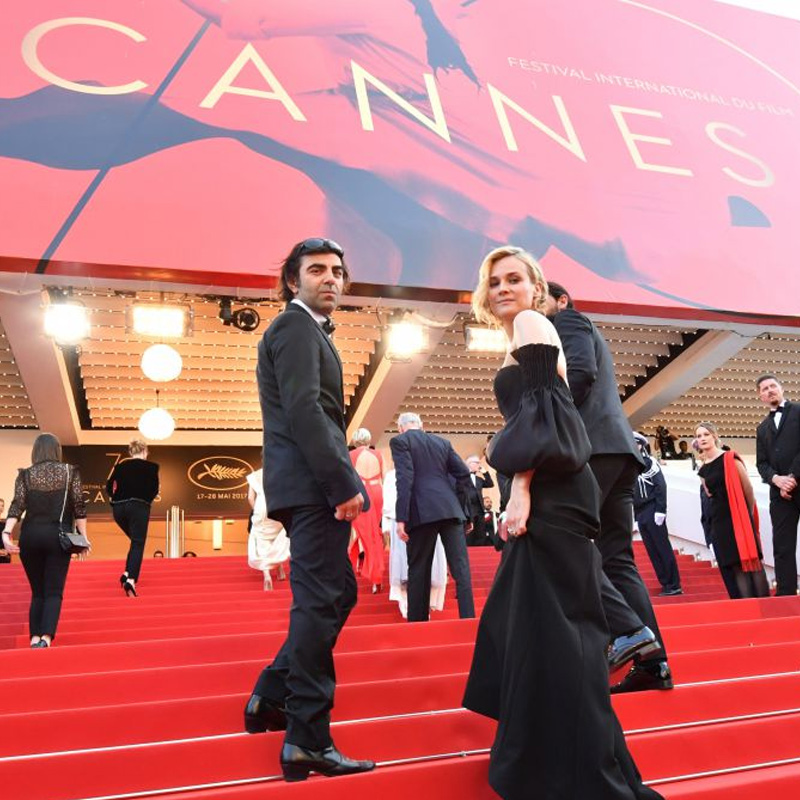
  • India named guest country at next year’s Cannes fest

    India named guest country at next year’s Cannes fest

    MUMBAI: The Cannes film festival has announced that it will invite a large delegation from the Indian Film industry next year to Cannes to celebrate hundred years of Indian Cinema. With this move, India becomes the third ‘Guest Country‘ at Cannes film festival following Egypt in 2011 and Brazil in 2012.

    "Cannes belongs to each and every one of us who contribute towards creating it step by step. We want the festival to be open to new ideas and diversity can only enrich it. I have been attending IFFI for past 4-5 years and it gives me immense pleasure to invite India as the guest country.

    "The Festival de Cannes is delighted to celebrate one of the most important countries in the world of cinema, a country with a prestigious history and tradition, one whose current day and creative impulses are a perennial example of vitality," averred Director of Film Department Cannes Christian Juene.

    Juene is here to attend the 43rd International Film Festival of India (IFFI)and NFDC Film Bazaar.

    The Festival de Cannes will be held from 15 to 26 May, 2013.

  • Paranormal Activity 5 set for 2013 release

    Paranormal Activity 5 set for 2013 release

    MUMBAI: After the box-office success of Paranormal Activity 4, Paramount has announced that the fifth installment of the film will hit the screens next year on Halloween.
    Christopher Landon, son of Hollywood legend Michael Landon, will helm the project, it is understood. “This will be an off-shoot aimed at the groups that have been the biggest supporters of the property – Latinos and folks in Latin America – Mexico, Brazil, and Argentina,” a source said.
    The fourth film in the franchise stormed the weekend box-office with an intake of $30 million.

  • UK, Brazil sign film co-production treaty

    UK, Brazil sign film co-production treaty

    MUMBAI: The UK and Brazilian Governments have signed a co-production treaty.
    The terms were negotiated by BFI, a UK organisation for film, and Ancine, the National Cinema Agency of Brazil. The treaty was signed in Brasilia by Lord Green of Hurstpierpoint.
    The treaty is expected to take two years to come into force.
    Film and TV productions that qualify under the terms of the treaty will be able to access the benefits of national status in each country.
    In Brazil these include tax incentives, all federal public funds and access to favourable TV terms, while in the UK qualifying productions will be able to access the UK public film fund with a current allocation of ?18 million per year to invest in the development, production and completion of feature films.
    This is set to increase to ?24 million by 2017 when the BFI launches its five year plan for film in October.
    The announcement follows a number of initiatives to foster greater creative collaboration between the UK and Brazil. The most recent example came at the Rio Content Market in March 2012, where Pact and the ABPITV, the trade bodies representing independent producers in the UK and Brazil respectively, signed an agreement to promote closer ties between the independent production sectors in both countries.
    Further cultural collaboration between the UK and Brazil will come later in 2012 with the British Council Transform event, a cultural programme of cross arts and transformative arts activity spanning the four years between London and Rio Olympic Games.
    Transform kicks off at the Rio International Film Festival in October 2012 with a retrospective of the works of Brazilian director, Alberto Cavalcanti, from the BFI National Archive and a high profile screening of legendary British director Alfred Hitchock‘s The Pleasure Garden at an outdoor gala on the Copacabana Beach. The film has been restored by the BFI as part of its Genius of Hitchcock summer blockbuster project, and will be screened in Brazil accompanied by live music performed by the Brazilian Youth Orchestra from a score composed by British composer, Daniel Patrick Cohen.

  • BRICS Youth Short Film Festival in Delhi to feature over 35 films

    BRICS Youth Short Film Festival in Delhi to feature over 35 films

    NEW Delhi: Over 35 short films from the BRICS countries – Brazil, Russia, India, China and South Africa – will be screened in a three-day festival to be held in the capital from 13 March.

    Around 31 films including four from Russia and the rest from India will be in competition. A block of short films from South Africa and one film each from Brazil, Russia, and China are in the non-competition section.

    ‘Film Dialogue 2012’, the BRICS Youth Short Film Festival, is being organised jointly by Delhi’s Citizens Film Forum and the Russian Centre for Science and Culture.

    The films include documentaries, short fiction films, animation films, and those with drama and action.

    According to Vimal Mehta of the Forum, the festival is aimed at encouraging young filmmakers from these countries and offer them a platform.

    The best films will receive awards and all films that take part will be given certificates of participation.

  • Two Indian films to premiere at Chicago fest

    Two Indian films to premiere at Chicago fest

    MUMBAI: The 47th Chicago International Film Festival will be held from 6 to 20 October at Chicago, Illinois.


    Two Indian films – Kshay and Inshallah, Football – would have their world premiere at the festival.


    The synopsis of Kshay on the festival website reads thus: “Chhaya, a woman of limited means, leads a good, decent life alongside her husband Arvind until she becomes obsessed with a sculpture of Lakshmi, the Hindu goddess of wealth. Chhaya will stop at nothing to bring home this statue, and soon her past weaknesses and disappointments (including a miscarriage) bubble to the surface, consuming and corroding her soul. Corrode is the latest example of an exciting new wave of independent Indian cinema.”


    The other film Inshallah, Football will participate in Docu Fest Competition. “The fast-paced game of the world’s most popular sport is contrasted against the slow turning gears of democracy in this controversial documentary. With help from a committed South American coach and his charming wife, 18-year-old Kashmiri soccer player Basharat is good enough to go play in Brazil but can’t obtain a visa due to his father’s militant past. More than a coming-of-age story
    about a teen who dreams of living as a free citizen, it is also a coming-of-age story for democracy in India,” reads the synopsis of the film.


    The Prashant Bhagarva-directed Patang (The Kite) will also be screened at the festival.

  • WPP’s billings up 5.2 per cent at ?21.4 billion

    WPP’s billings up 5.2 per cent at ?21.4 billion

    MUMBAI: WPP, the world’s largest advertising company, has reported a strong first-half financial performance.

    WPP declared revenue growth of 8.1 per cent in the first half (organic growth of 6.1 per cent), gaining from a robust advertising environment across the world. North American sales increased 5.4 per cent, and growth in the BRIC countries (Brazil, Russia, India, and China) improved 15 per cent in the first half.

    The company‘s operating margins augmented to 11 per cent from 10.3 per cent in the first half of 2010, with higher profitability in all geographic regions.

    Billings were up 5.2 per cent at ?21.4 billion, while reportable
    revenue has increased by 6.1 per cent at ?4.7 billion.

    The Board of WPP announced its unaudited interim results for the six months ended 30 June 2011. “Despite recent uncertainties, these results continue the post-Lehman bounce-back seen in 2010 and the Group has now achieved levels of pro-forma revenues and profitability beyond 2008,” said an official statement.

    For the remaining 2011, the company states that slowdown in the growth rate in the United States should be compensated geographically by faster growth in the United Kingdom, Western Continental Europe, “from admittedly low levels”, and faster escalation in Asia Pacific, Latin America, Africa and the Middle East and Central and Eastern Europe.

    “Functionally, any slowdown in traditional media spending, is similarly forecast to be covered by increasing digital spending and, in our case, by continued growth in media investment management,” an official statement stated.

  • BBC celebrates 70 years of broadcasting in Brazil

    BBC celebrates 70 years of broadcasting in Brazil

    MUMBAI: BBC Brasil celebrates its 70th anniversary by hosting four special debates in the cities of Brasília and São Paulo, starting 12 March 2008.

    BBC Brasil head Rogério Simões says, “BBC Brasil is 70, and I am very proud of how far we have come since 1938. Our aim has always been to help our audience understand the relevant issues behind the news and their consequences.

    “In turn, our audiences keep telling us that they see us as fresh, innovative and reliable broadcasters, connected to the world and with these debates we aim to prove these credentials once again. Our online operations go from strength to strength, and in January 2008, we received 4.2 million visitors to bbcbrasil.com and from content on our Brazilian partner websites.

    “We are also reaching new audiences with video on Bandeirantes TV and our radio output has a loyal listenership. We invite all our radio, online and TV audiences to engage with the debates.”

    The BBC Brasil debates will discuss “The Giant Neighbour: Brazil and South America,” “Journalism in the 21st Century: Objectivity and Subjectivity,” “Freedom of Speech: Limits of Journalism in the 21st Century” and “The New Journalism: Convergence and Interactivity.”

  • Fashion TV celebrates Rio Carnival 2007

    Fashion TV celebrates Rio Carnival 2007

    MUMBAI: Fashion TV will air the fashion event – Rio Carnival.

    Over 300 million homes in 202 countries will catch the Samba fever, as the channel will be bringing all the action from the event on 18 February 2007.

    The worldwide live broadcast on Fashion TV is in cooperation with Globo TV, Brazil’s largest TV company and the global distribution is provided by RRSat Global Communications Network. The production includes over 60 cameras covering the one kilometer sambardrome.

    Over 50 satellites and thousands of cable systems, leading mobile phone operators and IPTV and wireless networks will broadcast for the first time the rio carnival. In 2007, the carnival is a truly multi media global event over all the media combined.

    The Rio Carnival is a celebration of beauty, music and life. It is a parade of thousands of sexy performers in costumes, dancing to the rhythm of Brazilian music.
    TThe Rio Carnival Parade starts on 18 February 2007 and goes on till sunlight the next day. Each samba school, consisting of 5000 dancers, has about 60 to 75 minutes to make it through the run- way, called the Sambodromo. There are two days of 13 parades. Six of the best 13 samba schools march on Sunday and seven march on Monday. The Rio Samba Parade is a competition between the samba schools. Only one grand champion of the year will be awarded at the end of the carnival.

    The spectacle filmed by more then 30 cameras will be transmitted live on the nights of: February 18th to February 19th and on February 19th to February 20th 2007. in north and south America, the rio carnival can be seen live on ftv from the early evening onwards.

    On the following days of Rio Carnival, Wednesday 21st to Sunday the 25th, Fashion TV will again present at Midnight all night long…the Best of Rio 2007, including exclusive reports: the parade & costume preparation, backstage images, fancy VIP parties & celebrity interviews.

    Already available is The Best of Rio Carnival History. Fashion TV invites viewers every night at Midnight as it focusses everyday on one year of Rio carnival and as the countdown goes on, we will be discovering the best of Rio 2004 on 15 February, the best of Rio 2005 on 16 February and the best of Rio 2006 on 17 February.