Tag: brands

  • Tata Sky opens Actve Series to advertisers

    Tata Sky opens Actve Series to advertisers

    MUMBAI: Indian DTH players have been scouting for newer revenue opportunities in order to reduce their dependency on subscription revenues. One of the bigger ones,  Tata Sky, yesterday announced that it would be selling advertising space on its Actve Series platform allowing advertisers and brands to effectively reach out to the desired TG through either commercials or integrate brand communication in the programmes.


    Some of the popular series include Actve Fun Learn for kids under 10 years, Actve English, Actve Cooking, Actve Vedic Maths and Actve Music. According to the DTH provider, almost 2 million of its subscribers watch the Actve Series with cooking and English being the preferred choices, especially in tier II cities and towns. Brands such as McCain Foods, Google, Yakult, Maggi and Britannia have already been signed on to showcase their infomercials on Actve Cooking.


    “Reaching out to the audience based on research and preferences has helped our Actve services become a huge success in India. Being a paid platform, there is a high level of interaction with repeat viewers every day consuming content that they desire and expect. The infomercials hence integrated aptly with the Actve channels have resulted in a positive impact on our subscribers,” states Tata Sky CCO Vikram Mehra.


    Media planners seem sold out on the idea of getting segmented viewers for their clients. “It is a good way to reach out to people. Ultimately it is content that could be in any form. 2 million isn’t a small audience. The key thing is that it gives you a focused audience,” says MindShare India principle partner Jai Lala.


     “Each of these DTH players has launched such content platforms of their own so that they get to know the profile of their users. It is a thing we have been waiting for since long,” adds Lodestar UM CEO Nandini Dias.


    Some brand names have been signed up already, but that apparently is only the tip of the iceberg, as bigger advertisers will surely get on board.   Dias is of the opinion that personalised brands will do well in this series and FMCG brands will surely advertise as they advertise on an overall basis. Lala feels that brands that can integrate well with the programme will work best. “Consumers are getting onto this platform to learn. So educational brands, retail brands would work well here,” he says.


    However, this being a first attempt the ad rates  will be at a bare minimum. “The ad rates need to be evolved. They have to be competitively priced because there should be a logic as to why should money be invested into these active services. If there is better segmentation for clients then we can invest and ensure that money is not wasted,” points out Dias.


    Tata Sky claims that through its various interactive series, advertisers can directly target customised TGs. Currently, the only way to advertise on the DTH provider is on its channel 100, its initiation channel.

  • Avian Media further strengthens leadership team in Mumbai

    Avian Media further strengthens leadership team in Mumbai

    MUMBAI: With an aim to further strengthen its consumer practice in Mumbai, Avian Media has appointed Shalmana Tendulkar as Group Business Director, Consumer practice.


    Shalmana brings wealth of knowledge and domain experience of over 17 years. Having worked as an independent consultant and with agencies, Shalmana has in-depth knowledge of the media and broadcast industry having consulted general entertainment channels (GEC), news channels, radio channels, as well as niche channels in the action, movie, music and kids genre. Shalmana has also led publicity of feature films and managed celebrity brands.


    Over the years, Shalmana has also worked on consumer brands, having handled campaigns for large FMCG companies like HUL, Kellogg’s and Colgate. Adding to her dynamic portfolio, Shalmana has a number of special events like the tours of Def Leppard, Ricky Martin and Elton John to her credit.


    Nitin Mantri, CEO, Avian Media, said: “We are very pleased to have Shalmana join our growing Mumbai office. With her vast experience and expertise, we hope to boost the capability of our already successful consumer practice. Over the years, while working with some of the leading consumer brands, we have built the right talent and expertise to deliver successful PR campaigns for our clients. Under Shalmana’s tutelage, we will continue to accelerate this growth and deliver impactful campaigns for our clients.”


    Commenting on the appointment, Shalmana Tendulkar, said, “I am really excited to be a part of Avian Media and its talented team that has a proven track record of delivering successful PR campaigns and servicing standards. Avian Media is currently well positioned to write a new chapter in the growth story and I look forward to contribute to the augmentation of the firm by expanding the Consumer practice offerings.”


    In her role as the Group Business Director of the consumer practice at Mumbai office of Avian Media, Shalmana will bring in a renewed focus and direction to the existing client campaigns, harnessing the in-house talent and growing client base in the vertical.

  • Awards shouldn’t be taken very seriously: R Balki

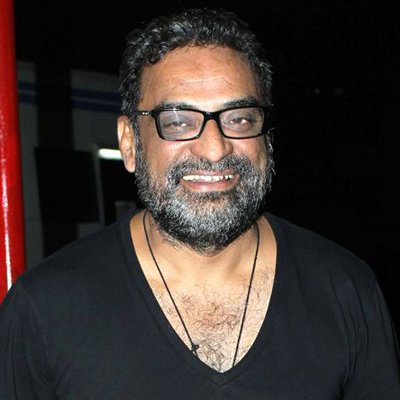
    Awards shouldn’t be taken very seriously: R Balki

    MUMBAI: A leader is said to be the one who takes criticism in his stride and recognition is the last thing on his mind. We wonder if this is the driving thought of filmmaker and the chairman and chief creative officer of the ad agency Lowe Lintas & Partners R Balki?


    At the recently concluded Effie Awards conducted by the Advertising Club, Lowe Lintas walked away with the Agency of the Year honour as it bagged six gold, five silver and five bronze metals at the award ceremony. But the man, who is the driving force behind the stupendous work, proclaims that awards have never been in his priority list.


    In fact, most of the award shows of the advertising world have in any way not earned the required respect from the ad fraternity. While some have been shunned by most of the advertisers, some have not even been noticed. And some agencies have started their own award shows in order to bring in quality, for instance Lowe Lintas’ True Show or Ogilvy and Mathers’ Envies.


    Unlike the showbiz that’s full of award functions and celebrities gracing them as well, the award shows of the ad world are a low key affair attended by few and the number of participants being even fewer. And if in such a scenario, an award function manages to bring almost the entire fraternity together, it certainly means something. The 13th edition of Effie received a great response with almost every agency gracing the event.


    Lowe Lintas led the Effies leaving Ogilvy & Mather behind by 35 points, but the winning companies’ boss still stood by his belief that these functions are about partying and winning and losing doesn’t really matter. Indiantelevision.com probed Balki a little more to get an insight after his agency’s grand victory. Excerpts:


    On a personal level, you have been very vocal about what awards (don’t) mean to you! So what do you and your team have to say about winning the Effie?


    It is not about winning or losing but an evening of celebration. Effies have always been a constant part of the industry and we have always participated in it. It is a democratic agency where many feel that we should enter the agency and not others. So we enter in the shows where the team as a whole wants to participate.


    So if you win, you party with a lot of noise and if you don’t win then you should party without making a big noise. I think winning and losing is a part of the game and I don’t think awards should be taken so seriously. It’s not a death and life scenario at all; it is not that if one wins an award we are better or otherwise. I believe that it is the work that speaks and it could be good or bad without winning an award.


    Awards are not important but if the team feels that they want to participate in a certain award then they are free to do so. The team right now felt that it should participate in the Effies and so we went ahead and did. Tomorrow, if the team feels that it doesn’t want to participate in any award then we will not. It all depends on the team.


    Anything you would like to change about Indian advertising awards?


    One hundred per cent we would like to initiate an award where advertising should be just the way it is. It can neither be all about effectivity nor creativity. I think creativity is to make things better and sometimes it is not about making it better. Sometimes great ideas also don’t work. It cannot be just about effectiveness or blind creativity. There is a way to judge advertising ads. It is funny that an industry which creates so many ads and brands hasn’t been able to create an awesome award function for itself.


    Whom do you see as your main competitor especially during award shows?


    We don’t believe in award shows so we don’t believe in competitors. There are a lot of good agencies; O&M is a great agency which is during great work. There are few others as well but two agencies which are doing some great work are O&M and Lintas.


    Which would be the one award which you would like to hold in your hands? Since you have dabbled in films it can be a film award too?


    Since I don’t believe in them, I guess I will have to think hard before I say that. Right now, I don’t know if there’s an award that exists that really catches my fancy.

  • Sudhir Deokar’s visualisation was photographically perfect: Ivan Arthur

    Sudhir Deokar’s visualisation was photographically perfect: Ivan Arthur

    MUMBAI: It was in the early 60s, I was a cub writer then, Sudhir a young tiger. Every day, I watched him roar, bold and resonant on his easel. And I cowered behind my table wondering what I was doing in a place like this? Tentatively, I handed him a line for an Esso advertisement, expecting a growl of disapproval. He looked at it for a moment and with the salivary articulation of well-chewed paan, he said: “Tomorrow.” The next morning I glanced at his easel and grew a hundred feet tall. There was my line on his layout, for sure, but barely recognisable even to me.  Sudhir had made it resonate beyond the thesaurus.


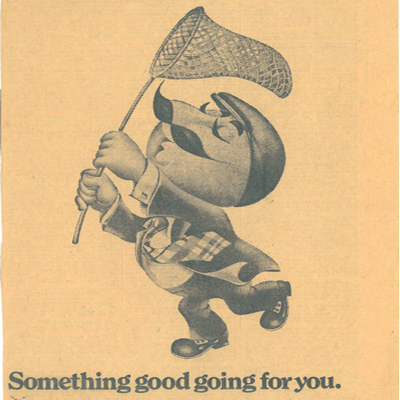
    He did this always. He took lines and gave them roundness, movement, dimension, resulting in halos for copywriters, account directors, clients and their brands. He freed the Air-India Maharaja from the croquill’s ruthless line and caressed him with that soft roundness. He poured sex appeal into Haryana Breweries’ beer barrels, played mid-wife to both DCM and Wipro Data Products and placed Hamdard on the medical pedestal it deserved. Name any Thompson brand from the early sixties to the Millenium year; Sudhir has gilded it with his brush. He retired as creative chief of the Mumbai office of Hindustan Thompson Associates (HTA), now JWT.

    Sudhir poured sex appeal into Haryana Breweries’ beer barrels

    He worked his magic with 6-B pencil, croquill, rotring, Indian ink, water-colours and his sable hair wand; conjuring up caricatures, cartoons, stylised drawings and life-like water colours; his 20-minute layouts often used as artwork. Artwork became works of art, clients having them framed and put up in their offices. His visualisation of human situations or tabletop was photographically perfect. When the final picture was taken in the studio, you might not be able to tell the difference between the photographed picture and the 20-minute wash drawing. Mitter Bedi, Obi, Salian and so many others would marvel at the lens that was Sudhir’s eye.


    For close to three decades he gave my work the visual sanctification of his brush, and I feel blessed. I know that many who came before and after me will echo my feelings. He had the bigness and breadth to work with most anyone – from trainee to guru. Many of his trainees are gurus now. I look with awe today at a generation that thrives on the digital evacuation of ideas, but I still thrill to the memory of those visual insights shaped by hand and eye by artists like Sudhir. He was loved by all – from the most cussed of executives to the most difficult of clients.

    Freed the Air India Maharaja from the croquills ruthless line and caressed him with that soft roundness

    Besides being my creative soul mate, Sudhir became a friend of the family. His passing is a deep gash that my soul will have to bear for ever.


    (Ivan Arthur is the former creative director of JWT, India. He can be contacted at Ivan.arthur@gmail.com)

  • Brands come out in support of LGBT community

    Brands come out in support of LGBT community

    MUMBAI: There are brands and then there are brands. The difference between the two is that while some try to be safe and use the same-old formula to reach out to their target audience, others break free to connect with their TG through the issues that matter to them.

    The Supreme Court has turned back the clock on Section 377 of the Indian Penal Code (IPC) that was earlier decriminalised by the Delhi High Court in 2009. As per the recent verdict, the 1861 law that criminalises any kind of sexual activity “against the order of nature” – including homosexual acts. While thousands of lesbian, gay, bisexual and transgender (LGBT) activists and supporters came out on the streets and took to social media platforms to avenge and retaliate against the ‘regressive’ verdict, they surprisingly found unexpected support from few brands.

    Amul, for instance, has been the pioneer in putting the (ugly) truth out in the open with its cheeky remarks on topical issues. This time again, it has again taken a stand. In its recently released ad, the Amul mascot – the girl in polka-dotted dress offers condolences as she stands beside a tombstone with “Freedom of choice” inscribed on it.

    However, what is interesting to note is that it isn’t just Amul that is making itself heard as a brand. Other brands are shedding their inhibitions as well. The youth fashion brand, Fastrack which takes pride in being the in-your-face youth brand shared a picture on the social media platforms supporting the LGBT community. It read: “The road to equality has never been straight”. Even earlier, the brand had launched a ‘Come out of the closet’ campaign challenging the taboos and asking people to let go of societal norms because the brand is moving on with time.

    But what has surprised everyone the most is the coming of age stance of Tanishq that is largely known to be a brand following tradition. The jewellery brand from the house of Tata took the plunge with the latest advertisement on a social media site which read: “Two of a kind always makes a beautiful pair!” making an unexpected sassy remark on the issue. In a very subtle tone, the brand has made it clear what it stands for.

    Gradually, it is trying to break away from the other traditional counterparts. In October, Tanishq had launched a campaign for its latest wedding collection where a dusky woman was seen remarrying. With the film, the brand aimed to target young women who are looking for differentiated designs and not the old, traditional ones.

    Allen Solly too flaunted the ‘colours’ on the networking site.

    Even internationally, the brands have come out to support the cause with some times being appreciated for their initiatives and many times condemned as well. When United Colors of Benetton launched its ‘Unhate’ campaign featuring images of world leaders in passionate lip-locks with some of their biggest rivals last year, the campaign didn’t do much for world peace but it won an award at Cannes.

    Similarly, Kenneth Cole showcased an ad with two handbags and a headline that read: “We’re pro-choice, after all, she’s the one carrying it.” It was a tongue-in-cheek comment on the debate on abortion in the US.

    Eyewear style brand Ray-Ban was also praised for its advertisement in 2012 that was gay-inclusive. Released as part of its “Never Hide” campaign as part of the company’s 75th anniversary, the ad featured two sharply-dressed gay men out for a romantic stroll on a busy sidewalk.

    The popular coffee brand, Starbucks, which entered the Indian markets, has also taken a pro-LGBT stand. In an interview a US journalist, the coffee chain’s CEO Howard Schultz had revealed that he has once told an anti-gay marriage activist to sell his shares in the company if he disagreed with the company’s position on the issue. His rationale was that it was an important issue to Starbucks’ 200,000 employees, so at the end it was worth any lost sales. “Some things aren’t economic decisions,” he had said that time.

  • Brands, youth mindsets & Samyak Chakrabarty

    Brands, youth mindsets & Samyak Chakrabarty

    MUMBAI: “Who can know the heart of youth but youth itself?” wrote punk rocker Patti Smith in her memoir, Just Kids.

    Indeed, global brands have made it their business to figure out what the youth wants, often ending up classifying them into categories which they think define them – cool, sexy, social media presence and so on.

    This is however their biggest mistake, opines DDB Mudra chief youth marketer Samyak Chakrabarty. “Youth can’t be classified or boxed into traditional or conventional SECs. A certain 21-year-old may appear to be the consumer for a brand but this doesn’t mean he/she will actually purchase it. For instance, a youngster living in Dharavi may own an iPhone while someone in SoBo may have a Nokia Asha,” he says.

    Samyak is speaking from a position of knowledge; he and his agency have spent six months with 40 youth unraveling the complexity of a youth generation in the Indian metros which is more connected and aware than any other in the history of mankind, thanks to the spread of the internet, mobiles and the power that both have showered on them. The output is Youth Report 2013 which aims to provide some insights into those between 18-25 years of age.

    While many question whether it is right to paint a very disparate and fickle demographic grouping with a broad sweep of a brush, Samyak has indeed taken a shot at it in his Youth Report 2013, which is drawing some attention amongst advertisers and marketers.

    The basic premise of his report is “that those born post 1988 are extremely moody people. At one level they are very sure of what they want to do in the long run, but on another there is immense amount of confusion and parallel thought flow. Again it is the number of options available and continuous bombardment of information through new media to blame. 9 out 10 decisions are made based on the prevailing environment and frame of mind.  5 mindsets (read: mood) existing every Young Indian born post 1988 living in metro cities. Each gets triggered based on the type of decision and plays a critical role in influencing choice.”

    The five according to Samyak are:

    * The Passionista: Someone who transforms into a Passionista while making decisions would base judgment purely on feelings often also defying strong logic.

    * The Racehorse: It’s always about being the first in everything he/she does. Such as state of mind is active in people who are generally very motivated, aggressive and competitive in nature.

    * The Label: All decisions are completely based on the badge value of a product. Unlike someone who thinks likes a racehorse, here it’s not about being the first but rather being the ‘coolest’.

    * The Shiny Disco Ball: If someone thinks like a Shiny Disco Ball, He / She is an optimist and will be open to try different things just for the experience.

    * The Kite: Those in this state of mind prefer to follow others when it comes to buying decisions.

    And how do these mindsets come into play. Samyak explains that if the youngster has a racehorse mind or competitive and aggressive mindset, he/she will buy a certain product to be in a position of leadership and create talk value among others.

    If a youth has a kite mind where say five friends get together in a bar with four of them ordering a certain brand of beer, the fifth friend will display a kite mind and order what his four friends ordered. At this point, his/her mindset is to simply go with the flow. However, if the same person is in a passionista mindset, he/she will take charge and order what he/she likes instead of blindly following the others.

    “Today, youngsters are driven a lot by mindsets rather than economics. I think they are more inclined towards their passion, following their desires and finding ways and means to achieve them,” says the young in years, but old in experience Samyak. Irrespective of their economic background, they strive to achieve what they want and it doesn’t have anything to do with their ability or inability to buy the product. It has got more to do with what they want.”

    However, diversity (economic, social, geographic or religious) does influence choice and so. Say, a like on a facebook page does not always translate into the youngster buying the brand and that’s where mathematics fails, explains Chakrabarty.

    For a brand to understand the youth, it is necessary to tap the thinking process. “Tap it because it remains constant. If a brand has been able to understand the ingredients that contribute towards building an opinion or brand preference, it has cracked the code,” says Chakrabarty.

    He cautions against the use of jargon and quick fixes like celebrity endorsement, popular lingo and bright colours to attract the youth. Asked how the Youth Report would help brands understand youngsters, he says: “One must remember that most statistics expire even before they are put to print. For instance, a report may say that seven out of 10 people think this way and so end up buying a certain product. However, what influenced a person today may not influence him/her tomorrow depending on the influence of his/her peer group and other such.”

    While the Youth Report helps brands by offering this kind of a classification, Chakrabarty also points out that brands would do well to stick to their core values even if they reinvent themselves with time. He cites the example of Red Bull which at its core continues to be about energy and adrenaline however much it may revamp itself. Ditto for Nike and Kingfisher.

    “It’s suicidal for a brand to reinvent its core because then you lose the long term relationship with the TG. Young people don’t wake up thinking about brands. They don’t care. If brands want to be in the youth’s priority list, they need to connect emotionally with the youth or have the youth looking up to them for example Apple,” he elaborates.

    The other thing he talks about is how a 22-year-old will always have options B and C if he/she doesn’t get option A but the same 22-year-old will turn 50 at some point in future. So, it is for brands to decide if they want a long-term relationship with such a customer. In the event they do, the message has to be sustainable and not fluctuating.

    Chakrabarty is candid about the fact that media – both print and television (even the likes of MTV and Bindass) – has failed to capture the mind of the youth.

     “MTV was MTV because of the music. It picked up on various popular trends and kept changing according to time. But now, shows have become bigger than the channel. Take Roadies, for instance – if we take the show away from the channel and put it on any other, it will still work. The same can be said about Emotional Atyachar. There has to be a balance between content and the brand. That is why we tell our clients to focus on 10 per cent of people and not the remaining 90 per cent because you can’t please everyone. When a brand tries to be overly youthful, it has lost the plot. MTV made a big blunder by changing their core.”

    “Having said that, I also think we give undue importance to the youth. Yes, it is true that those born after 1988 and those before 1988 will behave differently. The main reason is of course the social influences around them – internet was not an integral part of life before 1988, facebook wasn’t around, there was no ‘e’ before commerce. Plus, as a society too, we are changing, parents are giving more freedom to their children. The problem lies in the fact that people think that today’s youth is special, which it is not. Yes, it is different and it is quantitatively more but there is nothing starkly unique about it,” he adds.

    However, wouldn’t he agree that social media, which has become an integral part of youth today, has changed the youth’s psyche? He disagrees: “The time has changed but the thinking hasn’t in a way. Earlier our parents used to tell us to beehave in a certain manner because of what the society will think. And now youngsters behave in a certain manner because they want to be seen like that on social media. However, social media doesn’t influence when it comes to brands. It might surprise you to know that a brand so popular on social media may not have so many consumers. Also, there isn’t too much of branded content on social media that will engage young people.”

    Chakrabarty points out that the Youth Report clearly highlights the power of off-line communication (word of mouth).

    If someone were to buy a Rs 30K phone, he/she is going to show off in front of his/her friends. He/she may read a few reviews but will talk to his/her tech-savvy friends before making the purchase. In this case, it’s not peer pressure but peer influence. According to Chakrabarty, this can be artificially regulated and the agency is working toward it.

    And what is the youth’s attitude toward money? “There is no answer to it. We are still trying to figure it out. At one level, there are a lot of young people exploring the merits of economical products and savings. Currently, whatever the youth earns, 75 per cent of it is spent on satisfying desires while the rest is spent on survival. They do try to achieve a balance between the two. However, my prediction is that looking at our future and the way the economy is youngsters too will become cautious about their finances. So, all the financial product companies shouldn’t ignore them. They might form only five to seven per cent of the TG of these companies at present but it is going to amplify into something much bigger,” says Chakrabarty.

    Apart from what the youth think and how brands can decode that, Chakrabarty, who started young, is simultaneously running a Blackdot campaign to motivate youngsters to step out and vote in Maximum City. He feels that this year, a lot of youngsters are going to take charge because they want a better future and know that they need to take a stance rather than being passive observers. Maybe, he does know their mind better than most others….


  • Contract Bengaluru gets a new ECD in Manoj Jacob

    Contract Bengaluru gets a new ECD in Manoj Jacob

    MUMBAI: Contract Advertising has got a new executive creative director (ECD) for its Bengaluru office. It has hired Manoj Jacob, who has worked with the company earlier as well and joins back after a gap of six years. Jacob will be reporting to Contract Advertising NCD Ashish Chakravarty and would also work in partnership with Monojit Ray who recently joined Contract as the Bengaluru head.

    Prior to joining Contract, Manoj ran his own creative consultancy firm, where he worked with clients such as Nova Specialty Surgery, Apollo Hospitals, Simply South Restaurant and Abs Fitness among others.

    “I am very happy to have Manoj on board as the ECD of our Bangalore office. He is extremely passionate about his craft, very driven, and a hands-on kind of leader. Having worked with him in the past, I won’t be surprised if he dives straight into the deep end from day 1 itself.  It is a challenging role, but I am positive he will shine,” said Chakravarty.

    Manoj comes with an experience of 17 years and has worked with O&M, McCann Erickson, Satchi & Satchi, Euro RSCG, orchard, Publicis Ambience and Bates over the course of his career. He has also handled some of leading brands across verticals such as IBM, Air Deccan, Cavin Kare, Mitsubishi Motors, Wipro Consumer Care and Weekender.

    On his coming back to Contract, Manoj said, “It’s an awesome new team, across disciplines, that is getting together at Contract Advertising and I’m very happy to be a part of it.”

    Manoj’s work has won him a lot acclaim and rewards both nationally and internationally from Cannes to New York festival to winning at AD Spot Non Profit Awards, Italy and the Bangalore Ad Club awards.

  • Brands have to take a back seat and tell human interest stories

    Brands have to take a back seat and tell human interest stories

    MUMBAI: At a time when the world is moving towards the digital medium, can advertising be far behind?


    Indeed, the last couple of years have seen several brands and agencies falling back on this space to reach out to their consumers.


    D&AD’s CEO Tim Lindsay and president & Dare CD Laura Jordan Bambach who are in the country to address the forthcoming seminar (organised by Kyoorius) on Building Brands via Digital Media, shared some valuable insights on the subject with indiantelevision.com.


    On the fast blurring line between traditional and digital advertising in India, Tim quips: “Probably there are other markets which are further ahead when it comes to digital; and this is simply to do with the penetration of tablets, laptops and smart phones. Mobile is highly developed in this country and will only amplify. Therefore, digital advertising and marketing will develop in a separate way in India.”


    Still to recover from jet lag, Laura adds: “It is quite an exciting time and I can see the behaviour change and there is a more digital approach in various campaigns; which is more worldwide, but it is there here as well. The change in advertising message is becoming more purposeful.”


    Speaking about the trend of viral videos, Laura says they would work better if people had an interesting story to tell rather than the brand putting forth its message. “The brand has to take a back seat and tell a human interest story. Not all viral campaigns are good, there are many bad ones as well because they don’t tell you the story you want to hear,” she says, pointing out that videos which are entertaining, funny and have a human angle are likely to click with the viewers.


    Also the co-founder of SheSays, an international volunteer organisation encouraging women to take up digital creative careers, Laura feels things are changing now as more and more women are not only entering the field but also reaching high positions. “There are a quite a few women in the higher ranks and the things are looking up in India as well,” she says.


    Asked to point out the two important advertising trends of 2013, Tim talks about ads and campaigns having moved more towards story-telling apart from the increased engagement of people through branded content and added efforts by companies to take their CSR activities more seriously. He cites the example of Unilever’s latest Project Sunlight (Unilevers Project Sunlight promises a brighter future) . “In India, HUL’s Lifebuoy campaigns have been very successful. Be it the village one or the stamped rotis,” he says.


    In the coming year, Tim feels there will be more acquisitions including digital acquisitions of smaller agencies which will only serve to increase their credibility and sustainability.

    Both Tim and Laura feel that hereon, the digital space is only set for a further boom, with agencies milking the medium to reach out to as many people as possible.

  • Puja festival – A great platform for brands to engage

    Puja festival – A great platform for brands to engage

    MUMBAI: Many brands are planning to use the puja festival at various pandals to engage with the consumers. The product range can be as wide as possible. Starting from soya bean nuggets to aerated products brands can make use of this huge platform as a great place for engaging and delivering experiences to the worshippers who will throng in huge numbers across several pandals especially in East and North India. Brands must leverage this opportunity as they are able to address a wide spectrum of audience from kids to adults to elderly people; and thus helping brands to deliver that extra mile through brand experience. Let’s examine how brands can enrich themselves and establish a strong connect with the audience at the various pandals.


    Relevant Brand Connect: The essence of the brand should be captured with firsthand experience. Vijayadhsami is the most auspicious day for most parents to make their kids learn and start their beginning to step into the educational world. This is a brilliant opportunity for writing instrument brands to connect with tomorrow’s audience. Catch them young to stay connected with your brand. People especially in the East are avid travelers and sincerely make use of their LTA to visit new holiday spots. Travel and tourism brands should try and explore it to the maximum advantage by capturing some of the tourist spots in the most dramatic manner to bring them closer to the brand.


    Right Brand Experience:  Give a proper structure to deliver the brand experience. For example an audio and television brand can create a mini auditorium to deliver great sound and picture clarity to give the consumer that original and natural experience at the venue. Brands like Dolby can really capitalise by educating and promoting their sound features with live demonstration and firsthand experience.


    Interactive engagement: Make use of the best of technology to make your consumer engagement interactive. Touch screens and use of apps will intrigue customers to take maximum advantage. With so many Pandals located at various places, downloading of apps at the venue which gives you all information on various activities at various pandals will excite the consumers to download the information using their mobile. Some famous devotional songs can also be made available for downloading at the venue to bring in some emotional connect with the festival and the relevant brand.


    Relevant Target audience: You will witness people from all strata of the society queuing up at all pandals. So one need not worry about the brand fit to be present at the pandals. A mixed population can be reached with the relevant product and brand and thus giving you an immense opportunity for branding your product at various touch points.


    With the economy slow down and limited marketing budgets, I am sure most brands will use this platform to propagate their brands in the most engaging manner. What’s more with festivals like Puja becoming popular year after year it’s one of the best platforms for marketers to pump in money and increase their brand saliency.
    By Ganapathy Viswanathan, an independent communication consultant, in communication, branding and public relations.

  • Kyoorius Launches Kyoorius Design Showcase 2013/14

    Kyoorius Launches Kyoorius Design Showcase 2013/14

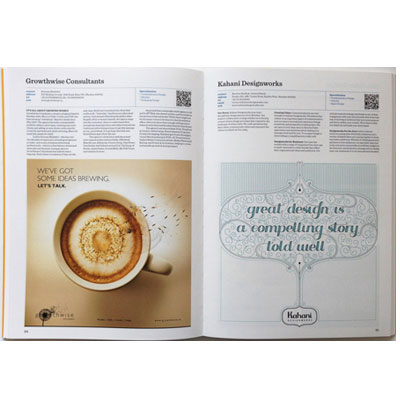
    MUMBAI: The showcase book is an initiative by Kyoorius in its continued commitment to the growth & development of the Indian design & visual communications industry by launching the 4th edition of its biennial Kyoorius Design Showcase 2013/14.

    The Kyoorius Design Showcase aims to bridge the existing divide between advertising and design. While the former is well know and established, the latter needs a platform to showcase the strategic value of design and in many ways to be seen as an industry distinct from advertising. In India, so far branding, visual communication and other specialised design services have lived under the shadow of advertising but this is rapidly changing and rightly so. The design industry is now being recognised for what it is. But there is gap in connecting these studios with the buyers of design in the corporate world. The 3rd edition of Kyoorius Showcase Book helped generate business worth over Rs.9.4 Cr for the studios showcased in the book and this is just what Kyoorius has been able to track. But it brings to focus that businesses in India are upping the ante by working with specialist design studios in an effort to add value through design.

    This 4th edition of the Kyoorius Showcase Book helps bridge the gap between studios and business and help the buyers find the right partner for their needs. Additionally starting this year, all the studios and work would be featured on resources.kyoorius.com – an online version that allows studios to regularly update their work, becoming relevant to the needs of design buyers. Additionally, the book also helps studios showcase themselves to the young talent graduating in design schools across India. The Kyoorius Showcase Book is amongst the only initiative that helps studios, brands and students alike – by blurring the lines of communication, conversation and collaboration.

    It is a tribute to the work of these studios, that the Kyoorius Showcase Book has found such acceptability within the corporate world. On the success of the previous editions and the demand for this 4th edition. Kyoorius has upped the circulation numbers to 3000 copies this edition – a
    50% increase over the last edition.

    Unsurprisingly the number of participants and consequently the number of pages have also increased in similar percentage. The increase in participation necessitated the publication to print two books published as a box set and has been printed on an all new paper while using an all new velour like paper used for the cover of the book and the bookcase from its fine papers division.

    Speaking at the launch, Mr. Rajesh Kejriwal, Founder CEO, Kyoorius said, “From the feedback we have received in the last few years, we are glad that the Kyoorius Showcase Book has grown to become a must have resource book for all corporates. I would like to thank all the contributors who helped bring this edition together and hope that this hardback like the others, helps add value to all businesses and brands.”