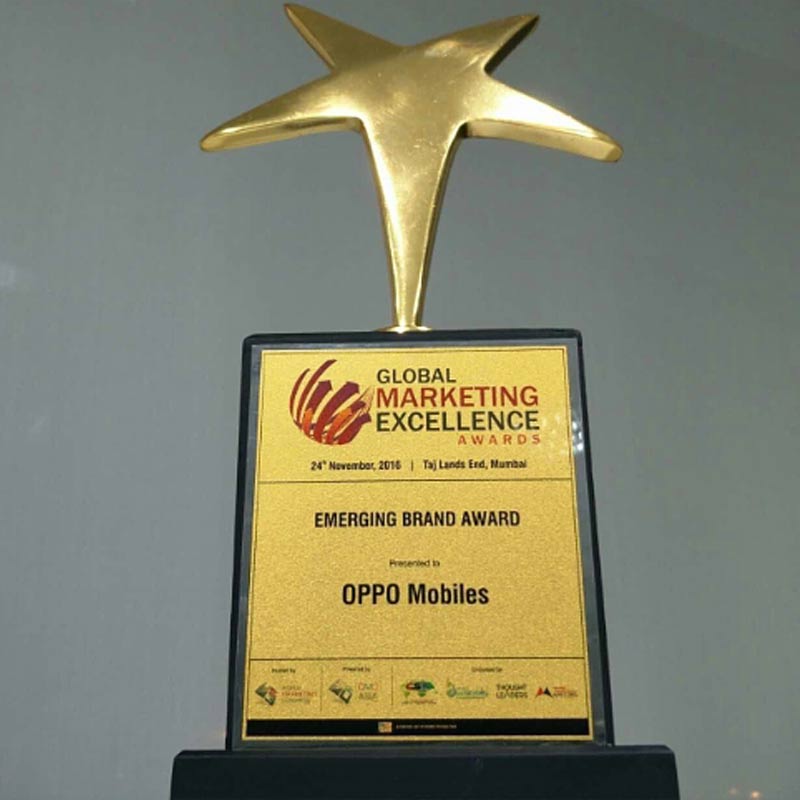
MUMBAI: Chinese smart phone Oppo has won the Emerging Brand Award at World Marketing Congress Global Brand excellence awards for 2016. The brand has been associated with its successful promotion of Selfie Expert smartphones and strong connection with young consumers in 2016.
On this achievement, Oppo India brand director Will Yang said, “From the brand aspect, we are working hard in making our brand a well-known name for its innovation and quality over the coming years. The great camera experience and high built-quality has enabled our brand to stand out in global markets, and this will continue to be one of our core focus in the coming future as well. We aim to be one of best premium mobile brands here in India and globally.”
Based on the study of targeted consumers, Oppo had launched Selfie Expert series – F1, F1 Plus and the latest F1s in 2016. As per the data from GFK, Oppo has become the No. 2 brand in India’s offline market in September, based on sales value.
MUMBAI: Chinese smart phone Oppo has won the Emerging Brand Award at World Marketing Congress Global Brand excellence awards for 2016. The brand has been associated with its successful promotion of Selfie Expert smartphones and strong connection with young consumers in 2016.
On this achievement, Oppo India brand director Will Yang said, “From the brand aspect, we are working hard in making our brand a well-known name for its innovation and quality over the coming years. The great camera experience and high built-quality has enabled our brand to stand out in global markets, and this will continue to be one of our core focus in the coming future as well. We aim to be one of best premium mobile brands here in India and globally.”
Based on the study of targeted consumers, Oppo had launched Selfie Expert series – F1, F1 Plus and the latest F1s in 2016. As per the data from GFK, Oppo has become the No. 2 brand in India’s offline market in September, based on sales value.
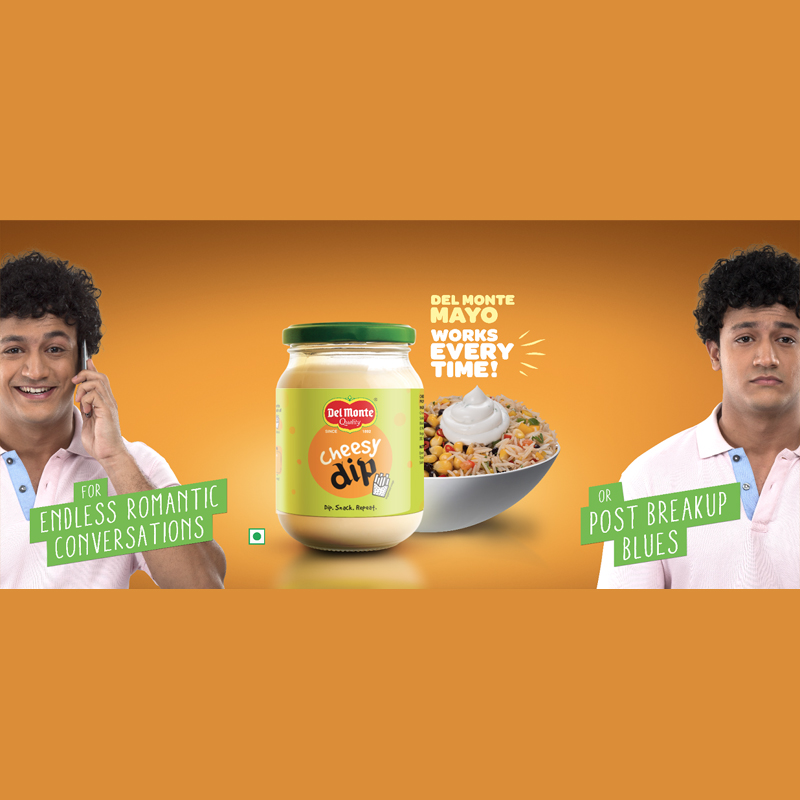
MUMBAI: Products spread their Brands wider! Del Monte is ready with its new marketing campaign supported with pictures of mouth-watering treats. With the aim of creating awareness on the usage and elaborating on the versatility of mayonnaise, the campaign has been floated in the Delhi NCR region alongside the launch of eight variants of Del Monte mayonnaise.
The new campaign highlights the uncalled-for food-related situations in one’s daily life simplified by Del Monte. The brand engaged Wunderman India as its creative agency to plan and execute the campaign. The campaign demonstrates the role mayonnaise can play in today’s new-age women’s world.
The brand recently revamped its mayonnaise range and introduced new packaging. With quick and easy recipes printed stylishly at the back of the pack, wrapped in eye-catching colours, the move echoes the same thought as that of the campaign.
The campaign which kick-started in August with print ads and radio will be amplified in other media such as OOH and social media to impact the audience minds in an engaging manner. The campaign will also incorporate consumer outreach activities to create usage awareness through recipe brochures, and on-ground activation via extensive sampling across organized and unorganized retail.
MUMBAI: Products spread their Brands wider! Del Monte is ready with its new marketing campaign supported with pictures of mouth-watering treats. With the aim of creating awareness on the usage and elaborating on the versatility of mayonnaise, the campaign has been floated in the Delhi NCR region alongside the launch of eight variants of Del Monte mayonnaise.
The new campaign highlights the uncalled-for food-related situations in one’s daily life simplified by Del Monte. The brand engaged Wunderman India as its creative agency to plan and execute the campaign. The campaign demonstrates the role mayonnaise can play in today’s new-age women’s world.
The brand recently revamped its mayonnaise range and introduced new packaging. With quick and easy recipes printed stylishly at the back of the pack, wrapped in eye-catching colours, the move echoes the same thought as that of the campaign.
The campaign which kick-started in August with print ads and radio will be amplified in other media such as OOH and social media to impact the audience minds in an engaging manner. The campaign will also incorporate consumer outreach activities to create usage awareness through recipe brochures, and on-ground activation via extensive sampling across organized and unorganized retail.
MUMBAI: MEC, a global media agency has launched MEC Touchpoints, a tool that builds on MEC’s knowledge of the consumer purchase journey combined with global media-survey data from the recently launched GroupM LIVE Panel.
MEC Touchpoints is built around the Active and Passive stages of the purchase journey, as defined by MEC Momentum, the agency’s proprietary approach to understanding and quantifying how consumers make purchase decisions. Combining the strategic framework of MEC Momentum with data from LIVE Panel, GroupM’s global survey of media and consumer insights, MEC Touchpoints identifies the communication touchpoints that are most valuable to a brand, across any one of 15 categories in 30 countries.
In contrast to the common assumption that there are general rules about which touchpoints perform particular roles regardless of category, MEC Momentum studies reveal that touchpoint influence is category-specific. Even within a single category, touchpoints play different roles for the same consumer, depending on where they are on the purchase journey. With the launch of MEC Touchpoints, MEC puts these findings to use to help brands determine which exact touchpoints will have the greatest influence over consumers at different stages of the purchase journey, and which present the best opportunity for growth.
Commenting on the launch, MEC Chief Analytics and Insight Officer Stephan Bruneau, said, “All of our clients face exactly the same challenge: how can they create brand growth that outpaces their competitors? MEC Touchpoints gives us an immediate read on understanding our clients’ business, allowing us to create strategies and ideas that cut through the noise.”
MEC Touchpoints is powered by data from LIVE Panel, GroupM’s consumer panel built from Lightspeed GMI’s global panel of 5.5m consumers.
MUMBAI: MEC, a global media agency has launched MEC Touchpoints, a tool that builds on MEC’s knowledge of the consumer purchase journey combined with global media-survey data from the recently launched GroupM LIVE Panel.
MEC Touchpoints is built around the Active and Passive stages of the purchase journey, as defined by MEC Momentum, the agency’s proprietary approach to understanding and quantifying how consumers make purchase decisions. Combining the strategic framework of MEC Momentum with data from LIVE Panel, GroupM’s global survey of media and consumer insights, MEC Touchpoints identifies the communication touchpoints that are most valuable to a brand, across any one of 15 categories in 30 countries.
In contrast to the common assumption that there are general rules about which touchpoints perform particular roles regardless of category, MEC Momentum studies reveal that touchpoint influence is category-specific. Even within a single category, touchpoints play different roles for the same consumer, depending on where they are on the purchase journey. With the launch of MEC Touchpoints, MEC puts these findings to use to help brands determine which exact touchpoints will have the greatest influence over consumers at different stages of the purchase journey, and which present the best opportunity for growth.
Commenting on the launch, MEC Chief Analytics and Insight Officer Stephan Bruneau, said, “All of our clients face exactly the same challenge: how can they create brand growth that outpaces their competitors? MEC Touchpoints gives us an immediate read on understanding our clients’ business, allowing us to create strategies and ideas that cut through the noise.”
MEC Touchpoints is powered by data from LIVE Panel, GroupM’s consumer panel built from Lightspeed GMI’s global panel of 5.5m consumers.
MUMBAI: It’s not just the Finding Nemo fans who are impatiently waiting to throng the theatres for its sequel Finding Dory, several brands are equally excited for the latest animated delight from Pixar and Disney that will release on 17 June in Hindi and English in 2D, 3D and IMAX formats across 600 screens in India.
Including Myntra, Bioworld, Trucare, Hamleys, Gingercrush, Firstcry, Colgate and Yakult — as many as 16 Indian brands have come on board to celebrate the animated adventures Nemo, Dory and Marlin. As per Disney India, that is the highest number of brand integrations that any animated movie has achieved in India.
Which doesn’t come as a surprise given the increasing importance of kids in purchase decisions in families as per industry recognised Turner’s New Generations report 2016. With the growing popularity of animated movies in India amongst kids, brands too are paying keen attention and increasing their visibility.
Explaining why Finding Dory would strike a chord with a larger audience, Disney India consumer products head and VP Abhishek Maheshwari said, “Finding Nemo was one of the most successful Disney and Pixar movies and we are very confident that the then younger audience, who are now grown up to be young adults or parents will come watch Finding Dory and at the same time introduce the franchise and its lovable characters to their kids, nephews and nieces.”
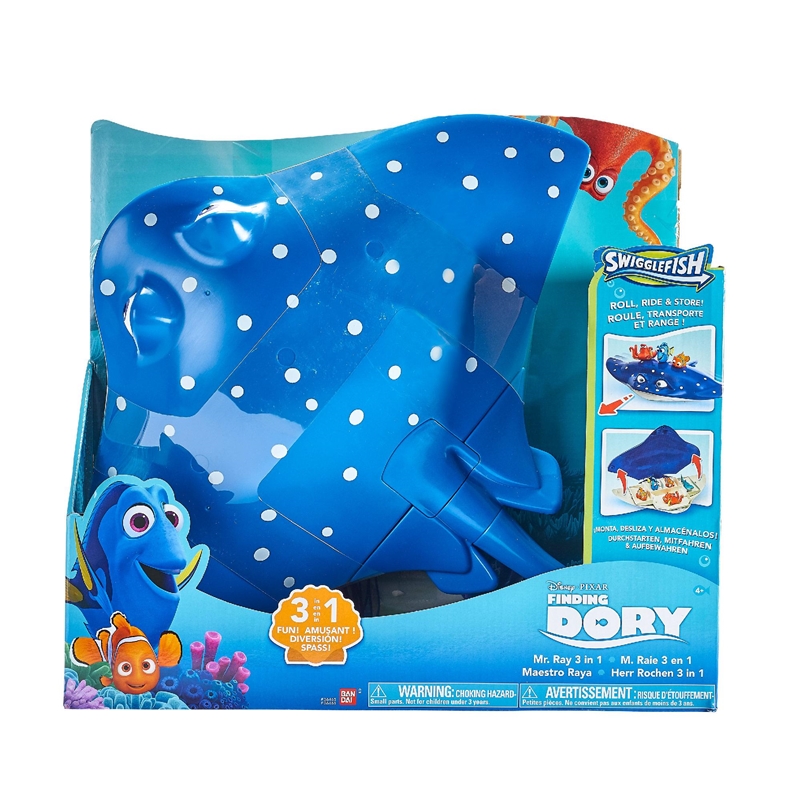
Apart from the usual brands that are believed to have kids as their primary TG, Finding Dory has seen media promotions and merchandising deals across a wide range of categories. While Myntra, Bioworld and Trucare have signed merchandising deals for its apparel range , brands My Baby Excel, Frank and Rowan have struck merchandising deals to launch for the new Finding Dory toys product line.
Excited about launching an apparel collection for the much anticipated Disney film, Myntra Fashion Brands head Abhishek Verma said, “The in-house brand, YK (Yellow Kite) has specially associated with Disney for a fun filled Finding Dory kids wear collection. We are extremely excited about our collaboration and look forward to its success”.
In the household segment, Essfil is producing special Finding Dory themed frames and mugs, while Raghuvir Lifestyle is weaving bedsheets with the colourful characters on.
For the consumer electronics segment, Macmerise and Hamee have signed deals for their power banks and mobile covers.
Retail and eCommerce players didn’t lose out either in making the most of the eyeballs the movie promises to grab with Hamleys, Gingercrush and Firstcry on board as brand partners.
“Activations around movies gives us a good opportunity to engage with the customers and create lasting impressions, especially if there is good movie merchandise available. Finding Dory is one such successful story where we are seeing a lot of traction on the sales front with animatronic models of Dory, Nemo and others selling as hot cakes in our stores even before the movie hits the theatres. We are planning multiple activities across our stores in association with Disney over the next two weeks to promote the movie and the merchandise,” shared Hamleys head of products Manu Sharma on how associating with animated films that targets kids is a significant marketing move for brands.
The media spends for the movie’s promotion are in the range of between Rs 75 lakh to Rs 1 crore approximately for each media association, while the merchandising deals for toys and apparels etc., start at Rs 50 lakh and go up to Rs 1 crore as well. As per industry estimates, these brand associations amount to between Rs 15and 18 crore worth of media value for the studio.
Going by insights from media management agencies, brands like Hamleys and Yakult with kids as their TG would predominantly spend on kids channels for media promotions of the movie, followed by English GEC channels to target young parents.
Apart from the media promotional deals that the studio has signed with Colgate and Yakult, Disney has focused the film’s marketing strategy on two key points — firstly, it reached out to Finding Nemo fans and built affinity towards Dory among kids; and secondly by creating a local relativity in the market by inducing local elements.
The film was dubbed in Hindi with dialogues written by Mayur Puri. Puri and his team of writers along with the extraordinary voice cast have given a unique twist to the Hindi dubbed version of Finding Dory, by giving the characters special localized accents – such as the Nawabi Sea Lions as seen in the Hindi trailer.
Speaking of his association, Puri said, “After The Jungle Book and Captain America: Civil War, this is my third project with Disney India and I cannot think of a better project to complete our ‘hat-trick’. It has been a learning experience as well as a joyride to bring Dory, Nemo and a host of new adorable characters to life. I’m extremely proud of the Hindi version which keeps the essence of the original intact but is more relatable for the Indian audience.”
Disney India had earlier used the same strategy which successfully worked for its popular international release The Jungle Book.
Disney’s marketing strategy further included tie-ups with media houses to host special ‘Bring your kids to work’ activities wherein kids were treated to fun Dory related activities to build affinity towards the character.
In addition, Disney India has partnered with PVR cinemas for on ground activities like ‘Doryminders’, reminding people of movie going etiquette and the ‘Finding Dory’ treasure hunt, which allows lucky moviegoers to win exciting prices. Disney has also partnered with Imagica and Hamleys for Dory centric activities and photo opportunities with interactive standees.
MUMBAI: It’s not just the Finding Nemo fans who are impatiently waiting to throng the theatres for its sequel Finding Dory, several brands are equally excited for the latest animated delight from Pixar and Disney that will release on 17 June in Hindi and English in 2D, 3D and IMAX formats across 600 screens in India.
Including Myntra, Bioworld, Trucare, Hamleys, Gingercrush, Firstcry, Colgate and Yakult — as many as 16 Indian brands have come on board to celebrate the animated adventures Nemo, Dory and Marlin. As per Disney India, that is the highest number of brand integrations that any animated movie has achieved in India.
Which doesn’t come as a surprise given the increasing importance of kids in purchase decisions in families as per industry recognised Turner’s New Generations report 2016. With the growing popularity of animated movies in India amongst kids, brands too are paying keen attention and increasing their visibility.
Explaining why Finding Dory would strike a chord with a larger audience, Disney India consumer products head and VP Abhishek Maheshwari said, “Finding Nemo was one of the most successful Disney and Pixar movies and we are very confident that the then younger audience, who are now grown up to be young adults or parents will come watch Finding Dory and at the same time introduce the franchise and its lovable characters to their kids, nephews and nieces.”
Apart from the usual brands that are believed to have kids as their primary TG, Finding Dory has seen media promotions and merchandising deals across a wide range of categories. While Myntra, Bioworld and Trucare have signed merchandising deals for its apparel range , brands My Baby Excel, Frank and Rowan have struck merchandising deals to launch for the new Finding Dory toys product line.
Excited about launching an apparel collection for the much anticipated Disney film, Myntra Fashion Brands head Abhishek Verma said, “The in-house brand, YK (Yellow Kite) has specially associated with Disney for a fun filled Finding Dory kids wear collection. We are extremely excited about our collaboration and look forward to its success”.
In the household segment, Essfil is producing special Finding Dory themed frames and mugs, while Raghuvir Lifestyle is weaving bedsheets with the colourful characters on.
For the consumer electronics segment, Macmerise and Hamee have signed deals for their power banks and mobile covers.
Retail and eCommerce players didn’t lose out either in making the most of the eyeballs the movie promises to grab with Hamleys, Gingercrush and Firstcry on board as brand partners.
“Activations around movies gives us a good opportunity to engage with the customers and create lasting impressions, especially if there is good movie merchandise available. Finding Dory is one such successful story where we are seeing a lot of traction on the sales front with animatronic models of Dory, Nemo and others selling as hot cakes in our stores even before the movie hits the theatres. We are planning multiple activities across our stores in association with Disney over the next two weeks to promote the movie and the merchandise,” shared Hamleys head of products Manu Sharma on how associating with animated films that targets kids is a significant marketing move for brands.
The media spends for the movie’s promotion are in the range of between Rs 75 lakh to Rs 1 crore approximately for each media association, while the merchandising deals for toys and apparels etc., start at Rs 50 lakh and go up to Rs 1 crore as well. As per industry estimates, these brand associations amount to between Rs 15and 18 crore worth of media value for the studio.
Going by insights from media management agencies, brands like Hamleys and Yakult with kids as their TG would predominantly spend on kids channels for media promotions of the movie, followed by English GEC channels to target young parents.
Apart from the media promotional deals that the studio has signed with Colgate and Yakult, Disney has focused the film’s marketing strategy on two key points — firstly, it reached out to Finding Nemo fans and built affinity towards Dory among kids; and secondly by creating a local relativity in the market by inducing local elements.
The film was dubbed in Hindi with dialogues written by Mayur Puri. Puri and his team of writers along with the extraordinary voice cast have given a unique twist to the Hindi dubbed version of Finding Dory, by giving the characters special localized accents – such as the Nawabi Sea Lions as seen in the Hindi trailer.
Speaking of his association, Puri said, “After The Jungle Book and Captain America: Civil War, this is my third project with Disney India and I cannot think of a better project to complete our ‘hat-trick’. It has been a learning experience as well as a joyride to bring Dory, Nemo and a host of new adorable characters to life. I’m extremely proud of the Hindi version which keeps the essence of the original intact but is more relatable for the Indian audience.”
Disney India had earlier used the same strategy which successfully worked for its popular international release The Jungle Book.
Disney’s marketing strategy further included tie-ups with media houses to host special ‘Bring your kids to work’ activities wherein kids were treated to fun Dory related activities to build affinity towards the character.
In addition, Disney India has partnered with PVR cinemas for on ground activities like ‘Doryminders’, reminding people of movie going etiquette and the ‘Finding Dory’ treasure hunt, which allows lucky moviegoers to win exciting prices. Disney has also partnered with Imagica and Hamleys for Dory centric activities and photo opportunities with interactive standees.
MUMBAI: From Tata Motors taking India on its first ever virtual drive using Google Cardboard, Facebook allowing brands to message users using chat bots, to drones covering live gig at concerts –the last few months have been exciting in brand land. By themselves these events maybe little pockets of wonder, but they also point towards a larger paradigm shift in the way products will be hawked, how methods to attract consumers have evolved and are evolving.
If marketers in the country haven’t been taking notes, they better catch up as technology is fast changing how consumers interact with brands just like a friend after marriage. On the one hand it poses countless possibilities for innovation, on the other, there’s an impending threat of becoming irrelevant. It’s either adapt, adopt or perish. “Brands can surely become the tissue between consumers and technology. We will see emergence of many technology led marketing solutions more so because business are challenged to break open the walls and digitally transform,” points out triggerbridge co founder and future facing marketer S. Yesudas.
The best part about these emerging technologies is that they give equal opportunities for brands, small and big to be firsts in many ways. Given the accessibility options available, there is a more democratic penetration of some of these technologies across the globe, putting India at an advantage in many cases. “If you watch the trends that are making the waves in the marketing communities, some are happening faster in India while others will take time to penetrate here. For example mobile and smartphone based technologies will no doubt see a more rapid boom in India just for the sheer utility and scale that the country presents,” explains Kyoorius founder Rajesh Kejriwal. According to him, while mobile and social media aren’t ‘new’ technologies, the way they are used to target and interact with consumers will see a sea change in the upcoming recent years.
To some marketers who love to dabble in technology wearable technologies like ‘smart watches’ are on top of the list of marketers, though they do admit that India hasn’t caught on to their full fervor as yet. Location based marketing that makes optimum use of geo tagging will be the next phenomenon in local and regional markets. “They are not just tech but a source of data, very precise and targeted data,” quips Kejriwal. This is at a time when brands are paying millions to get hold of data and analyse them.
As per the inputs from creatives, agencies, planners, startups, techies, gadget freaks, and brand managers, top emerging technologies that marketers should watch out for are —
Read on:
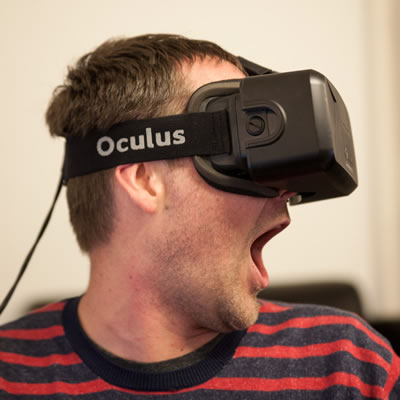
Virtual Reality/ Augmented Reality: VR/AR seems to be the martech buzz word for 2016. It is evident from the number of technology and smartphone brands that have come out with their own headgears in the past few months — Facebook, HTC, Samsung Huawei just to name a few. Globally several brands have awed their peers with a brilliant use of VR in marketing. India isn’t a late bloomer in this sphere and has churned out some awe inspiring work for the home market. Why use it? “Firstly, VR helps brands with a significant amount of credibility through immersive experience, which otherwise is not possible as effectively. Secondly it also allows to communicate the entire value chain with the customer, through multiple channels — be it retail, or post sale etc; from the factory to the showroom and then road,” says Happy Finish APAC CEO Ashish Limaye.
Tata Motors initiated a virtual drive for its flagship car Tiago through a newspaper ad on the front page of a leading daily. It mass distributed 2.3 million (23 lakh) branded Google Cardboards, digital campaign and print ads in The Times of India, across the highly potential automotive markets of Mumbai, Delhi/NCR and Bengaluru.
Drones: While government restriction has given a limited exposure to drones in India, they are quite a craze in more mature markets like the US, South Asia and Europe. “Consumer drones offer the ability to capture a unique perspective that previously required either a higher cost (helicopters), a more intense set-up and time (custom-made quadcopter or aerial rigs) or a mixture of both. Our drones create the right mix of affordability, stability and ease of use that allows small-to-medium-sized enterprises (as well as large ones) to create unique marketing campaigns based around this new perspective, at a cost effective alternative,” explains drone manufacturing giant DJI’s director of Strategic Partnerships Michael Perry.
However, India is not alone in facing restrictions when it comes to a commercial field – the solution is that these platforms must be treated according to their weight classification, as a 2 kg quadcopter with minimal payload abilities should be governed by different rules as compared to a 10 kg quadcopter with a sizeable payload, shares Perry.
Jaguar and DJI recently teamed up to showcase how drones can help change film car chase sequences and the future of such sequences.
Chat Bots: After disruption, convenience is the name of the game and that is exactly what chat bots are banking on. The recent announcement by Facebook last week, allowing brands to have their chat bots in the Facebook messenger has been a revolution of sorts, and brand owners in India have yet to get the feel of it. The biggest impact is expected in the service industry. There was a time when brands became apps, and now it’s time for them to become bots.
So how are chat bots different? “Chat bots are a game changer because they are much simpler to use. Everyone is already on their messaging apps. If instead of having to go to a website, or an eCommerce site or download an app, consumers could simply access all their brands through their messengers, imagine how convenient it would be. Unlike AR and VR which need marketers to create an infrastructure to reach full potential, chat bots have a ready playing field,” shares cloud messaging platform Gupshup’s co founder and CEO Beerud Sheth, while he was in India to create awareness on chat bots for brands. From ordering pizza to booking flights, nothing is impossible for these smart chat bots.
3D Printing: More than its utility in marketing, why brands and advertisers need to pay attention to the fast growing market for 3D printing and its quick evolution, is how it empowers consumers. With 3D printing becoming a household product, the entire manufacturing industry will see a drastic change. The rules of game will change for them and so will it for marketers who are promoting the products.
“The beauty of 3D printing is that it will take advertising from computers and graphics into making into real physical products. You customise the product and it will be immediately made for you. It will revolutionise advertising as none of the advertising has so far given us a product. Plus 3D printing will affect every pillar in the industry, like distribution, parts manufacturing, merchandising,” shares iPropect India MD Vivek Bhargava.
Videos: India has seen a huge boom in video consumption, which is only expected to grow bigger as the internet penetration expands and strengthens within the market. As per a Carat report in 2016, “The continued growth of digital is driven by mobile, online video and social media, increasingly becoming more prevalent components of advertising investment. Mobile continues to show the highest spend growth across all media in 2016, with a year-on- year estimated increase at +37.9 per cent in 2016.
Therefore videos will play a major role, especially live video streams. Facebook understands this well, and anticipates the trend before it has hit us by launching Facebook Live. It will open up new vistas for pushing one’s service and product. Infact, in the words of Facebook Creative Shop APAC head Fergus O’ Hare , “The dying breed of salesmen will find a renewed motivation with Facebook Live as they can make calls to consumers at specific relevant times of the day when they are most likely to buy the product. Brands can call you any time of the day when it matters the most.”
Somewhere down the line all these separate technological advancements will be connected, and what will connect them are Big Data and Internet Of Things. That is why Big Data and The Internet of Things will revolutionise technology, marketing and human lifestyle even. Ai or artificial intelligence, which falls in the purview of the former, is also making ripples in the brand space.
But Yesudas throws a note of caution for aspiring ‘martech’ users. Care needs to be taken about over dependency on technology or going overboard with it. “Brand owners need to understand digital transformation is not about technological gimmicks. They need to ensure humans are put before technology, using it only to accentuate human behaviour. Brands that will crack this code will lead the marketing charge in the digital era.
MUMBAI: From Tata Motors taking India on its first ever virtual drive using Google Cardboard, Facebook allowing brands to message users using chat bots, to drones covering live gig at concerts –the last few months have been exciting in brand land. By themselves these events maybe little pockets of wonder, but they also point towards a larger paradigm shift in the way products will be hawked, how methods to attract consumers have evolved and are evolving.
If marketers in the country haven’t been taking notes, they better catch up as technology is fast changing how consumers interact with brands just like a friend after marriage. On the one hand it poses countless possibilities for innovation, on the other, there’s an impending threat of becoming irrelevant. It’s either adapt, adopt or perish. “Brands can surely become the tissue between consumers and technology. We will see emergence of many technology led marketing solutions more so because business are challenged to break open the walls and digitally transform,” points out triggerbridge co founder and future facing marketer S. Yesudas.
The best part about these emerging technologies is that they give equal opportunities for brands, small and big to be firsts in many ways. Given the accessibility options available, there is a more democratic penetration of some of these technologies across the globe, putting India at an advantage in many cases. “If you watch the trends that are making the waves in the marketing communities, some are happening faster in India while others will take time to penetrate here. For example mobile and smartphone based technologies will no doubt see a more rapid boom in India just for the sheer utility and scale that the country presents,” explains Kyoorius founder Rajesh Kejriwal. According to him, while mobile and social media aren’t ‘new’ technologies, the way they are used to target and interact with consumers will see a sea change in the upcoming recent years.
To some marketers who love to dabble in technology wearable technologies like ‘smart watches’ are on top of the list of marketers, though they do admit that India hasn’t caught on to their full fervor as yet. Location based marketing that makes optimum use of geo tagging will be the next phenomenon in local and regional markets. “They are not just tech but a source of data, very precise and targeted data,” quips Kejriwal. This is at a time when brands are paying millions to get hold of data and analyse them.
As per the inputs from creatives, agencies, planners, startups, techies, gadget freaks, and brand managers, top emerging technologies that marketers should watch out for are —
Read on:
Virtual Reality/ Augmented Reality: VR/AR seems to be the martech buzz word for 2016. It is evident from the number of technology and smartphone brands that have come out with their own headgears in the past few months — Facebook, HTC, Samsung Huawei just to name a few. Globally several brands have awed their peers with a brilliant use of VR in marketing. India isn’t a late bloomer in this sphere and has churned out some awe inspiring work for the home market. Why use it? “Firstly, VR helps brands with a significant amount of credibility through immersive experience, which otherwise is not possible as effectively. Secondly it also allows to communicate the entire value chain with the customer, through multiple channels — be it retail, or post sale etc; from the factory to the showroom and then road,” says Happy Finish APAC CEO Ashish Limaye.
Tata Motors initiated a virtual drive for its flagship car Tiago through a newspaper ad on the front page of a leading daily. It mass distributed 2.3 million (23 lakh) branded Google Cardboards, digital campaign and print ads in The Times of India, across the highly potential automotive markets of Mumbai, Delhi/NCR and Bengaluru.
Drones: While government restriction has given a limited exposure to drones in India, they are quite a craze in more mature markets like the US, South Asia and Europe. “Consumer drones offer the ability to capture a unique perspective that previously required either a higher cost (helicopters), a more intense set-up and time (custom-made quadcopter or aerial rigs) or a mixture of both. Our drones create the right mix of affordability, stability and ease of use that allows small-to-medium-sized enterprises (as well as large ones) to create unique marketing campaigns based around this new perspective, at a cost effective alternative,” explains drone manufacturing giant DJI’s director of Strategic Partnerships Michael Perry.
However, India is not alone in facing restrictions when it comes to a commercial field – the solution is that these platforms must be treated according to their weight classification, as a 2 kg quadcopter with minimal payload abilities should be governed by different rules as compared to a 10 kg quadcopter with a sizeable payload, shares Perry.
Jaguar and DJI recently teamed up to showcase how drones can help change film car chase sequences and the future of such sequences.
Chat Bots: After disruption, convenience is the name of the game and that is exactly what chat bots are banking on. The recent announcement by Facebook last week, allowing brands to have their chat bots in the Facebook messenger has been a revolution of sorts, and brand owners in India have yet to get the feel of it. The biggest impact is expected in the service industry. There was a time when brands became apps, and now it’s time for them to become bots.
So how are chat bots different? “Chat bots are a game changer because they are much simpler to use. Everyone is already on their messaging apps. If instead of having to go to a website, or an eCommerce site or download an app, consumers could simply access all their brands through their messengers, imagine how convenient it would be. Unlike AR and VR which need marketers to create an infrastructure to reach full potential, chat bots have a ready playing field,” shares cloud messaging platform Gupshup’s co founder and CEO Beerud Sheth, while he was in India to create awareness on chat bots for brands. From ordering pizza to booking flights, nothing is impossible for these smart chat bots.
3D Printing: More than its utility in marketing, why brands and advertisers need to pay attention to the fast growing market for 3D printing and its quick evolution, is how it empowers consumers. With 3D printing becoming a household product, the entire manufacturing industry will see a drastic change. The rules of game will change for them and so will it for marketers who are promoting the products.
“The beauty of 3D printing is that it will take advertising from computers and graphics into making into real physical products. You customise the product and it will be immediately made for you. It will revolutionise advertising as none of the advertising has so far given us a product. Plus 3D printing will affect every pillar in the industry, like distribution, parts manufacturing, merchandising,” shares iPropect India MD Vivek Bhargava.
Videos: India has seen a huge boom in video consumption, which is only expected to grow bigger as the internet penetration expands and strengthens within the market. As per a Carat report in 2016, “The continued growth of digital is driven by mobile, online video and social media, increasingly becoming more prevalent components of advertising investment. Mobile continues to show the highest spend growth across all media in 2016, with a year-on- year estimated increase at +37.9 per cent in 2016.
Therefore videos will play a major role, especially live video streams. Facebook understands this well, and anticipates the trend before it has hit us by launching Facebook Live. It will open up new vistas for pushing one’s service and product. Infact, in the words of Facebook Creative Shop APAC head Fergus O’ Hare , “The dying breed of salesmen will find a renewed motivation with Facebook Live as they can make calls to consumers at specific relevant times of the day when they are most likely to buy the product. Brands can call you any time of the day when it matters the most.”
Somewhere down the line all these separate technological advancements will be connected, and what will connect them are Big Data and Internet Of Things. That is why Big Data and The Internet of Things will revolutionise technology, marketing and human lifestyle even. Ai or artificial intelligence, which falls in the purview of the former, is also making ripples in the brand space.
But Yesudas throws a note of caution for aspiring ‘martech’ users. Care needs to be taken about over dependency on technology or going overboard with it. “Brand owners need to understand digital transformation is not about technological gimmicks. They need to ensure humans are put before technology, using it only to accentuate human behaviour. Brands that will crack this code will lead the marketing charge in the digital era.