Tag: brands

  • On Earth Day, L’Oréal Paris pledges to reduce its carbon footprint by 50%

    On Earth Day, L’Oréal Paris pledges to reduce its carbon footprint by 50%

    Mumbai: Amid increasing urgency to combat climate change, brands around the world have begun reevaluating their production practices. Now, beauty brand L’Oréal Paris has announced its sustainability program, ‘L’Oréal for the Future, because our Planet is Worth it’, on the occasion of World Earth Day.

    The brand has pledged to embrace the ambitious mission of reducing its carbon footprint by 50 per cent on every finished product. It has also announced its decision to contribute €10 million to environmental projects whose beneficiaries are communities of women around the world.

    “Now is the time to accelerate sustainable innovation, to make the shift to a circular economy and to reduce the impact of our products,” said L’Oréal Paris global brand president Delphine Viguier-Hovasse, adding that between 2005 and 2020, the brand’s factories and distribution centres had already reduced CO2 emissions by 82 per cent, water consumption by 44 per cent, and waste generation by 35 per cent.

    “There is still much work to be done but we will remain strong in our resolve to make a difference and play our part in this race against climate change. We have a duty to change the codes of beauty to adopt a more sustainable approach and to empower our consumers to achieve responsible consumption,” she added.

    Among the key pledges made by the brand include its aim to use 100 per cent recycled plastic, 100 per cent sustainable cardboard and operate100 per cent carbon neutral factories by 2030. Along with financial support, it will also develop specific programs that empower women in leadership positions.

  • The multi-billion-dollar price brands risk paying for a data breach

    The multi-billion-dollar price brands risk paying for a data breach

    MUMBAI: As a large part of our day and indeed our lives moves online, brands are responding by relying more and more on digital technologies to deliver a unique experience to their customers. It is no longer a purely “real” world that we interact with, it is a mix of physical and digital experiences. And new tech like AI and AR (augmented reality) are only blurring those lines more. For brands, these shifts imply the need to re-evaluate even ‘hygiene’ aspects of their experience, like cybersecurity.

    But what are the long-term and comprehensive implications of this shift- both for the consumers as well as the brands? A study conducted jointly by Infosys and brand consultancy firm Interbrand on cybersecurity and brand value impact attempts to shed light on some of these concerns. This has two implications: for consumers, it implies a quid pro quo – sharing personal information with brands for a personalised experience. For brands, it means the real and virtual have to coexist in creating this unique experience.

    This is no longer just true for digital or tech brands like Google and Amazon, but also brands that were focused on offline. For instance, it is estimated that the amount of data shared online at the beginning of 2020 was a staggering 44 zetabytes.

    The companies jointly released on Tuesday a report that examines the long-term impact of data breaches on value of the world's top brands across sectors, called ‘Invisible Tech. Real Impact’. The report reveals the world’s 100 most valuable brands could face a staggering potential risk to the tune of $223 billion due to a data breach. The report did not name the top 100 brands.

    To quantify this risk, Infosys and Interbrand identified the brand factors most impacted when a company suffers a data breach – presence, affinity, and trust – and simulated the results using Interbrand’s proprietary brand valuation methodology. They found that technology, automobile and financial services industries might suffer a higher overall brand value at risk, whereas luxury brands and consumer goods face greater value at risk as a percentage of their net income.

    Specifically, of the total possible value erosion, technology brands could lose the most – up to $29 billion brand value risk, followed by consumer goods up to $5 billion in brand value risk, automotive up to $4.2 billion, financial services up to $2.6 billion, and luxury goods up to $2.4 billion.

    For a full copy of the report, please click HERE
    [Embed : https://www.infosys.com/services/cyber-security/insights/long-term-cost-data.html]

    Interbrand India’s chief growth officer Ameya Kapnadak said the study evaluated parameters like financial value of the company, role and strength of the brand. “At the most basic level, a data breach instantly creates negative news about the brand, which can create a negative perception in social media and impact presence. In fact, we believe that the presence score is dented for every brand regardless of whether it is digital or physical,” he added.

    The second significant impact that a breach has is on affinity. In case of a breach, customers might either stop engaging with the brand or reduce engagement. The report said as much as 85 per cent of customers would not deal with a brand after a data breach, while 65 per cent customers would lose their trust in the brand in the event of a data breach.

    In Interbrand’s estimate, a breach might impact affinity scores between 0.5 points and 2 points, depending on the extent to which consumers engage with them digitally. The most significant impact of a breach, however, is on trust, which is at the heart of any strong relationship.

    The report said that, traditionally, banks that handle large amounts of customer wealth may see up to 16-17 per cent of their brand value at risk. Tech brands also have nine to 12 per cent of their brand value at risk. This, in many ways, represents the ubiquity of these brands in everyday lives, with customers willingly sharing vast amounts of personal data with them, said the study.

    Cybersecurity has been a hot topic of discussion, especially in the current times that we live in. Indeed, what was once an arcane subject that only the most seasoned of IT professionals would understand, has now spilled over into the lexicon of laypeople as well. 

    “The issue of cyber security is real and important. To quantify (this) financially was difficult. This report talks about that and also how other business segments should embrace security. We need to bring deeper commitment to this conversation,” said Infosys chief information security officer & head cyber security practice Vishal Salvi.

  • Guest column: How brands can negotiate the ‘work-from-home’ & ‘virtual’ reality of PR

    Guest column: How brands can negotiate the ‘work-from-home’ & ‘virtual’ reality of PR

    NEW DELHI: John Wooden, a renowned American ex-basketball player, coach and author, once famously said, “If we fail to adapt, we fail to move forward.” True to his saying, every change that mankind has faced has forced us to adapt and evolve, and the current Covid2019 pandemic is no different. Not only has it altered the way we take care of ourselves at a personal level to avoid contracting the ailment, but it has also impacted us financially, professionally and socially, among others.

    One of the most common adaption at a professional level, unequivocally, has been implementing the practice of work from home (WFH) by organisations across geographies and scale. This is particularly true for the IT, FMCG, pharmaceutical, electronics, online retail platforms, digital lenders, start-ups, and BPO/ KPO sector. A recent report by a leading search engine company (Naukri.com) notes that the hiring of employees for a WFH job role has increased by a whopping 300 per cent since the lockdown. The enthusiasm for this ‘new normal’ has been equally reflected at employees’ end, with WFH being one of the top keywords searched.

    Advantages of WFH

    Aside from the safety factor, there are several other advantages of WFH. It has been observed that a significant amount of time is saved, that would otherwise be spent on travelling to work and meetings. Instead, it can, now, be used more productively and to incubate innovative solutions and ideas. WFH can also help organisations blur geographical boundaries by connecting all its stakeholders through common virtual communication and transactional platforms. Additionally, it is beneficial financially. In WFH, lower overheads, especially fixed, would be incurred and this would, eventually, prompt organisations to offer products and services at lower costs and make them more profitable and affable to its customers. Hence, post the pandemic, these factors are going to continue to encourage a multitude of organisations across sectors to reconsider a permanent WFH for some or all of its employees.

    Changing dynamics of the PR landscape

    Given that organisations are increasingly getting accustomed to WFH, public relations (PR), being a service-led industry, has also adopted the new norm of WFH to be on the same page as its stakeholders. The dynamic PR industry has redefined itself and has reinvented its objectives, strategies and tools to transcend to the world of ‘virtual reality’, seamlessly. Virtual models and methods are, at times, replacing and in other times, going hand in hand with traditional approaches to client servicing, media relations and other stakeholder engagements.

    At a time, when client engagements can no longer happen via in-person meetings, it has to be conducted virtually. PR consultants need to maintain effective engagement with clients by sharing daily updates and various status reports in a timely manner, and schedule regular phone and video calls so that the client does not feel alienated.  Key documents could be updated on shared drives to enable real-time reviewing and discussion on the way forward. It is, of course, imperative to use encrypted and trustworthy platforms to avoid leakage of confidential information or data. Time management is of key essence in WFH. It is ideal to synchronise work timings with those of the clients, to the maximum extent possible, so as to be available when the client requires your assistance and ensure that neither is eating into each other’s personal time. Virtual working has also led to merging geographical boundaries. Consultancies can now cater to existing clients, as well as onboard new ones in any location and engage virtually.

    The media catches on too

    It has been noted that in times of Covid, consumers are heavily relying on online and social media forums for information. This is true not just for consumers but also for the media where press conferences are now being replaced by video calls. Product launches and key announcements are taking place through social media handles of organisations. There is an even greater need for brands to post various ‘updates’ so as to maintain the brand recall in this age of information overload. It could be easy for consumers to lose interest in virtual engagement. Hence, the content to be driven on such platforms needs to be brief, relatable and highly engaging. Crisis resolution also has been redefined, since every social media participant could be a potential influencer for the brand. In the wake of this, there is a pressing need to reshape the crisis manual, timely engagement with the client, its customer or media, and address concerns promptly. All in all, a PR professional has to be well versed with digital engagement as well as the measurement metrics for gauging interest and evaluating strategies.

    In the media domain, engagement has also become virtual since media rounds and meetings, one of the key relationship-building approaches are no longer feasible. There is a need to constantly engage with the media to share updates about clients, but avoid calling journalists at odd hours or expect them to check emails instantly, since WFH is a new setup for them, as well. The bottom line is to maintain a fair balance of engagement without overwhelming them.

    So, how to turn this into a success story?

    Last, but far from the least, WFH requires PR consultants to work in a more collaborative manner with all stakeholders, including their teams. It is vital for leaders to stay connected with teams and keep them engaged, motivated, and maintain a personal connect, beyond work. Using positive reinforcement, rather than negative, will help keep up the morale. Small gestures like celebrating achievements, occasions or simply connecting at regular frequencies, will go a long way in retaining team bonding whilst working remotely.

    In a nutshell, since the end of the pandemic is indefinite, many organisations and sectors have declared, or atleast considered, WFH for its employees for at least a year. It has been observed through the passage of time that every working environment requires its own strategy to succeed. Leveraging this ‘virtual reality’ to maintain healthy relationships with all stakeholders, will enable PR consultants to assist clients to respond to new age challenges more effectively and lead the overall PR and communication industry to its growth and evolution.

    (The author is founder of Value360 Communications. Indiantelevision.com may not subscribe to his views.)

  • How brands welcomed 2021

    How brands welcomed 2021

    NEW DELHI: All things end, and so did 2020. The world rejoiced as the year that shall not be named faded to black and 2021 was ushered in with hearts full of hope and positivity. Social media was abuzz with happy messages, and brandsville too chimed in with quirky creatives to welcome 2021 as the year of new hope and new beginnings.

    Here’s a look at how some top brands set the mood for the new year:

    1. Burger King


    2. Coca Cola


    3. McDonald’s India


    4. Netflix India


    A post shared by Netflix India (@netflix_in)


    5. SonyLiv


    A post shared by SonyLIV (@sonylivindia)


    6. Zomato 


    A post shared by zomato (@zomatoin)


  • How brands are saying goodbye to 2020

    How brands are saying goodbye to 2020

    NEW DELHI: 2020 is probably the only year that the whole world was dying to bid adieu too. Inundated with crises from all sides on top of a global pandemic, when many a plan was cancelled and existence became a little lonelier for almost everyone, the year nonetheless made us realise the value of little joys in life. One of which was dear internet! Filled with content for our every mood, it kept us entertained via a number of stories, creatives, memes, and information. The brands, as usual, made it an interesting place to be at. And now as the year is ending, here’s how some brands are again displaying their quirky sides to say bye-bye! 

    Durex is strangely waiting for someone to come early


    A post shared by Durex India (@durex.india)


    Domino’s thanking the best friend of the year for all – pizza


    Netflix vibing with the “dukh” of everyone


    A post shared by Netflix India (@netflix_in)


    Amazon Prime putting the good and the bad all together


    Zomato giving the best meme rewind


    A post shared by zomato (@zomatoin)


    Google showing what we searched for 

    And Swiggy giving hopes for 2021


    A post shared by Swiggy (@swiggyindia)


  • Guest column: A favourable ROI is a must for a successful influencer engagement

    Guest column: A favourable ROI is a must for a successful influencer engagement

    It has become quite evident that influencer marketing is gaining popularity and prominence rapidly over a span of 3-4 years. There are reports after reports that depict how this form of social media marketing is growing in leaps and bounds. These reports also showcase how companies are increasingly devoting a considerable amount from their marketing budget to influencer marketing. While it has been established that influencer marketing has flourished quite a bit, it is also crucial to develop a framework to evaluate its effectiveness.

    In order for a brand to evaluate the effectiveness of an influencer engagement, it needs to focus on gaining maximum ROI in terms of reach, conversions, awareness, etc. For assessing the ROI of an influencer engagement activity, a brand needs to keep a few factors in mind.

    Firstly, the goal and objective of the marketing campaign need to be clearly established. The brand might want to reach new target audiences, improve brand advocacy, increase product sales, generate more leads, manage the reputation of the company or just simply increase brand awareness.

    Second of all, the brand should clearly establish the key performance index (KPI). This takes into account how much success the company is getting with respect to the investments it is making in an influencer engagement activity. If a brand is investing 3 lakhs in an influencer campaign and getting 6 lakh-worth of impressions, reach and other parameters, the brand has attained a KPI of 1:2 that signifies a favourable ROI.

    Thirdly, the influencer should ensure that the content created is visually and aesthetically pleasing. So all the background elements, characters, plot, props, etc. need to be in line with the campaign objectives. Along with that, they should be visually attractive to grab attention.

    After that, one needs to ensure that there is some synergy between the brand and the influencer. Apart from fulfilling the campaign objectives, the influencer should be a right for the brand’s overall tonality and ethos. For instance, an influencer who is big on spirituality and natural living may be a suitable fit for promoting a herbal soap/supplement brand. The influencer’s content and tonality will be in line with the herbal brand. Not just that, his/her followers would expect brand content similar to that.

    Lastly, a brand should be able to identify the key messaging used in the influencer engagement. Ths key messaging can act as the unique selling proposition of the influencer campaign. Whether its the dialogue delivery, the funny music or the emotions the video espouses, as long as there is a touchpoint,  the campaign ROI would be in the brand’s favour.

    So every brand should invest in an influencer engagement strategy that promises a favourable ROI as only then will the brand achieve success.

    (The author is founder & CEO, Whoppl. Indiantelevision.com may not subscribe to her views.)  

  • Shah Rukh Khan: King of Bollywood & brands

    Shah Rukh Khan: King of Bollywood & brands

    MUMBAI: That boyish charm, that dimpled smile, that romantic effervescence – Shah Rukh Khan has effortlessly won viewers' hearts, be it on the silver screen with his movie personas, or on the small screen with his brand endorsements.

    to the golden days of advertising.

    Here’s a look at the King of Bollywood’s journey as one of the most dynamic and bankable faces in ad campaigns:

    Videocon

    The young Indian side under the leadership of MS Dhoni won the ICC World T20 in 2007, and Videocon came up with this droll commercial featuring the Indian captain and SRK. The duo played long-lost brothers in childhood and have their real-life roles reversed. While Dhoni plays an actor, SRK is a cricketer!

    Byju’s

    Ed-tech company Byju’s has partnered with Khan to unveil their new offering – Byju’s Classes to parents across the country. In the campaign, Khan is seen essaying the role of a teacher to a group of parents and discusses the common worries they have regarding their children’s after-school tutoring needs.

    D’Decor

    Home furnishings brand D’Decor memorable campaign ‘Beautiful Homes tell Beautiful Stories’ was a series of short films featuring Gauri and Shah Rukh Khan. The brand marked 10 years of association with the couple with this campaign. The film transported viewers straight into Gauri and Shah Rukh’s living room where they’re celebrating their 22nd wedding anniversary.

    Hyundai

    Shah Rukh Khan has played an instrumental role in building brand Hyundai in a competitive market like India. He had a contract with the auto company from 21 April 2017 to 20 April 2019. This was his longest association with a brand. Here’s a look at King Khan’s ad for the auto company:

    LUX

    LUX has featured Shah Rukh Khan in their creatives for a long time. Among all the ads he has done with LUX, the most love he got from the audience was when actresses were seen assisting him into a bathtub.

    DISH TV

    DISH TV signed Shah Rukh Khan in 2007 for the first time. Since then, he is the face of the brand. During their decade-long association, he has played a key role in delivering DISH TV’s communication strategy.

    Denver

    Denver is another brand that has used the image of Shah Rukh Khan to promote its range of fragrances for men. He has been seen endorsing Denver deodorant in various marketing and promotional campaigns.

    Pepsi

    The Oye-Bubbly ad featuring Shah Rukh Khan, Sachin and Amitabh Bachchan created a storm in 2014. Ye Dil Maange More campaign is another example where Khan has successfully conveyed the beverage brand’s messaging in his signature style.

  • Durga Puja: Advertisers optimistic as demand returns

    Durga Puja: Advertisers optimistic as demand returns

    MUMBAI: By now it’s evident that the Covid2019 pandemic is not going away anytime soon. After spiralling caseloads – ravaged the economy, and played spoilsport with travel plans – scary ol' Corona seems to be on the wane in time for the festive season, though it’s too early to celebrate outright. But with the markets rallying and consumer sentiments surging, brands and advertisers are sniffing the air hopefully, even as they tread with caution. 

    Every year, several categories like FMCGs, apparel, auto, e-commerce and consumer durables become the biggest spenders during the Durga Puja-Diwali stretch. The query their marketing teams puts up is not ‘how much?’ but ‘why not?’ This time around, the question is: how brands plan to advertise in the year of Corona.

    However, the Tata group owned fashion and lifestyle chain Westside has braced to make the most out of the circumstances. The brand’s ‘What’s Your Festive’ campaign focuses on all the products, right from clothing, cosmetics, footwear to  home décor. For the campaign, Westside has created four festive installations, each of which spans 15 seconds in which viewers can catch a glimpse of everything that it offers.

    Westside customer head Umashan Naidoo explained, “The films are directed by the very talented Devang Desai and the cast consists of Westside employees, customers and designers from the ethnic wear brand. After all, who better to advocate style and share the joy of their products but the creators themselves? We believe that these are real people with the aspirations of the brand at heart.”

    Read more news on Durga Puja 

    The films are meant to uplift spirits and have nothing to do with hard selling, said Naidoo, adding in an aside that the sparkling diyas featured in the video are part of a CSR project started in 2003 by Simone Naval Tata herself.

    As the options for big outdoor displays and activities are limited, brands are shifting to the digital space to keep their connect with customers alive. For instance, Fortune the Adani Wilmar group's Fortune brand has been running a digital campaign called Pet Pujo for the last three years to engage consumers. The brand’s media & strategy head Sanjay Adesara said: “This year, we have given it a twist keeping the current Covid situation in mind. From the last 3-4 years, we were doing a separate digital activity outside. This year also we are keeping it digital.”

    Adesara also shared that the trends in the West Bengal market during the pre-Puja period are similar to last year’s: there’s been no dip in additional grocery buying and shopping for clothes and personal care products.

    Kolkata is a major market for RSH Global-owned Joy Personal Care. CMO Poulomi Roy is of the view that from November onwards, things are going to pick-up in the northern part of the country, especially before Diwali. The skincare maker has launched a new campaign ahead of Durga Puja in West Bengal. As part of the campaign, the brand released the peppy, upbeat music video Dugga Elo featuring ten popular Bengali celebrities which captures vivid moments that highlight the vibe of pujo. Intended to create a festive mood and keep the spirit alive, the campaign song will be played out on television, radio, OTT platform and social media platforms of SVF Brands.

    Observing that while the personal care segment such as hand wash, soap, sunscreen segments had gone down during the initial phase of the lockdown, Roy said one category that witnessed a boost was luxury products.

    “People have stayed back at home and instead of spending outside, they have actively been indulging and taking care of themselves by using  personal care  products,” she added. The disruption that happened at the outset of the pandemic affected the company's supply chain but as things are getting back to normal, the demand is steadily returning.

    Experts echoed the sentiment, saying consumer demand has definitely picked up in the past 15 days. Experimental and cross-shopping is on the rise, especially for categories such as cosmetics, lingerie and home décor. They project that brands which have the best style, value, availability, and experience will surely witness growth.

    Tata CLiQ CMO Kishore Mardikar noted that since people are still on guard against contracting the virus, there’s been a lull in out-of-doors puja activity, especially shopping. Instead, they’ve switched to online to purchase their discretionary needs along with daily essentials. Broadly, there’s been an accelerated digital adoption this year,  with increased exploration and buying in all the categories including fashion and electronics.

    Looking to capitalise on this shift, the primary focus of Tata CLiQ is on audiences that have higher intent/consideration to purchase and thereby engage with them to catapult traffic to the platform. The company's marketing plan during the season is positioned around the theme of gifting.

    “This year our focus is to drive transactional efficiencies and hence our marketing choices are dictated mainly by digital media complimented with engagements via our social platforms,” Mardikar added.

    Even after Covid and government-mandated guidelines to check it, brands have improvised, adapted and are desperately trying to overcome all the challenges. Will they get to have the last laugh? Or will the Calcutta High Court's direction to make all pujo pandals in the state 'no-entry zones' prove to be their undoing?

    MediaCom chief growth officer Soumak Banik paints a not-so-rosy picture of the situation. “When you talk about Durga Puja or event festivities, the maximum of the money goes on ground. This time that is itself cut down, taking a huge hit. Even if the entire outdoor budget is lesser, it will impact advertising fundamentals at the end of the day,” he said.

    The festive season is an auspicious time in terms of sales for businesses across the board and marketers leverage this opportunity with promotions galore. This year, the festivities may be subdued and the volume of ads may be low, but brands are not down and out for the count. They're trying to reach out to customers in new ways and formats.

    “There is cautious optimism in the air. Brands are planning activities and are expecting offtakes to happen,” summed up Havas Media Group MD India Mohit Joshi.


  • MIB issues advisory to curb surrogate advertising

    MIB issues advisory to curb surrogate advertising

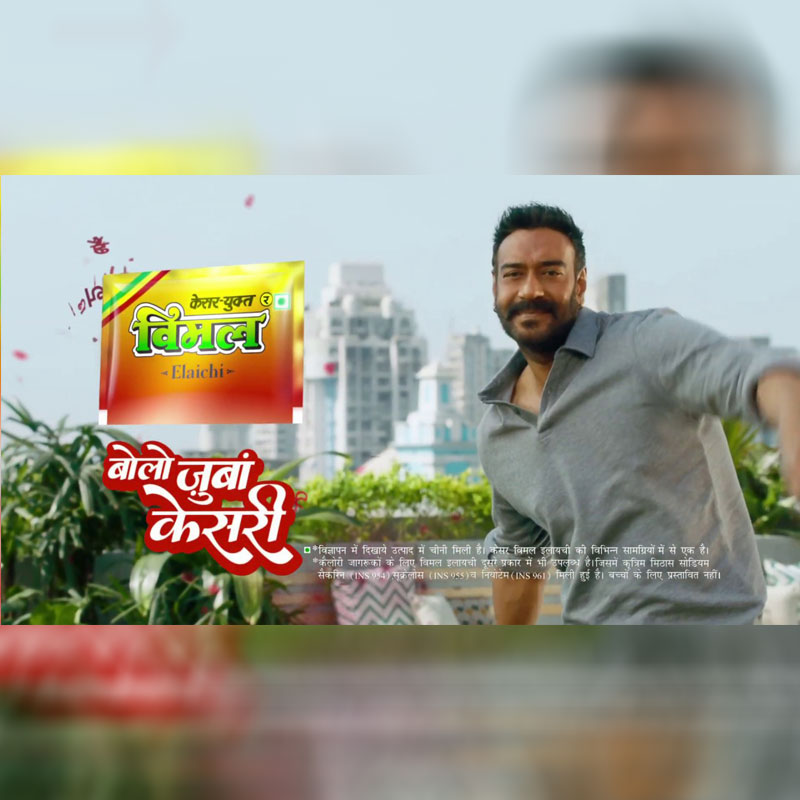
    NEW DELHI: Surrogate Advertising has been a very old debate in the India’s advertising industry. An alcohol brand can advertise in the garb of music CD or a gutka brand can talk about the great taste of saffron and circumvent the advertising code. The rule thus aims at prohibiting surrogate advertisements while at the same time allowing advertisements of genuine brand extensions subject to specified conditions. 

    Rule 7(2)(vih)(A) of the Advertising Code enshrined under Cable Television Networks Rules, 1994 prohibits direct or indirect advertisements of cigarettes, tobacco products, wine, alcohol, liquor or other intoxicants. However, advertisements of genuine products sharing a brand name or logo of such products are permissible subject to specified conditions prescribed therein.

    Time and again, industry people and government institutions have debated the matter on various industry platforms but not much output has come. Several activists and common citizens have also complained about surrogate ads from various categories running on national television but not much could have been done about it.

    Over the years, brands have circumvented the rule to create a massive reach of their products via their brand extensions.

    The latest advisory issued by the Ministry of Information and Broadcast states that such ads have to be first previewed by Central Board of Film Certification before telecast and deemed to be fit for consumption.

    “Second proviso of Rule 7(2)(vhi)(A) provides that such advertisement has to be previewed and certified by Central Board of Film Certification as suitable for unrestricted public exhibition and are in accordance with stipulated conditions,” stated the advisory.

    The focus of this advisory was mostly on brands related to the cigarettes, tobacco products, wine, alcohol, liquor or other intoxicants. The advisory clearly stated that “It is accordingly advised that all advertisements of the nature referred to at para 2 above strictly follow the stipulations contained in the Rules and are previewed and certified by Central Board of Film certification (CBFC) before being telecast on Television.”

    The decision is expected to create a strong impact on the brands for this industry because many of these players have emerged as the top advertisers of the country. 

  • Partha Sinha & the art of monetisation at The ToI

    Partha Sinha & the art of monetisation at The ToI

    NEW DELHI: As the government imposed strict lockdown restrictions for close to three months, the print industry was one of the worst-hit. If various reports are to be believed, they lost around 60-80 per cent of their revenues. A lot of them shut down editions, most of them let go of their employees, shaved salaries, and almost all of them dealt with a painful period where their resources just bled.

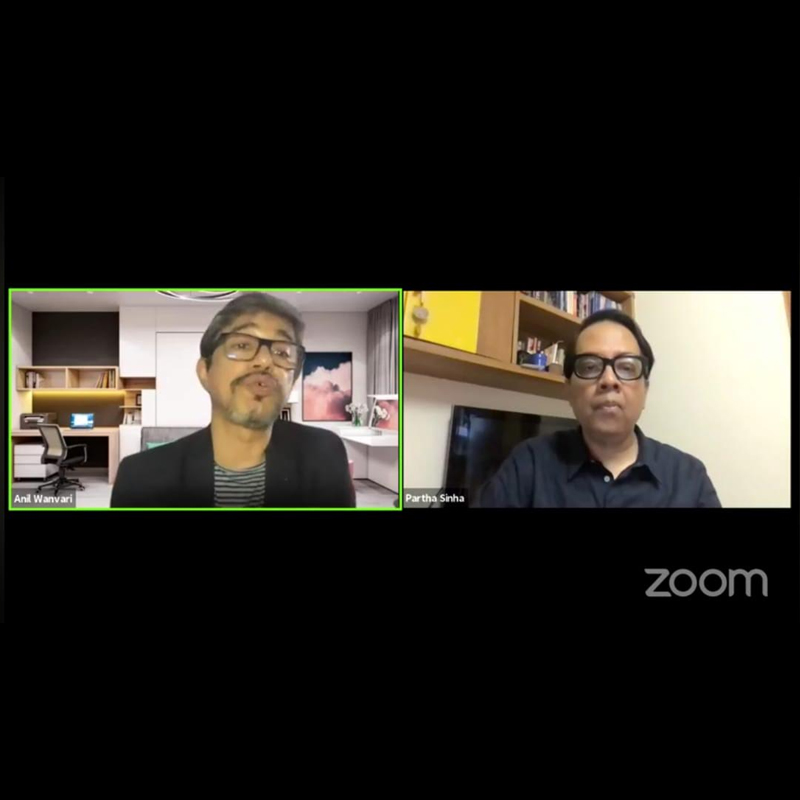
    However, as the world starts getting back to normal and a new world order sets in, the print industry is looking forward to a better tomorrow, lined up with new opportunities and relevancy, Bennet Coleman & Co Ltd (BCCL)  president–responses Partha Sinha shared in a virtual fireside chat with Indiantelevision.com founder, CEO, and editor-in-chief Anil Wanvari. On Monday evening, the duo sat across screens to discuss the impact of Covid2019 on print and the way ahead for the industry. 

    Sinha noted that the print industry has already reached a 70 per cent recovery in terms of the number of copies being delivered. “I think in some markets it has gone up to 90 per cent because, in the south or states like Kolkata, there was never a massive problem of circulation. Cities like Delhi, Mumbai, and a few more in the north were hit badly and I guess it has revived now, not just for us but for all the players.”

    He indicated that it is a good sign for the industry and debugs the myth that print will shut down. “For three to four months, our main concern was consumer demand that was severely impacted. But coming out of it so quickly is absolutely brilliant.”

    So, was it a knee-jerk reaction on the part of the industry to shut down some of the editions and let go of a number of employees, or as some of the unions say, an excuse, Wanvari questioned. 

    “I don’t think it was a knee-jerk reaction or an excuse. Even it was not for Covid2019 and something else would have happened, you would have got a consultant like McKinsey or BCG and asked them to optimise, right? This optimisation tells you if there is any cost reduction required and how can you improve profitability. Honestly speaking, as much as it's being talked about but it's quite a routine activity. Every organisation has optimised; when you find a new revenue opportunity, you hire people and if you find a revenue opportunity drying up, you optimise. I think this is a regular organization life cycle,” Sinha cleared the air. 

    So, what does the future of print seems like to him as digital and other mediums take centre stage? 

    Sinha insisted that there can’t be any substitute for the content that print generates and therefore the medium will stay here, but it might take just a slightly different role going ahead.  

    “I want to debug the myth that digital can replace or surpass print, or TV is a challenge to print. What is happening with both these mediums is that they are creating fragmented opinions, which lack credibility for the source and even for the brands. The news on television is so polarised, that it is sickening now. And obviously, if fake news becomes the business model, the credibility is hampered. Therefore, no amount of user-generated content or no amount of hair pulling on the camera will be able to substitute the credibility that print offers. Journalism will always remain about how deep you go, how sincere you are  and whether you are you're taking all the points of views,” Sinha elaborated. 

    He added that the role of print, going ahead, will move on from being a medium of discovery of product to being involved in its purchase by the customer too because of the credibility associated with the medium. He cited the instance of a real estate developer Casa Gold out of Chennai. It sold 120 apartments during the peak of Covid over four days. The Times of India Chennai response team managed everything from the webinar, to virtual expo, to get the potential buyers to take part in the virtual display of the advertisements to front page jackets of the physical newspapers.

    Sinha revealed that print media plays a big role in cultural marketing. "Cultural marketing works by creating truth and opinion and rallying people around the truth and opinion or finding emergent truth and opinion in society and making it bigger,” he explained. “Many branded efforts have almost become culture: Lead India, Teach India, Lead India led to Anna Hazare and the birth of AAP. Print can create a better narrative than any other medium. Another example is organ donation which has been driven by the Times of India.. The Times of India is the only way to create a culture with the affluent.

    “With so much fragmentation, there is a lack of credibility in the domain now. Due to fake news being so prevalent, print has started playing a significant role in building credibility and a path to purchase. The advantage of the printed word is it doesn't come with a picture. Therefore, you are forced to use your brain, you're forced to use your opinion. And that's how culture gets created. The beauty of culture creation is that eventually  brands will pay a premium to be closer to culture. Everything else is just a matter of discount because that's why the most popular method of advertising on the internet is programmatic led,” he shared. 

    He highlighted that cultural authority is the biggest asset a brand can ever own, because with that comes credibility. “These are the things that print media have to start thinking about, some like the New York Times has already done so,” he pointed out.

    Further, to help the brands gain the maximum out of the exposure and credibility that print offers Bennet and Coleman has come up with a pricing engine, which is based on artificial intelligence and machine learning. It can make an umpteen number of parameters and churn out a very specific notation for the time, helping the brands understand the right channels and the right strategy to advertise. “We are backing culture creation with data and analytics and have huge amount of data analysis,” he revealed.

    Sinha highlighted that all the assets of the Times of India group are brought into play while offering solutions to clients, whether its digital or TV or print or the social handles of these. “Thanks to the fact that we have all these assets, we can bring in 20 of our group assets or 30 of them,” he disclosed. “Let me also tell you we are open to look at assets outside the group to provide solutions to clients.”

    Times have indeed changed things at The Times. As many clients and marketers say, the change has happened for the better.