Tag: brands

  • Bhujia, extrudes and the festive season: Bikano’s go-to-market strategy for H2

    Bhujia, extrudes and the festive season: Bikano’s go-to-market strategy for H2

    Mumbai: The second half of 2021 began on a bustling note for packaged snacks brand Bikano. The Company has launched two new snack ranges – a tea-time maida-based snack range and an extrude range under sub-brand Fatax, a new campaign for its star product – Bhujia, and the festive blitz focusing on sweets. The launches are part of Bikano’s well-thought-out strategy for the rest of the year even as the Delhi-based FMCG firm sets out to achieve its larger goals of establishing itself as the Bhujia specialist and market leader, developing the extrudes category and driving volumes for sweets with festive offerings.  

    Bikanervala Foods, head of marketing, Dawinder Pal takes us through these developments and their strategic importance for the Company in the light of trends, that emerged out of the pandemic year. When Pal joined Bikano from Bonn Group of Industries in October 2019, little did he know that in addition to transitioning from leading a premium western snacks category to heading marketing function for a traditional snacks brand, he will also have to deal with another unexpected industry-wide transformation, just six months down the line. Fortunately, the change was largely positive for him as well as Bikano.

    Taste and flavours reign supreme

    There’s no denying the emergence of health and hygiene consciousness as the most important trends out of 2020. From sanitisers to ‘virus-resistant’ clothing lines, brands across categories grabbed the opportunity to come up with new offerings. Bikano also introduced a range of diet namkeen mixtures and multigrain chips. However, with the setting in of post-covid rationalisation, it became clear that while snacking had definitely embraced hygiene, thus providing an advantage to packaged foods brands, the wave of health-consciousness was short-lived.

    “Even though there’s more awareness and talk of healthy-snacking, the quantum of it is quite low. When it comes to snacks, people are more glued to the taste; there’s still an unwillingness to compromise on it,” says Pal.   

    With renewed confidence, Bikano decided to go full throttle on traditional tastes and flavours, delivered with the hygiene advantage of packaged foods. Bhujia emerged as the obvious choice to lead the Indian snacks category. The humble snack contributes a whopping 35 per cent to Bikano’s namkeen category sales. “We are targeting Rs 200 cr in revenues from Bhujia (Aloo and Bikaneri) in the next two quarters,” says Pal.

    The namkeen and snacks market in India is valued at about Rs 35,000 crore, with Bhujia and Sev enjoying a 25 per cent share. Currently, the second-biggest player, Bikano wants to become the market leader in Bhujias. To this effect, the brand recently launched a campaign – ‘Hum Se Behtar Bhujia Ko Jaane Kaun’ – positioning itself as the “Bhujia specialist”.

    Bikano’s new tea-time range of refined wheat flour (maida)-based snacks, launched in July is further expected to provide it an edge over the competition. Consisting of seven products – Bhakar Badi, Tikoni Mathi, Gol Mathi, Matar Para, Methi Mathi, Mini Samosa and Chai Puri – the range is primarily targeted at the northern markets.

    Unlike traditional Indian snacks where it is the second biggest player, Bikano’s foothold in the western category which includes extrudes, wafers and bridges are not as strong. Pal tells us that since the time he joined, efforts to capture the western snacks market have picked up significantly. With a minimal presence in wafers and bridges ensured, the brand decided to aggressively pursue the high-volume, high-growth extrudes category which targets kids.

    In July, Bikano introduced a revamped extrudes range consisting of Ringz, Puffees, Cheese Balls, Pasta Crunch and Jungle Safari for children aged three to ten years. The objective was to augment presence in the 16000cr western snacks market, within which, extrudes (6000cr) is the fastest-growing sub-category at 23-25 per cent YoY.

    During the launch, Bikano, director Manish Aggarwal had stated that the new range is expected to give the Company a sales surge of up to Rs 15 crore in this fiscal.

    Another top gainer of 2020 for Bikano was the sweets category. Explaining the phenomenon, Pal states, “While our snacks TG remained unaffected, as consumer behaviour shifted towards hygiene, we felt the change – a positive one – most prominently in the sweets category, with volumes doubling in the last two years. That’s also when festive became an important part of our portfolio and yearly plans.”

    Last festive season, the brand achieved 40 per cent growth over the previous year. It has the same target for this year.

    Overall, the Company is eyeing 125cr in revenues from global markets and 1250cr from domestic market in this financial year.

    Changing Media Needs

    Bikano’s media strategy has been a combination of ATL and BTL, with print (newspapers and magazines), tactical outdoor, BTL activations, PoS branding and digital dominating the mix along with some TV. The brand has collaborated with Chhota Bheem for the launch of its Fatax extrudes range. As its builds the kids-oriented extrudes category, more such associations can be expected to increase the quantum of advertising on TV.

    Within digital, Bikano prioritises social media. “We are using the modern social media platforms to build preference for our traditional products among millennials who are more inclined towards western snacks,” Pal remarks.  

    Pal has deployed the OTT medium significantly for the brand’s advertising needs in the US and Canada. Commenting on the rather muted presence on Indian OTT platforms, he notes, “OTT brands in the US offer clear audience segmentation, for instance, the Willow TV app is dedicated exclusively to Cricket. The phenomenon is yet to happen in the Indian OTT space, where there’s no evident differentiation, but we do plan to explore it in the coming year.”


  • TikTok tops ad equity charts for second year: Kantar

    TikTok tops ad equity charts for second year: Kantar

    Mumbai: Data, insights and consulting company Kantar on Thursday released its report titled Media Reactions 2021, the second edition of Kantar’s global ad equity ranking of media channels and media brands. Ad equity refers to the attitudes consumers have towards the advertising experience within specific platforms and ad formats.

    Across branded digital platforms, TikTok remains top of the global ad equity rankings. Although leading the highest spot as overall platform in only one market – Taiwan, TikTok is the leading global digital platform in the important US market and is first or second-ranked of the global digital platforms in 9 of the 22 markets where it was measured.

    The inclusion of commerce platforms in this year’s ranking illustrates their increasing importance across the digital advertising landscape. Amazon ranks second globally among consumers, topping the list in 4 markets. Together with regional e-commerce giant Mercado Libre, which leads in Argentina, Amazon’s success showcases why e-commerce has entered the online media channel ad equity rankings in third place.

    Despite the prominence of digital platforms in daily life, consumers continue to be more positive about offline ad platforms such as cinema, sponsored events, magazine ads, and point of sale (POS). The popularity of podcast adverts has risen. Positioned at #11 in the overall ad equity ranking, they have overtaken influencer content as the preferred digital ad medium. Podcast ads are perceived as both better quality and more relevant compared to 2020, but also more repetitive, unsurprising given the increase in ad spend on the platform.

    Global vs Local: The report highlights the importance and challenge of market-specific media strategies. In 16 of the 23 markets surveyed the top-ranked media brand was a local media brand or a localised version of global media brands. The 10 of these 16 are news and magazine brands. This local success, together with differing attitudes to the ads on global digital media brands, makes balancing the benefits of scale of global media platforms with the promise of greater relevance from local media gems ever more important.

    The Innovator’s Dilemma: The report also underlines the challenge for brands in keeping their media mix reflective of the latest consumer media preferences as well as reflective of their own values and brand positioning. Marketers favour channels and platforms they believe provide both trustworthy and innovative advertising environments. Among the global brands, Instagram best manages this balancing act. YouTube, Google and Facebook are trusted platforms but are considered slightly less innovative.

    TikTok is not yet trusted by marketers as much as the more established platforms, but it has made enormous improvements in the past year. It remains comfortably the most innovative place for ads, and trust has doubled, so many more marketers are now positive about placing ads on the platform.

    Ad Spend Outlook: The report marketers’ survey provides insights into probable media growth areas for 2022. The vast majority of global marketers plan to increase spend on their favoured ad formats: online video, influencer content and social media ads. Many will reduce spend on print ads.  YouTube, Instagram, and TikTok are the platforms set to benefit most.

    Discussing the findings, Duncan Southgate commented: “The ad industry has been encouraged by the rapid recovery in 2021, as advertising has been used as one of the levers to fuel recovery in the wider economy. As we emerge into a new media landscape, brands need to understand which consumer and marketer attitudes have changed, and which have stayed the same. Which media brands have retained their appeal, and which have grown stronger? While the pandemic accelerated the growth of digital in every aspect of life, we have seen robustness in consumers’ preference for offline advertising, and some strong local news brands in particular.”

    “Marketers need to ensure their strategies respect those preferences alongside the benefits of scale delivered by global digital platforms. TikTok has done an impressive job retaining its differentiated advertising proposition with consumers – even as its user base has almost doubled over the past year. We have also seen the re-emergence of retail as a critical ad platform, both online and physically. Advertising strategies that seamlessly align with omnichannel retail strategies provide a great opportunity for marketers to deliver more popular campaigns.”

    Kantar, head of media- South Asia, insights division, Sandeep Ranade added, “Moving into 2022, we will see consumers adopting more and more digital channels and it will impact advertiser’s appetite for digital connection opportunities. Consumers do not differentiate between the way media is bought and hence it will no longer be offline vs online but a balance of reach vs receptivity and global vs local media partners to bridge the gap between what consumers prefer vs what advertisers perceive consumers prefer. We have also seen that Indian consumers generally have more pronounced views on advertising compared to the global audience”

  • Brands eye stronger recovery in ad spends this festive season

    Brands eye stronger recovery in ad spends this festive season

    MUMBAI:  The year 2020 was a game-changer on many counts for the world in general. Many brands that relied heavily on offline marketing and in-store shopping had no other option but to join the digital marketing bandwagon to engage with their consumers. Now with the festive season almost upon us, how are brands looking to attract eyeballs and consumer footfalls with persisting outdoor restrictions in many parts of the country?

    According to the latest survey – ‘The Festive Season Pulse 2021’ conducted by global technology company, The Trade Desk, nearly 82 per cent of respondents said they shop online at least once a month with nearly one in four making online purchases several times a week.

    “Digital consumption is at an all-time high,” highlights TVS Srichakra head, brand marketing Kavitha Ganesan citing the success of their recent integrated marketing campaign ‘Tyres for a Country full of Turns’. “However, for mass reach, the brand still relies on TV as the main medium. For a category like ours, it is critical to activate marketing campaigns with an integrated 360-degree approach. Hence BTL consumer and trade activations become important. We expect the category to place more and more impetus on the digital front and possibly lower the spends on print.”

    Post-pandemic, the total time spent by Indians on media channels has gone up significantly. According to Havas Media India, managing partner- South, Saurabh Jain, Digital is now mainstream in level with Print, given its multifarious applications and measurable ROI.

    “The growth in advertising would be led by Digital followed by TV, Print, OOH & Radio, yet TV will remain the biggest & most preferred medium for mass & incremental reach,” says Jain, highlighting how Big-ticket properties, especially cricket, have demonstrated the effectiveness of TV in brand building and scaling up reach in a cricket-frenzy nation.

    According to industry estimates, advertisers are expected to invest Rs 4000-5000 crore on sporting properties on TV and Digital in the current scenario where the ad demand is higher than supply. “Print also seems to be much stronger in Unlock 2.0 as compared to the previous unlock,” adds Jain.

    However, brand concur that there is a need to target the customer across multiple touchpoints to ensure they remain ‘top of the mind’ for consumers.

    Fashion and lifestyle e-tailer Myntra expects a similar play between digital and mainline, and is implementing a 360-degree campaign approach, leveraging TV, Digital and social media platforms to cut across diverse markets and build a deeper brand salience with its customers across the country.

    No doubt, industry experts expect high clutter across mediums, mainly TV and digital, this season. The emergent challenge for brands will be to drive more visibility amid this clutter, by looking for opportunities in print, OOH, and cinema.

    “Brands will invest in high-impact properties to break the clutter and achieve high reach during campaigns. The Star group has managed to retain their sponsors for IPL and also roped in many more for the T20 world cup. Other key properties like KBC have already attracted multiple new sponsors,” says Madison Media Ultra COO Jolene Fernandes Solanki.

    Apart from FMCG which leads the ad spends, advertising growth will also be seen across other categories like automobile, consumer durables, e-commerce, OTT, Ed-tech, mobile gaming, retail, tourism, and digital wallet payments. “We are observing a huge rise in new categories and advertisers through a whole bunch of start-ups emerging. They are likely to get active during this festive,” adds Solanki.

    The rise of regional media is another trend that is set to capture the brands’ interest this season, according to agencies. The popularity of regional content and increasing internet penetration in Tier 2 and Tier 3 markets will lead to content-driven marketing solutions at a regional level.

    “Print could also see some recovery during this festive season,” opines iProspect’s Kaushik Chakraborty. “The second half of 2021 is witnessing a resurgence in print advertising with brands returning to the medium in a big way. Large-format ads/Jackets have witnessed an increase in recent weeks.”

    However, OOH still has a tough road ahead, with most brands still cautious about investing in outdoor advertising amid apprehension of a third wave coming. However, both OOH and radio are likely to do better than 2020, say experts.

    TV and Digital have witnessed a steady increase. In terms of ad spends, Television will continue to have the highest share – over 40 per cent – of overall ad spends at the back of IPL and T20 WC, followed closely by Digital with 34 per cent share.  The overall ad market is forecast to grow by a further 12.4 per cent in 2022, recovering to pre-pandemic levels suggest reports.

    Furthermore, brands are expected to invest in impact shows such as Amitabh Bachchan hosted KBC, Salman Khan hosted Big Boss and the soon-to-be-launched Big Picture hosted by Ranveer Singh.

    “Brands have understood the importance of a split spending budget in order to obtain better results,” says Admitad Affiliate India, head – ecommerce vertical, Abhijit Banerjee. “To reconfigure their marketing strategy they are investing in partnerships and collaborations with an array of channels to keep the festive spirit intact. Not only that, with each year brands allocate a lot of budgets for inventories like cashback and coupons for lucrative deals and offers.”

    The three festive months of October, November, and December constitute an important decisive phase for brands and affiliate channels as they expect to reap the benefits of these increased ad spends. With regards to expenditures, high-impact properties, integrations, and video platforms are the focus areas for brands apart from their usual channels which are scaling up.

    “Everyone wants to tell a brand story that brings festive cheer and brands are trying to do this with the help of such platforms. The entire ecosystem is now very enthusiastic about this new growth and is passionately driving the adoption of various new products and service offerings which is clearly visible to us,” says Logicserve Digital founder and CEO Prasad Shejale.

    According to Grapes Digital founder and CEO Himanshu Arya, brands like Automobile, FMCG, and E-commerce players could spend around 25 to 30 per cent on digital, which can increase further during the festive period from Dussehra to Diwali. For specific categories like electronics, consumer durables, and jewellery, the festive period is the most crucial time as the maximum sale is derived during this season.

    There is also a lot of advancement in the Connected TV ecosystem and this space is expected to grow multifold, believe industry executives. The media options are limited at the moment and thus there is definitely a lot of din and chaos in the available media mix and brands would need to put extra effort to stand out from the crowd this season.

    “There is no surprise that the media planning is lopsided towards digital. Having said that, Activation is back in the game and we have delivered fantastic results to brands from activations conducted in a safe environment. So, apart from digital, anything that breaks clutter and delivers ROI for brands will definitely find a place in the media mix,” says CupShup co-founder Sidharth Singh.

    Marketing strategies are now pandemic-ready. Earlier marketing calendars would be lopsided towards offline and ATL with less than 10 per cent of budgets assigned to digital marketing and most companies didn’t have basics in place on digital distribution, logistics, and spending metric on digital.

    “Today marketers have evolved and have digitised their businesses. They are present where their consumer is. There is a healthy ratio of spends across platforms. Marketers are more agile and flexible. Communication calendars are being prepared with Plan A’s and Plan B’s. The mood out there is to win over with all the possible preparations and see an upside,” says Tonic Worldwide chief strategy officer and director, India and MENA Region, Unmisha Bhatt.

    Wunderman Thompson, South Asia chairman and Group CEO, Tarun Rai sums up, “India is not one India but ‘many Indias’ with different media consumption habits. As a result, there is a role for both traditional and non-traditional media in the country. We have seen how newspaper advertising has bounced back in the last few months. In fact, many digital-only brands are now using newspapers as a medium and spending huge sums on wrap-around front-page ads.” So, while digital will continue to grow at a fast clip and may even overtake TV in a couple of years, he believes both traditional and digital media are here to stay for, at least, the next decade.

  • Fintech invests in branded content to reach Gen Z and millennials

    Fintech invests in branded content to reach Gen Z and millennials

    Mumbai: Fintech brands are looking at the massive influx of Gen Z and millennial retail investors as an opportunity to create awareness about their products. As awareness about the securities market in India remains comparatively low compared to markets like the US, brands are choosing educational content to create brand recall.

    The Indian financial markets saw unprecedented retail participation between April 2020 and January 2021. The securities and exchange board of India (SEBI) reported that 1.4 crore new demat accounts were opened in FY 2020-21. The total number of demat accounts as of March stands at 5.5 crore which means that a fifth of the total demat accounts was opened in the last financial year.

    “The capital markets have grown tremendously as well and retail participation has increased. According to Central Depository Services Ltd, (CDSL), in the first six months of the lockdown only, there was also a 20 per cent rise in demat accounts. So, definitely, there is a huge interest and appetite for learning about the financial markets especially given the slowdown in placements and the job market,” said iProspect India, chief executive officer, Rubeena Singh.

    There was a surge in interest in all forms of wealth creation, as crores of people, lost their jobs. Unlike before, this time new investors had access to a vast trove of information on stocks, IPOs, mutual funds, cryptocurrencies, and other asset classes. Their decision-making is influenced not by a financial advisor but rather by influencers on YouTube.

    “There has been a spike in the volume of content created as the consumer interest in these (fintech) products has increased. However, more video and less text content are being consumed and thus, created. So, brands are looking to create short-form video content in a scalable way that is also cost-efficient. They are also integrating with existing shows, partnering with original content and content creators,” remarked Singh.

    A bevy of brands have made it their personal mission to educate these young investors about credit, securities, crypto and help them make smart decisions. This creates a halo effect around the brands, as well as drive their marketing agendas to appear as category leaders in their space. Brands like Upstox, CoinSwitch Kuber, CoinDCX, Cred, and PhonePe are investing in content creation on their own platforms as well as strategic associations with key influencers and media platforms to remain visible.

    The banking and finance, mutual fund, insurance, and cryptocurrency players are the most prominent when it comes to media partnerships as they are not only trying to grow their brands but also the entire category.

    For example, cryptocurrency platform WazirX partnered with business news channel CNBC TV18 to develop an education programme that lays emphasis on crypto emerging as a mainstream asset class. Similarly, competitor CoinSwitch Kuber partnered with NDTV for a similar content partnership.

    “The cryptocurrency market is attracting almost everyone. While almost 50 per cent of the users on the platform are below 28 years of age, we have been witnessing a lot of traction from senior citizens and users above 45 years of age. Investors from smaller cities in India are also getting into crypto. Around 60 per cent of the investors come from Tier II and Tier III cities of India” observed CoinSwitch Kuber, chief business officer, Sharan Nair.

    “CoinSwitch Kuber is actively collaborating with local newspapers, media and influencers to educate and inform investors about the new assets. Kuberverse, a free educational resource available on the platform, is also contributing to this goal. Also, the ease of usage of the platform adds to our advantage and attracts users in large numbers,” he added.

    Brands are looking at content integrations and partnerships as this educational content will continue to garner views, long after it has been created by the next generation of investors. Singh admits that money being spent on digital is far less than traditional channels, however, that needs to change with the consumption pattern. “Brands are spending about Rs 75 lakh to Rs 1 crore to create educational content. Integration in a video or partnering with one episode of a large IP may cost around Rs 25 lakh to 50 lakh,” she noted.

  • MG Motor teams up with para-athlete & Arjuna awardee Deepa Malik

    MG Motor teams up with para-athlete & Arjuna awardee Deepa Malik

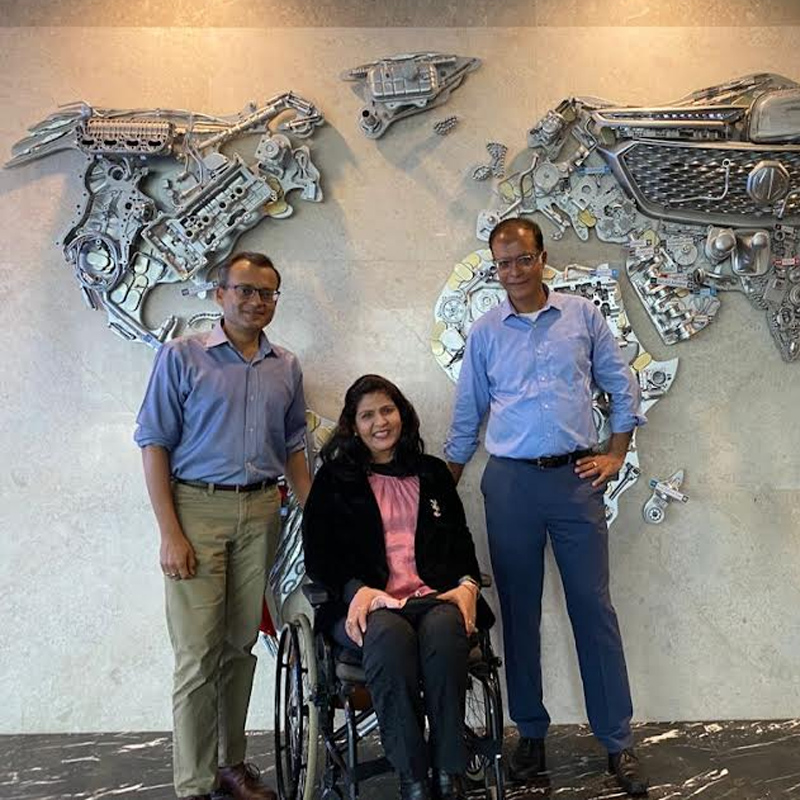
    MUMBAI: MG Motor India has announced Paralympic athlete and Khel Ratna Awardee Deepa Malik to be the voice of the personal AI assistant in its upcoming SUV – MG Astor to deliver a unique voice experience to its consumers as it looks to disrupt the Indian automotive industry.

    Called ‘The Woman on Wheels’, Deepa Malik has enlisted herself in the record books for several driving feats across deserts & mountains. The woman extraordinaire will humanise the voice of the personal AI assistant in the soon-to-be launched SUV MG Astor, it said in a media statement.  

    Talking about the partnership, MG Motor India president & managing director, Rajeev Chaba, said, “At MG, we strive to consistently create exciting and meaningful experiences for our customers. In another first, we are introducing a personal AI assistant in MG Astor. Having Deepa Malik, a woman of many firsts, as a voice for Astor, is in line with our commitment to both community and diversity. Deepa is the epitome of women empowerment and her voice in Astor is a message for everyone to be unstoppable.”

    Deepa Malik, the first Indian woman Paralympic medalist, said, “I am delighted to be the voice of the next MG SUV. I have closely followed MG’s journey in India, and I applaud their vision. MG has not only led the disruption in the automotive industry, but it has contributed to the empowerment of different sections of society. It is commendable that MG’s one-third of the active workforce is women. I am confident that MG will emerge as a champion with the industry-leading features of Astor.”    

  • ManipalCigna Health Insurance invokes spirit of togetherness in new ad

    ManipalCigna Health Insurance invokes spirit of togetherness in new ad

    Mumbai: The COVID-19 pandemic has transformed people’s lives in unprecedented ways. There are people who continue to experience social isolation and loneliness, and find it challenging to reach out for help. Echoing these concerns, ManipalCigna Health Insurance Company has launched a new digital campaign ‘Saath Dijeye- Fark Padta Hai’ urging people to support each other during the pandemic. The campaign highlights how simple acts of kindness can make a big difference in someone’s life. 

    “The second wave of COVID-19 was difficult for everyone. But we got through this together. If there’s one thing we’ve learnt in these difficult times, it’s that we’re stronger than we think. And the only thing that makes us even more undefeatable is being there for one another, despite the distance or time of day,” said ManipalCigna Health Insurance, head of marketing and online sales, Sapna Desai. “As we enter a time for healing and getting better, it is important that we don’t forget the lessons that we learnt along the way. Inspired by all the selfless acts and generosity that we saw, we have put together this message to celebrate the spirit of togetherness and how it makes a difference.”

    Besides the new digital film, the company has also rolled out advertisements on digital and social media along with influencer outreach programs to drive awareness about this new campaign. “#SaathDijiye has reached 6.08 million users and generated 17.42 million impressions, and there have been 4500+ posts on Twitter,” said the company in a media statement.

  • GUEST COLUMN: FMCG companies took to apps, bet big on direct-to-consumer reach

    GUEST COLUMN: FMCG companies took to apps, bet big on direct-to-consumer reach

    Mumbai: The eruption of COVID-19 has left millions and millions of businesses scurrying for survival. Although somewhat less affected than some categories, the FMCG companies also faced headwinds for some time. And to counter these headwinds, technology has been the single most important intervention that they have employed during these trying times. And of the technologies, applications enabling a direct route to the consumer as well as other businesses in the value chain have been most prominent.

    While placing their faith in these applications, FMCG companies have also recast their value chains weeding out unnecessary elements at various levels allowing themselves greater leverage vis-à-vis their vendor partners and establishing a more direct connect with their end-consumers. And among FMCG firms, food companies, or those with prominent food product portfolios have been particularly noteworthy for taking the app route.  A step ahead of general trade, modern trade, or even traditional e-commerce channels, these apps have been popular yet necessary go-to modes for these companies.

    The big B2C advantage

    How does B2C prove to be advantageous for FMCG companies? Until now, customer-relationship building and acquiring customer insights were largely the preserve of the retailer community. However, what B2C apps do is that they facilitate a direct and one-on-one company-to-consumer relationship, with the former no more having to make efforts to establish bonding with a faceless consumer. On top of allowing deeper end-consumer insights for companies and brands, they can catalyse more relevant and individualised product and service propositions by the brand to the consumer thus leading to a more enriching customer experience which in turn would drive increased customer acquisition, conversion, and retention for the brand. And needless to say, the power balance between the brand and the retailer is further shifted in favour of the brand and away from the retailer.

    B2B applications not too far away

    However, this taking to applications has not been limited to B2C channels. FMCG companies have also incorporated apps in their business processes directly targeting retailers and kirana stores who offload their products and serve as a last-mile seller/supplier to end-consumers. Identifying and prioritising retailers who delivered top volume businesses, the companies made sure that the retailers continued to place orders for their products, and even more efficiently using these applications than they did before. In fact, thanks to Covid, the earlier forecasts projecting a contribution of around 10 per cent digital channels in the total FMCG market in the next ten years in the country has been advanced to next three to four years now. And at the same time, cutting out or minimising the role of distributors especially in terms of selection of retail outlets, the brands have reclaimed their power vis-à-vis the latter while effecting greater streamlining and consolidation of their distribution systems.

    Proliferation of new products

    While pivoting to digital technologies, B2C and B2B apps, the FMCG companies have also realigned their product portfolios in a major way capitalising on the shifting consumer preferences and behavior in times of the pandemic. And as part of this realignment, there has been a proliferation of new and innovative products which have been introduced to the market in the last few months. With health and hygiene being a predominant consumer focus, as many as 3,000 products in the health and hygiene category have been estimated to be launched in the September quarter alone last year. Earlier, in the April-September quarter, as many as 9,700 new products were launched by FMCG companies. Mindful of and in response to the country-wide lockdowns in place and customers being confined to their homes, 125 products were introduced in-home cooking segment alone during March-August 2020 in categories including ketchup, jams, cheese, and milk powders.

    Exploring alternative channels of distribution too

    Even as D2C apps gain traction, the FMCG companies are also exploring tie-ups with new-age delivery startups, food-tech service players, food aggregators, hyper-local apps, and courier firms to have their products delivered to the doorsteps of the end-consumer. In fact, some FMCG companies are also making product-specific tie-ups with delivery platforms and micro delivery platforms.

    Digitisation not limited to distribution: Influencer marketing gets a boost

    Rising uptake in apps and the broader digitisation has not only been confined to retail and distribution but also advertising and marketing. And riding on the increasingly entrenched position of social media and its consumption, influencer marketing has become a big part of FMCG’s digital marketing strategy in recent years. According to a report, globally, nearly a fifth (19 per cent) of FMCG companies have raised their influencer spending significantly as compared to pre-COVID-19 levels. And within India, during the festive season campaign alone, influencer marketing saw a 20 per cent jump in campaigns. A digital marketing agency has estimated India’s influencer market at $75-150 million a year, as compared to the global market of $1.75 billion, which is only set to get bigger in the coming months and years.

    Other technologies that could aid the B2C momentum

    At the same time, apart from apps, there are several related B2C technologies and platforms that could add teeth to the ongoing B2C drive. They could range from customer data platforms to data management platforms to marketing automation tools to business intelligence and data visualization tools to social listening tools, among others.

    So, in the future, there is no doubt that the B2C apps as part of an FMCG company’s digitisation program will acquire a more permanent dimension. Notwithstanding a resurgence of Covid in certain states, now with vaccination underway and revival of consumer sentiment in urban India, FMCG businesses including food companies are set to see greater activity and growth.  

    (Manish Aggarwal is director, Bikano, Bikanervala Foods Pvt Ltd. The views expressed in the column are personal and Indiantelevision.com may not subscribe to them.)

  • HUL most prolific advertiser in week 32: BARC

    HUL most prolific advertiser in week 32: BARC

    Mumbai: The top-ten advertisers list for BARC week 32 (7 August to 13 August) was led by Hindustan Unilever Ltd (HUL) with ad volume of 4445.94 (‘000 secs). The FMCG giant’s last week’s score was 5487.39 (‘000 secs).

    Reckitt Benckiser (India) Ltd maintained its hold at the second position. The consumer goods company, unlike HUL, saw an increased ad volume of 3939.47 in week 32 compared to 3213.56 in week 31.

    Rest of the list was dominated by other FMCG players, namely, Cadburys India Ltd, Reliance Retail Ltd, Brooke Bond Lipton India Ltd, Godrej Consumer Products Ltd, Procter & Gamble, ITC Ltd, and Colgate Palmolive India Ltd, in that order, with the only exception being Asian Paints Ltd – at the seventh place.
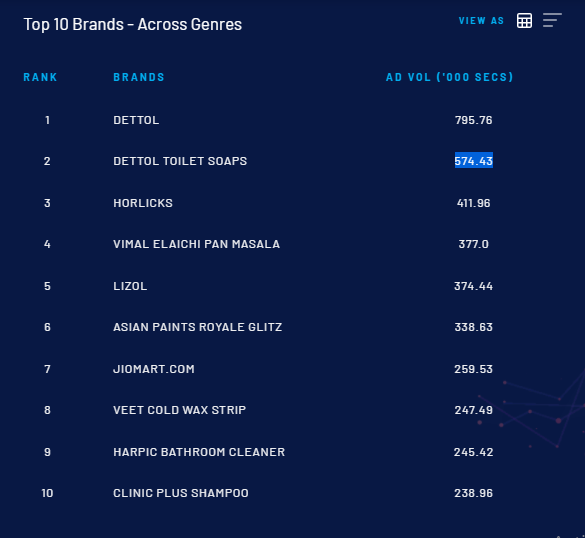
    Leading the top ten brands tally across genres were RB’s Dettol and Dettol toilet soaps with ad volume of 795.76 and 574.43 respectively.

    Horlicks, Vimal Elaichi Pan Masala, Lizol, Asian Paints Royale Glitz, Jiomart, Veet Cold Wax Strip, Harpic Bathroom Cleaner, and Clinic Plus Shampoo followed.

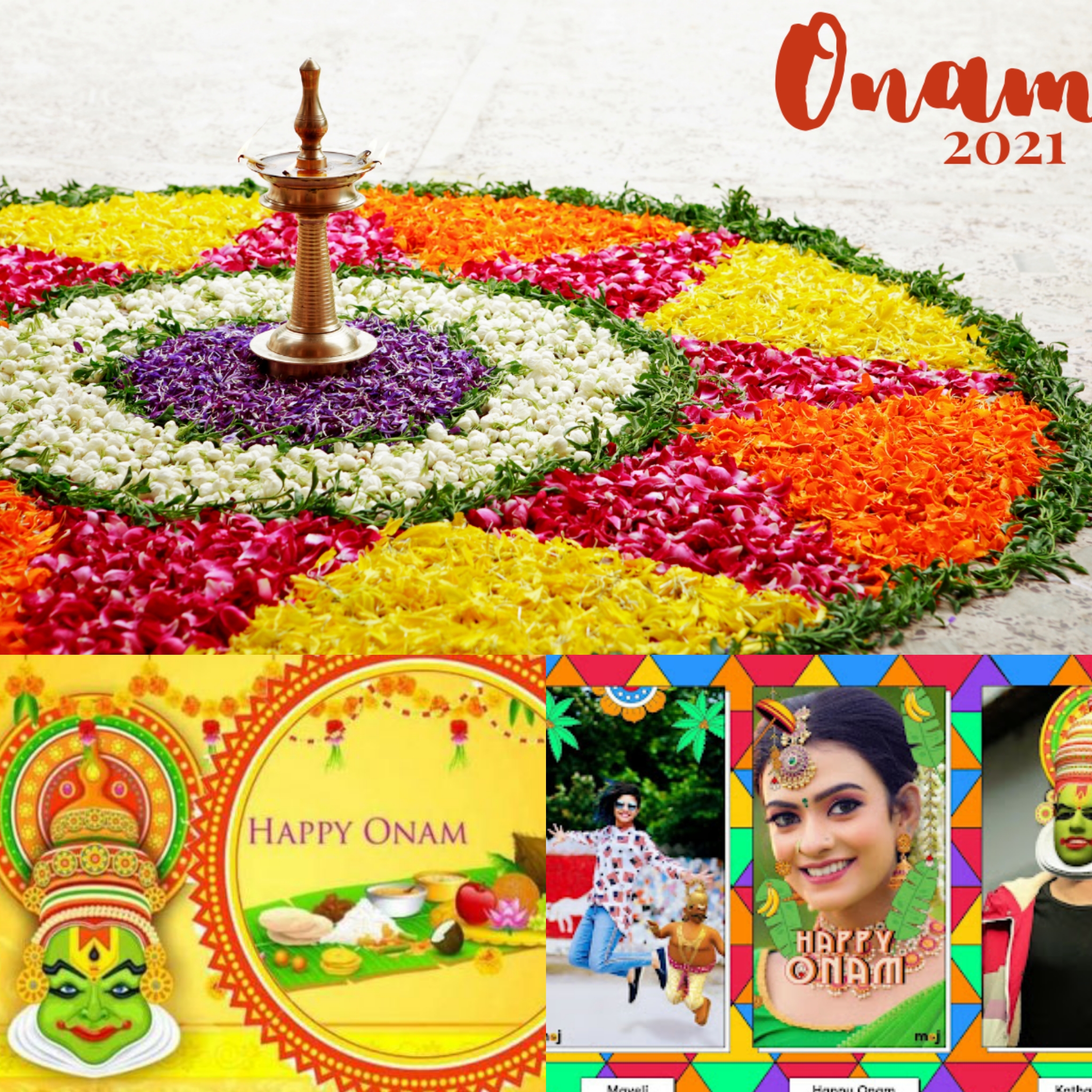
  • Brands pin hopes on Onam sales to tide over COVID gloom

    Brands pin hopes on Onam sales to tide over COVID gloom

    Mumbai: Kerala’s biggest festival of the year- Onam is finally here, flagging off the start of the festive season for the rest of the country. After some lacklustre years marred by natural calamities and floods, and followed by the pandemic in 2020, there is a lot of hope riding on the ten-day harvest festival this year. For businesses and brands across the state, Onam is poised to mark the revival of the shopping season.

    “Not just last year, but the last three years have also been a washout,” says Malayala Manorama VP – marketing & advertising sales, Varghese Chandy. “The Kerala floods impacted sentiments for 2018-19 and COVID-19 impacted sentiments for 2020. Even 2021 has been impacted by the pandemic but I must say that it’s turning positive. The reason being, there is a lot of pent-up demand and COVID-19 restrictions have been eased.”

    Kerala government has eased the lockdown protocols for the duration of the festival, providing a much-needed shot in the arm to retailers and businesses in the state. Effective till 23 August, all markets and shops across the state can remain open six days a week from 7 a.m to 9 p.m.

    “I am seeing that shops are full of customers and people are going out to buy things they could not buy for a long time. Onam is the season for shopping and it is the first large festival to kick off the festive season. This will incentivise consumers to buy what they want,” says Chandy. “The white goods, brown goods, and e-commerce categories are active. Since the CBSE, ICSE and Kerala State Board results have been announced, the education category is also very active.”

    On the movies front, Malayalam films have taken a backseat because theatres are still not open. However, lots of movies are moving to OTT platforms and finding a new audience.

    According to Mathrubhumi Group head- media solutions (TRD), Naveen Sreenivasan, there was a lot of uncertainty in July, but advertising picked up as markets opened up for the festive season, and it now looks poised for a “safe but healthy Onam”. “We are experiencing a build-up of advertising, and advertising from local brands and retailers are also picking up. Industries such as FMCG, consumer durables, retail, e-commerce, and automobiles are bouncing back which is a positive sentiment for the season,” he concurs.

    On the presence of digital brands on TV sustaining through Onam, Sreenivasan says that the brands and advertisers are well aware of the significance the festival holds as a marker of the beginning of the festive season in the country. Hence, they will make sure to capitalise on this opportunity to reach out to their TG at every level. “Companies prefer this time of the year for launches and sales drives to attract consumers at large; and TV news, with high reach especially in Kerala, is always impactful. Digital brands have certainly increased their advertising share for this season as well,” he adds.

    The opening up of retail will give businesses a chance at recovery after the bludgeoning dealt by the pandemic, also serving as an impetus for consumers to make purchases ahead of festivities. This uptick in consumer sentiment is also reflected in the numbers put out by the Retailers Association of India (RAI) in its latest Retail Business Survey. The survey indicated that retail businesses in South India have shown a sharp comeback in July 2021 with sales at 82 per cent of the pre-pandemic levels (July 2019), as against 50 per cent sales in June 2021. It further expects a significant recovery in sales in the upcoming festival season, provided restrictions on modern retail are relaxed across the country.

    Brands too have taken note of the cautiously celebratory mood in the state this year and have gone all out, launching new campaigns and festive deals across the board.

    Fashion e-tailer Myntra announced the launch of its first mega-brand campaign in Kerala, featuring its new brand ambassador, South superstar Dulquer Salmaan, ahead of Onam. The brand hopes that Dulquer’s presence in the campaign will strengthen Myntra’s men’s wear category and help in building brand salience with consumers across the state and beyond. It is implementing a 360-degree approach, leveraging TV, digital and social platforms to deliver the campaign ad film in Kerala.

    Short video app, Moj too has launched an Onam celebration campaign with prominent Malayalam actor and celebrity Anu Sithara called #MojOnaghosham to turn the spotlight on celebrating Onam virtually. The ten-day-long campaign is being hosted by the actor and will see participation from popular Moj creators who will be seen celebrating the festival in all its regional fervour. Since a community celebration is not feasible amidst the COVID-19 restrictions, #MojOnaghosham has been designed to reciprocate the madness around the physical celebration of the festival in Kerala, by taking cues from the community-driven celebrations.

    Moj senior director – content strategy, Shashank Shekhar said, “The #MojOnaghosham campaign has received great engagement so far and we are sure it will add more joy to the grand celebrations that our creators are planning. The campaign was designed on the premise of the traditional Onam celebrations with people participating in competitions organised by the local communities. Our attempt is to replicate the experience virtually and the challenges are modelled on cultural nuances that connect our community to the essence of the festival.”

    With the uptick in the consumer sentiment in the state, gold and diamond retail chain headquartered in Kerala’s Kozhikode, Malabar Gold & Diamonds, also kicked off the latest edition of its ‘Brides of India’ campaign featuring its celebrity brand ambassadors, Anil Kapoor and Kareena Kapoor last week. The campaign will be played on TV and OTT platforms with plans to occupy print media space too later.

    Ahead of Kerala’s biggest festival, Snapdeal announced its brand campaign ‘Brand Waali Quality, Bazaar Waali Deal’ in the southern markets, including Karnataka, Andhra Pradesh, Telangana, Tamil Nadu, and Kerala, which are a significant customer base for the e-tailer. The campaign that targets savvy, value-conscious buyers of fashion, accessories, homeware, and more, will be LIVE across all social media platforms like YouTube, Facebook, Instagram, Twitter, and OTT entertainment networks like Hotstar and MX Player.

    Taking a unique approach in the Malayalam speaking market, Snapdeal will run the campaign with Youtube Creator Promotions and Facebook Branded Content Ads only and has partnered with 30+ creators/influencers like Kalidas Jayaram, Ahaana Krishna, and Shamees Kitchen to create 100+ content pieces that will reach out to relevant audiences in Kerala & other southern states during this festive times.

    Adding flavor to the Onam celebrations, DTH brand DishTV has also announced a slew of attractive offers to delight its new and existing customers as it joins the Onam celebrations in Kerala. Regional TV channels, not wanting to miss out on the Onam frenzy, have announced world television premieres of the latest Malayalam films.

    Home appliances brand, Haier India also announced exciting offers on its products across categories this Onam season.

    In times that have been challenging in many ways for the world at large, the festive season holds a promise of hope for both brands as well as consumers.

  • Country Delight says ‘Good Morning India’ with new catchy anthem

    Country Delight says ‘Good Morning India’ with new catchy anthem

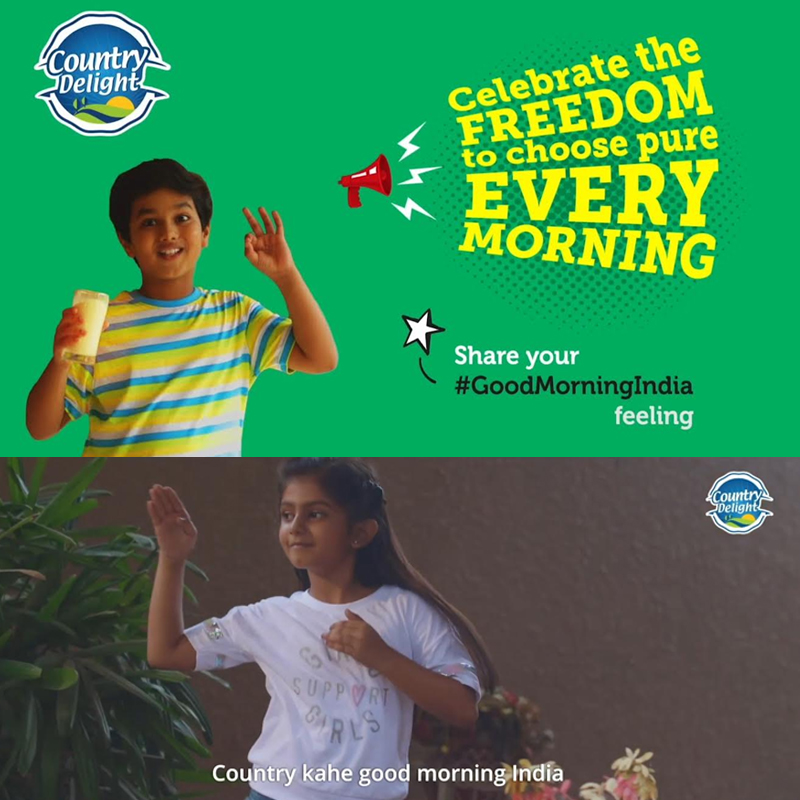
    Mumbai: Country Delight, a direct-to-consumer daily essentials brand, has released a lively music video to mark the 75th Independence Day. The “Good Morning India” anthem celebrates the freedom to choose pure every single day.

    Catchy and fresh, the video carries a hummable tune that invokes energetic morning vibes for the listeners. Starring kids from different ethnicities across India acing its hook step and raising a glass of purity full of Country Delight milk, the brand’s video pulls attention to the unity in the humble daily habit shared across India – choosing nutritious milk for families every morning.

    Sharing his thoughts on the anthem, Country Delight co-founder Chakradhar Gade, said, “Country Delight is now present across most of the key cities in India. We continued to be humbled by the customer love we have. We wanted to use the occasion of this Independence Day to present the Good Morning India Anthem, which expresses the essence of the small and beautiful part we play in making customers’ lives better.”

    The #GoodMorningIndia audio release across Social Media platforms also saw exciting participation from influencers matching the hook step.