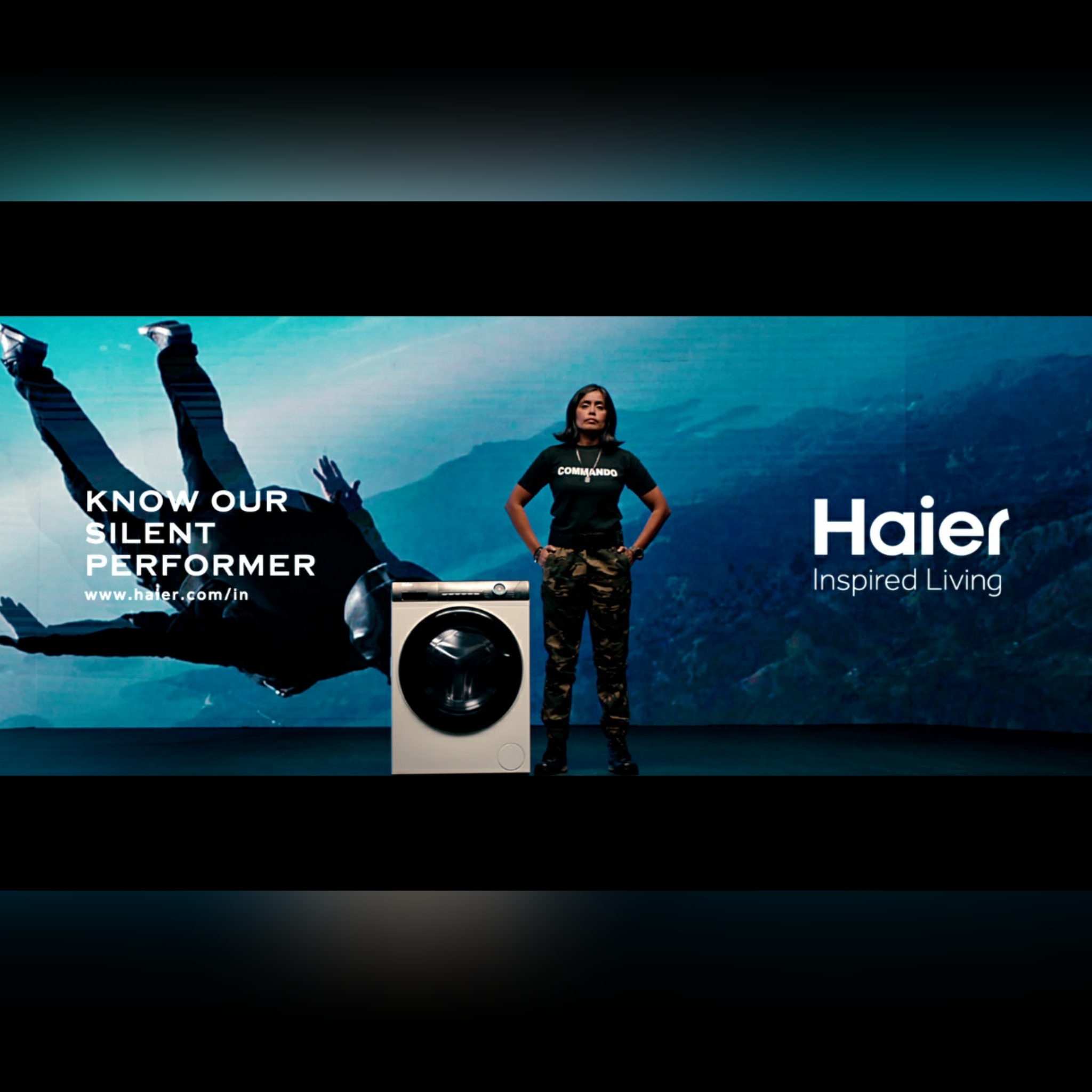
New Delhi: Home appliances and consumer electronics major Haier has launched a series of new TVCs titled ‘Perform Big, Silently’ featuring notable women achievers who pushed boundaries to make a mark.
The new TVCs feature Indian mountain climber Dr Arunima Sinha, India’s first woman commando trainer Dr Seema Rao, Indian Female Chess Grandmaster Harika Dronavalli, and female mountain biker Anissa Lamare. The campaign celebrates the power of being a silent performer and gives a peek into the challenges, conviction, and strength of each of the woman achievers.
An extension to its ‘Silent Performers’ campaign, the new TVCs acknowledges the determination and efforts of Indian women achievers and athletes who continue to ‘Perform Big, Silently,’ letting their work speak for everything and have made India proud at the global stage with their triumphs.
Haier Appliances India senior VP sales & marketing NS Satish said, “Our latest campaign takes another leap towards our efforts to recognise the success of Indian women. Striving silently in their respective fields they have made our nation proud and our campaign lauds their accomplishments. Similarly, our new range of washing machines champions performance in the background without making any noise. Haier salutes the spirit and achievements of these performers who made it big without making noise.”
The campaign gives center stage to women achievers and highlights how they have pushed boundaries to bring pride to India on an international platform. Their commitment and hard work coincide with Haier’s philosophy of ‘Inspired Living,’ said the brand.
The TVC created in collaboration with Famous Innovations will premiere across all leading national and regional TV channels. For a wider reach, the TVC will be aired in Hindi and English.
Famous Innovation founder and CCO Raj Kamble said, “The consumer durables category is cluttered with celebrity-driven communication, relying on Bollywood and Cricket’s fame to sell products. However, we believe that the Indian consumer has been ready to move forward with new idols – people who perform big, silently. That’s why we are celebrating personalities from various fields like mountain climbing, combat training, chess, and downhill mountain biking.”
This is the second series of TVCs launched by Haier under the larger campaign theme of ‘Silent Performers,’ first introduced by the brand in 2019 with India’s ace sportswomen – Dipa Karmakar, Hima Das, and Simranjit Kaur. The campaign is dedicated to highlighting Haier’s latest ‘Super Drum’ series of front-load fully automatic washing machines which are designed to function super silently.
New Delhi: 2021 saw a sea shift of people changing their lifestyles and adopting healthy life choices due to the ongoing pandemic. This gave birth to a new cohort of consumers who are proactive in staying healthy through wellness-oriented products and apps. It is this spirit of a healthy lifestyle that ICICI Lombard has emphasised upon in its new campaign which unveils its new feature ‘Cal Scan’ on the company’s health and wellness app ‘IL TakeCare’.
The campaign consists of two ad films that encapsulate the significance of eating the right amount of calories on the backdrop of a busy lifestyle characterised by faulty food habits, high-calorie intake, partially aggravated by the pandemic lockdown.
The first ad film opens with a scene from a typical halwai shop where a person is buying samosas. Upon packing the samosas, the shopkeeper tells the customer the calorie count instead of the price of the food items. He then goes on to suggest making the calorie count a round figure by adding two more samosas. To this, the customer declared a specific calorie count, took the samosa, and walked away happily.
The second ad shows a food delivery guy delivering food and affirming the accurate calorie score to the customer according to his food order. Both the ad films end with the thought that our food vendors will not be able to tell us the exact calorie count of the food consumed, hence with the IL TakeCare app’s new feature ‘Calorie Scan’, consumers can now get a personalised recommendation of their calorie intake and the tips to burn those extra calories. Through these films, the insurerattempts to guide the audience towards a behavioural change wherein they see the value of the food not in terms of money, but also the number of calories consumed.
ICICI Lombard General Insurance executive director Sanjeet Mantri said, “While the pandemic has turned people towards a holistically healthy lifestyle, it is equally important to add the element of measurement to all our health endeavours. Considering the significant increase in the usage of wellness and health-oriented apps recently, we have introduced this new feature of ‘Calorie Scan’, which will act as a counter and encourage the user to stick to their recommended calorie budget.”
The campaign centered on the World Heart Federation’s theme for 2021 focuses on harnessing the power of digital health to improve awareness, prevention, and management of cardiovascular diseases. Conceptualised by Ogilvy, ICICI Lombard’s Creative agency, the ad films are being promoted across ICICI Lombard’s social media assets and digital platforms.
Ogilvy Mumbai, executive creative directors Talha Bin Mohsin & Mahesh Parab said, “The ICICI Lombard World Heart Day campaign has had a long history of great work aimed at making people conscious of the challenges to their good health. This year, we sought to open a new chapter by going a step further and joining them in their journey towards holistic wellness. Not just by helping them count their calories, but giving them tips on how to burn them and stay fit on a regular basis too.”
Mumbai: Most common reasons for video revenue loss for publishers in India range from factors including inventory control, underutilisation of video advertising, traffic quality and not taking advantage of the latest technologies available.
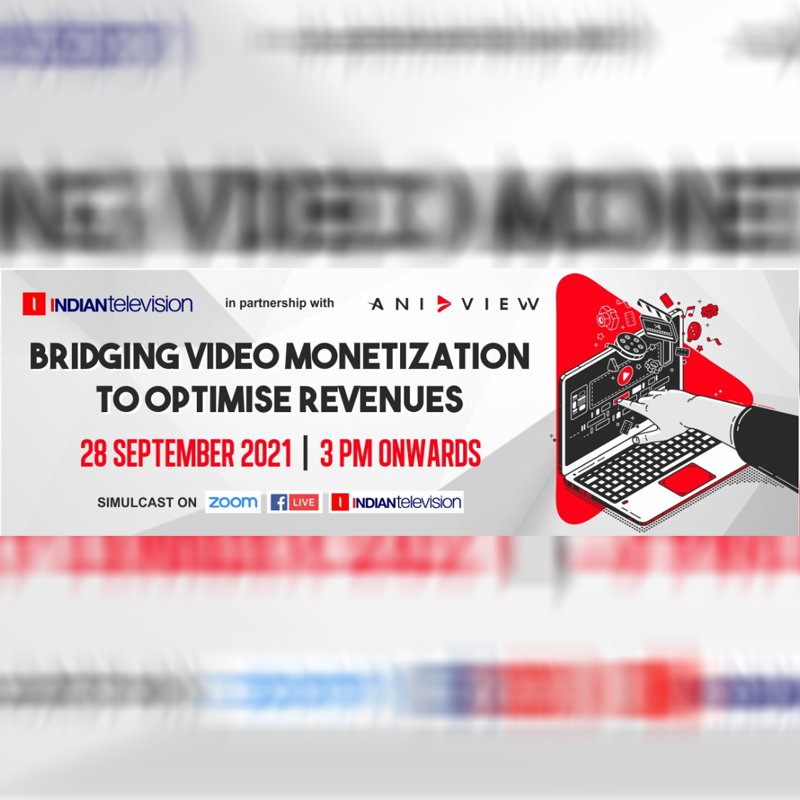
Some of these issues and their solutions were discussed during a webinar- ‘Bridging Video Monetisation to Optimise Revenues’ organised by Indiantelevision.com in association with Aniview on Tuesday. The virtual panel discussion was moderated by Indiantelevision.com Group founder, CEO, and editor-in-chief Anil Wanvari.
Experts discussed, how better content experience, fuller transparency, a self-service platform with better control on the video player, along with having an experienced team to operate the platform could drive higher revenues.
According to end-to-end video advertising and monetisation solutions provider Aniview, business director-APAC, Matthew Bray, currently India is the fastest-growing internet advertising market in the world, and video remains the most popular ad format. “It’s the sixth-largest market in consumption of video ads,” said Bray about the video advertising landscape in India.
Amongst the reasons for the loss in video revenue, Bray cited poor content experience, heavy player, player loading issues, inventory loss, lack of transparency on traffic insights among others. Non-adherence to Google policies and underutilisation of Google Adx are other primary causes of video revenue loss, Bray said. “Many publishers in India leak video revenue & underutilise their own video content on a regular basis,” he said, adding that full control over a video player can lead to an increase in revenue. “Google will likely remain the dominant SSP for video.”
According to HT Digital’s Prasad Sanyal, underutilisation of inventory plagues almost all publishers in India. “We are looking at avenues where we can have more control over our video assets & monetise them better,” he added.
By running a video player in these placements publishers can make better use of their own video content to engage their users and create more ad opportunities. While it not only allows full control over ad placements, player behaviour, and ad breaks, it leads to the creation of better quality traffic that drives higher CPMs. When deployed correctly this can even lead to significant revenue lifts. Aniview cited Jagran as a successful case study, as it has more than doubled its revenue on some ad placements on article pages by deploying Aniview.
“With Aniview we got a white label solution. There are the cities, and tier-2, tier-3 segments too, for all of which we need to create separate segmentation as per the category,” shared Jagran New Media, AVP and head-ad monetisation and strategic partnership, Dinesh Joshi. “We also produce a lot of text content, but definitely video is going to be big in the near future. Jagran is working on branded content on the video side, we have to work on the monetisation front too.”
HDFC Bank, vice president, and head- digital marketing, Jahid Ahmed, said, regulations apart from basics like viewability can give a lot of confidence on rolling out a video across platforms. Also, the decision on which video is to be used where- that also plays a significant role, he added.
Social Beat co-founder and director Vikas Chawla highlighted the need to scale up the inventory for advertisers to see it as a viable option to do large campaigns.
“Most of us have invested in analytics significantly, but we have a long way to go before advertisers get comfortable with us,” added HT Digital Streams’ Prasad Sanyal.
Manorama Online’s general manager (digital) Sathyajith Divakaran shared, “We have an OTT platform which is exclusively video-led and we only encourage video ads. We are clear in what we can offer as ads as we know which shows attract a certain kind of audience. It is just that the video inventory available is not utilised fully despite having a number of partners on board.”
According to Matthew Bray, Video is going to keep growing in India & in order to sell the inventory created one needs to have a system that they can properly control. “Then you see better yields and more video views because you can control the content,” he said, adding that there are exchanges in India that are having trouble moving video content because there isn’t enough inventory being created.
Sharing that increasingly they are evolving to a point where they know what to do with their inventories, HT Digital’s Sanyal said, “At HT we are getting to a stage where we should be able to drive more revenues out of videos & also do better videos in the process. We hope to deliver better value to our readers and viewers.”
HDFC Bank’s Jahid Ahmed said that every platform is evolving in its own space and it’s great to see such platforms coming up that helps publishers in their cause. He added, “It’s right to outsource such expert work instead of all platforms trying to do everything by themselves. For discoverability of our product-led videos, if some platform smoothly integrates with our CMS & gives good info to our users, then why not,” added Ahmed.
Talking about the near future Ahmed said, “Digital is growing significantly at 35 to 40 per cent Y-O-Y, and within digital, video-led content consumption is one key aspect we are focused on. Video along with a combined vernacular, with personalised elements like geography/ gender, is the way to go.”
All the panelists were in agreement on the significance of video content in today’s times.
Mumbai: FMCG major Hindustan Lever Ltd (HUL) led the top-ten advertisers list in Barc week 37 (11 – 17 September) with total ad volumes of 4718.72. Reckitt Benckiser (India) Ltd was a close second at 4028.89 (‘000s). Cadbury India stood third at 944.54.
Brooke Bond Lipton India, ITC Ltd, Godrej Consumer Products, Colgate Palmolive India, Amazon Online India, Procter and Gamble, and GCMMF followed at the remaining seven positions in that order.
Among the brands Dettol Toilet Soap led the tally with ad volumes of 542.01.
Video streaming platform Disney+ Hotstar stood out in the FMCG-dominated list at the sixth spot with 349.3 (‘000s). Amazon India (329.66) and Reliance Digital (304.61) broke the monotony at the eighth and tenth positions respectively.
Rest of the list was populated by FMCG brands including Lizol, Harpic Power Plus 10X Max Clean, Dettol, Dettol Antiseptic Liquid, and Harpic Bathroom Cleaner.
Mumbai: If a year is like a film, then the festive season is the climax scene of the year! Consumers are all set to fill their online shopping carts with amazing offers this festive season. According to the consumer synopsis, the year 2021 will record a large number of traction from the non-metro sectors. So, the good news is that consumers will have a plethora of brands to explore, and e-commerce businesses will have lucrative sale opportunities this festive season.
Over 60 per cent of the global population is on the internet, and it is fundamental for online brands to plan and leverage the festive season campaigns for extra market gains. Regardless of the pandemic situation, influential digital marketing strategies have been proven efficacious in attracting the target audience. So, online brands can definitely leverage brand marketing and advertising tactics to stand out in the digitally revolutionised world and acquire more users.
Festive seasons allow marketers to run well-tailored strategies and campaigns which focus on increasing the brand value and maintaining a high ROI.
What Makes Festive Season Campaigns Exclusive?
Festive Season is a peak business time for brands because at this time of the year customers indulge in dramatic shopping sprees and spend lavishly. Amid all the jovial festive atmosphere, brands reflect similar emotions to their customers through discounts and bonanza offers in order to acquire users and boost sales. Holding to these specifics, marketing professionals frame best-performing digital strategies that compel consumer purchase action.
Guiding Analysis:
Before strategising a new marketing plan, it is essential to analyse previous performance. The analysis sheds light on:
● Sales traffic information.
● Top and underperforming products and services.
● Ad performance.
● Customer interest.
● Landing page performance.
● Web pages that lead to maximum conversions.
● Channel that drives high user traffic/ engagement.
Best Performance Marketing Strategies for Festive Season 2021:
Customised Festive Emails (Email Marketing)
Email marketing is a promising and cost-effective marketing tool, especially during the festive season. Businesses can draft an occasion-themed email including personalised greetings, gift hampers, and vouchers to engage with the customers. Research shows festive emails are more likely to be opened and followed by a majority of customers.
Discount Offerings
While advertising products, businesses should add discount offers with creative ad copies and graphics to target users. Brands can promote festive vouchers and attractive CTAs, such as ‘limited period offer’ to attract buyers.
Festive Ad Campaigns (Google and Facebook)
It is crucial to promote ad campaigns via relevant and high-performing channels. The reason is that it increases the scope of brand visibility, lead generation, and user acquisition. So, boost ads to scale the reach and promote your communication digitally.
Seasonal SEO Implementation
Correct research of the festival-related keywords will guide the content to the top of the SERPs. Using high-ranking keywords eases SEO practices and drives more visitors to rise sales.
Festive-themed Video Marketing
Undoubtedly, video marketing has the best performance metrics over all other marketing categories. It is proven that well-planned video advertisement gathers three times more views compared to other forms of content. Plus, visual representation helps people connect better with the brand and its offerings.
Engaging Push Notifications
Push notification is a new and terrific performance marketing tactic. It is considered one of the best methods to keep users in the loop. As per the data, people interact five times better with push notifications than emails. Now, sharing updates, offers and announcements are easy with push notifications.
DeepLinking
Deep linking is by far the best redirecting method, in which app brands can direct their ads to the product landing page when clicked. This increases product page traffic and lets the customer engage with the targeted product efficiently within the app.
Festive Content Marketing
An image or video with relatable content stirs up the customers’ emotions to connect better. Relatable content urges viewers to share it among their social circle, increasing the brand’s visibility. And, content marketing holds that power where you can attract the audience with words.
RemarketingAds
Remarketing ads are used in the middle and bottom-funnel to boost user conversion. These ads are product and service-centric and target users who are aware of the brand.
(Siddhartha Vanvani is the founder & CEO of Digidarts. The views expressed in the column are personal and Indiantelevision.com may not subscribe to them.)
MUMBAI: Consumers today expect brands to take responsibility towards following sustainable practices, while being more aware of their choices. And they expect action, not just empty promises on sustainability, according to a recent BBC Global News study which revealed that 80 per cent of consumers in the Asia Pacific region agree that demonstrating a commitment to sustainability adds value to the brand. But where do brands stand on sustainability today?
A virtual webinar – ‘Taking the Sustainability leap’ organised by BBC News in collaboration with Indiantelevision.com on Thursday gave some valuable insights into innovative and sustainable marketing practices adopted by some of the leading brands who have taken the sustainability plunge.
“The rise in global consumption levels over the last decades has been accompanied by a persistent increase in resource depletion and pollution, putting serious pressure on the environment well above its regenerative capacities,” said BBC Global News, SVP Commercial Development, Alistair McEwan as he initiated the discussion. “Without a significant change in current consumption and production patterns, the world will face strong environmental and economic costs such as those caused by projected climate change.”
The event that shared case studies from sustainability leaders across the globe kicked off with a panel discussion on ‘Leading with Innovation and Inspiration’ led by The R Collective founder and CEO Christina Dean, Climate Force founder Barney Swan, The Fabrick lab founder Elaine Yan Ling Ng, and Sophie’s BioNutrients co-founder and CEO Eugene Wang.
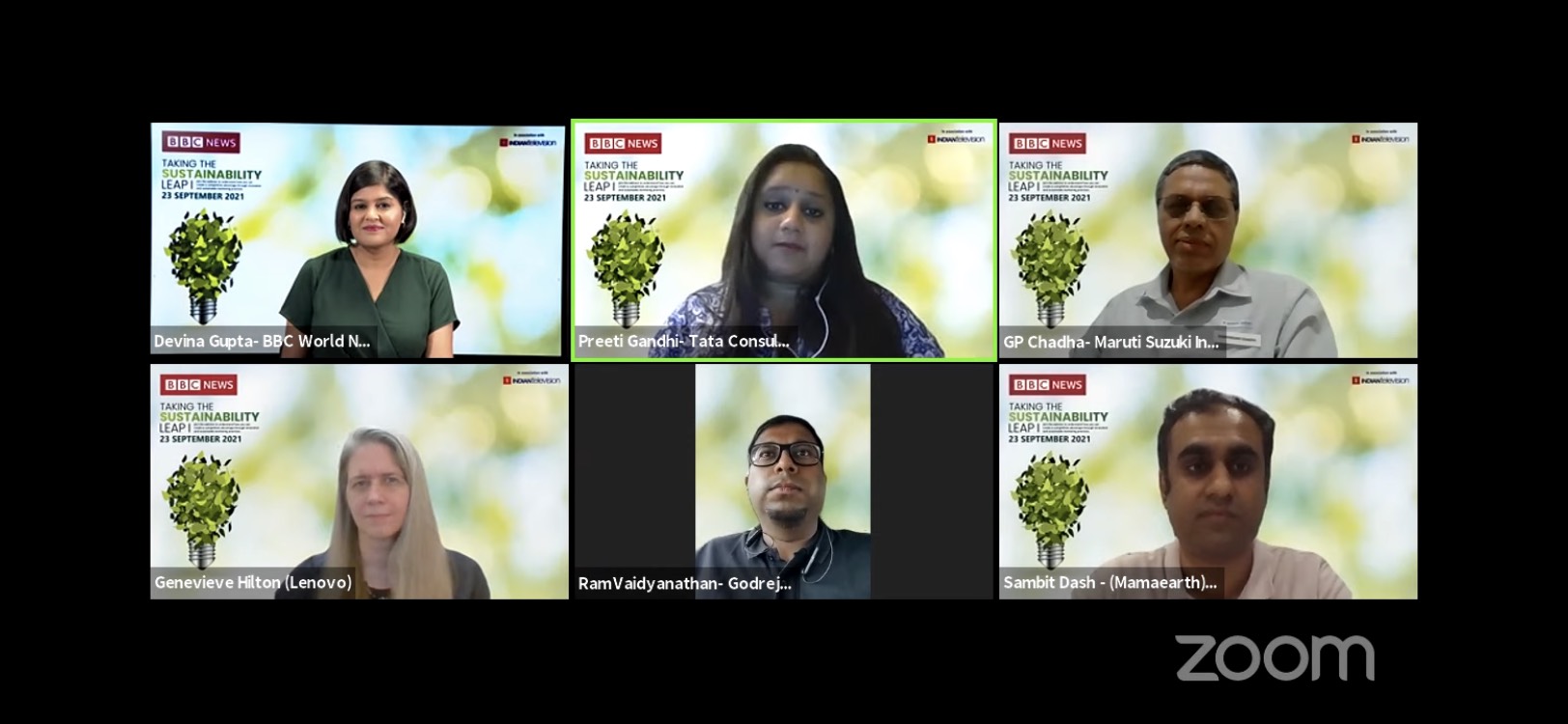
Other key speakers at the event included Maruti Suzuki India, assistant vice president-sustainability and carbon neutrality G P Chaddha, Godrej Group, head-environmental sustainability Ram Vaidyanathan, Tata Consultancy Services, head of sustainability marketing, Preeti Gandhi, Lenovo, head of communications, Asia Pacific, Geneviene Hilton, and Honasa Consumer Pvt Ltd (MamaEarth) vice-president marketing Sambit Dash. The discussion was moderated by BBC News senior journalist Devina Gupta.
Shooting down the notion that sustainability and business profitability cannot go hand-in-hand, Godrej Group’s Ram Vaidyanathan pointed out that companies with stronger sustainable principles and ESG (Environmental, Social and Governance) practices have far out-performed the other companies on pure financial indicators as well. “80 per cent of sustainable initiatives are actually cost-saving, simply by being more efficient in the way we use resources,” he added, highlighting that from an investor’s perspective too it makes sense as strong ESG performance and processes are de-risking investments.
“The current situation in India is that we’re still trying to make companies ESG-compliant. There’s a bit of regulatory pressure too,” said Maruti Suzuki’s GP Chaddha, adding that while production came to a virtual standstill during the pandemic, sustainable practices helped the company to bounce back quicker than others.
Tata Consultancy Services (TCS)’s Preeti Gandhi talked about the low carbon emissions observed across the country and globally during the pandemic due to the prevalence of WFH and minimal commutes. “It is important for us to continue these reductions over the long term as we come back to work and return to normalcy,” she said, citing some of the efficiency measures the company has implemented over this period such including the hybrid working initiatives like ‘25 by 25’ wherein only 25 per cent of its employees will commute to work by the year 2025. “This would hopefully ensure that we continue to see the environmental resilience to continue, even post-pandemic.”
Lenovo’s Geneviene Hilton underlined the fact that sustainability needs to be ingrained into the entire business from the start, for it to be truly effective. “Consumers today are also keen to know about the environmental, social, and governance measures that companies undertake,” she said.
Taking the belief of embedding environmental sustainability into the business’ foundation, Mamaearth’s Sambit Dash talked about the PETA-certified brand’s vision about being a purpose-led brand wanting to make a good impact on the environment as well as society. “We recycled more plastic than we produced from the beginning. Therefore, at a time when other brands are trying to be ‘plastic neutral,’ we have been ‘plastic positive’ right from the start,” shared Dash.
GP Chadhha referred to Maruti’s tagline of “Petrol khatam hi nahi hota” as evidence of its fuel-efficient cars. “There’s a need to increase incentivisation for brands and customers to start moving in the sustainable and carbon-neutral direction,” he said.
According to Godrej’s Ram Vaidyanathan, the Customer is the biggest stakeholder when it comes to deciding the kind of products that any company makes, so that’s a big driver when it comes to sustainable products. He believes packaging should be the biggest area where those companies must focus on to create maximum impact.
Gandhi also threw light on the role of media in championing the cause of sustainable consumerism and de-mystifying the eco-labels. “When it came to creating systems and platforms for eco-friendly collaborations, it must be led by the policy thinkers and changemakers across the board towards specific goals in driving sustainable development for all,” she noted.
The event also saw BBC Future Planet editor Martha Henriques shedding some light on how BBC is doing its part of the sustainability of the planet. BBC Future Planet is the first major online publication launched in 2020, with a sole focus on climate change that also aims to be as close to zero carbon as possible. BBC StoryWorks APAC director Nicola Eliot discussed how brands are partnering with the BBC to tell their stories on forging an effective sustainability journey.
Mumbai: Rising global temperatures and environmental degradation has left the world on the cusp of major climate change. The slow, yet discernible impact of these changes has been seen across all major sectors, leading brands to make a conscious choice to protect the environment while catering to their consumers’ needs.
A recent BBC Global News study also revealed that 80 per cent of consumers in the Asia Pacific agree that demonstrating a commitment to sustainability adds value to the brand. Consumers expect action, not empty promises, from brands on sustainability. They are becoming ever more aware of their choices and expect brands to take responsibility towards following sustainable practices.
Some of these stories will take centre stage at the virtual webinar – ‘Taking the Sustainability leap’ being organised by BBC News in collaboration with Indiantelevision.com on 23 September. The hour-long event starting at 3 p.m. will witness insightful discussions with some of the leading brands who have taken the sustainability plunge.
“Without a significant change in current consumption and production patterns, the world will face strong environmental and economic costs such as those caused by projected climate change. Therefore, there must be a change in how we satisfy our needs if we want to achieve sustainable development and maintain the Earth’s capacity to satisfy the needs of future generations which consumers are becoming increasingly aware of,” said BBC Global News, senior VP, Commercial Development – Asia Pacific, Australia and New Zealand, Alistair McEwan.
The attendees will get an opportunity to hear inspiring stories from sustainability leaders across the globe, as they share case studies. This will include stories of building a fashion collection created by rescued luxury fabric, and much more. BBC will also share insights on forging an effective sustainability journey, and how brands can create a competitive advantage through innovative and sustainable marketing services.
The event will begin with introductory remarks from BBC Global News, SVP Commercial Development, Alistair McEwan. It will proceed with a panel discussion on ‘Leading with Innovation and Inspiration’ to be led by The R Collective founder and CEO Christina Dean, Climate Force founder Barney Swan, The Fabrick lab founder Elaine Yan Ling Ng, and Sophie’s BioNutrients co-founder and CEO Eugene Wang
Other key speakers at the event include Maruti Suzuki India, assistant vice president-sustainability and carbon neutrality G P Chaddha, Godrej Group, head-environmental sustainability Ram Vaidyanathan, Tata Consultancy Services, head of sustainability marketing, Preeti Gandhi, Lenovo, head of communications, Asia Pacific, Geneviene Hilton, and Honasa Consumer Pvt Ltd (MamaEarth) vice-president marketing Sambit Dash.
BBC Future Planet editor Martha Henriques will throw light on how BBC is doing its part of the sustainability of the planet. BBC Future Planet is the first major online publication launched in 2020, with a sole focus on climate change that also aims to be as close to zero carbon as possible. BBC StoryWorks APAC director Nicola Eliot will discuss how brands are partnering with the BBC to tell their sustainability stories.
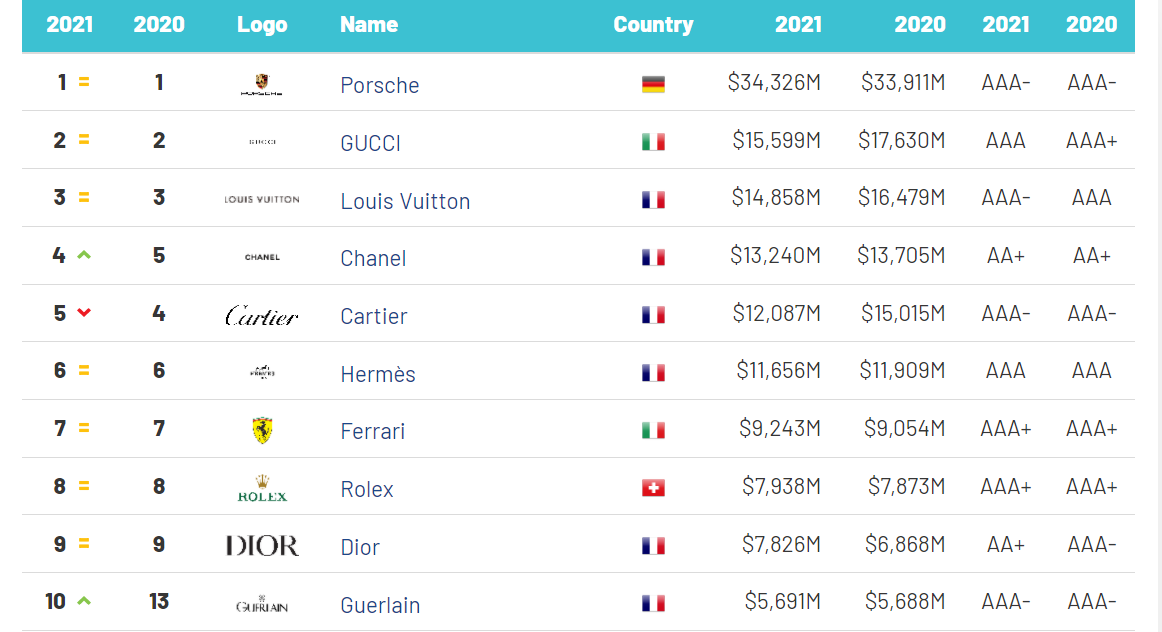
Mumbai: The total value of the world’s top 50 most valuable luxury and premium brands has declined by five per cent year-on-year, according to the Brand Finance Luxury & Premium 50 2021 report. As the world grapples with the fallout from the Covid-19 pandemic, these brands witnessed a downturn from $227.1 billion in 2020 to $219.5 billion in 2021, it said.
Apparel brands dominated the ranking, with 30 brands featuring and accounting for 62 per cent of total brand value, but brand values suffered, nevertheless, due to Covid-19. German auto giant Porsche retained the top spot with a brand value of $34.3 billion, considerably ahead of second-ranked Gucci (brand value down 12 per cent).
French leather luxury goods brand Celine bucked the trend to emerge as the fastest growing brand, up by an impressive 118 per cent, according to the report. Despite the pandemic’s impact on travel and tourism industry, two hotels managed to check into the ranking for the first time, with Shangri-La in 29th and Intercontinental in 35th position in the report.
American luxury design house Coach, specialising in handbags, luggage, accessories, and ready-to-wear has recorded the biggest drop in brand value this year in the apparel subsector, falling 31 per cent to $4.7 billion. While performances across the board have been impacted by the pandemic, with the majority of brands recording a brand value loss this year, the brand’s sales and profits have taken a hit over the previous year. Coach’s parent company, Tapestry, has however, cited that forecasts across its brands are looking more positive than anticipated thanks to triple-digit e-commerce growth and a strong rebound across the Chinese market.
In addition to measuring the overall brand value, the report also evaluates the relative strength of brands, based on factors such as marketing investment, customer familiarity, staff satisfaction, and corporate reputation. According to these criteria, Ferrari (up 2 per cent to $9.2 billion) is the world’s strongest luxury & premium brand – and the second strongest brand in the world. The auto-maker reacted proactively to the pandemic, initially shutting down production and then reopening with a focus on creating a safe working environment. This both minimised disruption and reinforced the brand’s reputation as a high-quality and responsible firm, as per the report.
Sitting behind Ferrari as the second strongest luxury & premium brand is Rolex, up by one per cent to $7.9 billion. Despite the challenges of the last year, the market for luxury watches has shown remarkable resilience to the pandemic turmoil, with demand remaining stable, demonstrated by Rolex’s website traffic experiencing a surge over the previous year.
“As predicted, the Covid-19 pandemic has damaged brand values across the luxury & premium sector with the total brand value of the world’s top 50 most valuable down five per cent year-on-year,” says Brand Finance valuation director Alex Haigh.
It is not all doom and gloom though, he notes, adding that the pandemic can be used as a catalyst for change across the industry, through growing e-commerce channels or through brands’ responses to the increased consumer demand for social and sustainable action.
German automaker Porsche, for instance, is striving towards pushing the boundaries and redefining the future of the sportscar. As part of the brand’s ‘Strategy 2025’, the auto giant aims to maintain the traditional aspects that the brand is known for, as well as undertaking the shift towards sustainability through the launch of the Taycan. Porsche celebrated strong sales of the Taycan, which totalled over 20,000 units sold last year, despite a six-week pause in production due to the pandemic. This impressive result means that over 10 per cent of Porsche’s sales are now from its EV models.
As holidays are cancelled and people are instructed to work from home, the hospitality industry has reached an almost complete standstill both from tourism, as well as corporate travel and hotel brand values, have suffered as a result. Home to five-star luxury properties with elite postcodes and addresses across the Middle East, Asia, North America, and Europe, Shangri-La – despite the challenges – is the highest-ranked hotel brand in 29th position. The hotel recorded an encouraging recovery across mainland China over the last year with demand being supported by an uptick in domestic leisure travel.
Mumbai: From Siri to Tesla Car, and Google AI to Alexa, Artificial Intelligence is now impacting every aspect of our lives. It is designed and programmed in a way to mimic and think like a human being. With data as the new oil in the marketing world, intelligence will be needed to derive meaningful insights to improve the marketing mix.
With the vast potential of collecting, analysing, applying, and learning data, artificial intelligence is transforming the digital strategies of various sectors. With its advancement, it is also impacting and dominating the world of digital marketing.
We all know digital marketing uses online platforms to advertise products and services of the brand. A study conducted by Salesforce revealed that almost 51 per cent of marketers are already using AI, as of 2018. But, after the pandemic, customers, as well as businesses, took the digital way resulting in an unprecedented surge in the way people experience the digital ecosystem, where our lives had literally moved online.
Here are some insights on how AI is playing a pivotal role in the field of digital marketing:
Customer Insights Integration
Customer insight integration basically refers to the analysis of customer behaviour. Insights in this perspective refer to the metrics that show, how well a certain content is performing. For example: On LinkedIn, when one uploads an image/video, AI immediately scans the image for nudity/sensitive content and rejects or removes it from the timeline. Alternatively, if your status has more comments on a particular post, the algorithm amplifies it to the second and third network of users. On another popular digital platform, Spotify, the app recommends playlists based on the user’s choices. A similar algorithm is deployed by Amazon when you see recommended products based on your past purchase. Most popular digital platforms, through AI, are able to paint a virtual personality of the user, based on past behaviour and actions online.
Real-Time Tracking
Artificial intelligence also allows real-time tracking and lets the marketers know how a certain post is performing in an instant. For marketers, this means faster A/B testing of content, better analysis, and swift deployment of better strategies to produce more content of what’s working.
Enhances Customer Experience
Artificial Intelligence uses the theory of machine learning to study its user. They observe the pattern of the user’s choices by monitoring what s/he likes or dislikes. After observing the patterns, they show content to users according to their preferences and likes. This makes marketing virtually personalised and the user engages more with the content as per his/her preference, stimulating dopamine. And it’s not rocket science to note that a happy user is most likely to buy a product or service.
Chatbot
Chatbots are designed in such a way that it can stimulate human conversation with the help of pre-defined texts and sentences. With the introduction of AI in digital marketing, it has enhanced the customer experience by providing them 24×7 customer care services. A study conducted on American Businesses and Customers who have used chatbots revealed that 64 per cent of Americans agreed on the availability of chatbots 24×7, on any day as its best feature 24×7. An erstwhile long content that had a dedicated FAQ page has now turned into an interactive session where the bot addresses your most common concerns and directs you to a human when needed.
Email marketing
AI can also help email marketers reach the right customers at the right time, ensuring that messaging is relevant, engaging, and more likely to convert. It can also allow you to better analyse what types of messaging, subject lines, design, and images get the best results. With Artificial Intelligence, it has become a lot easier to send the customer personalised emails.
With data-driven marketing strategies ruling the roost, Artificial Intelligence is the hero that ‘makes sense of the data, analyses the data, creating a virtual persona of the intended audiences, and predicts ‘better’ strategies to target them. And this is probably just the start of how AI will transform the face of marketing as we know it.
(Nikhil Sharda is EVP – creative & digital communications at Scroll Mantra. The views expressed in the column are personal and Indiantelevision.com may not subscribe to them.)
Mumbai: The launch of the much-awaited affordable smartphone, JioPhone Next being jointly designed by Jio and Google is in advanced trials and will commence before Diwali, the company announced on Friday.
Jio said they have made considerable progress towards launching the made-for-India smartphone. The first-of-its-kind device features an optimised operating system based on Android and Play Store.
“Both companies have begun testing JioPhone Next with a limited set of users for further refinement and are actively working to make it available more widely in time for the Diwali festive season. This additional time will also help mitigate the current industry-wide, global semiconductor shortages,” it said.
The device and the operating system aims to offer “premium capabilities” that have until now been associated with more powerful smartphones, including voice-first features that enable people to consume content and navigate the phone in their own language, deliver a great camera experience and get the latest Android feature and security updates said the company.
According to the company, the phone is also built with exciting features like the Google Assistant, automatic read-aloud and language translation for any on-screen text, a smart camera with India-centric filters and much more. “The companies remain committed to their vision of opening up new possibilities for millions of Indians, especially those who will experience the internet for the very first time,” it said in a media statement.




 Shooting down the notion that sustainability and business profitability cannot go hand-in-hand, Godrej Group’s Ram Vaidyanathan pointed out that companies with stronger sustainable principles and ESG (Environmental, Social and Governance) practices have far out-performed the other companies on pure financial indicators as well. “80 per cent of sustainable initiatives are actually cost-saving, simply by being more efficient in the way we use resources,” he added, highlighting that from an investor’s perspective too it makes sense as strong ESG performance and processes are de-risking investments.

 In addition to measuring the overall brand value, the report also evaluates the relative strength of brands, based on factors such as marketing investment, customer familiarity, staff satisfaction, and corporate reputation. According to these criteria, Ferrari (up 2 per cent to $9.2 billion) is the world’s strongest luxury & premium brand – and the second strongest brand in the world. The auto-maker reacted proactively to the pandemic, initially shutting down production and then reopening with a focus on creating a safe working environment. This both minimised disruption and reinforced the brand’s reputation as a high-quality and responsible firm, as per the report.