Tag: brands

  • #Retrace2021: Advertising campaigns that struck a chord in 2021

    #Retrace2021: Advertising campaigns that struck a chord in 2021

    Mumbai: The pandemic has changed the way businesses function all around the world. As organisations start limping back to the new normal, they also had to find ways to adapt to the changing dynamics of the market- from consumer behaviour to the way brands communicate to their consumers.

    2021 year saw brands and advertisers experimenting with new trends, and taking a detour from their original marketing strategies. A lot of them embraced empathy and compassion to connect with their consumers, who too were learning to adapt to the new normal. From Savlon to Byju’s and from Coca Cola to Dove, let’s look at some of these brand campaigns that struck a chord with the masses, as the year draws to a close.

    Savlon- #NoHandUnwashed by Ogilvy

    Regular hand washing became a norm during the pandemic. Savlon launched the campaign ‘No Hand Unwashed’ in association with Ogilvy. The campaign featured a video that depicts the story of an artist without arms who paints with her legs and can sanitise her limbs. “If she could, why can’t you?” was the inspiration behind.

    Dove- #StopTheBeautyTest by Oglivy

    The empathetic advertising continued even after the Covid wave subsided. Dove took this approach to address other issues of Indian society. In its ad campaign #StopTheBeatuyTest Dove addressed body shaming and skin colour biases in the Indian matrimony space. Dove has always been vocal about such negative norms of society. In 2021, it came up with its ad film #StopTheBeautyTest by Ogilvy.

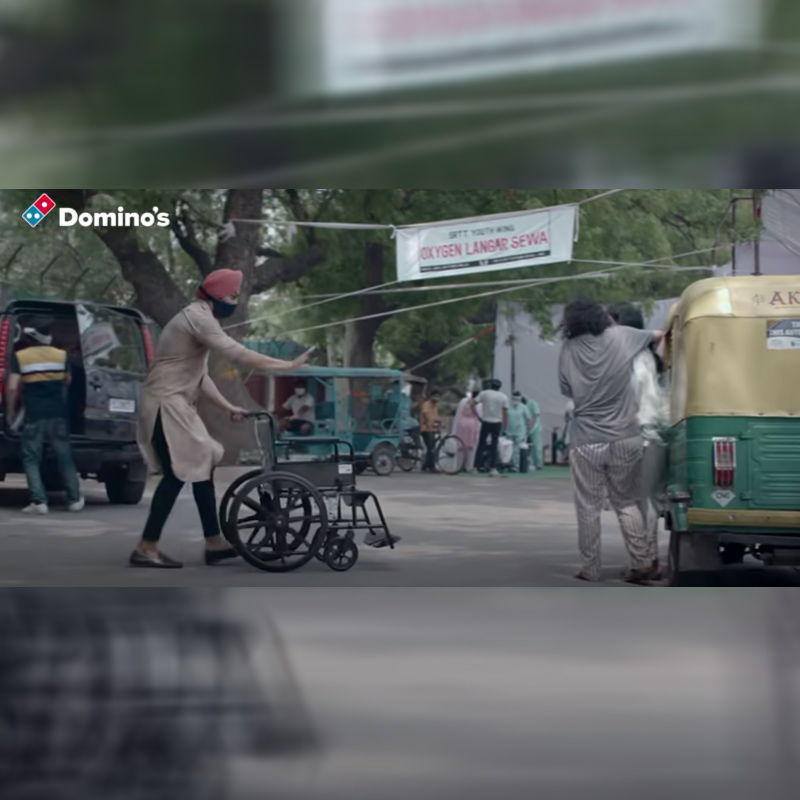
    Domino’s ke Saath #HaathBadhaoIndia #VaccineLagaoIndia by FCB

    The empathetic ad film by Domino’s takes a look back at the struggles that people went through during the pandemic. Domino’s tells people to extend their hands once again and get vaccinated together through its ad film. FCB India conceptualised the campaign. The ad film was directed by Amit Roy of Love Aaj Kal fame, and lyrics penned by Swanand Kirkire.

    Unacademy- #TeachThemYoung by Lowe Lintas

    This ad campaign by Unacademy and Lowe Lintas, Made by Lowe Lintas, tells how a brother opening her sister’s bag is nothing but an invasion of her privacy and boundaries. It talks about empowering women and teaching gender equality to boys at a young age.

    Cadbury- Not just a Cadbury ad by Ogilvy

    Undoubtedly the pandemic has shaken the spine of the Indian economy. While the big brands managed to bring back their business quickly, the local ones couldn’t do much due to the lack of resources. The spot by Ogilvy features Shah Rukh Khan, who is seen promoting local cloth merchants, shoe shops, electronic stores and the nearby Kirana shop. The ad showcased 7000+ stores across 34mn consumers in two weeks.

    Facebook- Pooja Didi by Taproot Dentsu

    The ad campaign designed by Taproot Dentsu ignites hope among the users. The ad highlighted how we could reach out to the many unorganised sector workers who had lost their livelihoods.

  • Wavemaker launches South entertainment outpost for brands

    Wavemaker launches South entertainment outpost for brands

    Mumbai: Wavemaker India has unveiled a specialised unit in collaboration with One Mercuri which will focus on helping brands leverage the entertainment and content businesses in South India. The unit will open up a whole new world of collaborations and opportunities for brands and creators.

    The unit will be based out of Wavemaker’s Bangalore office and led by Anilkumar Sathiraju under the leadership of Karthik Nagarajan.

    This is an effort to help corporatise the business of South entertainment, by way of providing brands structured access to entertainment content from the south, right at the conception stage. It will deliver on creating original content IPs, enabling better brand associations in films and OTT content (audio & video), bringing in an era of measurement and collaborations with writer rooms, among other things. The partnership will be a catalyst in developing the symbiotic relationship between brands and the South entertainment industry – one that has under-delivered so far.  

    “We have always focussed on paving newer ways to provide innovative solutions to our clients and partners. Creativity, content and collaboration are the three pillars of this newly launched specialised unit,” said Wavemaker South Asia CEO Ajay Gupte. “We see huge potential in content, partnerships, digital content and content creators / influencers in the next few years. With this unit, our aim is to create a new wave in the entertainment and business space.”

    Southern entertainment industry releases more than 900 films in a year. While Bollywood witnessed a tepid response to the reopening of cinema halls, for example, the Southern films and entertainment industry has led the way. The same is also true in terms of original content creation during the pandemic.

    “The South entertainment industry has always held a great promise for national brands but it is also true that historically this promise has never been realised,” said Wavemaker India chief content officer Karthik Nagarajan. “There are probably two key reasons for this –  the cultural understanding of the South is scarce among national brands and – the entertainment industry here is also more independent in nature compared to Bollywood, which makes tie-ups a bit more challenging. This outpost is an attempt to overcome both these challenges and make brands a significant stakeholder in both South films and streaming content.”

    “In One Mercuri, we not only have a trusted partner to the entertainment industry but also one with a strong understanding of brands,” he further said.

    This first of its kind specialised unit will help create original content IPs on audio and video OTT channels, bring some of the legends in the industry into the digital content-verse and also bring in brand investments into film and streaming content. Wavemaker with its proven track record in content marketing will leverage its expertise in IP creation, audience understanding, measurement and culture scoping for the partnership.

    “A resurgence of quality content from the region which is home to the four thriving film industries besides a large entertainment-hungry viewership, a larger than life fan following base seen nowhere in the world and the content coming out from this region fast attracting global interests and gaining prominence on pan India scale,” commented One Mercuri MD and group CEO Sriram Bakthisaran. 

    “With our already significant presence in the south market having serviced some of the biggest production houses and the celebrities in the past, we feel we are better placed to expand our offerings than before as we jointly venture out to feed all stakeholders including the consumer, the production houses as well as the brands. As Wavemaker has all the experience and know-how with their global exposure, I am very confident that this collaboration will only elevate the industry and set standards for several to follow and benefit,” Bakthisaran added

  • 71 per cent of Indian marketers’ budgets to increase in 2022: DCMN Growth Guide

    71 per cent of Indian marketers’ budgets to increase in 2022: DCMN Growth Guide

    Mumbai: At least 66 per cent of global marketers expect their budgets to increase next year, with this figure rising to 71 per cent for Indian marketers alone, showed a new analysis published by DCMN, the growth marketing partner for digital brands.

    The ‘Growth Guide’ released on Thursday looks at marketers’ goals, strategies and challenges going into 2022, and points to a new period of growth for the industry.

    While, in India, 71 per cent of Indian marketers surveyed expect an increase in their budgets in 2022, it was 75 per cent in France and 68 per cent in the US. It’s good news for marketing and advertising agencies with the vast majority of Indian respondents – 93 per cent – planning to increase their spending on agencies in the next 12 months.

    Aside from spending on agencies, budgets will go towards experimenting with new formats and advertising channels. Outside of digital advertising, the three channels Indian marketers plan to focus on and invest in the most are mobile advertising, podcasts and linear TV.

    The research also shows that 62 per cent of Indian marketers are more focused on long-term branding efforts, versus 33 per cent for performance-oriented goals. This is remarkably in-line with global figures, at 65 per cent versus 31 per cent.

    The new year also comes with its own challenges. As advertising campaigns grow ever more complex, marketers in India are most concerned about managing and reconciling large amounts of data across channels. Keeping up with privacy regulations comes in second place, as policies targeting iOS and the future of cookies are set to dramatically reshape the marketing world.

    The research conducted by Censuswide on behalf of DCMN surveyed 600 in-house marketers in the US, the UK, France, the Netherlands, Germany and India. The results offer an understanding of how the marketing landscape has changed after a tumultuous few years and how optimistic brands are heading into 2022.

    “At DCMN, we wanted to take a closer look at where the marketing industry stands right now, and the impact of a disrupted 2020 and 2021. The results are impressive, and point to a marketing rebound in the coming year – both in India and in other countries around the world. Overall, we’re seeing that branding efforts remain top of mind for marketers. It’s also clear that brands still have huge faith in linear TV, with mobile advertising and TV set to be some of the most popular channels for marketers to invest in next year,” said DCMN country head – India Bindu Balakrishnan.

  • TV Brand Fest 2021: Brands share mantras for enhancing market share through TV.

    TV Brand Fest 2021: Brands share mantras for enhancing market share through TV.

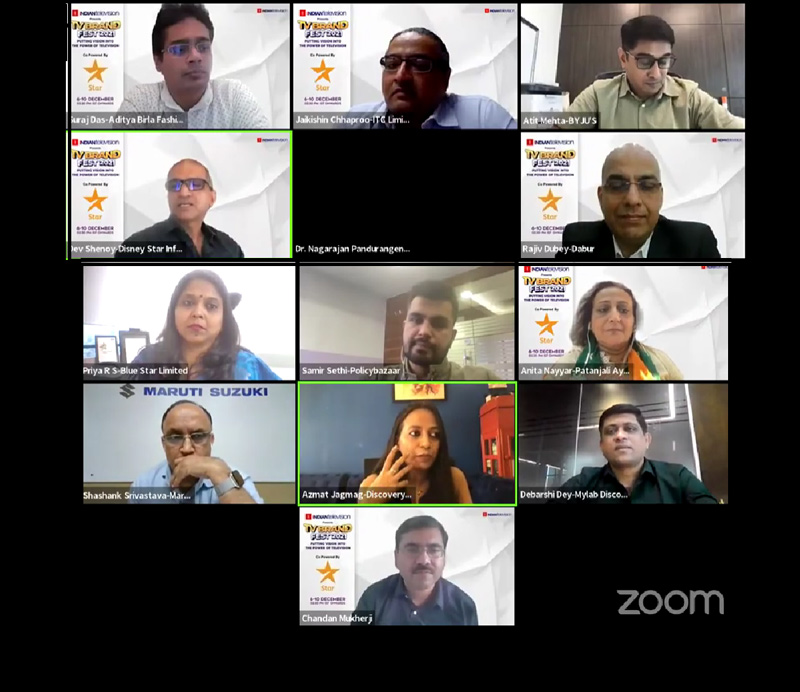
    Mumbai: Day two of the five-day TV Brand Fest summit being organised by IndianTelevision.com saw brands discuss their experience, with regards to increasing the market share while using Television as a communication tool.  

    Ernst & Young partner & leader – Consulting Markets Monesh Dange, who was moderating the discussion set the ball rolling by asking Lenskart media head Anupam Tripathi about the brand’s transition from a D2C brand to a house of brands model.

    “As a consumer you don’t just buy a product, you buy a brand,” asserted Tripathi. “So, having the entire control on the product- from production to the end user- eradicates the middle men which saves cost and gives value-for-money to the consumer. It was a carefully thought-of year-long strategy.”

    Matrimony.com GM – marketing communications Akhil Jain talked about how the brand replicated its urban success in rural areas. The brand has recently launched the website in Tamil version. “In the last five to six years, internet penetration has grown exponentially & led to a rise in vernacular users,” he noted. “Our overall learning is that if you can break the barrier of language then you will see tremendous success.”

    Syska Group’s head of marketing Amit Sethiya encapsulated the marketing-led growth of the over 30 years old SSK Group. For the Syska brand’s communication, the company did not go into product-driven promotions, but rather ventured to educate the masses on why they need to buy LEDs. “For almost five to six years we supported the entire category. And today Syska has become synonymous with the LED category,” he said, while adding that the brand has now expanded into wires, cables, as well as mobile accessories.

    “Marketing is both an assailant and a victim of its own creation,” said Upstox senior director, Marketing Kunal Bhardwaj, adding that a year and a half ago nobody even knew this category existed, much less the brand, but they came up with a mix of traditional and non-traditional marketing media, using them to their maximum potency. “Nothing beats Television when you want to create awareness and nothing beats digital when you want to create Call-to-actions or a reminder medium,” said Bhardwaj, adding that the Media mix, along with a “190 per cent effort on retention and user experience” were the three things the start-up focused on the most”. He also added that the English-first app is also looking to expand its language boundaries.

    The pandemic hit every business sector and category. Talking about the specific marketing strategies during the prevalence of the pandemic, Amit Sethiya of Syska Group shared that the first thing that the brand did was to remain completely agile and optimise the distribution channel.

    The government mandate that personal care appliances were considered semi-essentials helped the brand and they placed their products across all the medical and kirana shops which were the only ones operational during lockdowns. “That’s also when we saw the uptake of contactless lighting and smart home products as people were at home 24/7, so we quickly tapped into that,” added Sethiya.

    Tripathi shared Lenkskart started the digital revolution in spectacles buying in India and with time many new features have been introduced based on consumer behaviour and needs. Having started with 3-D trial more than four years back, the brand has now moved on to AR (augmented reality) & HTO (home try on) on the app.

    The panellists unanimously agreed on the importance of Television in carrying the brand message to masses. “The moment we stop TV, we see a downfall in traffic, app installations, social media interactions and even calls. So there’s no competition,” said Tripathi.

    Marketeers realised that when push comes to shove with disruptions such as the one caused by the pandemic or else technological disruptions, the key is to be very agile and help brands reach their objectives, agreed the participants on the panel.

    The five-day event is being organised by IndianTelevision.com, and co-powered by Star India.

  • TV Brand Fest 2021: Marketers relook at TV ad spends in times of disruption

    TV Brand Fest 2021: Marketers relook at TV ad spends in times of disruption

    Mumbai: The media industry and the economy saw an unprecedented level of disruption post-lockdown phase. As marketers went back to the drawing board to scrutinise their media spend, TV advertising moved from strength to strength commanding the highest share of advertising spends.

    “Television will continue to command the majority share of ad-spends in the next five to seven years,” asserted ITC head of media Jaikishin Chhaproo, as he began the discussion at the ‘TV Brand Fest 2021’ – a five-day event being organised by Indiantelevision.com, and co-powered by Star India. Day one of the event saw marketers and prominent TV advertisers discuss ‘The power of television in times of disruption’ and ways of ‘Using TV + digital strategy’.

    Maruti Suzuki India executive director – marketing and sales Shashank Srivastava noted that out of the Rs 700 crore spent on advertising, the brand spent 34 per cent on TV and 27 per cent on digital. “In terms of building brand imagery, especially in the auto category, there’s no substitute for TV,” he noted.

    Most industries were impacted by the pandemic. However, the edtech sector was one of the few that saw an increase in demand during the lockdown. Byju’s head of marketing Atit Mehta observed that this was an important moment for the edtech industry to build top of the funnel awareness. “One of the categories that increased their advertising spends during lockdown was edtech,” he said.

    The fast-moving-consumer-goods (FMCG) category remains the largest advertiser on TV. Despite the impact of the pandemic on the bottom line of most consumer goods companies, this category remained visible on TV. “FMCG cannot do without TV because you need the reach, frequency and eyeballs,” said ITC’s Chhaproo.

    “A significant number of categories operate around the magic price point of Rs 10. Due to the impact of the pandemic on the supply chain, continuing to offer this price point to consumers became a challenge”, said Chhaproo. “We had to constantly communicate to consumers to drive them to our products.”

    The category which usually invests on general entertainment channels, shifted media spends on other genres on TV. “We shifted our spends on TV to the news genre because consumption had gone up significantly,” remarked Dabur head of media Rajiv Dubey.

    Covid was a timeout for the entire world and when the normal choices were unavailable to consumers they began experimenting with different modes of consumption. When fresh content returned to GECs last year, Dubey observed that there was a significant consolidation of viewership in the eight regional markets that Dabur looked at including South (Karnataka, Andhra Pradesh/Telangana, Tamil Nadu and Kerala), West Bengal, Maharashtra, Orissa and Bihar.

    “The viewership has been on the upswing in these regional markets with consolidation of viewership in fewer programs and channels,” said Dubey. “We’ve seen that if you speak to a consumer in Maharashtra, in Marathi, using a Star of his choice, it works better.”

    There are 40-50 million homes that watch only free-to-air channels on Prasar Bharati’s free DTH platform DD Free Dish, Dubey said. “The FTA channels work like magic if you want to advertise products with smaller price points. Unfortunately, the major FTA channels only cater to Hindi-speaking audiences and no other language audiences.”

    In terms of consumer behaviour, there is a key overlap in terms of audiences on TV and digital. Audiences are watching both these media at different points in time. For Policybazaar.com’s vice president and head of brand marketing Samir Sethi it became important to map these audiences to optimise ad spends.

    He said, “The attention is now divided between a TV and mobile phone. Earlier, people watched TV undivided but now they’re also multitasking on a mobile phone. We’ve seen that there are times when people are influenced enough by your communication on TV that they respond by checking out your website or downloading your app on mobile.”

    A lot of digital and direct-to-consumer brands have understood and leveraged this behaviour. When it comes to achieving their growth targets, “all the major D2C brands have come on our platform (TV) to reach audiences at scale,” remarked Disney and Star India head of sales for infotainment, kids and regional cluster Dev Shenoy.

    In the last 18 months, ad spends have inevitably shifted to digital media platforms. For example, with retail spaces closed, certain category spends have completely moved to e-commerce. Maruti Suzuki’s Srivastava said, “At the top end of the funnel there is no substitute for TV. Digital becomes more important at the lower end. In the consideration stage of the brand, there’s an overlap.”

  • Havas Group India restructures Havas Worldwide (Creative) leadership

    Havas Group India restructures Havas Worldwide (Creative) leadership

    New Delhi: Havas Group India has elevated Arindam Sengupta as chief client officer of Havas Worldwide India and head – Group Integration, here on Thursday. He was previously managing partner – West & South.

    The announcement is part of the phased restructuring of the Havas Worldwide (Creative) leadership that comes on the back of the company’s recent growth.

    Sengupta will also continue to head the French automobile brand Citroen India, and other key clients of Havas Worldwide India. As head of integration, he will work closely with the leadership team of all the Havas Group companies, drive higher growth and business collaboration, which will dovetail into the overall Better Together philosophy of Havas Group India, it said in a statement.

    The agency has also promoted Havas CX executive vice president and business head Prashant Tekwani who will now additionally also head the Mumbai operations of Havas Worldwide India, working closely with Manas Lahiri. He will continue to lead and build Havas CX which was launched in India in late 2020, and accelerate digital transformation and consumer experience-led brand strategies.

    Arindam and Prashant (as head of Havas CX) will continue to report to Group head Rana Barua and work closely with the senior leadership of Havas creative and the group companies, according to the statement.

    Prior to this, the agency had promoted Manas Lahiri as managing director and Ravinder Siwach as ED & national creative director of Havas Worldwide India, respectively.

    Havas Group India – Group CEO Rana Barua said, “Despite the challenges of the last two years, as a network, we have witnessed unprecedented growth through new business wins, acquisitions and extending several global expertise to India. All of which has helped us build a marquee list of new clients and partnerships. Havas Group India has emerged as one of the strongest integrated networks in India, offering our clients effective solutions through collaboration and coming together of the best talent and expertise.”

  • GUEST COLUMN: The future of Fantasy Sports Market in India

    GUEST COLUMN: The future of Fantasy Sports Market in India

    Mumbai: India has been a sports-loving nation. With Cricket, Football, and Kabaddi as the most sought-after sports, we’ve got thousands across the country who’d swear on their love for a good game. This has been one of the reasons for the emergence of fantasy sports in India. It gives the sports enthusiasts a chance to draft their teams with the best of players.

    Going to a sports match or sitting glued to the TV is something that every sports enthusiast in the country has done. Moreover, every fan has a set of opinions or expertise in the game. That’s where Fantasy Sports steps in. It gives the users the excitement of real-time action, a first-hand thrill of participating in future tournaments, and cash rewards if they win.

    With the increasing popularity of fantasy gaming leagues and frequent contests, fantasy sports enthusiasts are growing by the day. The number of fans capitalising on their sports knowledge has gone up 25X in the last ten years, and more potential players are waiting to join the trend.

    Along with a massive craze for sports, digitalisation is another factor that resulted in the emergence of fantasy sports platforms. More tech-savvy millennials in India are participating in fantasy sports tournaments. In fact, the past decade has witnessed a growth of around 700 per cent in the fantasy sports market.

    The online fantasy gaming platforms have allowed a massive chunk of sports aficionados to use their understanding of the game and play their role in online fantasy sports events. While the Cricket-frenzy in the Indian audience is well known, these platforms allow the users to explore other segments. With the introduction of new-age strategies in Fantasy Cricket, most platforms have seen a massive engagement of enthusiasts, with them becoming a part of the Indian T20 League and other tournaments. These platforms have started catering to a large audience, and are now expanding their offerings to league sports, even for Football, Kabaddi, and Basketball. Establishing a link between technology and the sports ecosystem, users can now be a part of multiple sporting events. The shift has been received well by sports enthusiasts increasing engagement in real-time sports that need attention.

    Currently, over 20 million people play fantasy games in India, and the number is estimated to reach 150 million by 2022. With so many people turning to fantasy sports, the market segment is expected to accelerate in the coming years. One of the reasons for the massive participation is the user-friendly fantasy gaming applications and increased internet penetration across the country. Besides gaining traction amongst the community keen on sports, the sector has seen large revenue growths too. In 2020, the industry generated a revenue of $3.4 million. In fact, the fantasy sports segment is estimated to reach $ 3.7 billion by the year 2024.

    With the potential of growth, fantasy sports platforms in India follow specific guidelines and principles as a part of the ‘game of skill’ category. It involves strategy, understanding, expertise, and knowledge by the participants. As a rapidly growing tech-driven industry, the market segment attracts a substantial number of investors. A report by NITI Aayog approximates that the fantasy sports industry has the potential to attract FDI of more than Rs 10,000 crore over the next few years.

    The sports ecosystem has seen a massive shift with the ongoing digitisation. The increase in the use of smartphones has enabled most sports enthusiasts to enjoy the thrill and excitement of sporting tournaments with fantasy sports. While increasing the knowledge of multiple sporting events, fantasy gaming platforms have witnessed a hiked participation in fantasy sports leagues and contests related to Cricket, Football, and Kabaddi, to name a few.

    Besides this, with a massive population of sports enthusiasts, surging demand in fantasy sports, and ever-evolving advancements in technology, India is set to grow rapidly in the online fantasy sports segment.

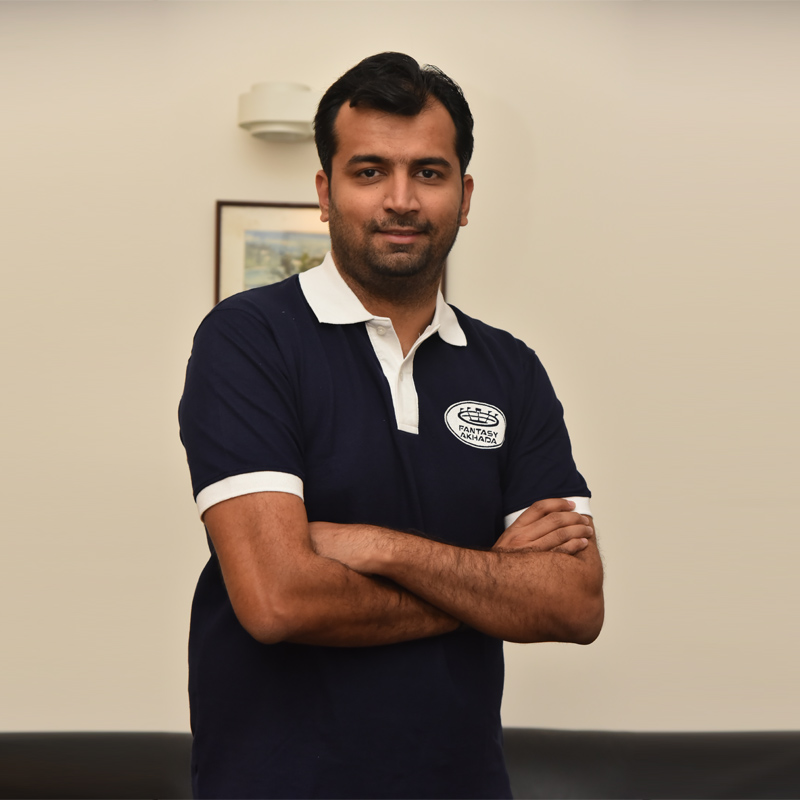
    (Amit Purohit is the founder of Fantasy Akhada. The views expressed in the column are personal and Indiantelevision.com may not subscribe to them.)

  • GUEST COLUMN: The future of ed-tech in India

    GUEST COLUMN: The future of ed-tech in India

    Mumbai: Ed-tech is a trending buzzword today. It is simply a combination of education and technology, implying the augmenting of education using technology and digital tools. The canvas of Ed-tech is extremely vast and transcends learning across ages, grades, vocations, and skill enhancement.

    I would like to specifically focus on the impetus Ed-tech is bringing into India for children in their formative, school-going years.

    India has over 264 million school-going children, more than any other country in the world. We also have ~15.5 lakh schools in India. While digitisation was slowly seeping into our lives and how we do things, be it online vocation or coding classes; education delivery was largely traditional through the brick and mortar classroom format. However, the pandemic has led to sudden acceleration and even disruption in the way technology is integrated into education and leveraged to bring best-in-class learning direct to home!

    The ecosystem is well poised to accept ed-tech. Today, 80 per cent of the school-going children are aware of ed-tech and there are over 500 million active internet users expected by 2022 (up from 350m in 2019) (Source: BLinC Insights 2021). The National Education Policy announced in 2020 acknowledges the importance of online interventions and outcome-based learning. By 2022, online education offerings across grades 1 to 12 are projected to increase 6.4 times. (Source: Omidyar Reedseer Report, 2019-20)

    The benefits are multi-fold with students getting access to best-in-class academia, supplementary support, skill-building, application-based learning, and more sans boundaries. Educators will get their due with an opportunity to transcend geographical horizons, surpass barriers of formal structures and impart learning for the outcome. A few exciting things we can look forward to in the future are:

    More Application, Less Instruction

    While LIVE, online classes are a fantastic platform and will continue to unite educators and students alike, we will also see the application and outcome-based learning gaining traction. We are seeing a lot of game technology used for better engagement. These will be further used for core learning and even supplementing academics. For example, at BrainGymJr, we provide puzzles and challenges based on Math, English, and real-world skills in fun formats such as crosswords, digit cards, etc. Children can solve and learn the real application of what is being taught in school.

    One Size will not fit All

    We already know that every student in a given class has a varying level of proficiency. While we reward better performance and celebrate achievers, we have limited capacity to tailor learning based on proficiency and aptitude. However, technology can enable extremely detailed insight into the core proficiency of every child. Application of analytics and enabling machine learning will further help customise to the strength of every child and nudge them from there. AI and big data will help empower students to develop their competencies, critical thinking, and creative abilities.

    Learning on the Go!

    We will see more self-initiated and self-learning formats gaining precedence. These formats will provide flexibility of space and time while giving clear results on learning. This could be in the form of activities, puzzles, short courses, daily quizzes, video-based learning, and more. Over time, these will be acceptable outcome-based learning modules with due credit and consideration breaking away from scheduled or structured learning courses.

    In summary, information will not be king, the intent to learn will rule. A couple of decades ago, Google brought about a huge change in how we perceive information and knowledge, with everything available at a click of a button. We now see this permeating education and learning. We already have and will continue to have an abundance of learning courses, material, and information. Peer-to-peer exchange of information will be encouraged and even facilitated. Educators and students will be seamlessly connected.

    Ed-tech will evolve further wherein the value addition brought about by customised learning, analytics-based insights, deep engagement, and outcome-based programs will be what differentiates the learning experience for every student.

    “Tell me and I forget, teach me and I may remember, involve me and I learn” – Benjamin Franklin.

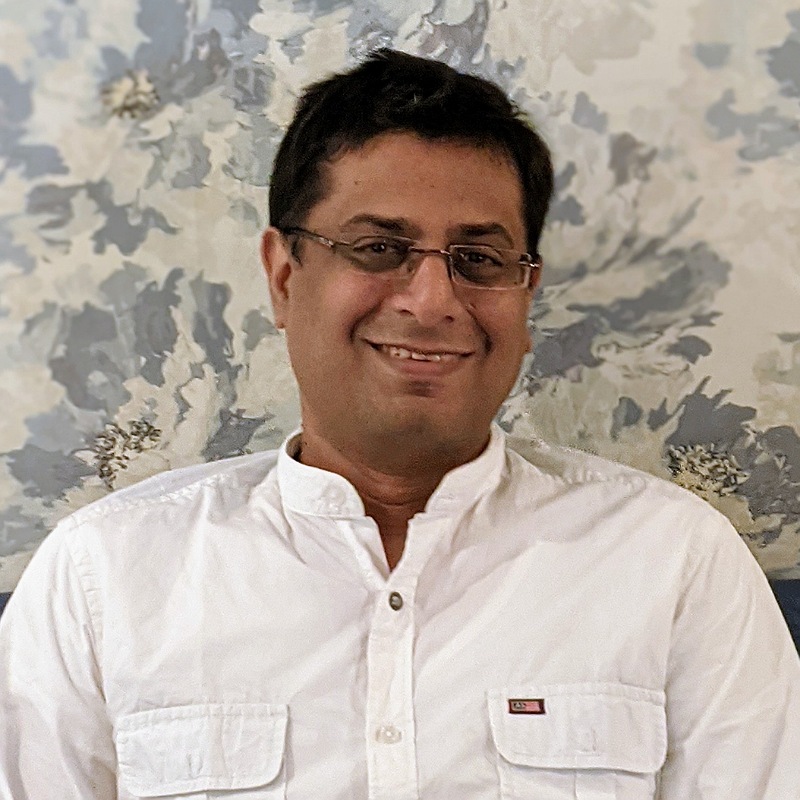
    (Vidur Garg is the founder at BraingymJr. The views expressed in the column are personal and Indiantelevision.com may not subscribe to them.)

  • International Men’s Day: Brands challenge stereotypes, start conversation on mental health

    International Men’s Day: Brands challenge stereotypes, start conversation on mental health

    Mumbai: “Real men don’t cry. Real men are tough, real men don’t seek help, real men are self-sufficient. Be strong. Be a man.”

    When it comes to gender-based stereotypes, it’s not just women, but men who also become victims of rigid and deeply entrenched cultural expectations. We live in a society where the identities and roles of individuals are often linked to their gender. That’s why it’s important to question these biases and normalise conversations around positive masculinity and manhood.

    This International Men’s Day, that’s what several brands did as they raised awareness on men’s issues that are normally brushed under the carpet.

    Man Matters

    The home-grown digital health platform for men launched a digital campaign #MenDontTalk. The brand roped in Mirzapur fame actor Divyenndu Sharma to encourage men to speak up and start conversations around their health and well-being. The digital film executed by Spring Marketing Capital addresses how socially recognised ideas about masculinity are proving painfully slow at changing the mindset. The archaic concept of ‘Alpha’ is compelling men to impose self-enforced silence on issues related to mental health, medical problems, intimacy, and other struggles. The campaign seeks to break this unhealthy cycle of stigma and urges men to open up and normalise conversations around one’s wellbeing.

    The campaign also sheds light on statistics revealing that 28 per cent of men don’t seek medical help for mental health conditions while 35 per cent wait more than two years or have never disclosed a mental health problem to a friend or family member. As per another recent survey conducted by a brand, over 80 per cent of the men do not express their emotions for the fear of being judged or getting embarrassed in front of their peer group.

    Bombay Shaving Company

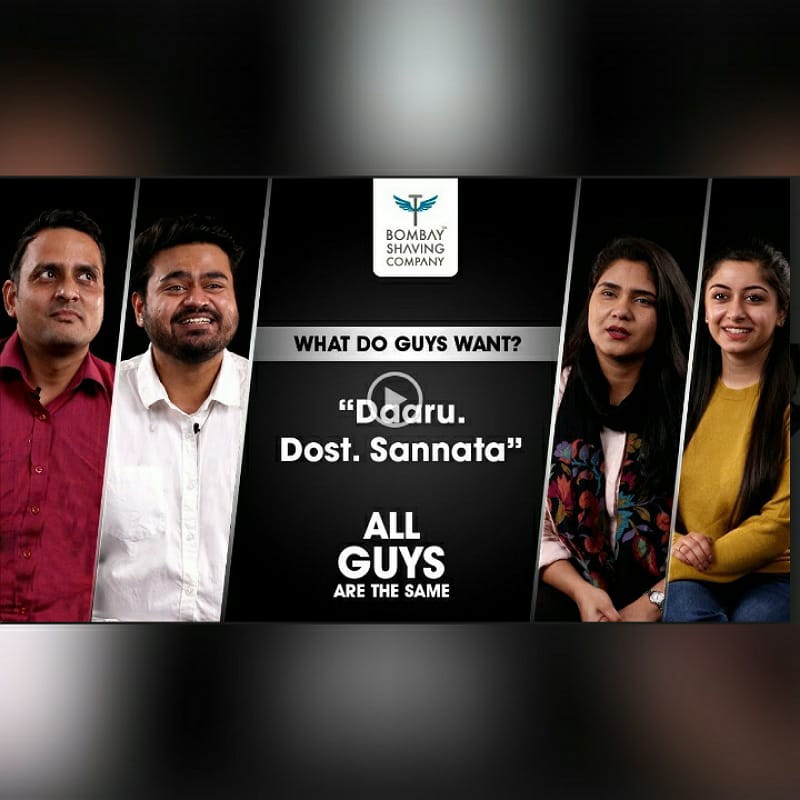
    The men’s grooming brand celebrated International Men’s Day by rolling out a campaign video #AllGuysAreTheSame. The video highlights archaic generalisation and preconceived notions about men and their emotional, behavioural, and social orientation, which results in all men being boxed into the same labels.

    The campaign conceptualised and developed in-house by the Bombay Shaving Company team tries to get close to the truth by interviewing nine men and eight women and asking them revealing questions about men. The difference in the unfiltered and heartfelt responses of these men and women highlight the misconceptions about men in our society, revealing that ‘all men are not the same’. Amusing yet thought-provoking, the film reveals some home truths about men, their struggles, insecurities, vulnerability, and stacks of self-doubt.

    SBI General

    SBI General highlighted the important and diverse roles that men play in our lives. From being a responsible sibling to a dependable husband and caring father and a son, it’s the little things men do that make them the original providers of ‘Suraksha aur Bharosa dono’ for their loved ones. The campaign by Tonic Worldwide emphasise the struggles men go through while safeguarding their families, even as they ensure to provide Suraksha and Bharosa.

    Mankind Pharma

    The importance of starting a conversation about positive masculinity can go a long way in shaping the gender notions for the coming generations. It is equally crucial to call out toxic masculinity when one sees it. Society is often guilty of turning a blind eye to a man’s not-so-gentlemanly behaviour under the guise of tropes like ‘Men will be men’.

    This International Men’s Day, Mankind Pharma tackles this unpleasant, difficult but more relevant than ever subject through its campaign  #NahiChaltaHai. It encourages people to educate themselves and be aware of the behaviours that can be uncomfortable and are downright wrong. The video featuring actor Adil Hussein urges us to talk with the men and growing boys around us to tell them about the acts that are unacceptable while promoting gender equality and improved gender relations to create a safe and better world for everyone.

    Kotak Mahindra

    The bank paid a sweet tribute to different roles played by a man in easing the lives of their families with a social media post that goes: “Thank you for loosening the tight jars, reaching the top shelves of the cupboards, being our go-to heroes, and helping us be our best selves every day”

    Onsurity

    The homegrown digital monthly employee health benefits subscription platform for SMEs & start-ups has launched a digital-first campaign #ManItsOk to mark International Men’s Day. The campaign encourages men to be vocal about their emotions and express themselves, driving the core messaging that it’s perfectly ‘OKAY’.

    The #ManItsOk campaign will run for a week, starting from 18 November to 25 November kickstarting with a social story campaign encouraging men to share stories that resonate with the theme, leading to a weeklong employee and their family engagement initiatives.

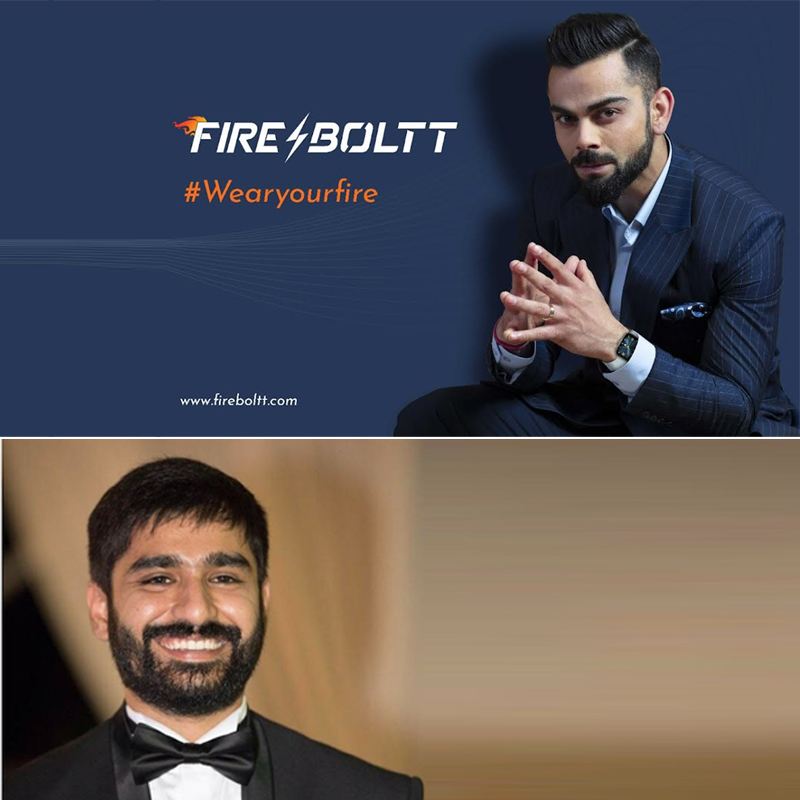
  • The pandemic had a phenomenal impact on the wearable space: Fire-Boltt’s Arnav Kishore

    The pandemic had a phenomenal impact on the wearable space: Fire-Boltt’s Arnav Kishore

    India’s wearables market grew 118.2 per cent year-over-year in the April-June quarter of 2021, shipping 11.2 million units according to the recent data from the International Data Corporation (IDC)’s India Monthly Wearable Device Tracker. In a market dominated by the likes of Apple & Fitbit, strong shipments from home-grown brands in earwear and watches fuelled this growth.

    ‘Made in India’ brand Fire-Boltt identified the gap and was quick to leverage this trend and align the device portfolio. The Indian brand entered at fourth position in just three quarters of starting its business in the smart wearables category, cementing its place among the top five brands in the already crowded market in the wearable tech space.

    Co-founded in 2019 by Arnav Kishore in partnership with Aayushi Kishore, Fire-Boltt currently has a presence in over 750+ cities across the country and emerging as a strong contender in the budget smartwatch brand segment.

    Backed by a strong DNA of wearable technology, having launched an AI-based wearable fitness startup- Boltt Sports Technologies Ltd in 2015, Kishore’s entrepreneurial journey began shortly after he completed his education. Awarded and featured under CNBC-TV18’s ‘Young Turks,’ co-founder Arnav Kishore aspires to take affordable, industry-first feature-packed smartwatches to the masses. The brand roped in cricketer Virat Kohli as its brand ambassador ahead of its global debut.

    IndianTelevision’s Anupama Sajeet caught up with the young visionary entrepreneur for a freewheeling conversation on being one of the early movers in the highly competitive and crowded domestic market. Kishore also shared his vision for the young startup, post-teaming up with Kohli.

    Edited excerpts:

    On the challenges faced as a home-grown brand to penetrate into the wearables sector

    While it is true that the Indian wearable market is cluttered with a plethora of offerings from several brands, the fact remains that there was a severe dearth of quality products at affordable price points till very recently. With decades-old DNA in the wearable space, we identified the lacunae and filled the same with premium offerings in the most economical range. Also, we ensured plenty of options to choose from, each conducive to the needs and liking of different individuals. This is how we grew as a home-grown brand and eventually as the main pilot of the booming Indian wearable market.

    To ensure that we established a long-term rapport with our existing as well as prospective customers, we onboarded reputed names like actor Vicky Kaushal and cricketing icon, Virat Kohli. This made the buyers trust our brand, and most obviously, we made sure that they always got something new and special from each of our offerings.

    On onboarding Virat Kohli as brand ambassador

    Rather than an endorsement, we have collaborated with the iconic cricketer on a long-term basis. Virat Kohli will be participating in different marketing, ad, and endorsement campaigns as our brand ambassador. Just days ago he unveiled our complete line for the UAE market, where we forayed recently. With the cricketer being amongst India’s most valuable celebrity brands, an association with him has definitely been a boost for our brand value. Also, we have not put any deadline on the association as of date.

    We have already taken the next big step by kick-starting our global expansion, post the onboarding of Kohli as our brand ambassador along with Vicky Kaushal. Within the next few weeks, we intend to further expand our presence across all Emirates, following which we will head towards other geographical regions.

    On the brand’s marketing strategies

    Fire-Boltt has grown as a formidable home-grown wearable brand owing to a strategic communication roadmap, which we have charted through our different marketing and communication partners. An omnichannel approach has made our products rank amongst the best-sellers on leading e-commerce platforms like Amazon, and has also enabled us to establish an offline presence across more than 750 cities across India.

    On the media mix, Fire-Boltt is looking to target

    We have always banked on an omnichannel approach, having a mix of different media such as print, television, or digital. In the past 18 months, the focus has definitely inclined towards digital, which is the buzzword in the new normal. Going forward too, we expect digital to rule the roost.

    On plans to leverage influencer marketing mode of advertising

    The impact of influencer marketing cannot be disputed. However, we take a little broader approach by collaborating with big celebrities rather than just endorsements of different products by different influencers or celebrities. We feel a lack of coherence in the same, hence we took an informed decision to take a rather traditional approach of getting brand ambassadors on board for the long term.

    On the difference in the brand’s consumer base, pre & post covid

    The pandemic has had a phenomenal impact on the wearables space, not only in India but across the world. The realisation of keeping a constant tab on health metrics along with physical activities has been the major catalyst for the growth of the wearable market. Even IDC mentions that the watch form factor has been appealing to the consumers over the past few quarters. This is the reason why the Indian wearable market registered a whopping 118.2 per cent YoY growth in the June 2021 quarter. As per the latest Counterpoint Research report, India’s smartwatch market registered a 293 per cent YoY in Q3 2021.

    On the brand’s current consumer demographic

    As per the latest Counterpoint Research report, Fire-Boltt has been adjudged as the fastest growing smartwatch player in Q3 2021, clocking QoQ growth of a whopping 394 per cent. This signifies that our reach is beyond the digital divide, age group, or geographical constraints. We started with an offline presence in nearly 350 cities, and within a year, we have expanded to over 750 cities. It goes without saying that the expansion was not confined to just metro cities but also to different tier 2 and tier 3 cities. Regarding catering to any definite age group, we understand that health metrics are intrinsic to everyone who wishes to lead a healthy and active life, thus we have crafted multiple timepieces sufficing the needs of people from different age brackets and demography.