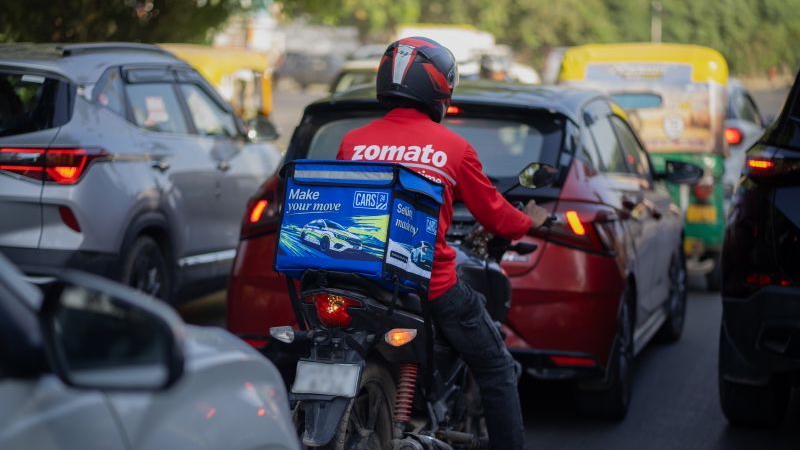
BENGALURU: Bengaluru’s gridlock has found a new purpose. Cars24, the used-car platform, has plastered its branding across thousands of Zomato delivery bags, turning food couriers into roving billboards. The logic is simple: if the city won’t move, let the marketing do the moving.
The partnership transforms everyday delivery bags into brand real estate. With Zomato’s army of riders weaving through traffic and queuing at signals, Cars24 reckons it’s found a captive audience where traditional out-of-home advertising stands still.
“OOH is great. But MOH—moving out of home—is better,” says Cars24 head of creative, content and communication Prachi Sharma. “We had one simple idea: take the brand to the streets in a city that is constantly moving.”
The company frames this as part of a broader hunt for unconventional brand surfaces. Delivery bags today, something else tomorrow. For now, Cars24 is treating the exercise as an experiment, promising to share learnings and impact data once the campaign wraps.
It’s marketing that moves with the traffic—and in Bengaluru, that means it moves very slowly indeed. Which, for advertisers, may be precisely the point.
Second-hand car platform tests “moving OOH” as traffic-choked city becomes captive audience
MUMBAI: Television advertising in 2024 wasn’t just background noise—it was prime-time gold, stealing the spotlight from even the most dramatic soap operas. According to TAM AdEx – 2024 Television Advertising Recap, TV ad volumes surged 14 per cent compared to 2020, proving that the battle for consumer eyeballs is still raging.
Globally, television ad spending is expected to touch $177 billion, with India alone seeing a nine per cent rise in TV ad expenditures compared to 2023. The second quarter alone saw a six per cent growth over the first, while the fourth quarter took a six per cent dip—probably because people were too busy binge-watching holiday specials to pay attention to ads.
But who poured in the most cash? Which industries turned up the volume? And which brands refused to be skipped? Buckle up—this one’s a wild ride through the world of TV ads.
Who was buying all that airtime?
If you turned on your TV in 2024, you were likely bombarded with ads from the food & beverages sector, which took a massive 21 per cent share of ad volumes, proving that snack cravings and screen time go hand in hand. Not far behind, personal care/personal hygiene lathered up with 16 per cent. The household products sector scrubbed in at 9 per cent, because apparently, nothing pairs better with your TV drama than a cleaner floor.
But who ruled the ad wars? Hindustan Unilever dominated with 16 per cent of all ad volumes, closely followed by Reckitt Benckiser (India), which boasted five out of the top ten most advertised brands. If you feel like every other commercial was selling you a soap or detergent, you weren’t wrong.
If you thought soap operas were dramatic, the real drama happened in the soap advertising department. Toilet Soaps dominated the charts yet again, refusing to be flushed away. Laundry detergents, toothpastes, and floor cleaners scrubbed into the top 10, proving that cleanliness is next to advertising greatness.
Quarterly showdowns
2024 was a tale of peaks and dips. The second quarter flexed its muscles, rising by six per cent over Q1, only for Q4 to slump by six per cent compared to Q3. Maybe by year’s end, consumers had perfected the art of muting commercials.
Despite the dips, 92 per cent of all TV ad volumes came from just five channel genres—dominated, unsurprisingly, by general entertainment channels (GECs) and news. If nothing else, advertisers know exactly where the eyeballs are.
Which brands stole the spotlight? The award for most persistent ad on TV goes to Harpic Power Plus 10x Advanced, which climbed over 60 spots to claim the top brand of the year. It was followed closely by Dettol Toilet Soaps, Dettol Antiseptic Liquid, and Jiocinema App. Because what’s better than watching ads? Watching ads about an app that shows more ads!
Surprisingly, digital brands also made a larger impact, with e-commerce and fintech stepping up their ad spends. The TV ad game isn’t just about FMCG anymore; the tech world wants a piece of your screen time too.
Co-branding went bonkers. Indian cinema blockbusters and brands continued their love affair in 2024, with Pushpa 2 leading the charge, accounting for 21 per cent of co-branded ads. The film with the most brands fighting for screen time? Fighter, which partnered with a record 13 brands—making sure even if the movie didn’t knock out box-office records, it definitely conquered ad slots.
Who surprised us?
While the usual suspects stayed strong, some underdogs made surprising leaps. Paints saw a 51 per cent increase in ad secondages, because who doesn’t love a fresh coat of paint before their favourite reality show? Travel and tourism ads doubled, surging by 100 per cent, as people started daydreaming about vacations rather than just watching them on TV. But the real showstopper? Beauty accessories/products grew a jaw-dropping 303 times, proving that looking good isn’t just for movie stars anymore.
And the exclusive advertisers? Over 4,010+ new advertisers joined the television ad game in 2024. Leading the pack was Velnik India, proving that fresh faces aren’t just for reality TV anymore. From fintech to online shopping platforms, new players saw TV as the ultimate stage to make their mark.
If you thought TV ads were taking a back seat, think again—because brands are still duking it out for your attention like it’s prime-time gladiator combat. As long as there are eyeballs to mesmerise and remotes to misplace, ad makers will be there, squeezing their pitches between your favourite shows. Industry experts predict that 2025 will bring even smarter AI-driven ad placements, hyper-personalised content, and interactive ads that might just talk back if you ignore them.
So, buckle up for more soaps (literally and figuratively), more snacks (because snack ads are never going away), and an avalanche of co-branded spectacles. If 2024 was a preview, 2025 is shaping up to be the full-length feature film of advertising dominance.
MUMBAI: In an era where digital transformation is reshaping every aspect of business, marketing, and branding are undergoing revolutionary changes. With India’s digital consumer base projected to reach 900 million by 2025, the convergence of technology, changing consumer behaviours, and evolving market dynamics are creating new paradigms that will define the future of how brands connect with their audiences.
The rise of hyper-personalisation through AI
Gone are the days when segmentation meant dividing consumers into broad demographic groups. Today’s marketing is moving towards individual-level personalisation, powered by sophisticated AI algorithms. According to recent studies, 76 per cent of consumers are more likely to purchase from brands that personalise their experiences.
Indian success stories
– Myntra’s “Style Squad” AI engine analyses over 15 million fashion products to provide personalised recommendations, resulting in a 25 per cent increase in customer engagement – HDFC Bank’s EVA AI assistant handles over 50,000 customer queries daily with a 95 per cent accuracy rate – Swiggy’s AI algorithm processes over 40 data points per customer to customise food recommendations, leading to a 30 per cent increase in order values
The metaverse and augmented reality (AR) are no longer futuristic concepts but present-day marketing tools. The global AR market in retail is expected to reach $45 billion by 2025, with India showing one of the fastest adoption rates.
Notable Indian implementations
– CaratLane’s “Perfect Look” AR feature has increased online conversion rates by 40 per cent – Lenskart’s AR try-on technology serves over 10 million virtual trials monthly – IKEA’s AR app in India has reduced furniture returns by 35 per cent
– Flipkart’s “Camera, Your Story” AR feature enables users to virtually place furniture in their homes, with 30 per cent of furniture buyers now using this feature
Purpose-driven branding takes centre stage
Modern consumers, particularly Gen Z and millennials, are increasingly aligning with brands that demonstrate genuine commitment to social and environmental causes. Research shows that 88 per cent of Indian consumers want brands to help them make a positive difference.
Indian brand initiatives
– Tata Tea’s “Jaago Re” campaign increased brand loyalty by 45 per cent while raising social awareness – Hindustan Unilever’s “Water Conservation Program” saved over 900 billion litres of water while strengthening brand trust – Patagonia India’s “Repair, Reuse, Recycle” initiative has led to a 60 per cent increase in brand advocacy among young consumers
Emerging technologies transforming marketing
Blockchain in marketing
– Supply chain transparency: ITC’s “Know Your Product” blockchain initiative allows customers to trace product origins – Digital assets: Tata Motors’ NFT collection generated ₹5.2 crore in revenue while building brand engagement – Loyalty programs:Mahindra’s blockchain-based rewards program has increased customer retention by 40 per cent
Internet of things (IoT) integration
–Smart packaging: Dabur’s IoT-enabled packages track freshness and usage patterns – Retail analytics: Reliance Retail’s IoT sensors analyse customer movement patterns, optimising store layouts – Connected experiences:Asian Paints’ IoT-enabled colour visualisation system has increased conversion rates by 35 per cent
Advanced data analytics and predictive marketing
The future of marketing relies heavily on predictive analytics and real-time data processing. Indian brands are investing heavily in these technologies:
Implementation examples
– Marico’s predictive demand forecasting has reduced inventory costs by 25 per cent – BigBasket’s real-time analytics engine processes over 15 million data points daily to optimize delivery routes and inventory – PepsiCo India’s AI-driven market analysis has improved campaign ROI by 45 per cent
Voice and visual search optimization
Voice commerce in India is expected to reach $40 billion by 2025, with 82 per cent of smartphone users regularly using voice search features.
Market leaders
– Amazon India reports 3x growth in voice shopping queries in regional languages – Google Lens processes over 50 million visual searches daily in India – Flipkart’s visual search feature has improved product discovery by 50 per cent
Sustainability and circular economy
Environmental consciousness is driving major changes in brand strategies. Studies show that 79 per cent of Indian consumers prefer sustainable brands.
Brand initiatives
– Hindustan Unilever’s plastic waste collection program has recycled over 100,000 tons of plastic – Flipkart’s sustainable packaging initiative has reduced plastic usage by 50 per cent – Godrej’s circular economy program has created a new market for recycled products
The integration of online and offline experiences
Omnichannel presence is becoming crucial, with 74 per cent of Indian consumers using multiple channels before making a purchase.
Success stories
– Reliance Digital’s integrated shopping experience has increased cross-channel sales by 45 per cent – DMart’s hybrid model has shown 60 per cent higher customer retention compared to single-channel shoppers – Tata CLiQ’s phygital presence has reduced customer acquisition costs by 30 per cent
Social commerce evolution
Social commerce in India is projected to reach $70 billion by 2025, revolutionising how brands engage with consumers.
Platform innovation
– Meesho’s social commerce model has enabled over 15 million resellers – Instagram Shopping has seen a 120 per cent growth in Indian merchant adoption – WhatsApp Business’s shopping feature processes over 1 million orders daily
The future of marketing and branding is being shaped by technological advancement, changing consumer values, and evolving market dynamics. India’s unique position as a rapidly digitalising economy with a strong traditional retail presence creates opportunities for innovative marketing approaches.
For brands in India and globally, success lies in leveraging these trends while maintaining authentic connections with consumers. The most successful brands will be those that can:
– Implement technology thoughtfully and purposefully – Maintain strong ethical and sustainable practices – Create seamless omnichannel experiences – Build genuine connections with their audience through personalization and purpose
As we move forward, the key to success will be balancing innovation with authenticity, technology with human touch, and global trends with local relevance.
(This article has been authored by Thinkin’ Birds CEO Bhavik Mehta. The views expressed here are his own and indiantelevision.com need not subscribe to them)
Mumbai: TriVayu Media Works has announced the launch of its new customer success service portfolio. The services will be launched under a new brand called TMW: NBUx (next billion users’ experience). With a presence in over 200 districts, 1,000 villages, and 20+ states across the country, TMW is a private hyperlocal content distribution company and distinguishes itself as a solution that assists India’s leading companies in targeting the hyperlocal market through the development of super-niche content, marketing, and resource services.
TMW: NBUx’s customer success services include live chat support, email support, online reputation management, and telephony (inbound and outbound) in 10+ languages. TMW: NBUx service is a plug-and-play kind of module where clients just have to select their customers and define the aim or queries. TMW’s team will also facilitate the strategy and execution using their in-house CRM ecosystem. Soon, TMW plans to offer short services such as customer response surveys and user intent research surveys as well.
“We are thrilled to announce the launch of our customer success services portfolio under the new brand of TMW: NBUx. The service aims to empower any B2C brand that is keen to enhance its customer loyalty and satisfaction. There are many tier-two-based SMB companies that want to set up a customer success team but are not able to do so due to a low budget and lack of awareness. With our cost-efficient and feasible plug-n-play hyperlocal dialect module, we are driven to serve more brands and help them scale quickly and build customer trust,” said Trivayu Media Works co-founder Ratnendra K Pandey.
TMW offers content in 15+ languages to help brands reach a wider audience in tier two and tier three cities where branding and its associated concepts are challenging to develop. TMW also trains and employs youth in content learning, and the process is completely free until a candidate begins earning money. Candidates are hired based on their performance and work from TMW’s micro-offices, which the company claims no other company offers. By collaborating closely with trained resources from tier two and tier three cities, TMW is able to save its clients up to 30 per cent on project costs.
Mumbai: Publicis Groupe owned Leo Burnett India has announced the launch of LB regional-a specialised division that aims to help brands maximise their reach with national audiences by understanding region-wise insights. LB regional will help brands create localised content to build relevance with national audiences.
Often, marketing campaigns miss cultural nuances and appropriate generalised stereotypes of different communities. Leo Burnett Regional aims to break this cycle and help brands create region-appropriate content by bringing in experts from each region, making content more relatable and relevant. The specialised division currently focuses on five key languages-Tamil, Telugu, Malayalam, Punjabi, and Bengali-and has a team of creatives and writers who are experts in each of them.
“To succeed in today’s times, brands need to win in regions, not just nationally,” said Leo Burnett South Asia CEO and BBH India chairman Dheeraj Sinha, speaking about the launch of the division. “Often, brands have opportunities or problems that are typical of certain regions. We have to deploy region-up thinking, using insights from that region’s context, to be able to solve these. Also, there is a growing demand for local, vernacular, Indianised content, which, if done right, presents a big opportunity for brands to grow their audiences.”
“With this in mind, we have created this division which helps brands think and create regional-level solutions. We have already created local level interventions for some brands and have seen great results in going region-up rather than national-down in our thinking and creation,” he added.
The strategy and thinking is backed by an in-depth quantitative survey undertaken by Leo Burnett India, spanning across ten states (Maharashtra, Tamil Nadu, Andhra Pradesh, Telangana, West Bengal, Karnataka, Rajasthan, Uttar Pradesh, Punjab, Chandigarh, Kerala, and Delhi), with 2,805 respondents across different age groups (18-30, 31-45, and 45+ age groups). The survey covers attitudes and sentiments across seven categories: food, mobility, finance, life motivations and relationships, health, and fashion.
Mumbai : Ogilvy India announced that effective 1 July 2022, Hirol Gandhi has taken over as president and head of office – Mumbai and Kolkata.
A postgraduate from NMIMS, Gandhi has been an Ogilvy ambassador for 22 years. He has championed many success stories across clients and in varied leadership roles in Ogilvy, said the agency in a statement. Gandhi has championed work across brands like Vodafone Idea, Cadbury, Parle, Bajaj Pulsar, Brook Bond Red Label and SBI Life Insurance, among others.
In his 18 months stint as the managing partner of Ogilvy Mumbai, he steered the Mumbai office through the challenging Covid times and drove both employee care and business growth in equal measure, according to the agency.
Ogilvy India group president VR Rajesh said, “The next three years are the years of transformation for Ogilvy in India. Hirol is an extraordinary future focused leader who also has an astute sense of business. We need a champion like him to accelerate our journey into modernising our largest office.”
On his new role, Hirol Gandhi said. “After having successfully partnered brands in their growth and transformation journey, this is an equally exciting and challenging opportunity – chart the next chapter for Mumbai and Kolkata offices, and further accelerate the transformation agenda. I’m really looking forward to my next phase at Ogilvy.”
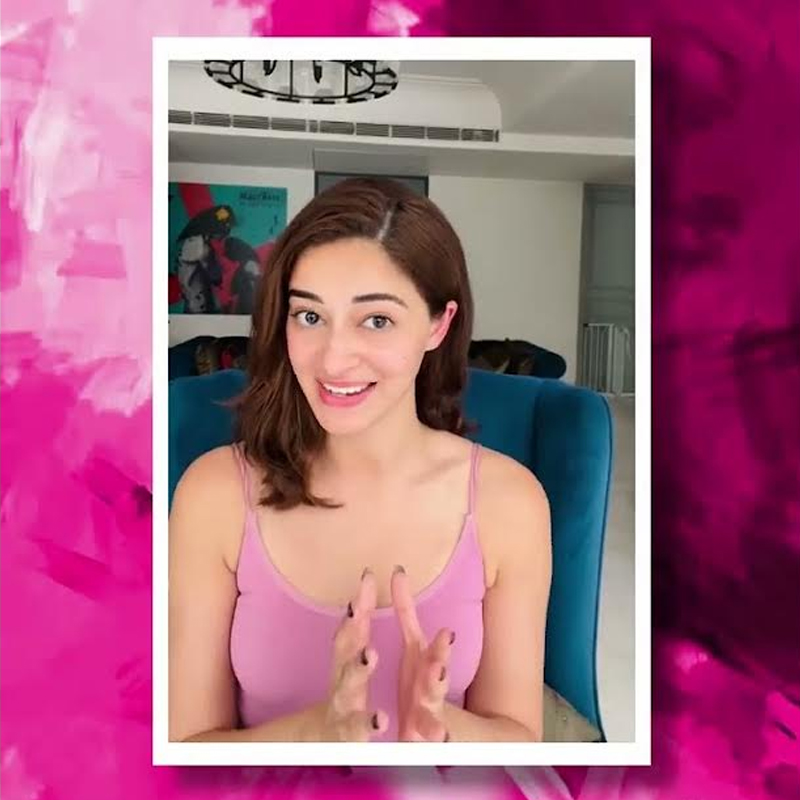
Mumbai: Lakmé Academy powered by Aptech has signed Bollywood actress Ananya Panday as the brand ambassador. The association comes after a long-standing relationship of the actress with the brand. Appealing to a young, Gen Z audience with her quirky, cute and charming demeanour, Ananya is a recognised youth icon in India.
The Rs 25,000 crore professional beauty and wellness industry in India, which includes salons, spas, parlours, men grooming outlets & skin clinics, amongst others, has grown at a compound annual growth rate (CAGR) of 12 per cent over the last decade. The industry is extremely fragmented, but it is believed to have over one million outlets employing almost 15 million people, of which nearly 65 per cent are women. For a young country like India, with nearly 700 million individuals below 25 years of age, the beauty and wellness industry has the potential to generate livelihoods in small towns without promoting mass-scale migration to large metros.
Focusing on professional training and providing opportunities in the space, Lakmé Academy powered by Aptech, with over 130 centres in 100 cities+ across India, has added tremendous value in not only upskilling thousands of students with their industry-relevant curriculum but also giving them hands-on experience of becoming professional artists beautifying their future and that of the industry as well.
MUMBAI : Mothers everywhere and, perhaps, more so in India are held to unreasonably high standards, wherein they are expected to lean in at work whilst remaining primarily responsible for the domestic front. This perennial balancing act leads to an intense pressure to ‘perfectly’ manage both work and home for most working moms today, or ends with guilt about their inability to live up to socio-cultural ideals of a ‘good mother.’ It is this narrative that Prega News’ latest campaign #SheIsImperfectlyPerfect released ahead of Mother’s Day chooses to highlight and challenge. The pregnancy detection brand from the house of Mankind Pharma unveiled the second leg of the campaign on Thursday with celebrity influencers and mom bloggers that further attempts to normalise a more ‘realistic’ version of motherhood.
IndianTelevision.com caught up with Mankind Pharma general manager- sales & marketing Joy Chatterjee to find out what drives the brand to challenge societal stereotypes on a sensitive subjects like pregnancy and motherhood. The interaction also saw a deep dive into the brand’s journey from 2007 to becoming a leader in the category with an 82 per cent market share through its marketing activities.
According to the brand, it has witnessed a steep spike of over 20 per cent in its demand during the Covid-19 lockdown, and has been growing in healthy double digits annually. Over the years, Prega News has managed to create a unique brand proposition, becoming synonymous with ‘at-home pregnancy detection.’
A marketeer who self-confessedly “works to balance bottom and top line” with more than 20 years of Industry experience, Chatterjee currently heads the OTC division of brands like Manforce, Health ok, Gasofast, Acnestar, Unwanted 72 etc- apart from Preganews- at Mankind Pharma, having joined the company in 2006.
By Anupama Sajeet
Edited excerpts:
What was the thought behind the #SheIsImperfectlyPerfect concept, and why do you think it is essential to get these conversations going?
There is always needless pressure on every mom to be perfect, which puts her in self-doubt about being a good mother. The campaign encourages society to embrace the imperfection of a mother who is always on her toes to work best for her child. The entire ad was curated with the aim to spread the message that it’s completely fine to be not so perfect. The film breaks the age-old narrative of mothers always portrayed as the perfect personalities, highly adept at everything they do. It disintegrates this stereotypical image of a mother who always forces herself to be perfect in everything.
With time the number of working women has increased over the years and the trend of living in a nuclear family has been evolving as a lifestyle option. Considering that this number is only going to escalate in the future, it is important to have conversations around embracing the imperfection of a mother to not pressurise the new generation and make them scared to enter the motherhood phase in their lives. We have all observed that working mothers are always chasing the balance between her job and being a mother. The pressure of being perfect makes her life stressful. We don’t want our mothers to live in any stress or guilt for not being able to meet the expectations of a “perfect mother” imposed by society.
What worked in favour of creating brand recall value for Prega News since its inception?
Since its inception in 2007, throughout the journey, the brand focused on educating women and their families about pregnancy to break the stereotypical mindsets and to address the myths existing in society. We continuously come up with campaigns be it on digital or on TVC to spread awareness and take a firm stand on what we believe in as a brand. These campaigns helped us in creating a special bond with the target audience.
One thing that majorly worked in our favour was that we were determined to develop an emotional connect with the audience by shedding light on the various issues faced by women and also portraying an inclusive conversation aimed at bringing about a social change. The primary purpose at Prega News is not to promote the product but we strive to touch upon the lives of our consumers and create awareness around the sensitive topic of pregnancy. We closely study the problems existing in society and come up with solutions to help people get acquainted with the options they have ahead. At Prega News through our initiatives, we urge the people to be more responsible when it comes to pregnancy.
Given that this method (pregnancy home test kit) was very new for the rural masses, we strived to create awareness around pregnancy care for which we worked towards breaking the stereotype connected to pregnancy detection cards in rural India. Considering the intensity of preconceived notions existing in these parts of the country, we tied up with Asha workers and local NGOs who hold a strong influence on people as key opinion leaders for effective message reception amongst the audience. Also, to create awareness, we organised a caravan activity for 25 days across 125 districts of Uttar Pradesh to establish a better line of engagement with the people there through door-to-door invitations, announcements and distribution of gifts, and many fun activities. We took the opportunity to give detailed information on the do’s and don’ts during the pregnancy. From the proper diet with the right nutrition to what food to avoid was touched upon at large in the activity.
Over the years, the brand has collaborated with some of B-town’s leading actors and of late, influencers. What was the idea behind roping in celebrities?
We aimed at leveraging the various tools to increase our visibility amongst the potential audience throughout the journey of Prega News. When we started in 2007 we wanted to make the brand a household name by making it acquainted with the people at large. For which we collaborated with Neha Marda who was a popular face at that time in every household. Therefore, by roping in Marda we were able to introduce our product in the market. Over the time when we realised that Prega News has made a decent place in the market we wanted to amplify our reach by making it the top brand in the country. For this, we collaborated with leading B-town actors such as Kareena Kapoor Khan, Anushka Sharma and Shilpa Shetty to give mileage to our brand reception. Further to penetrate deeper into the market we also ventured into influencer campaigns where we roped in more than 21 regional mommy bloggers in an influencer activity campaign to spread awareness about the important RTBs of Prega News for expectant mothers.
Considering that pregnancy is a very sensitive topic, what is the primary challenge you have faced in the segment?
The lack of awareness amongst the people is the biggest challenge the brand faces till now. From the very initial stage, it has been a persistent roadblock acting as a deterrent that makes people skeptical about the product and inhibits them from coming forward to find solution to their persisting problem. Hence, to overcome the challenge we realised that along with the promotion of the product we needed to elaboratively talk about the sensitive problem of pregnancy at the root level and encourage women to break free from their inhibitions and come forward to try new solutions to improve the quality of their lives. To achieve this, we continuously organise on-ground events and collaborate with local NGOs and Asha workers to throw light on various aspects of pregnancy and make women acquainted with family planning as an important option.
How do you plan to further amplify the brand’s penetration into the market?
To penetrate deeper into the market beyond the metropolitan cities, we take an alternate route, as mentioned earlier. In order to reach out to the masses beyond metropolitan cities, we deliver content in their preferred vernacular language to ensure better reception. Previously, we have launched Shakti Awareness program to spread awareness about the product’s benefits. Through the programme, we stressed upon how the pregnancy detection kits were important for early pregnancy detection that could help in reducing any chances of health hazards for the baby as well as the mother. We tied up with local Asha workers and NGOs to spread our message and establish a more personal interaction with the local people. They became the solution providers for the women in the village, helping them with the healthcare-related needs.
The entire campaign was unique as it was the first time ever a pregnancy detection card brand had initiated rural activation. We organised local events at the field level to better interact with the audience. We invited 50 to 100 Asha workers and gynecologists to spread awareness around pregnancy and contraception. To date, we have organised 20 such events by tapping around 750 Asha workers across India.
Share about your recent inroads into regional markets with local brand ambassadors.
Over the years, we have realised that content is better received and reciprocated in the regional language. Audiences are better able to form connections with the brand and understand the comprehensive message the brand wants to convey when it is communicated in their own mother tongue. Hence, multilingual campaigns help in entering into a more concentrated market that lies beyond the metropolitan cities but can make up for a larger customer base. Hence, understanding that vernacular content enhances the brand penetration into the regional market, recently we collaborated with Kajal Aggarwal for a TVC as she is a well-known face in the South, helping us form better connectivity with the masses there. Prior to this, we had also roped in Priyamani to amplify our presence in the South and reach the remotest parts of the market. Likewise, Prega News is focusing to expand its visibility in other regional areas as well and has roped in Bengali Film actress Srabanti Chatterjee as the brand ambassador of West Bengal to intensify its reach and regional connection in West Bengal.
Tell us about your future plans. Any upcoming announcements in 2022?
Currently portraying a market share of 82 per cent, Prega News has marked consistent growth and come a long way from 67 per cent in 2019. Passionate to further expand our product into the unorganised and unbranded market we strive to form an emotional connection with the expectant mothers not just in metropolitan cities but make our presence felt in the rural market as well. Considering that the segment penetration across the country is very narrow, we are working towards a unified goal of increasing the penetration of kits from 17 per cent to 26 per cent by 2026.
We are intensively reaching out to small towns with the help of our rural outreach strategy to penetrate deeper into the regional market. Last year we launched an awareness drive with Asha workers in Lucknow to create awareness around the use of contraceptives and pregnancy detection cards. It was our first interactive session in Malihabad, Bachhwaran (Lal Ganj), Nawabganj (Unnao), Varanasi, Meerut, Kolhapur, Patna, and Bulandsheher in Lucknow and Bihar aimed at breaking the myths prevalent in society and motivating people to adopt family planning in advance. In the future too, the company is keen on conducting such sessions in a phased manner and amplifying its endeavor to educate people on sexually transmitted infections, different contraceptive methods, and regular use of available contraceptives.
Finally, would you say Prega News’ 2022’s Women’s Day campaign with its #SheCanCarryBoth message is at odds with your latest one for Mother’s day, which acknowledges that a mother can be humanly imperfect and not excel at every role as dictated by society?
Both the campaigns are unique in their own way touching upon the different aspects of women’s life. I would say that the message conveyed through #SheCanCarryBoth and #SheIsImperfectlyPerfect complement each other. When we said that women can don multiple roles, we never implied her to be perfect. We encourage the empowerment of women where we do not believe in putting incessant pressure on them. Rather we want them to explore new possibilities in life at their own will and at their own pace, and to evolve over time by learning from their own experiences.
MUMBAI: The sports sponsorship market is booming. Never before has more money been pumped into marketing sporting events, athletes and sports teams- globally as well as in India. According to a recent Nielsen study, sports sponsorships were up by 107 per cent in 2021, even as sponsorships drove an average of 10 per cent lift in purchase intent among the fan base. Today, aided by accelerated digitalisation, sports sponsorship offers brands entirely new opportunities than a few years ago, that’s especially attractive. And when it comes to sporting properties in India, it goes without saying that the Indian Premier League (IPL) is indisputably the mother of them all!
For the second consecutive year DHL Express India, one of the leading players in logistics, parcel delivery, e-commerce shipping and international supply chain management is the principal sponsor and official logistics partner of Mumbai Indians (MI). The deliverables entailed in the partnership are indicative of the brand’s 360-degree approach. While the brand logo can be prominently seen on the back of the players’ jerseys, DHL branding is visible in the player dugout banners, stadium concourse, outdoor, as well as digital and print ads of the MI team and all its official stationery. And that includes the right to present the coin toss in one home match!
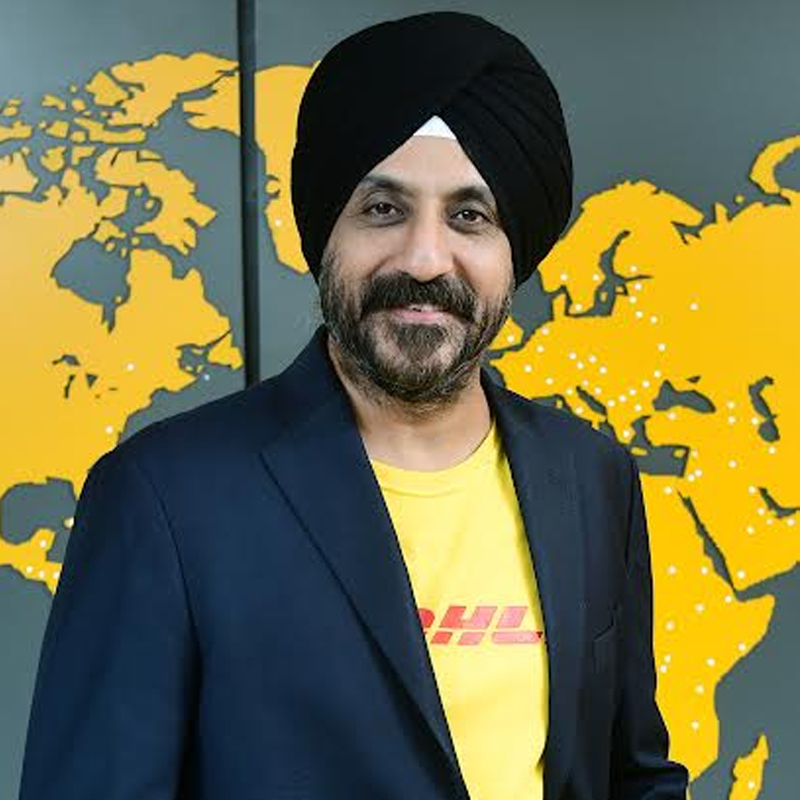
As DHL Express (DHLE) India, enters its second year of partnership with Mumbai Indians, IndianTelevision.com had an exclusive interaction with DHLE India VP of sales and marketing Sandeep Juneja to try and understand the background and rationale behind the continued association. Having joined DHLE in 2004, Juneja worked his way up in the organisation, taking on the mantle of VP- sales & marketing in October 2013. He has played a key role in driving the sales and marketing strategies, especially in the new normal.
Juneja also shares insights into the value and ROI that DHLE gained basis the partnership as well as the campaigns it has planned to further leverage the collaboration. Despite its bad run at the IPL this year the MI team remains one of the crowd favourites. The brand recently released its latest ad film featuring the MI players titled ‘DHL #TheTeamBehindTheTeam for Mumbai Indians – 2022.’
Edited excerpts:
On the value/ROI that DHLE gained basis its partnership with Mumbai Indians in 2021
2021 was a bit different for the Indian Premier League. While it started with an in-stadia audience, the second wave of Covid-19 put a halt to the game, moving it to the later part of the year. However, for DHL Express India, it still ended up being a fruitful association with the team. As per Broadcast Audience Research Council (Barc) India data, while the tournament’s reach (live matches on TV) in India was 405 million, matches featuring Mumbai Indians were watched by 306.5 million households. In fact, the buzz on social media around the team also saw an 18 per cent growth over 2020. All this data only strengthens our belief in Mumbai Indians and this partnership. In fact, the presence of DHL’s logo on the back of the jersey positions us as the team behind the team and we have enjoyed great brand visibility with this association.
On the background and rationale behind the long-term partnership with IPL & Mumbai Indians
DHL, globally, over the years, has supported some of the world’s largest and most popular sports formats – from football to rugby, Formula One and even e-sports. Collaborating with prominent events helps brands, such as ours, to generate leads, and build customer loyalty and credibility. Cricket is a game that is well-loved and followed with ardent devotion in India, and many nations across the world. If you talk about the Indian Premier League, it is a festival in this country. The league has been able to successfully bring together sports and entertainment, making it an event for everyone, regardless of age or gender. IPL brings countries together and gets them all on one single platform.
Even within the IPL, it was essential for us to partner with a team that shares similar values. For DHL Express, the partnership with Mumbai Indians demonstrates our support for sports given the shared spirit of speed, passion, teamwork, and a can-do attitude. Mumbai Indians has proved its mettle in the game. If one has to go with pure data, they tick all the boxes: five-time champion, most popular team in IPL, highest social media buzz generator during the game, and many more. Mumbai Indians demonstrates “Excellence: Simply Delivered,” which is in sync with our mission. Therefore, we are glad to be the principal sponsor and official logistics partner for Mumbai Indians for the second consecutive year.
Sports sponsorships, like the one with Mumbai Indians, gives us an opportunity to widen our canvas and expand our target audience. It helps us build brand awareness and equity with not only a more varied target group but also reconnect with our customers and stakeholders through multiple touchpoints, a necessity in a post-pandemic world. Through this partnership, we hope to better connect with our customers and reach out to a wider customer base.
On how does the brand aim to strengthen its bond with its TG through this association
The viewership data for IPL suggests that the tournament cuts across sections, gender, geography and age groups. It is a great platform to reach out to people, primarily in the age group of 25-35, especially from tier I and II cities. This partnership with Mumbai Indians has helped DHL expand its target group and become a household brand. This season, we are looking forward to amplifying our MI partnership through a carefully curated and immersive 360-degree campaign with a focus on digital.
With our various digital activations, we created multiple touchpoints, thus giving us an opportunity to have instant and engaging conversations with our audiences across gender, geography, and age groups. We have introduced an all-new brand film featuring the crowd favourite Mumbai Indians players, to establish ourselves as the team behind the five-time league champions, as well as our customers. In fact, our digital video on #TheTeamBehindTheTeam trended number two in the first hour of it being activated on Twitter. Also, via our several social media fan contests and campaigns like Six for a Cause, DHL Match Ke Stars, the interaction with both the MI players and fans were much more authentic. We were able to tap into a new set of customers and build a greater connection with our existing customers via this crowd favorite game.
On the strategy and activations planned to further leverage this collaboration
With the traditional and digital worlds merging, it is vital for brands to leverage new technology and utilise digital platforms to develop engagement like never before. After a fruitful partnership last year, this season, we aim to amplify the association via a 360-degree marketing approach. Through digital, social, radio, print, and outdoor mediums, we will take our activations to the next level. We have leveraged all these mediums to ensure our visibility on and off the field.
Given that people are stepping out of their homes again, we have focused on outdoor advertising as well. This will include personalised branding on over 50 DHL vans, outdoor ads & radio spots. We are working on creating interactive content to engage with our target audience on social media.
We will also engage with Mumbai Indians fans as well as our current and potential customers via fan contests on social media like ‘DHL Match Ke Stars’ and through our alpha campaign – ‘Six for a Cause.’ The campaign will showcase Mumbai Indians players holding interactive sessions with the blind cricket team. We will also donate Rs 20,000 for every six that a MI player hits during their game. The proceeds of this will go to Samarthanam Trust for the Disabled which supports blind cricketers.
The focus for any brand that wants to build and retain its market position should be put on continuous user engagement, via digital touchpoints such as search engine marketing, snackable digital content, online knowledge sharing and round-the-clock availability of sales executives. We employ a 360-degree marketing mix to build stronger customer relationships. Be it television, radio, online or print, we try to ensure our brand visibility across media channels. We believe in leveraging all these channels throughout the year.
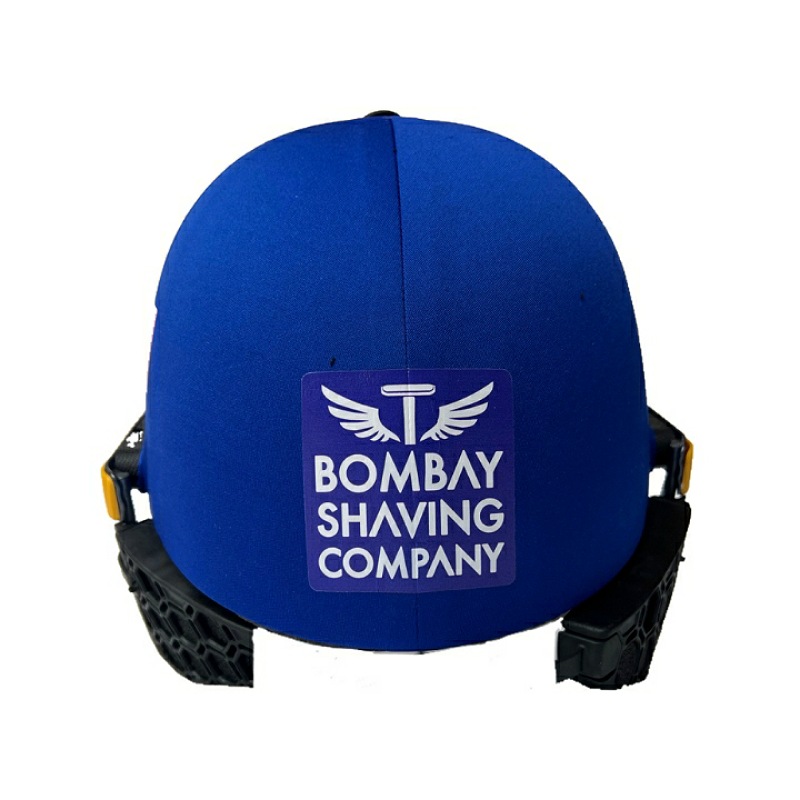
Mumbai: Homegrown grooming brand Bombay Shaving Company has signed on as the ‘official grooming partner’ of Mumbai Indians for the upcoming season of Indian Premier League (IPL).
As part of this association, the brand logo will be seen on player helmets, caps and kits right through the two-month carnival of cricket. It will appear at the stadium, on TV, in social media, and across all other Mumbai Indians marketing touchpoints in the city, said the brand in a statement. “The company aims to reach over 300 million men and women across India over the next three months as partners of the T20 Cricket extravaganza 2022,” it added.
“We’re not only immersed in Mumbai Indians, we intend to become an integral part of the lives of the people in Mumbai and the state of Maharashtra,” said Bombay Shaving Company COO Deepak Gupta. “We are planning to expand our distribution to 1,00,000 stores by the end of this year, stock up shelves with some of our best products, and paint the town blue with exciting merchandise, offers and activities for both – customers and partners. We understand the love people of the city have for the team, and we want to be the brand that brings them closer to the team.”
“We have always believed in associating with brands which resonate and support our objective to create the best fan experience,” stated Mumbai Indians’ spokesperson. “Bombay Shaving Company brings a seamless brand and team connect as our partner and we look forward to having a successful collaboration with them in a season where we eagerly await welcoming and entertaining the fans in the stadiums.”
More than anything else, it’s been a meeting of values with the franchise. Beyond the blue, and similarities in name, Mumbai Indians represent the sentiment of the nation – with a wonderful mix of players and faces from every region. As a brand and company built with the intent to bring a smile on faces across India, and help them put their ‘best look forward’, there couldn’t have been a better platform and team to partner with. It’s been the most spontaneous choice,” commented Bombay Shaving Company founder and CEO Shantanu Deshpande.
Earlier this year, the grooming brand made its presence felt in the recently concluded India vs Sri Lanka series. This partnership is set to further propel the brand, according to a statement.