Tag: brand

  • Reebok India new brand ambassador Kangana Ranaut salutes #FitToFight women

    Reebok India new brand ambassador Kangana Ranaut salutes #FitToFight women

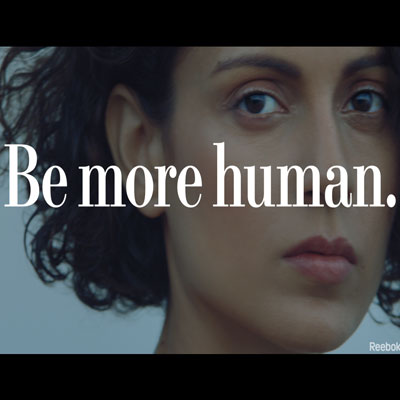
    MUMBAI: Continuing its global mission to change how people perceive and experience fitness, Reebok India just ‘raised the game’ with its new #BeMoreHuman campaign, featuring its newly appointed brand ambassador Kangana Ranaut. The fully integrated marketing campaign, releasing today on International Women’s Day, aims to inspire women. It is a tribute to the modern day Indian woman, telling her that she is fit to rise above stereotypes and carve out her own destiny.

    The pan-India campaign centres on a TV commercial that will unveil Ranaut’s inspiring life story through the lens of fitness. In the new campaign, Ranaut will be seen challenging herself with various fitness activities including functional training, dance, yoga, kick-boxing and others, thereby communicating the overarching brand message – ‘how fit you are defines how far you go’. Her call is an encouragement for all women, asking them to raise their game in the face of challenges while being calm and composed when a storm hits.

    Commenting on this launch, Reebok and Adidas India MD Dave Thomas said “Reebok in India is strategically focused on winning in fitness in 2016 and beyond. This inspiring campaign helps to cement Reebok as the leading fitness brand in the women’s category and we are delighted to partner with Kangana Ranaut, who is not just a Bollywood superstar but an achiever in every sense of the word. Being as rebellious as she is, Kangana has broken all stereotypes and has never been overwhelmed with the many challenges that have been thrown at her. We salute her spirit and the spirit of all women who have faced obstacles and continue to challenge themselves daily in search of greater rewards. Digital activation #FitToFight is at the centre of this campaign and we are confident that consumers will relate to this strongly. We are certain that Kangana’s powerful personal story and fitness journey will inspire many – women and men – to embark on their own fitness journey and become better version of themselves.”

    Sharing her excitement about the association, Ranaut said, “I have always been a Reebok fan. Their products and campaigns have always inspired me. When they came to me, it was a natural fit and I was extremely excited to be associated with them. I feel that anything in life can be accomplished if we believe in ourselves. Today’s women should stay fit in all aspects, be it physically, socially or mentally. This ideology echoes with Reebok’s overall positioning and I am delighted to be the face of the brand, helping them push this message further. I look forward to encouraging millions of other women to take a plunge with me and not just become fitter, but stronger and better versions of themselves. I hope this campaign will be able to inspire not just women but also men.”

    The ad campaign will be supported by an extensive 360 degree marketing approach including TV, Digital, Print, Radio, OOH & Retail. In addition, the creative visuals featuring Ranaut will be in the primary windows at 184 Reebok stores across India. The new collection is available at Reebok stores, shop4reebok.com, Myntra, Jabong and Amazon. The advertisements will be aired nationwide starting 8 March 2016.

  • New iGameLeague allows advertisers to sponsor individual players

    New iGameLeague allows advertisers to sponsor individual players

    MUMBAI: iGameLeague – a platform through which mobile games for all age groups can be played offline or online professionally anytime and anywhere, aims at revolutionizing the industry as it allows advertisers to become sponsors of individual players.

    The platform has been created by four experts – serial entrepreneur Devesh Gupta, sales and marketing maverick Nilesh Thakkar, animation and VFX industry veteran Susanta Dutta and Nishith Maheshwari. “IGameLeague is first and sole professional mobile gaming platform in India. How YouTube is a platform for video the same we are for gaming industry with monopoly,” said co-founder NIlesh Thakkar.

    “Apart from print, TV, outdoor, radio and online, IGameLeage will add as yet another medium for advertising, where users not only play and win cash, the media partners and advertiser also reach their target audience,” Thakkar shared, adding, “Being a sole platform, brands like Citrus will give our users Rs 50 per players as sponsors. So we bring ready advertiser with us.”

    As per Thakkar, the startup is already valued at Rs 70 crore after investment from venture capitals.

    Bringing alive the idea of ‘Play Mobile games –Win Real Cash’, the platform has more than 20 popular mobile games on the platform. With a very simple and easy to use interface, players can download, register and start winning cash from their favourite games.

    After testing the waters through a beta launch in Mumbai where more than 2300 students from 18 top colleges including HR, Nationals, Thakur, KJ Somaiya, etc participated,  iGL is in the process of doing a massive national launch of the platform through Brand, Media and Celebrity partnerships.

    Various business houses have evinced interest in buying the territorial rights of various regions of the platform.

    Since it has brought to the fore a completely new age medium for mass engagement, it is expected to be lapped up by the Smartphone and IT industry. 

  • New iGameLeague allows advertisers to sponsor individual players

    New iGameLeague allows advertisers to sponsor individual players

    MUMBAI: iGameLeague – a platform through which mobile games for all age groups can be played offline or online professionally anytime and anywhere, aims at revolutionizing the industry as it allows advertisers to become sponsors of individual players.

    The platform has been created by four experts – serial entrepreneur Devesh Gupta, sales and marketing maverick Nilesh Thakkar, animation and VFX industry veteran Susanta Dutta and Nishith Maheshwari. “IGameLeague is first and sole professional mobile gaming platform in India. How YouTube is a platform for video the same we are for gaming industry with monopoly,” said co-founder NIlesh Thakkar.

    “Apart from print, TV, outdoor, radio and online, IGameLeage will add as yet another medium for advertising, where users not only play and win cash, the media partners and advertiser also reach their target audience,” Thakkar shared, adding, “Being a sole platform, brands like Citrus will give our users Rs 50 per players as sponsors. So we bring ready advertiser with us.”

    As per Thakkar, the startup is already valued at Rs 70 crore after investment from venture capitals.

    Bringing alive the idea of ‘Play Mobile games –Win Real Cash’, the platform has more than 20 popular mobile games on the platform. With a very simple and easy to use interface, players can download, register and start winning cash from their favourite games.

    After testing the waters through a beta launch in Mumbai where more than 2300 students from 18 top colleges including HR, Nationals, Thakur, KJ Somaiya, etc participated,  iGL is in the process of doing a massive national launch of the platform through Brand, Media and Celebrity partnerships.

    Various business houses have evinced interest in buying the territorial rights of various regions of the platform.

    Since it has brought to the fore a completely new age medium for mass engagement, it is expected to be lapped up by the Smartphone and IT industry. 

  • The Gillette India Flexball challenge on Twitter

    The Gillette India Flexball challenge on Twitter

    MUMBAI:  Since it launched the Fusion Proglide Flexball  razor, Gillette India has been coming up with various promotional strategies,  with one of the strategies being promoting it through social media .

    The new Gillette razor is different from the previous razors launched by the brand. It has five blades on the front and one blade at the back that allows it to swivel back and forth. The movement of this razor is quite similar to how one’s wrist works. The new Flexball technology helps men to shave without twisting their face in awkward ways.

    The brand now has an ongoing campaign for its Fusion Proglide Flexball  razor on Twitter – The Flexball Challenge that challenges its patrons. To enter The Flexball challenge, one has to tweet to Gillette India with #Flexiballchallenge and wait till Gillette India makes its first move. (For example; ‘I am ready for #TheFlexballchallenge @GilletteIndia’)

    Once Gillette India has made its first move by sending a chart which is divided into three rows and three columns -A1-A3,B1-B3,C1-C3, the participants have to reply to the move by choosing the desired position. (For example A3#TheFlexballchallenge). The game is a clever way of explaining the flexibility of the product as players do not have to use pen or pencil to play the game. 

    Before getting started with the game, participants have to keep its in mind. For instance only one game at a time can be played. Furthermore participants can always ask for a rematch. The hashtag has to be used always and one must wait until Gillette India responds back, resending or changing of moves are not allowed. The challenge has taken Twitterti by storm. Over a hundred participants have tweeted and taken part in the challenge so far.  Here are a few examples:

    sujoy_kapur tweeted, “C1 is my first move team @GilletteIndia #TheFlexballChallenge.”

    avdesh_roy tweeted, “Friends lets take #TheFlexballChallenge Play & win  @GilletteIndia @saraf_silky

    Amol_77 tweeted, “I am ready for #TheFlexballChallenge join me and play it @GilletteIndia guys.”

  • The Gillette India Flexball challenge on Twitter

    The Gillette India Flexball challenge on Twitter

    MUMBAI:  Since it launched the Fusion Proglide Flexball  razor, Gillette India has been coming up with various promotional strategies,  with one of the strategies being promoting it through social media .

    The new Gillette razor is different from the previous razors launched by the brand. It has five blades on the front and one blade at the back that allows it to swivel back and forth. The movement of this razor is quite similar to how one’s wrist works. The new Flexball technology helps men to shave without twisting their face in awkward ways.

    The brand now has an ongoing campaign for its Fusion Proglide Flexball  razor on Twitter – The Flexball Challenge that challenges its patrons. To enter The Flexball challenge, one has to tweet to Gillette India with #Flexiballchallenge and wait till Gillette India makes its first move. (For example; ‘I am ready for #TheFlexballchallenge @GilletteIndia’)

    Once Gillette India has made its first move by sending a chart which is divided into three rows and three columns -A1-A3,B1-B3,C1-C3, the participants have to reply to the move by choosing the desired position. (For example A3#TheFlexballchallenge). The game is a clever way of explaining the flexibility of the product as players do not have to use pen or pencil to play the game. 

    Before getting started with the game, participants have to keep its in mind. For instance only one game at a time can be played. Furthermore participants can always ask for a rematch. The hashtag has to be used always and one must wait until Gillette India responds back, resending or changing of moves are not allowed. The challenge has taken Twitterti by storm. Over a hundred participants have tweeted and taken part in the challenge so far.  Here are a few examples:

    sujoy_kapur tweeted, “C1 is my first move team @GilletteIndia #TheFlexballChallenge.”

    avdesh_roy tweeted, “Friends lets take #TheFlexballChallenge Play & win  @GilletteIndia @saraf_silky

    Amol_77 tweeted, “I am ready for #TheFlexballChallenge join me and play it @GilletteIndia guys.”

  • “Think mobile as ad dollars are heading there”: CVL Srinivas

    “Think mobile as ad dollars are heading there”: CVL Srinivas

    MUMBAI: Several market forecasts that we have seen in the past couple of months project digital advertising and marketing growing by leaps and bounds this year. The historical galloping growth rates have led marketers and planners to consider the possibility that the medium will overtake television spends in the near future.
     

    Brand custodians are no longer investing in digital as an added benefit but are thinking about investments on that front from the get-go. So is digital gnawing away at television’s share of ad spends or is its growth coming courtesy a new breed of brand builders?


    Group M South Asia CEO CVL Srinivas does not think that TV is losing its edge. “Television is riding the digital wave, and smartly so”, says the veteran waving off any worries of television ad revenues seeing a dip this year. Not denying the obvious growth one sees in the digital space, Srinivas gives indiantelevison.com a complete breakdown of  how the digital growth works in favor of broadcasters and content providers, while also touching upon the key trends in the market, the changing role of media agencies and his take on the currently mushrooming of several digital agencies in the market. Excerpts from an interview with indiantelevision.coms Papri Das. 


    Here it is:


    How was 2015 for GroupM as a whole? What were the agency’s benchmark developments?


    2015 was a great year for us in GroupM. All our agencies performed well, especially when it comes to client retention which I consider most important. On the client acquisition front as well, we grew our business with several new accounts.


    Last year has also been kind to us when it came to awards. The GroupM Office of Year award, which is given out by GroupM APAC, was given to us last year. That’s something I consider as another high for us.


    For me, 2015 would be the year when we truly broke out of the mould of pure play media agency and delivered a range of different services to our clients to help them keep ahead of the curve. Over the years we have made investments in data, analytics and experiential marketing, cinema advertising and rural marketing and so on. All of that delivered excellent value to our clients last year. That has helped us diversify our offerings and in turn win us new and interesting mandates as well. Apart from that we have actively involved ourselves in the Mobile Marketing Association to help set standards and get some measurements going.


    Out of the four agencies under GroupM in India, which one do you think performed the best?


    I think all of them did exceptionally well and I say this with confidence based on each of the agency’s client retention and the newer arenas that they ventured successfully into.


    How was the year for the industry at large? Did you notice any changes that majorly impacted the industry?


    Last year we projected 12.7 per cent growth in ad expenditure and I must say we erred on the conservative side at the start of the year and we ended up with 14.2 per cent, but no one’s complaining!


    Several factors led to this development. The FMCG sector despite all the pressure it is facing continues to invest big money behind brands. You also saw huge growth coming in through e-commerce and there were quite a few brands that continued to invest throughout the year.


    What key trends do you see emerging in the market in 2016?


    Very clearly, our clients and brands in general are adapting to mobile as a medium. Till few years ago we hardly had ten or twenty clients, today the count is around 150. Advertisers are actively investing in campaign after campaign, month after month, by experimenting with new formats and following the measurements.  That is something I see taking off in a major way this year as several enablers are supposed to come into place in 2016.


    E commerce is emerging as a platform for advertisers in 2016 which can give an interesting spin to ecosystem.


    Apart from this we see several interesting initiatives happening in the content space, especially in the video and branded content space. This can give a further push to mobile advertising. The real big headline for me is mobile driving digital growth and in turn driving ad growth in India, and getting all traditional medium owners – be it broadcasters or be it print publication – to think mobile fast and think mobile first, because that’s where most of the advertising dollars are gonna flow to.


    What do you think will dictate how marketers spend this year?


    Right now we observe that marketers are a bit circumspect on where and when to invest. We are not yet seeing any major budget cuts otherwise our numbers in the GroupM This Year Next Year report for 2016 wouldn’t have looked so good.  But there is definitely an amount of cautiousness creeping in amongst advertisers.


    I think this year they are going to look at a lot more Return On Investment (ROI) and accountability across different media platforms. I also think they will wait and watch the market before deploying any of their long term campaigns and investments across media channels. Unless a property is tried and tested it will go through intense scrutiny before marketers decide to invest. Tracking of ROI and tracking of what the marketing spends are doing to the overall business will be key drivers for brands this year.


    Brands are increasingly seen as the sum of all customer touch points and this in turn increases the scope of marketing. In this context, how is the role of agencies changing?


    We think we are becoming even more relevant in the current scenario and important at the end of the day given the way the marketing and the media landscapes are shaping. Today consumers have multiple choices when it comes to brands and media consumption channels. In the same way advertisers and marketers also have multiple options to invest in. It can become highly confusing for the clients. That’s where GroupM  went ahead of the curve and started investing in multiple media investment management  services so that our clients can have a holistic marketing strategy and solution.


    What percentage of your business is “traditional” or core media now?


    I can’t share the break up but if you look at the market split, and the fact that we are future focused we tend to concentrate on wherever the marketing is moving to step ahead of it.


    A lot has been said about digital advertising overtaking television as the primary medium. What’s the ground reality?


    If you look at the trends in the last few years, not just in India but across markets we see a lot of synergy between television and digital. Looking at it from a consumer’s lens, you and I watch television and also consumer media on our second screen be it mobile or laptop. There is some amount of interplay happening between the screens.


    Looking at it from a broadcaster or content providers angle, most major broadcasters today have their own digital arms. And hence, I say television is actually riding the digital wave. Broadcasters are doing it very smartly, unlike other media which are getting swamped by digital. We see that trend continuing. Inf act if you look at our forecast figures, TV and digital account for close to 60 per cent of the market share of the total ad expenditure, and we see that number move to 70 to 80 per cent in near future.


    Is India truly ready for mobile marketing? Do we have a road map for it?


    There are several developments that have happened in the recent past. I have been personally involved in setting up the Mobile Marketing Association (MMA). Despite India being one of the top markets globally for mobile, we did not did not earlier have a body that monitors the digital marketing space. Therefore we needed this body where all stakeholders can come and ideate and put in place systems and structures for the medium. A lot of useful discussions have happened in the recent past be it on measurement and advertising standards and MMA as a body has done phenomenal work across the market. That is one of such several initiatives that will show its effect in 2016.


    What impact did BARC rural inclusive data have on the TV industry and on advertisers?


    I think it’s still early days to comment on BARC’s rural ratings. It’s only few weeks that they have come out. It is a very positive development. Rural India’s viewership accounts for a sizable chunk of our market. It’s a very aspirational class and important segment for many products and categories. To have data for this segment is a very good development.


    Though we will have to wait on watch how the data impacts the market, it is sure that advertisers are going to look at rural markets a lot more seriously especially in terms of media investment deployment across TV and other media options. Similarly content creators are also going to look at that space a lot more seriously today and come up with relevant products and offerings.


    And over all it is good for the economy and the country because we are finally becoming a lot more inclusive.


    How will the advertising landscape change with the completion of cable television digitization in India?


    Funny thing about India is that nothing ever happens sequentially…..everything happens together….somehow amalgamating. This actually makes our job fun because on the one hand you have the whole cable TV digitization playing out and DAS phase III being rolled out, and a lot of DTH players have gotten very active. On the other hand you have the 4 G launch that will open up a lot more bandwidth and infrastructure in digital and you have mobile crossing 1 billion connections.


    For marketers and advertisers what this means is to be aware of the developments, keep a close eye on them and see what are the opportunities they can capitalize on in short term and where is it that they need to invest, test and learn so that they can start capitalizing on them in the long term.


    The big lesson for us and specially me has been that we need to be constantly in a state of beta. What do we keep testing and learning today which could become a big thing tomorrow. Staying dynamic is the way to go.


    2015 also saw several well-known creatives and executives setting up their own startups, resulting in a mushrooming of several branded content and digital agencies. What is your take on this development?


    I think it is a good thing that bright young individuals are setting up companies on their own.  In fact some of us wouldn’t have jobs if this wasn’t done earlier. It also shows that today there are so many different areas that are emerging, and with the way the industry is being revolutionized there are many different expertise and special skill sets that the marketers need. I believe all of us can co-exist as one happy family because of the way the whole pie is getting fragmented. A lot of them are my dear friends and I wish them all the best.

     

  • “Think mobile as ad dollars are heading there”: CVL Srinivas

    “Think mobile as ad dollars are heading there”: CVL Srinivas

    MUMBAI: Several market forecasts that we have seen in the past couple of months project digital advertising and marketing growing by leaps and bounds this year. The historical galloping growth rates have led marketers and planners to consider the possibility that the medium will overtake television spends in the near future.
     

    Brand custodians are no longer investing in digital as an added benefit but are thinking about investments on that front from the get-go. So is digital gnawing away at television’s share of ad spends or is its growth coming courtesy a new breed of brand builders?


    Group M South Asia CEO CVL Srinivas does not think that TV is losing its edge. “Television is riding the digital wave, and smartly so”, says the veteran waving off any worries of television ad revenues seeing a dip this year. Not denying the obvious growth one sees in the digital space, Srinivas gives indiantelevison.com a complete breakdown of  how the digital growth works in favor of broadcasters and content providers, while also touching upon the key trends in the market, the changing role of media agencies and his take on the currently mushrooming of several digital agencies in the market. Excerpts from an interview with indiantelevision.coms Papri Das. 


    Here it is:


    How was 2015 for GroupM as a whole? What were the agency’s benchmark developments?


    2015 was a great year for us in GroupM. All our agencies performed well, especially when it comes to client retention which I consider most important. On the client acquisition front as well, we grew our business with several new accounts.


    Last year has also been kind to us when it came to awards. The GroupM Office of Year award, which is given out by GroupM APAC, was given to us last year. That’s something I consider as another high for us.


    For me, 2015 would be the year when we truly broke out of the mould of pure play media agency and delivered a range of different services to our clients to help them keep ahead of the curve. Over the years we have made investments in data, analytics and experiential marketing, cinema advertising and rural marketing and so on. All of that delivered excellent value to our clients last year. That has helped us diversify our offerings and in turn win us new and interesting mandates as well. Apart from that we have actively involved ourselves in the Mobile Marketing Association to help set standards and get some measurements going.


    Out of the four agencies under GroupM in India, which one do you think performed the best?


    I think all of them did exceptionally well and I say this with confidence based on each of the agency’s client retention and the newer arenas that they ventured successfully into.


    How was the year for the industry at large? Did you notice any changes that majorly impacted the industry?


    Last year we projected 12.7 per cent growth in ad expenditure and I must say we erred on the conservative side at the start of the year and we ended up with 14.2 per cent, but no one’s complaining!


    Several factors led to this development. The FMCG sector despite all the pressure it is facing continues to invest big money behind brands. You also saw huge growth coming in through e-commerce and there were quite a few brands that continued to invest throughout the year.


    What key trends do you see emerging in the market in 2016?


    Very clearly, our clients and brands in general are adapting to mobile as a medium. Till few years ago we hardly had ten or twenty clients, today the count is around 150. Advertisers are actively investing in campaign after campaign, month after month, by experimenting with new formats and following the measurements.  That is something I see taking off in a major way this year as several enablers are supposed to come into place in 2016.


    E commerce is emerging as a platform for advertisers in 2016 which can give an interesting spin to ecosystem.


    Apart from this we see several interesting initiatives happening in the content space, especially in the video and branded content space. This can give a further push to mobile advertising. The real big headline for me is mobile driving digital growth and in turn driving ad growth in India, and getting all traditional medium owners – be it broadcasters or be it print publication – to think mobile fast and think mobile first, because that’s where most of the advertising dollars are gonna flow to.


    What do you think will dictate how marketers spend this year?


    Right now we observe that marketers are a bit circumspect on where and when to invest. We are not yet seeing any major budget cuts otherwise our numbers in the GroupM This Year Next Year report for 2016 wouldn’t have looked so good.  But there is definitely an amount of cautiousness creeping in amongst advertisers.


    I think this year they are going to look at a lot more Return On Investment (ROI) and accountability across different media platforms. I also think they will wait and watch the market before deploying any of their long term campaigns and investments across media channels. Unless a property is tried and tested it will go through intense scrutiny before marketers decide to invest. Tracking of ROI and tracking of what the marketing spends are doing to the overall business will be key drivers for brands this year.


    Brands are increasingly seen as the sum of all customer touch points and this in turn increases the scope of marketing. In this context, how is the role of agencies changing?


    We think we are becoming even more relevant in the current scenario and important at the end of the day given the way the marketing and the media landscapes are shaping. Today consumers have multiple choices when it comes to brands and media consumption channels. In the same way advertisers and marketers also have multiple options to invest in. It can become highly confusing for the clients. That’s where GroupM  went ahead of the curve and started investing in multiple media investment management  services so that our clients can have a holistic marketing strategy and solution.


    What percentage of your business is “traditional” or core media now?


    I can’t share the break up but if you look at the market split, and the fact that we are future focused we tend to concentrate on wherever the marketing is moving to step ahead of it.


    A lot has been said about digital advertising overtaking television as the primary medium. What’s the ground reality?


    If you look at the trends in the last few years, not just in India but across markets we see a lot of synergy between television and digital. Looking at it from a consumer’s lens, you and I watch television and also consumer media on our second screen be it mobile or laptop. There is some amount of interplay happening between the screens.


    Looking at it from a broadcaster or content providers angle, most major broadcasters today have their own digital arms. And hence, I say television is actually riding the digital wave. Broadcasters are doing it very smartly, unlike other media which are getting swamped by digital. We see that trend continuing. Inf act if you look at our forecast figures, TV and digital account for close to 60 per cent of the market share of the total ad expenditure, and we see that number move to 70 to 80 per cent in near future.


    Is India truly ready for mobile marketing? Do we have a road map for it?


    There are several developments that have happened in the recent past. I have been personally involved in setting up the Mobile Marketing Association (MMA). Despite India being one of the top markets globally for mobile, we did not did not earlier have a body that monitors the digital marketing space. Therefore we needed this body where all stakeholders can come and ideate and put in place systems and structures for the medium. A lot of useful discussions have happened in the recent past be it on measurement and advertising standards and MMA as a body has done phenomenal work across the market. That is one of such several initiatives that will show its effect in 2016.


    What impact did BARC rural inclusive data have on the TV industry and on advertisers?


    I think it’s still early days to comment on BARC’s rural ratings. It’s only few weeks that they have come out. It is a very positive development. Rural India’s viewership accounts for a sizable chunk of our market. It’s a very aspirational class and important segment for many products and categories. To have data for this segment is a very good development.


    Though we will have to wait on watch how the data impacts the market, it is sure that advertisers are going to look at rural markets a lot more seriously especially in terms of media investment deployment across TV and other media options. Similarly content creators are also going to look at that space a lot more seriously today and come up with relevant products and offerings.


    And over all it is good for the economy and the country because we are finally becoming a lot more inclusive.


    How will the advertising landscape change with the completion of cable television digitization in India?


    Funny thing about India is that nothing ever happens sequentially…..everything happens together….somehow amalgamating. This actually makes our job fun because on the one hand you have the whole cable TV digitization playing out and DAS phase III being rolled out, and a lot of DTH players have gotten very active. On the other hand you have the 4 G launch that will open up a lot more bandwidth and infrastructure in digital and you have mobile crossing 1 billion connections.


    For marketers and advertisers what this means is to be aware of the developments, keep a close eye on them and see what are the opportunities they can capitalize on in short term and where is it that they need to invest, test and learn so that they can start capitalizing on them in the long term.


    The big lesson for us and specially me has been that we need to be constantly in a state of beta. What do we keep testing and learning today which could become a big thing tomorrow. Staying dynamic is the way to go.


    2015 also saw several well-known creatives and executives setting up their own startups, resulting in a mushrooming of several branded content and digital agencies. What is your take on this development?


    I think it is a good thing that bright young individuals are setting up companies on their own.  In fact some of us wouldn’t have jobs if this wasn’t done earlier. It also shows that today there are so many different areas that are emerging, and with the way the industry is being revolutionized there are many different expertise and special skill sets that the marketers need. I believe all of us can co-exist as one happy family because of the way the whole pie is getting fragmented. A lot of them are my dear friends and I wish them all the best.

     

  • #SnapdealForIndia faces #AppWapsi after recent Aamir Khan controversy

    #SnapdealForIndia faces #AppWapsi after recent Aamir Khan controversy

    ‘A celebrity endorsement can make or break a brand.’

    Quoted from Countering Brandjacking in the Digital Age by Christopher Hofman and Simeon Keates, the statement strikes a key note with the eCommerce giant Snapdeal’s current situation with its brand ambassador, actor Aamir Khan.

    In a recent interview at the Ramnath Goenka Awards 2015, the actor had spoken about “growing disquiet” in India and had also remarked that his wife had once asked him whether they should move out of the country! Though Khan has come out with an official statement defending his stand on the matter, the damage has already been done.

    An excerpt from Khan’s official statement reads: “Neither I, nor my wife Kiran, have any intention of leaving the country. We never did, and nor would we like to in the future. Anyone implying the opposite has either not seen my interview or is deliberately trying to distort what I have said. India is my country, I love it, I feel fortunate for being born here, and this is where I am staying. To all those people who are calling me anti-national, I would like to say that I am proud to be Indian, and I do not need anyone’s permission nor endorsement for that.”

    The angry netizens however took to Twitter, Facebook and other social media platforms to  protest against actor Aamir Khan’s controversial comment on India’s growing intolerance. Snapdeal, a brand that the actor endorses was also dragged into this by the netizens and the brand has since been facing the brunt of their anger. 

    Lately, Snapdeal has come out with an official statement dissociating the brand’s association of any kind with Khan’s comments.

    “Snapdeal is neither connected nor plays a role in comments made by Aamir Khan in his personal capacity. Snapdeal is a proud Indian company built by passionate young Indians focused on building an inclusive digital India. Everyday we are positively impacting thousands of small businesses and millions of consumers in India. We will continue towards our mission of creating one million successful online entrepreneurs in India,” said a spokesperson from Snapdeal.

    With an all encompassing growth of social media, the common man’s access to celebrities and brands have enhanced, and so did the threats to corporations and brands in both number and variety. Celebrity endorsements doesn’t escape the purview of this double edged sword that the digital platform brings along with its many benefits. Within hours of #AppWapsi going viral on Twitter and Facebook, Snapdeal saw over 70,000 one star ratings being hurled at their app on Google’s Play Store.

    Some even took to the review space to write negative messages to the online shopping platform, explaining their reasons to pull out of the brand’s services.

    Whether the brand will take the threats seriously  and snap the deal with Aamir Khan is a question that remains to be answered.

    A veteran media planner told indiantelevision.com under conditions of anonymity, that it is unlikely that Snapdeal will walk that route.  Moreover, “a major part of the contract tenure has run its course and there is no discussion on reevaluating the endorsement contract or talks of ceasing it,” he says, adding, “Diwali is the main season when it comes to sales, and even for marketing and promotions in this quarter. With Diwali over, we don’t see major changes in Snapdeal’s endorsement contract with Aamir Khan

    Question of the hour is-, has the #AppWapsi campaign brought down Snapdeal’s brand value by any significant score?

    “Snapdeal is a major brand with a huge customer base. I don’t think this campaign will affect the brand that easily. This is a passing phase. Before it affects Snapdeal, it will effect Aamir Khan at the box office, which I feel is less  likely a chance,” points out an expert under promise of anonymity.

    Seconding that opinion is another expert from the industry. “It may influence the brand’s image only temporarily but will fade away as fickle minded mass will move on to another controversy and forget Snapdeal. So yes, there will definitely be an impact on Snapdeal, but I don’t see it last longer. At the end of the day consumers’ relation with Snapdeal is the product and this controversy won’t come in the way of the sales. We aren’t even sure if those angry comments have come from consumers who make a difference in the brand’s sales at all”

    While most market analyst and planners feel that the situation doesn’t call for a knee jerk reaction, Snapdeal’s official statement dissociating themselves from Aamir Khan’s comment shows that the brand isn’t completely unaffected.

    “If the ratings affects the performance of the app, then it will definitely be detrimental to the brand. It may also affect the brand value. The brand needs to communicate their perspective to the consumers. “shares a veteran media analyst and planner.

    Meanwhile, counter argument in favour of Snapdeal has also gained ground over the net, with some supporters belonging to Khan’s fan base. The uncanny of all was the tweet from Snapdeal’s rival, Flipkart’s Sachin Bhansal, who earlier tweeted defending Snapdeal.

    Sachin Bansal @_sachinbansal This is a flawed logic. Brands don’t buy into brand ambassadors personal opinions. @snapdeal shouldn’t face this SnapdealForIndia is the campaign used to counter #AppWapsi, where happy Snapdeal consumers are taking to social media to share how the brand has helped the country in the past. Snapdeal’s official handle on Twitter immediately jumped to retweet posts that spoke well of the brand.

    Infact, the page is running a contest asking consumers to give ‘honest reviews and rankings’ of their app on Google Play to win prizes.

    Whether these efforts will save Snapdeal from being dragged+AKA-further+AKA-into its brand ambassador’s mess, only time will tell.

  • McDonald’s, the marketer of the year

    McDonald’s, the marketer of the year

    MUMBAI: Winning a Cannes Lions is every brands and agency’s ultimate vision. And, for McDonald’s it has been a common phenomenon.


    Since 1979, it has won 77 Lions and this year, it has been made the Marketer of the Year by Cannes Lions International Festival of Creativity.


    The award is presented to ‘brands that have distinguished themselves by inspiring innovative marketing of their products worldwide across multiple platforms and who embrace and encourage creativity in their brand communications produced by their agencies’.


    Lions Festivals CEO Philip Thomas said, “McDonald’s consistently places creativity at the heart of its advertising and communications, and that has resulted in the brand receiving many Lions at the Cannes Festival. McDonald’s and its agencies have taken creative risks to produce meaningful work, and they see award-winning content earning higher returns – a success story that will, we hope, inspire other brands. We look forward to congratulating the team from McDonald’s by presenting this very important Creative Marketer of the Year Award in Cannes.”


    The award will be presented to McDonald’s on 21 June in the Palais des Festivals, Cannes, France.


    McDonald’s senior executive vice president and global chief brand officer Steve Easterbrook says, “McDonald’s is honoured to be named Creative Marketer of the Year. This award recognises the enduring and inspiring relationships we have with our agencies around the world. It’s a nod to our creative heritage and the power of the brand to connect with customers around the world with a local accent. Our restless energy moves us to uncover new ideas, and pursue excellence in insight, positioning, idea and craft. The honour of winning Creative Marketer of the Year at Cannes Lions recognises the hard work of many people throughout the McDonald’s system.”


    Last year, the award was presented to Coca-Cola.

  • 3Pillar Global expands leadership team in India

    3Pillar Global expands leadership team in India

    MUMBAI: 3Pillar Global, a leading developer of innovative software products for clients, has announced the appointment of Suresh Kabra as its VP and GM of India to lead the continued growth of the company’s delivery center.


    “We are thrilled to welcome Suresh to our growing team. He has an outstanding track record of entrepreneurship and product development and will serve as an extremely valuable asset to our operations in India,” said 3Pillar CEO David DeWolf. “His proven ability to lead high performance teams, along with driving new initiatives and building long-lasting customer relationships, compliments 3Pillar’s global growth strategy.”


    Kabra will be responsible for leading, guiding and mentoring the delivery teams while overseeing the day-to-day operations. Suresh will also be responsible for developing and increasing brand awareness and reputation in the Indian market, leading to increased traction in the market for 3Pillar and influencing the ability to recruit top talent.


    “I am excited to join the 3Pillar Global executive team at such an exciting time of growth for both the company and the software product development industry. I am looking forward to leveraging my experience to lead and grow the team in India,” said Kabra.


    Prior to joining 3Pillar, Kabra was the founder and CEO of clk2c.com, a start-up in the mobile video delivery space, which was acquired in early 2013. Prior to becoming an entrepreneur, he served as assistant VP of Software Products Group at Aricent, Inc., where he directly managed several product line managers and product engineering teams in Delhi, Bengaluru and Chennai.


    Kabra also served as VP, business development (APAC) for Conexant, Inc., where he helped the company to grow business manifolds in the Greater China region. He holds a BE from BITS, Pilani and MS from Concordia University, Montreal, and has done a certificate program in International Management from NUS-Stanford. Kabra is also a MIT Sloan Executive Program in General Management scholar. He also holds a Design Patent for Flexible Display Units, issued by The Patent Office, Govt. of India.