Tag: brand

  • Covid2019 creates opportunity for used car market

    Covid2019 creates opportunity for used car market

    NEW DELHI- Covid2019 battered the automotive industry in India with the demand for new cars and two-wheelers plummeted between March-May 2020. The month of April 2020 has gone down in the history of the country when not even a single car was except a few that were exported out of the country. The industry started to pick up since May 2020 and has been showing signs of recovery. Even then at a cumulative level, the first half of the year 2020 has battered the auto industry, even worst then the last year. In passenger vehicles, in particular, the April-June period saw sales drop of 78.43 percent, making it possibly the worst-ever quarter since the time such data were being compiled.

    Covid2019 actually forced people to think twice before making investment into a big ticket purchase like cars. As a result, it created a window for the already existing new car market to grow further. Several brands have reported that there is an increased number of inquiries from customers around used cars. These include brands like Maruti Suzuki True Value and Hyundai’s H Promise.

    Maruti Suzuki India Limited executive director marketing and sales, Shashank Srivastava said, “During lockdown scenario, most media got impacted due to restrictions and hence their consumption. In New normal, ensuring customer safety and communicating safe practices is of utmost priority.”

    As per experts, the car buyers who had plans to buy new cars will opt for used cars seeing the economic uncertainty and the tougher times ahead. As economic activities resume, people prefer personal cars over public transport for the fear of being affected by the virus and to follow the physical distancing norms. This will give an impetus to the used car business.

    People will either go for two-wheeler or pre-owned cars. Historically, it has been that whenever there’s an economic downturn people gravitate towards pre-owned goods as they are cost-effective.

    Covid2019 has created a great opportunity for brands like Droom, CARS24, Olx, Mahindra First choice, and others in the space. They are aggressively promoting their products and released campaigns to connect with their consumers.

    CARS24 rolled out a 360-degree campaign with MS Dhoni that talks about how CARS24 can help connect sellers with buyers directly making the process more transparent and easier for its new-age customers.

    OLX CashMyCar is also doubling down digital presence across platforms. Maruti Suzuki also launched a 360-degree campaign on ‘Buy & Sell’ for True Value before the lockdown happened.

    CARS24 co-founder and CMO Gajendra Jangid explains, “the size of the used car industry is 1.3 times the size of the new car market, in other words, used cars accounted for 55 percent of total 7.5 million car transactions in India. We are expecting a steady growth in demand post lockdown period due to the shift in budgets.”

    He further said, “According to our recent research study, we saw that Intention to use private cars by consumers increased by 41 per cent and 22.5 per cent people who were preferring to buy new cars earlier are now shifting to pre-owned cars which looks promising for the pre-owned auto segment.” 

    However, since the time economic activity resumed, several automobile brands have also launched new products that were on hold. They are realigning new strategies to connect with the target audience.

    OLX CashMyCar business head Amit Kumar shares that the launch of new models will definitely help the pre-owned car market as consumers will have a wider range of brands and models to choose from across price ranges. 

    Kumar explains, “Pre-owned car market actually benefits from the increased activity in the new car market. “An important source of pre-owned market supply is the new car sold on the exchange. So, more new cars entering the market augurs well for the pre-owned car market as this would result in the availability of fresh new models with the latest features.”

    However, the used car market in India is highly unorganized, only a few organized players are operating in the market. The organized market contributes only 18 percent of total pre-owned cars sold in the country. The used car market size is around 1.5-1.7x (times) of the new car market. As per estimates, over 4 million pre-owned cars were traded and sold in FY19.

    Increase demand, the rise in personal mobility.

    Covid2019 has impacted the consumer’s behavior and preferences towards their commute choices. He prefers personal mobility over public transport.

    According to Jangid, as social distancing is the primary norm of the ‘new normal’, people are inclined towards commuting through their personal vehicles. But at the same time, they are looking for more affordable and budget-friendly deals as well. “This is the reason behind people moving more towards owning a pre-owned vehicle that fulfills both requirements. Further to the resumption of the services as soon as Unlock was announced, we have witnessed a surge in used car sales, he said.”

    However, during economic stress, customers are expected to downgrade their demand due to declining affordability and enhanced focus on functionality.

    Srivastava explains, “Nearly 85 percent pre-owned car customers are two-wheeler upgrades. We are confident that the current situation and sentiments will have a positive rub off on the used car market as the price of the new vehicle would be higher.”

    He further adds that telescoping of demand is expected to happen due to economic stress and customers will give more importance to functionality buying, Customers who were earlier planning to buy a Swift top variant may now consider the base variant. “First-time buyers are also expected to increase,” adds Srivastava.

    The used car market has registered healthy growth in India in the last few months. According to statistics released by the Society of Indian Automobile Manufacturers’ (SIAM), pre-owned vehicle segment that accounts for 18 percent of the market share, registered estimated sales of 4.4 million units, whereas the new passenger vehicle sales in FY 20 stood at 2,775,679 units, dipping below the 3 million sales unit mark for the first time since FY17.

    Kumar concluded by saying, “Pre-owned cars could see an increased supply of new car models. Buyers of pre-owned cars now would also prefer transacting with their local sellers instead of traveling to far off places which would further boost their local economy.” He also believes that the pre-owned industry will adopt digitization as a key pillar to ensure business continuity.

  • CarDekho to invest $20 million in the pre-owned car business

    CarDekho to invest $20 million in the pre-owned car business

    NEW DELHI: CarDekho will invest $ 20 million (approx. Rs 150 crore) in its used car business in the ongoing financial year.

    The Girnar Software owned venture plans to open 250 franchise stores this year and ramp up this network to over 1,000 retail locations by 2022. The franchise outlets would be branded CarDekho Trustmark stores.

    The used car market is seeing a surge in demand as buyers are increasingly preferring for personal mobility instead of public transportation due to Covid2019 scare.

    CarDekho co-founder, Amit Jain said, “There is a surge in demand for used cars as this pandemic has reinforced the need for a personal vehicle. In FY20, there were 1.3 used car transactions for every new car transaction. We see this number going well above 1.8 times in the current year as people prefer personal mobility at a lower cost. We are entering into the franchise business model for selling Trustmark cars with the aim of providing economical personal mobility solutions to people in the most transparent and hassle-free manner.”

    The pre-owned car market in India crossed 4 million units in size as the industry saw tailwinds post the GST rationalization to 12-18% and penetration of organized channels, said findings of the Indian Blue Book, compiled by Mahindra First Choice Wheels Ltd, released last year.

    The Trustmark stores will also provide on the spot Loans and insurance service along with RC transfer facility under one roof. Moreover, the evaluation report of every Trustmark car is transparently available on the website and any customer can see it and discuss it before buying.

    Announcing its foray, the company said it has launched its first franchise store for the sale of certified used cars in Jaipur. The next upcoming stores are planned in Delhi NCR and Bengaluru respectively.  

    The company already operates over 50 CarDekho Gaadi stores across India where it acquires used cars from their existing owners.

    Earlier in June, CarDekho reported that its digital platform saw a 99% recovery in customer traffic for used cars after the lockdown wherein cars in the ₹1-5 lakh range saw maximum traction.

  • Micromax aims to make a comeback: Reports

    Micromax aims to make a comeback: Reports

    NEW DELHI: Homegrown smartphone brand Micromax is reportedly planning to make a comeback to the Indian market. This time, the company is banking on the government support, with its Production Linked Incentive (PLI) scheme which was announced recently. The company said that it would invest Rs 500 crore towards manufacturing and research and development, as per an online report. The brand also plans to launch 20 new phones by the end of the next fiscal.

    The PLI scheme will help boost local manufacturing as part of government’s initiative to make India self-reliant (Aatmanirbhar). The PLI scheme was announced on April 1, 2020, under the National Policy on Electronics 2019 shall extend an incentive of 4% to 6% on incremental sales (over the base year) of goods manufactured in India and covered under target segments, to eligible companies, for a period of five (5) years subsequent to the base year as defined.

    Micromax co-founder Rahul Sharma in an interaction with a leading daily said that the company was looking to regain its spot in the smartphone market through the multiple handsets it has planned to launch in the future. He also mentioned that the phone would look to disrupt the market.

    On 15 August, the smartphone brand had also uploaded a teaser across its social media handles captioned “73 years of independence or being in dependence? On our 74th independence day, let’s stop being doosron pe nirbhar and become truly Atmanirbhar. Are you ready to join the revolution with us?”

    Due to the influx of Chinese brands including Xiaomi, Oppo, the homegrown smartphone brands got wiped out of the smartphone market. Reportedly, Xiaomi is currently leading the smartphone market with a 30 per cent market share.

  • Brands should focus on creating content that fits their space

    Brands should focus on creating content that fits their space

    MUMBAI: Every individual during the lockdown is trying to master one or the other skill.  But they are not realising that it is okay to ignore the pressure of productivity. Apparently, productivity is not a synonym for safety, health or sanity. This point was raised by Oaktree founder Gaurav Kapur during a webinar discussing the business of content in a post-Covid world, hosted by The Advertising Club Bangalore.

    Kapoor said: “I just want to tell people that it is not a productivity contest which people initially taught it is. It is the race for survival. During the first thirty days people though it is a party, but slowly people are realising that the situation is quite dire. And now there is a shift in the mood and behaviour of people. I have a team of 25 people at Oaktree. It is not just about generating revenue but also have some things that keep the team motivated; we are trying to keep busy by generating content”

    The other panellists in the virtual discussion included Pocket Aces founder Ashwin Suresh, Duroflex VP marketing Smita Murarka, Nodwin Gaming MD Akshat Rathee, Wavemaker VP and Kishan Kumar MS. The panel was moderated by Wavemaker chief content officer Karthik Nagarajan.

    Explaining the measures taken at Pocket Aces, Suresh added, “In the initial week of lockdown we realised the repercussions. So, accordingly we made the arrangements by moving the system to people’s houses. Post that, we started working on forward content; we were planning a lot of shoots that could be done during lockdown. We started researching about what is happening in the countries where lockdowns happened before India. Our HR team started preparing scenarios if it is going to be 20 day or 30 day but now it is almost 70 days. So we in a way had a capability to move into the productive mode.”

    According to experts, it is time for motivating people as well as focusing ways on generating revenue systems.

    There are two kinds of advertisers: those who spend a lot of money on advertising and those playing it safe. And others who are seeing this period as a great opportunity and are being more aggressive when it comes to content.

    “Before Covid2019 we were educating clients about the importance of sleep but according to Indian mentality burning the midnight oil is great. For Duroflex as a brand the situation has come very positively and organically where we say that sleep builds immunity. We were able to take this conversation out in the world through digital and TV medium in a much stronger way than we could have done earlier,” says Smita Murarka.

    According to Murarka, posting the right content that fits today's environment has helped them a lot. There was an increase in the traffic on the site by 4x times. She also highlights that it is important for other brands to see if the occasion relates to you and how much connection you can draw from it organically. It is not a performance contest or a competition. Brands should see if the content is in their space and strengthen that further to help people.

    Gaming industry is one of the few sectors that has seen growth or is faring better than other industries.

    Elaborating on the same, Nodwin Gaming MD Akshat Rathee said that working from home for a sector like gaming and e-sports is easy. “We already knew that PUBG mobile was doing well before it became popular. My servers are melting down because people are playing too much and watching too much. On the other side platforms like Netflix are very passive because when you watch too much it creates an urge of doing something live. E-sports comes at the top tier of gaming.”

    This year was very challenging in terms of ad spends. Currently, live entertainment has come to a standstill. Major sports events like IPL and Olympics are not happening.  Considering this scenario Nagarajan pointed a question towards Kishan Kumar on how it will impact a market like India.

    “As agencies we are consultants. So, basically consultancy is based on past knowledge and here we don’t have any rule book on issues like this. As an industry we work on passion points, whether it is cricket or live game or entertainment. So, when you are in a situation where a large aspect of the industry is taken away is very difficult. As long as brands and advertisers stick on to a passion point to engage with consumers that passion point translates into different ways of expression. This pandemic has also taught us to go back and rediscover our fundamentals,” added Kishan Kumar.

  • Bombay Shaving Company appoints Chirag Taneja as chief revenue officer

    Bombay Shaving Company appoints Chirag Taneja as chief revenue officer

    MUMBAI: Men's skincare brand Bombay Shaving Company (BSC) has on-boarded Chirag Taneja as Chief Revenue Officer (CRO) in its bid to strengthen its online presence as it aims to cross the INR 100 crore revenue mark this year. Chirag Taneja will lead the entire online business including D2C technology, e-commerce, and brand for Bombay Shaving Company. Chirag’s astute business acumen and deep understanding of digital marketing and analytics will enable Bombay Shaving Company, an internet first brand to achieve its business goals at an accelerated rate.

    Before joining BSC,  Taneja  was the founder CEO at Ketchupp – an online Metasearch engine for food discovery and successfully sold the business to Cartoq. 

    On joining BSC, Chirag Taneja said, “Digitally native vertical brands present an exciting business opportunity because of the potential scale backed by data and the ability to track user journey to the T. Technology has reached the personal care category and BSC is leading this change from the front. Solving consumer problems with technology at the core is key for me. I am looking forward to building one of India’s most loved men’s skincare brand and already seeing signs of scale in my early days.”

    Bombay Shaving Company (BSC) CEO & founder Shantanu Deshpande  said, “Chirag is an accomplished marketer and experienced leader. He has expertise in implementing metrics-driven online marketing strategies, managing a P&L, growing businesses and building out committed and high-performing teams. He brings a great balance of tech and consumer to BSC. With his knack of understanding the industry, I am confident that he will achieve greater milestones and further strengthen the brand.”

    “We are in the process of hiring strategic partners across levels and recruiting Chirag is our first step towards the same.” He further added. 

    In December 2019, BSC had raised INR 45 crores in Series B led by Sixth Sense Venture Partners. Existing investor Colgate Palmolive Asia Pacific, a subsidiary of CPG giant Colgate-Palmolive had also participated in the round. 

  • PVR Ltd. launches brand film in the entertainment ecosystem

    PVR Ltd. launches brand film in the entertainment ecosystem

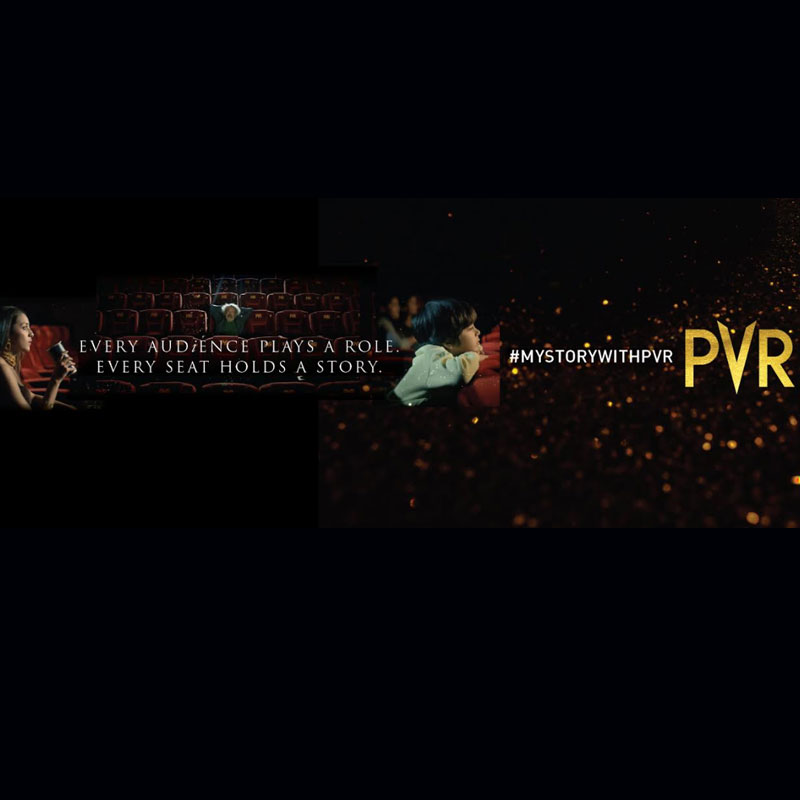
    MUMBAI:  PVR Ltd, India’s largest film exhibitor and a name synonymous to excellence in the entertainment ecosystem, has launched the brand film recently to celebrate its audience for over two decades. The film observes the patrons and the million experiences while stating “Every seat has a story.” Conceptualized around the significance of customer-centricity, PVR Ltd. with the newly launched film reiterates its focus on the customer and their experiences.

    PVR Ltd  chairman and managing director Ajay Kumar Bijli commented “It has been over two decades since we started and if there is one thing which has stayed constant; it is our focus on the customer and the experiences they yield in that 3 hours inside the cinema. We have evolved in every aspect but at the heart of our business lays the audience who drive us, guide us and encourage us to do better, push the envelope and explore new things.”

    “It has been an exceptional year on the business front, and I am grateful to our patrons and partners in supporting us in all our endeavors. Wishing all a very happy and entertaining year-end with family and friends.”

    The film celebrates the stories of the patrons, sharing a million emotions from inside the cinema theaters. It is launched across traditional, digital and social media platforms. 

  • MMA India holds first ever Ideathon, addressing brand challenges in a mobile first economy

    MMA India holds first ever Ideathon, addressing brand challenges in a mobile first economy

    MUMBAI: The Mobile Marketing Association (MMA) in India will introduce its first ever Ideathon, a 30-hour nonstop hackathon to address and solve brand challenges in a highly competitive environment. The event, which will take place on 25 – 26 August 2018 at K-start Respace, is targeted at tech-driven entrepreneurs and students. The first of its kind, the Ideathon will also be introduced at the upcoming MMA Forum in September.

    Bringing together the brightest and youngest minds from across Bangalore, the event, run in partnership with IncubateIND, will see advertisers from big brands across industries present their problem statements. Participants are then expected to come up with a solution and present their proposals after a 30-hour nonstop hackathon.

    As mobile continues to occupy maximum time and attention of consumers today, brands need to seek new and innovative ways to stand out and effectively reach their consumers. More than a place to share ideas, the Ideathon will also act as a platform for industry practitioners and students to network. 

    “The rapid growth of mobile adoption in India alongside the competitive landscape it operates in prompts companies to rethink their strategies when it comes to growing their businesses,” said Moneka Khurana, Country Head at MMA India. “The Ideathon will bring fresh insights from some of the best and most creative young minds in Bangalore, challenging brands to think outside the box and look at the multitude of possibilities mobile presents.”  

    Brands that will be participating in the Ideathon include Unilever, Vodafone, Tata Chemicals Limited, and Godrej Consumer Products Ltd. Despite coming from different industries, they all face challenges when it comes to engagement on different levels, especially in a mobile environment. This Ideathon provides a platform for brands to bring their individual problems to light, allowing the younger generation to use their creativity and talent as they do a deep dive into individual brand issues, providing solutions that are relevant to todays mobile audience. (Individual brand problem statements can be found here)

    “Vodafone seeks to partner India and the world in building a future which is exciting. In an era of technology, via this MMA Ideathon, we are keen to see some innovative and creative solutions coming from these young minds who are working on the designated briefs. It will certainly be interesting to watch how these young teams approach complex business and brand problems of today, and I’m sure there will be several fabulous nuggets to takeaway for the participants as well as the jury,” said Siddharth Banerjee, EVP-Marketing, Vodafone India.

    “Most of us (the business and marketing fraternity) have been solving business problems or marketing challenges, and connecting with consumers in a particular way for decades now. Through this Ideathon, the future generation will get a chance to tackle real-life scenarios and will empower them to speak their minds and come up with a possible solution which we might not have thought of. It is also a good opportunity for us to meet these young talents and possibly work with them in the future”, said Pankaj Parihar, Vice President & Head, Digital Marketing & Transformation, Godrej Consumer Products Ltd. 

    “Events like this are a great way for brands to hear from a generation of young talents who grew up in a mobile-first environment. Likewise, this Ideathon will allow future technopreneurs to get real insights from brands,” said Rohit Dadwal, Managing Director, MMA Asia Pacific. He added that while this is only the first event of this nature, he looks forward to seeing more events like this hosted by MMA across the region.

  • Eros Now partners InMobi to monetise ads

    Eros Now partners InMobi to monetise ads

    MUMBAI: India’s over the top (OTT) platform Eros Now, part of Eros International, has tied up with InMobi to enable advertisers to directly monetise on Eros Now’s video platform, which boasts an audience of over a 100 million registered users. This exclusive partnership will give brands and advertisers in India a unique opportunity to experience an end-to-end playbook that spans innovative video and ad formats, dynamic in-content placement of high-quality movies, and music videos and originals across devices.

    In addition, Eros Now will also adopt InMobi’s disruptive mobile-first advertising platform to market content through the in-app video universe across India.  

    Commenting on this association, Eros Digital CEO Rishika Lulla Singh said, “With the advertising landscape transforming into immersive engagement, brands can now leverage deep story-telling to collaborate with the audience. The digital penetration is seeing an incremental growth across cities in India and the consumer is increasingly spending much more time on their mobile devices than they did a few years ago, making it one of the most sought-after platforms for advertising. We are happy to join hands with one of the leading advertising platforms in India and aim to continue providing a seamless experience to all our subscribers.”

    InMobi founder and CEO Naveen Tewari said, “Our association with Eros Now marks an industry first partnership in the OTT space which is the next big thing after the app economy. It will be a trendsetter in many ways. Our distinction lies in our core business which centres around the primary screen – mobile; making this an organic progression for us, and that’s where our decade-long expertise also comes at play. Our full-stack mobile OTT solutions hinged on in-app and our video-first platform will not only allow for deep brand integrations but will improve the overall efficacy of content monetisation, driven through Eros Now’s original video content.”

    Eros Now hopes to open up avenues for both traditional and non-traditional brands to engage with their target audience. Mobile in-app advertising is a highly personalised segment, and by using InMobi’s technology and innovation, Eros Now will give advertisers access to creative optimisation, re-targeting and data-driven decision-making capability to run ads and to be the market leader.

  • Kohli brand driving on the up

    Kohli brand driving on the up

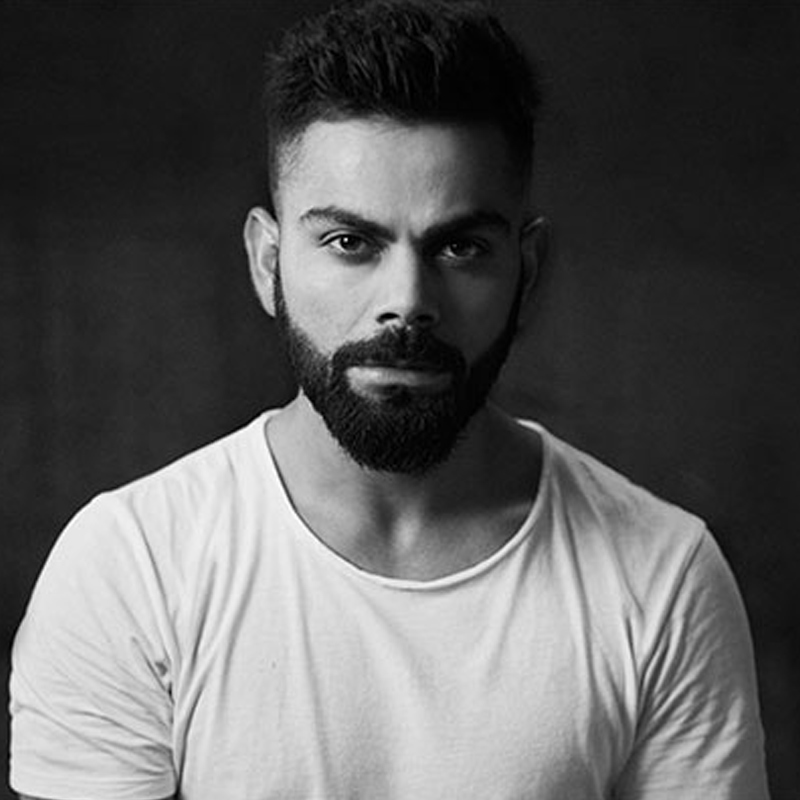
    MUMBAI: From a rambunctious maverick to becoming India’s most celebrated player, Virat Kohli is the man that brands pay crores to get on board.  

    Kohli has emerged as the star celebrity of Indian advertising and brands are willing to spend crores to get him. The Indian cricket captain’s brand equity was valued higher than football star Lionel Messi in the Forbes top 10 list of global athletes of 2017 at an estimated value of $14.5 million. According to a recent report by corporate advisers Duff & Phelps, Kohli is India’s most valuable brand surpassing even Bollywood’s king Shah Rukh Khan who held the title since 2014.

    Known for his innings, temper and wise choices on field, cricket fans have seen Kohli turn from a brash young boy into a decisive and strong-willed leader. As he matured in his life and cricket, so did his decisions on the brands he associates himself with.

    While the early glamour may have pushed him to advocate Pepsi and Fair & Lovely Men, he eventually decided to move away from these brands. He was signed up as the brand ambassador for Pepsi in 2011 but refused to renew the contract which ended in April 2017, saying at the time that he would not ask people to consume something that he himself does not. Kohli said, “Things that I’ve endorsed in the past – I won’t take names – but something that I feel that I don’t connect to anymore. If I myself won’t consume such things, I won’t urge others to consume it just because I’m getting money out of it.”

    Many saw his move as a sign of a man who believes in himself and someone who has invested his mind, heart and body in his role as a leader in society. “I want to give something to people that I use myself. One of the reasons I decided not to sign Pepsi is that I have undergone a lifestyle change. It might have been big money for me and a very lucrative deal but I opted out as we need to have some thought behind the products we promote and we must understand that people trust us,” he added. 

    Kohli also no longer endorses fairness creams or products of that genre since equating success with skin fairness goes against his values.

    Other brands he decided to stop endorsing include 3C Company, Celkon Mobiles, Cinthol Soap, Clear Shampoo, Fair & Lovely, Fastrack Watches, Flying Machine, Mattel, Munch chocolate, Oakley Sunglasses, Red Chief Shoes, Sangam Suitings and Toyota Motors.

    It was reported in 2013 that Kohli’s brand endorsements were worth over Rs 100 crore with his bat deal with MRF to be the costliest deal in Indian cricket history. 

    In 2017, he signed an eight-year endorsement deal with Puma for Rs 110 crore, becoming the first Indian sportsperson to hit the ton with a brand. The Manyavar face today endorses over 20 brands. Some of his iconic brand associations are with Gionee Mobile, Colgate, Vicks Vapo Rub, Boost, American Tourister, and Punjab National Bank among others. 

    Several eyes rolled when he signed with Royal Challenge but he has always maintained that he does not endorse or promote alcohol in any way but is rather promoting the brand’s energy drink. He recently signed deals with Uber India and snack company TOO YUM.

    But what makes Virat Kohli such a huge hit where he now seems to have surpassed Amitabh Bachchan and Shahrukh Khan to become every Indian brand’s first choice? 

    Brand expert Saurabh Uboweja believes Virat Kohli’s consistency in performance on the field and he being an icon who stands for the values the youth of India resonates with, has made him a hot pick. He adds, “Kohli exudes the charm and attitude of a celebrity and loves the media, limelight and is a natural performer both on and off the field.”

    Kohli has an undying love for sports and with football being his second favourite sport, Kohli became a co-owner of Indian Super League club FC Goa in 2014. He is also the co-owner of International Premier Tennis League franchise UAE Royals and JSW-owned Bengaluru Yodhas franchise in Pro Wrestling League.

    Kohli is one of the few cricketers who have an equal taste for cricket and fashion (media). In 2014, Kohli along with Universal Sportsbiz (USPL) launched a youth fashion brand for men WROGN. He has also invested Rs 90 crore to start his own chain of gyms and fitness centres across the country, under the name Chisel. In 2016, Kohli started Stepathlon Kids, a children fitness venture, in partnership with Stepathlon Lifestyle.

    The young cricketer still has a long road and career ahead and his star value is unlikely to dim anytime in the future. It will be exciting to see how his brand associations shape going forward as he is the only cricketer in India today that brands are dying to align themselves with.

  • Guest Column: Dear Me…Be a good loser!

    I failed often, failed bitterly, had my fair share of ups and downs. I had my apprehensions and my faults. I share here the positive convictions I have gained. May be they hold some wisdom for the millennials of today too as they venture for their first inclines.

    A line in a poem by Czeslow Milosz that’s always stuck with me: “Love means to learn to look at yourself/ The way one looks at distant things/ For you are only one thing among many.” The key to happiness, the poem suggests, is to understand that you need to become less self-obsessed – so that you can better relate to the world around you.

    I was fortunate to rise to the job of a CEO within 11 years of take-off.

    24 years since I started and as an athlete at the peak of his game today, here are 7 things I would want my younger self to take care of. 

    1. Seize the moment. Carpe Diem. I would volunteer for the next responsibility and rise to the occasion. I would not make ‘best’ the enemy of ‘better’. No work is too small. I would relish the opportunity to work. If you’re not progressing, you’re regressing; so, keep moving forward. The key to success in any field or endeavor is to keep moving forward. In the block-buster Indian movie Baahubali, the Hero gives the dark horse a piece of advice – “Zindagi Ek Baar Sher banane ka mauka sabko zaroor deti hai” (Life gives you the chance to become a Hero at least once). This one moment must be seized. Also as goes the popular Hindi saying “Behta paani nirmala” – translated into English which is “Rolling Stones gather no moss”.

    2. Take care of myself. Your body is the greatest instrument you will ever have. I would keep it in fit condition. You are beyond your body. The quality and power of your mind will determine how you well you would fare in the wake of challenges. I would train my mind. The importance of constant upgradation of your intellect cannot be emphasised enough.

    3. Kill my ego. Adapt to the world. You need them. They don’t. Simple. Adapt to the situation or the challenge. Not even a whiff of entitlement. Please. Half of my problems is me. The other half is the circumstances. I would find the best combination.

    4. Choose to be happy. I would not be rigid about my wants. I would awake to the truth that I can change my wants. Happiness does not depend on anything but me. Wants are changeable.

    5. Save money. I would start early to create wealth by saving money. A dollar yesterday is bigger than one today. Money grows. The power of the exponential function is one of the most misunderstood!

    6. Be a good loser. I would rise every time I fall. You only fail if you do not get up. I would fail fast, fail often, fail uninhibitedly and fail – not quit – till I succeed. And again… A progressive mentality doesn’t mean that you’ll never experience major setbacks, or even utter failure–which can deliver vital lessons and invaluable experience. Additionally, reflecting on how far you’ve come can provide necessary motivation. Remember, there are no shortcuts. True success is as much about hard work as about resilience–the ability to keep getting up when you’re tempted to throw in the towel. Never give up. Ever.

    7. Find my spiritual center. I would involve myself in spirituality much earlier than I did. To know how to live better, be content and spend life so that it is worthwhile.

    Some of the above are convictions because they invariably stood me in good stead. Some of them I did not practise but would be wise to – were I to do it again! Happy Living.

    public://Untitled-4_3_0.jpg

    (Piyush Sharma, a global tech, media and entrepreneurial leader, created the successful foray of Zee Entertainment in India and globally under the ‘Living’ brand. The views expressed here are of the writer’s and Indiantelevision.com may not subscribe to them.)