Tag: brand

  • Colgate Palmolive net profit for Q2 20 grew by 12.7%

    Colgate Palmolive net profit for Q2 20 grew by 12.7%

    New Delhi: Colgate-Palmolive (India) has reported net sales of Rs. 1,277.6 crore for the quarter ended September 30, 2020, an increase of 5.3 per cent over the same quarter of the previous year.

    Domestic net sales for the quarter reported 7.1 per cent growth. Reported net profit after tax for the quarter was Rs. 274.2 crore as against the net profit of Rs. 244.1 crore for the same quarter of the previous year. Excluding the one-time impact of tax rate change in the previous year, the net profit growth is 32 per cent.

    H1 2020-21: Net sales for the half year ended September 30, 2020 was recorded at Rs. 2,311.3 crore, an increase of one per cent over the same period of the previous year. Reported net profit for the same period was Rs. 472.4 crore, an increase of 14 per cent over the preceding period.

    Dividend: The board declared a first interim dividend for the financial year 2020-21 of Rs. 18 per share of Re 1 each (face value). The dividend pay out to the shareholders will be Rs. 489.6 crore and will be paid on and from 17 November 17 2020 to those shareholders whose names are on the Register of Members of the Company as on 22 November 2020.

    Colgate Palmolive MD Ram Raghavan says, “We are very pleased with our performance as we continue to see momentum strengthening across the portfolio with domestic revenue growing at 7.1 per cent this quarter. Our resilience and disciplined approach to managing all revenue and cost drivers, despite all the uncertainties and challenges around us drove improvements in key financial metrics with gross margins and EBITDA at 67.9 per cent and 32 per cent respectively.

    We are pleased that we were able to increase shareholder value while we continue to drive innovation that meets the needs of our consumers. All categories saw positive growth this quarter with toothpaste continuing its accelerated performance, driven by strong brand fundamentals and household penetration. The quarter also saw some exciting innovation. We launched Colgate Visible White Instant, with its unique optical brighteners technology that starts whitening from the first brushing itself.

    The new Colgate Gentle line of toothbrushes offers an effective yet gentle clean. Launched across price points, it offers solutions to different consumer preferences. We also relaunched our flagship toothbrush, Colgate Zig Zag, with unique anti-bacterial bristle technology.

    Another first from our stable, was the launch of our Colgate Vedshakti mouth spray. A pocket sized solution that offers instant germ kill with a refreshing minty saunf flavour, that consumers love.

    Our sharp focus aimed at fulfilling demand and ensuring uninterrupted access ensured agile and innovative approaches, specifically in our supply chain and distribution efforts. As an organisation we continue to live our values and remain unwavering in our focus to improve the health and well-being of our consumers. We are thankful to our customers, business partners and employees for their continued support.”

  • HUL’s Profit for Q2 2020 grew by 8.7%

    HUL’s Profit for Q2 2020 grew by 8.7%

    HUL, the major FMCG major and a leading advertiser, has reported a profit of Rs 2,009 crore in the quarter ended September 2020, against the Rs 1848 crore in the same period last year recording a growth of 8.7 per cent.

    It was further reported that the overall sales grew by 16 per cent during the quarter. Underlying domestic quarter business sales also grew by three per cent during the quarter.

    The BSE filing further mentioned that the revenue from operations increased 16.1 percent to Rs 11,442 crore in Q2FY21 compared to Rs 9,852 crore in corresponding period last fiscal. EBIDTA for the quarter stood at Rs 2,869 crore against Rs 2,443 crore in same period last year. It grew by 17 per cent and margin improved by 30 bps.

    The profit after tax before exceptional items for the quarter stood at Rs 2,035 crore against Rs 1,832 crore in the same period last year. It grew by 11 per cent.

    The board has declared an interim dividend of Rs 14 per equity share of face value of Rs 1 each for the period ended September 2020.

    Read more news on HUL

    HUL CMD Sanjiv Mehta said, “In the context of a challenging economic environment, our growth has been competitive and profitable. We continue to demonstrate execution prowess, agility, adaptability, resilience and passion of our people. The company’s operations and service levels are now back to pre-Covid levels and they have accelerated the pace of digitizing the operations under the ‘re-imagine HUL’ agenda.”

    “The economic outlook has improved given the various initiatives taken by the government and Reserve Bank of India. In our sector, rural markets have been resilient but the demand in urban India, especially in metropolitan cities has been muted. We believe that the worst is behind us and we are cautiously optimistic on demand recovery,” he added.

    HUL shared that its household care segment delivered strong performance across all segments led by continued penetration gains. The brand has reduced the cost of fabric wash to pass on benefits of lower commodity costs to consumers. The category consumption of laundry has been adversely impacted due to confined living. “Continued focus on driving market development has enabled us to grow our liquids and fabric sensations segments strongly,” the filing further mentioned.

    The company’s skin cleansing segment grew in double digits on back of a very strong performance in ‘Lifebuoy’ and a good delivery in ‘Lux’.

    Its hand sanitizers and handwash segments continued to gain penetration and have delivered robust growths. Its oral care grew in double digits with accelerated momentum in ‘Close Up’, while hair care also grew in double digits. Its skin care brands ‘Glow & Lovely’ and ‘Glow and Handsome’ also continue to grow.

    Food, tea, coffee sustained the high growth momentum and grew in double digits. Its performance of nutrition business was competitive and disrupted supply lines were completely restored. However, ice creams, food solutions and vending machines continue to be impacted as the out-of-home consumption was affected.

    “Our strong savings funnel, judicious and calibrated pricing in tea, synergies in nutrition have enabled us to successfully manage headwinds of commodity inflation and adverse mix,” HUL said in a release.

    “We have significantly increased our investments behind our brands and our spends continue to be competitive,” it added.

    HUL commands a large portfolio of brands across categories and it is one of the largest advertisers of the country. 

  • Kabir Ahmed Shakir replaces Pratibha K Advani as CFO at Tata Communications

    Kabir Ahmed Shakir replaces Pratibha K Advani as CFO at Tata Communications

    Mumbai: Tata Communications, a global digital ecosystem enabler, has appointed Kabir Ahmed Shakir as its chief financial officer. Kabir will join on October 21st, 2020 and will be responsible for the strategic financial management of the company, including investor relations.

    Kabir brings with him nearly three decades of leadership experience in strategic financial management with a sharp focus on growth, strong business processes, and operational execution across diverse industries and geographies. Until recently, he was the CFO at Microsoft India, responsible for Microsoft’s  overall finance leadership across all entities in India.

    Kabir has extensive experience in global markets. Prior to Microsoft, he spent 23 years with Unilever in  leadership roles across the globe – as International Funding Director in the Netherlands, Global Supply  Chain Finance Director in the UK, CFO of the Home and Personal Care business in India and Global CFO for  the Skincare category in the UK.

    Tata Communications MD & CEO A.S Lakshminarayanan says, “I am pleased to welcome Kabir into  the leadership team at Tata Communications. Kabir brings with him extensive functional expertise together  with deep understanding of digital businesses and start-ups. As the company looks to implement the new  vision to be a global leader in enabling digital ecosystems, Kabir’s experience will be valuable in driving  transformation programmes as well as profitable and sustainable growth for the company.”

    Shakir says, “I am very excited to join Tata  Communications. The company has shown remarkable business performance which is being recognised by the market and key stakeholders. Tata Communications have a clear, ambitious strategy and a strong leadership team. I look forward to building on the company’s financial strategy and delivering value to  shareholders, as the company continues on its path of achieving profitable growth and being seen as a  leading digital ecosystem enabler globally.” 

  • Chrome dm week 41: Hindi News emerges as top gainer

    Chrome dm week 41: Hindi News emerges as top gainer

    NEW DELHI: Hindi News genre has become the top gainer in week 41, 2020 of Chrome Data Analytics and Media data, albeit with a marginal growth. The genre has grown by 0.30 per cent.

    In this genre, ABP News has gained the highest OTS with 99.9 in the HSM excl < 1 market. OTS is the actual census-based percentage connectivity of a channel spread across 81 million homes, as reported by Chrome DM, across analogue cable, digital cable, and DTH.

    This week, Religious genre has emerged as a close second on top gainers list with a growth of 0.23 per cent in the six metros market. In this genre, Sanskar has gained the highest OTS with 98.2 per cent.

    Read more coverage on ChromeDM

    As per the data, no other genres including Infotainment, English Movies, Hindi Movies and others have grown during this period. 

  • Micromax announces comeback

    Micromax announces comeback

    NEW DELHI: Popular Indian mobile manufacturer Micromax is poised to make a comeback with its "In" range of smartphones.

    Micromax founder Rahul Sharma made the announcement, saying the homegrown company is once again looking to re-enter the smartphone market. In a video posted on Twitter, Sharma narrated Micromax’s journey – the brand’s growth to the top as well as the mistakes which were made on the way – and that it’s now ready for a fresh start.


    Sharma stated that he does not condone the recent events playing out on the Indo-Sino border. At one point the number 2 smartphone maker in India, Micromax faced tough competition from Chinese brands, and was eventually forced to call it quits.

    “The Chinese mobile manufacturers wiped me out in my own country. This time, whatever I do, will be for the sake of India," he said in the video, adding that he has taken PM Narendra Modi’s call of Atmanirbhar Bharat to heart.

    Micromax, along with 15 other smartphone manufacturing companies, was approved for incentives under the government's Production-linked incentive (PLI) scheme.

    Earlier this year, the Centre had amended the rules to the PLI scheme to make it more market-friendly by removing caps and other contentious clauses. The incentives range from 4 per cent to 6 per cent over a five-year period, provided the manufacturer makes smartphones valued at around $200.

    According to a Reuters report, the approved companies are expected to make Rs 10,50,000 crores worth of smartphones in India.

    A few years ago, brand Micromax was shining and thriving in the sub-Rs 10,000 and sub-Rs 5,000 segment phones. It also launched several premium smartphones and did an interesting campaign with Hollywood superstar Hugh Jackman.

  • What BARC’s temporary cessation of news channel ratings means for all

    What BARC’s temporary cessation of news channel ratings means for all

    MUMBAI: With all the hullabaloo around the news TV space and allegations of rigging flying thick and fast, the viewership monitor BARC has decided to take a breather as far publishing of  weekly ratings of the purveyors of news is concerned. This temporay cessation  could impact the overall industry – especially advertisers and those involved in the news business. More so because advertisers and agencies will not have access to the de facto ratings cuurrency that allows them to price the air time and TV spots they buy from the news channels.  

    The committee has shared its point of view on why it has taken such a step. Excerpts:-

    Why has BARC India taken the step of not reporting news channels? 

    In the light of the recent developments, the BARC board has proposed that its technical  committee (Tech Comm) review and augment the current standards of measuring  and reporting the data of niche genres, to improve their statistical robustness and to  and to significantly hamper the potential attempts of infiltrating the panel homes.  This exercise would cover all Hindi, regional, English news and business news channels  with immediate effect.  

    Therefore, starting with the ‘News Genre,’ BARC will cease publishing the weekly  individual ratings for news channels during the exercise. This exercise is expected to  take around eight to 12 weeks including validation and testing under the supervision of  BARCs TechComm. The monitoring service will continue to release weekly audience estimates for the  news genre by state and language. 

    Which genres will be affected by this change?  

    The decision will initially impact all Hindi, regional, English news and business news  broadcasters. BARC will continue to provide estimates for the overall news genre  every week by state and language.  

    For how long will the data not be available for news channels?  

    The BARC TechCom  will revisit the rule sets of niche genres to improve their  statistical robustness and to significantly hamper the potential attempts of infiltrating  the panel homes. Starting with the news genre, BARC would stop declaring the individual  channel ratings for news channels while this reworking of the rule sets is being done.  This exercise would take around eight to 12 weeks including validation and testing under the  TechComm’s supervision. BARC will keep its stakeholders updated as it  augments these processes.  

    Which data and analysis will not be possible or will not be available because of the withholding of ratings? 

    The withholding of ratings will, inter -alia, will lead to non – availability of the following  viewership variables for impacted channels: 
    • Impressions  
    • Daily reach  
    • Average Time Spent (ATS)  
    • Cumulative reach  
    • Rating % 

    Since these variables will not be available, analysis such as viewer movement and  behavioural track analysis will not be possible.  

    However, the above details will be available at a genre level.  

    Will BARC be collecting and processing data for impacted channels during  this period? Will the individual channel data be released post this period?  
    BARC will continue to collect and process data for the impacted channels. BARC’s TechComm  will advise a protocol for release of individual channel data,  post its work on niche channels.  

    Will playout data be collected during this period for the impacted  channels? 

    Yes, playout data will be collected for the impacted channels during this period. 

    Will Spot Trek service be impacted due to this withholding of ratings?  

    BARC will continue to confirm spot – related data to its Spot Trek subscribers.  There will be no impact on the Spot Trek service.  

    Are the numbers released by BARC inclusive of the impacted news  channels?  

    The data for news channels will still be included in the audience estimates for  aggregate such as total TV. It is only the audience estimates for the individual  channels that will be masked. 

    What data will be reported for the impacted news channels?  

    BARC will continue to release audience estimates for the overall news genre every  week by state and language. However, channel–wise data will not be released.  

    I am not a news channel. Why has my data been withheld?  

    Individual news channels audience estimates will not be reported. The genre  classification is determined by “Policy for Genre Classification of TV Channels” as last  updated in September 2019 and as updated on the BARC website. This classification is  updated on a quarterly basis.  

    As per the BARC policy on genre classification, a TV channel is classified as a news  channel, when more than 60 per cent of the TV Channel content for a given week averaged  across a calendar quarter from 6:00 Hrs. – 26:00 Hrs. consists of news and news- related  content. 

    Are genres other than news genres also going to be impacted?  

    The BARC TechComm will review and augment the current  standards of measuring and reporting the data of niche genres, to improve their  statistical robustness and to and to significantly hamper the potential attempts of  infiltrating the panel homes. 

  • Havas establishes dedicated customer experience network

    Havas establishes dedicated customer experience network

    NEW DELHI: Havas Creative has launched Havas CX – a new, international network dedicated to delivering meaningful brand experiences across the entire customer journey. It brings together more than 1200 people from 20 of Havas Creative’s global agency groups and local agencies, plus additional CX specialists from across the Havas network, under a common structure, governance, methodology and mission.

    Havas CX will span 18 major Havas Villages around the world, with key hubs in London, Paris, New York and Mumbai. It brings together global agency groups including ekino (digital transformation), BETC FullSix (customer experience), Havas helia (customer engagement) and award-winning leaders in their markets including Plastic Havas, Langoor, Boondoggle, Gate One, Think Design, Host/Havas, Project House and Intellignos.

    Havas CX’s competitive advantage lies in its ability to combine this deep-rooted, newly coordinated CX expertise with Havas’ rich insights into modern consumers (via its proprietary Meaningful Brands study of 350,000 consumers), its ground-breaking Prosumer studies of ‘leading edge’ consumers, and its X Index – a new barometer for measuring and managing customer experience) and its unique, integrated village model–establishing the ability to look at customer experience from a more holistic, comprehensive and less siloed perspective.

    This combination provides the network with the ability to marry the technological, functional aspects of CX with its clients’ brand promise and the personal and cultural context devised from Havas and BETC’s consumer insights.

    The move to establish a dedicated CX network follows the successful launch of the BETC Fullsix agency model in Paris and the acquisition in 2019 of best-in-class specialists Langoor (digital engagement), Think Design (user experience) and Gate One (a digital and transformation consultancy).

    The component agencies’ branding will be updated to reflect the new network identity. The new network already boasts clients including Reckitt Benckiser, Tesco, Maersk, Club Med, AbbVie, Airtel, Starbucks, Canal+.

    The Havas CX network will be led by Yann Doussot (Global COO) overseen by an executive committee chaired by Chris Hirst (Havas Creative Global CEO), Mercedes Erra (Chairwoman BETC FULLSIX), Donna Murphy (Global CEO Havas Health & You) and Peter Mears (Global CEO Havas Media Group). And a strategic committee chaired by Hirst including Tracey

    Barber (Global CMO), Stéphanie Nerlich (Global CCO, executive managing partner, Havas North America), Olivier Vigneaux (CEO BETC FULLSIX), Xavier Rees (CEO Havas London), Mark Sinnock (CSO Havas UK).

    Havas Group chairman & CEO Yannick Bolloré says: “Having pursued an acquisition strategy of cutting-edge agencies in the customer engagement space over recent years, we feel the time is right to unify our agencies under one joined-up, global network brand. In Havas CX, we believe we have the most comprehensive customer engagement proposition the industry has to offer–and it’s one we intend to continue to strengthen by hiring top talent and making further best-in-class acquisitions.”

    Havas Creative global CEO Chris Hirst adds: “Today customer experience is the bedrock on which a brand is built – indeed, the majority of a consumer’s experience of any brand won’t be through above-the-line advertising, but their personal interactions with it. As technology advances almost any conceivable purchase is just a couple of clicks away and the opportunities for brands to get it right, or wrong, are manifold. CX is the new battle ground – and the brands that get it right will win, and those that don’t will lose; it’s as simple as that.

    “Now is the right time to be overt in our commitment to the one the discipline that today underpins all others by bringing our 1200-plus specialists in a single brand. With our integrated village model and our proprietary consumer insights, the Havas CX Network will significantly extend the power and capability of our offer.

    “The network will be guided by our world-class leaders in France, UK, US, Asia and LATAM ensuring we share learning, best practice and capabilities to make the network greater than the sum of its parts and helping our clients build deeper and more meaningful connections with their customers”

  • White Rivers Media elevates Chirag Sangai as head of client partnerships

    White Rivers Media elevates Chirag Sangai as head of client partnerships

    NEW DELHI: White Rivers Media has elevated Chirag Sangai as head of client partnerships. He joined the agency in August 2020 as an accounts director. Sangai joined White Rivers Media from Blink Digital. 

    He has over 10 years of experience in the digital industry, and has worked on various national and international brands including Tropicana, Disney, KFC, Amazon, Zomato, Chivas Regal, Milton, and ICICI.

    White Rivers Media CEO & co-founder Shrenik Gandhi said, “I’m very glad to welcome Chirag as the Head of Client Partnerships. He comes with the experience, passion, and goodwill that makes him a perfect fit for White Rivers Media, and at a time that sets us up perfectly for our next phase of growth.”

    Chirag Sangai said, “I believe in the four ‘R’s of successful account management: Revenue, Relationship, Resource, and Research. I’ve plied my ad craft in F&B, Homeware, Banking, and Gaming industries, and at White Rivers Media my next step is to not only keep expanding my portfolio, but also work with the amazing in-house talent, and harness the creative firepower of this agency to create disruption in the market.”

  • On Uday Shankar’s exit from Disney+Star, a retrospective on his rise

    On Uday Shankar’s exit from Disney+Star, a retrospective on his rise

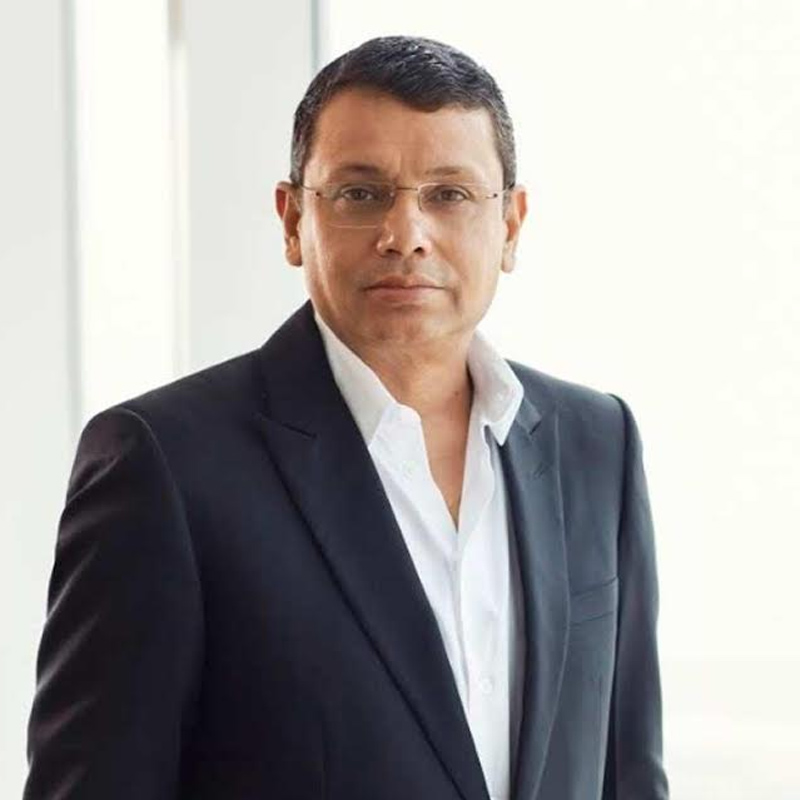
    MUMBAI: Back in 2007, when Uday Shankar was picked out of nowhere to lead Star India, the organisation was a minnow. It had been a leader in the Hindi GEC space through its channel Star Plus, but it slipped from that pedestal following aggressive moves by competitors like Zee TV, and Sony. It had a small presence in regional languages; its channel portfolio was limited. Long-running teams and senior managers had left the network, for whatever reasons.

    Most professionals asked: “Who Uday?” with the emphasis on the fact that they did not consider him much of an entity when one asked them about his appointment.

    When he leaves the organization on 31 December, he will be leaving behind a massive beast present in almost every Indian language, which is a front runner in general entertainment, drives the sports and sports broadcasting agenda in India, is a pay TV powerhouse, has a globally recognised OTT streaming service Hotstar, that is the envy of gold standard streamer Netflix.

    To add to that the Star India network also has brilliant pedigree attached to its brand – the name Disney, which is the world’s biggest media firm.

    And industry is still asking: “Who? Uday?”

    This time, the emphasis is on the shock that they feel about his decision to leave Disney Star India, having made his mark as a media and entertainment industry leader.

    Read more news on Uday Shankar

    Many expected him to leave on the back of the merger announcement a year and a half ago. Of course, the expectation was that there would be a clash between the rigorous process and the system driven approach that Disney is known for and the entrepreneurial, back-of-the envelope, seat-of-the pants culture that the Murdochs encouraged in Star India and which Uday had gotten used to. But because he stayed put – even as his deputy Sanjay Gupta, digital head Ajit Mohan, strategy and marketing head Gayatri Yadav left – one thought he had managed to meld into the new culture; that he would stay.

    Uday filled the executive gaps quickly by bringing in K Madhavan to look after the TV business, a new Hotstar boss in Sunil Rayan, and everyone thought he was padding up to take Disney Star India into its next innings.

    His announcement comes at a time when the IPL is having its best year yet with higher viewership than ever before; that too in times of dire stress thanks to Covid2019. The IPL is something which has been very close to his heart; hence he bid the seemingly ridiculously high amount he did when he acquired its rights. Yes, revenues may be a little stifled this year thanks to the clampdown on spends by advertisers. But by any yardstick, Uday and his team have done a fairly good job in bringing in the financial numbers they have.

    The channels he runs are in fine fettle – being top of the rung in almost every genre. Yes, there are rumblings that the broadcast sector is a legacy business; digital is going to make it look antiquated. Yes, Covid2019 and subsequent lockdowns have totally upended business and revenue generation plans and accelerated digital adoption.

    Read more news on Disney & Star India

    The wrongly held perception is that we are counting down to traditional television’s inevitable demise. Which is where many are wrong-stepping themselves, at least in the Indian scenario. If one were to look at the demographics of India, television still has a lot many homes to penetrate. Will these homes leapfrog to broadband and streaming TV? Unlikely. Most experts have said no. VoD is here to stay, but the lean-back comfort that TV provides cannot be wished away.

    Uday showed he has the appetite and the aptitude to think big, to think scale.He built a team from ground up. The team listened to him, opposed him, and together they charted the growth of Star. He managed to convince the Murdochs to consolidate management of Star’s India operations into India from Hong Kong, saving them hundreds of millions of dollars in the process. He also convinced them to grant him the independence of Star Sports’ future in India by buying out ESPN’s interest in ESPN-Star, the 50:50 joint venture between the two. He then went about on his sports pursuits, acquiring cricket rights across BCCI, ICC and that of almost every sport and setting up local leagues for football, kabaddi, tennis, badminton and what have you.

    He gave the programming vertical the respect it deserves by labelling it as content; he allowed the setting up of a writer’s room in Star, he encouraged the concept of a show runner, something the broadcast sector was loathe to define. He was willing to take risks on content, on branding the network. His channel campaigns were like the broad brush of a painter who knows his craft, and they hit a chord with all of us. At one time he coalesced the messaging around Star India with the messaging of a new India with the tag line Nai Soch (new thinking).

    He chiseled the Star network into one which is deeply connected to the Indian ethos with stories and shows that talked about uplifting the Indian woman. He brought in a new narrative and seriousness through series such as Satyamev Jayate, TedX talks. Yes, they possibly did not help lift Star’s TRPs but they showed that it cared, and cares. He made many friend in high places, even with rivals. Zee TV’s Punit Goenka and he were opponents in business, but they often exchanged notes as though they were friends.

    Amongst Uday’s biggest initiatives was to give shape to Star India’s digital initiatives after failing on different versions online. With the right teams, technology and investment, he nurtured and grew the streamer, Hotstar,  into one which is driving the local streaming  agenda in India today.

    Uday raged against excessive regulation in the broadcast sector, when all his earlier efforts at diplomacy failed with the industry watchdog Telecom Regulatory Authority of India.

    What does Uday’s departure signal? Nothing much. Except that he is itching to do something different. Like he has been vaunt to do throughout his career – giving up a cushy print media job to do TV, saying ta-ta to news TV to do general entertainment television and running a network. Now giving up a prime executive position to turn entrepreneur.

    Most of the executives who left Disney Star India have left to join either digital or investment oriented ventures. It was not as if they were unhappy with what they had going at Star India. They left for better opportunities – Sanjay as Google India MD, Ajit as Facebook India boss and Gayatri as chief marketing officer at Sequoia Capital. As is Uday himself.

    Uday, in the press statement issued on his departure announcement said that he is going to partner with a bunch of global investors and pioneers to mentor startups and entrepreneurs “as they set out to create transformational solutions that will have a positive impact on countless lives.”

    Rajesh Kamat – the former CEO of Viacom18 – had in the past taken a similar tack, by partnering with Paul Aiello to run media investment funds. But they were focused on media. Going by Uday’s statement, his remit will be wider.

    The release also announced that Uday will work closely with Disney direct to consumer & international segment chairman Rebecca Campbell to find his successor. He has three months to do that. Going by the legacy he is leaving behind, finding someone who can match his energy and chutzpah might be a tall order.


  • Nivea pushes face wash segment with refreshed packaging

    Nivea pushes face wash segment with refreshed packaging

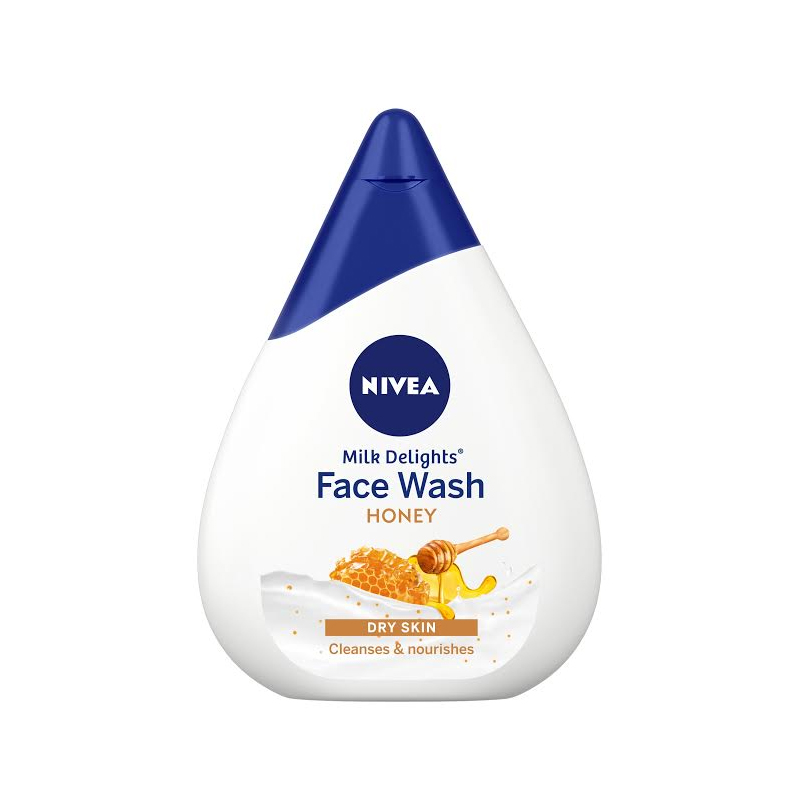
    MUMBAI:  Personal care brand Nivea is foraying into the face wash segment with its new range of Milk Delights Face Wash. With the launch of its latest campaign ‘Don’t Face Wash, Milk Wash!’ the body care label is encouraging consumers to not just wash their faces with generic cleansers but to use their product, enriched with the benefits of milk, for a natural healthy glow. 

    Milk is a natural cleanser that offers unmatched cleansing and keeps skin healthy and moisturised throughout the day. It is an ingredient that is traditionally revered for its healthy and nutritional properties. 

    Nivea’s Milk Delights range comprises four traditional variants: rose, besan (gram flour), saffron, and honey to address the needs of sensitive, oily, normal and dry skin with the goodness of milk and local home-remedy ingredients. The brand claims the product to be soap free, is pH-balanced, and suited for everyday use. 

    Adding another variant into the mix, the brand has also introduced the new Nivea Milk Delights Turmeric Face Wash. It has the goodness of milk combined with turmeric which helps reduce acne-causing bacteria.

    The new line of face washes is available in the market in a refreshed packaging and will be sold across India. The price of the product starts at Rs. 90.

    Nivea India marketing director Sachin Killawala said the brand has developed this range to suit every Indian skin-type.

    “A great cleanser is a one which has pH best suited to your skin. One such natural cleanser which has pH similar to your skin is Milk. We packed the goodness of milk into Nivea’s Milk Delights Face wash range, which cleanses the skin deeply to give you a natural healthy glow. With pH best suited to your skin Milk Delights Facewash isn’t harsh on your skin,” he said.

    German body care brand Nivea started its operations in 2006 in India. It recently forayed in the hand sanitisers segment during the lockdown after demand for the product went through the roof.