Tag: brand

  • Chrome DM week 43: Hindi news genre emerges as top gainer

    Chrome DM week 43: Hindi news genre emerges as top gainer

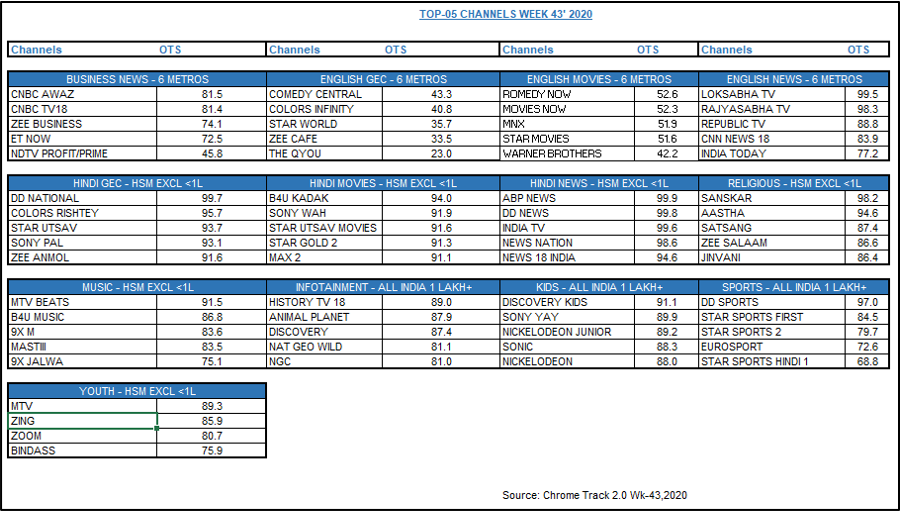
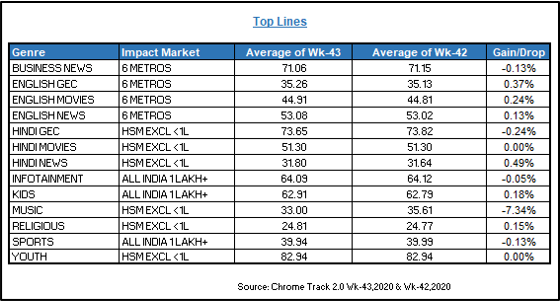
    NEW DELHI: Hindi news genre is the top gainer for week 43, 2020 of Chrome Data Analytics and Media data, with a marginal growth. The genre has grown by 0.49 per cent.

    In this genre, ABP News has gained the highest OTS with 99.9 in the HSM excl < 1 market. OTS is the actual census-based percentage connectivity of a channel spread across 81 million homes, as reported by Chrome DM, across analogue cable, digital cable, and DTH.

    This week, English GEC genre has emerged as a close second on top gainers list with a growth of 0.37 per cent in the six metros market. In this genre, Comedy Central has gained the highest OTS with 43.3 per cent.

    Read more coverage on ChromeDM

    Among other genres, Religious, English movies, English news, kids, have grown negligibly.

  • Mumbai Police violated Supreme Court guidelines in Arnab Goswami’s arrest, says AIBA

    Mumbai Police violated Supreme Court guidelines in Arnab Goswami’s arrest, says AIBA

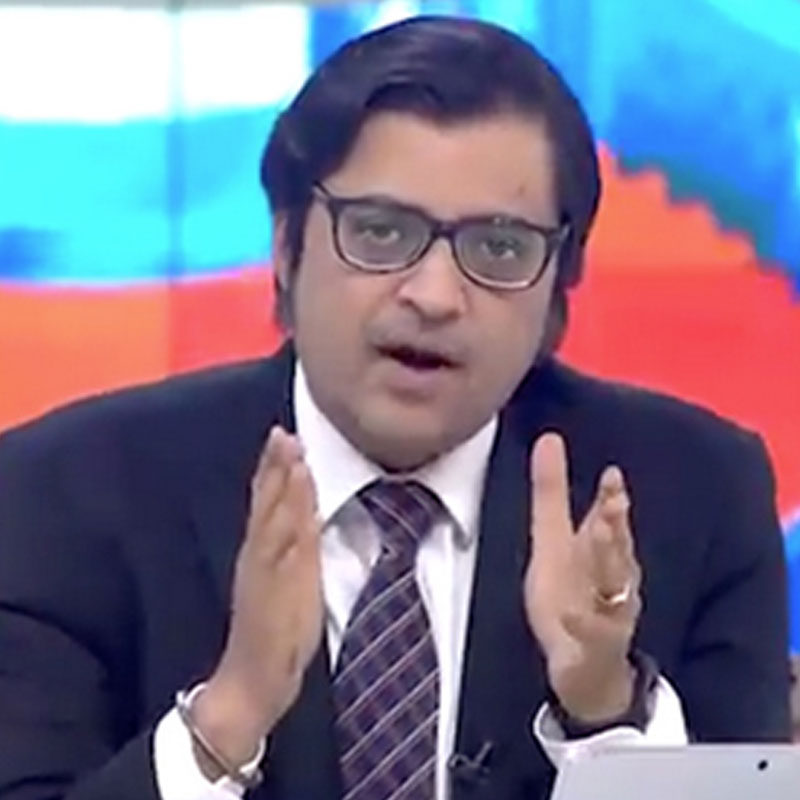
    NEW DELHI: The arrest of Republic TV’s editor in chief Arnab Goswami has evoked a response from multiple sections of the industry.

    Senior bureaucrats and news federations have condemned the arrest and called upon the chief minister of Maharashtra to conduct a free and fair investigation in the matter without exercising the authority of the government on media.

    In the latest development, All India Bar Association (AIBA) has condemned the arrest of noted journalist Arnab Goswami by Mumbai Police as it has violated the landmark guidelines to protect the rights of arrestee as enumerated in judgment delivered by Hon’ble Supreme Court in D. K. Basu v. State of West Bengal (AIR 1997 SC 610).  

    In a letter to the governor of Maharashtra, AIBA chairman Adish C Aggarwala, senior advocate, appealed for immediate release of the journalist as it is blatant misuse of power by Maharashtra Govt. against Republic TV and Arnab Goswami. The illegal arrest is an attack on individual freedom and the fourth pillar of democracy. 

    The following guidelines of
    honourable Supreme Court in the judgment passed in D. K. Basu v. state of
    West Bengal (AIR 1997 SC 610), have been violated by Mumbai Police in
    the matter of arrest of Arnab Goswami 

    Duties of Police Making
    Arrest and Handling Interrogation: All Police personnel should wear name tags clearly indicating their name and designation.

    Police must enter the complete details of police officials conducting interrogation in a register.

    Arrest Memo: The police officer making
    an arrest has to prepare an arrest memo that records details of the
    arrest. The arrest memo must contain:

    a. The signature of at least one witness, who can be a relative of the arrestee or a respectable person of the locality where the arrest is made. 

    b. The time, date, and place
    of the arrest. The arrested person should sign the arrest memo after it is
    properly prepared.  

    Inspection Memo: If the arrested person requests it, the arresting officer must record any minor/major injuries on his/her body in an inspection memo. The memorandum should be signed by the arrested person and the arresting officer. A copy of the Memo  must be given to the arrested person.

    Information About the Arrest & Detention: The arrested person has the right that his/her relative/friend is informed about the arrest. The police must contact and inform the relative/friend of the time and place of arrest, and the exact location where the arrested person is detained, at the earliest. If the relative / friend is in a different district / city, the concerned police station should be informed by telegraph within 8-12 hours of the arrest and then convey the  information to the relative / friend. The information of the arrest should also be sent through the district legal aid committee.

    Right to a Lawyer: The arrested person has the right to meet and consult a  lawyer during his/her interrogation. The police cannot deny this.  

    Illaqa Magistrate: The Police must send one copy of all documents, relating to the arrest (including the Arrest and Inspection Memos) to the Illaqa Magistrate for his/her records.

    Police Control Room: Police Control Rooms should be set up in all district and state headquarters. The arresting officer has the duty to inform the control room about the place of detention of the arrested person. This has to be done in all arrests.This information must be sent to the control room within 12 hours of the arrest. This information must be displayed clearly on the notice board of the Control Room. Duties of Police making arrest and handling interrogation: 

    These directions should be mandatorily followed. Refusal to do so results in the initiation of contempt of Court proceedings.

    Departmental action should be initiated against police officials who have violated above safeguards guaranteed to the citizens of the country. 

  • Madras High Court issues orders to Tamil Nadu, central government & brand endorsers in PIL against online gaming

    Madras High Court issues orders to Tamil Nadu, central government & brand endorsers in PIL against online gaming

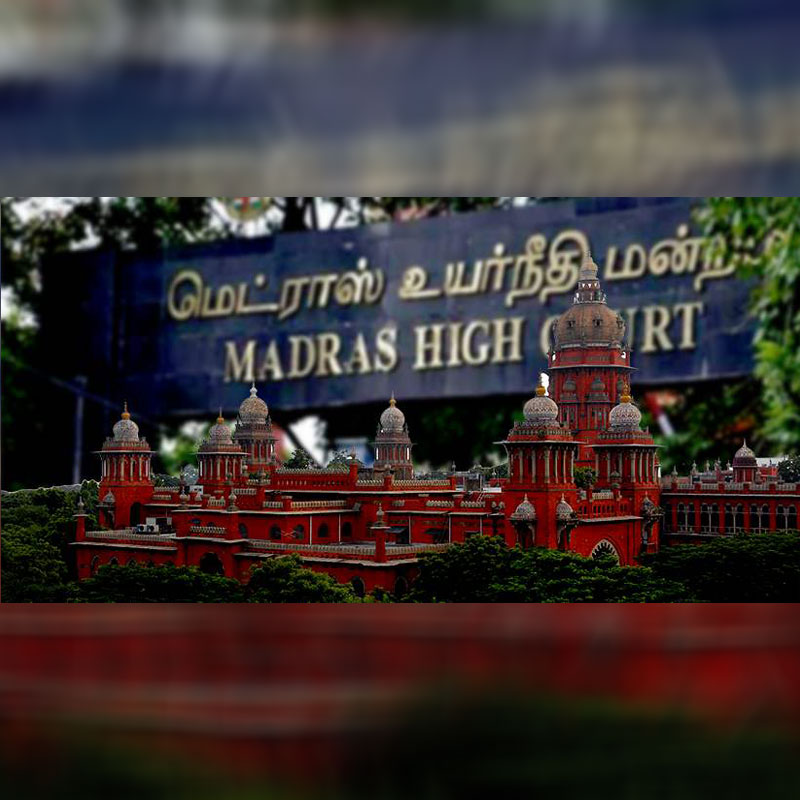
    NEW DELHI: Acting on a PIL against the ill-effects of online gaming filed by an advocate Mohammed Rizvi, the Madras High Court has issued notices to Cricket team captain, Virat Kohli, President of Board of Control for Cricket in India (BCCI), Saurav Ganguly and the Central and Tamil Nadu governments. 

    The TN government, represented by AAG Sricharan Rangarajan, has asked for 10-days time to file a response. The case has thus been adjourned to 19 November.

    The court also voiced concern that lives have been lost due to online games and the lack of law governing such issues in Tamil Nadu.

    The PIL also names Telecom Regulatory Authority of India (TRAI) and celebrity endorsers such as actors Prakash Raj, Tamannah Bhatia, Rana Daggubati and Sudeep as respondents.

    In his petition, Razvi had risen serious concerns about gaming addiction and social stigma. He cited instances of children who have died by suicide on account of playing online games similar to the Blue What challenge and after losing in PUBG to state exposure to online gaming introduces the kids to a world of crime and negative thinking,

    Other instances where people have died because they have lost money while playing Online Rummy and online gambling were also highlighted by him. 

  • How Covid2019 impacted ad rates & consumption of news genre

    How Covid2019 impacted ad rates & consumption of news genre

    NEW DELHI: Covid2019 impacted every category of the television business. In the news genre, ad volumes, as well as ad rates, were hit initially, but have since regained momentum. There was a massive surge in viewership, which is now beginning to stabilise. And with more and more people getting onto the digital platform, the news consumption pattern has witnessed a slight change.

    In a session titled – ‘Advertising on News’ at Indiantelevision.com’s News Television Summit, co-powered by TVU Networks, eminent advertisers and agency heads discussed how stakeholders in this business are analysing the rapid changes and adjusting their strategies to it. The panellists included FBB, Future Group CMO Prachi Mohapatra, Policy Bazaar head of brand marketing Samir Sethi, Wavemaker CEO – south Asia Ajay Gupte, Essence SVP & MD – India Anand Chakravarthy, ITV group CEO Varun Kohli. It was moderated by E&Y partner M&E Ashish Pherwani.

    Pherwani began by asking Kohli how he sees the ad rates at news channels in the current scenario. Kohli mentioned that Covid2019 had hit everyone adversely big time. “The FMCG brands that were operating on the other genre started coming to the news genre because the latter was growing. All other genres were lacking fresh content, except movies where the channels just played their libraries. Overall, the news genre was impacted for the first two months of the financial year but then it regained,” added Kohli.

    He elaborated that in the post-Covid scenario, especially during the festive season and election times, the frequency news channels will be able to get their old rates back. “So maybe the leaders might not have gained it yet but the frequency channels have started getting their rates back in some order because they are making a lot of sense to the agencies and advertisers in terms of CPRP mix.”

    Adding to this Gupte from Wavemaker shared that Covid was a big blessing for the news genre. “GEC was not launching fresh content and newspapers also suffered during that time, which led to news on television doing really well. During that time, there was a high viewership throughout the day and the viewership among women also went up. Interestingly, we are also seeing a lot of appointment viewing coming into play, which was not there earlier. Previously, the news channels sold on the basis of TRPs or day parts, but now it’s also selling some shows that command a premium,” explained Gupte.

    He went on to add that during this time a lot of extended family viewed news channels, so it will be interesting for the latter to think about creating content that works for other family members too.

    Pherwani then touched upon changes in consumption of news on the digital front, especially more after the Covid period, to which Chakravarthy from Essence responded that people are fast moving towards digital consumption.

    “I think with English news genre, building a product which is completely differentiated and is able to add value over and above what a digital platform to my mind will determine how long this genre will exist. If we do not change the nature of how English news channels position themselves and their content and what they offer, I fear that they may be over indexed today and will start witnessing a decline in ad revenue before it starts moving to digital very quickly – especially in a country like India, which is rapidly becoming digital. On the other hand, in the language news sector, the content and consumption of news is picking up slowly. It is happening but there is a possibility of a longer run,” he outlined.

    Seeking a marketers point of view, Pherwani called upon Mohapatra, who mentioned that the digital consumption has rapidly increased especially from the start of the lockdown. However, her mantra regarding spends on digital news is that she seeks a brand-safe environment to operate and a clear RoI on it.

    On the other hand, Sethi from PolicyBazaar stated that his brand continues to stay bullish on TV as it is extremely RoI focussed. Moreover, television offers the consumer freedom to surf the internet. He mentioned that whenever a PolicyBazaar spot runs on television, a simultaneous surge within 10 seconds is observed by the brand while it is mapping the data. People can watch the spot and engage with the brand on the website but when a similar set of audience is watching news on OTT, they hold back from exploring the internet.

  • #ProtectChildhood: Manforce takes a stand against child pornography

    #ProtectChildhood: Manforce takes a stand against child pornography

    MUMBAI: From losing your innocence to safeguarding it, Manforce Condoms has undergone a sea-change in its brand messaging. In its latest ad campaign, the sexual wellness giant has taken up cudgels against the spread of child pornography in the country.

    Titled #ProtectChildhood, the video tells parents to be cautious, keep an eye on their kids and try to look for truth beyond what they see.

    “If we don't keep an eye on our children, someone else will. Children spending more time online unsupervised, makes them vulnerable to grooming and sexual coercion,” the ad says in a stark warning.

    According to India Child Protection Fund (ICPF), there has been an alarming rise in the demand for child pornography material since the Covid2019-induced lockdown was enforced in India. The largest pornography website in the world has registered 95 per cent growth in traffic from India compared to pre-Coronavirus times, the ICPF claimed.

    At the same time, children are spending more time on the internet, especially with the new normal of online classes. Through this video campaign, Manforce aims to raise awareness about the rise in child pornography and shed light on the current situation.

    In the last few years, Manforce has shifted its communication strategy to come across as more ‘socially-responsible’. It took the internet by storm in 2017 for its campaign #ShutThePhoneUp, which aimed to generate awareness about the risks associated with recording one’s private moments on the phone.

    In the commercial condom category, most brands at a point of time focused their marketing on the theme of carnal pleasure and the messaging in their ads was heavy on sex appeal (think Sunny Leone on a beach). But now they have switched gears and are going for a ‘woke’ image by promoting safe sex or breaking the stigma around socially-sensitive issues.

    According to Sowmya Iyer, founder and CEO DViO Digital, child pornography is a pressing social concern that is neither openly discussed nor covered by the media. “Manforce choosing the subject of a sharp rise in child pornography and bringing it to light is an example of cause marketing. Global data states that less than 12 per cent of the audience makes the correct association between a brand and its cause,” she said.

    Iyer went on to add that if Manforce is intending to carve out long term impact in the consumer’s mind, it has to go above and beyond just an awareness building ad. “It has to be seen how consistently they will integrate this cause into their messaging and actions to drive it into the minds of the audience.”

    Porus Jose chief creative officer IdeateLabs shared that he has not seen a message like this before, not in the Indian context. The attempt to present a new danger is fair and valid but it lacks nuance, in his view. “The point that parents should keep an eye on kids’ internet usage (a simple enough call-to-action) is laboured. While the topic of child pornography is present and real, the film itself lacks empathy and sensitivity,” he pointed out.

    He believes as a condom manufacturer brand, Manforce’s conscious decision to move into the social responsibility area is not only commendable but also hitherto unseen in the local landscape. Films like #MoreOfAMan, #YouAreNotAlone, and the series on #ShutThePhoneUp are providing the much-needed x-ray glasses on society’s sexual deviance, and prodding us to stay alert.

     The brand is competing with the likes of global and local players such as Durex, Moods, Kamasutra and others. Manforce has been engaging with the audiences on social media with its witty creatives by playing strong on moment marketing. 

  • Bajaj Auto clocks 11% sales growth in October 2020

    Bajaj Auto clocks 11% sales growth in October 2020

    NEW DELHI: Bajaj Auto registered 11 per cent year-on-year growth in the overall sales of its vehicles (across portfolio) in October 2020. It sold 512,038 vehicles in October 2020 against 463,208 vehicles in the same month last year.

    Two-wheelers drove numbers, recording unit sales of 4,70,290 in October 2020 for an overall growth of 18 per cent. 2,68,631 vehicles were sold in the domestic market, clocking 11 per cent growth, while another 2,01,659 vehicles were exported, registering 29 per cent growth. Notably, Pulsar alone sold 1,70,000 units – a record high for the brand.

    On the commercial vehicle front, Bajaj Auto sold only 12,529 vehicles domestically, witnessing a negative growth of 65 per cent and exported 29,219 vehicles registering a growth of four per cent. The company sold 41,478 commercial vehicles in October 2020 and recorded a slowdown of 35 per cent.

    The overall domestic sales saw a marginal growth of one per cent and exports saw a growth of 25 per cent.

  • Here’s why news genre works for advertisers

    Here’s why news genre works for advertisers

    NEW DELHI: Covid2019 impacted brands across the board and as a result, ad volumes on television also took a hit. At that point, businesses were forced to realign their advertising budgets with an eye on future projections. However, advertising is once again on a roll and there is a year-on-year growth in ad volumes across some product categories. 

    In a session titled – ‘Advertising on News’ at Indiantelevision.com’s News Television Summit, co-powered by TVU Networks, eminent advertisers and agency heads conferred on the importance of news genre in a media plan for a CMO. They discussed why advertisers continue to reach out to their audiences via the news space. The panellists included FBB, Future Group CMO Prachi Mohapatra, Policy Bazaar head of brand marketing Samir Sethi, Wavemaker CEO – south Asia Ajay Gupte, Essence SVP & MD – India Anand Chakravarthy, ITV group CEO Varun Kohli. It was moderated by E&Y partner M&E Ashish Pherwani.

    Pherwani started off by asking Mohapatra how the brand looks at news genre and why they advertise on it. “We have been actively using this platform for a long time. I think it’s not a new category for us. For our campaigns, we have given our due respect to this genre as one of the highest reach provider for us. We are a young brand and reach out to the right kind of customer segment and news has worked for us. We have seen results,” said Mohapatra.

    She further added that the brand has been able to use both FCT and non-FCT space effectively. “It’s not about platform anymore but the content that you are associating with it. Of course it became a very pertinent place for us in the pre-Covid time but post-Covid it has definitely skewed a little more towards the digital platform but news is right up there for us,” explained Mohapatra.

    Echoing the sentiment, Sethi stated that news is the anchor genre on which Policy Bazaar advertises throughout the year. “News takes approximately one third of our TV spends. During the slump of Covid, when most categories were pulling out of their advertising plan, we were extremely bullish because insurance was one of the categories that were positively impacted by the pandemic. So, during the slump as well when the overall ad volumes were down, our share of voice also increased without spending extra on that. And we will continue to be extremely bullish on news because insurance is an extremely male dominated category in terms of shoppers and the audiences we find there is very relevant.”

    Next, Pherwani asked for the panellists’ take on the impact of the impending legislation on ad-cap in the news genre. Kohli shared his view that Covid2019 was a blessing for news channels in the sense that since people were not very clear whether the information in the digital space was right or not, they came back to the news channels.  Many channels also reinvented themselves during this period and that is why the reach of the genre went up considerably. “It is the cheapest way to reach out to the audience because it is FTA. I do not see the legislation happening for news cap on news channels in the next two-three years,” he added.

    But what do agencies think about advertising on news genre? To answer this question, Pherwani turned to Gupte from Wavemaker and Chakravarthy from Essence.

    Gupte shared that rates are effectively a function of viewership. “If you put more ads in a break, the viewership tends to drop in the middle of it, but if you shorten the break, the viewership is a lot higher, there is higher TVRs and eventually one gets better rates.”

    Chakravarthy pointed out that three Cs – clutter, context and cost – determine whether the platform is going to do a good job for the client or not. “Today on FTA channels we see advertisers ranging from all kinds of products – from high end cars to the ones speaking to the last mile audiences. I believe that context will be important because there are advertisers who for the right value of the right audiences will be willing to pay a premium price,” he said.

    He went on to add that people are not on news channels to watch advertising and a 15 minute ad-break will be too long because people will switch off and move to another genre; plus there is also the ever-present distraction of the smartphone. “So, I think it is important that our advertising environment becomes consumer friendly. Yes, consumers want ads but how much advertising and how you place it and what kind of breaks you have is very critical to give the right kind of experiences and value to the entire ecosystem,” concluded Chakravarthy.

  • India Today Group announces key management changes

    India Today Group announces key management changes

    New Delhi: There's  management changes aplenty afoot at the Aroon Purie promoted India Today group.  Long serving senior executives have been given promotions. 

    The group's listed company TV Today Network's chief operating officer Rahul Shaw has been elevated as CEO of the TV and radio business. A 10 year  veteran of the group, he has held various positions in different verticals that India Today is present in. 

     Salil Kumar, who has been with the group for over a decade, has also been given a legup by being redesignated as CEO of its digital business.  Kumar, who was  COO, digital,  has been with the organisation for over a decade.

    14 year old vet KR Arora has been named as  chief operating officer for distribution and international.

    Another senior professional, Dinesh Bhatia , who was the group CFO has been named group CEO for the whole group. 

    Manoj Sharma will be the CEO for LMI. He was last serving as chief operating officer – publishing for India Today Group. He has spent over 10 years at the group.

    Yatendra Tyagi will be the chief financial officer for TV Today Network.

    Read more news on India Today Group

    India Today vice chairman Kalli Purie announced these changes to the group today. “All will continue to work in close coordination with group roles on legal, compliance, financial, people, and technology matters. I have been on the job regularly with Dinesh, Rahul, Manoj, and Salil during these difficult times and feel that each is highly capable. Various necessary approvals are being initiated towards effecting these changes. Congratulations!," she said in an internal email circulated throughout the organisation.  "Over the next several days I will be hosting pop-up Diwali celebrations with small groups. I hope to meet many of you, alas at a distance, so as to ensure that we are able to celebrate together in spite of the restrictions.”

    Purie also stated that India Today would be going in for regular appraisals of its employees. 

  • Times Network’s MK Anand prioritises subscription over advertising model

    Times Network’s MK Anand prioritises subscription over advertising model

    NEW DELHI: On day one of the News Television Summit  2020, Times Network MD and CEO MK Anand had a few words of caution to offer: monetisation by ad sales is a huge steroid that the news business is running on and which it needs to get out of. Instead, he advocated subscription.

    “When you go the subscription route, there is no need to be ratings-led. The current subscription numbers are 10x of what they were in 2014, when I joined Times. We have to benchmark ourselves on net distribution income (NDI). When it comes to NDI, a news channel should look at the top of the population pyramid more,” he said during a virtual fireside chat with Indiantelevision.com founder, CEO and editor-in-chief Anil Wanvari.

    For instance, Times Network focuses on the top of the pyramid as it believes this is something the organisation needs to cater to, not because of a single-minded determination to chase numbers. “We are numbers-sensitive in the sense that we believe our ratings, our reach, our penetration has to be high. But I absolutely do not consider time-spent (TSV) as a driving factor at all,” he claimed.

    Reach is a good driver, said Anand, adding that Times went from 300 headends when he joined the group to 3,000 plus in just two years.

    Anand went on to reveal that 54 per cent of the Times Network’s revenue in FY21 is going to come from subscriptions. “The total ratings-led business in our topline is less than 25 per cent. Earlier it used to be 90 per cent. Back then we didn’t have branded content or premium-led ground or digital business. Now 14 per cent is from digital while 14-15 per cent is branded content. Specifically, Times Now’s TRP-led business is less than 11 per cent of the total.”

    Wanvari quickly asked Anand if there’s a scenario where the Times Network converts its business model to 90 per cent subscription-led? Anand disagreed with that train of thought for the reason that the network’s audience is hot property for advertisers.

    “Our audiences are premium and our reach management is very aggressive. For advertisers, 40-45 per cent of the top-end audience can only be met through Times Network’s English movies or English news channels. We may not depend on them for survival but that’s a very solid audience for us to monetise and one advertisers can’t do without,” he explained.

    He went on to qualify that the ratio of ad sales (including digital) to subscription will settle at 40:60.

    Anand also upheld rival channel CNBC as a solid example of a subscription-based brand, adding that when it comes to business news channels there isn’t a high degree of dependency on advertising.

    “For niche channels, ratings do not matter. At Times, I have never, ever called up my editors and asked them why the ratings were up or down in any given week. I don’t believe that ratings are the be-all and end-all of right content,” he said.

    Touching upon the television ratings measurement mechanism, Anand asserted that he genuinely believes in the process – it’s only certain unscrupulous players who are trying to manipulate the system and they must be dealt with.

    “Whether it was Tam or BARC, I agree with the statistical and sampling processes. Lapses can happen anywhere but 99 per cent of the time it works. I don’t have a problem with the process. But content sensibilities are very different going down the population pyramid and it’s so much easier to get great numbers by continuously lowering the focus from the top of the pyramid to the bottom,” he added.

  • Chennai Super Kings is driving IPL13’s social media popularity: Wavemaker Mesh Report

    Chennai Super Kings is driving IPL13’s social media popularity: Wavemaker Mesh Report

    NEW DELHI:  IPL buzz volume is on track to go two times from the last season, reaching more than 60 million, indicated the Wavemaker Mesh report, released recently. Last year, the buzz volume was 37 million. 

    The report is curated by Wavemaker using real-time data intelligence solution via reading real-time environmental signals on multiple data-points. This season report has data sources from multiple consumer touchpoints across Digital ecosystem ranging from Social Listening, Google Searches, Website visits, BARC, Video analytics in partnership with VIDOOLY, Interaction data points collected from Facebook, Twitter, Instagram, and YouTube.

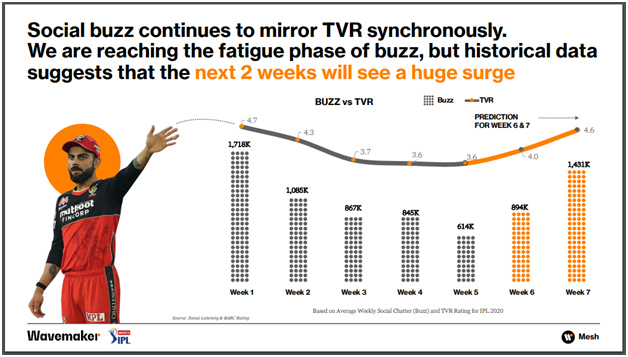
    The report also indicates that the social buzz of the cricketing extravaganza is mirroring TVR and the next two weeks might see a huge surge there, after momentous buzz fatigue. Chennai Super Kings is driving the league’s social media popularity. 

    The report also highlighted the top 10 most loved ads; in pecking order: Dream11, Oppo, Tata Motors, Samsung, Paytm First Games, Gulf Oil, Make My Trip, Lifebuoy, Bingo, and Gamezy. 

    Additionally, cricket fantasy leagues are enjoying never before seen engagement with 90+ million web traffic and 300 million Google searches for the top 5 leagues in September 2020.