Tag: Brand Trust

  • The modern CMO: Driving growth and innovation in India

    The modern CMO: Driving growth and innovation in India

    Mumbai: In a world where screens dominate our lives, advertisements have evolved into captivating narratives that often capture more of our attention than the movies we adore or the podcasts we cherish. This relentless tide of digital innovation has placed marketing at the very heart of modern business. Behind every clever campaign or viral ad lies a creative mind weaving strategies that resonate deeply with audiences, shaping trends and subtly steering our choices.

    India, a land of infinite diversity and ceaseless contrasts, offers an unparalleled canvas for marketers. Here, chief marketing officers (CMOs) transcend their traditional roles, becoming architects of growth, pioneers of digital transformation, and custodians of trust. In this dynamic marketplace, where every consumer interaction carries the weight of cultural nuance, CMOs are tasked with not just adapting to change but leading it, forging a path toward a future brimming with opportunity and innovation.

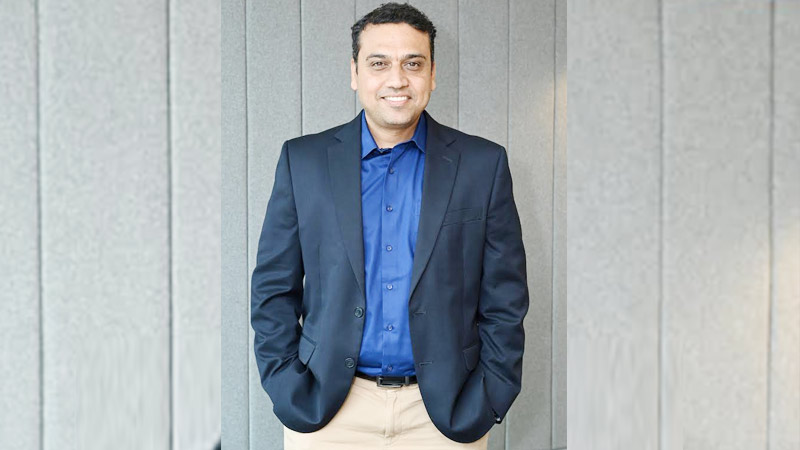
    To delve deeper into this dynamic evolution, Indian Television dot com spoke with Danone’s marketing director, Sriram Padmanabhan about the challenges, opportunities, and expectations shaping the modern CMO’s role in India.

    How has the role of the CMO evolved in India over the years?

    The role of the CMO has expanded far beyond traditional marketing functions like advertising and brand building. Today, the CMO is a strategic leader who collaborates closely with the CEO and other C-suite executives. This transformation is driven by the need to integrate marketing with broader business goals, particularly in a market as diverse as India.

    CMOs must now navigate the complexities of digitised consumer touchpoints, leverage data-driven insights, and create personalised customer experiences. In essence, they’re not just marketers—they’re business architects who play a pivotal role in steering their companies toward growth.

    What are the biggest challenges CMOs face in the Indian market?

    India’s diversity is both a strength and a challenge. The country’s rich cultural tapestry means consumer preferences can vary drastically across regions. For a CMO, crafting marketing strategies that resonate deeply with such a varied audience requires not just creativity but also a deep understanding of market research and consumer behavior.

    Additionally, technological advancements have added layers of complexity. The integration of AI and machine learning into marketing is no longer optional. CMOs must be comfortable with these technologies to analyse consumer behavior, predict trends, and optimise campaigns effectively.

    How important is technology in redefining the CMO’s role?

    Technology is absolutely central. Tools like AI, machine learning, and advanced analytics have revolutionised marketing. They allow us to predict customer needs, create hyper-personalised experiences, and measure outcomes with unprecedented precision.

    In fact, a recent EssenceMediacom report highlights that 90 per cent of marketing leaders find their roles increasingly complex due to these technological demands. But this complexity also presents opportunities. By embracing technology, CMOs can drive efficiency, enhance engagement, and deliver measurable results.

    Can you elaborate on the leadership qualities a modern CMO needs?

    Today’s CMOs must be strategic visionaries who align marketing with business objectives. They need to inspire innovation within their teams and foster a culture of agility and creative thinking. This includes having a deep understanding of the broader business landscape, anticipating market shifts, and identifying new growth opportunities.

    More importantly, CMOs must embrace a mindset of continuous learning. In a rapidly changing environment, the ability to adapt, experiment, and take calculated risks is essential. Leadership isn’t just about managing—it’s about inspiring and guiding the organisation through transformation.

    What role does the CMO play in building trust and customer experience?

    At its core, the CMO’s role is to be the guardian of the brand and the customer experience. Trust is the cornerstone of any successful brand, and in today’s age of social media, maintaining that trust requires transparency, authenticity, and consistency.

    CMOs must ensure seamless interactions across all customer touchpoints, integrating marketing with sales, customer service, and product development. The ultimate goal is to create a unified, positive customer journey that strengthens brand loyalty.

    What advice would you give to aspiring CMOs navigating a dynamic market like India?

    The key is to be proactive rather than reactive. Don’t just follow trends—lead them. Understand the pulse of your market and leverage technology to your advantage. Invest in learning new tools and methodologies, and always keep an eye on how your strategies align with the company’s broader objectives. Finally, stay customer-focused. Every decision, whether strategic or operational, should ultimately enhance the customer’s experience with your brand. That’s where the true value of a CMO lies.

    The journey of a CMO in India is akin to navigating a vibrant mosaic—each piece representing a unique cultural nuance, consumer preference, and technological shift. As India’s market continues to evolve and diversify, the CMOs who embrace the art of storytelling, the power of technology, and the essence of trust will not just adapt to change—they will orchestrate it. Their leadership will illuminate the path to enduring growth, leaving a legacy that shapes the future of business in a world where innovation and authenticity reign supreme.

  • When pandemic strikes, trust keeps brands, agencies going

    When pandemic strikes, trust keeps brands, agencies going

    MUMBAI: Trust plays an important factor when you can’t see the other person, and now the whole world is running on trust, as the whole world remains engulfed by the Covid-19 pandemic. Never has trust between advertisers and agencies been more apparent than now.

    Dentsu Aegis Network India CEO Anand Bhadkamkar says that trust builds if one acts responsibly and delivers in time. “Trust, definitely, is quite critical during this time. Clients or colleagues need comfort in regular interaction, which builds trust amongst teams. Yes, the challenge remains of not being able to see the person physically but, the current phase is a passing phase. Thus, as long as the deadlines are met, commitments delivered and there is constant engagement, the trust keeps on building,” he says.

    While most of us have always seen work from home as a convenient way of working, it has its challenges and limitations, too. It comes true for the advertising industry, where agencies and brands were used to physical meetings either in offices, coffee shops, board rooms, etc., which has now been converted into virtual meetings. According to industry experts, in these difficult times, teams have adopted the new way of working quite effortlessly via virtual meetings and teleconferences, etc.

    Bhadkamkar says that DAN had already planned this out. “For the work to continue smoothly, we provided alternative sharing sites and a secured VPN line for better communications and data access. There are some small challenges but that’s all part of the teething and learning process. Efficiency has not dropped that much. Yes, the work is slow but not hampered completely. As a daily practice, teams have regular check-ins – daily/weekly as per agreed duration to plan, review and execute. The working pattern also varies from team to team. Frankly, people are responsible and all the more support each other in these times.”

    Socxo CMO and program head Ajit Narayan says, “Business friendship is one of the most powerful drivers of the business, so educate them, help them and over service them. Forget the inane content of handwashing (they are already getting bombarded by it.) They would appreciate if you stepped back on the sales pitches to them and helped in whatever you do for them. They will remember you and do more business with you once they get their side of the business going well.” 

    The Mavericks founder and CEO Chetan Mahajan think that COVID-19 has impacted every human being and every brand globally. Agencies now have become geography-agnostic and are doing everything possible to support the brand's communication needs. Trust is derived from the transparency of relationship and commitment to the outcome and during these trying times, one has to have 200 per cent commitment. “Our teams are separated by corona yet together with purpose with unprecedented resilience, commitment, camaraderie, and focus to be solution-oriented and be together in spirit as well as action. Our clients have been appreciative of our efforts so far and the show must go on.”

    Adding to this, RED FM national marketing head Rajat Uppal says that he has always considered a brand-agency relationship as a partnership based on trust and faith in each other’s abilities and alignment to a common objective of delivering work par excellence.

    One of the major challenges of working from remote locations like home is the brand-agency team co-ordination issues and delays in work. This can be addressed with advance timeline planning. If one is more considerate about the limitations of the current setup of WFH, brands can actually get more quality work out of the agencies.

    Uppal adds, “For us at RED FM, last one week has been pretty productive and we have been able to get some good work going with our creative, PR and digital agencies. Briefs have gone out on time and agencies have delivered work with greater responsibility. With most brands prioritising work effectively, work has not really got affected. In fact, being away from the workplace and not getting occupied with the routine and hygiene work only, has given our brand team the time to think strategically and take on jobs and projects which were part of the wish list and never got the time to be taken up. On the flip side, WFH has surely extended the work hours for everyone, as everyone is accessible anytime and there are no stringently scheduled work hours. The need of the hour is for the brands and agencies to collaborate well and deliver quality work till we all move back to our workplaces and I am sure we all will do it well.”

    WATConsult VP – account planning and strategy Sabiha Khan  feels that the most important thing to do to ensure trust is to communicate with each other and be honest in communication, which means – be frank about the good, the bad and the ugly.

    Agencies should proactively keep clients abreast of trends and how the situation will impact and change behaviour among the audience and for the respective sectors/ industries.  They should seek to work towards the next quarter keeping in mind the presence of consumer fears and the change in behaviour and possibly even preempt an indoor summer and work towards campaigns accordingly.

    Brands on the other hand should consider agencies as partners whom they can trust in such turbulent times. Brands can keep an agency in the loop about their ongoing situation and the business operations to enable the agency to make informed plans and suggestions that can benefit the brand not just in the immediate term but for the long run.

    Technology has been a big enabler during this time. Brands and agencies are communication via platforms like Zoom Cloud Meetings, Google Hangout, Slack, Google Duo for both internal and client meetings. If things go fine, maybe we are looking at a future where more companies will provide work from home options.