Tag: Brand Safety

  • IAB Tech Lab lays down new rules to stop AI from eating the web’s lunch

    IAB Tech Lab lays down new rules to stop AI from eating the web’s lunch

    MUMBAI: When your content becomes someone else’s main course, it’s only fair to send them the bill. Publishers and advertisers have long played the thankless role of feeding the internet’s knowledge machine. But with the rise of large language models (LLMs) and AI agents hoovering up open web content without so much as a nod—or a rupee—the tables are finally turning.

    The IAB Tech Lab, the global technical standards-setting body for digital advertising, has taken a firm stand against the unchecked rise of generative AI. In a bold move, it announced a new framework dubbed the LLM Content Ingest API Initiative, aimed at helping publishers and brands monetise and manage how their content is consumed by AI systems.

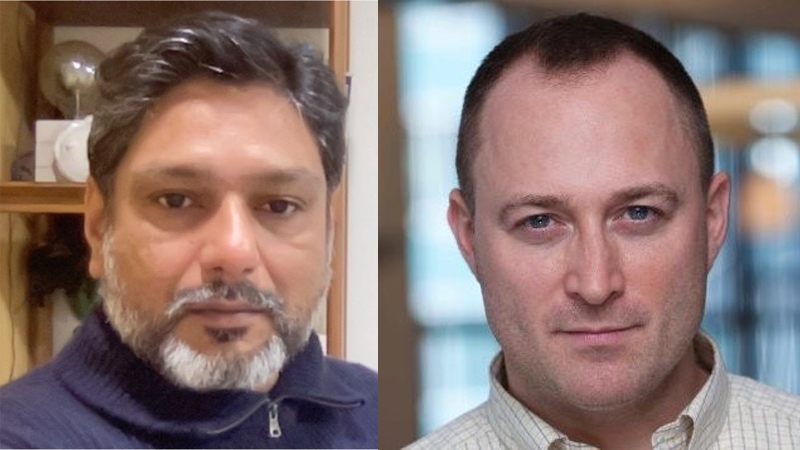
    “It is clear that AI agents powered by large language models are shifting how users engage with content”, said IAB Tech Lab CEO Anthony Katsur. “While this is a promising new way for people to access information, we have also seen data showing publisher traffic decreases at 15 per cent or higher, and revenue is down. Meanwhile, AI platforms are growing on the back of open web content, impacting publisher revenues and misrepresenting advertisers. This initiative is about giving publishers and brands a path forward that is fair, enforceable, and grounded in technical standards”.

    The new framework targets AI’s relentless content scraping. It proposes a structured technical solution that ensures publishers get compensated for their content and brands control their digital reputation in AI-generated search summaries and chat responses.

    At the heart of the initiative is the LLM Content Ingest API, a tool that enables content owners to manage how AI models ingest and present their material. The framework seeks to stem traffic and revenue losses and aims to empower publishers with tools to govern bot access, track AI scraping, and monetise their digital assets more effectively.

    “The LLM Content Ingest API is one part of the framework to address the challenges publishers and brands face from the growing use of AI-based tools by consumers”, said IAB Tech Lab EVP, product & COO Shailley Singh. “The proposed technical framework is designed to foster better collaboration between LLMs/AI agents and content owners and to lay the foundations for fair value exchange for content, two of the biggest challenges that have emerged since the proliferation of generative AI and endanger the web economy as it works today”.

    The IAB Tech Lab plans to kick off the effort with a workshop, bringing together publishers, brands and AI developers to co-create solutions. Among the talking points: managing bots that mine data without permission, building AI-friendly but fair delivery mechanisms, and ensuring brand information isn’t lost—or worse, misrepresented—in the LLM ether.

    With publisher traffic already dipping by 15% and revenues following suit, the initiative couldn’t have come sooner. The Lab’s approach blends technical pragmatism with economic common sense, aiming to strike a balance between innovation and ownership in a world where chatbots can mimic your writing but never pay your bills.

  • 1 percent improvement in marketing capability fit is linked 2.5 percent increase in sales growth: MMA Global study

    1 percent improvement in marketing capability fit is linked 2.5 percent increase in sales growth: MMA Global study

    MUMBAI: As per a global study by MMA, a 1 percent improvement in marketing capability fit is associated with a 2.5 percent increase in sales growth and 2.35 percent increase in market value. Based on this insight, MMA has developed a structured approach by creating a capability fit map for organisations to evolve into winning marketing organisations. 

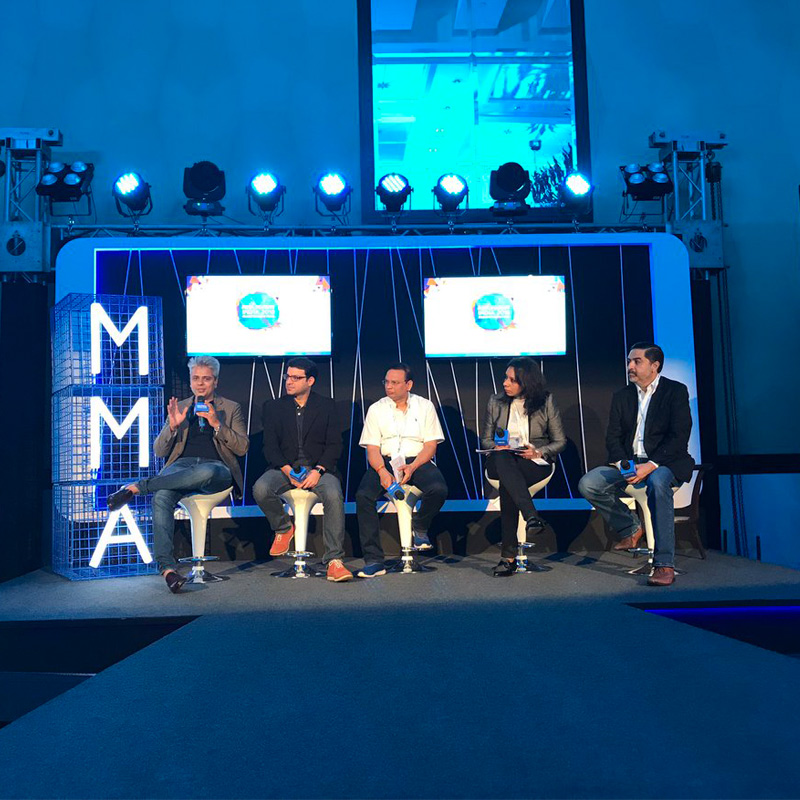
    MMA India, a part of MMA global hosted the 11th edition of its biggest marketing event “MMA Impact India 2022 – The Future of Modern Marketing” with key stakeholders across industries to champion the theme of enabling organisations to evolve into winning marketing organisations. 

    Popularly recognised as a credible marketing think tank that brings effective solutions for marketers, MMA also unveiled three informative reports titled “Brand Safety Reimagined: A Toolkit for the Modern Marketer”, “Modern Marketers Guide to Leveraging Data” and “Martech 2022 and Metrics that Matter” at the event. 

    The Digital Marketer Brand Safety survey 2022 revealed that while knowledge of brand safety guidelines exists, the implementation is weak in India. The Brand Safety Reimagined toolkit report is an initiative by MMA to highlight why brand safety and suitability need to be part of the marketer’s agenda and explains why it should be owned by marketing organisations. The Modern Marketers Guide to Leveraging Data and Martech report highlights that most organizations have 25 percent to 75 percent data aggregated in a unified data mart. However, many organizations lack the clarity of how unified data can help in improving the connected customer experience.

    In addition to these two toolkits, MMA also unveiled a white paper titled ‘Metrics that Matter’ which is an MMA India Board initiative with meta. It talks about two common key concerns: ‘What are the metrics that matter and must be measured?’ and ‘How do we measure the cross-media impact of advertising across all digital and non-digital media’?

    MMA India country head, board member Moneka Khurana said, “Our theme of Impact this year of evolving into a winning marketing organisation is more inevitable today than ever before. We are in an era of Digital Darwinism where technology and consumers are evolving faster than businesses can naturally adapt. 52 percent of companies on the fortune 500 list have become obsolete in the past 20 years. Evolving is no longer an option, it is a necessity to succeed. At Impact this year, we have unveiled a framework that helps businesses evolve with the ever-changing consumer”.

    MMA India board chair, L’Oréal India managing director Amit Jain said, “The interaction between consumers and brands has been evolving rapidly – it is closer, personal, powerful, and pervasive. Hence, the marketing function needs to be nimble and swift to effectively cater to this evolution. Winning Marketing Organisations need to keep customer value and company value at the heart of all their initiatives. To create a strong recall among consumers for your brand, effective storytelling is key. If you have a good story, there is no reason why a customer will not connect with your brand”.

    The sessions focussed on the tenets of engagement, experience and exchange -commonly referred to as the ‘3E’ formula to attract, acquire and retain the consumer through effective marketing. This year, at Impact 2022, leaders and experts are discussing, debating and having a constructive discourse on the aspects of the winning marketing organisation framework. It is a fresh take on strategies to retool the marketing field, so that brands can innovate on their product plans.

  • Marketers want news channel viewership data to be more frequent

    Marketers want news channel viewership data to be more frequent

    NEW DELHI: The Broadcast Audience Research Council (BARC) and the representatives of the news genre have often been at loggerheads; the latter having several complaints regarding how the measurements work. From sample size to data points, everything has been a cause of concern for most of the channel owners and editors. Now, several marketers have raised another important point in the narrative, expressing how they would like the industry ratings, including the IRS ratings, to be more frequent. 

    At a recent webinar on brand safety hosted by Indiantelevision.com, presented by BBC World News and BBC.com, Future Group CMO – FBB Prachi Mohapatra pointed out that ratings remain at the basis of all the math they do to create their marketing strategies and decide their marketing pies and it would really help the cause if they are more regular. 

    “I really want to have data that I can rely on completely and not have to act on my gut feeling basis the data of the past week or the past few months,” she said. 

    PolicyBazaar head of marketing Samir Sethi also insisted that the data should be as real-time as possible so one doesn’t have to wait for the completion of a campaign to gauge its success.

    “I think all advertisers and agencies would want the data to be as frequent as possible because that will aid in instant decision making. If I know about the ratings six months later or two months later, it gets less valuable,” explained Wavemaker CEO – South Asia Ajay Gupte.

    He went on to add that TV channels could potentially lose out to digital modes of marketing, where the data can be tracked and measured practically instantaneously. “It's about having data which is relevant and which is robust and which is to the day because the channels today are also competing with Google, Facebook, YouTube, and Twitter, where the data is almost real-time.” 

    Parle Products senior category head – marketing Krishnarao S Buddha agreed that there is a dire need of a frequent matrix but he highlighted that content should also be taken into consideration to create a differentiation when it comes to picking channels to put ads on. 

    Initiative CEO Vaishali Verma, while acknowledging that there are certain brands that prefer buying news as a commodity and plan their spends basis TRP, said there are some that also see the content and its authenticity. 

    Mohapatra added that along with the individual content of the channel, another factor contributing to their marketing decisions are the fellow brands that are present on the channel. “Looking into the adjacent space helps us create a multiplier effect for the sales. Therefore, it is very important to put your brand in a space that is relevant for you and your category.” 

    However, when it comes to picking content to put ads on, Sethi emphasises that brands should be non-partisan. “If somebody believes in a certain media outlet, he is still a potential customer. Toxicity is a different thing, but when it comes to the leaning of a channel, I think businesses should not pick a side. The world has always been divided and it will continue to be. Our aim should be to be present where the customer is.” 

    The panel also discussed other hot-button issues like the need for 24-hour news channels, and how advertisers are seeing the current news media. 

  • Do we need 24-hour news channels?

    Do we need 24-hour news channels?

    NEW DELHI: The news television industry has been getting a lot of negative publicity these days, the prime reason being the inflammatory content they are airing. Not just viewers, but several advertisers and marketers have also highlighted their discontent with the journalism these channels are doing and some brands have already started pulling out their ad monies. While most people put the blame for this on the rat race for TRP and viewer interests, Parle Products Pvt Ltd senior category head – marketing Krishnarao S Buddha voiced an intriguing thought – do we really need 24-hour news channels these days?

    “I don’t think that the content degeneration on news channels happened recently. It’s been worsening for a few years now. I think the days when we had just Doordarshan, which had only three bulletins running, we had more semblance of propriety in the news content. I really want to understand whether there is a need for 24-hour news channels, from a programming perspective. If there is enough news happening across the globe that it requires multiple 24-hour news channels to cover,” he pointed out. 

    He added that this “mad requirement” of filling content slots for 24 hours has forced news channels to go overboard and serve content that is not only toxic but is also non-relevant. 

    Buddha was speaking at the recent brand safety webinar hosted by Indiantelevision.com in partnership with BBC World News and BBC.com. Other speakers on the panel – moderated by Indiantelevision.com founder, CEO, and editor-in-chief Anil Wanvari – were Wavemaker CEO – South Asia Ajay Gupte, Future Group CMO – FBB Prachi Mohapatra, BBC Global News MD India Rahul Sood, PolicyBazaar head of marketing Samir Sethi, Accenture MD supply chain, network, and sales operations Shekhar Tiwari and Initiative CEO Vaishali Verma. 

    Contrary to Buddha’s view, Gupte stated that he doesn’t feel that there is more supply than demand for news in the current scenario, and it makes complete sense from a business perspective to have multiple 24-hour news channels. 

    Said he, “At the end of everything, this is a marketplace, which functions on the basic objective of demanding profitability. To achieve that, there needs to be an equilibrium in demand and supply, so that the pricing remains fair. I believe that there is really not more supply than the demand in the market right now. This is only from the business perspective and how the market forces generally work.”

    Buddha insisted that in that case, channels really need to work on their content strategies and come up with smart fillers based on investigative journalism. 

    “There is a stark need for creating differentiators within news channels based on content. If there is virtually the same telecast happening on each channel, then there is nothing much to differentiate them,” he interjected. 

    Gupte too agreed that news has a responsibility to serve and it defines the culture and thinking of any nation. “It is definitely important for networks to ensure that the content is right. It will create a better market too, in terms of delivery. People will then have the option to consume the content that suits them better. I would leave it to the channels to decide the content.”  

    Tiwari added that channels need to have the right strategy, the right talent, and the right investors to ensure great content. “There is a need for a good 24X7 independent news channel that covers current affairs, sports, entertainment, and everything else. Then we will have better content provided. It shouldn’t be working under the pressure of its investors or a government for that matter.”

    The panel highlighted several important factors that are contributing to the erosion of faith in news channels by advertisers and marketers. Vaishali Verma also highlighted that three out of ten clients of her agency have already said no to advertising on news channels, and the industry is in dire need of a course correction. 

  • ‘3 out of 10 brands are saying no to advertising on news channels’

    ‘3 out of 10 brands are saying no to advertising on news channels’

    NEW DELHI: News channels have always been a big part of the media mix for any advertiser; they enjoy a sizeable share of eyeballs and have been known as a brand-safe space to be present on. However, in the past few months, advertisers have become gravely concerned by the controversies around news content, as well as the TRP manipulation scandal that has come to the fore. The existing news space, especially on TV, has called for a strong inspection on advertisers’ part, and a few of them have already pulled out ad money from some channels.

    In a recently concluded Indiantelevision.com webinar called “Is Your Brand Truly Safe: Decoding The Right Brand Equity With The Power Of Trust” — powered by BBC World News and BBC.com, and moderated by Indiantelevision.com founder, CEO, and editor-in-chief Anil Wanvari – leading marketers and advertisers unanimously agreed that their faith in news television has eroded to a great extent.

    Sitting in the panel were Wavemaker CEO – South Asia Ajay Gupte, Parle Products Pvt Ltd senior category head – marketing Krishnarao S Buddha, Future Group CMO – FBB Prachi Mohapatra, BBC Global News MD India Rahul Sood, PolicyBazaar head of marketing Samir Sethi, Accenture MD supply chain, network, and sales operations Shekhar Tiwari and Initiative CEO Vaishali Verma.

    Verma claimed that three out of every ten clients of hers has already said no to advertising on news channels.

    “As a consumer of news, I can say that the content has been sensationalised, there is no investigative journalism left, and as a result, we are seeing brands taking a different route when it comes to their media mixes. There definitely has been a loss of credibility,” she said.

    Tiwari noted that news is not news if one needs to go and validate it, but today the consumers are forced to do that. This has resulted in the lack of credibility that advertisers are also taking into account.

    Sood added that the environment around news television has been such of late that he can no longer proudly flaunt his association with the industry. “This says a lot about the state of media right now.”

    Buddha, whose Parle products will no longer advertise on some of the top news channels in the country, said, “News channels are going overboard, the content is toxic and the news they show is really not relevant. I do not want my brand to be seen with the content that these channels are peddling.”

    Earlier, news channels used to be a big part of their media mix given the credible and brand-safe environment that they created, shared Mohapatra. “The two core factors for us have been the viewership the news genre generates and the credibility it has, but if that is being compromised, we will definitely rethink our media mix.”

    However, not all brands are wary of their presence on any form of content, be it good or bad, in news media.

    Verma highlighted that every brand has its own lakshman rekha (boundary) that it follows. “Some brands have taken out their ad monies and that was absolutely right on their part. Some are still continuing to advertise and it is only because the medium is still relevant to them. They have their audience consuming that content.”

    Gupte, in the same vein, reflected that each news channel serves the content that their audience likes viewing. “It is delivering what is being consumed. And if there is a collective movement where people dismiss this kind of content and stop viewing it, the viewership will go down and it makes sense from a business perspective.”

    PolicyBazaar’s Sethi agreed and pointed out that news is a competitive genre and there is significant advertising demand there. “For a product category like ours where primary customers are male, we get that reach from news channels.”

    However, he added that news channels cannot shy away from their responsibilities of being a credible and trustworthy source of valid information.

    But could the continued association with ‘problematic’ news content impact the brand equity at large?

    The panel agreed that it has a long-lasting impact on any brand’s image and equity as customers are more sensitive and sensible these days. At the same time, it also depends on the level of association the advertiser has with the channel or a particular piece of content.

    Gupte stated, “The impact on brand equity hugely depends on the level of association. For example, it’s more difficult on platforms like YouTube where a single advertiser might be visible on the whole duration of the content. Also, it depends on the brand too.”

    Sethi added, “Obviously a sponsor is much more deeply associated with the content than someone who is doing vanilla spot advertising with maybe 20 other brands.”

  • Ad fraud: The aftermath of digital advertising

    Ad fraud: The aftermath of digital advertising

    NEW DELHI: In the past four months due to the Covid2019 crisis, customers have been compelled to embrace technology in their daily lives whether it's ordering grocery, food, rapid adoption of OTT, VoD, or games. Hence, leading to an influx in the digital economy. As the adoption of digitisation happens at a large scale, the chances of ad frauds increase and programmatic advertising is no exception. Ad fraud is probably one of the most poignant points of fraud in any industry. Programmatic digital advertising fraud is a deliberate, malicious activity that manipulates with the delivery of ad content and prevents its serving to the targeted audience.

    Xaxis India country lead Bharat Khatri, in a web meet, discussed how ad fraud is denting programmatic advertising in the digital landscape. 

    The general conception about digital advertising is that display ads on digital have a benchmark of viewability around 60-65 per cent in India which means if you’re serving 100 impressions on display ads, only 60 per cent of the ads are being seen.

    Digital has stronger power because digital brands can actually measure which half of the advertising is viewable and which half is not working. Every impression served on digital can be measured on all three aspects – viewability, engagement or the impression served with the audience.

    In today’s context, BAV serves as a key benchmark for buying quality inventory because it gives, ‘human viewable impression’, ‘decreased invalid traffic’, and contextually relevant ad placements.

    Brand safety 

    Brand safety refers to considerations, practices, and tools to ensure that advertising does not appear in a context that is inappropriate for a brand. Digital brings power in terms of brand suitability and brand safety.

    YouTube is one of the channels that come under scrutiny because YouTube as a publisher has a lot of user-generated content. YouTube has a brand safety channel YouTube has partnered with 3rd party tech & data companies to help with brand suitability aspect on YT Videos, Channel factory is one of the partners called the channel factory, it is focused on measuring the role of content, its quality level, safety level, and relevance. Contextual targeting is available on ad-supported by YouTube channels using proprietary guard and graph technology.

    Custom targeting slates can be applied to YouTube ad buys.

    Ad fraud

    Ad frauds mean invalid traffic, which either comes from non-human activity or there are devices that are accessed by humans but controlled by machines.

    Impressions generating from a deliberate activity to stop the proper delivery of ads to the relevant audience at the right time. There are different ways ad frauds are taking place be it human or non- human. Hackers use code to create bots able to take orders from botnet centers. Users unknowingly download and install bot engines on their computers. Bots are instructed to visit premium sites, picking up desirable cookies, and then visit fraudulent sites.

    The highly trafficked fraudulent sites use exchanges and networks to attract advertisers, ads are continuously served to bots, and botnet operators get paid.

    People have also started doing domain spoofing on digital for quite a long time

    Viewability

    MRC or Media Rating Council is a body that tells about the viewability aspects of the digital. As per MRC if you are running a digital ad, display viewable impressions are counted if at least 50 percent of pixels on screen for one continuous second. Video viewable impressions are counted if at least 50 percent of pixels are on screen for a continuous second.

    However, as per Group M viewability standards, Display viewable impressions are counted if at least 100% of pixels are on screen for 1 continuous second. Video viewable impressions are counted if at least 100% of pixels are on screen for 50% of the video duration (capped at 15 secs) with sound on.

    An ad that is not viewable has no value. Viewable ad impressions are a measurement of true reach. Optimising towards viewable inventory allows us to sieve out low-quality sellers and buy more efficiently.

    Viewability is all about the type of place you buy, and the pricing you pay to the publisher.

    Follow Tellychakkar for the consumer facing news & entertainment

  • Advertisers shifting focus to OTT for brand safe environmentAdvertisers shifting focus to OTT for brand safe environment

    Advertisers shifting focus to OTT for brand safe environmentAdvertisers shifting focus to OTT for brand safe environment

    MUMBAI: Over-the-top (OTT) platforms in India have reached a tipping point with growth in internet users. The change in viewing habit is also altering the way brands want to communicate with consumers. Despite the shift towards OTT platforms, social media giant YouTube remains the dominant player in digital advertising space. Experts from the ecosystem discussed how these players can attract more money focusing on some shortcomings in a session ‘Video 2.0- Time to Pay?’.
    The event was organised by Mobile Marketing Associations India. Hotstar EVP & chief marketing officer Sidharth Shakdher, Sony Pictures Networks India digital business head Uday Sodhi, Isobar South Asia, India group MD Shamsuddin Jasani, Patanjali Ayurved Ltd CGM, and marketing head Avinash Kumar took part in the session that was moderated by Neena Dasgupta, CEO and director Zirca Digital Solutions.

    Dasgupta started the session asking what have been the major shifts in recent time. Jasani mentioned two new trends- one is the high focus on collecting data in the right manner, especially after the rollout of GDPR and the second is the surged demand for a brand safe environment. Brands(http://www.indiantelevision.com/iworld/social-media/facebook-watch-has-its-work-cut-out-in-video-content-creation-180912), as well as agencies, now want their advertisements to appear in the proper content. He cited examples of content owners and creators like SonyLIV and Hotstar which are extremely brand safe.
    The moderator raised a question as to why 70 per cent of revenue still goes to YouTube(http://www.indiantelevision.com/iworld/over-the-top-services/local-ott-players-not-distressed-by-youtubes-originals-plan-180918), the walled garden, while OTT platforms have a good hold over content. Hotstar’s Shakdher said a large number of brands now want to place their ad where content is safe. “Just reach for the sake of reach does not mean anything,” he commented. He also cited the example of Patanjali.

    Avinash Kumar, the exec from the largest domestic FMCG brand also acknowledged the importance of the safe environment. For a brand like Patanjali which reflects “high world value” being deep rooted in Indian culture, putting its ads in the proper place is very important. According to him, a clear shift is visible. Though it started with YouTube, realising the lack of curated content and facility to interact in a safe environment, it moved out. It now only interacts through OTT platforms and considerably works with both Hotstar and SonyLIV whose representatives were present on the stage.
    Kumar, on the other hand, pointed out YouTube’s advantages along with the difficulties of OTT platforms on which they can work. Google’s video streaming service is not only free but also leaves the highest choice for content. He said OTT platforms need to have more content options as well as democratise the payment for content in a way that Jio has achieved in data consumption.
    “There is need of OTT platform, as well as YouTube. It is not an us versus them. So for example when we are doing something for a brand, we have in the mix both as there are different KPIs for different segments,” Jasani said.
    Moreover, Dasgupta added a counterpoint to the fact that Indians don’t want to pay for content. OTT platforms garner 20-22 per cent of the revenue from subscription, which is expected to reach 40 per cent in the next five years.

    Jasani at the start of the session only highlighted that the underlying strength of digital has always been data. While OTT platforms have a huge amount of data as well, the question is if consumers are ready to pay for that data.
    Uday Sodhi said the first steps are definitely being taken already. The movement of money from all other mediums is shifting towards OTT platforms which indicates these platforms definitely carry some value. According to him, these added values help to OTT players get higher rates for ads than others. “Now we are able to sell the inventories on most popular events or shows through which a brand can easily target its defined TG, which for me is the subtle way of targeting, and they are ready to pay for it,” he added. He also mentioned for events like FIFA, IPL, KBC, brands don’t mind to buy premium inventory.
    However, the events merely don’t attract brands. The affordability, right moment, target audience also play a key role. “We should make every ad dollar count. When you are buying a sporting event, you are buying demographic of the event. You don’t buy cricket for sake of cricket. You know demographic composition, product proposition. It’s never a black and white decision,” Shakdher commented.
    Interestingly, before Patanjali buys inventory on OTT, it first goes to the traditional TV to compare rates. If it sees an OTT platform ranking at the top, then it goes ahead. Getting a brief from the OTT platform it goes back to TV to compare the affordability it is getting on the digital platform.
    However while OTT platforms provide better facilities than TV, Patanjali’s Kumar thinks in terms of getting consumer data back the two mediums don’t have much difference.

    “Let’s say I am buying a spot at whatever price, what I am getting out of spending on it is as simple as TV data. You have an image and video fingerprint, you have lots of AI which can put actually the kind of geography and customers I am trying to reach. Do I get that data back from Hotstar or SonyLIV? In fact, we are operating in the same environment as TV. You give us few cookies we cannot decipher,” he pointed out stating the “biggest challenge” for OTT players. In addition to that, there is no accurate data available for digital like TV ratings or BARC data.
    The session ended on a note that it is not about competition between TV and OTT, it is more about whether brands are willing to invest and support in data. Such willingness from brands can enable freemium or AVoD OTT platforms to create better content and engagement, ultimately leading to higher engagement for brands.