Tag: brand films

  • Minikin DGWorks: The powerhouse redefining digital content production

    Minikin DGWorks: The powerhouse redefining digital content production

    MUMBAI: The digital world moves fast, blink and you might miss the next big thing. But Minikin DGWorks isn’t here to play catch-up. It’s here to lead. The new-age production house, a sister concern of the acclaimed Chrome Pictures, is rewriting the rules of digital storytelling, crafting content that doesn’t just entertain but connects in the ever-evolving digital landscape.

    Co-founded by Aleya Sen, Amit Sharma, and Hemant Bhandari, Minikin DGWorks is a vibrant, high-energy production house that blends the artistry of traditional advertising with the infinite possibilities of AI-driven content creation.

    Aleya Sen, Co-founder, explains the vision behind the venture, “Minikin is all about embracing the excitement of the new-age technological shift, blending traditional advertising with the possibilities of the digital and AI era. We recognize that the world is at the threshold of a major civilizational shift, where the lines between the old and the new are blurring under every department. Hence, we’re here to explore, evolve, and push boundaries, shaping the future of advertising as we navigate this transformational change.”

    Minikin DGWorks isn’t your run-of-the-mill production house. It’s a collective of sharp, tech-savvy minds, bringing together a panel of freelance directors handpicked for their expertise in storytelling, VFX, animation, and stylised content. The production team is built for quick turnarounds, high-impact execution, and bold creative choices—because in the digital era, speed and quality are non-negotiable.

    Since launching, Minikin DGWorks has collaborated with major brands, including Google, Make My Trip, HDFC Life, Tanishq, Pepsi, Flipkart Minutes, Bajaj Allianz, Saregama, Airtel, Snapdeal, Goibibo, ICICI Bank, Maruti Suzuki, and Acko India. Not stopping there, the company has worked with some of Bollywood’s biggest names, including Shahrukh Khan, Ranveer Singh, and Deepika Padukone. Their redBus campaign, directed by Mithun R Shaw and produced by Ashish Gole, earned recognition at the Effies Awards 2024 and IAA Awards 2024, cementing Minikin’s reputation for cost-effective, high-engagement video content.

    Minikin DGWorks understands that internet-driven content needs to hit differently—no fluff, no fillers, just compelling stories that click with modern audiences. Whether it’s short-form digital films, high-energy commercials, or immersive storytelling for brands, Minikin is always on the hunt for fresh, disruptive ideas.

    As the industry steps into a future fuelled by AI, automation, and limitless digital possibilities, Minikin DGWorks is positioning itself at the forefront. With its ethos of staying fresh, real, and constantly evolving, the company is set to redefine digital storytelling for a generation that doesn’t just watch content—they live i

     

  • Mathrubhumi celebrates its 100-year anniversary with anthology film

    Mathrubhumi celebrates its 100-year anniversary with anthology film

    Mumbai: Mathrubhumi, one of the oldest newspapers in the country has rolled out arguably the first-ever anthology of brand films in the history of Indian advertising, to mark the beginning of its centenary celebrations.

    Conceptualised by Kochi-based Maitri Advertising Works, these films have recreated and showcased some of the meaningful social interventions the newspaper has initiated since its inception through its editorial content and aims to highlight the brand’s social stature as a responsible media house.

    “When we decided to bring out audiovisual content in connection with our centenary celebrations, a run-of-the-mill corporate documentary talking about the commercial growth of the brand in numbers and growth charts was the last thing we wanted to do,” stated Mathrubhumi managing director MV Shreyams Kumar. “I wanted the agency to come up with something meaningful and different.”

    “In the last 100 years, Mathrubhumi had positively impacted society in the realms of environment conservation & protection, infrastructure development, education, agriculture and gender equality to name a few. My brief to the agency was to highlight these aspects in an interesting and aesthetic way without any chest-thumping or forced product placement. The audiovisual was to be screened in front of a large audience and it had to have the scale and impact. It had to be done quickly too because the prime minister of India had agreed to attend the function on a particular date,” he further said.

    “It was exciting to work on this very clear brief and thrilling too because Mathrubhumi always gave us the creative freedom to think big and think different,” remarked Maitri Advertising executive creative director Venugopal Ramachandran Nair. “Our first task was to arrive at a creative device that would make storytelling entertaining and impactful. We struck upon the idea of our protagonist, a young man, who would carry forward the entire storyline. He would never age and through different periods of time he would voice his strong and clear opinions.”

    “When we put together the basic idea in a piece of paper and presented it, the client gave us an immediate go-ahead. However, choosing the most relevant topics to portray in the film posed a big challenge, since there was a problem of plenty,” stated Maitri Advertising managing director Raju Menon. “Apart from the topics suggested by Shreyams Kumar, there were so many cover stories, features, articles and editorial content in the Mathrubhumi archives, each addressing relevant and time-sensitive social issues.’’

    In consultation with the newspaper’s editorial team, the agency finally handpicked the six most relevant topics to be portrayed in the film series.

    “Execution of the project was not an easy task. There were constraints of time. The research process was enormous and a precisely set deadline was looming large behind us every day,” said Maitri Advertising branch director Jayakumar N, who is also in charge of managing the Mathrubhumi Account. “We decided to work with six versatile directors meticulously selected based on their ability to interpret the agency script and their expertise in visual storytelling. The next task was to find out the lead actor. The directors, after long hours of auditions finally settled down on Adil Ibrahim, a promising young actor in Malayalam cinema.”

    The opening film in this anthology narrates the birth story of Mathrubhumi as a catalyst to India’s freedom movement in 1923, followed by another five shorts, showing the audience how the editorial contents carried out by the newspaper has positively impacted society.

    The film has been released across various digital media platforms. Stand-alone edits of each film in this anthology would also run as television commercials later, across various channels.

    Maitri Advertising ideation executive Ajeesh Raman, who was in charge of scripting and supervision remarked, “Working with six highly talented directors on this anthology film was very exciting and indeed a great learning experience. Our brief to them was simple –  Make every film interesting and engaging yet when compiled together, the audience should see it as a seamlessly blended single film, with proper optical and acoustic connect between each of them.”

    “We are extremely happy that the anthology film, probably first of its kind, is getting tremendous response on social media. People don’t see it as branded commercial content. More than commercial property, we believe that it got the potential to become a social property sooner than later,” commented Mathrubhumi director of digital business Mayura Shreyams Kumar.

    “A project of this magnitude wouldn’t have been possible without the wholehearted support of Shreyams Kumar. He is a gem of a client every agency would love to have in their portfolio who realises the power of simple ideas the moment he hears one,” said Maitri Advertising executive director C Muthu. “For over two decades, we were able to churn out memorable and award-winning creative works for Mathrubhumi because of this.”

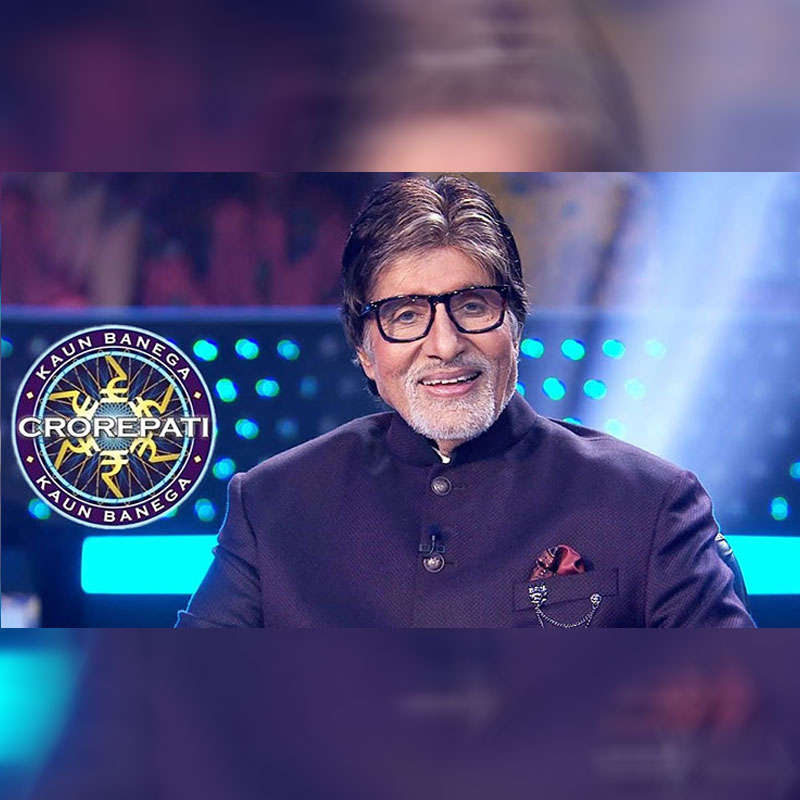
  • How KBC campaigns ensure focus stays on the common man

    How KBC campaigns ensure focus stays on the common man

    MUMBAI: Ever since 2000 when Kaun Banega Crorepati (KBC) first launched, the show has captivated millions not just through its quiz format but also innovative campaigns. The ads are socially relevant yet never boring.

    This year, KBC has come up with another endearing campaign titled #KabTakRokoge. “This year we thought that we can stand, support and attribute our viewers and so we came up with #KabTakRokoge campaign. The campaign beautifully highlights three relatable stories with a soul. We often face situations in life that tend to deter us from achieving our goals. Often, we encounter people who discourage our attempts and obstruct our progress. When the odds are against us, one can only stand up to them and ask… #KabTakRokoge?” says Nitesh Tiwari who has created and conceptualised all the brand films for the show since Sony began telecasting the hugely popular show.

    The first brand film of this season was launched on Facebook on 23 July and has garnered 746K views till date. Viewers can play the KBC game online, win passes to visit the KBC studio and engage with interactive social applications. 

    “KBC is a very famous game show. Every year people have loved the game show and have connected with the campaign and came to play the game. This year as well, I want my audience to watch the campaign, get connected to it and come and play the game and make it as famous as they have made KBC in the earlier seasons,” says Dangal director.

    All campaigns bear in mind the show’s legacy. The ads appeal to people because they are based on biases encountered in real life, with the victim coming out on top in the end. The show has never relied on a celebrity for any of its campaigns because it is a common man’s game.

    Tiwari has been associated with KBC for eight years. The former chief creative officer of Leo Burnett India has directed many ad films, a few being Flipkart, DHFL Home Loans and Star HD. He has written and directed many feature films like Dangal and Chillar Party, but, working for KBC has been more fun as it gave him a chance to work with his childhood idol.

    “I am blessed to work with such a big person. I have been admiring him since childhood. It was through KBC that I met Amitabh Bachchan. So, KBC will always remain special to me,” he says.

    When Bachchan saw a decline in movies in the 1990s, it was KBC that gave him a boost by bringing him close to millions of Indians by becoming the host. When KBC was launched in 2000 on Star Plus, the show not only changed the fate of reality television, but also helped the broadcaster move up the ratings chart. A decade later, the show ratings started to dwindle and it moved hands to Sony.

    The launch campaign on Star was ‘Nau Baj Gaye Kya?’ and when the switch happened, Sony showed that ‘Koi Bhi Sawaal Chota Nahi Hota’ highlighting the thought that knowledge never goes to waste.

    Over the years, the campaigns have tried to touch important issues, revolving around the quest for knowledge. From preachy to humorous to inspiring societal changes, the ads have touched them all.

    The last season of the 18-year-old show ruled the rating charts throughout its run and broke all previous records. According to Broadcast Audience Research Council, India, in week 35 of season nine, (26 August to 1 September 2017), KBC was at the second position among the top-watched shows in India.

    The ninth season of KBC (2017) witnessed the ‘Jawab Dene Ka Waqt Aa Gaya Hai’ campaign, showing that knowledge is a great leveller in life. The campaign depicted various situations where individuals are bogged down by difficult questions of life. Through the campaign, KBC tried to change people’s destiny with the power of knowledge.

    Season eight saw the campaign Yahan Sirf Paise Nahi, Dil Bhi Jeete Jate Hain by focusing on the country’s diversity. Rewind back to season three when Shah Rukh Khan took over, the show said ‘koi bhi sawal chota nahi hota’ which was followed by ‘koi bhi insan chota nahi hota’. In 2013, the show changed its core thought towards knowledge by saying ‘seekhna bandh to jeetna bandh’ which was preceded by ‘gyaan hi apko aapka haq dilate hain’ in 2012.

    Given the strong legacy that KBC has created over two decades, it surely is a task for creative heads to keep coming up with innovative and engaging ways to get the audience hooked.