Tag: Brand Equity

  • Commitment to sustainability adds value to a brand : BBC News study

    Commitment to sustainability adds value to a brand : BBC News study

    Mumbai: Demonstrating a commitment to sustainability adds value to a brand, according to two waves of surveys conducted by BBC Global News to understand how consumers in APAC and across the globe feel about sustainability.

    The survey focused on three industries – automotive, technology, and finance.

    It found that 81 per cent of respondents thought that demonstrating a commitment to sustainability adds value to a brand. 79 per cent surveyed agreed that sustainable practices and commitments are an important consideration when making purchase decisions. 68 per cent were happy to pay for more brands with strong sustainability and eco-friendly practices. 57 per cent said they would stop buying a product they were previously loyal to, if they discovered it was not committed to sustainability.

    For the 27 brands surveyed across the three industries, on average, half of all the consumers said they are not aware of the brand’s sustainability practices. Finance brands ranked the highest with 63 per cent of consumers being unaware of their sustainability practices.

    Consumers believe that it is important for all brands’ sustainability practices to involve research and education, according to the survey. 83 per cent of consumers believe that brands should invest in education about the importance of sustainability and 79 per cent agree that brands should be financing research for sustainable practices.

    The research showed that, for consumers across the region, brand trust is seen as the most important brand association, indexing particularly high in the automotive and technology sectors at 87 and 83 per cent, respectively, with finance scoring at 63 per cent.

    66 per cent of respondents said that interviews with an international news partner are the most influential way for consumers to learn about a brand’s CSR, followed by branded content within a premium environment at 39 per cent.

    “These results demonstrate the importance that consumers place on a brand’s sustainability credentials and show that they are willing to use their wallets to make their feelings known,” said BBC Global News’ senior vice president, commercial development, Alistair McEwan. “For brands to retain loyalty from their customers, they need to be absolutely clear about their commitment to taking action.  Those that fail to do so open themselves to criticism, so it is vital that brands shape their narrative and communicate their message in a transparent and authentic way and working with trusted storytellers like the BBC will enable that.”

  • Virat Kohli commands highest brand value in Indian cricket: Checkbrand report

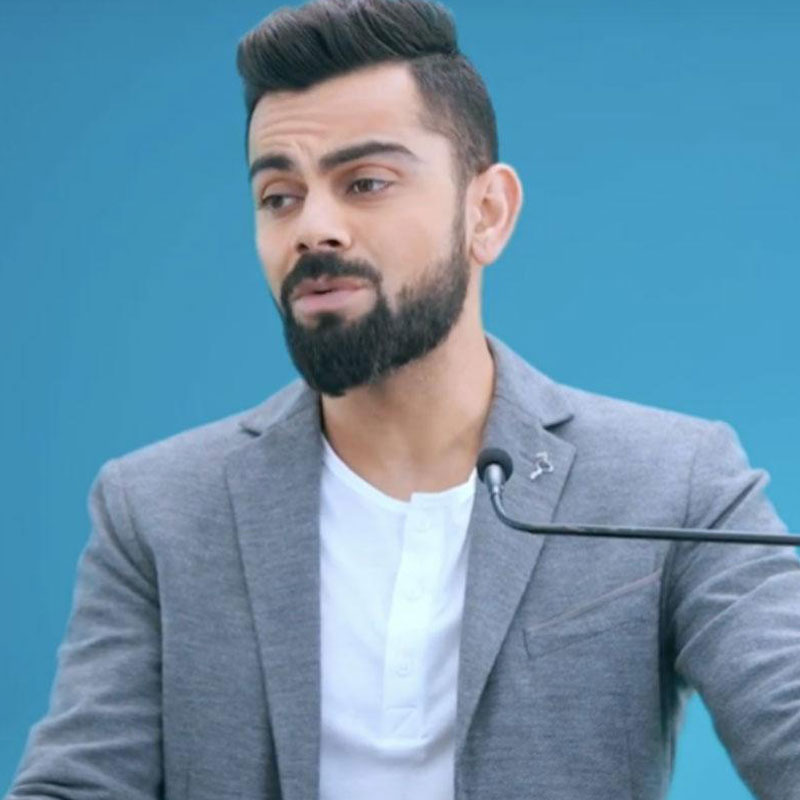
    Virat Kohli commands highest brand value in Indian cricket: Checkbrand report

    New Delhi: Checkbrand, an online sentiment analysis company, has analysed data for 45 top players on social media for the period of August – October 2020 and released a report on the online sentiments around them. This is the first quarterly analysis on the latest trending Indian cricketers by any agency in the country. Since the report is released for the first time, there is no comparison to the past data. Checkbrand analyzed more than 100 million online impressions for the report.

    The most trending (Twitter, Google Search, Wiki, YouTube etc) player was Yuvraj Singh in the last quarter (1622) followed by Rohit Sharma (1591) and Virat Kohli (1574), Harbhajan Singh ( 1376) and Parthiv Patel (1362). It was interesting to note that three retired players were amongst the top three trending players in last quarter.

    Virat Kohli has taken the top position when it comes to engagement on social media at 1.1 lakhs followed by Mahendra Singh Dhoni 1.02 lakhs, Rohit Sharma at 0.80 lakhs, Kapil Dev at 0.51 lakh and HardikPandaya at 0.40 lakh. Four cricketers had zero engagement Rahul Dravid, Piyush Chawla, Axar Patel and Sunil Gavaskar.

    Top three positions are undertaken by ex-cricketers when it comes to mentions. Kapil Dev has the highest mentions in the last quarter 8.8 lakhs, Dhoni at 6.2 lahks, Irfan Pathan at 4.27 lakhs, Virat Kohli at 3.45 lakhs. Umesh Yadav has the maximum positive sentiment at 86.3 per cent followed by Yuvraj Singh at 85.6 per cent, Suresh Raina at 74.8 per cnet, Ashwin at 73.4 per cent and Kapil Dev at 73.7 per cent.

    Virat Kohli emerged as the clear winner with a brand score of 43.94, followed by Yuvraj Singh 40.40, Sachin Tendulkar 37.51, Umesh Yadav 35.91, Suresh Raina 35.01 and Dhoni at 34.80. The overall score is measured out of 100. Five parameters have been considered for devising this score which are followers (20), trends (10), sentiment (30), engagement (20) and mentions (20).

    The Indian captain’s brand value in monetary terms basis the engagement and followers stood at Rs 3.28 billion, for Sachin Tendulkar at Rs 1.67 billion, followed by MS Dhoni at Rs 1.24 billion, Rohit Sharma at Rs 0.96 billion and Suresh Raina at Rs 0.60 billion.

    Speaking on the sentiment analysis, Checkbrand.online and ADG Online MD Anuj Sayal said, “The mentions for Kapil Dev were the highest and engagement was in the top five players due to the biopic movie on the cricketer. Despite low performance during the IPL MS Dhoni has stayed in top 5 positions in almost all the parameters apart from trends. Sachin’s brand value is the second highest amongst all the cricketers.”        

    “This is our first report and we plan to add more interesting anecdotes in our next quarterly report. We wanted to create a platform that could help brands understand their real value in terms of presence on Digital media on real-time basis.  We are eager to work for them and help them improve their overall digital presence,” he further added.

  • Colgate remains India’s #1 Most Trusted Oral Care brand, for the 8th consecutive year, in Nielsen’s consumer survey

    Colgate remains India’s #1 Most Trusted Oral Care brand, for the 8th consecutive year, in Nielsen’s consumer survey

    MUMBAI: Colgate-Palmolive (India) Limited, the market leader in Oral Care, has been ranked as the Most Trusted Brand in the Oral Care category for the 8th year in a row, as per the India’s Most Trusted Brands Survey 2018, conducted by Nielsen and commissioned by Economic Times – Brand Equity.

    Mr. Issam Bachaalani, Managing Director, Colgate-Palmolive (India) Limited, said, “We are delighted and extremely thankful to our consumers for the trust they show Colgate every year to make Colgate India’s Most Trusted Oral Care brand. It is our constant endeavour to ‘keep India smiling’ by making a real impact in the lives of the people and through our 100% commitment to safety and quality to provide the best quality products.”

    About the survey: The Brand Equity Most Trusted Brands survey was conducted by Nielsen. At the first stage, sales, social buzz and media visibility data were analysed to arrive at a list of brands for further discussion and shortlisting for the Most Trusted Brand 2018 consumer survey. After considerable evaluations, the categories and brand list were finalised. In total, there were 341 brands that were considered as part of this year’s survey with the achieved sample size being 2200; conducted in January 2019 across 4 metro cities, Mumbai UA, Delhi NCR, Chennai and Kolkata.

    About Colgate-Palmolive (India) Limited: Colgate-Palmolive (India) Limited is the market leader in Oral Care in the country. The company manufactures and/or markets toothpastes, toothpowder, toothbrushes and mouthwashes under the ‘Colgate’ brand, as well as a specialized range of personal care products under the ‘Palmolive’ brand. For more information about Colgate's business and products, please visit www.colgatepalmolive.co.in

  • Rural is bigger than Urban India: Kashyap

    Rural is bigger than Urban India: Kashyap

    MUMBAI: Rural India is now bigger than urban India, triggered by growth in the hinterland and rise in smaller towns.

    “Indian rural economy is a $1 trillion economy. Hence no company can now afford to ignore rural India. Whole rural India is moving from poverty to prosperity. In times to come, there will be a huge upsurge of demand in rural India in durables, consumer electronics etc. In past two years, the urban growth has been by 10 per cent while that of rural has been by 30 per cent. Rural GDP now equals urban GDP,” Mart founder and CEO Kashyap said, while speaking at Mindshare Brand Equity Compass here today.

    Marketers are waiting to tap into this expanding market, particularly those dealing with consumer durables.

    “Small towns are deeply linked to rural areas. Rural India is transforming from agricultural economy to non-farming economy, from non-farming economy to services economy. Service is 65 per cent of India’s GDP,” said Kashyap.

    Government schemes have been the growth drivers for rural India. “In the last 3-4 years, the government‘s spend on the various schemes has increased by 460 per cent. There is a special focus on education,” Kashyap added.

    Consults CEO Haish Bijoor believes rural is the new buzz word. “You can’t ignore them no matter where you are and what you do. Rural market embraces every category today. There is a gradual, clear, perceptible shift of power from Urban to rural. Rural is no smaller. It is bigger than urban today. Rural market is completely dispersed. Marketers have to develop the understanding of customers. There has been a pomposity surrounding our marketing lives. Bigger cities are more homogenous than smaller towns.”

    Youth is another main reason for rural India’s growth. “They have been going to nearby towns for higher education. It’s they who bring urban aspirations to life and are users of products that are used by urban India,” Kashyap averred.

    Service, rather than brand, loyalty is the new reality. Said Bijoor, “Most emerging markets are peopled by the young. 22.7 per cent of rural children go to private school while 50 per cent of urban children go to private. Rural India comprises of more than 75 per cent of the people of the country so this shows how many people are getting education from private school in rural India. But at the same time young are difficult to understand.”

    Marketers need to understand the local eco-system and develop appropriate product. They should develop solution through a community co-creation process.

    Bijoor said that there are three types of consumers in rural India: one who buys everything for self; second are those who buy 70 per cent for self and re-sell 30 per cent in villages; and the third set of people are the ones who sell 100 per cent.

    “The last two are the future of rural reach, distribution and penetration,” Bijoor concluded.