Tag: Brand Building

  • From advertising ace to entrepreneurial ace: Ambalika Sen charts a bold new course

    From advertising ace to entrepreneurial ace: Ambalika Sen charts a bold new course

    MUMBAI: One of Indian advertising’s sharpest advertising minds is switching gears. After a 16-year career spanning heavyweights like JWT, Contract, Taproot Dentsu, and Tilt Brand Solutions, Ambalika Sen has hung up her agency boots to launch into the entrepreneurial fast lane.

    Now managing partner at Fundamental, the newly minted venture based in Mumbai, she is eyeing a future built on sharper strategic partnerships, brand management excellence, and a strong dose of independent thinking.
    At the same time, she’s staying firmly rooted in nurturing talent — moonlighting as a guest faculty at the prestigious Xavier’s Institute of Communication, where she teaches Business Management in Advertising to the next wave of ad mavens.

    Before stepping into the startup world, Ambalika’s career reads like a best-of list of Indian advertising. Across her career, the through-line has been clear: client-first thinking, relentless business-building, and a gift for weaving culture into commerce.

    While advertising has been the bedrock, Ambalika’s recent years have also seen her expand into cultural consulting — working as an independent business advisor with youth-driven brand Homegrown since 2020.
    With Fundamental, Ambalika is betting on a hybrid future — where brand-building meets cultural fluency, and strategic partnership is as important as creative spark.

  • Akshay Gurnani steps down as Schbang CEO, gears up for next big leap

    Akshay Gurnani steps down as Schbang CEO, gears up for next big leap

    MUMBAI: For most, Mondays mean emails, meetings, and caffeine-fuelled survival. But for Akshay Gurnani, this Monday was different-it marked the end of a decade-long journey as co-founder & CEO of Schbang and the beginning of a brand-new adventure.

    “Ten years. A whole decade. A long time, yet in the larger picture of life, just a small fraction,” reflects Gurnani. “And yet, these 10 years have been nothing short of transformative.”

    Gurnani co-founded Schbang at just 25 years old, fuelled by the ambition to build something from the ground up. Along with his fellow co-founders, he set out to redefine the marketing landscape and provide cutting-edge solutions to clients. Under his leadership, Schbang scaled to a 1,100+ member team across Mumbai, Bangalore, Delhi, London, and Amsterdam, servicing over 200 brands globally. His relentless commitment propelled the agency to become one of the most sought-after creative powerhouses in the industry.

    From the boardroom to the brainstorming room, Gurnani’s leadership has been marked by resilience, innovation, and the sheer audacity to push creative boundaries. Schbang executed award-winning campaigns for Pidilite, Perfetti, Godrej Consumer Products, Tata Consumer, L’Oréal Group, Finolex Pipes, Ashok Leyland, Crompton, Castrol, Baskin Robbins, Philips, and more. Beyond building a successful agency, he fostered a community—mentors, teammates, industry peers, and clients who became friends.

    “More than anything, Schbang has been about the people, the culture. The teammates who turned into family. The mentors I looked up to. The clients who became partners (many now good friends) and believed in us. Each one of you has left a mark, and for that, I am eternally grateful.”

    While one chapter closes, another unfolds. Gurnani isn’t slowing down—he’s simply switching lanes. His next phase will focus on business transformation, mentoring startups, investing in game-changing ideas, and empowering young students. He aims to help brands and agencies on a hyper-growth trajectory in India and the UAE, leveraging his expertise in digital marketing, AI, media, and technology.

    “As business landscapes evolve and consumer behaviours shift, client needs are changing rapidly. My focus is on eliminating redundancies and prioritising services that deliver business value,” he shares. “Digital transformation isn’t just about technology—it requires a deep understanding of a client’s business and a partnership-driven approach to drive meaningful change.”

    Having worked with Fortune 500 brands, Gurnani has developed a keen eye for identifying inflection points where inefficiencies arise. His goal is to go beyond vanity metrics, dive deeper into digital transformation, and help brands achieve sharper outcomes powered by the right human resources, media, and technology.

    During his time at Schbang, Gurnani was also recognised with numerous 30 Under 30 awards and named among India’s Top 50 Content Marketing Professionals.

    “It’s not a goodbye, it’s just a shift in gears because if there’s one thing I’ve learned over the last 10 years, it’s that new ideas, new journeys, and new beginnings are always around the corner.”

    Schbang may have started as a bold idea, but its legacy continues. And so does Gurnani’s next great adventure.

  • State of B2B brand building

    State of B2B brand building

    Mumbai: In today’s digital era, the importance of online brand building in the B2B sector is becoming increasingly evident. While many B2B companies have traditionally focused on performance attributes such as price and features, they have often neglected the broader initiatives to build their online brand presence. However, recent studies suggest that this approach may be overlooking a crucial aspect of modern marketing.

    Research in the European Journal of Marketing explored how B2B companies create their brand image online through their products and customer interactions. The study found that companies can build a strong and consistent online brand image by focusing on two key aspects: the quality of their products and their customer engagement. This means companies need to show they are good at what they do and also need to build good relationships with their customers online.

    This finding challenges the traditional B2B marketing paradigm. It suggests that B2B companies should not only emphasize competence in product design and R&D but also warmth in activities related to sales and customer service. This approach can help firms build strong B2B brands that are both warm and competent online.

    The argument for a balanced approach to online brand building in B2B marketing is further supported by data from Boston Consulting Group (BCG) and Google. Their research shows that online brand marketing improves not only the brand but other components as well, such as the return on marketing investment (ROMI) on performance marketing, customer advocacy, and even employee satisfaction. Despite the clear benefits of online brand marketing, many B2B companies continue to underinvest in this area. This is a missed opportunity. Companies that are more mature in terms of online brand marketing generate a higher ROMI on those efforts; moreover, strong online brand marketing capabilities reinforce performance marketing, leading to better engagement overall.

    Let’s take the example of Tesla. Elon Musk, the CEO of Tesla, has played a pivotal role in the company’s growth and success. His charismatic personality and visionary leadership have been instrumental in shaping Tesla’s brand image. Musk’s personal brand is characterized by his passion for innovation, commitment to sustainable energy, and bold, often controversial, statements.

    Musk’s active presence on social media platforms, particularly Twitter, has been a key aspect of Tesla’s online marketing strategy. His tweets about new product launches, company updates, and even his personal thoughts and opinions, generate significant media attention and public interest. This has helped boost Tesla’s brand visibility and market value.

    If you want more examples near home, take a look at the judges on Shark Tank India. They are not just investing in businesses; they’re also investing in their personal brands. Each judge, a successful entrepreneur in their own right, uses the platform to demonstrate their expertise, strategic thinking, and unique approach to business. Their critiques, advice, and investment decisions all contribute to their personal brand narratives. Plus, they extend their brand-building efforts beyond the show. They engage with their audience through social media, sharing insights, experiences, and personal stories that reinforce their brand identities. They also leverage their business ventures and public speaking engagements to further enhance their personal brands.

    This strategic personal brand building serves to strengthen their business interests. A well-crafted personal brand can foster trust, attract opportunities, and drive business growth. Therefore, their participation in Shark Tank India is not just about discovering the next big business idea; it’s also about shaping public perception and building a strong personal brand that supports their entrepreneurial endeavors. This strategic personal brand building serves to strengthen their business interests. A well-crafted personal brand can foster trust, attract opportunities, and drive business growth. Therefore, their participation in Shark Tank India is not just about discovering the next big business idea; it’s also about shaping public perception and building a strong personal brand that supports their entrepreneurial endeavors.

    In fact, B2B businesses need to build their brands online. This is because the B2B buying process often involves more research and consideration than B2C purchases. By building a strong online brand, B2B companies can position themselves as thought leaders in their industry, build trust with potential customers, and ultimately drive more sales. So, whether it’s through content marketing, social media, SEO, or other digital marketing strategies, online brand building should be a key part of any B2B company’s marketing strategy.

    The author of this article is Bottle Openers COO Shilpi Prasad.

  • Content Hub 2021: Content marketing – the most efficient tool for brand building

    Content Hub 2021: Content marketing – the most efficient tool for brand building

    Mumbai: With five shows running across platforms, two delivered, and another five lined up for 2021, TVF president Vijay Koshy is looking forward to an exciting second half of the year!

    At the fifth edition of the ‘Content Hub 2021 – TV, Film, Digital Video, and Beyond’ being organised by Indiantelevision.com, Koshy along with his colleague and Aspirant’s director Apoorv Singh Karki and Unacademy, senior director – brand, Sonal Mishra spoke about the craft and business of creating branded content. The session titled, ‘Content marketing – the most efficient tool for brand building’ was moderated by IndianTelevision Dot Com Group, founder & CEO, Anil Wanvari.

    Keeping ‘Aspirants’ – TVF’s original web series produced in association with Unacademy – as the point of discussion, the session began with Sonal Mishra being quizzed about the brand’s involvement on the creative front. The series or ‘digital original’, as Wanvari prefers to call it, traces the journey of three UPSC aspirants and their friendship against all odds.  Mishra shared that it took almost a year for the idea to crystallise in a way such that it relates to the target segment. “As a consumer-first company, our strength lies in the connection we build with the ‘learners’, so we have to remain focused on their realities and mindsets,” said Mishra.

    The panelists unanimously agreed on consumer insight being the most important element in any form of branded content. “All stories exist out there in the real world. Depending on the segment being addressed, the insights and storytelling vary. Therefore, we must be observant at all times,” remarked Mishra. Adding to her point, Apoorv Singh Karki shared that the series writer Deepesh Sumitra spent nearly eight months with UPSC aspirants in Delhi’s Rajendra Nagar (the hub of UPSC preparation) before coming up with the script which was finalised only after about eight or nine iterations.

    “At the end of the day our biggest client is the audience. We have stayed true to them while creating content that is engaging. ‘Aspirants’ spoke about essential life lessons with UPSC as the backdrop which is why it resonated with learners across segments,” said Koshy.

    Commenting further on how difficult it was to ensure that brand integrations do not turn into intrusions, Karki stated, “One has to develop the skill of finding a common ground for thematic and seamless integrations. While we cannot diverge drastically from the brief, such complexities can be handled through mutual understanding. As one of our finest clients, Unacademy understands us as creators.”

    TVF’s association with Unacademy began in 2018, and two of its most successful ‘digital originals’ – ‘Kota Factory’ and ‘Aspirants’ – were sponsored by the brand. With nearly 12.9 million views and an IMDB rating of 9.7, ‘Aspirants’ garnered both mass as well as critical acclaim. Going beyond numbers, the series played a crucial role in building brand salience for Unacademy.

    According to Koshy, the significance and success of branded content lies in the area of brand building. “Because digital is an ‘over measurable’ medium, people tend to get lost in the numbers – downloads, views, conversions. Everyone wants to see ROIs, but what about the good old brand building,” he exclaimed. “Performance marketing is non-negotiable as it builds the user base for brands, but even after spending huge sums of money, the efficiencies begin to fall after a period of time. This is where branded content comes in because, ultimately, stories are the best way to get your message across.”

    Urging brands across categories to come forward and experiment in the ‘happening’ space, he said, “Until 2019 there was a lot of ‘window shopping’ going on, but branded content is serious business today; even more so after the pandemic. We have onboard partners such as Philips Grooming and a medical brand Pristine Healthcare that were once unwilling to explore the space.”

    The last part of the session dealt with the ‘tough question’ regarding the ownership of IP. Gladly fielding the query, Koshy said that the issue needs to be discussed more because not only does it define branded content, but also forms the basis of what differentiates it from advertising. “Advertising is something that brands create depending on their requirement and push it out in the market after identifying the best possible media options. The audience is not actively seeking it; given an option, they will almost always skip an ad. However, with our kind of offering, viewers keep coming back to the platform on a daily, weekly or monthly basis wanting to consume more content. So it is best that the IP stays with us.”

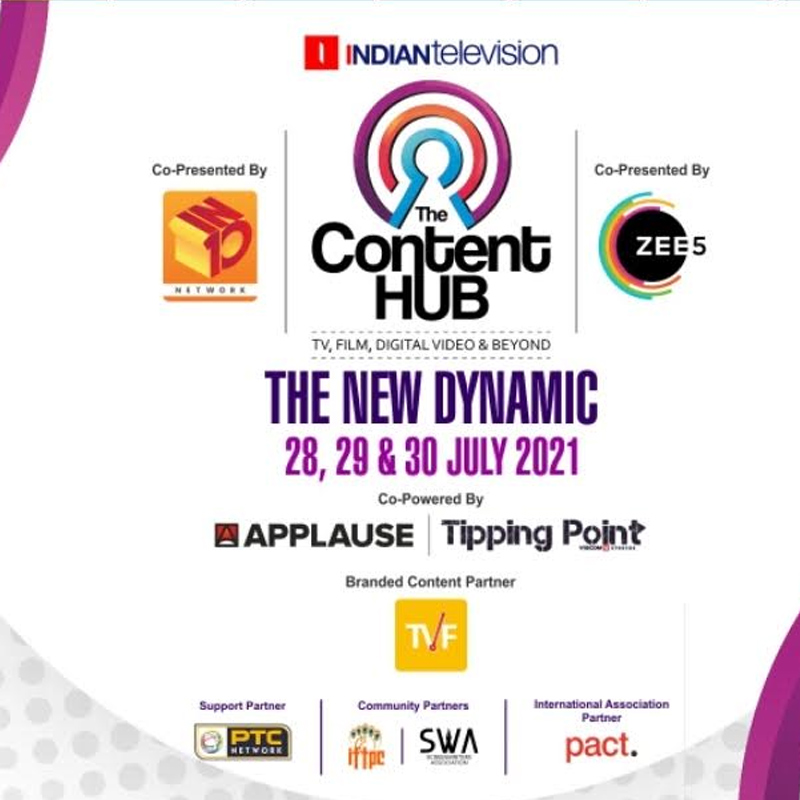
    The fifth edition of Content Hub 2021- ‘TV, Film, Digital Video, and Beyond’ is being organised by Indiantelevision.com from 28-30 July, 2021. The three-day summit is co-presented by IN10 Media Network and ZEE5, and co-powered by Applause Entertainment and Tipping Point, the digital content unit of Viacom18 Studios. PTC Network is the supporting partner. 

    Centred on the theme – ‘The New Dynamic’, The Content Hub 20201 will witness insightful sessions with industry stakeholders deliberating on how the new forces are transforming the way content is created and stories are told. It will also delve upon the impact of these changes on the business models for the world of films, TV and OTT.   

    For more details, visit: https://www.thecontenthub.in/

  • Guest column: Post pandemic, advertising shifts focus to brand building

    Guest column: Post pandemic, advertising shifts focus to brand building

    NEW DELHI: Do you remember TV commercials that featured fans at crowded football games, or that focused around cities choked with people, or with celebrities doing every possible thing to woo their audience? You may call them the “before coronavirus” commercials/ads that no longer work in today’s scenario. With the onset of the pandemic, everything changed in a matter of hours, and TV commercials of various brands were no exception. As the Covid-imposed lockdown continues, Indian advertisers are completely relying on media-led brand building to reap long term benefits.

    The rise of ad flexibility

    As major live events, where TVCs played a pivotal role, were cancelled keeping in mind to curb the spread of the Coronavirus, advertisers had to regulate themselves according to their new programming slate. This has also been changing according to the scenario outside, making the ads more compassionate and caring towards their customers. Since the airing of many programs was also cancelled due to the pandemic, the TVCs mostly aired during the news broadcast or in the news channel. 

    Advertising in digital content

    With the remote working and stay at home guidelines, the viewership of TV and OTT platforms is seeing an explosive growth. Though the advertising demand during this phase is being subdued due to the current situation, advertisement in certain categories like essentials, health and hygiene worked like never before. Brands across industries have responded to this situation quite promptly and started investing in TVC and campaigns for essentials and health and hygiene products across media. Whereas, non-essential categories didn’t fall behind and rather started their communications in digital medium by tagging alongside essential categories. Few companies have shifted to the basics and once again emphasised on brand building by highlighting their efforts towards combating the situation through their advertisements. 

    Brand building is the new focus

    With a stepped-up viewership of TV and OTT platforms, lessened advertiser clutter and potentially lower rates due to lower demand, brands have realised that this is the perfect time to invest in brand building by emphasising more on the brand’s core values. Brands have once again started earmarking for BTL so that it can be redirected to deploy on media and have put consumer promos, offers among others on a backseat. They executed brand building by exploring higher ACDs (average commercial durations) and consumer-relatable storytelling. 

    New industries, new advertisers

    As we have entered a much dreaded second phase of the Covid2019 pandemic, there is no clear timeline by when we will emerge out of the unprecedented situation. Therefore, brands need to engage in rigorous scenario-based planning, where they have to make an imaginary timeline of recovery, changes in consumer behaviour and upgraded budgets. The digital-first approach should be the first line of advertising for a brand in this ‘new normal’ situation. Brand’s media plans also need to be aligned with business strategy so that a balance can be made between opportunity and reality. One needs to keep in mind that whenever there is an extended lockdown, there is a downward pressure on consumer purchasing power and planned purchases will be on the lower side.

    (The author is director, Bonn Group of Industries. The views expressed in this column are his own and Indiantelevision.com may not subscribe to them.)

  • Havas Media Group launches study to understand IPL’s impact on brand health

    Havas Media Group launches study to understand IPL’s impact on brand health

    Havas Sports and Entertainment, which functions under Havas Media Group, in association with YouGov has launched Hi-CRICKET, a proprietary study to understand the impact of the Indian Premier League (IPL) 2021 in influencing brand health metrics across categories.

    The study, led by the Havas Insight team, has respondents from key cities in India to get a deeper understanding of how a larger-than-life platform such as IPL helps influence mind measures. HI-CRICKET will also answer the role of premium media buys in impacting brand health, one of the most critical questions raised by advertisers today.

    The respondents will be interviewed over five phases from 1 April 2021 to 1 June 2021 during IPL 2021. Each phase will track the impact of the game on brand health and capture shifts along with attributes that drive Meaningfulness as the league progresses. 

    Keeping in line with Havas Group’s Meaningful Brands philosophy, HI-CRICKET 2021 will help brands to further bolster their meaningful connect with consumers and will also identify the most meaningful campaigns during IPL this year. Havas’ Meaningful Brands framework constitutes of benefits brands offer across Functional (What does the product or service deliver?), Personal (How brands improve people's lives?) and Collective parameters (What’s their role in society?). Previous studies had suggested that all these benefits collectively drove brand performance. 

    Havas Media Group India CEO Mohit Joshi said that HI-CRICKET will help advertisers understand the overall impact of their association with IPL. 

    "This study will help advertisers understand the overall impact of their association with IPL. HI-CRICKET is the first initiative by Havas Insights and Havas Sports and Entertainment; we also intend to take the partnership into other sporting domains such as the Olympics, Hockey, Football, and Kabaddi," said Joshi. 

    YouGov India general manager Deepa Bhatia said, "Sports assets have impacted the recall of brands globally. YouGov panel constitutes data of 2 lakh active panel respondents who have participated in various surveys. During the IPL season, YouGov will consistently reach out to people who watch IPL to set up the study. Using Havas’ Meaningful attributes, the customized HI-CRICKET study will help us understand what drives meaningfulness for brands and to what extent are campaigns able to drive perceptions for brands based on functional, personal, and collective benefits."

  • Kantar’s ‘new normal’ mantra for brands: Build brand equity, invest in multimedia

    Kantar’s ‘new normal’ mantra for brands: Build brand equity, invest in multimedia

    NEW DELHI:  Brand building acts as a multiplier of ROI and more than doubles the impact of media investment of sales, says Kantar CEO global media and digital practice in a webinar discussing how to grow brand and ROI in the ‘new normal’ of post-COVID world. He highlighted that on an average media investment helps to explain about 13 per cent of sales today while media impact considering the brand is 28 per cent on short-term sales plus long-term equity-driven sales.

    He insisted that brand equity and media investments combined together can act as a great driver of long-term and short-term sales.

    Kantar Singapore managing director, insights division, Jane Ng noted that it is important for brands to keep communicating with consumers to build brand equity. Sharing data, she highlighted that people want brands to take a larger role in society.

    “In essence, it is not just good for business or it will help us for recovery, the most important reason here is that consumer will be looking at brands as an important companion through this journey,” she said.

    Kantar NASEAP chief digital officer insights division Pablo Gomez added that brands, therefore, need to take a multi-channel approach of reaching out to consumers as synergies will be a major driver of ROI in the new world.

    He added that in addition to what message the brand wants to convey, it will also have to put increased emphasis on how it cuts that through. “Creativity is the queen as being creative with media drives half of the campaign impact reach.”

    Gomez also says that reusing previous successful ideas can also be used as it is relevant when one wants to remind the consumers why they should care about the brands.

  • Gender stereotyping remains the template for weight-loss ads

    Gender stereotyping remains the template for weight-loss ads

    MUMBAI: We are constantly haunted by the media, be it television, print, out of home or digital. Our thoughts and actions get subliminally influenced, not to mention the direct effects on young impressionable minds. But as David Ogilvy rightly said, “Advertising reflects the mores of society, but it does not influence them,” advertising is a mirror of society and not its torchbearer.

    Picture in your mind a male celebrity lecturing you on how to use the product he is endorsing in order to look attractive and stay slim. Does it look a little off? If it did, then you are a part of the system that has been subject to gender distinction in advertising.

    Since the beginning of the advertising culture, men and women have been projected differently in advertisements. Men have always been portrayed as the gender that is daredevil, outgoing, brave, strong and the dominant one in a relationship. Women, however, have always been characterised as the weaker gender that is supposed to look good, do household chores and keep the men happy.

    public://f1_8.jpg

    Although a lot has changed in the ad world over the years and women are now being projected as decision makers and as equals to men, the hard truth is that women are bombarded with products that are supposed to make them the ‘perfect woman’ according to society’s standards. Female consumers have faced years of being sold the idea that they must have the perfect skinny body and look beautiful.

    public://f2_7.jpg

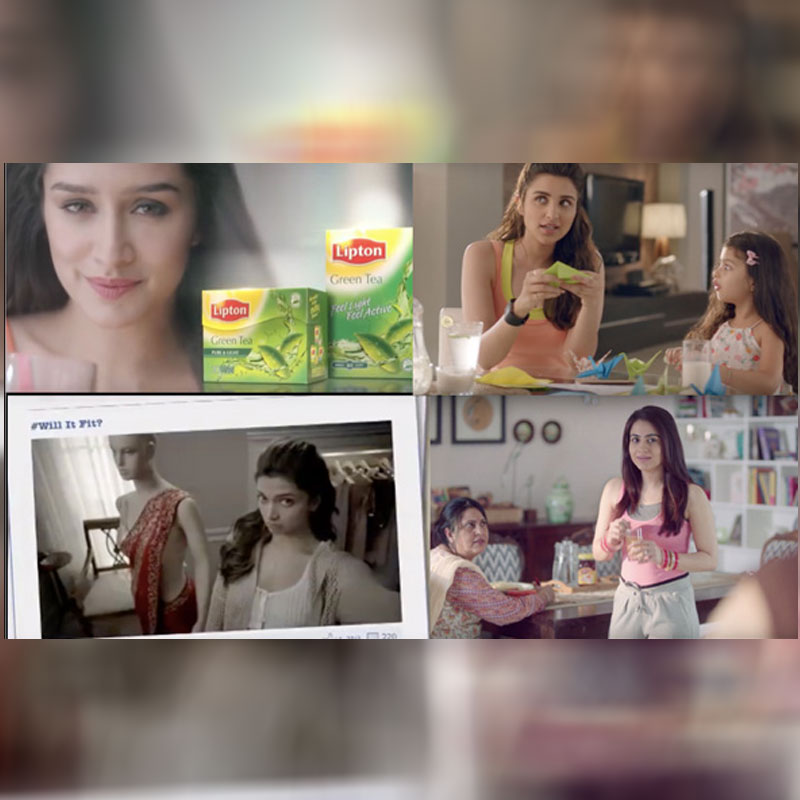
    Brands have always stereotyped women to look their best and that does not seem to be changing anytime soon. Even today, advertisers prefer using women to endorse fitness, weight loss and a healthy lifestyle. Although a lot of men also seem to be getting fitness-conscious and concerned about their weight and looks, brands continue to use women in order to promote their product. Even in the 21st century, we see Deepika Padukone endorsing Kellogs Special K, Shraddha Kapoor promoting weight loss with Lipton Green Tea, Parineeti Chopra endorsing a healthy eating option of Sugarfree and so on. On the other hand, we don’t see any such product being promoted by male brand ambassadors. This gender stereotype does not seem to be changing anytime soon. But why does this stereotyping of women still happen in Indian advertising?

    Harish Bijoor Consults founder and brand strategy specialist Harish Bijoor notes that sadly stereotyping brings in the moolah and women in India by and large do not complain about being stereotyped as there is a tendency to believe in the dictum “This is how we are”.

    According to investment banking platform SMERGERS, the fitness industry in India was worth Rs 4,500 crore in 2017 growing at 17-19 per cent per annum. The total branded tea market in India stands at Rs 9,500 crore, growing at about 5 per cent but the branded green tea market, in contrast, is only around Rs 150 crore. The green tea market, however, is growing faster at 21 per cent yoy. Dabur Honey rakes in some Rs 500 crore in annual sales for the ayurveda brand.

    Brands look at this category with awe, as their volumes gallop with every progressive move that is governed first by vanity and then by good health. While Bijoor notes that the fitness and weight loss market is huge in India, it is dominated by the aspiration of the people in the metros and mini metros who want to ape the western lifestyle of looking good and feeling good.

    Brand-Building founder and brand guru Ambi Parameswaran notes that Indians want good health but without going through the pain of exercising and that does not seem to have changed much. “We discovered this phenomenon when we launched Sweetex in the late 80s and once again when we launched Tropicana in the late 90s. While you see a lot more people on the roads walking in the morning and doing yoga, Indians want it easy.”

    Brands need to adapt now because there is a growing male audience for the same products. Men today don’t shy away from sipping green tea in order to shed those extra kilos or have a bowl full of Kellogg’s Special K or eat oats. With increasing awareness about fitness and an aim to lead a healthy lifestyle, more men have started to adapt to the healthy route. So, it only makes sense for advertisers to shift their focus to men and bring more male endorsers to promote their ideology.

    Ambi Parameswaran mentions that today young men are more conscious about their looks, hair and skin than women of their age. “I am waiting for brands to jump on to the ‘keeping men fit’ bandwagon,” he prophesises.

  • Vegit bets on BTL for brand building

    Vegit bets on BTL for brand building

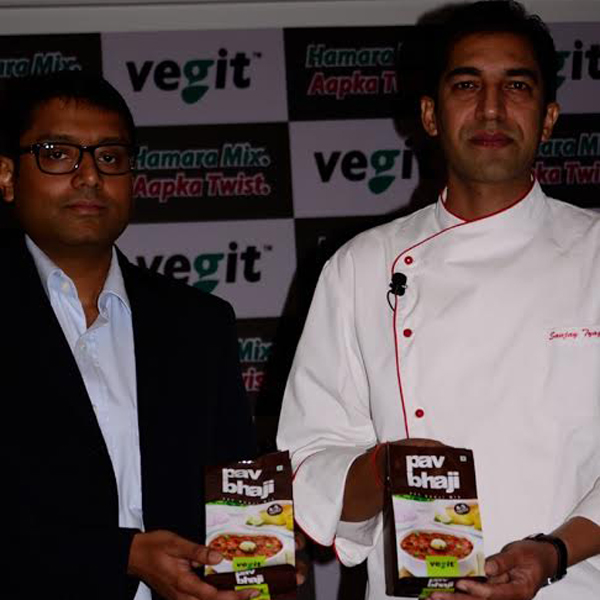
    BENGALURU: Bengaluru based Merino group’s agro division and ready to cook brand Vegit spends between 10-15 per cent of revenue on BTL activities. So far, a major portion of the Rs 40 crore revenue from the ready to eat Vegit has been institutional and B2B, with only about 20 percent, or about Rs 8 crore coming in from the retail segment. The USP, as also the tagline of the brand is ‘Hamara Mix, Aapka Twist’ (Our Mix, Your Twist)


    “We are planning to grow at a CAGR of about 25 per cent through increased B2B and the retail consumer sales, as well as new products. A major portion of our BTL activities are focused on the end consumer, the end user in mind, this includes in-shop promos, wet sampling, taking part in exhibitions, etc. We need to get to a critical mass before looking at mass media communications,” revealed Vegit director Manoj Lohia to www.indiantelevision.com on the sidelines of the launch of Vegit’s new snack Vegit Pav Bhaji in Bengaluru today.


    Besides BTL, the company has been betting on the digital media also. It has a range of recipes on its portal and has been growing its presence on social media. The brand has a range of nine new snacks and plans to add another two or three more during the current calendar year.


    Lohia estimates the size of the ready to cook market in India as Rs 500 crore, with an overall size of the organised and the unorganised market of Rs 2000-2500 crore growing at a CAGR of 35 per cent.


    The Rs 950 crore Merino group spends around Rs 20 to 25 crore towards communications, including ATL and BTL. Creative duties are handled by the Publicis group’s Capital, mass media by Mindshare and digital by Publicis Istart.