Tag: Brand awareness

  • Gracenote says advertisers are botching connected TV with wrong targeting tactics

    Gracenote says advertisers are botching connected TV with wrong targeting tactics

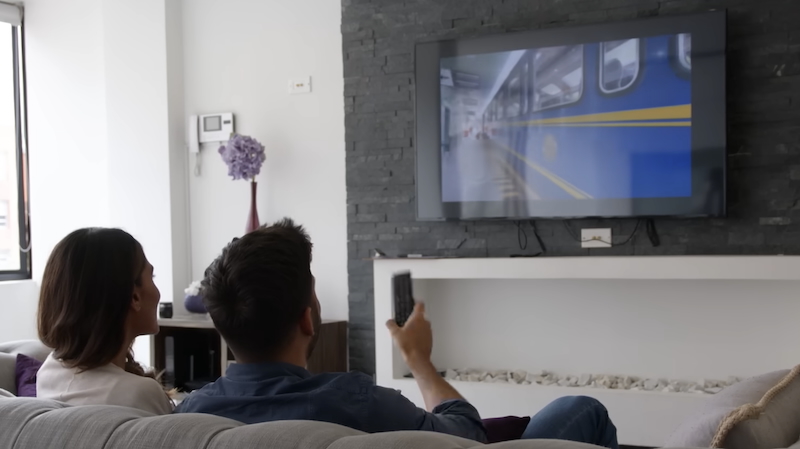
    NEW YORK: Connected television was supposed to be the performance marketer’s dream: precision targeting on the biggest screen in the house. A decade in, it’s not delivering. American advertisers will spend $26.6 billion on CTV this year, up 12 per cent from 2024, according to the IAB. Yet 27 per cent cite lack of insight into whether ads reach their intended audience as their top challenge. Nearly a third rate CTV only “moderately effective” despite pouring money in.

    The problem is a mismatch between strategy and medium. Marketers are treating CTV like social media—chasing users with demographic and behavioural targeting—when they should be focusing on what people watch, not just who’s watching. A Gracenote survey of 600 American brand and agency executives found 30 per cent rank brand awareness as their top CTV objective, with customer retention a distant fourth. Yet 80 per cent still prioritise audience-based targeting over contextual approaches.

    “CTV has not delivered the scale and premium reach that marketers expect of the largest screen in the house largely based on the use of narrow targeting tactics,” said Gracenote VP of partnerships Jake Richardson. “By taking better advantage of contextual targeting capabilities with their CTV campaigns, they have new opportunities to drive both return on ads spend and the scale they’ve been looking for.”

    The irony is sharp. CTV now accounts for 48 per cent of American viewing time, overtaking live television’s 46 per cent in the first quarter of 2025. Ad-supported content makes up 45 per cent of streaming viewership. The audience is there, engaged and watching ads. But marketers haven’t adapted their playbook.

    Nearly 46 per cent of survey respondents have shifted at least 26 per cent of their budgets to CTV over the past three years. Among financial services, retail, technology and healthcare brands, that figure rises to 52 per cent. A quarter now allocate 40 per cent or more of total budgets to CTV. Yet confidence remains shaky. Only 28 per cent consider their CTV spending “extremely effective.”

    The culprit, according to Gracenote, is fragmentation and missing metadata. With 85 per cent of CTV buys purchased programmatically, incomplete or inconsistent content data leaves platforms blind. Nearly 70 per cent of respondents say lack of standardisation is at least a modest challenge when developing campaigns.

    Free ad-supported television (Fast) channels illustrate the problem. Gracenote tracked nearly 1,850 active Fast channels distributing more than 182,000 programmes as of July 2025. Pluto TV, Tubi and The Roku Channel accounted for 5.7 per cent of total American television usage in May 2025, up 36 per cent year-on-year. Yet the metadata is patchy. Before enrichment, 55 per cent of sports programmes on  Fast  channels lacked original air date information. A sample of 28 sports programmes shared by Rain the Growth Agency found only eight included proper content titles—three simply said “tv.”

    This matters because knowing whether a sports event is live, which teams are playing, or whether it’s a playoff game is crucial for advertisers. TV listing data can distinguish an MLB game between the Los Angeles Dodgers and San Francisco Giants from a Liga MX match between Santos Laguna and Pumas UNAM—both aired live on Fast channels on 12 July 2025.

    When asked if standardised content metadata would boost confidence in CTV planning, 62 per cent of respondents said yes. More than half said it would justify higher spending. When asked about TV schedule information, 72 per cent said it would help with planning and investing—rising to 78 per cent among financial services, retail, technology and healthcare advertisers.

    The solution, Gracenote argues, is contextual targeting at programme level. Only nine per cent of respondents currently prioritise this approach, compared with 29 per cent for demographic targeting. Yet contextual signals—knowing a programme has a TV-MA rating, includes adult language, has a gritty mood, or involves arms trafficking—provide the brand suitability insight that audience targeting can’t.

    The pitfalls of over-focusing on existing customers are well documented. Nike’s 2020 direct-to-consumer pivot, which neglected broader brand building, became a cautionary tale last year. Despite CTV’s addressable nature, excluding anyone outside the funnel inhibits future growth. Marketers want CTV for brand building, but to capitalise they’ll need to embrace a simple truth: what people watch matters as much as who’s watching.

    The survey was conducted online between 10 and 20 July 2025, polling brand and agency associates with director-level titles or above across media, entertainment, telecommunications, retail, financial services, automotive, consumer goods and healthcare.

  • GOZOOP Group bags Infiniti Mall’s public relations mandate

    GOZOOP Group bags Infiniti Mall’s public relations mandate

    Mumbai: Independent marketing group, GOZOOP Group, has bagged the public relations mandate for Mumbai’s premier destination for shopping, entertainment, and food, Infiniti Mall.

    GOZOOP Group will be responsible for building brand awareness, strengthening spokesperson imagery and highlighting the offerings amongst a larger set of target audiences. The agency will also create and implement innovative communication strategies and provide end-to-end media relations support to ensure top-of-mind recall and extensive footfall.

    Commenting on the win, GOZOOP Group CEO (India) Samrat Bedi said, “We at GOZOOP place our clients at the core of operations. We believe in understanding the needs or wants of the client and delivering those in a balanced yet effective manner. Infiniti Mall has been one of the most popular retail destinations in Mumbai, and I am sure that with our creative mindset we will be able to help the brand achieve desired milestones.”

    A subsidiary of K Raheja Realty Group, Infiniti Mall Andheri was founded in 2004 and Infiniti Mall Malad opened its doors for the first time in 2011. Since then, the mall has been transforming the essence of leisure and entertainment, providing an ultimate retail experience to its customers.

  • Mamaearth celebrates every day as Earth Day in new brand campaign

    Mamaearth celebrates every day as Earth Day in new brand campaign

    Mumbai: Personal care brand Mamaearth has announced its latest campaign #EverydayIsEarthday to celebrate mother earth every day. As a part of this campaign, the brand unveiled a new digital film encapsulating the essence of World Earth Day.  

    Conceptualised by Korra Worldwide, the film starts with a little girl named Shreya, the central character of this campaign who is depicted as a goodness specialist at Mamaearth, emphasising how every day is Earth Day at Mamaearth by explaining the facts. It begins with the Plantgoodness initiative of planting trees in abundance, and she fumbles when looking at the number of trees planted, which is around 300,000, and visualises it as an amusement park, explaining that three lakh trees are comparable to 2200 acres of land covered by 22 amusement parks.

    She further takes through the next initiative of recycling plastic and explains in a simpler form by connecting the amount of plastic recycled is equivalent to the weight of 854 elephants. She continues explaining the next initiative of Goodbooks made with one side used papers and connects one lakh used sheets used by Mamaearth to a size of a football ground and tells to reduce paper wastage by reusing.

    “Being a purpose-driven brand with the objective of serving a greater purpose with our products and initiatives. We at Mamaearth, celebrate every day as Earth Day as we strive to take one step every day with our Plant Goodness and Plastic Positive initiative,” commented Mamaearth co-founder and chief innovation officer Ghazal Alagh. “This Earth Day we wanted to share the impact of our initiatives with our consumers and followers. The campaign aligns perfectly with our purpose, and we pledge to commit to staying honest to our principles and values in investing in our planet through our good deeds.”

    “Mamaearth isn’t just a brand, but a way of life. We believe that big things happen when you do small good every day. And this earth day, we wanted to showcase the small good we do every day,” shared Korra Worldwide chief creative officer Deepak Kumar. “From our initiatives to our products to the simple choices we make. But we wanted to simplify this impact of goodness in a language that everyone could understand. So, we took the help of an eight-year-old kid who could demystify things for everyone in a simple video; a video made with a lot of goodness and innocence for all the goodness we all do together, throughout the year.”

  • FarEye appoints Judd Marcello as CMO

    FarEye appoints Judd Marcello as CMO

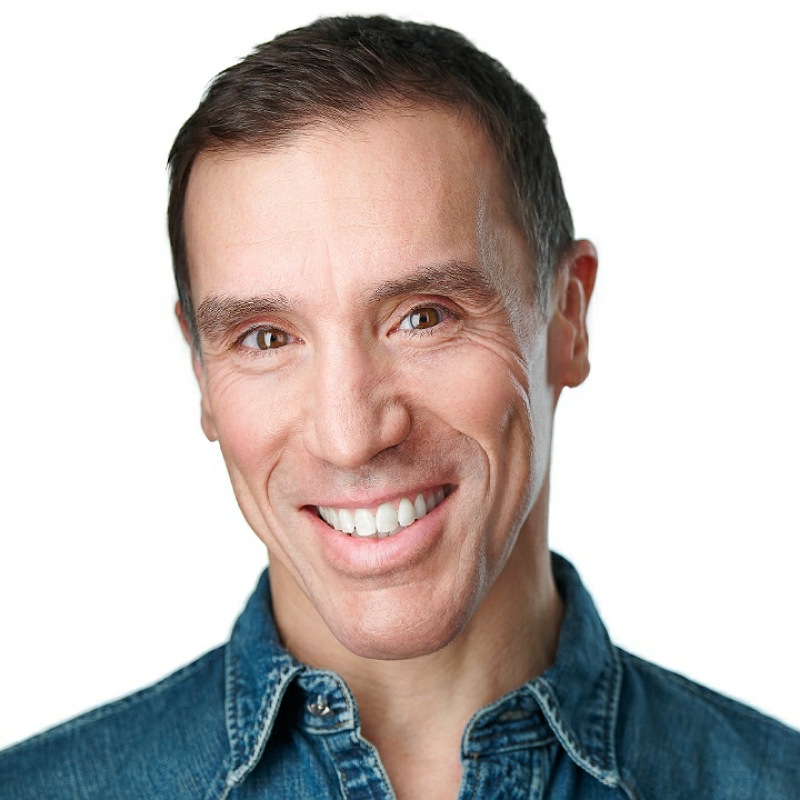
    Mumbai: Global SaaS platform provider FarEye has announced the appointment of Judd Marcello as chief marketing officer (CMO), based in the United States. The news comes soon after the announcement of Chicago as FarEye’s North America headquarters and the movement of its CEO Kushal Nahata to North America.

    In this newly created role, Marcello will lead all facets of marketing to drive brand awareness and growth in key global regions, including the Americas, said the statement.

    “Judd brings a winning combination of B2B and B2C experience that will help us deliver greater value to the supplier, carrier and consumer communities we serve,” said FarEye chief revenue officer Amit Bagga. “His experience in building teams and leading scaling efforts across global regions will allow us to capitalise on the rapidly growing demand for FarEye’s last-mile delivery logistics platform. We welcome Judd to the leadership team and FarEye family, as we establish marketing as a growth driver for the company.”

    Marcello brings over 28 years of leadership in B2C and B2B marketing delivering high-impact business outcomes for leading brands in the software, consumer packaged goods, consumer electronics, and food and beverage industries. He has first-hand experience in building teams and leading growth efforts across the United Kingdom, Americas, Australian and European markets.

    “I am grateful for the opportunity to join FarEye and lead the marketing effort. FarEye is a fast-growing company with strong values and a category-leading product. The recent historical growth in online sales has mandated the delivery experience be a key component in the relationship between brands and consumers,” said Marcello. “Every company that declares itself a “consumer-centric” business is now a logistics and delivery business. In an era where the front door has become the new store front, the delivery experience is where you either win or lose customers. I look forward to helping FarEye’s current and future customers turn deliveries into their competitive advantage.”

  • GUEST COLUMN: Social media will play critical role in building brand awareness in 2022

    GUEST COLUMN: Social media will play critical role in building brand awareness in 2022

    Mumbai: As India continues to fight Covid-19 and Omicron, and people continue to fear venturing out, digital initiatives in both advertising and marketing will become more prevalent in 2022.

    According to the most recent statistics, there are around 3.78 billion social media users globally. The number of such users is expected to climb again next year. Social media trends will rule the advertising and brand strategies in the coming year. Marketing and business will become more varied, inclusive, and responsive to real client requirements in the future. While AI and data-driven marketing will continue to advance, the primary focus will remain on people rather than technology.

    Using social media for brand recognition

    Traditional in-person events and promotions have given way to virtual spaces in brand awareness initiatives. We live in a world of social media marketing, and every company understands the value of social media. Whether you are leveraging influencers, referrals, or simply providing good content, social media has proven to be an important part of building brand recognition. This is due to the fact that social media is an excellent venue for brands to maintain client interactions while also increasing their chances of discovering new leads. In reality, many people become aware of new businesses after hearing about them via a friend on social media. Social media sites are a place where people may interact with one another. As a result, it’s an excellent area for you to interact with clients and build a relationship with them.

    Going ahead, 2022 will witness a greater emphasis on highly personalised one-to-one advertising, mobile advertising with in-app and in-game ads, video advertising, video-embedded display banners, native advertising, accelerated automation, programmatic advertising, and even cookie-less advertising, among other things.

    Here are the top 3 social media trends to watch out for in 2022.

    Metaverse and its virtual universe

    Facebook’s name has been changed to Meta. The company has planned a range of new products for virtual and augmented experiences as part of Metaverse. This is a major gamble on the web’s future, and it has the potential to change social media space. Companies will be able to benefit from new features which Meta will introduce. With the help of new emerging social media trends, they will be able to expand their product reach and visibility.

    Influencers market will continue to grow

    Influencer marketing is expected to reach $13.8 billion in 2021, with growth expected to continue in 2022. Influencer marketing efforts add a personal touch to the product, making it more relevant to the user. Thus, B2B brands will continue to embrace influencers in light of current trends.

    LinkedIn will grow in importance as a social networking platform

    In the digital world, LinkedIn is still a growing star. The company just launched a Hindi version to cater to the 600 million Hindi speakers throughout the world. With 82 million members in a global community of 800 million, India is a key market for LinkedIn’s growth and the second-largest market in terms of members after the United States. Since the pandemic, India’s member base has expanded by more than 20 million (15 percent year-over-year), and participation and talks on the platform have increased dramatically. This will continue to be a great way for brands to reach out to their target demographic.

    In conclusion

    Building brand recognition may require some trial and error, but having a dedicated awareness plan will surely help in your brand’s visibility. By following the latest social media trends, you may position yourself to become a brand that stands out in the eyes of your customers.

    (Rishi Kajaria is MD Kajaria Bathware and JMD of Kajaria Ceramics. The views expressed in this column are personal and Indiantelevision.com may not subscribe to them.)

  • VingaJoy ropes in Jacqueline Fernandez as brand ambassador

    VingaJoy ropes in Jacqueline Fernandez as brand ambassador

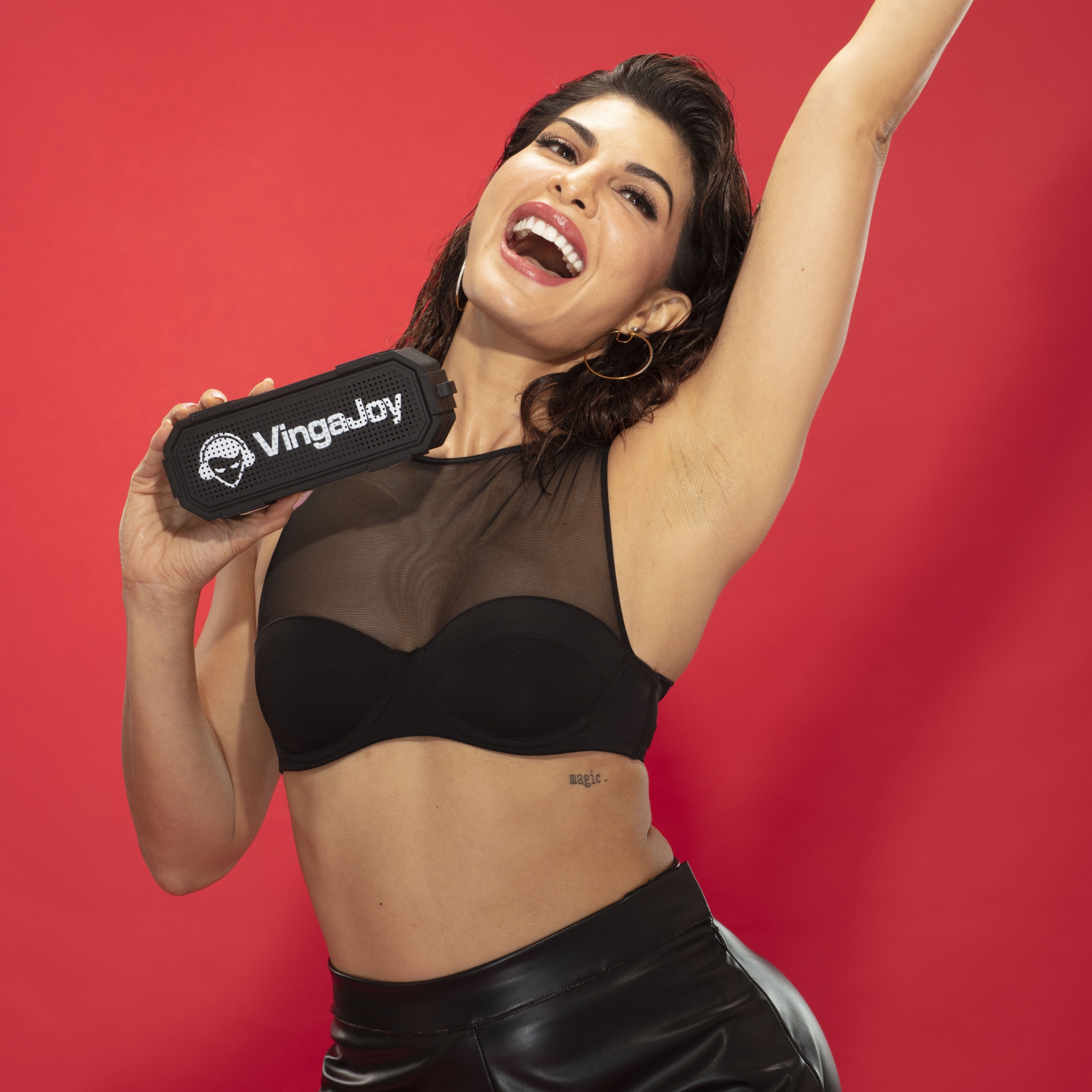
    Mumbai: Homegrown consumer electronics manufacturer VingaJoy has announced Bollywood star Jacqueline Fernandez as its brand ambassador. The collaboration is aimed at creating increased brand awareness with respect to the young consumer base.

    With the tagline ‘Be Loud, Be Proud,’ the brand is focused on being the first choice of millennials and offers products such as earphones, headphones, speakers, travel chargers, and premium rugged cables that seamlessly integrate into the youth’s style statement. In line with the spirit of the brand, Jacqueline was a unanimous choice as she represents the energy of the youth, the brand said in a statement.

    “Jacqueline Fernandez is the perfect face for our brand. She is dynamic, young, and stylish, and a person who has left her own mark in the industry, making her the perfect expression of VingaJoy,” said VingaJoy’s co-founder Lalit Arora. “We are delighted to invite Jacqueline Fernandez to join our crew and take our brand’s style quotient to a whole new level. We welcome her to the VingaJoy family and are confident she will inspire our consumers to feel proud to be associated with a brand like ours.”

    “I am extremely thrilled to be the face of VingaJoy and participate in the brand’s incredible journey of success and innovation,” said Jacqueline. “Known as the millennial audio brand, VingaJoy offers seamless tech quality and modern design in all its products.  The company’s innovative approach to offer consumer-focused solutions is what attracted me to it. I am hopeful that this association will ensure higher brand recall, and eventually create a larger customer base for VingaJoy.”

  • Shiprocket hires Amit Bhatia as vice president – marketing

    Shiprocket hires Amit Bhatia as vice president – marketing

    NEW DELHI: Logistics start-up Shiprocket has brought on Amit Bhatia as vice president of its marketing division. He moves from BannerBuzz, where he was head of marketing.  

    Bhatia’s mandate is to increase the customer base, improve brand awareness and scale performance marketing to achieve growth.   

    In a career spanning 15 years, he has also worked with Droom, Times Internet and Interactive Avenues.   

    Shiprocket CEO and co-founder Saahil Goel said, “Shiprocket is fiercely expanding its leadership team as more businesses in India continue to join the digital bandwagon. To scale our services and drive innovation as India’s leading post-order fulfilment platform, we are pleased to welcome Amit Bhatia as our new vice president for marketing. A young, motivated professional with rich experience in marketing and a proven track record, we are confident that his analytical and strategic style of working will elevate Shiprocket towards greater heights.”  

    Bhatia said, “I am thrilled to be a part of a distinguished platform such as Shiprocket in the next phase of my career. My plans for Shiprocket a few years down the line include scaling 5X, making it a default choice for e-commerce shipping for any d2c brand, and making it the most popular and used independent shipping platform. I look forward to working closely with the team to jointly achieve these goals.”   

  • TV still has headroom for monetising from underpenetrated areas

    TV still has headroom for monetising from underpenetrated areas

    GOA: With the advent of OTT platforms, technological disruptions and change in content consumption trends, traditional linear TV has been facing a difficult time. Moreover, demonetisation and inclusion of GST also came as additional challenges in the recent past, with effects that lingered for long, while the biggest disruption – the new tariff order – is on the way. Due to the rapid changes, traditional players in the ecosystem are changing their strategy to stay profitable.

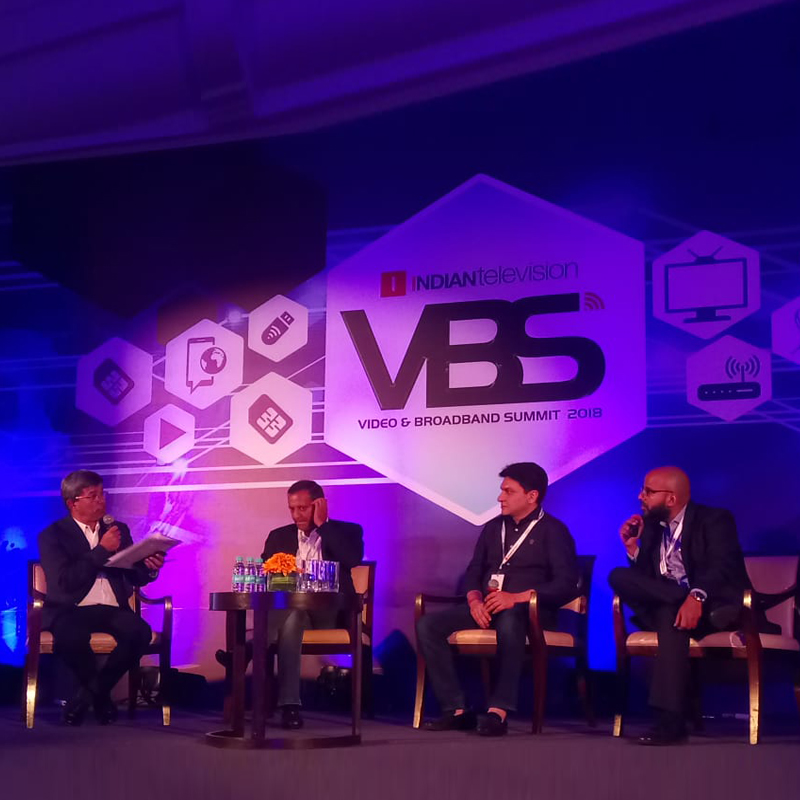
    In this scenario, Video and Broadband Summit 2018 held a session on monetising TV in times of transition. Zee Entertainment Enterprises Ltd (ZEEL) chief growth officer Ashish Sehgal, TAM India CEO LV Krishnan, KPMG India media and entertainment partner, deal advisory and head, Girish Menon took part in the session which was moderated by Indiantelevision.com founder and CEO Anil Wanvari.

    Wanvari kick-started the session asking what the monetisation trend in TV industry was in the last nine months. Menon, whose organisation KPMG published a report two months ago on the entire ecosystem, spoke about the increasing interest levels, contribution and demand from rural and regional markets on the advertising side which ensures that there is a growing deeper demand. He added that if someone is able to optimally monetise those options, the opportunities fairly exist for ad growth. He also added that a fair amount of traction in the FTA market is attracting brands there. On the subscription side, Menon said there’s enough headroom for growth as till now only 65-66 per cent households are penetrated by TV in India.

    ZEEL's Sehgal also endorsed Menon’s view on the growth opportunities for TV. “Across the industry, there has been a healthy double-digit growth which is happening. Even if you talk about the demonetisation and GST period, which stunted growth, even then the industry grew in single digit. It’s not like it had gone back to a certain level and then grew back,” Sehgal commented on the growth of the TV industry.

    Asked about tariff order, he said they still need to see how it’s going to pan out. But he mentioned that broadcasters like Zee and Star have come out with consumer-friendly packages which will help in ARPU growth. While he was asked whether users will start cutting cords if the price of subscription packages goes up too much, he answered that there’s no other better option available. According to him, to get the amount of content available on cable or DTH, users need to subscribe to ten other platforms.

    TAM India CEO Krishnan also agreed with Sehgal on the growth side of TV. He said that in the first 9 months of this year, TV showed around 11 per cent growth. Owing to the assembly elections, the growth may reach up to 12-13 per cent at the end of the year. Moreover, he added, it is the real revenue growth, not only volume growth.

    While the moderator asked if TV has got its real value, Krishnan said it definitely has brought in value itself from advertising and subscription. He also spoke about opportunities in hyperlocal advertising which is very much prevalent in print. There were 130,000 new advertisers just in the last 9 months compared to 2017 on the print medium which is coming from hyper-local editions of newspapers. But when that is being monitored in the adex data, those advertisers are still not translated into advertising on television or radio or digital yet.

    “On the other hand if I look at exclusive advertisers happening on digital and on TV it’s very comparable. There are around close to 16,000 advertisers uniquely positioned only on TV and around 12,000 unique advertisers on the digital adex. Now they are just 10 per cent of the overall volume that’s coming into print. If that translates slowly into regional television or digital OTT platforms for advertising, imagine the growth that TV and OTT can get,” he added.

    Sehgal believes that certain TV genres aren't getting a fair deal. “Average price across the genres are increasing. Yes, I would say there are certain genres which are still underpriced. For example, south channels are 90 per cent penetrated in terms of television. They are still underpriced. This pricing needs to be corrected. Kids' channels segment is underpriced. Hindi movie genre is highly underpriced while the value input behind purchasing movies is high, from advertising as well as subscriptions you are still not getting the value back,” he said.

    Where all the experts agreed was that sports content and TV premieres get higher value but when it was asked if it’s enough compared to other countries they said it’s linked to the purchasing power of the country. Moreover, they also said the growth rate in India is much higher than the US or China. It was also said that the pay-TV ecosystem in most of the developed markets are subscription led not ad led. India is always going to be a market where the rates of advertisement will be low but the fact is given the level of demand there is in the country from a consumption perspective, the growth will also be much higher than what can be seen globally.

    While most of the players work on volume rather than value, Sehgal said ZEE is working on the mix. “We have to start working with the real mix – how to get value and volume both together. Today, we are going 2X with the market only because we are not only getting the volume but also value. My price point from what it was last year to this year has increased in every channel. Now somewhere it has increased more and somewhere it has not increased more,” Sehgal said.

    On the question of how TV, cable or DTH can be monetised better, the experts think they should not shy away from the competition coming from digital. They think investment in technology, going back to advertisers with more value proposition is important. Though TV cannot engage like digital, they think brand building on TV is easiest. Unless a brand advertises on TV, building awareness becomes difficult.