Tag: BP Rath

  • Ortel plans Rs 300 cr investment to improve efficiency & reach

    Ortel plans Rs 300 cr investment to improve efficiency & reach

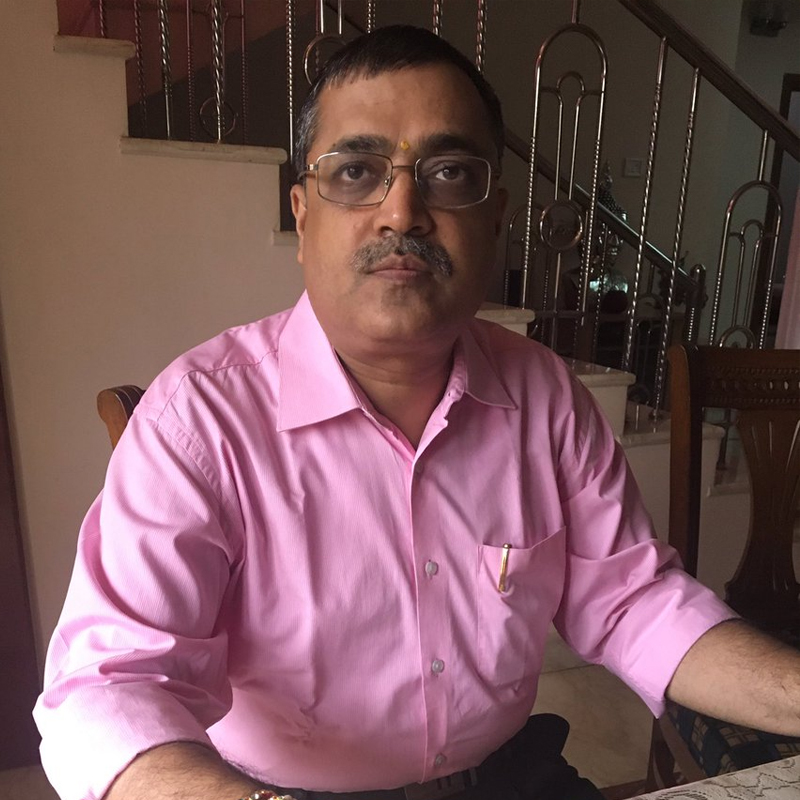
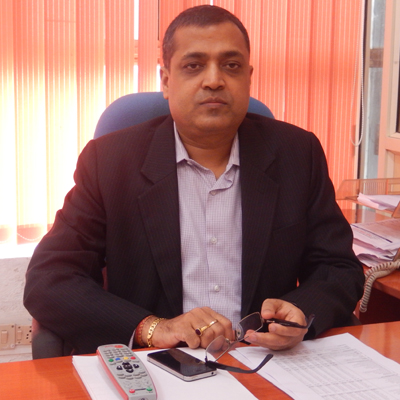
    MUMBAI: Odisha’s largest multi-system operator (MSO) Ortel Communications plans to invest Rs 300 crore on expansion over the next two years. Ortel CEO BP Rath said it would utilise IPO proceeds, internal accrual, debt and equity to meet its need.

    Ortel, a regional cable television service-provider, is engaged in the distribution of analog and digital cable television services, high-speed broadband services & Voice over Internet Protocol services. Currently focused in the states of Orissa, Chhattishgarh, Andra Pradesh, Telangana, Madhya Pradesh & West Bengal, Ortel focuses on building a two-way state-of-the-art communication network enabled for ‘Triple Play’ services (video , data, and voice capabilities) with control over the ‘last mile’ .

    Rath said that Ortel would be making the investment on upgrading and expansing its infrastructure. The investment would help strengthen Ortel’s efficiency, reach and competitiveness. Ortel, which manages 90 per cent of its subscribers directly, in September last year, had a subs base of around 805,000.

    Also Read:

    BSNL leader in wireline b’band subs addition in Oct-16; Jio joins top five wireless list

    MSO Ortel strengthens digital payment services

    Q1-17: Infrastructure leasing segment pulls down Ortel’s numbers


  • Ortel plans Rs 300 cr investment to improve efficiency & reach

    Ortel plans Rs 300 cr investment to improve efficiency & reach

    MUMBAI: Odisha’s largest multi-system operator (MSO) Ortel Communications plans to invest Rs 300 crore on expansion over the next two years. Ortel CEO BP Rath said it would utilise IPO proceeds, internal accrual, debt and equity to meet its need.

    Ortel, a regional cable television service-provider, is engaged in the distribution of analog and digital cable television services, high-speed broadband services & Voice over Internet Protocol services. Currently focused in the states of Orissa, Chhattishgarh, Andra Pradesh, Telangana, Madhya Pradesh & West Bengal, Ortel focuses on building a two-way state-of-the-art communication network enabled for ‘Triple Play’ services (video , data, and voice capabilities) with control over the ‘last mile’ .

    Rath said that Ortel would be making the investment on upgrading and expansing its infrastructure. The investment would help strengthen Ortel’s efficiency, reach and competitiveness. Ortel, which manages 90 per cent of its subscribers directly, in September last year, had a subs base of around 805,000.

    Also Read:

    BSNL leader in wireline b’band subs addition in Oct-16; Jio joins top five wireless list

    MSO Ortel strengthens digital payment services

    Q1-17: Infrastructure leasing segment pulls down Ortel’s numbers


  • Ortel reports respectable maiden numbers for FY-2015 & Q4-2015

    Ortel reports respectable maiden numbers for FY-2015 & Q4-2015

    BENGALURU: At the time of its IPO earlier in March 2015, Ortel Communications had to withdraw a part of the promoter’s quota to prevent undersubscription. In its maiden financial numbers, Ortel reported fairly respectable numbers for FY-2015 as well as Q4-2015 and hence justified the faith that investors put in it. The company was listed on 19 March, 2015.


    For FY-2015, Ortel reported total income from operations (TIO) of Rs 154.79 crore for FY-2015, 20.5 per cent more than the Rs 128.50 crore in the preceding financial year. The company reported a profit after tax (PAT) of Rs 5.65 crore in FY-2015 as compared to a loss of Rs 11.28 crore in FY-2014.


    Notes: 100,00,000 = 100 lakh = 10 million = 1 crore

    The numbers mentioned in this report are standalone.


    Cable subscription fees in FY-2015 grew four per cent to Rs 79 crore from Rs 75.7 crore in FY-2014, while internet subscription fees grew five per cent to Rs 27 crore from Rs 25.8 crore in FY-2014.


    In Q4-2015, the company’s TIO at Rs 44.91 crore was a healthy 34.4 per cent more than the Rs 33.41 crore in the corresponding quarter of last year and 13.9 per cent more than the Rs 39.44 crore in Q3-2015. The company reported a PAT of Rs 5.65 crore in Q4-2015, as compared to a loss of Rs 1.23 crore in Q4-2014 and more than 20 times (20.64 times) the PAT for Q3-2014 which was reported as Rs 0.27 crore.


    Revenue generating units (RGU)


    Two main segments add to the company’s numbers – Cable TV and Broadband, with a big chunk of numbers also being added by unallocated segments.


    Ortel reported total RGUs of 530,111 in FY-2015 as compared to 515,835 in FY-2014 and 486,255 in FY-2013. Of these, total cable RGUs in FY-2015 were 471,592, in FY-2014 they were 461,408, and in FY-2013 they were 435,628.


    Correspondingly, Broadband RGUs were 58,519 in FY-2015, 54,427 in FY-2014 and 50,627 in FY-2013.


    Cable TV segment


    In FY-2015, Cable TV segment reported 11.5 per cent growth in revenue from Rs 97.35 crores in the previous year to Rs 108.52 crore in FY-2015. Cable TV segment reported 12.1 per cent growth in operating profit to Rs 49.32 crore in FY-2015 from Rs 43.98 crore in FY-2014.


    Within this segment, besides subscription fees, cable connection fees grew 161 per cent to Rs 3.1 crore in FY-2015 from Rs 1.2 crore in FY-2014. Channel carriage fees grew 29 per cent in FY-2015 to Rs 26.4 crore from Rs 20.5 crore from FY-2014.


    Cable TV reported 9.7 per cent y-o-y growth in revenue to Rs 27.87 crore from Rs 25.41 crore in Q4-2014 and 2.2 per cent growth from Rs 27.27 crore in Q3-2015. The segment reported more than triple the operating profits in Q4-2015 at Rs 11.21 crore as compared to the Rs 3.61 crore in the corresponding quarter of last year and 8.3 per cent more than the Rs 10.36 crore in Q3-2015.


    Broadband segment


    Broadband segment revenue grew 5.2 per cent during the corresponding period to Rs 28.89 crore in FY-2015 from Rs 27.47 crore in FY-2014. Operating profit from Broadband segment grew a healthy 43.3 per cent to Rs 20.89 crore from Rs 14.57 crore in FY-2014. Within this segment, internet connection fees grew 12 per cent in the current year to Rs 1.9 crore from Rs 1.7 crore in FY-2014.


    Broadband segment reported revenue of Rs 7.44 crore in Q4-2015, which was 5.9 per cent more than the Rs 7.02 crore in Q4-2014 and 4.5 per cent more than the Rs 7.12 crore in Q3-2015. The segment reported almost eight times (7.61 times) operating result of Rs 7.95 crore in Q4-2015 as compared to the Rs 1.04 crore in Q4-2014 and 68.9 per cent more than the Rs4.71 crore in the immediate trailing quarter.


    Unallocated


    Revenue from unallocated segment grew almost four fold (3.73 times) to Rs 17.38 crore in the current year from Rs 3.67 crore in FY-2014. Operating profit credited to unallocated segment grew 3.7 per cent from Rs 3.07 crore in FY-2014 to Rs 3.19 crore in FY-2015.


    In Q4-2015, revenue from unallocated revenue grew almost tenfold (9.79 times) to Rs 9.61 crore from Rs 0.98 crore in Q4-2014 and 90.1 per cent more than the Rs 5.06 crore in Q3-2015. Unallocated operating profit grew 4.2 per cent in Q5-2015 to Rs 0.81 crore from Rs 0.78 crore in Q4-2014 and grew 2.8 per cent from Rs 0.79 crore in Q3-2015.


    Average revenue per user (ARPU)


    The company has reported a slight reduction in average revenue per user (ARPU) in all cases when compared to the previous year, except for digital cable. Analog TV ARPU in FY-2014 was 145 per month as compared to Rs 147 in FY-2014 and Rs 136 in FY-2013.


    Digital TV ARPU in FY-2015 was Rs 186 as compared to Rs 177 in FY-2014 and Rs 157 in FY-2013.


    Retail broadband ARPU stood at Rs 356 in FY-2015 as compared to Rs 373 in both FY-2014 and FY-2013. Corporate broadband ARPU had the highest fall. In FY-2015, corporate broadband ARPU was Rs 2851 as compared to Rs 3487 in FY-2014 and Rs 3998 in FY-2013. Data usage per month has gone up relatively, hence indicating lowering of charges for data – in FY-2015, it was 3143 MB, in FY-2014 it was 3126 MB and in FY-2013 it was 2666 MB.


    Ortel President and CEO Bibhu Prasad Rath said, “I am pleased to report that the company delivered healthy performance during the quarter and full year on the back of growth in Revenue Generating Units (RGUs) in Cable and Broadband businesses and robust contribution from Infrastructure Leasing segment. Our EBITDA margins stood strong at 37 per cent in FY-2015 as compared to 31 per cent in FY-2014. We anticipate further improvement in margins going forward as a result of deeper penetration in the Cable business along with our continued focus on the high-margin Broadband segment. Ortel Communications’ Direct-to-Consumer offering with full control over the ‘last mile’ network has enabled us to emerge as a dominant regional player in the cable TV and broadband business. With increasing penetration in our core and emerging markets along with the inorganic LCO (Local Cable Operator) buy out strategy, we believe we are well-positioned to achieve our immediate target of ~1 million RGUs by the end of FY-2017. I am also proud to share that we successfully concluded the Initial Public Offering (IPO) of the company by raising Rs 108.6 crore during the quarter. The capital infusion will also enable us to accelerate growth and deliver much stronger financial and operational performance in the coming years.”


    Click here to read the investor presentation

  • Ortel IPO closes; goes through by a whisker

    Ortel IPO closes; goes through by a whisker

    MUMBAI: It was meant to be a test of whether investors have confidence in the media – and more specifically in India’s relatively nascent cable TV sector. And the verdict is that while retail and HNI investors don’t, institutional investors definitely do.


    We are referring to the Ortel Communications IPO which closed today. The regional cable TV MSO which approached the market to raise funds for its growth plans, said in a statement, quoting a Kotak Mahindra Capital spokesperson: ““The Ortel IPO has been successfully closed today. Ortel has successfully raised its entire primary capital requirement as stated in the IPO Red Herring Prospectus, along with providing partial exit to New Silk Route (NSR). The QIB segment has been fully subscribed with participation from  Mutual Funds and Insurance companies.The net under subscription in the HNI and Retail segments will reduce the offer for sale component by NSR.”


    Simply translated the latter part of that statement means that NSR – its private equity investor – had decided to cut back on the amount of shares it was offering to the public.


    At the time the IPO commenced with the price band at Rs 181-200, 12 million shares were on offer for investors. Six million of these were coming from the NSR stable, while Ortel was issuing another six million freshly. With Kotak Mahindra Capital as the issue manager, Ortel managed to rope in  Axis Mutal Fund and ICICI Prudential came in as anchor investors. Both picked up 2.55 million shares (0.9 million to Axis and 16.55 million by ICCI) for Rs 46.2 crore at the lower range of the price band.


    That left about 9.45 million shares on offer to qualified instituitional bodies (QIBs) and retail/HNI investors. Bids were received for 7.12 million shares of these by day three of the issue. Thus the public offer was subscribed up to 0.75 time. Overall,  9.68 million shares, including the anchor component,  were lapped up totally or 81 per cent of the issue. The QIBs totally subscribed to what was available for them.


    NSR, which was making a secondary sale, decided to lop off the the  shares it was selling 3.67 million, meaning only 61 per cent of its offer was subscribed. It was aiming to raise Rs 108-120 crore through the offfer.


    Ortel, on its part, was was looking at raising  Rs 120 crore through the fresh issue.


    The Kotak Mahindra spokesperson told indiantelevision.com that the retail investors don’t really understand the potential of cable TV while institutional investors do. “Hence, the QIB portion has been totally subscribed. Ortel has managed to raise all the growth capital it needs for the next two to three years,” he said. “Hence, retail investors who missed this IPO will have to opt for secondary market purchases.”


    Estimares are that Ortel would end up raising around Rs 175 crore crore through the IPO. But the final tally totted up to Rs 175 crore-odd, according to Press Trust of India reports.

  • IDOS 2014: ‘Customer is the King and not the Content’

    IDOS 2014: ‘Customer is the King and not the Content’

    GOA: Content is the king is a passé; in today’s world it is the customer which rules.


    Businesses across the world understand that involving their customers will help them innovate and provide better products and services. The same goes for the Indian cable television industry. The players believe that the core intention of digitisation was not just converting the analogue signal into digital one, but to offer choice to the customers.


     “One key element, which we all missed out in the phase I and II of digitisation is the customer, itself. Customer is the king and not the content. Customer decides whether ARPUs will go up or not. Hence, a methodology needs to be found by all the stakeholders,” said Hinduja Group MD and IMCL CEO Tony D’silva while adding that if  a customer wants broadband, VAS or cable, we have to give it to him/her as per the need.


    He was speaking at a panel discussion on ‘Digitisation: The phase III and phase IV Challenge’ held at IDOS 2014.


    Ortel Communication CEO BP Rath said that the core intention of digitisation was not to decrease the carriage fee but to increase the ARPUs. “The aim was to offer choice to the customers; those who want more services, will pay more or otherwise,” he said and added that he is happy with the delay in dates for digitisation in phase III and IV as the players would get more time to understand the needs of their clients.


    “It was inevitable. Most of the people sitting here don’t know what India is. The lessons are simple. Except for seeding boxes in phase I and II, nothing much has been done. Customers’ choice was not taken into consideration in earlier phases,” he said.


    Instead of taking the top-down approach, we should work from customers’ perspective and integrate those into our plans, suggested Rath.


    Speaking in the same tone, CSG International south Asia vice president Letchu Narayanan said that customer experience matters the most. The industry should shift focus to customer as it is a customer-driven industry.


    Essel Group’s Dish TV CEO RC Venkateish feels that in phase III and IV there is a need for regional and low price offerings in around 70-80 million cable TV homes, which are yet to be digitized. He said that even though the players have different models, customer addressability is the need of the hour.


    On the content and the challenges to be handled in phase III and IV, Venkateish said the DTH players are working on different packages as per the customers need. “The road for better revenue can be achieved if all solve the problem together,” he said.


    Talking about the Dish TV business model, he said India is a big market and there are different needs. The company reports around 55 per cent of its revenue from the mass as only 15-20 per cent customers go for HD channels. “It all depends on the purchasing power,” he said.


    Maharashtra Cable Operators Foundation (MCOF) president Arvind Prabhoo said the players are mulling to offer choices to customers by not only providing network, Wi-Fi but also ensuring that the up-gradation is done before the next rollout.


    Agreeing with others Sagar E-Technologies executive director Sudish Kumar further elaborated that by understanding the needs of the customers, the industry players can establish the market well. “Every cable TV home in our network will connected with internet. If a customer will get a taste of it then it will contribute to the ARPU. We might not charge for cable, at all,” he proposed.


    The public broadcaster, Doordarshan, also has the same opinion that customer has to play a key role in digitisation. Doordarshan deputy director general CK Jain said, “Doordarshan is trying to ensure that people, who can’t afford the subscription of cable and DTH, we will provide value to them.”


    Cable TV Operators Association (COA) president Nassir Hassan Anwar talking about the preference of the customers in the southern region of the country said the demand for Hindi channels among the customers is comparatively less hence, the packages are designed keeping that in mind.


    So, going forward if customers’ needs are addressed, cable digitisation in India offers huge opportunity for all the stakeholders.


  • Ortel Communications files DRHP with SEBI for IPO worth Rs 360 crore

    Ortel Communications files DRHP with SEBI for IPO worth Rs 360 crore

    MUMBAI: Odisha based last mile owner (LMO) Ortel Commnications has filed its draft red herring prospectus (DRHP) for its proposed initial public offering (IPO) with the securities and exchange board of India (SEBI). Ortel Communications CEO BP Rath confirmed the news to indiantelevision.com.


    The LMO is looking at a public issue of 14,182,598 equity shares of face value of Rs 10 each. The IPO may raise as much as Rs 360 crore.


    It consists of 60 lakh shares from the company and an offer for sale of up to 81.82 lakh shares by New Silk Route (NSR) that currently owns a 35 per cent share in the LMO. This would mean Ortel ending up with nearly Rs 150 crore and NSR exiting with Rs 200 crore.


    The deal is being handled by Kotak Mahindra Capital. It also has the option for a pre IPO sale of up to 25 lakh equity shares to generate up to Rs 65 crore.


    NSR has been keen to exit the business for quite some time. With this fresh infusion that Ortel is expecting, the LMO plans to grow its cable and broadband business in Odisha as well as neighbouring states such as Andhra Pradesh, Chhattisgarh, West Bengal etc.

  • By imposing digitisation, government is giving away the market to DTH: BP Rath

    By imposing digitisation, government is giving away the market to DTH: BP Rath

    When he is not actively focused on growing the business of the company, he is a family man.  He spent eight years at his current group’s parent company– Indian Metals and Ferro Alloys and then driving the group’s venture into cable and television in 1998. Currently the president and CEO of Ortel Communications, Bibhu Prasad Rath has ensured that the company not just grows, but becomes one of the big players in the country.


    From finance to marketing and then to the cable business, he has seen it all for the company headed by Jay Panda and Jagi Mangat Panda. By taking a cue from the US cable TV  biz, he and his team at Ortel looked at consolidating the fragmented mom-and-pop Indian cable TV industry.


    Rath took out some time to talk to indiantelevision.com’s Vishaka Chakrapani about Ortel’s future business plans, rollout of digitisation and the key areas of growth and development in the coming few years. Excerpts:


    What is the philosophy at Ortel?


    The core philosophy of Ortel is to have access to the consumers’ homes. We want to be a communication pipe to consumers’ homes which is capable of delivering a wide range of related services in future. To achieve this we decided right from the beginning that we would have last mile ownership, because in cable TV, video services are one way, and data is two way. Two way services are extremely sensitive to network parameters.


    In the traditional B2B model where the MSO reaches out to the LCO and then to the consumer, close to 80 per cent of the work is done by the LCO. The MSO does very little and so there is no quality uniformity and many times the LCO lacks the right equipment. Workmanship matters a lot in any communication network. It is a choice that we made from the beginning that we wouldn’t deal with any LCOs. Our business is B2C.


    Many people tell us that our model is unique. We, at Ortel, follow the international model by having a network that is capable of delivering both the services- cable and data.


    The biggest advantage of this model is that we can build a network and also provide data services.  The disadvantage is that because you are doing last mile, it is capex heavy. So you can’t do the kind of large spread operation that an MSO-LCO model can do.


    What is your reach?


    We are now operating in four states- Odisha, Chattisgarh, West Bengal and Andhra Pradesh. On an overall basis we have a network capacity of 800,000 homes but the subscriber base is 520,000 of which 80 per cent is concentrated in Odisha and the rest in the other states.


    We want to expand a lot more in other states but we haven’t been able to raise money. We look forward to raising capital in the next one year. Then our focus will be to expand in our existing and other neighbouring states such as Madhya Pradesh. Our focus is also to expand geographically to other states and more in Chattisgarh and Andhra Pradesh. Our idea is to build a regional last mile play. We do not intend to go national now.


    What is the status of your IPO?


    Right now, though the markets are improving and we hope that they continue to do so for next three to four years, we are not actively looking at it. We are looking at other means of fund raising such as private equity as well as international strategic options. The likelihood of opting for private equity is definitely higher.


    What has been your progress in digitisation?


    We have been digitising for nearly five years now, much before the mandate came in. We don’t have an under-declaration issue. We have to digitise because it enhances the capacity by getting more number of channels so that we can effectively compete with DTH operators.


    Odisha comes mostly in phase III and IV. Kolkata came in phase I and Vishakhapatnam (Vizag) in phase II. Our digital base is 15 per cent of our total subscribers. Analogue has always been a fixed price model. In every city you have different sections of consumers with different needs for content and different paying abilities. In digital you can offer customised products to customers. Digital is an important tool to tier the service. There are four markets in Odisha where we have been digitising- Bhubaneswar, Cuttack, Rourkela and Jharsuguda, apart from Kolkata and Raipur.


    Which are your key investment areas for digitisation?


    We are doing three kinds of investments. One is backend. We have five headends in Bhubaneswar, Jharsuguda, Rourkela, Kolkata and Raipur. We don’t intend to set up any more headends. What we are looking at now is intercity connect through infrastructure providers (IPs), mainly RailTel. Wherever we do digital we will take the feed from Bhubaneswar. At present, we give the feed to Vizag through RailTel.


    The next area for investment is the network. We have a fully digital network which is broadband ready so that isn’t an issue.


    The third cost is the set top boxes (STB). Currently we get a STB for Rs 1700. The box vendor asks for only half the amount and we pay the rest in installments, while we charge consumer only Rs 500 per box. We are looking at raising money for geographical expansion.


    What is your current ARPU?


    Our analogue ARPU is Rs 150 plus taxes, digital is about Rs 185 plus taxes and broadband is about Rs 375 plus taxes.


    Then we also get 15 per cent to 20 per cent incremental customers.


    How digitisation ready are you?


    In our case, SMS, encryption, billing, tiering and CAF for every digital customer and encryption, billing, and CAF for analogue customers is already in place since the past 15 years. We have a billing database where every customer’s data is entered. A collection team of nearly 700 people on contract basis go to all the neighbourhoods at the beginning of the month and collect money by providing a bill and receipt. We have a call centre where customers can lodge complaints and the locally situated service centres take care of their complaints. So the entire B2C backend is already in place.


    Our main challenge now is to seed the STBs. It isn’t possible to complete that by 31 December at the pace at which it’s happening right now. Our current focus is not on spread but on depth. Our biggest market is Bhubaneswar which is already 65 per cent digital. By 31 December about half of our entire subscribers should be digital.


    What do you have to say about TRAI’s digitisation mandate?


    We don’t believe digitisation is mandatory, it needs to be voluntary. When you go to smaller markets, digitisation becomes unviable. The main issue is how do you take the signal to homes? It’s either by setting up a headend or RailTel.


    In smaller markets the number of people is less, so the cost per person increases and becomes unviable. We have spoken to regulators that going forward, smaller markets are going to be difficult and by imposing digitisation, they are giving away the market to DTH which isn’t fair to the cable industry.


    We also intend to explain this to the government. They need to do a further cut off for phase III and IV, say half or quarter million population. Below these population numbers, we require either an exemption from mandatory digitisation or even longer time until the market situation stabilises and costs come down and people start getting returns to invest for digitising the less populated areas.


    What is your subscriber churn?


    We are facing around 1 per cent churn every month but on net basis it is positive. Churn happens because people shift their house to another city or maybe in the same city, some due to timings such as exam time, and I’m sure some due to bad service. On an average we also get around 500 DTH converts per month.


    What is the status of your broadband offering and what are your plans for the same?


    Broadband has been a key focus area at least at a mental level. 10 years ago, TV was the only thing in life. Now people are slowly moving to browsing and watching videos on smartphones. The TV set as a device at home is going to see a reduced utility over a period of time and internet is going to be used more. Ultimately we see this business as a broadband business and not just as a TV business. Whether this will happen in 10 or 20 years, I don’t know but it’s going to be business of broadband, not so much of analogue or digital.


    Out of our entire network capacity, we can give broadband to 400,000 homes. But our actual subscriber base for broadband is 11 per cent of total TV subscribers, that’s about 55,000. This 11 per cent gives 20 per cent to 22 per cent of overall revenue.


    Our focus is to increase broadband penetration from 11 per cent to 25 per cent.


    What broadband services do you offer?


    We are currently operating on DOCSIS 2.0. The same cable that goes to a consumer’s house is split inside for TV and for PC. We also have wired and wireless modem services for using many devices. In retail we provide speeds ranging from 512 kbps to 2 mpbs.


    What is your main focus now for Ortel Communications?


    Our main focus for the next few years will be digital and broadband. Any other service rides on broadband or digital. The only other service we have been trying to get in the past also, but it isn’t working out due to regulatory issue, is the voice service.


    Our aim is to go from the current subscriber base to 30,00,000 in the next three to five years.


    How has your growth come? Organically or through LCO acquisitions?


    We have acquired about 1000 LCOs since 2008. Half of our growth is organic and half is inorganic.


    Initially our growth was only organic and in competition with LCOs. Subsequently, since 2008, we switched to the LCO acquisition model. We acquire the LCO, dismantle the network and lay our own network.


    The LCO exits the business with a revenue share. We buy out the LCO with a structured payment where part of money is paid at the time of buying and the rest is given over a longer period of time ranging from 5 to 7 years. So the LCO owner gets more than what was originally committed because he gets a revenue share. The LCO’s owner does not go back and start competing with us.


    The key difference is that in the organic model when you are competing, you need a longer time to reach critical mass. If you are acquiring then it happens right at time of acquisition. Depending upon what works best for a situation, we follow either model.


    How has your revenue grown?


    Last year our revenue was Rs 132 crore, while this year we expect it to reach Rs 155 crore. The EBIDTA margins are usually 32 per cent to 33 per cent.