Tag: BoxTv

  • Saying traditional TV is dying in India is premature

    Saying traditional TV is dying in India is premature

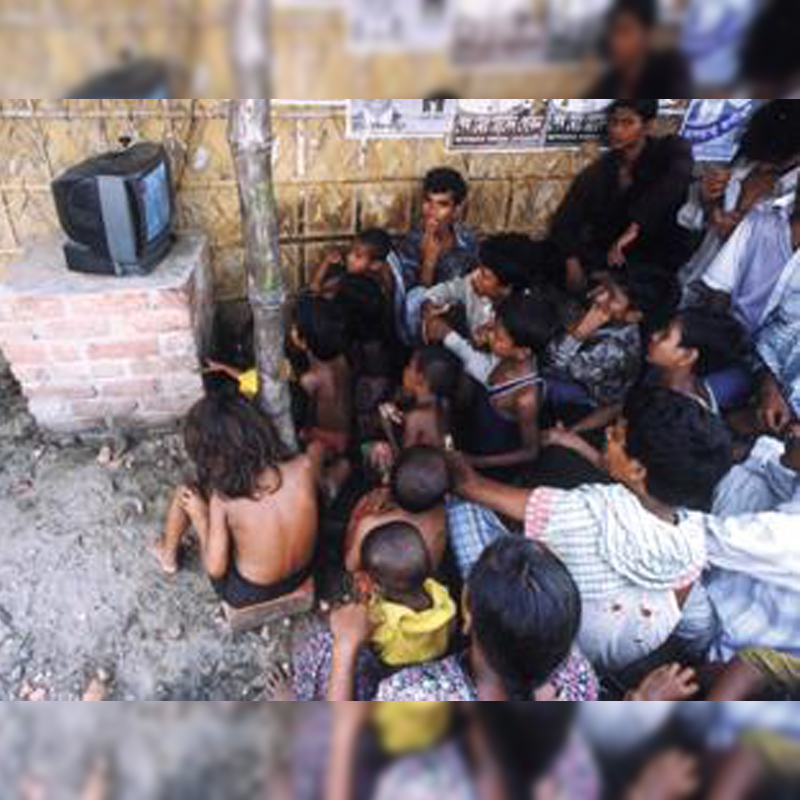
    On a recent road trip to Ladakh with friends we stopped at a nondescript roadside ‘dhaba’ (makeshift eatery) near the Himachal Pradesh and J&K border for tea and to stretch sore limbs. As tea was being boiled, stifled giggling from inside the hutment attracted me. While trying to see if my smart-phone was working so I could check-in on FB, I peeped inside. A group of local kids were enjoying a soap opera on television; courtesy DD FreeDish, a free-to-air DTH platform. My mobile phone, in the meanwhile, showed no signs of life with a No-Network message flashing.

    This, and many other such examples in India’s hinterland, highlight a fact loud and clear: India may be going digital, but Bharat (as non-urban hinterlands of India is referred to by some sociologists and marketers) still roots for the traditional. Such instances also tell us that in a country as diversified, complex and challenging as India, traditional habits, like TV watching, are there to stay despite technological disruptions like streaming video and smart-phones.

    Globally, death of traditional TV viewing has been predicted for past few years. But data and analytics from more mature and developed markets and even some East Asian nations – where digital is a big draw – show that TV as we know it is not going away anytime soon.

    A US Department of Labour Survey, released early 2016, states that watching TV was the leisure activity that “occupied the most time (2.8 hours per day), for those aged 15 and over.”

    BARB (UK equivalent of BARC India) data shows that average daily video viewing by all individuals is 4hrs 35mins and that TV accounts for 94 per cent of all video advertising time. Over the last decade, despite several “disruptive” technological developments, time spent watching TV has hardly dipped, as was being forecast. More importantly, TV continues to have largest reach of all media: it reaches 71per cent of population in a day, 93per cent in a week, and 98 per cent in a month.
    And, these are markets with near total saturation of TV homes, and a highly developed and widespread digital eco-system.

    What about India?

    Appetite for more TV content is only bound to grow given that only 153 million homes in India have TV out of a total of about 250 million (a penetration of about 60 per cent). Rise in disposable incomes, increasing fragmentation of families and continued challenges of Indian infrastructure are bound to push TV viewing higher.

    All-India BARC data for 47 weeks appear to validate that. Average daily TV viewing stands at 3 hours 16 minutes, showing headroom for growth, compared to more mature TV markets that have higher TV penetration rate of 97+ per cent.

    India has close to 900 licensed channels and while Ministry of Information and Broadcasting (MIB) agrees some of these licensees may not be on air, but scores of applicants are in queue too — another indicator of growth in appetite for TV.

    But, what about the perception that traditional TV viewership is losing out due to growth of digital platforms?

    Let’s look at BARC India data for a recent TV event, the Rio Olympics. TV viewership for Rio 2016 grew 2.65 times as compared to London 2012. While 16 million unique viewers watched the broadcast of London Games in India, the corresponding figure for Rio Games is 43 million (using the same viewership base – 1million+ towns). If one looks at the all-India (Urban+Rural) base, Rio 2016 set another high of 203.8 million unique viewers.

    This brings us to cricket, India’s fav sports (apart from politics). BARC data shows that a new viewership high was achieved during an India-Pakistan ICC T20 World Cup match in 2016, which generated a whopping 80.5 million impressions across Star Sports Network and DD National. And these numbers came on the back of not just a larger number of people watching TV, but also considerable higher time spent on TV.

    When asked about linear TV’s impending death in India owing to digital’s growth, Colors CEO and President of the Advertising Club (of India) Raj Nayak waved away the analysis asserting, “I am ready to stick out my neck on this. People who say that traditional television is dying don’t know what they are talking about. TV has been growing and there is still big headroom for its growth in India.”

    India may be adopting mobile phones faster than the US or other western countries, and a major percentage of them are smart-phones. Still, challenges for digital players are big and many ranging from costly data, indifferent bandwidth speed and getting the right content mix for a country that has 22 official languages and over 700 dialects.

    At Vidnet2016, an OTT conference organised by indiantelevision.com recently, Hotstar chief Ajit Mohan admitted that high cost of data is a major hurdle for expansion of streaming services like Hotstar and others like Voot, dittoTV, BoxTv, Arre, Savvn, Hooq, Viu, SonyLiv, etc.

    Data pointing to greater consumption of TV is one side of the picture. Globally, studies and data also indicate that TV remains a highly effective form of advertising.

    A study by the Institute of Practitioners of Advertising (UK’s equivalent of India’s AAAI) shows that TV continues to guarantee best commercial outcomes of campaigns for things such as sales, profit, market share, etc. Echoing similar sentiments, Colors’ Nayak added, “Digital advertising does not have the same impact that TV (advertising) has… Even Amazon, Google and other e-commerce companies have to use TV to make an impact.”

    US-based eMarketer (started in 1996 to study digital trends and considered one of the most widely cited research providers in the media) admits that despite a drop in TV watching time, in general, it hasn’t stopped marketers from pouring significant amounts of money into television advertising.

    Without discounting the strides being made by digital players in India (and they seem to be mushrooming all over like dotcoms during the dotcom boom of the late 1990s), traditional TV’s importance and reach still outstrips that of digital.

    Pointing out that digital does offer consumers choices of watching TV (government lingo for video consumption) at different time and in different formats, a senior government official, having worked at MIB, on condition of anonymity admitted that TV is not going away from India. Rather, the size of India will help it retain its pre-eminence as opposed to other media.

    GroupM too testifies to TV’s strong presence in India compared to other segments of media like print, OOH and digital. In projections made in January 2016, which are re-visited mid-year to do any course corrections if necessary, the company said television was estimated to grow by 17.6 per cent to touch Rs 27,074 crore (Rs. 2,7,0740 million) this year against Rs 23,022 crore (Rs. 23,02,20 million) last year as far as advertising spends go.

    Colors’ Nayak aptly sums up the issue: “There is no doubts that digital will see growth at a phenomenal pace especially with Reliance Jio addressing the bandwidth and speed issues, but digital must be seen as another platform for delivering content and that’s it. There will be lot of content consumption on digital platforms, but it will not be at the cost of (traditional) TV viewing.”

    Like Nayak, I too am ready to bet my bucks on linear or traditional TV in India. Digital has to travel many more miles in India before it can be a replacement for TV, which is still far off from near-saturation point or even plateauing off.

    (Author is Consulting Editor to indiantelevision.com)

  • Saying traditional TV is dying in India is premature

    Saying traditional TV is dying in India is premature

    On a recent road trip to Ladakh with friends we stopped at a nondescript roadside ‘dhaba’ (makeshift eatery) near the Himachal Pradesh and J&K border for tea and to stretch sore limbs. As tea was being boiled, stifled giggling from inside the hutment attracted me. While trying to see if my smart-phone was working so I could check-in on FB, I peeped inside. A group of local kids were enjoying a soap opera on television; courtesy DD FreeDish, a free-to-air DTH platform. My mobile phone, in the meanwhile, showed no signs of life with a No-Network message flashing.

    This, and many other such examples in India’s hinterland, highlight a fact loud and clear: India may be going digital, but Bharat (as non-urban hinterlands of India is referred to by some sociologists and marketers) still roots for the traditional. Such instances also tell us that in a country as diversified, complex and challenging as India, traditional habits, like TV watching, are there to stay despite technological disruptions like streaming video and smart-phones.

    Globally, death of traditional TV viewing has been predicted for past few years. But data and analytics from more mature and developed markets and even some East Asian nations – where digital is a big draw – show that TV as we know it is not going away anytime soon.

    A US Department of Labour Survey, released early 2016, states that watching TV was the leisure activity that “occupied the most time (2.8 hours per day), for those aged 15 and over.”

    BARB (UK equivalent of BARC India) data shows that average daily video viewing by all individuals is 4hrs 35mins and that TV accounts for 94 per cent of all video advertising time. Over the last decade, despite several “disruptive” technological developments, time spent watching TV has hardly dipped, as was being forecast. More importantly, TV continues to have largest reach of all media: it reaches 71per cent of population in a day, 93per cent in a week, and 98 per cent in a month.
    And, these are markets with near total saturation of TV homes, and a highly developed and widespread digital eco-system.

    What about India?

    Appetite for more TV content is only bound to grow given that only 153 million homes in India have TV out of a total of about 250 million (a penetration of about 60 per cent). Rise in disposable incomes, increasing fragmentation of families and continued challenges of Indian infrastructure are bound to push TV viewing higher.

    All-India BARC data for 47 weeks appear to validate that. Average daily TV viewing stands at 3 hours 16 minutes, showing headroom for growth, compared to more mature TV markets that have higher TV penetration rate of 97+ per cent.

    India has close to 900 licensed channels and while Ministry of Information and Broadcasting (MIB) agrees some of these licensees may not be on air, but scores of applicants are in queue too — another indicator of growth in appetite for TV.

    But, what about the perception that traditional TV viewership is losing out due to growth of digital platforms?

    Let’s look at BARC India data for a recent TV event, the Rio Olympics. TV viewership for Rio 2016 grew 2.65 times as compared to London 2012. While 16 million unique viewers watched the broadcast of London Games in India, the corresponding figure for Rio Games is 43 million (using the same viewership base – 1million+ towns). If one looks at the all-India (Urban+Rural) base, Rio 2016 set another high of 203.8 million unique viewers.

    This brings us to cricket, India’s fav sports (apart from politics). BARC data shows that a new viewership high was achieved during an India-Pakistan ICC T20 World Cup match in 2016, which generated a whopping 80.5 million impressions across Star Sports Network and DD National. And these numbers came on the back of not just a larger number of people watching TV, but also considerable higher time spent on TV.

    When asked about linear TV’s impending death in India owing to digital’s growth, Colors CEO and President of the Advertising Club (of India) Raj Nayak waved away the analysis asserting, “I am ready to stick out my neck on this. People who say that traditional television is dying don’t know what they are talking about. TV has been growing and there is still big headroom for its growth in India.”

    India may be adopting mobile phones faster than the US or other western countries, and a major percentage of them are smart-phones. Still, challenges for digital players are big and many ranging from costly data, indifferent bandwidth speed and getting the right content mix for a country that has 22 official languages and over 700 dialects.

    At Vidnet2016, an OTT conference organised by indiantelevision.com recently, Hotstar chief Ajit Mohan admitted that high cost of data is a major hurdle for expansion of streaming services like Hotstar and others like Voot, dittoTV, BoxTv, Arre, Savvn, Hooq, Viu, SonyLiv, etc.

    Data pointing to greater consumption of TV is one side of the picture. Globally, studies and data also indicate that TV remains a highly effective form of advertising.

    A study by the Institute of Practitioners of Advertising (UK’s equivalent of India’s AAAI) shows that TV continues to guarantee best commercial outcomes of campaigns for things such as sales, profit, market share, etc. Echoing similar sentiments, Colors’ Nayak added, “Digital advertising does not have the same impact that TV (advertising) has… Even Amazon, Google and other e-commerce companies have to use TV to make an impact.”

    US-based eMarketer (started in 1996 to study digital trends and considered one of the most widely cited research providers in the media) admits that despite a drop in TV watching time, in general, it hasn’t stopped marketers from pouring significant amounts of money into television advertising.

    Without discounting the strides being made by digital players in India (and they seem to be mushrooming all over like dotcoms during the dotcom boom of the late 1990s), traditional TV’s importance and reach still outstrips that of digital.

    Pointing out that digital does offer consumers choices of watching TV (government lingo for video consumption) at different time and in different formats, a senior government official, having worked at MIB, on condition of anonymity admitted that TV is not going away from India. Rather, the size of India will help it retain its pre-eminence as opposed to other media.

    GroupM too testifies to TV’s strong presence in India compared to other segments of media like print, OOH and digital. In projections made in January 2016, which are re-visited mid-year to do any course corrections if necessary, the company said television was estimated to grow by 17.6 per cent to touch Rs 27,074 crore (Rs. 2,7,0740 million) this year against Rs 23,022 crore (Rs. 23,02,20 million) last year as far as advertising spends go.

    Colors’ Nayak aptly sums up the issue: “There is no doubts that digital will see growth at a phenomenal pace especially with Reliance Jio addressing the bandwidth and speed issues, but digital must be seen as another platform for delivering content and that’s it. There will be lot of content consumption on digital platforms, but it will not be at the cost of (traditional) TV viewing.”

    Like Nayak, I too am ready to bet my bucks on linear or traditional TV in India. Digital has to travel many more miles in India before it can be a replacement for TV, which is still far off from near-saturation point or even plateauing off.

    (Author is Consulting Editor to indiantelevision.com)

  • OTT player HOOQ makes India debut; prices subscription at Rs 199

    OTT player HOOQ makes India debut; prices subscription at Rs 199

    MUMBAI: Competing with over the top (OTT) players such as Star India’s Hotstar, BoxTV and Big Flix, Asian video-streaming service Hooq has made its Indian debut.


    As reported by last month by Indiantelevision.com, the OTT video service from Singtel, Sony Pictures Television and Warner Bros. Television was looking at expanding in the Asian region by launching in countries like India, Philippines, Indonesia and Thailand.


    While Hooq will officially go live in India in June, beta access will be available to select users beginning 27 May.


    Hooq’s one-month subscription will cost Rs 199 and consumers will be able to pay using credit card, debit card, cash card, internet banking as well as PayTM.


    “We are very excited to bring to Indian consumers the ultimate ad-free video-on-demand service at an amazingly low price.  HOOQ will offer India the largest and best catalogue of Hollywood and Indian content of any service available today,” said Hooq CEO Peter Bithos.


    Hooq will offer over 15,000 international and local titles to consumers in the country including the likes of Harry Potter, Spider-Man, Iron Man, Pulp Fiction, Nikita, Shield, Friends, Lost, Grey’s Anatomy, Chennai Express, Vishwaroopam, and Andaz Apna Apna.


    For the local content, the company has partnered with movie studios like Yash raj Films, Sun TV, UTV Disney, Rajshri, Reliance, Shemaroo, and Sri Balaji AP International amongst others. At launch, Hooq plans to offer over 10,000 videos including Bollywood, Tollywood and Kollywood movies along with TV shows.


    Hooq users will be able to access their account on five devices at any given point of time and stream content on two devices simultaneously. The ad free Hooq also offers download support for offline viewing. Movies can be streamed for an unlimited amount of time anytime and anywhere.


    Hooq is accessible over the web at hooq.tv as well as via official Android and iOS applications.

  • BoxTV adds premium international content for its viewers

    BoxTV adds premium international content for its viewers

    MUMBAI: BoxTV.com, an online video service of Times Internet has tied up with KM plus Media, a Czech Republic based production house. KM Plus Media produces wildlife documentaries, children titles, lifestyle and travel shows to name a few genres from extended catalogue of more than 1500+ hours of TV programming.


    KM Plus Media together with its US partners Big Media covers the worldwide distribution with focus on its original productions as well as content of third party producers, mainly from USA and Australia.


    As a part of the offering, BoxTV will feature more than 100 hours of premium KM Plus Media content for audiences in the Indian sub-continent. The content will be available for free ad-supported viewing, adding to BoxTV’s already large library of more than 17,000 hours of content across Hollywood, Bollywood, regional movies and television shows.  The content will be available across the web and BoxTV’s mobile and device apps from April 2014. 


    “Content from KM Plus media add to our global content catalogue.  Our users write to us every day asking for more shows around travel, adventure and wildlife. KM offers premium content around these genres. International content has been our USP and this tie up is another step towards it,” says BoxTV business head Pandurang Nayak.


    “Our content appeals to a wide range of audiences. BoxTV is part of the largest media conglomerate in India and it is a great platform to showcase our content. This online video service has a great viewing experience across devices, which makes it the ideal platform for high-quality content such as ours,” adds KM Plus Media managing director Ladislav Svestka.


  • Times Internet partners with Amazon Appstore for Android

    Times Internet partners with Amazon Appstore for Android

    MUMBAI: Times Internet Limited, India’s largest online network, has joined hands with the Amazon Appstore, a mobile application store for the Android operating system.  Apps like Gaana, ZigWheels, Economic Times, Speaking Tree, BoxTV and The Times of India by Times Internet (TIL) are now available on the Amazon Appstore. The apps that are downloadable on all Android devices including Kindle can be accessed from www.amazon.in/appstore.


    The Android OS is available in over 200 countries and accessible to over 240 million Amazon customers. It offers a great selection of localized content for customers on news, automotive, spirituality and entertainment.


    Speaking on the occasion, Pratik Mazumder,Vice President & Head Marketing, Times Internet, said, “We are delighted to announce our new tie up with the Amazon Appstore. TIL has always been striving to innovate and implement ways to make the customer experience better. This is another endeavour by TIL that has set a new industry standard. We are confident that this partnership will benefit our users in a large way. This association will make searching and buying of various apps from the TIL stable easier and more convenient.”


    “We are extremely happy that TIL has chosen to partner with us for apps. As the Amazon Appstore celebrates its 3rd anniversary, we continue to add strong partnerships to bring locally relevant content to our users in nearly 200 countries worldwide. Now our users can download news, entertainment and other content from TIL directly to their Android phones and tablets, as well as Kindle Fire tablets. This is a win-win situation,” says Mr. Parag Gupta, Country Head, Amazon Appstore.


    The Times of India app brings you breaking news and unrivalled coverage of national, international, city, sports, entertainment, lifestyle, business, health, science and technology topics from India’s most-read and most-trusted newspaper.


    Apps Selection available on the Amazon Appstore: Gaana,  ZigWheels , The Economic Times,   The Times of India,  Speaking Tree, BoxTV ,TimesCity


    Gaana App offers an endless collection of songs from Bollywood, International music and varied languages like Tamil, Telugu, Marathi, Kannada, Punjabi, Bengali and many more Indian regional languages. ( International content For Indian geography only)

    ZigWheels App offers an ultimate source of information on automobiles. This app not only lets you research new cars, used cars, and bikes in the market but also brings you latest news, reviews, comparisons, photos, and videos of your favorite cars and bikes.

    Economic Times  app helps customers track latest business & economy news as it happens. The app gives a comprehensive and real time updates across markets, business, and industry to help consumers stay updated with an unrivalled coverage. The build in Portfolio tracker helps the consumers to simply track and manage their wealth on the go.

    Times of India App offers complete and up-to-date coverage of everything that is relevant and interesting — anytime, anywhere, bringing breaking news and unrivalled coverage of national, international, city, sports, entertainment, lifestyle, business, health, science and technology topics from India’s most-read and most-trusted newspaper.

    TimesCity   App is your comprehensive discovery destination which lets you to explore recommended restaurants, movies, bars, events etc. In your city.

     
    Speakingtree.in is India’s first spiritual social network online where spiritual enthusiasts discuss spirituality under the guidance of world renowned spiritual masters like Sri Sri Ravi Shankar, Deepak Chopra, SadhguruJaggiVasudev, Andrew Cohen, MaulanaWahiduddin and many others.

    BoxTV is India’s premium online video streaming service for watching Hollywood, Bollywood and regional movies &TV shows on your kindle. It delivers premium movie watching experience with high quality streaming offering content across 9+ languages and 20+ genres.


  • Sony Liv signs distribution deal with BoxTV

    Sony Liv signs distribution deal with BoxTV

    MUMBAI: Multi Screen Media’s video on demand service Sony Liv has inked a deal with Times Internet’s BoxTV to make its video content available on BoxTV’s website. The service will be available to BoxTV users worldwide.

    Speaking on the development, Sony Entertainment Network executive VP – new media, business development and digital/syndication Nitesh Kripalani said in a press statement, “Our vision is to make Sony Liv the leader in Video Entertainment and to reach audiences, both organically and inorganically. We need to expand our reach and be where our consumers are. This distribution partnership with Box TV is a step in fulfilling our vision.”

    BoxTV users will get to see over 18 years of content from Sony’s stable, covering genres including drama, comedy, thriller and many more on the platform. The content will include currently running shows that BoxTV users can watch across MSM’s leading channels – Sony and Sab. In addition to original complete content, the deal will also include content made specifically for the web that include sneak peek videos, “Quickisodes” and “Short-crunch” episodes.

    BoxTV business head Pandurang Nayak added, “We are very happy to bring Sony Liv’s content for BoxTV users. The association is also a big new leap for BoxTV where we’re building more and more on the platform through aggregation of content via unique tie-ups with existing digital brands like Sony Liv. We believe that this enhances the experience for users to get more at a single destination and enables content brands like Sony Liv to reach out to wider base of audience, creating a win-win for both our services, with the end-user reaping the maximum benefit.  It is an exciting step forward for us to build BoxTV as a platform of choice for both premium content owners and users alike.” 

  • BoxTV integrates mobile payments; introduces new subscription packs

    BoxTV integrates mobile payments; introduces new subscription packs

    NEW DELHI: BoxTV, Times Internet’s on-demand video service, has recently integrated mobile payments on its platform and introduced multiple subscription packs offering a range of plans from a super small three-day plan (weekend pack), seven day plan (week pack), 15 day pack (fortnight pack) all the way up to an yearly pack.

    Data on viewership patterns indicates that a lot of online content consumption happens on weekends and BoxTV’s weekend pack makes it easy for people to watch premium content without paying for an entire month. The mobile subscription plans also enable people without credit cards to buy a subscription plan easily on BoxTV.


    BoxTV has integrated a seamless process for mobile payment for smaller duration packs of three, seven and 15 days, which allows users to pay directly from their mobile phones. The prices range from Rs 49 (for a three day pack) to Rs 99 (seven day pack) and Rs 150 (15 day pack). All a customer needs to do is to select the plan and input his or her mobile numbers on the BoxTV website. The user receives a one-time password which once submitted, activates the plan for the given duration. The process does not require any credit information to watch the premium content available on BoxTV at any time. The payment will be charged to the customer’s mobile bill or deducted from his balance.

    For the long-term users, there are multiple plans available which range from Rs 199 for a monthly plan to a yearly plan priced at Rs 1499. For these plans, users will need to subscribe using their credit cards on BoxTV. This provides a lot more flexibility to select a plan which best caters to their individual requirements.

    “The BoxTV team is constantly working towards increasing customer satisfaction and improving overall experience, be it by introducing newer features on an ongoing basis or provides product flexibility by incorporating flexible price packs. Since inception, we received several requests from our users to provide multiple plans and payment options and that is exactly what we have introduced. With the introduction of new subscription packs BoxTV service will cater to all segments of users looking for suitable service, which provides flexibility in terms of payment and a seamless movie watching experience. The mobile payments will allow users without credit cards to watch premium content on BoxTV thereby increasing our overall user-base,” said BoxTV business head Pandurang Nayak.

  • BoxTV integrates mobile payments; introduces new subscription packs

    BoxTV integrates mobile payments; introduces new subscription packs

    NEW DELHI: BoxTV, Times Internet’s on-demand video service, has recently integrated mobile payments on its platform and introduced multiple subscription packs offering a range of plans from a super small three-day plan (weekend pack), seven day plan (week pack), 15 day pack (fortnight pack) all the way up to an yearly pack.

    Data on viewership patterns indicates that a lot of online content consumption happens on weekends and BoxTV’s weekend pack makes it easy for people to watch premium content without paying for an entire month. The mobile subscription plans also enable people without credit cards to buy a subscription plan easily on BoxTV.


    BoxTV has integrated a seamless process for mobile payment for smaller duration packs of three, seven and 15 days, which allows users to pay directly from their mobile phones. The prices range from Rs 49 (for a three day pack) to Rs 99 (seven day pack) and Rs 150 (15 day pack). All a customer needs to do is to select the plan and input his or her mobile numbers on the BoxTV website. The user receives a one-time password which once submitted, activates the plan for the given duration. The process does not require any credit information to watch the premium content available on BoxTV at any time. The payment will be charged to the customer’s mobile bill or deducted from his balance.

    For the long-term users, there are multiple plans available which range from Rs 199 for a monthly plan to a yearly plan priced at Rs 1499. For these plans, users will need to subscribe using their credit cards on BoxTV. This provides a lot more flexibility to select a plan which best caters to their individual requirements.

    “The BoxTV team is constantly working towards increasing customer satisfaction and improving overall experience, be it by introducing newer features on an ongoing basis or provides product flexibility by incorporating flexible price packs. Since inception, we received several requests from our users to provide multiple plans and payment options and that is exactly what we have introduced. With the introduction of new subscription packs BoxTV service will cater to all segments of users looking for suitable service, which provides flexibility in terms of payment and a seamless movie watching experience. The mobile payments will allow users without credit cards to watch premium content on BoxTV thereby increasing our overall user-base,” said BoxTV business head Pandurang Nayak.

  • Amkette’s EvoTV to have BoxTV application for OTT services in India

    Amkette’s EvoTV to have BoxTV application for OTT services in India

    BENGALURU: Times Internet‘s video-on-demand service BoxTV will be available on Amkette‘s flagship product EvoTV in India, announced BoxTV through a press release.

    Amkette assistant VP Nikhil Bapna, while emphasising his company‘s cooperation with BoxTV, said “Amkette is an innovative company that is always on the lookout for new challenges to develop innovative technologies for. Considering the rapid rise of online video consumption in India, we have designed EvoTV so that it is easy for users to watch OTT content on the television screen. BoxTV has the widest range of high-quality video content, making it ideal for use in India for OTT services.

    EvoTV is a device that converts any TV to a smart TV and more. It offers a customised one click access to all the user‘s favorite apps, social networking sites, browser and games. It seamlessly turns the user‘s existing TV into a gaming station, a movie and music on demand theater and a learning and education hub.

    BoxTV has been working with EvoTV through EvoTV platform applications to provide users with a large library of content. BoxTV claims to have more than 10,000 hours of content, which includes popular movies, TV shows, short films and documentaries that a consumer can watch on television with Amkette‘s EvoTV that has the BoxTV application.

    EvoTV platform‘s BoxTV application has several special functions including those that allow users to quickly access content recommended by the BoxTV editorial team with a single click.

    Also Read:

    Times Internet plans to launch service akin to Hulu

    Times Internet launches BoxTV

    BoxTV partners Sony Pictures & Disney UTV for content

    IPL 6 kicks off with a bang

    Times Internet sees 52 per cent growth in viewership for IPL

  • Times Internet sees 52 per cent growth in viewership for IPL

    Times Internet sees 52 per cent growth in viewership for IPL

    MUMBAI: As the online video usage grows across the country fans of the money spinning Indian Premier League (IPL) are going online as well.

    This year Times Internet which is the IPL‘s digital partner decided to use Youtube and BoxTV as platforms. It focused on making the IPL a more social experience and the results are telling.

    As per the viewership numbers recorded at 38 matches, which is 50 per cent of the tournament – IPL online across both www.boxtv.com and www.youtube.com/indiatimes combined recorded a 52 per cent growth viewership over 2012 (75.2 million versus 49.3 million last year). Furthermore – the combined viewership of users watching highlights and clips saw a 480 per cent growth in watch hours over 2012.

    This shows that the IPL is being used as a catch-up service to a large extent by people who may not have the time to watch live content. In India, Bangalore and Hyderabad lead the viewership with 14 per cent each, with Delhi coming in second at 10 per cent. The matches that registered the maximum online views were on 23 April between Royal Challenger Bangalore and Pune Warriors India and Mumbai Indians versus Royal Challengers Bangalore on 25 April. The viewers watch the live matches and highlights on YouTube and BoxTv.

    Times Internet CEO Satyan Gajwani said, “Over the last two years, we‘ve offered IPL fans across the world a superior experience online and steadily grown a loyal viewer base. For IPL 2013, we‘ve worked hard to make the online experience more social and interactive than ever before, and our traffic numbers so far are proof enough that IPL fans are loving it.”

    He adds that this year‘s IPL is a far more social experience with Google + Hangouts integrations, and users being able to co-watch IPL with their friends. “We added a Match Tracker to should live data and information contextual to the video match experience.”

    Google India head of media sales Praveen Sharma said, “Better streaming experience, increased mobile and tablet device access and growing awareness about the availability of IPL online is fueling the growth in viewership. In the past, we usually saw rise in the first two weeks of the tournament and then it picked up again during the final week. But this year, the growth has been consistent through the tournament. At this rate we are hopeful of registering strong growth in total viewership by the end of the tournament over last year.”

    ZenithOptimedia partner Navin Khemka said that a lot of younger viewers are watching the IPL online. “The base is small but the growth has been tremendous. The key is the access cost to watch the IPL online. High speed broadband is not cheap. But the moment costs come down which could happen in the coming year IPL viewing online will reach a critical mass. Then advertisers will move towards it in a big way.” Google which handled ad sales this time got six sponsors for the IPL this time including Maruti and Samsung.