Tag: bouquet

  • Sanjay Gupta on executing the new tariff regime, Star India’s strategy and channel pricing

    Sanjay Gupta on executing the new tariff regime, Star India’s strategy and channel pricing

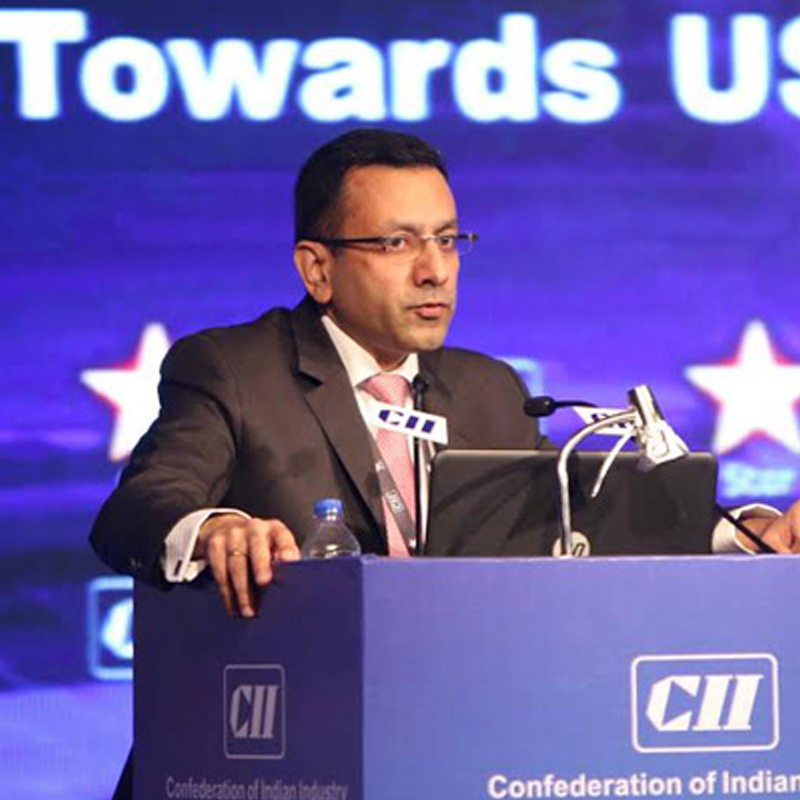
    MUMBAI: Star India MD Sanjay Gupta is a veteran of many high-stake battles. The one he’s currently involved in could be long drawn, unpredictable, unlike anything he’s encountered before and potentially his toughest in a while. However, as India’s broadcast bosses put their heads down to implement TRAI’s new tariff regime, Gupta and Star seem to be first off the blocks. Over the weekend, the network unleashed a nation-wide, multi-media and multi-starrer campaign to educate the consumers across about the radical changes.

    While Star fought the TRAI order tooth and nail in India’s top court, Gupta and team deserve full marks for the sheer scale and speed at which they seem to have got things moving after an unfavourable ruling on 30 October. Gupta says his team at Star is ‘excited’ and sees the new tariff regime as an ‘opportunity’. More power in the hands of the consumer and transparency in the value are the two major highlights as India’s broadcast sector undergoes a facelift, he feels.

    That’s not all. Gupta also articulated his views on Star India’s strategy, channel pricing, disruption in the value chain, the SLP filed by the TRAI in the SC, its implications and more as he fielded wide-ranging questions on a balmy Monday morning on the 37thfloor of Star House.

    On the tariff order’s impact

    The biggest change the tariff order is making is bringing transparency into the whole system of how content gets created to how content gets bought. The biggest change you’re going to see is the transparency, which is existent in almost every industry. It is the biggest shift this industry could have asked for and is great value from a consumer point of view. 

    On preparedness of the system 

    I think people will learn. Over the next two-four weeks, it’ll be an intense learning experience. The good thing in this country is people learn very well quickly. The biggest change in this tariff order is the transparency and power to the consumer.

    On Star India’s strategy

    Our strategy has been in delivering great value to consumers. You know that we invest in making marquee content. Be it our channels in drama, movie, sports, National Geographic or any other content that we deal with. And the question that we ask ourselves is how do we ensure that we provide great value to our consumer through our pricing. We offer content in every geography – be the drama we create with Star Plus and Star Bharat in Hindi, Asianet in Malayalam, Star Vijay in Tamil, we add movies to it in each of the markets, National Geographic – which has some of the best infotainment content to consumers – and on top of it sports. What we are trying to do is make the price affordable to ensure that every consumer has access to this content. Not only do they have power but it is power at a great value from a Star bouquet point of view.

    On channel pricing

    The reason we started the communication early, at Star and IBF, is to let the consumers know that a change is happening. I think it requires a lot of education and communication for people to talk to. To my mind, it’s critical and important. And we wanted to begin early, as early as practically possible. Our price is not led by sports but it is also regionally decided. So, we have a different price in Tamil Nadu as compared to Bengal. Depending on what we think is the strength of our bouquet and the quality of content we are offering. So there is differential pricing like in any business that you decide it regionally and locally. We have a strong channel in Asianet, we have a much weaker channel in Vijay. So we are trying to ensure that consumers get dramatic value in each geography.

    For content with mass requirement, we have tried to make it as cheap as possible within the constraints of the investment we make in each of the businesses.

    On weaker channels

    As I said, the real big change is the power to consumers. They have a choice to decide. Less performing channels cannot come to consumers if they don’t like it. The business will be forced to perform better and better to meet consumer expectations.

    On viewership and ad revenue

    If the channels are powerful and the consumers want you, they will take that option. I think the real question is – Are the channels and content powerful enough? Great content will get viewership. It will force everyone to up their game in terms of the kind of content they offer.

    On TRAI’s SLP in SC

    It is up to the court to decide that. I think now as an SLP is in SC, whenever it gets picked up, the courts will decide. I don’t have a view beyond that. But at this moment, the current ruling is that there is no discount cap. It may change going forward depending on the SC ruling.

    In case the court has a new ruling that discounts have changed, pricing needs to change, both a-la-carte and bouquet pricing in that case, because the distance between them has to be only 15 per cent. I think we are still awaiting the court’s decision and if we need to adapt to it, then we’ll adapt to it. But there will be a shift again in pricing if that comes through.

    On whether distribution chain is ready

    I think we will know closer to time. It is possible that they are all not ready at one time and at that point in time TRAI will have to take a view whether they’ll give more time for people to transit. For now, 29 December is the deadline and we are following the TRAI deadline fully in our intent, in our communication and our effort on ground. In the last few months, we have invested aggressively both in putting together our communication, putting up our pricing on the website, training our teams internally because this is such a massive change. All our internal teams need to get prepared too because this has never been done before. It requires a complete re-understanding within the organisation and briefing our partners.

    On potential change in pricing

    Pricing once defined will remain the same. This is the pricing we have published. People can change their pricing but once consumers pick it up, it applies for the next one year. You can’t change it then. This will also bring about discipline in the industry.

    On the impact on advertisers

    I don’t have a firsthand view on it. But I think this will mean some challenges in implementation. A massive shift of this kind brings out a bit of chaos in the beginning. But I think when I look back – when we went from analogue to digital there were similar concerns, and personally, I carry that worry more than anyone else. But if you look back, it happened more smoothly than what all of us anticipated. Given the enterprise of our partners and consumers, we find solutions to difficult problems quickly. So I think this transition will be a little chaotic but hopefully, it will settle down in a few weeks.

    On disruption in distribution chain

    Consumers are used to buying everything else on MRP and choosing. So, they are used to it across business and categories. It is a big shift for people who deliver content to them, i.e., all of us and distributors – both DTH and cable. I think I personally feel all of them have been working hard over the last few months to prepare.

    On readiness of DPOs

    I think DTH is ready in any case because they do this for a living. DTH covers around 60 million homes. They are fully ready. I think cable is ready from a technology point of view. I think from a people point of view they are getting ready. They have been working hard to get ready. I do hope that given the value this is going to unleash, given the power to consumer this is going to provide, our consumers will really come forward and adopt it and force the transition to happen quickly and smoothly.

    On nature of agreements with DPOs

    Now the nature of agreements is simple – there is no long term agreement. You offer your RIO, which is offered by all content owners on the website. People can download and sign it. Basis the number of consumers that you get every month and the price that you set, you get paid. So it’s a fully transparent way of working for everyone. There is nothing like a long-term agreement anymore.

    On how content will be offered to consumers 

    I think DPOs will decide that. But we are offering to every DPO a-la-carte content and bouquet content both. It’s the same price to DTH and cable. It’s a transparent price to all. They can now choose to make their own bouquets by using a-la-carte channels or they can combine bouquets of different broadcasters. I think that’s the strategy each distributor will define on its own. The interesting thing will be from a consumer point of view, you’ll know everything – what’s the a-la-carte price for a channel, what’s the DPO bouquet and what’s the content bouquet. This kind of transparency has never existed in content business ever before.

    On impact on content offering

    Low performing channels will be under pressure. It will put pressure on content to be better and better. Hence, everybody will have to invest in quality to ensure your channels become better. Content has to work well.

    On consumer awareness

    We have launched a big campaign across eight languages. We are doing a big digital push led by Hotstar and digital assets outside. We are trying to make a very simple communication, at both IBF and Star, to simply explain to consumers what is the change. I’m sure all DPOs and channels are investing equally. The amount of communication consumers will see on this front will be quite significant. So I think communication will be a big draw for both the distribution industry and the content industry in the next few weeks.

    On the relationship between broadcasters and distributors

    One big change that is happening is (and that is the power of the TRAI ruling) that pricing is the same for all distribution partners. There is no difference. It’s equitable and it’s transparent, which means more trust. I think this should help drive a much better and a deeper partnership with the distributors.

    On measuring viewership

    As consumers shift, each of them won’t behave the same way. Each distributor won’t behave the same way. Some of the challenges on measurement would be the sampling, which is an important backbone of any measurement, might go for a toss. Because there are 180 million homes measured through 40 thousand boxes. So if there is chaos in 10 thousand boxes, the ratings may not reflect. Hence the IBF made a request (to not release viewership data for two months) to BARC. Now the BARC board has to decide what the next step should be.

  • TRAI notifies draft DAS tariff & interconnect rules

    TRAI notifies draft DAS tariff & interconnect rules

    NEW DELHI: The Telecom Regulatory Authority of India (TRAI) has made life a little simpler for MSOs. Last weekend (20 September 2013) it notified the amendments to interconnection regulations applicable for Digital Addressable Systems (DAS) and also to the tariff order for DAS the drafts of which it had released for industry consultation on 4 June 2013. 

    It has some further changes following industry feedback. Amongst these include: 

    * The removal of the minimum channel carrying capacity of 500 channels for MSOs.

    * It has clarified that subscribers can either opt for channels on a-la-carte basis or bouquet or combination of both, as per their choice. 

    * It has disallowed MSOs from seeking a channel from a broadcaster while at the same time seeking carriage fees from it. 

    * It has forbidden MSOs from charging placement fees. 

     The amendments in the Telecommunications (Broadcasting and Cable) Services (Fourth) (Addressable) Systems) Tariff (Second Amendment) Order 2013 modify the ‘twin conditions‘ that regulate the a-la-carte rate of channels vis-a-vis the bouquet rates at retail level protecting subscribers’ interests. It also clarifies the position that subscribers can either opt for channels on a-la-carte basis or a bouquet or a combination of both, as per their choice. 

    Considering the fact that the operators would be required to make appropriate changes, both in pricing and packaging, the Authority has decided to make the ‘twin conditions’, prescribed through this tariff order mandatory with effect from 1 January 2014. However, during the period from the notification of this tariff order till 31 December 2013, operators would be required to offer channels, complying to either of the two conditions, specified in the ‘twin conditions’. 

    The operators are, however, free to make their offering, complying to the ‘twin conditions’, if they wish to do so before 1 January 2014. 

    Further, in case a channel forms part of more than one bouquet then the above conditions will have to be satisfied for all such bouquets. Further, if the operator offers discounts to its subscribers on bouquet rates, the above said ‘twin conditions’ should also be satisfied with such discounted bouquet rates. 

    Therefore, the Authority felt it appropriate to extend the a-la-carte provisioning of channels to cover both the FTA and pay channels carried over the network of an operator.

    Accordingly, vide the tariff amendment order dated 30 April 2012, it was mandated that every operator providing services to its subscribers using an addressable system shall offer or cause to offer all channels, whether pay or FTA, offered by it to its subscribers on a-la-carte basis. In sync with this provision, the word “pay” has been deleted from the heading of clause 6 and also from the clause 6(2) of the principle Tariff order dated 27 July 2010. With the removal of word ‘pay’, an operator can specify a minimum commitment period, not exceeding three months for both ‘pay’ and ‘FTA” channels, subscribed on a-la-carte basis. 

    The TRAI has noted that “it has been observed that, some of the DTH service providers have been imposing pre-condition for subscribing to a particular bouquet before add-on-bouquets and/or a-la-carte channel(s) can be subscribed. The Authority is of the view that such conditions are unreasonable and the consumer should be free to choose any combination of the channel(s) or bouquet(s) offered by the operator. In the tariff amendment order dated 30 April 2012, a provision was made which allowed the DAS subscriber to subscribe to basic service tier or basic service tier and one or more pay channel or only free to air channels or only pay channels or pay channels and free to air channels at his option i.e. consumer is free to choose any combination of the channel(s) or bouquet(s) offered by the operator. 

    Accordingly, sub-clause (4) of clause 6, applicable for addressable platforms other than DAS, has been suitably amended and a proviso has been added to bring in parity amongst various addressable platforms as well as to ensure that consumers of these platforms are on equal footing. 

    The Interconnection Regulation applicable for DAS has the following safeguards with regard to charging of carriage fee: carriage fee to be transparently declared in the RIO of the MSO; the carriage fee is to be uniformly charged; the carriage fee not to be revised upwardly for a minimum period of 2 years, and the details of the carriage fee are to be filed with the Authority and the Authority has a right to intervene in cases it deems fit. 

    The Authority has decided that the phrase “having the prescribed channel capacity” appearing in sub-regulation 3(2) of the Telecommunication (Broadcasting and Cable Services) Interconnection (Digital Addressable Cable Systems) Regulations 2013  should be deleted as the same will have no relevance with the deletion of the minimum channel carrying capacity criteria from the regulations.

    For the time being, the Authority has decided not to specify the capacity to carry a minimum number of channels by the MSOs, on the expectation that market dynamics will take care of the emerging situation. However, in the event the Authority notices that the market dynamics are not allowed to function freely by the service providers, resulting in creation of an artificial capacity constraint, it will intervene appropriately. 

    Analysing the issue of placement fee, TRAI has noted that the DAS technology provides for an Electronic Programme Guide wherein the channels being carried on an MSO’s network can be arranged in a simple, easy to understand, manner so that the subscriber can easily go through this guide and select the channel of his choice instead of flipping through all the channels.

    The genre-wise display of channels in the EPG, where all the channels of a particular genre are listed under relevant genre, has been mandated through regulations. Moreover, in digital systems, signal quality of the channels is independent of the placement of the channel. 

    Further, the Interconnection Regulation already has a provision (sub-regulation 3 (11)) that if an MSO, before providing access to its network, insists on placement of the channel in a particular slot or bouquet, such precondition amounts to imposition of unreasonable terms. Thus, adequate provisions already exist in the regulations. Accordingly, sub-regulation 11A of regulation 3 of the interconnection regulation has been deleted. 

    The amendments follow a judgment of the Telecom Disputes Settlement and Arbitration Tribunal and a consequent fresh consultation paper by TRAI and reactions on it from stakeholders. 


  • One more feather in Star’s English GEC cap

    One more feather in Star’s English GEC cap

    MUMBAI: Not content with having a clutch of channels firmly ensconced in the English entertainment space, Star India is gearing up to add one more English GEC to its existing bouquet.

    Titled STAR World Premiere HD, the channel will debut on the Star network on 24 September. It will cater to a super premium audience aka global Indians by airing the biggest US shows from the biggest studios like FOX Studios, Warner, Disney and Sony in a cluster of 26 episodes.

    Speaking about its TG, STAR India business head Kevin Vaz said: “We thought there is a certain super premium kind of audience, which is very up-to-date with global trends. And I would like to call it more as global Indian.”
    We want to eliminate the concept of a release gap between US and India says confident Kevin Vaz

    “They know the space in terms of luxury goods, technology, entertainment needs etc. When it comes to television, many channels have a longer gap from the US release. So how do we satisfy this audience? We thought this would be a good opportunity to give them entertainment on a daily basis.”

    Spelling out who constitutes its TG, Vaz said: “It is the most premium audience in India, comprising the one per cent of top SEC, A+ and between the age group of 20 to 35.”

    With Star reaching out to 67 per cent of the total English audience, STAR World Premiere HD will air four hours of original content every day,Monday to Friday. Saturday and Sunday will see a lot of catch-ups with the channel planning to air drama and comedy-based shows, respectively.

    The newbie’s proposition reads: ‘Watch with the World’ for it will air shows on television that are playing in the US at the same time and will play in India within the same week. “We want to eliminate the concept of a release gap between US and India,” Vaz pointed out.

    So, shows including Agents of S.H.I.E.L.D, The Blacklist, Betrayal, Dads, The Goldbergs, The Michael J. Fox Show, Mom and Sleepy Hollow will be telecast on television for the first time both in the US and in India. While audiences here will get to see the latest seasons of shows such as The Simpsons (S25), New Girl (S3), Revolution (S2) , Two & A Half Men (S11), White Collar (S5), Sons of Anarchy (S6), Revenge (S3), Person of Interest (S3), New Girl (S3), The Neighbors (S2), Last Man Standing (S3), Modern Family (S5), Homeland (S3), It’s Always Sunny in Philadelphia (S9), Castle (S6) and Criminal Minds (S9).

    The network will aggressively promote the new channel through digital and on-air. For starters, the Facebook page boasts 1,221 likes and is being kept up-to-speed with pictures, videos, polls and all the hot goss, even sharing links with official pages of the various shows aired on the channel. So also the official twitter handle of the channel @SWPremiere was abuzz with nearly 188 tweets from over 521 followers at the time of penning this article. It also has the hash tag #WatchWithTheWorld.

    Its main website http://premiere.starworld.in/ is also decked up with pictures of the biggest shows.

    But will the network tie-up with other network channels as well? “At the end of the day, through our star network channels, we will reach out to most of our audiences. I don’t think we need to go outside the kind of network that Star network has,” said a confident Vaz

    On the other hand, planners feel that the channel is not going to be a typical advertising model. Agreeing on this, Helios Media managing director Divya Radhakrishnan states: “In today’s time, people download all the latest shows on the internet and then watch it, because they are not able to watch seasons parallel happening in the US. So it is a good move by the network, which is trying to attribute this small bunch of audiences who are doing that.”

    Radhakrishnan feels that the advertising GRPs will be very small for the newbie. She says: “The network is trying to address those audiences and people who download from net and will be open to subscription model. They will go more for the subscription model revenue driven rather than advertising one. The way they are advertising is watch it along with the America. So whatever shows is getting premiered in America, you don’t have to wait for it to come to India and you don’t have to download it from the net and they will air it. So that is their USP.”

    This is the fourth English GEC from the STAR Network stable after STAR World, FOX Crime and FX.

  • Dish TV adds Star India’s five HD channels to its bouquet

    Dish TV adds Star India’s five HD channels to its bouquet

    MUMBAI: Dish TV Monday said it has added five new HD channels from Star India bouquet comprising Star Plus HD, Star Gold HD, Star World HD, Star Movies HD, and Life OK HD effective 8 April.

    Star bouquet of HD channels will be included and made available in all existing HD packages starting from Rs. 399. With this addition Dish TV now boasts of 25 HD channels and 17 HD services.

    Speaking on the occasion, Dish TV COO Salil Kapoor said, “We are excited to add the most anticipated Star channels bouquet in HD and give our customers a viewing experience that is incredibly lifelike. We recognise that our customers have already been enjoying many of their favorite programmes in HD, and I‘m delighted that we can now broaden their choice with maximum 25 HD channels and 17 HD services.”