Tag: Boston Consulting Group

  • Sony Pictures Networks India brings in BCG to slash costs

    Sony Pictures Networks India brings in BCG to slash costs

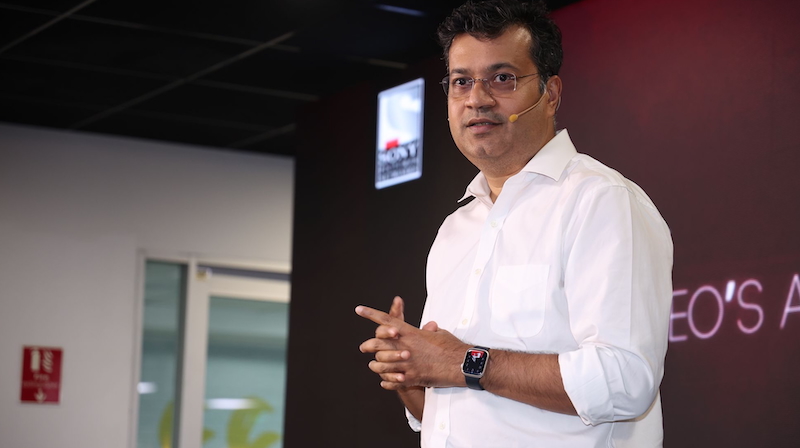
    MUMBAI: Sony Pictures Networks India (SPNI) has hired Boston Consulting Group to conduct a comprehensive audit of its operations, according to media reports. The review, ordered by new chief executive Gaurav Banerjee (GB to his associates), aims to cut costs and boost efficiency across the broadcaster’s television and digital arms.

    GB, who took the helm in 2024 after the departure of long-serving chief N.P. Singh, is driving the strategic overhaul as India’s broadcast sector grapples with spiralling content costs, fierce competition from digital rivals, regulatory interference and volatile advertising revenues.

    The audit will scrutinise both SPNI’s 28 television channels and SonyLiv, its streaming platform, hunting for redundancies and wasteful spending on programming, marketing and content rights. BCG has been tasked with creating “a roadmap for sharper efficiency”, a senior executive told media outlets.

    The consultancy’s mandate spans linear television and digital operations, with particular focus on aligning content investments with revenue reality. The exercise seeks to eliminate structural inefficiencies and streamline overlapping processes without disrupting core operations.

    Industry analysts say GB’s decision to deploy BCG signals a new era of financial discipline. The timing is critical. SPNI reported revenues of Rs 651.1bn and net profit of Rs 84bn in the financial year ending March 2024. Subscription income reached Rs 320.6bn whilst advertising contributed Rs 282.5bn. Yet content costs are climbing faster than revenue growth, forcing a fundamental reassessment of the business model.

    “The era of unchecked spending is over,” said an industry veteran. “This audit is about building a leaner, sharper SPNI that can weather current pressures and thrive in the next phase of media growth.”

    The BCG review carries symbolic weight beyond operational fixes. For employees, partners and investors, it signals that GB intends to apply rigorous financial scrutiny to SPNI’s expansion plans. For rivals, it demonstrates that whilst SPNI will compete aggressively, it will avoid ruinous spending wars.

  • Vidnet 2024: The new content tangle

    Vidnet 2024: The new content tangle

    Mumbai: The OTT business in India is buzzing with new streamers, niche, and language offerings. However, early players are struggling as heavy content spending isn’t matching revenues, and India-specific low pricing hasn’t spurred subscriptions. Growth has plateaued as consumers return to post-COVID normalcy, preferring to binge occasionally.

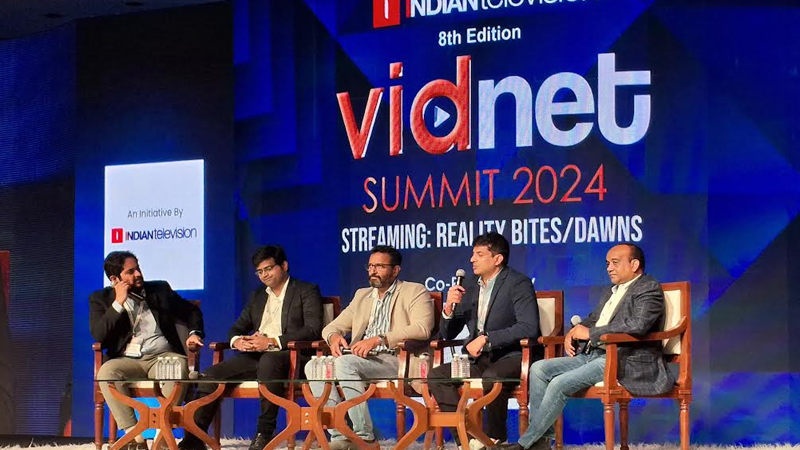
    Adding to the churn is the shift towards AVOD by giants like JioCinema, offering premium events like cricket for free, with Disney+Hotstar following suit. This has strained streaming bottom lines. The rise of FAST channels is also causing industry jitters. Vidnet explores the future of the streaming ecosystem.  The Vidnet 2024 is being held on 19 July 2024, at Hotel Sahara Star, Mumbai.

    This panel explored the evolving content landscape with constant changes in production and distribution. The new 30-plus episode format on OTT shows (TV++) is seen as a game changer, while premium originals (6-10 episodes) remain popular among urban audiences. Increasing platforms and aggregators are expanding content reach and footprint. Audio content is also making significant strides. How can these strategies be assimilated to create an effective content platform?

    The session was chaired by Boston Consulting Group managing director & partner Akshay Kohli. It included the following panelists: Shemaroo Entertainment COO-digital, Saurav Srivastava, MMTV head of digital & OTT Sathyajith Nair, Klassroom CEO Dhruv Javeri and Chana JOR, V Hunt Digital Media director & CEO Pratap Jain.

    Emphasising the dual nature of content in the global digital landscape, Saurabh Srivastava said, “Good content can be language agnostic and appeal globally, but it also has a soul tied to local culture and nuances. Both will coexist, with some stories resonating universally and others deeply rooted in specific cultural and linguistic contexts.”

    Sathyajith Nair underscored the importance of genuine content that connects with audiences on a personal level and said: “Content should be genuine, focusing on its trueness rather than catering to a specific audience. Our strategy ensures that shows reach a Pan India audience by targeting promotions to individual tastes, as evidenced by a recent show reaching 98 per cent of PIN codes in India.”

    By staying true to the essence of the content, creators can achieve widespread reach and resonance across diverse regions.

    Talking about educational content, Dhruv Javeri shed light on the distinct approach required for academic and extracurricular content. Javeri said, “In education, content creation starts differently. We have two types: academic content, defined by board standards, and extracurricular content. For academics, we write stories from the provided content and visualize them. The focus is on innovative pedagogies to enhance learning, aligned with the new education framework.”

    Highlighting the strategy of creating exclusive content to captivate and retain users, Pratap Jain said, “Creating exclusive content is key to engaging and retaining users, as opposed to relying on content available on multiple platforms. By casting new talents and producing fresh, simple content, we stand out in the market, similar to the appeal of popular YouTube videos.”

  • IBS: Tapping into the D2C Opportunity

    IBS: Tapping into the D2C Opportunity

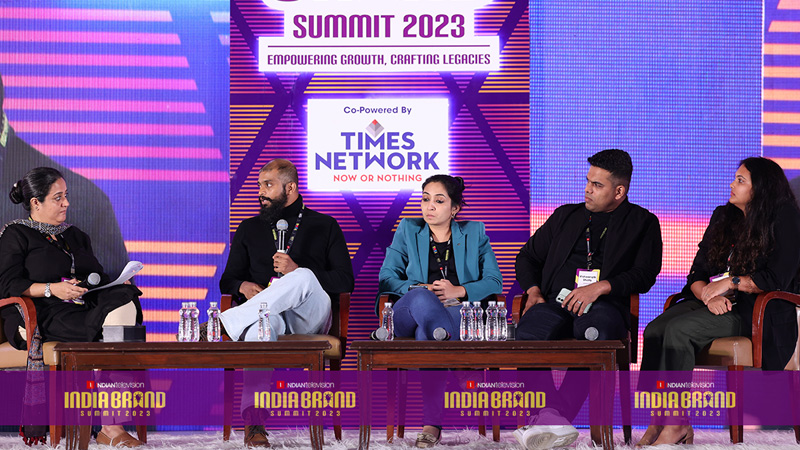
    Mumbai: The India Brand Summit held on 28 November 2023 at The Lalit Mumbai, convened leaders, marketers, entrepreneurs, and experts to explore current trends, challenges, and opportunities in the dynamic brands and marketing arena.

    The session delved into: Is D2C the correct way for businesses? How bright is the future? The session offers an in-depth exploration of the brands choosing the way of D2C and how that decision has impacted the success journey and contributed to their successful brand building.

    The key highlights of this session were: Brands are turning to D2C for rapid revenue growth and enhanced customer loyalty. This shift, crucial in price-sensitive markets like India, overcomes distribution challenges. D2C not only bridges gaps but also utilizes data for personalized user journeys, ensuring quicker and more efficient consumer connections.

    The panel was moderated by Boston Consulting Group partner and associate director Jyoti Narula Ranjan and had panelists including

    Candere By Kalyan Jewellers head of marketing, brand experience & data Akshay Matkar, NIVEA India digital precision marketing manager Tanvi Amladi, Pocket Aces business head Vishwanath Shetty, Kaya VP & head of marketing Samyukta Ganesh Iyer.

    The session began with Ranjan asking, “How do you as a brand, map the consumer journeys in this omni-channel D2C world? There is an aspect of marketing to these users in this digital world and there is a method of mapping the consumer journeys.”

    Amladi answered, “ I think one for us was to really acknowledge that today consumer journeys are not linear. So we know consumers are exposed to so many different touchpoints, especially in a category like skincare. I think the first step for us when we talked about customer journey was to really acknowledge that fact and say then therefore What are these different ways in which I can reach my consumer? The second thing was actually understanding the consumer and therefore just making sense of who she is because we knew weren’t talking to someone who is just 18 to 22. That is someone who is just displaying a certain specific life she would within that she’s doing so many different things. She comes in with different, she’s at different stages in her skincare journey. So speaking, again specifically to the category that we play in, it was very important for us to even understand what is her category entry point. When she gets into skin care. Someone’s getting into it, at the age of 18, by the time she’s 22, she’s already super evolved in her journey. Someone is getting introduced to it only at the age of 25, maybe when she’s a little bit into her career. So, for us just understanding all these little nuances around how the consumer comes into the category and how kind of she plays around with it, in different in different ways. That was the starting point and that’s always been kind of the anchor around which we build a lot of what we do at NIVEA.

    Commenting on the same, Ranjan said, “I think one thing which is probably coming out stronger is how over the long term period there were a lot of micro-moments that you’re probably capturing in how these consumers are entering the purchase journey or just the brand interaction journey.”

    She then asked Matkar, “It would be very interesting to see how really as a brand to thrive in an environment where consumers are doing this omni channel touch point. How do the marketing teams really thrive using agile methodologies, both on preparing the back end, and getting the right touchpoints in place? How do you make that happen at the backend because one is knowing the consumer, but then how do you capture that touchpoint in a digital-first world?”

    Matker replied, “I’ll break it into two parts. Part A is, how you look at the consumer area. So in our case, since we have an online store and also offline store. We look at it in four parts. Part A is, that the user has discovered the product online and purchased it offline. Part B is, consumers have discovered the product online and purchase is also happening online. Third and fourth is user has discovered the product offline and purchased it offline and the user has discovered the product offline and made the purchase online. So these are the four different types of consumer journeys that we look at. Hence our entire marketing spends, the teams, the way we operate, it shifted. We started our offline reading journey in 2022. Prior to that, it was completely online. What we do is, we have something created called our entire data warehouse, and we have something called a CDP like many brands do. The main problem in the digital space is that it’s not about collecting the data, it’s about how accurately your data you’re collecting and what are the data losses that are happening. So because we have multiple systems, we have CRM, we have a communication platform, we have personalisation tools, we have recommendation tool and then so many data points that we need to collect, we need to process and then we need to look at different data and based on that how do we actually split the entire marketing spends. So looking this journey into four halfs has helped us to make informed decision on which channel we need to invest more. Though, I think we can see that, our data pointers like 70 per cent of the consumers are discovering the product online. So though our CPA on the retail side would be lower, but our investments should be on the higher side on the digital space.”

    Thereafter bringing Iyer into the conversation next, Ranjan asked, “How did you help these (Baskin Robbins & Kaya) brands find out the value proposition to the right consumer set mapping? And how did you really use digital media to drive this omnichannel existence for the brand?”

    Iyer said, “One big thing I think we were discussing just before the panel right now in terms of saying that, today every brand, small, big otherwise needs to have a very strong presence both online and offline. So it’s no longer about whether I’m a D2C brand, or whether I have an offline brand. Everyone’s omnichannel today. Brands that were born on D2C have now started opening up stores offline in order to give consumers the experience that they’ve been craving because they don’t get that online. And vice versa, the convenience, the comfort of calling for things online is why even the large brands who registered for the longest time today are all there. A great case study would be what happened with CPR in, when we actually did one of the first collabs, that we drove with Swiggy where we actually did a 50/50 partnership in terms of making the ads, making all of the media buys including Hotstar Integration. For the very first time, two brands, one aggregator brand and one brand actually came together and it hit the nail on many boxes because one, a brand like Baskin-Robbins, which had been there in the Indian market for 26 years at that point in time, globally for 75 years, suddenly became relevant to millennials who had kind of played back to us saying ‘it’s my childhood friend, it’s a brand that I grew up having as a kid with my parents. After dinner, we would go for a walk, go to the nearest Baskin-Robbins parlor, and pick from their 31 flavours. But today it was not the brand of choice for millennials so there was a definite issue there. For Swiggy, they wanted a premium ice cream brand on their platform. So it kind of hit the nail on many, many boxes there. Second, it had also become irrelevant to the male audiences, perhaps because of the color pink it had become little alienating to the audience, that ice cream as a category is fairly gender agnostic otherwise. Third, there was also a problem of the brand not being easily available because ice cream, as a category, was not something that people were calling for online. So going live on IPL being there from, the first match to the last match, we did this fantastic innovation with Hotstar as well where you could just call for the ice cream while the gamification was happening. It has changed the landscape because suddenly the brand became relevant. The brand had fresh fruit ice cream flavors like Naturals and Ibaco and it also helped everybody. As I was saying it was a much larger connect because suddenly during the lockdown the brand was available and that would have never happened. I mean we could have never forced on. So I think why D2C matters, it kind of answers the question of the topic today, the brand is then available. Any brand of your choice is then available at your fingertips.”

    Thereafter Ranjan asked Shetty, “What is the mantra for getting content right on social marketing and how do you advise brands to leverage content social media influencer marketing for building brands having that direct connect?”

    Shetty replied, ”I feel knowing your customer is very important. Where is the customer? Are they on Instagram or are they on Facebook or on LinkedIn, That’s also really, really important. So content is a huge bucket where you can bifurcate its basis where your audience is. Interestingly, when the influencer wave started post-COVID. I think there was good traction initially. I remember basically when we started Skinsi which was direct competition to Kaya then and we largely were D2C, so we provided clinical services at home. So for us, I still remember we did drop challenge which was one of the first campaigns that I did for Skinsi back then and this was I think Woman’s Day. So there was a clear trend that we saw, globally whatever works on TikTok on Insta, in a week’s time it is to travel to India. So you always want to make your UGC content a success and everyone starts digging into what should we do. While it was very simple for what we saw, we executed in 10 days and we spent barely around 10-12 lacs. Interestingly, we didn’t get a lot of leads in such, but the consideration and the conversion doubled our business. So, I think influencer marketing is not just a big mark in a box, but you need to be very, very sure what will work for your brand and how your audience will take it and if you make it a very inclusive community campaign, budget doesn’t matter. It will work for your brand. So that’s influencer marketing and working and you don’t have to spend crores, but you can still leverage it using international trends or global trends. Indianise it, take one or two good influencer and make a UGC content, do a tactical campaign, and kick-off. So that’s how influencer marketing has really helped especially for a skincare category. So I think that’s a great example. But now what has happened is a lot of these influencers also don’t want to be called influencers, they want to be called creators. So if you go back to the influencers, tell them, ‘You know what here is a reel, a post, do one story, one reel’, they’ll charge you a bomb but instead if an Instagram influencer wants to do a podcast series on Spotify and as a brand you help him to do that, he will come at 1/3 the cost and he will do value ads like no one’s business. So when you start connecting with the creator, help him in his journey, is when the brand grows and then the creator will be happy to push extra stuff from his side.”

  • Second Covid wave weakens consumer sentiments, anxiety at an all-time high

    Mumbai: Consumer anxiety is at its highest level since the coronavirus outbreak hit India last year, shows the latest round of consumer sentiment survey conducted by Boston Consulting Group (BCG).

    The second wave of covid-19, which saw a huge spike in the country’s caseload and casualties numbers, has further weakened consumer sentiment as households cut their expenditure, says the report. At least 58 per cent of consumers think their income in the next six months will be lower than pre-COVID levels, as against 44 per cent in July last year. Similarly, the sentiment about spending has been impacted, with 51 per cent of consumers expecting their spending over the next six months to be lower, as compared to 40 per cent in July 2020.

    According to the survey, this fall in sentiment is steepest among the less affluent income groups or those with annual household income less than Rs five lakh. The study carried out between 23 May and 28 May covers 4000 consumers across all socio-economic groups in urban and rural India and is the sixth conducted by the group during the pandemic, since March last year.  

    Unlike last year, sentiments were impacted more uniformly across large towns, small towns, and rural areas in 2021 with 55-60 per cent of consumers across all feeling that the worst of the coronavirus is still ahead, BCG said in its report.

    Even amongst those in the Rs 10 lakh and above annual income bracket — termed as “affluent” households by the survey — expect their incomes to shrink in the next six months.

    The survey demonstrates uncertainty for more discretionary categories such as apparel, personal care, cosmetics, travel, and out-of-home entertainment in particular. “Travel, out of home entertainment continues to show negative sentiment with expected cutbacks reaching all-time highs,” as per the survey’s findings.

    The report sheds light on consumer anxiety, which is at its ‘highest levels’ since the pandemic hit India, with concerns around economic outlook, health, and lifestyle being accentuated.

    An overwhelming 86 per cent of those surveyed cited concerns over an economic recession due to the pandemic. Over 80 per cent reported feeling some sense of uncertainty toward their jobs and income—the highest ever recorded by the consulting firm.

    However, the forecast is not all bleak- there are certain positive themes too. Some categories like essentials, health, in-home entertainment, etc continued to show a stable, positive sentiment.

    “There is an impending sense of uncertainty however we have observed certain positive messages too. The spending sentiment has not been impacted similarly across categories. Essentials, health, in-home entertainment continue to be winners. Some of the discretionary categories, however, have been negatively impacted.” said BCG India MD & partner Nimisha Jain.

    There were also indicators that the shape of the new normal for consumer behaviour is beginning to emerge, now that we have been in the crisis for over a year.

    “Many of the newly adopted behaviours ranging from social commerce, online shopping, digital content/ payments – have continued to stick, even when the lockdowns were no longer in place. However, others like ‘do it yourself’ regimes, online doctor consultations have shown high sensitivity to the pandemic situation.” said BCG India Centre for Customer Insight lead Kanika Sanghi.

    A positive trend has also emerged, which shows a significant increase in the willingness to take vaccines after the lethal second Covid wave – especially in small towns and rural areas, which had shown high levels of hesitancy/ indifference earlier. At least 78 per cent of the eligible consumers in large towns said that they were very willing to take the vaccine now – compared to 62 per cent earlier. For rural, it stands at 63 per cent now as compared to 41 per cent earlier.

    BCG’s COVID-19 consumer sentiment research is based on a global survey that currently covered both developed and emerging markets. It is fielded in waves to provide a longitudinal view of consumer sentiments about the coronavirus pandemic, and changes in consumer consumption behaviour.

  • Viewing on TV, digital doesn’t have to be either-or question

    Viewing on TV, digital doesn’t have to be either-or question

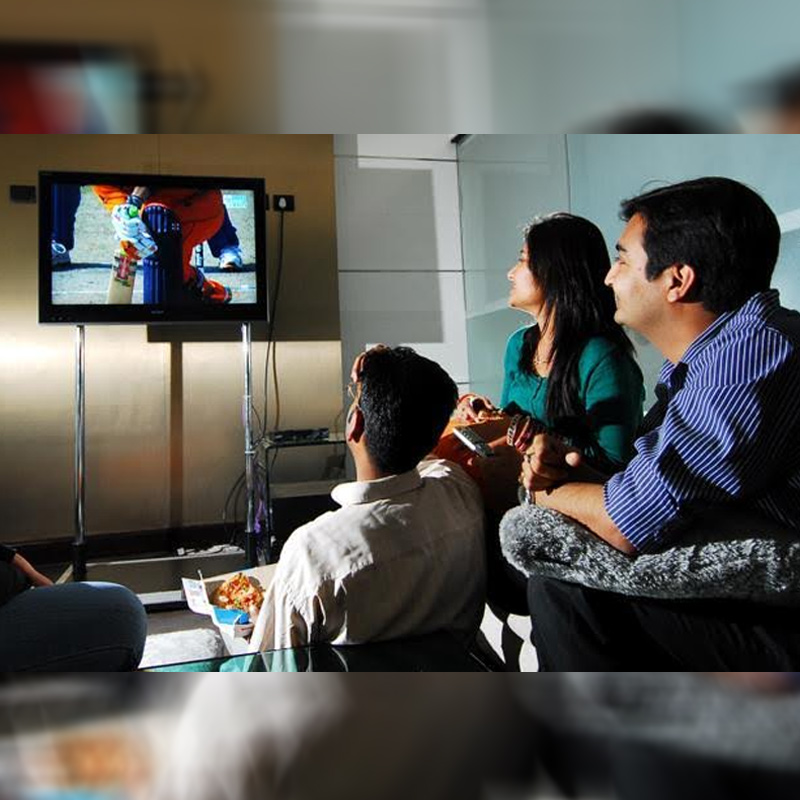
    MUMBAI: For decades, television has been the platform that’s commanded the attention of the maximum number of people in India. However, thanks to cheap mobile data costs and smartphones, there has been a surge in digital video consumption, and audiences are fast changing the way they view content.

    With viewers starting to divide their content consumption across TV and digital, it now makes sense for broadcasters to also spread their budgets across both mediums to reach more audiences.

    To address this change, the Confederation of Indian Industry (CII) has organised the Big Picture Summit 2020, where it deliberated upon India’s multi-screen obsession and what it means for content owners. The panel comprised Shemaroo Entertainment COO Kranti Gada, ministry of information and broadcasting additional secretary (broadcasting) & CVO Neerja Sekhar, ABP news CEO Avinash Pandey, Discovery India MD Megha Tata, and Boston Consulting Group MD & partner Vikash Jain.

    Of late, and especially with the onset of Covid2019, broadcasters are pushing the digital agenda, realigning their content strategies, business models to cater to consumers’ interests; some fear this may be to the detriment of their traditional business, noted Gada. However, Tata, who has spent more than three decades in the media and entertainment industry, pointed out how every time a new platform emerges, talking heads pronounce the death of the previous one. Contrary to this perception, all mediums have stayed strong and grown – whether its print, radio, cinema, television, and now digital.

    “We don’t have to be an either-or world all the platforms can co-exist. It is absolutely not an easy decision to make but yes we need to think about where we are putting our money. These are very difficult questions where there is no rule book. Our approach is that both need to survive,” said Tata.

    She highlighted that unlike the west, where the death knell has been sounded on linear television, India has actually beaten the trend. This requires a fine balancing act on the part of broadcasters. Both the mediums are important – one is the business of today and the other is the business of tomorrow.

    “During pandemic, there has been a huge growth in television consumption but at the same time OTT growth has been stupendous. We launched Discovery+ in the middle of the lockdown. The question is how do you balance this act. You have to protect our linear business that is funding your digital business because there is still time for digital business to reach profitability and monetisation status and TV has to play a key role in that,” she explained.

    There’s no denying that streaming platforms have emerged as a major challenge to linear television, but the latter is a Rs 79,000 crore industry that has stood the test of time and is still going strong, claimed Sekhar. “We are seeing the convergence in infrastructure where wired broadband and wireless distribution are much in demand and both are giving better choices to consumers. We are seeing one content on different platforms with multiple screen options.”

    She went on to say that the pandemic threw up major changes in viewership pattern, where family viewership has taken over. But one factor that has remained consistent is content. There has been a huge uptick in demand for entertainment, followed by localised or regional content. She also shared that during the lockdown, OTT content was watched double that of linear programming. But linear television remains primary as far as the consumer is concerned. “With the number of OTT players rising we don’t know how self-sustaining OTT platforms are going to be. Market will change, technology will change but content will be of utmost importance.”

    The question that arises in a multiscreen world is how the business model changes. Television was largely advertising-driven whereas in digital, larger multinational companies take away 60 to 70 percent of the ad pie and then broadcasters grapple with what is remaining. There are other players also who are looking at the same ad pie. It is quite a challenging situation for broadcasters.

    Pandey explained that the whole ecosystem has changed: a content is created then there is a distributor cable operator which downlinks the signal and sends it to the consumer. Based on the business model, whether you are a free channel or a paid channel, you get the subscription money which is shared by the DPO operators. Then the carriage fee is accordingly paid to some other person. Broadcasters are in control of their audience through a third party – BARC, which tells you what the consumer is watching, and the price is determined on that basis. Things work differently on digital – streaming platforms that serve the consumer on pull medium, where the viewer looks for his choice of content and consumes that; the entire push system of that content is now controlled by two companies.

    “Streaming platforms decide what rate to sell and they give you the share. There is no value for the content that we are creating. If you look at two big content creators, they take your content and serve it to the consumers. They know the data and how to push their content and they will be the one who will take the share out of the advertising and give you some money,” he stated.  

    Behind all this lies the platforms’ algorithm, which pushes the content, but no one knows what makes it tick. In Pandey’s view, the government will have to step in and see to it that all parties are treated fairly. At the end of the day, content creators need to get their due.

    “Fortunately, we are seeing that in the European Union and Australia, creators are looking at getting good value for their content,” said Pandey, adding that he hopes that the day’s not far off for India, too.

  • M&E industry to hit Rs8 trillion revenue by 2022: report

    M&E industry to hit Rs8 trillion revenue by 2022: report

    According to a report published by Boston Consulting Group (BCG) and Confederation of Indian Industry (CII), India’s media and entertainment (M&E) industry is expected to reach revenue of Rs7.5-8 trillion by 2022 from an estimated Rs4.5 trillion in 2017. Over the next five years, the industry is poised to grow at an annual growth rate of 11-12 per cent.

    The report highlighted that the M&E industry has the potential to generate four million jobs (direct and indirect) over the next four-five years, on the back of technology adoption, big data and analytics.

    By 2022, total employment across the industry is expected to be 6-6.5 million from the estimated 3.5-4 million in 2017. The report said that the structural changes across the industry and major shifts around adoption of technology, big data and analytics will lead to several new job roles and a massive reskilling of the current workforce.

    “The Indian M&E sector has huge room for growth and can create four-five million jobs without much spending from public infrastructure. Digital platforms are proliferating and there are tremendous opportunities that never existed before, especially for creators, storytellers and technology providers,’’ CII director general Chandrajit Banerjee said in the report.

    The report highlighted that M&E organisations need to rebuild their strategies to fit in the shifting digitally oriented landscape. “It’s the need of the hour for the industry to identify the creative, technological and analytical skills that will be required over the next five-seven years to restructure its business model for the upskilling exercise,” said Kanchan Samtani, partner and director at BCG, in the report.

    The report said that the M&E industry will require 140,000-160,000 trained/employable individuals entering the workforce every year for the next five years.

  • The rationale behind Star India’s reorganization

    The rationale behind Star India’s reorganization

    MUMBAI: The buzz had been gathering pace since Ficci Frames in Mumbai at the beginning of this month. Change is  afoot at India’s leading media and entertainment major the 21st Century Fox owned Star India. But nobody was willing to say what. The company’s executives murmured that its businesses had developed octopus like and CEO Uday Shankar along with 21st Century Fox CEO James Murdoch was planning a managerial rejig.

    Management firm The Boston Consulting Group had been given the mandate of coming up with an organizational structure that would empower Star India’s senior executive team, unleash their expertise to execute and monetise the business strategy that Uday has put in place for the group to the fullest.

    The reorganization would allow Uday, who has been leading Star India at a frenetic pace over  the past few years to have some breathing space to further evolve the business plans that the Murdochs have for their Asian jewel and also get a helicopter view of the goings-on.

    And today’s announcement at a town hall within Star India seems to be a master stroke of sorts, according to several Star observers. A former Star India executive went as far as to say that it is a stroke of genius.  According to him, the entire burden of steering the company into the behemoth that it has become had fallen on Uday.

    When he was handpicked out of nowhere by the then News Corp COO Peter Chernin and Star group boss Paul Aiello to run Star India as its COO – a terrain he was not really familiar with – it was a market leader which had lost its way and was a much smaller operation: focused on simple general entertainment with a small interest in regional languages and sport. There was very little strength in senior management. Uday first went about tweaking the programming and took the network gradually to the No 1 spot. He simultaneously brought in senior professionals from the best companies to strengthen his core team. Over the years, he offloaded  investments Star India had made in other ventures, pumped in money into acquiring other regional networks,  made big bets on  sports and sports television, steered the media and entertainment major into the digital VOD ecosystem. And he roped in even more professionals to incubate these forays.

    The Star India of today is a very different beast from the one it was when he first stepped into its offices.

    Observers say that by elevating  himself  as chairman and CEO he has taken the load off his shoulders and is sharing the burden with his fellow professionals.  “He’s done the hard work with the various executive teams putting together all these verticals,” says a management consultant. “Now he’s empowering them allowing them to function like intrapreneurs. Which is the best thing he could do.”

    Thus Sanjay Gupta, the current COO has been elevated to managing director-Star India and K. Madhavan to managing director-South. Both Gupta and Madhavan will continue to report to Uday Shankar. Madhavan will have Kevin Vaz reporting to him as his CEO and looking after all of Star India’s southern interests.

    Sanjay on his part has a clutch of CEOs reporting into him responsible for key silos:

    empowered business units each with its own CEO reporting to Sanjay Gupta:

    · Amit Chopra, CEO of Entertainment, which spans drama and movie channels across national and regional channels in Hindi, English, Bengali and Marathi

    · Nitin Kukreja, CEO of Sports, which includes a leading portfolio of channels under the Star Sports banner

    · Ajit Mohan, CEO of Digital, which oversees Hotstar.  

    · Vijay Singh, CEO of Fox STAR Studios, which produces and distributes Bollywood and regional films

    * A Pan Indian content studio headed by Gaurav Banerjee to produce cutting edge innovation in programming.

    “This is a world class team that has powered Star  to the No. 1 position in the Media and Entertainment industry in India,” said Uday in a press release issued today on the reorganization. “We have set ourselves a bold growth agenda and these changes will deepen the leadership bench, unlock entrepreneurial energy and position Star better to deliver on its ambitions.”

    Top of that ambition heap is the target to attain an operating profit of $1 billion plus by  from 21st Century Fox’s Indian offshoot by 2020. With that rock solid team in place, Uday and James  will have more energetic legs to race to the finishing post.

  • The rationale behind Star India’s reorganization

    The rationale behind Star India’s reorganization

    MUMBAI: The buzz had been gathering pace since Ficci Frames in Mumbai at the beginning of this month. Change is  afoot at India’s leading media and entertainment major the 21st Century Fox owned Star India. But nobody was willing to say what. The company’s executives murmured that its businesses had developed octopus like and CEO Uday Shankar along with 21st Century Fox CEO James Murdoch was planning a managerial rejig.

    Management firm The Boston Consulting Group had been given the mandate of coming up with an organizational structure that would empower Star India’s senior executive team, unleash their expertise to execute and monetise the business strategy that Uday has put in place for the group to the fullest.

    The reorganization would allow Uday, who has been leading Star India at a frenetic pace over  the past few years to have some breathing space to further evolve the business plans that the Murdochs have for their Asian jewel and also get a helicopter view of the goings-on.

    And today’s announcement at a town hall within Star India seems to be a master stroke of sorts, according to several Star observers. A former Star India executive went as far as to say that it is a stroke of genius.  According to him, the entire burden of steering the company into the behemoth that it has become had fallen on Uday.

    When he was handpicked out of nowhere by the then News Corp COO Peter Chernin and Star group boss Paul Aiello to run Star India as its COO – a terrain he was not really familiar with – it was a market leader which had lost its way and was a much smaller operation: focused on simple general entertainment with a small interest in regional languages and sport. There was very little strength in senior management. Uday first went about tweaking the programming and took the network gradually to the No 1 spot. He simultaneously brought in senior professionals from the best companies to strengthen his core team. Over the years, he offloaded  investments Star India had made in other ventures, pumped in money into acquiring other regional networks,  made big bets on  sports and sports television, steered the media and entertainment major into the digital VOD ecosystem. And he roped in even more professionals to incubate these forays.

    The Star India of today is a very different beast from the one it was when he first stepped into its offices.

    Observers say that by elevating  himself  as chairman and CEO he has taken the load off his shoulders and is sharing the burden with his fellow professionals.  “He’s done the hard work with the various executive teams putting together all these verticals,” says a management consultant. “Now he’s empowering them allowing them to function like intrapreneurs. Which is the best thing he could do.”

    Thus Sanjay Gupta, the current COO has been elevated to managing director-Star India and K. Madhavan to managing director-South. Both Gupta and Madhavan will continue to report to Uday Shankar. Madhavan will have Kevin Vaz reporting to him as his CEO and looking after all of Star India’s southern interests.

    Sanjay on his part has a clutch of CEOs reporting into him responsible for key silos:

    empowered business units each with its own CEO reporting to Sanjay Gupta:

    · Amit Chopra, CEO of Entertainment, which spans drama and movie channels across national and regional channels in Hindi, English, Bengali and Marathi

    · Nitin Kukreja, CEO of Sports, which includes a leading portfolio of channels under the Star Sports banner

    · Ajit Mohan, CEO of Digital, which oversees Hotstar.  

    · Vijay Singh, CEO of Fox STAR Studios, which produces and distributes Bollywood and regional films

    * A Pan Indian content studio headed by Gaurav Banerjee to produce cutting edge innovation in programming.

    “This is a world class team that has powered Star  to the No. 1 position in the Media and Entertainment industry in India,” said Uday in a press release issued today on the reorganization. “We have set ourselves a bold growth agenda and these changes will deepen the leadership bench, unlock entrepreneurial energy and position Star better to deliver on its ambitions.”

    Top of that ambition heap is the target to attain an operating profit of $1 billion plus by  from 21st Century Fox’s Indian offshoot by 2020. With that rock solid team in place, Uday and James  will have more energetic legs to race to the finishing post.