Tag: Bombay High Court

  • Topline improves for Hathway in Q1-2017, but bottomline impacted

    Topline improves for Hathway in Q1-2017, but bottomline impacted

    MUMBAI: The slow progress of DAS is continuing to prove painful for multisystem operator Hathway Cable & Datacom. Especially if one goes by the results it has reported for Q1 FY 2017 ended 30 June 2016.

    Ballooning pay channel costs of Rs 102.05 crore, service charges of Rs 34.59 crore, depreciation and amortization expenses of Rs 70.37 crore and higher employee benefit expenses of Rs 22.72 crore have resulted in it reporting an operating loss of Rs 25.88 crore. The comparative figures for the previous corresponding quarter were Rs 78.56 crore, Rs 25.94 crore, Rs 59.19 crore Rs17.60 crore had dragged its bottomline down to the tune of Rs 18.11 crore.

    Its topline, has however, shown some healthy improvement at Rs 301 crore in Q1 2017 as against Rs 257.44 crore in Q1 2016.

    Its finance costs seem to have risen too at Rs 29.75 crore as against Rs 21.36 crore in the previous corresponding quarter of FY 2016. The outcome: its net loss has shot up to Rs 52.86 crore as against Rs 36.99 crore.

    The company says that the hold up of the DAS Phase III rollout has impacted its monetization of the infrastructure investments it had made in some of the cities which came under those areas in preparation of the deadline of 31 December 2015.

    Hathway has also stated that it is facing resistance from cable operators who are refusing to sign inter-connect agreements despite orders from the Telecom Regulatory Authority to do so in notified cities.

    The company has got board approval to transfer its broadband business to a wholly owned subsidiary Hathway Broadband Pvt Ltd (HBPL) as of 1 April 2015. But this will be dependent on approval from the shareholders, and permission from the Bombay High Court and department of telecommunications (DoT). It says it has got approvals from the relevant stock exchanges, and it has approached the Bombay High Court.

    Until it gets the approval, Hathway Cable will continue to operate the broadband business on behalf of HBPL and will receive a payment of Rs 98.05 crore in cash but the amount will not be reflected in its financial statements, the company stated.

  • Topline improves for Hathway in Q1-2017, but bottomline impacted

    Topline improves for Hathway in Q1-2017, but bottomline impacted

    MUMBAI: The slow progress of DAS is continuing to prove painful for multisystem operator Hathway Cable & Datacom. Especially if one goes by the results it has reported for Q1 FY 2017 ended 30 June 2016.

    Ballooning pay channel costs of Rs 102.05 crore, service charges of Rs 34.59 crore, depreciation and amortization expenses of Rs 70.37 crore and higher employee benefit expenses of Rs 22.72 crore have resulted in it reporting an operating loss of Rs 25.88 crore. The comparative figures for the previous corresponding quarter were Rs 78.56 crore, Rs 25.94 crore, Rs 59.19 crore Rs17.60 crore had dragged its bottomline down to the tune of Rs 18.11 crore.

    Its topline, has however, shown some healthy improvement at Rs 301 crore in Q1 2017 as against Rs 257.44 crore in Q1 2016.

    Its finance costs seem to have risen too at Rs 29.75 crore as against Rs 21.36 crore in the previous corresponding quarter of FY 2016. The outcome: its net loss has shot up to Rs 52.86 crore as against Rs 36.99 crore.

    The company says that the hold up of the DAS Phase III rollout has impacted its monetization of the infrastructure investments it had made in some of the cities which came under those areas in preparation of the deadline of 31 December 2015.

    Hathway has also stated that it is facing resistance from cable operators who are refusing to sign inter-connect agreements despite orders from the Telecom Regulatory Authority to do so in notified cities.

    The company has got board approval to transfer its broadband business to a wholly owned subsidiary Hathway Broadband Pvt Ltd (HBPL) as of 1 April 2015. But this will be dependent on approval from the shareholders, and permission from the Bombay High Court and department of telecommunications (DoT). It says it has got approvals from the relevant stock exchanges, and it has approached the Bombay High Court.

    Until it gets the approval, Hathway Cable will continue to operate the broadband business on behalf of HBPL and will receive a payment of Rs 98.05 crore in cash but the amount will not be reflected in its financial statements, the company stated.

  • Actors shown in smoking scenes in films or TV should promote anti-smoking

    Actors shown in smoking scenes in films or TV should promote anti-smoking

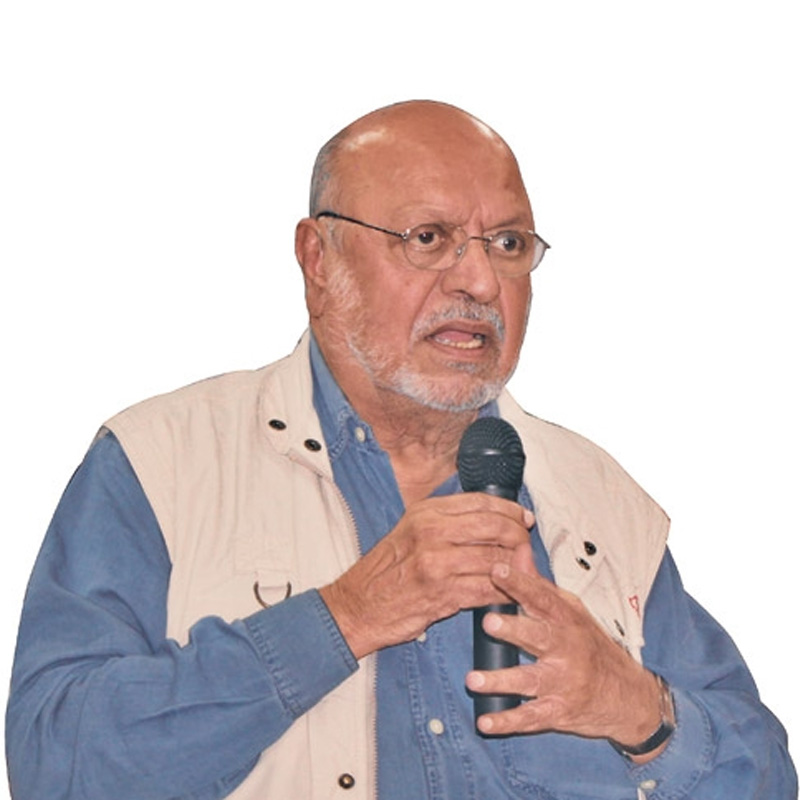
    NEW DELHI: The Shyam Benegal Committee on Film Certification, which earlier recommended that alterations or changes in any film can be made by the Central Board of Film Certification only with the consent of the rights holder, has now said that a “meaningful static disclaimer in the beginning of the film with standard visual background approved by the Ministry of Health may be shown for a minimum time period along with an audio backing it.”

    SMOKING SCENES

    In a supplementary report dealing only with smoking scenes and depiction of animals in films, it has said the disclaimer should be made in all Indian languages and made applicable to all Media Platforms.
    However, the periodicity of scenes depicting smoking should be avoided keeping in view the legislations in this regard.  
    The Committee also suggested that as an option, producers of that film can make a short film conveying an anti-smoking message ‘by the same actor who is depicted as smoking in the film’.  
    It also said the Film Industry should produce small films on anti-tobacco/smoking with popular actors on their own for screening in cinemas halls and on TV Channels. These may replace the present films in the Theatres and TV Channels shown after obtaining clearance from the Health & Family Welfare Ministry.

    SCENES SHOWING ANIMALS

    Referring to animal welfare and in response to the views of the Animal Welfare Board of India (AWBI), the Committee was of the view that there is a need to bring about further clarity and  simplification of the process to allow film producers the operational flexibility that is critically required in any film project. Besides, a better and comprehensive definition of “performing animals” is needed.

    The Committee said there should be “licensed suppliers” of Performing Animals (PA) who are qualified in handling various animals and taking care of them as per requirement of the law, whose services can be hired by the Producers.

    Such a mechanism would be of great benefit to all stakeholders who need to engage such services. This type of facilitation is available internationally and could be supported by AWBI for adoption, it added.
    As an interim measure to cut down the time consumed, the Committee said that a directory of “certified (approved) personnel” of AWBI including veterinary personnel on the list of AWBI in different parts of the country may be published, enabling producers to intimate them the time of their shooting and, who would then be present at the time of shooting the performing animal scenes.

    Based on the report of such certified (approved) personnel, AWBI could issue the NOC. An appropriate fee for the services rendered by such AWBI empanelled experts could also be finalised by AWBI enabling the applicant / producers to remit the same directly to AWBI while availing the services of such empanelled persons.
    The Committee said often notices were issued by AWBI with regard to numerous instances where animals in normal settings during the course of shooting are interpreted as “performing animals”.

    In order to have some clarity on this, Committee said a “performing animal” in case of films may be defined as an animal which is written into the script of the movie, and is required to perform an act which it would not normally do. Such a clarification will allow automatic clearance for scenes of cows, goats, etc. apart from birds which often appear when picturising scenes in villages, small towns etc.

    However, it cautioned that it had to be kept in mind whether it is a genuine natural shot or staged for filming which would involve the hiring, transportation, etc. of the animal/s.

    The Committee suggests that in such situations, a self-declaration by the producers to this effect be submitted at the time of application to CBFC in lieu of an NOC from the AWBI.

    The Committee made its recommendations in the light of the current practice in both smoking scenes and those with animal depiction.  

    At present, the shorts on smoking are prepared by the Health Ministry under the Cigarettes and other Tobacco, Products (Prohibition of Advertisement and Regulation of Trade and Commerce, Production, Supply and Distribution) Amendment Rules 2012.

    These rules say that all new Indian or foreign films and television programmes displaying tobacco products or their use shall have a strong editorial justification explaining the necessity of the display of the tobacco products or their use in the film, to the CBFC; and anti-tobacco spots of minimum 30 seconds duration each at the beginning and middle of the films and television programmes; apart from anti-tobacco health warning as a prominent static message at the bottom of the screen during the period of display of the tobacco products or their use in the film and television programme. It is also stated that an audio-visual disclaimer on the ill-effects of tobacco use of minimum twenty seconds duration each in the beginning and middle of the film and television programme.

    The present rules with regard to use of animals flow from the Prevention of Cruelty to Animals Act, 1960 and Performing Animals (Registration) Rules 2001 and also the Bombay High Court Judgment on 22 August 2005 in the PETA case.  
    These require a Pre-shooting Permission and a No Objection Certificate (NOC) and then it is left to AWBI to accept or deny permission.

    In its first report submitted to the Information and Broadcasting Ministry on 26 April 2016 but placed on the Ministry’s website in late June, the Committee said that there should be no system of imposing excisions (as is practiced at present) and the CBFC must transition into solely becoming a film certification body, as indeed the name of the institution suggests.

    In recommendations that are bound to stir a major debate among moralists and others, the Government-appointed Committee was of the “unanimous view that the rights owner has complete rights over his/her film.”

     

  • Actors shown in smoking scenes in films or TV should promote anti-smoking

    Actors shown in smoking scenes in films or TV should promote anti-smoking

    NEW DELHI: The Shyam Benegal Committee on Film Certification, which earlier recommended that alterations or changes in any film can be made by the Central Board of Film Certification only with the consent of the rights holder, has now said that a “meaningful static disclaimer in the beginning of the film with standard visual background approved by the Ministry of Health may be shown for a minimum time period along with an audio backing it.”

    SMOKING SCENES

    In a supplementary report dealing only with smoking scenes and depiction of animals in films, it has said the disclaimer should be made in all Indian languages and made applicable to all Media Platforms.
    However, the periodicity of scenes depicting smoking should be avoided keeping in view the legislations in this regard.  
    The Committee also suggested that as an option, producers of that film can make a short film conveying an anti-smoking message ‘by the same actor who is depicted as smoking in the film’.  
    It also said the Film Industry should produce small films on anti-tobacco/smoking with popular actors on their own for screening in cinemas halls and on TV Channels. These may replace the present films in the Theatres and TV Channels shown after obtaining clearance from the Health & Family Welfare Ministry.

    SCENES SHOWING ANIMALS

    Referring to animal welfare and in response to the views of the Animal Welfare Board of India (AWBI), the Committee was of the view that there is a need to bring about further clarity and  simplification of the process to allow film producers the operational flexibility that is critically required in any film project. Besides, a better and comprehensive definition of “performing animals” is needed.

    The Committee said there should be “licensed suppliers” of Performing Animals (PA) who are qualified in handling various animals and taking care of them as per requirement of the law, whose services can be hired by the Producers.

    Such a mechanism would be of great benefit to all stakeholders who need to engage such services. This type of facilitation is available internationally and could be supported by AWBI for adoption, it added.
    As an interim measure to cut down the time consumed, the Committee said that a directory of “certified (approved) personnel” of AWBI including veterinary personnel on the list of AWBI in different parts of the country may be published, enabling producers to intimate them the time of their shooting and, who would then be present at the time of shooting the performing animal scenes.

    Based on the report of such certified (approved) personnel, AWBI could issue the NOC. An appropriate fee for the services rendered by such AWBI empanelled experts could also be finalised by AWBI enabling the applicant / producers to remit the same directly to AWBI while availing the services of such empanelled persons.
    The Committee said often notices were issued by AWBI with regard to numerous instances where animals in normal settings during the course of shooting are interpreted as “performing animals”.

    In order to have some clarity on this, Committee said a “performing animal” in case of films may be defined as an animal which is written into the script of the movie, and is required to perform an act which it would not normally do. Such a clarification will allow automatic clearance for scenes of cows, goats, etc. apart from birds which often appear when picturising scenes in villages, small towns etc.

    However, it cautioned that it had to be kept in mind whether it is a genuine natural shot or staged for filming which would involve the hiring, transportation, etc. of the animal/s.

    The Committee suggests that in such situations, a self-declaration by the producers to this effect be submitted at the time of application to CBFC in lieu of an NOC from the AWBI.

    The Committee made its recommendations in the light of the current practice in both smoking scenes and those with animal depiction.  

    At present, the shorts on smoking are prepared by the Health Ministry under the Cigarettes and other Tobacco, Products (Prohibition of Advertisement and Regulation of Trade and Commerce, Production, Supply and Distribution) Amendment Rules 2012.

    These rules say that all new Indian or foreign films and television programmes displaying tobacco products or their use shall have a strong editorial justification explaining the necessity of the display of the tobacco products or their use in the film, to the CBFC; and anti-tobacco spots of minimum 30 seconds duration each at the beginning and middle of the films and television programmes; apart from anti-tobacco health warning as a prominent static message at the bottom of the screen during the period of display of the tobacco products or their use in the film and television programme. It is also stated that an audio-visual disclaimer on the ill-effects of tobacco use of minimum twenty seconds duration each in the beginning and middle of the film and television programme.

    The present rules with regard to use of animals flow from the Prevention of Cruelty to Animals Act, 1960 and Performing Animals (Registration) Rules 2001 and also the Bombay High Court Judgment on 22 August 2005 in the PETA case.  
    These require a Pre-shooting Permission and a No Objection Certificate (NOC) and then it is left to AWBI to accept or deny permission.

    In its first report submitted to the Information and Broadcasting Ministry on 26 April 2016 but placed on the Ministry’s website in late June, the Committee said that there should be no system of imposing excisions (as is practiced at present) and the CBFC must transition into solely becoming a film certification body, as indeed the name of the institution suggests.

    In recommendations that are bound to stir a major debate among moralists and others, the Government-appointed Committee was of the “unanimous view that the rights owner has complete rights over his/her film.”

     

  • No stay, but CBFC asked to hear Sikh community leaders on Bollywood film “Santa Banta Pvt. Ltd.’

    No stay, but CBFC asked to hear Sikh community leaders on Bollywood film “Santa Banta Pvt. Ltd.’

    NEW DELHI: Even as the The Bombay High Court refused the stay the screening of the Bollywood film “Santa Banta Pvt. Ltd.”, the Delhi High Court has asked the the Central Board of Film Certification to give a hearing to the Delhi Sikh Gurdwara Management Committee.

    The Bombay High Court has directed the Maharashtra government, the CBFC and the producers to given their affidavits in reply to a petition filed against the film which the Punjab Cultural Heritage Board president Charan Singh Sapra and others claimed depicts the Sikh community in poor light and it could pose a threat to public order.

    A division bench of Justice S.C. Dharmadhikari and Justice Shalini Phansalkar-Joshi  listed the matter for 27 April. Advocate B.A. Desai said the film was a mockery of the high principles of the Sikh faith and portrays a community member as “a dumb, unreasonable person who is an obvious idiot”.

    (It may be recalled that the Supreme Court had earlier in another case issued an order banning websites that carry jokes about the Sikh community.)

    Earlier on 29 March, a bench led by Delhi High Court Chief Justice G Rohini had advised the CBFC to reconsider a U/A certificate to the film.

    Justice J R Midha was later informed that by the government that the DSGMC’s member could have a meeting at the CBFC chairman’s office in Mumbai regarding the film scheduled to be released on 22 April.

    The issue was also brought up before the Supreme Court, which said the Shiromani Gurdwara Parbandhak Committee (SGPC) counsel could file a petition and challenge whichever aspect his client felt aggrieved by.

    The Delhi High Court hearing was on a plea filed by the DSGMC and two others against CBFC chairman Pahlaj Nihalani and its CEO Anurag Shrivastava in which it was alleged that they had not complied with the 29 March directions given by the court.

    In the plea which came up for hearing yesterday, the DSGMC alleged that CBFC had “clandestinely” passed an order on 7 April without hearing them on the issue about certification of the movie despite the court’s direction.But the government’s standing counsel Anil Soni told the court that proper messages were sent to them but they did not appear before the CBFC for a discussion.

  • No stay, but CBFC asked to hear Sikh community leaders on Bollywood film “Santa Banta Pvt. Ltd.’

    No stay, but CBFC asked to hear Sikh community leaders on Bollywood film “Santa Banta Pvt. Ltd.’

    NEW DELHI: Even as the The Bombay High Court refused the stay the screening of the Bollywood film “Santa Banta Pvt. Ltd.”, the Delhi High Court has asked the the Central Board of Film Certification to give a hearing to the Delhi Sikh Gurdwara Management Committee.

    The Bombay High Court has directed the Maharashtra government, the CBFC and the producers to given their affidavits in reply to a petition filed against the film which the Punjab Cultural Heritage Board president Charan Singh Sapra and others claimed depicts the Sikh community in poor light and it could pose a threat to public order.

    A division bench of Justice S.C. Dharmadhikari and Justice Shalini Phansalkar-Joshi  listed the matter for 27 April. Advocate B.A. Desai said the film was a mockery of the high principles of the Sikh faith and portrays a community member as “a dumb, unreasonable person who is an obvious idiot”.

    (It may be recalled that the Supreme Court had earlier in another case issued an order banning websites that carry jokes about the Sikh community.)

    Earlier on 29 March, a bench led by Delhi High Court Chief Justice G Rohini had advised the CBFC to reconsider a U/A certificate to the film.

    Justice J R Midha was later informed that by the government that the DSGMC’s member could have a meeting at the CBFC chairman’s office in Mumbai regarding the film scheduled to be released on 22 April.

    The issue was also brought up before the Supreme Court, which said the Shiromani Gurdwara Parbandhak Committee (SGPC) counsel could file a petition and challenge whichever aspect his client felt aggrieved by.

    The Delhi High Court hearing was on a plea filed by the DSGMC and two others against CBFC chairman Pahlaj Nihalani and its CEO Anurag Shrivastava in which it was alleged that they had not complied with the 29 March directions given by the court.

    In the plea which came up for hearing yesterday, the DSGMC alleged that CBFC had “clandestinely” passed an order on 7 April without hearing them on the issue about certification of the movie despite the court’s direction.But the government’s standing counsel Anil Soni told the court that proper messages were sent to them but they did not appear before the CBFC for a discussion.

  • Total number of MSO provisional licence holders rises to 522, taking total to over 750

    Total number of MSO provisional licence holders rises to 522, taking total to over 750

    NEW DELHI: Even as the Government got a fillip with the Supreme Court saying that Bombay High Court order did not imply a pan-India stay of digital addressable systems, 26 more multi-system operators got registration in the third week last month and took the total number to 753 including 231 which have permanent (ten-year licences) by 26 February.

    The last list issued on 17 February had put the total at 727 including the 231 which have permanent (ten-year) licences. The Ministry of Information and Broadcasting (MIB) had by 12 January cancelled the licences of 26 MSOs and closed their cases. According to the list issued today, the areas of operation of some of the MSOs have been revised or amended.

    The new licencees have all got state-wise licences and none has got a pan-India licence. These are from Gujarat, Assam, Madhya Pradesh, Karnataka, Rajasthan, Uttarakhand, Maharashtra, Utar Pradesh, Chhatisgarh, Telangana, Odisha, Andhra Pradesh, and West Bengal.

    With the Home Ministry directive about doing away with security clearances for MSOs not being communicated in writing to the MIB, the pace remains slow.

    The permanent licence issued to Kal Cable of Chennai had been cancelled on 20 August, 2014 but this cancellation was set aside by Madras High Court on 5 September the same year. However, Kal Cable’s name continues to be in the cancelled list – presumably because the cases are still pending.

    Sources said many MSOs holding provisional licences had not completed certain formalities relating to shareholders and so on.


  • Total number of MSO provisional licence holders rises to 522, taking total to over 750

    Total number of MSO provisional licence holders rises to 522, taking total to over 750

    NEW DELHI: Even as the Government got a fillip with the Supreme Court saying that Bombay High Court order did not imply a pan-India stay of digital addressable systems, 26 more multi-system operators got registration in the third week last month and took the total number to 753 including 231 which have permanent (ten-year licences) by 26 February.

    The last list issued on 17 February had put the total at 727 including the 231 which have permanent (ten-year) licences. The Ministry of Information and Broadcasting (MIB) had by 12 January cancelled the licences of 26 MSOs and closed their cases. According to the list issued today, the areas of operation of some of the MSOs have been revised or amended.

    The new licencees have all got state-wise licences and none has got a pan-India licence. These are from Gujarat, Assam, Madhya Pradesh, Karnataka, Rajasthan, Uttarakhand, Maharashtra, Utar Pradesh, Chhatisgarh, Telangana, Odisha, Andhra Pradesh, and West Bengal.

    With the Home Ministry directive about doing away with security clearances for MSOs not being communicated in writing to the MIB, the pace remains slow.

    The permanent licence issued to Kal Cable of Chennai had been cancelled on 20 August, 2014 but this cancellation was set aside by Madras High Court on 5 September the same year. However, Kal Cable’s name continues to be in the cancelled list – presumably because the cases are still pending.

    Sources said many MSOs holding provisional licences had not completed certain formalities relating to shareholders and so on.


  • SC dismisses as withdrawn IBF petition challenging Bombay HC’s DAS III stay order

    SC dismisses as withdrawn IBF petition challenging Bombay HC’s DAS III stay order

    NEW DELHI: The Supreme Court dismissed as withdrawn, the petition by the Indian Broadcasting Foundation (IBF) challenging the Bombay High Court order on the Digital Addressable System (DAS) Phase III implementation.

    The two-judge bench of the court headed by Justice Jagdish Singh Khehar said that a reading of the Bombay High Court’s order did not necessitate any action by the Supreme Court. The court asked the petitioners the grounds on which the High Court order were being challenged.

    Justice Khehar observed that a reading of Bombay High Court doesn’t imply any pan India’s stay. 

    Senior advocate Dr. Abhishek Manu Singhvi pointed out that other High Courts have also given stay orders in this matter.

    Thereupon, Justice Khehar said in that case IBF should have impugned the other orders and not merely to the Bombay High Court.

    Thereafter, Dr Singhvi withdrew the petition in light of observations made by the judge. It is learnt that a similar petition by the I&B ministry will be up for hearing on 24 February.

    Indiantelevision.com learns that several caveats have been filed by stakeholders who have approached various High Court in the country and got a stay of implementation of DAS Phase III.

  • SC dismisses as withdrawn IBF petition challenging Bombay HC’s DAS III stay order

    SC dismisses as withdrawn IBF petition challenging Bombay HC’s DAS III stay order

    NEW DELHI: The Supreme Court dismissed as withdrawn, the petition by the Indian Broadcasting Foundation (IBF) challenging the Bombay High Court order on the Digital Addressable System (DAS) Phase III implementation.

    The two-judge bench of the court headed by Justice Jagdish Singh Khehar said that a reading of the Bombay High Court’s order did not necessitate any action by the Supreme Court. The court asked the petitioners the grounds on which the High Court order were being challenged.

    Justice Khehar observed that a reading of Bombay High Court doesn’t imply any pan India’s stay. 

    Senior advocate Dr. Abhishek Manu Singhvi pointed out that other High Courts have also given stay orders in this matter.

    Thereupon, Justice Khehar said in that case IBF should have impugned the other orders and not merely to the Bombay High Court.

    Thereafter, Dr Singhvi withdrew the petition in light of observations made by the judge. It is learnt that a similar petition by the I&B ministry will be up for hearing on 24 February.

    Indiantelevision.com learns that several caveats have been filed by stakeholders who have approached various High Court in the country and got a stay of implementation of DAS Phase III.