Tag: Bombay High Court

  • NTO 2.0: DPOs express discontent over partial implementation of regulation

    NTO 2.0: DPOs express discontent over partial implementation of regulation

    KOLKATA: With constant changes in regulations, the pay-TV sector in India continues to face uncertainty. Major broadcasters have come together to fight the implementation of the amended new tariff order (NTO 2.0) as directed by the Telecom Regulatory Authority of India (TRAI). However, distribution platform operators (DPOs) have already complied with the network capacity fee (NCF), multi-TV charges, etc., under the new directive and express dissatisfaction over the partial implementation. 

    “TRAI had asked all DPOs to adhere with NTO 2.0 on NCF, multi-home and others. As broadcasters have not given any new rates, you can’t implement the full NTO 2.0. If you implement half NTO, you have taken whatever is negative on your books but whatever positive we could take from broadcasters’ side has not happened. Hence, it is harmful to both DPOs and subscribers. We will be struggling how to handle it if the issues drag on and broadcasters don’t come out with new prices,” says GTPL Hathway CATV business head and chief strategy officer Piyush Pankaj.

    While broadcasters are reeling under Covid2019 impact, TRAI came out with a directive to implement NTO 2.0 by 10 August. As the petition against it was already sub judice, the broadcasters went to the Bombay high court challenging the directive. The court asked both parties to go by “gentlemen’s word” and TRAI assured it would not take any action till the next hearing. The court is hearing the case today before a bench comprising justice AA Sayed and justice Anuja Prabhudesai. 

    Another executive from a national MSO also brought up the fact that TRAI made all DPOs to implement the order on 1 March. But DPOs could not implement new pricing without broadcasters publishing it. Hence, many DPOs reached out to TRAI saying that either broadcasters should comply with all the rules or the authority should roll back pressure on DPOs. He also informs that one of the large broadcasters already published new pricing with 10-15 per cent hike but was continuing with the old reference interconnect offer (RIO).

    “Any channel which is above Rs 12 cannot be clubbed in a bouquet. If broadcasters don’t reduce the prices to be included in the bouquet that will affect all our bouquets,” says Metrocast Network Services promoter Nagesh Chhabria. However, he adds that there is no issue currently as Metrocast is continuing with the old model.

    “It’s an ecosystem, you cannot implement regulations in bits and parts,” says UCN Cable Network director Jagdish Paliya. However, he adds that NTO 2.0 is not very favourable for DPOs, too, as making a discount on second box compulsory is harsh on the operators.

    But what if the order comes in favour of the implementation of NTO 2.0? Here, the DPOs echo broadcasters’ view that executing it amid a pandemic would be very difficult. While approximately 15 million pay-TV subscribers cut the cord during NTO 1.0 implementation, the executive from a national MSO posed the most important question – will more subscribers drop off now?
  • Bombay high court grants interim relief to HUL in brand name row with Emami

    Bombay high court grants interim relief to HUL in brand name row with Emami

    NEW DELHI: Hindustan Unilever heaved a sigh of relief as the Bombay high court gave an interim relief in the case with Emami involving HUL's rebranding of its skin cream for men Glow & Handsome. Reportedly, Emami had claimed that it already has a cream named Glow and Handsome.

    Last week, HUL rebranded its best-selling range of products Fair & Lovely to Glow & Lovely. the men's fairness range was also renamed from Fair & Lovely to Glow & Handsome. Following this, Emami had responded with a legal action against the brand for copying its brand name Glow & Handsome.

    The court has asked Emami to give seven days’ prior notice before striking a legal battle on the trademark.

    According to reports, justice BP Colabwalla has ordered the notice after hearing an application filed by HUL under the Trade Marks Act seeking an injunction against Emami from issuing “groundless threats” in view of the use of its trademark Glow and Handsome.

    HUL in its petition also sought at least seven days clear notice before Emami can initiate any legal proceedings against the company. HUL called Emami's threats of legal action 'groundless.'

    The court observed, "Prima facie it does appear that having filed its trademark application in September 2018 and subsequently on 25 June 2020 for the mark ‘GLOW & HANDSOME’, the Plaintiff (HUL)is the prior adopter of the said mark".

    The court also directed Emami to give HUL seven days prior written notice before initiating legal proceedings against it and posted the matter for further hearing on July 27.

    “The statements made by the defendant (Emami) do amount to a threat, however, whether they are unlawful or groundless, that is something that will have to be decided after hearing both the sides,” the court further said as reported by a leading daily.

    Follow Tellychakkar for the consumer facing news & entertainment

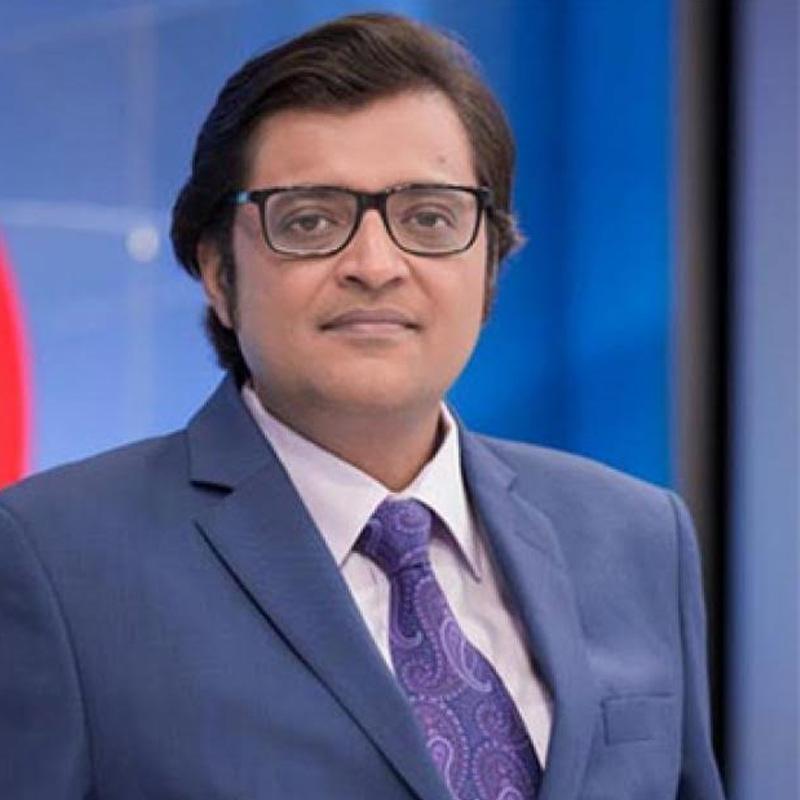
  • Bombay high court suspend 2 FIRs against Arnab Goswami

    Bombay high court suspend 2 FIRs against Arnab Goswami

    MUMBAI: Republic TV editor-in-chief Arnab Goswami was given an interim relief by Bombay high court on Tuesday as it suspended two FIRs against him for allegedly making provocating and inflammatory statements over Palgarh lynchings and gathering of migrant workers outside Bandra railway station. He was being questioned for giving a communal twist to the events. 

    The court further added that no coercive steps to be taken against him until  further orders as there is no prima facie case made and no offences have been disclosed against Goswami. 

    The court said, “It will be would be wrong to say that petitioner had made the statement in broadcast with a view to defame or insult the feelings of any religious group or community.” 

  • MCGM to Bombay high court: Can’t waive licence fee for Mumbai’s OOH owners

    MCGM to Bombay high court: Can’t waive licence fee for Mumbai’s OOH owners

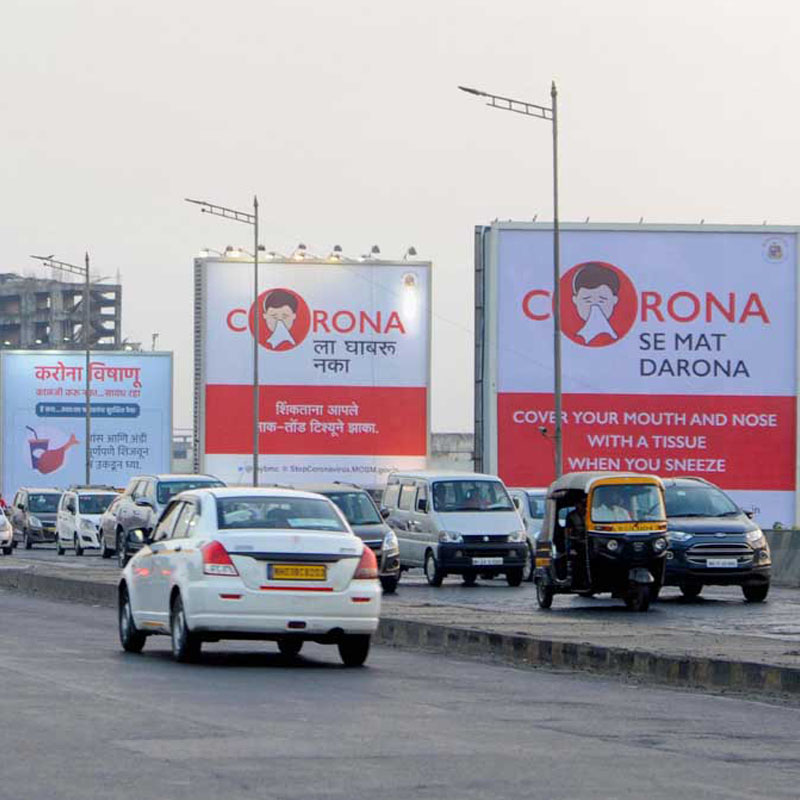
    MUMBAI: On 19 June, in an unexpected turn of events, the municipal corporation of greater Mumbai (MCGM) refused to waive off the licence fees even if the hoardings in Mumbai are advertising civic messages.

    The bench dealt with a number of petitions filed by advertising agencies, holding licences for hoarding sites in Mumbai. The hoarding owners were seeking waiving of the licence fees. The licence holders claimed that they are not using their hoarding sites since March due to the outbreak of Covid2019 and they have been only advertising civic messages.

    "There is no provision in any statute, rule, policy or license condition that contemplates that if the licence holders are unable to display the advertisement for any reason whatsoever, they will be entitled to waiver of licence fees. They have failed to make out any constitutional or legal right for such waiver of the license fees," the MCGM said in an affidavit.

    "Our guidelines specifically contemplate that it is mandatory on part of the agency to display a civic message as and when directed by us for a period of 15 days in a year for which no fees will be payable," the affidavit read.

    The civic body mentioned that it had sent notices to a number of agencies to put messages to spread awareness about the disease in March.

    Clarifying in the affidavit, MCGM said, “Hoardings were required to be displayed for a period of 10 days only and there was no need to give any fresh notice or letter for removal of the same. The agencies are intentionally misreading our notice. The notice does not contemplate that any further instructions would be issued for removing the hoardings.”

    The civic body also revealed that it had waived licence fees for the month of April of Rs 7.49 crore and that the civic body itself went through a loss of nearly Rs 70 lakh.

    "The commercial arrangements between the private advertisers and the licencees are not within our scope and ambit. We are in no way responsible for any such breakdown in the commercial relationship of the licencees and the same cannot be a ground for a grant of a waiver of licence fees without any legal or the statutory basis for the same," the MCGM said while urging the bench to dismiss the plea.

    The eight Mumbai OOH owners who filed the petition in the Bombay HC for waiver of licence fees are — Creation Publicity Pvt Ltd, Bright Advertising Pvt Ltd, Orion Advertisers, Anurag Sites, Em Vee Advertising Company, Pingle Outdoor, Yoag Advertisers and Pioneer Publicity Corporation Ltd.

    The firms have been asked to submit replies in writing, by 26 June.

  • Bombay High Court ends OOH hoardings’ Covid2019 messaging mandate

    Bombay High Court ends OOH hoardings’ Covid2019 messaging mandate

    MUMBAI: In a move that comes as a relief, during the fourth virtual Bombay high court hearing, the Municipal Corporation of Greater Mumbai (MCMG) has asked media owners to stop displaying awareness messages around Covid2019 on its OOH properties.

    In the month of March, MCMG had mandated all hoarding owners to feature messages around the pandemic to raise public awareness. However, while the duration of the messages was supposed to be 10 days, the campaigns continued for almost three months, free of charge.

    During the hearing, the council of MCMG also said that they would need some more time to come to a conclusion on the compensation charges which are to be applied on the non-payment of licence fees. On the matter of licence fee payment, the civic body has filed its reply to the Bombay High Court. However, it has not been disclosed yet. The next hearing will take place on Friday, 19 June.

    The OOH players who appealed for the waiver of the licence fee are- Creation Publicity Pvt Ltd, Bright Advertising Pvt Ltd, Orion Advertisers, Anurag Sites, Em Vee Advertising Company, Pingle Outdoor, Yoag Advertisers and Pioneer Publicity Corporation Ltd.

    The outdoor industry which has already suffered huge losses and has also not been compensated is also looking for some relief after the next hearing.

    In May, the high court issued an interim order instructing Brihanmumbai Municipal Corporation (BMC) to not impose a licence fee on hoardings for May in the wake of the losses suffered by OOH players due to the pandemic.

  • Bombay high court to hear OOH players’ plea on 12 June

    Bombay high court to hear OOH players’ plea on 12 June

    MUMBAI: On 5 June, the Bombay High Court, while hearing the plea of Mumbai OOH owners, extended its stay order till 12 June, for waiver of license fee on hoardings for the month of May 2020.  According to the verdict, the exemption will only be given to the eight OOH players that have already appealed for the waiver in May.

    Creation Publicity Pvt Ltd, Bright Advertising Pvt Ltd, Orion Advertisers, Anurag Sites, Em Vee Advertising Company, Pingle Outdoor, Yoag Advertisers and Pioneer Publicity Corporation Ltd are the players who will get the exemption.

    The court has issued a notice to the petitioners to submit the amendments in their petitions to the municipal corporation within a period of two weeks, if there are any. In the meantime, earlier order passed by the court will continue i.e., no coercive steps should be taken by the authority for not paying taxes.

    Bright Media Outdoors CMD Yogesh Lakhani shares that due to the crises, all businesses are downhill. “We have requested the civic body to waive off the fee because of the unprecedented crises. For the next four to five months, the situation only looks grim. If people are not stepping out, who will see the hoardings?” he says.

    The court also mentioned that the senior counsel appearing for the municipal corporation has asked for a week’s time to take instructions in the matter, due to which no further proceedings could be done.

    Sharing the same sentiment as Lakhani, another OOH owner, who opted to be anonymous, says, “Paying such a heavy amount for the period when businesses all over the globe are going through a lull doesn’t make any sense. We are glad that the court has given an extension. While the country is slowly opening up businesses, it seems we will be in a better position in a few months from now.”

    Lemma Technologies founder and CEO Gulab Patil says that there has been a heavy impact on the media side, “Most of the advertisers usually plan campaigns in advance, but no one saw this coming. Not just the civic bodies, the publishers are also asking for payments and it puts people in a tough spot. We are just settling down the minimum requirement from the publisher side. We are asking our clients to balance on that.”

    As per the high court’s order issued on 5 June, the municipal corporation sought a week's time to take instructions in the matter. If any of the petitioners are desirous of amending the petition, they shall forward the draft amendment to the municipal corporation within a period of two weeks.

  • NTO 2.0: Bombay High Court adjourns case to 26 Feb

    NTO 2.0: Bombay High Court adjourns case to 26 Feb

    MUMBAI: The Bombay High Court has adjourned the ongoing case between the Telecom Regulatory Authority of India (TRAI) and broadcasters on the new tariff order (NTO) to 26 February. During the last hearing , no interim relief had been granted.

    Last time, the advocate for TRAI made a statement at the very beginning that the arguments should be based only on the petition and not on the rejoinder. Countering that, the advocate for Film & TV Producers Guild of India stated that there is nothing new in the rejoinder and everything is available in public domain.

    He also touched upon the point of the newly imposed twin conditions levied in the amendment of new tariff order where one condition is the cap of Rs 12 in a bouquet, the other being the discount on channel bouquets to around 33 per cent.

    Earlier, broadcasters were giving higher discounts pursuant to cross subsidies available by including smaller channels in its bouquets, which was totally in favour of consumers. He argued that if a consumer has to watch the so-called popular/niche channels (terms used by TRAI), he has to pay a higher price and it will increase his monthly bill.

    He also continued that although they do not come under the direct purview of TRAI, the amendments in the tariff order can affect their revenue. As the regulatory body has put a cap of Rs 12 on pay channel that can be included in a bouquet, the broadcaster cannot charge more than Rs 12 for that pay channel in a bouquet.

    The broadcaster has to pay huge amount to acquire content. Due to the regulations, if the broadcaster is not able to include it in a bouquet, it may prefer not to acquire such high priced content. Moreover, if broadcasters can not acquire quality content, the customer will lose.

    While broadcasters have the flexibility to decide the price of its pay channel and the customer should be able to view quality content on his TV, both these conditions are violated by the order.

    Last month, the Indian Broadcasting Foundation (IBF) along with others has filed a writ petition in the Bombay High Court against the TRAI order. The petitioners mentioned that the as amendments which has been notified in “consumer interest," will have exactly the opposite effect, leading to crippling of the business of broadcasters and ultimate suffering of the consumer.

  • NTO 2.0 case: No interim relief granted, to be heard on 12 Feb

    NTO 2.0 case: No interim relief granted, to be heard on 12 Feb

    MUMBAI: The Bombay High Court has listed the next hearing of the ongoing case between the Telecom Regulatory Authority of India (TRAI) and broadcasters on the new tariff order (NTO) on 12 February. No interim relief has been granted yet which can be argued at the next hearing. It has also been directed to issue a notice to Maharashtra advocate general.

    During Thursday’s hearing, the advocate for TRAI made a statement at the very beginning that the arguments should be based only on the petition and not on the rejoinder. Countering that, the advocate for Film & TV Producers Guild of India stated that there is nothing new in the rejoinder and everything is available in public domain.

    He also touched upon the point of the newly imposed twin conditions levied in the amendment of new tariff order where one condition is the cap of Rs 12 in a bouquet, the other being the discount on channel bouquets to around 33 per cent.

    Earlier, broadcasters were giving higher discounts pursuant to cross subsidies available by including smaller channels in its bouquets, which was totally in favour of consumers. He argued that if a consumer has to watch the so-called popular/niche channels (terms used by TRAI), he has to pay a higher price and it will increase his monthly bill.

    He also continued that although they do not come under the direct purview of TRAI, the amendments in the tariff order can affect their revenue. As the regulatory body has put a cap of Rs 12 on pay channel that can be included in a bouquet,  the broadcaster cannot charge more than Rs 12 for that pay channel in a bouquet.

    The broadcaster has to pay huge amount to acquire content. Due to the regulations, if the broadcaster is not able to include it in a bouquet, it  may prefer not to acquire such high priced content. Moreover, if broadcasters can not acquire quality content, the customer will lose.

    While broadcasters have the flexibility to decide the price of its pay channel and the customer should be able to view quality content on his TV, both these conditions are violated by the order.

    Earlier in the month, the Indian Broadcasting Foundation (IBF) along with others has filed a writ petition in the Bombay High Court against the TRAI order. The petitioners mentioned that the as amendments which has been notified in “consumer interest," will have exactly the opposite effect, leading to crippling of the business of broadcasters and ultimate suffering of the consumer.

  • Bombay HC grants no interim relief in IBF’s NTO case; matter posted for 22 Jan

    Bombay HC grants no interim relief in IBF’s NTO case; matter posted for 22 Jan

    MUMBAI: After the broadcasters moved to Bombay High Court on Monday, the high court has issued notice to the Telecom Regulatory Authority of India (TRAI) for filing response. The matter has been listed for next hearing on 22 January. No interim relief till the next hearing.

    The Indian Broadcasting Foundation (IBF), along with other broadcasters, had filed a writ petition in the court against TRAI, it read, “The petition under article 226 and 227 of the constitution of India has been filed praying, for a writ, order or direction quashing the amendments carried out vide the telecommunication (broadcasting and cable) services interconnections (addressable systems) (second amendment) regulations, 2020 along with the telecommunication (broadcasting and cable) services standards of quality and consumer protection (addressable systems) (third amendment) regulations, 2020 along with the telecommunication (broadcasting and cable) services (eighth) (addressable systems) tariff (second amendment) order, 2020 issued by the respondent (TRAI) on 1 January,”

    In the beginning of this month, the industry regulator modified certain provisions (described as impugned provisions) of the new price regime which was implemented last year. TRAI prescribed twin conditions on pricing –

    The sum of the a-la-carte rates of the pay channels (MRP)forming part of a bouquet shall in no case exceed one and half times the rate of the bouquet of which such pay channels are part

    The a-la-carte rates of each pay channel (MRP), forming part of a bouquet, shall in no case exceed three times the average rate of a pay channel of the bouquet of which such pay channel is a part.

    The authority also decided that only channels with MRP of Rs 12 or less will be permitted to be part of the bouquet offered by the broadcasters.

    How the amendments can harm the broadcasters’ business as well as consumer interest:

    The petitioners have mentioned that the amendments which have been notified in “consumer interest” will have exactly the opposite effect, leading to the crippling of the business of broadcasters and ultimate suffering to the consumer.

    It has also been mentioned that such crippling of the business would ultimately result either in closing down of the broadcasters’ channels or in diminishing the quality and the quantity of content available on TV channels to the consumer. In addition to that, the petitioners would lead in compelling the broadcasters to offer their channels only in a-la-carte format.

    Additionally, unlike under the 2017 Regulatory Regime, the new provisions prohibit broadcasters from giving any discount on the MRP of any bouquet to the DPO. Hence the broadcasters are of the view that they are completely dis-incentivised from creative bouquet offerings. They think that the new prohibition placed upon the broadcaster from offering a discount on bouquets will result in a huge reduction in DPOs’ demand for broadcaster-created bouquets, resulting, over a period of time, in discontinuation of bouquet offerings by broadcasters.

    The writ has been filed broadly to address the following issues:

    A Broadcaster’s freedom of pricing its own content has been taken away/ interfered with by the Respondent, as it continues to place fetters and unrealistic caps on the manner of offering the channels and pricing thereof.

    Despite admission by Respondent that offering of channels through bouquets is the preferred and prevalent practice, even from a subscriber’s viewpoint, the Impugned Provisions have the effect of dismantling and making unworkable any bouquet offering made by the broadcasters, by the placement of fetters that have no co-relation to the method or manner of offering content to the subscriber.

    A broadcaster’s effective freedom to price its channel with a view to recover/recoup its every increasing investment into content creation, is being taken away. The earlier imposed cap that prohibited any channel priced at more than Rs 19, as per the 2017 Interconnection Regulations and 2017 Tariff Order, has now been unilaterally and arbitrarily reduced to Rs.12 by the Impugned Provisions.

    A broadcaster’s freedom to offer its channels as part of one or more bouquets, has effectively been taken away, by prohibiting the broadcaster from offering any discount on the Maximum Retail Price of its bouquets; and further, by placing archaic and unworkable conditions to be followed by a broadcaster while creating a bouquet.

    At the same time, the Delivery Platform Operator (“DPO”) has been given further freedom to offer channels as part of bouquet and to give discounts on the bouquet prices, by unilaterally reducing the price of the channel received by the DPO from the broadcaster, has been kept intact and in fact, strengthened.

    A Broadcaster has effectively been prohibited from offering, as part of any bouquet, Niche channels, including sports channels, whose content consists of expensive and exclusively licensed rights to broadcast sporting events.

    To address the issues, IBF on Friday also held a press conference in Mumbai. The broadcasters of India came in support of each other under the shelter of IBF to voice their concerns against the new TRAI amendments of the new tariff order. All the top bosses of the major networks have agreed to the fact that this revision is going to leave severe adverse effect on all the players. The industry may explore legal options to fight the disruption.

  • IBF files writ petition against TRAI in Bombay High Court

    IBF files writ petition against TRAI in Bombay High Court

    MUMBAI: Amid the ongoing dispute in the broadcasting industry regarding amendments to the tariff order, the Indian Broadcasting Foundation (IBF), along with other broadcasters, has filed a writ petition in the Bombay High Court against the Telecom Regulatory Authority of India (TRAI).

    “The petition under article 226 and 227 of the constitution of India has been filed praying, for a writ, order or direction quashing the amendments carried out vide the telecommunication (broadcasting and cable) services interconnections (addressable systems) (second amendment) regulations, 2020 along with the telecommunication (broadcasting and cable) services standards of quality and consumer protection (addressable systems) (third amendment) regulations, 2020 along with the telecommunication (broadcasting and cable) services (eighth) (addressable systems) tariff (second amendment) order, 2020 issued by the respondent (TRAI) on 1 January,” the petition read.

    According to industry sources, the hearing of the case will come up tomorrow.

    In the beginning of this month, the industry regulator modified certain provisions (described as impunged provisions ) of the new price regime which was implemented last year. TRAI prescribed twin conditions on pricing –

    · The sum of the a-la-carte rates of the pay channels (MRP)forming part of a bouquet shall in no case exceed one and half times the rate of the bouquet of which such pay channels are a part

    · The a-la-carte rates of each pay channel (MRP),forming part of a bouquet, shall in no case exceed three times the average rate of a pay channel of the bouquet of which such pay channel is a part.

    The authority also decided that only channels with MRP of Rs 12 or less will be permitted to be part of the bouquet offered by the broadcasters.

    How the amendments can harm the broadcasters’ business as well as consumer interest :

     The petitioners have mentioned that the amendments which has been notified in “consumer interest” will have exactly the opposite effect, leading to crippling of the business of broadcasters and ultimate suffering to the consumer.

    It has also been mentioned that such crippling of the business would ultimately result either in closing down of the broadcasters’ channels or in diminishing the quality and the quantity of content available on TV channels to the consumer. In addition to that, the petitioners would lead in compelling the broadcasters to offer their channels only in a-la-carte format.

    Additionally, unlike under the 2017 Regulatory Regime, the new provisions prohibit broadcasters from giving any discount on the MRP of any bouquet to the DPO. Hence the broadcasters are of the view that they are completely dis-incentivised from creative bouquet offerings. They think that the new prohibition placed upon the broadcaster from offering a discount on bouquets will result in a huge reduction in DPOs’ demand for broadcaster-created bouquets, resulting, over a period of time, in discontinuation of bouquet offerings by broadcasters.

    The writ has been filed broadly to address the following issues:

    · A Broadcaster’s freedom of pricing its own content has been taken away/ interfered with by the Respondent, as it continues to place fetters and unrealistic caps on the manner of offering the channels and pricing thereof.

    · Despite admission by Respondent that offering of channels through bouquets is the preferred and prevalent practice, even from a subscriber’s viewpoint, the Impugned Provisions have the effect of dismantling and making unworkable any bouquet offering made by the broadcasters, by placement of fetters that have no co-relation to the method or manner of offering content to the subscriber.

    · A broadcaster’s effective freedom to price its channel with a view to recover/recoup its every increasing investment into content creation, is being taken away. The earlier imposed cap that prohibited any channel priced at more than Rs 19, as per the 2017 Interconnection Regulations and 2017 Tariff Order, has now been unilaterally and arbitrarily reduced to Rs.12 by the Impugned Provisions.

    · A broadcaster’s freedom to offer its channels as part of one or more bouquets, has effectively been taken away, by prohibiting the broadcaster from offering any discount on the Maximum Retail Price of its bouquets; and further, by placing archaic and unworkable conditions to be followed by a broadcaster while creating a bouquet.

    · At the same time, the Delivery Platform Operator (“DPO”) has been given further freedom to offer channels as part of bouquet and to give discounts on bouquet prices, by unilaterally reducing the price of the channel received by the DPO from the broadcaster, has been kept intact and in fact, strengthened.

    · A Broadcaster has effectively been prohibited from offering, as part of any bouquet, Niche channels, including sports channels, whose content consists of expensive and exclusively licensed rights to broadcast sporting events.

    To address the issues, IBF on Friday also held a press conference in Mumbai. The broadcasters of India came in support of each other under the shelter of IBF to voice their concerns against the new TRAI amendments of the new tariff order. All the top bosses of the major networks have agreed to the fact that this revision is going to leave severe adverse affect on all the players. The industry may explore legal options to fight the disruption.