Tag: Bombay High Court

  • Zeel-Invesco case: Bombay high court adjourns hearing to 29 Nov

    Zeel-Invesco case: Bombay high court adjourns hearing to 29 Nov

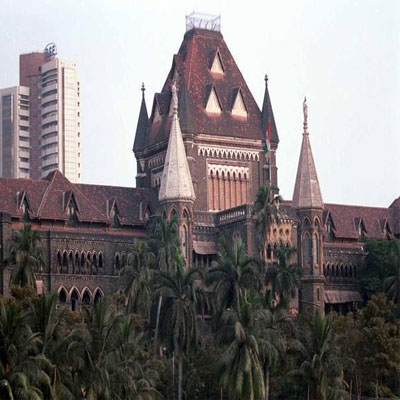
    Mumbai: On Friday, the Bombay high court adjourned the hearing on Invesco’s plea that challenged the injunction order of the single judge bench of the same court. The next hearing will be held on 29 November.

    Invesco, the largest shareholder in Zee Entertainment Enterprises Ltd (Zeel) had approached the court on Thursday to challenge the injunction order passed by the bench in a petition filed by Zeel against the investor.

    The court had ruled in favour of Zeel granting it temporary relief against the requisition notice by Invesco to call for an extraordinary general meeting (EGM) of shareholders to pass a resolution to remove the sitting board of directors and appoint a new board. 

    The Zeel-Invesco tussle began when the media company’s two top investors Invesco Developing Markets Fund and OFI Global China Fund LLC who combined own 18 per cent stake in the company had sent a requisition notice to the company on 11 September to call an EGM even after two weeks, the investors moved to the NCLT, citing provisions of company law, according to which the company is bound to call for an EGM within a specific number of days, if stakeholder demanding it owns more than 10 per cent of the company.

    The investors had also sought the removal of long-standing directors and close associates of the Chandra family from the board. The two independent directors Ashok Kurien and Manish Chokhani have already submitted their resignations. 

    The investors moved to have six nominees appointed to the board of Zeel, which included Surendra Singh Sirohi, Naina Krishna Murthy, Rohan Dhamija, Aruna Sharma, Srinivasa Rao Addepali and Gaurav Mehta as independent directors of the board for a term up to five consecutive years. The notice was received by Zeel on 12 September, and it informed the stock exchanges on 13 September, adding that the appointments are subject to approval by ministry of information and broadcasting (MIB).

    Zeel refused to conduct the EGM citing ‘shareholders interest’ and moved to Bombay high court on 2 October seeking to declare the requisition notice as “illegal and invalid.”

  • Bombay HC grants Zeel temporary relief from Invesco’s EGM notice

    Bombay HC grants Zeel temporary relief from Invesco’s EGM notice

    Mumbai: The Bombay high court has ruled in favour of Zee Entertainment Enterprises Ltd (Zeel) temporarily barring the requisition notice by its majority shareholder Invesco to call for an extraordinary general meeting (EGM).

    In another development, Zeel has also cancelled its board meeting scheduled on 27 October to discuss the unaudited financial results for the second quarter of the year ended 30 September citing lack of quorum. In the BSE filing, the company said that the next date of the meeting will be duly informed with fresh notice.

    “The decision taken by the hon’ble Bombay high court is a huge win for all the stakeholders of the company,” a Zeel spokesperson said in a statement on Tuesday.

    The National Company Law Tribunal (NCLT) hearing on a petition moved by Invesco on the EGM notice will be held on Wednesday. The NCLT is likely to follow the Bombay high court decision.

    The Zeel-Invesco tussle began when the media company’s two top investors Invesco Developing Markets Fund and OFI Global China Fund LLC who combined own 18 per cent stake in the company had sent a requisition notice to the company on 11 September to call an EGM even after two weeks, the investors moved to NCLT, citing provisions of company law, according to which the company is bound to call for an EGM within a specific number of days if stakeholder demanding it owns more than 10 per cent of the company.

    The investors had also sought the removal of long-standing directors and close associates of the Chandra family from the board. The two independent directors Ashok Kurien and Manish Chokhani have already submitted their resignations.

    The investors moved to have six nominees appointed to the board of Zeel, which included Surendra Singh Sirohi, Naina Krishna Murthy, Rohan Dhamija, Aruna Sharma, Srinivasa Rao Addepali, and Gaurav Mehta as independent directors of the board for a term up to five consecutive years. The notice was received by Zeel on 12 September, and it informed the stock exchanges on 13 September, adding that the appointments are subject to approval by the ministry of information and broadcasting (MIB).

    Zeel refused to conduct the EGM citing ‘shareholders interest’ and moved to Bombay high court on 2 October seeking to declare the requisition notice as “illegal and invalid.”

  • Zeel-Invesco tussle: Bombay HC directs Zeel to call for EGM

    Zeel-Invesco tussle: Bombay HC directs Zeel to call for EGM

    Mumbai: The Bombay high court asked Zee Entertainment Enterprises Ltd (Zeel) to call for the extraordinary general meeting (EGM) requisitioned by Invesco Developing Markets Fund on Thursday. Zeel must inform the court of the EGM date by Friday morning.

    According to a Business Standard and Reuters report, Zeel agreed to hold the EGM only if its right to contest the validity of the resolution passed at the meeting is reserved. The court determined that any resolution passed at the meeting will be put on hold until it decides on the validity of Invesco’s request. The bench suggested that a neutral chairperson should head the meeting who may be from the corporate world, a lawyer, or a judge.

    The Zeel-Invesco tussle began when the media company’s two top investors Invesco Developing Markets Fund and OFI Global China Fund LLC who combined own 18 per cent stake in the company had sent a requisition notice to the company on 11 September to call an EGM even after two weeks, the investors moved to National Company Law Tribunal (NCLT), citing provisions of company law, according to which the company is bound to call for an EGM within a specific number of days if stakeholder demanding it owns more than 10 per cent of the company.

    The investors had also sought the removal of long-standing directors and close associates of the Chandra family from the board. The two independent directors Ashok Kurien and Manish Chokhani have already submitted their resignations. 

    The investors moved to have six nominees appointed to the board of Zeel, which included Surendra Singh Sirohi, Naina Krishna Murthy, Rohan Dhamija, Aruna Sharma, Srinivasa Rao Addepali, and Gaurav Mehta as independent directors of the board for a term up to five consecutive years. The notice was received by Zeel on 12 September, and it informed the stock exchanges on 13 September, adding that the appointments are subject to approval by the ministry of information and broadcasting (MIB).

    Zeel refused to conduct the EGM citing ‘shareholders interest’ and moved to Bombay high court on 2 October seeking to declare the requisition notice as “illegal and invalid.”

  • ‘Will safeguard Zee and its future’: Punit Goenka on Zeel-Invesco tussle

    ‘Will safeguard Zee and its future’: Punit Goenka on Zeel-Invesco tussle

    Mumbai: In a new development, Zee Entertainment Enterprises Ltd (Zeel) managing director and chief executive officer has publicly spoken regarding the company’s ongoing boardroom battle with its investor, Invesco Developing Markets Fund.

    “We will ensure that no one maligns the intrinsic value of this company for their own benefit, and I continue to pursue this in the best interest of all our shareholders and at immense personal costs,” stated Goenka.

    Referring to the merger proposal with media business under Reliance Industries in February-March, he wrote that the reason for disclosing the series of communications exchanged between Invesco and the board of directors of Zeel was “to bring the truth out in the interest of all our stakeholders.”

    According to Goenka, the valuation attributed to the media entities under Reliance was inflated by Rs 10,000 crore and as a result, felt that the deal would result in a loss for shareholders of the company.  

    “My attention was on the imbalance observed in the valuation and how it was not in the best interest of our shareholders. The only reason I did not agree to the proposal was that the shareholder value was getting compromised,” he added.

    Goenka acknowledged the stance taken by Invesco but noted that “communications pertaining to such proposals are always well-documented, and they speak to the contrary.”

    On a personal note, he questioned Invesco’s intentions on the basis of their actions and asked pertinent questions, “Why didn’t Invesco make its plans public earlier? Does good corporate governance only apply to corporates and not their institutional investors?”

    He affirmed his faith in the Indian judicial and regulatory system and said that under the guidance of his legal counsel he would take the “required steps to safeguard Zee and its future.”

    The Zeel-Invesco tussle began when the media company’s two top investors Invesco Developing Markets Fund and OFI Global China Fund LLC who combined own 18 per cent stake in the company had sent a requisition notice to the company on 11 September to call an EGM even after two weeks, the investors moved to NCLT, citing provisions of company law, according to which the company is bound to call for an EGM within a specific number of days if stakeholder demanding it owns more than 10 per cent of the company.

    The investors had also sought the removal of long-standing directors and close associates of the Chandra family from the board. The two independent directors Ashok Kurien and Manish Chokhani have already submitted their resignations. 

    The investors moved to have six nominees appointed to the board of Zeel, which included Surendra Singh Sirohi, Naina Krishna Murthy, Rohan Dhamija, Aruna Sharma, Srinivasa Rao Addepali, and Gaurav Mehta as independent directors of the board for a term up to five consecutive years. The notice was received by Zeel on 12 September, and it informed the stock exchanges on 13 September, adding that the appointments are subject to approval by the ministry of information and broadcasting (MIB).

    Zeel refused to conduct the EGM citing ‘shareholders interest,’ and moved to Bombay high court on 2 October seeking to declare the requisition notice as “illegal and invalid.” Meanwhile, Invesco moved a requisition petition with the National Company Law Tribunal (NCLT) to call for an EGM.

    The next Bombay high court hearing is scheduled for 21 October and the next NCLT hearing is scheduled for 22 October.

  • Zee-Invesco tussle: Bombay HC gives Invesco time till 20 Oct to file reply

    Zee-Invesco tussle: Bombay HC gives Invesco time till 20 Oct to file reply

    Mumbai: The Bombay high court on Wednesday heard the petition filed by Zee Entertainment Enterprises Ltd (Zeel) against the requisition notice sent by its investor Invesco Developing Markets Fund. The court has asked Invesco to file its reply by 20 October and will hear the matter on 21 October.

    National Company Law Tribunal (NCLT) has given Zeel time until 22 October to file its reply to Invesco’s requisition plea after a hearing on 8 October.

    Zeel’s two top investors Invesco Developing Markets Fund and OFI Global China Fund LLC who combined own 18 per cent stake in the company had sent a requisition notice to the company on 11 September to call an EGM even after two weeks, the investors moved to NCLT, citing provisions of Company Law, according to which the company is bound to call for an EGM within a specific number of days if stakeholder demanding it owns more than 10 per cent of the company.

    The investors had also sought the removal of long-standing directors and close associates of the Chandra family from the board. The two independent directors Ashok Kurien and Manish Chokhani have already submitted their resignations. 

    The investors moved to have six nominees appointed to the board of Zeel, which included Surendra Singh Sirohi, Naina Krishna Murthy, Rohan Dhamija, Aruna Sharma, Srinivasa Rao Addepali, and Gaurav Mehta as independent directors of the board for a term up to five consecutive years. The notice was received by Zeel on 12 September, and it informed the stock exchanges on 13 September, adding that the appointments are subject to approval by the ministry of information and broadcasting (I&B).

    Zeel refused to conduct the EGM citing ‘shareholders interest,’ and moved to Bombay high court on 2 October seeking to declare the requisition notice as ‘illegal and invalid.’

  • SC adjourns NTO 2.0 hearing to 18 August

    SC adjourns NTO 2.0 hearing to 18 August

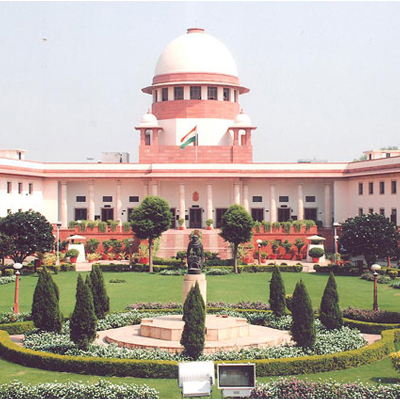
    Mumbai: The Supreme Court on Friday adjourned the hearing in a matter pertaining to the New Tariff Order (NTO 2.0) to 18 August.

    Last month, The Indian Broadcasting Foundation (IBF) and several leading broadcasters had filed a petition in the Supreme Court against the Bombay high court verdict dated 30 June, which had upheld the constitutionality of the NTO 2.0. The amended NTO 2.0, passed by the Telecom Regulatory Authority of India (TRAI) in January 2020, was challenged by broadcasters in the Bombay HC.

    After a legal tussle that lasted over a year, TRAI had managed to get a green signal from the court on 30 June on the implementation of the amended NTO 2.0. The division bench of the HC had stated that the challenge to the constitutional validity of the 2020 rules and regulations of TRAI does not hold any water. At the same time, it termed one of the twin conditions “arbitrary”, according to which the maximum retail price of an a-la-carte channel could not be more than one-third the maximum rate of a channel in the bouquet.

    The judgment was passed on the petitions filed by several broadcasters under the umbrella of the Indian Broadcasting Foundation (IBF) including ZEE Entertainment, Star India, TV18, and Sony Pictures Network India (SPN) who had challenged the NTO 2.0 terming it “arbitrary and in violation of their fundamental right”.

    The NTO 2.0 prescribed linkage between a-la-carte price and bouquet and reduced the price cap on the subscription fees for pay channels.

  • NTO 2.0 verdict: Who wins what?

    KOLKATA: One of the major issues that has dominated the pay TV ecosystem in India is in constant conflict between stakeholders and the sector regulator, the Telecom Regulatory Authority of India (Trai).  With the Bombay high court pronouncing its verdict on the amended new tariff order matter, one of the long-fought battles between the two may have come to an end. It upheld the constitutional validity of Trai’s NTO 2.0 but set aside the second clause of twin pricing conditions. The court’s decision is receiving mixed reviews from senior industry executives.

    On Wednesday, the division bench of Justices Amjad Sayyed and Anuja Prabhudessai passed judgement on several petitions filed by broadcasters and industry bodies like the Indian Broadcasting Foundation (IBF). The bench stated that the challenge to the constitutional validity of the 2020 rules and regulations of Trai does not hold any water. At the same time, it termed one of the twin conditions arbitrary according to which the maximum retail price of an a-la-carte channel could not be more than one third of the maximum rate of a channel in the bouquet.

    “We welcome this verdict of the honourable Bombay high court on amendment in tariff regulation. The full implementation of the amendment will bring more transparency in industry and give more choices and power to the customer. We are hopeful that this will get implemented soon. It is good for all stakeholders in the industry value chain,” GTPL Hathway cable TV head & chief strategy officer Piyush Pankaj said.

    Others in the business are not so sure because they believe it will definitely lead to a decline in subscription revenues. Considerably, major broadcasters have not already witnessed a fall in subscription revenue after partial implementation of NTO 2.0.  But they fear that after this verdict, there will be a faster movement towards a-la-carte from bouquets thus leading to lower ARPUs.

    One of the senior executives with a leading broadcaster said squashing the second twin condition can be looked at as a big win for broadcasters. This clause had the potential to effectively hamper broadcasters from packaging their channels as they had to bundle similarly priced offerings together as part of the bouquet. 

    However, the grounds that it has been struck down on are not very solid, another senior executive added. This battle was unnecessary and a fight for power, he noted, especially given the cost. Moreover, very few broadcasters were looking at pushing high pricing for channels anyway. Even these broadcasters also cannot go for high pricing now due to changed market dynamics in the last one year due to pandemic. As Trai still has substantive grounds to reclaim whatever has been lost, they might look at rechallenging it, the executive noted.

    “We believe there is a high likelihood of this being contested in the supreme court by Trai as the entire reasoning of getting the NTO 2.0 was to cap discount and move to selective viewing which the NTO 1.0 did not fulfil,” Elara Capital VP research analyst (media) Karan Taurani said in a note.

    “We continue to believe that the negative impact of NTO 2.0 is highest for Star whose bouquet prices have a higher discount factor and lowest for Sun TV whose discounting of bouquet vs ala carte is already at very low levels, which will lead to continued outperformance for Sun TV on subs revenue front despite NTO 2.0. On the other hand, this order is low to moderately negative for Zee,” stated Taurani.

    Back in 2018, Madras high court had also set aside the capping of discounts to 15 per cent mentioned in the Tariff Order and Interconnection Regulations of 2017. However, the battle reached the supreme court where the regulator won the case. Within a year of implementation of the regulation, the authority brought changes which irked broadcasters starting the second battle. Now are we in for the third?

  • TRP scam: Have right to investigate a case for as long as needed, state tells HC

    TRP scam: Have right to investigate a case for as long as needed, state tells HC

    MUMBAI: The Bombay high court, hearing the petition by ARG Outlier and Republic TV editor-in-chief Arnab Goswami seeking quashing of the FIR and chargesheet in the TRP manipulation case, was informed by chief public prosecutor Deepak Thakare on Thursday that as there were no statutory restrictions, investigation would go on as long as needed.

    After the state’s assurance to the court that the interim relief against coercive action to Goswami and other employees of ARG Outlier would continue for two weeks, the court posted the hearing for Monday, as reported by the Hindustan Times.

    Responding to the Bombay high court’s query on why Republic TV editor Arnab Goswami and ARG Outlier Media were not named as accused in the TRP manipulation case, the state said it was not in a position to answer the question immediately, but it had the right to investigate a case for as long as required.

    The division bench of justice SS Shinde and justice Manish Pitale on Wednesday had asked the Mumbai police why Goswami had not been named as an accused in the FIR in the case, and had directed the prosecutor to inform it by the following day if they plan to do so.  

    The court, while accepting the state’s submission, said that rather than keeping the petitioners on tenterhooks, the police could call on them as per clause 12 of the charge sheet which mentions chalak and malak (operator and owner) by issuing them notice. Citing the example of another case (Dabholkar and Pansare), the bench said that it was not asking the state to give a time limit for completion of the investigations. However, it wanted to know from the special public prosecutor how much more time they would take to complete the probe.

     Senior counsel Ashok Mundargi for the petitioners drew the attention of the bench to the fact that the alleged crime that the channel was involved in was influencing cable operators to place the channel at the top of the bouquet which they offered to subscribers. The action, Mundargi said, even if constituted an offence, could be dealt with by TRAI. He added that the company and Goswami were willing to cooperate with the investigation provided they were told what their alleged offences were.

    Mundargi claimed that the police was being evasive by keeping the investigations open ended, and hence their apprehension of being arrested was not out of place. He also referred to the two chargesheets filed till now in the case and said the claims that the TRP ratings throughout the country were manipulated by rigging a few barometers in Mumbai was not possible.

    After hearing the submissions the bench observed, “In a democratic set up, there has to be reasonability and objectiveness. Hence what we want to know when will you complete the investigation…There is a concept of welfare state. The state and the investigating officer should stop at one stage. It cannot continue for years together.”

    The fake TRP scam came to light in October when ratings agency Broadcast Audience Research Council (BARC) filed a complaint through Hansa Research Group, alleging that certain television channels were rigging TRP numbers. Hansa is one of BARC’s vendors on engagement with panel homes or people’s meters. TRP, measured by recording viewership data at sample households, is crucial for attracting advertisers. According to the police, certain channels including Republic TV were gaming television ratings and were involved in distorting the system used by BARC to rate TV channels. Republic TV has denied wrongdoing.

  • Broadcasters write to Bombay HC requesting timely verdict on NTO 2.0 case

    Broadcasters write to Bombay HC requesting timely verdict on NTO 2.0 case

    KOLKATA: Broadcasters have lodged an application before the Bombay high court requesting speedy pronouncement of verdict in the amended new tariff order (NTO 2.0) case.

    The petitioners have mentioned that detailed arguments on the case were heard in September-October 2020. Subsequently, the judgement was reserved via an order on 20 October. However, the revised tariff regime has not been implemented so far and TV broadcasting ecosystem has continued to operate under the NTO price regime implemented in 2019.

    “It is submitted that the judgement remains reserved and since the issues pending for adjudication before the honourable court are substantial, an early pronouncement of judgement will be in the best interest of all stakeholder,” the petition read.

    In this regard, the Telecom Regulatory Authority of India (TRAI) also wrote to Bombay high court in late February requesting urgent listing of the case, so that a verdict may be passed soon in the matter. An industry source close to the developments in the court said at that time: "With this filing of application before the Bombay high court, the newly appointed chairman of TRAI, PD Vaghela has made it clear that the authority seeks to implement NTO 2.0 as soon as possible. “

    TRAI’s decision to implement NTO 2.0 in the beginning of 2020 came as a shocker for the broadcasting industry. In an unprecedented move, all major broadcasters came together to challenge the new tariff regime in court. Following continuous hearings from the end of February to early March 2020, the judgment was reserved on 4 March, after which the lockdown was imposed. A praecipe dated 15 June was filed by TRAI for the verdict. Post that, the matter was heard throughout September- October. The parties in conflict have wrapped up their arguments and written submissions have also been filed.

    The authority has defended its decision saying the amendments will usher in better consumer offerings. On the other hand, the industry stated the over-interference of TRAI, especially in the area of pricing, is hurting the stability of the sector. TRAI released directives for immediate implementation of NTO 2.0 even during the pandemic, which was restrained by the Bombay high court.

  • No prima facie evidence against Arnab Goswami in abetment to suicide case: SC

    No prima facie evidence against Arnab Goswami in abetment to suicide case: SC

    NEW DELHI: Detailing the reasons for granting interim bail to Republic TV editor-in-chief Arnab Goswami in its 11 November judgement, the Supreme Court highlighted that the bail will remain in force for four weeks, even after the Bombay high court decides on the journalist-cum-businessman’s plea to quash the FIR against him. The judgment was delivered by a bench of justices DY Chandrachud and Indira Banerjee. 

    Justice Chandrachud said that prima facie, it could not be held that Goswami had abetted the suicide of Anvay Naik. 

    The apex court also lamented the Bombay high court’s order in the matter. “The striking aspect of the impugned judgment of the high court spanning over fifty-six pages is the absence of any evaluation even prima facie of the most basic issue. The high court, in other words, failed to apply its mind to a fundamental issue which needed to be considered while dealing with a petition for quashing under Article 226 of the Constitution or section 482 of the CrPC.”

    The bench upheld that the judiciary should stand as a bulwark against weaponizing criminal law for selective harassment. “Courts must be alive to the need to safeguard the public interest in ensuring that the due enforcement of criminal law is not obstructed. The fair investigation of crime is an aid to it. Equally, it is the duty of courts across the spectrum – the district judiciary, the high courts and the Supreme Court – to ensure that the criminal law does not become a weapon for the selective harassment of citizens."

    Read our coverage in the suicide abetment case

    Goswami had approached the SC after the Bombay high court refused to grant him bail. The top court gave a prima facie view that the preliminary evaluation of FIR did not establish any abetment to suicide charge and granted interim bail to Goswami, saying it will be a "travesty of justice" if personal liberty is curtailed.

    The bench had also ordered the release of two others in the case — Neetish Sarda and Feroz Mohammad Shaikh — on a personal bond of Rs 50,000 each and directed that they shall not tamper with evidence and cooperate in the probe.

    The accused were arrested by Alibaug police in Maharashtra’s Raigad district on 4 November in connection with the suicide of architect-interior designer Anvay Naik and his mother in 2018 over alleged non-payment of dues by companies of the accused.