Tag: Bombay High Court

  • PVR Inox wins first round in Bhool Chuk Maaf battle: court halts Maddock’s OTT debut

    PVR Inox wins first round in Bhool Chuk Maaf battle: court halts Maddock’s OTT debut

    MUMBAI: The Bombay high court has thrown a wrench into Maddock Films’ plan to skip the cinemas and take Bhool Chuk Maaf straight to Amazon Prime Video. In a dramatic turn, the court issued an interim stay on the film’s OTT release, siding with PVR Inox in a fierce Rs 60 crore legal battle.

    The courtroom clash erupted after Maddock Films, citing “heightened security drills across the nation” amid an India-Pakistan conflict, decided to ditch the planned 9 May theatrical release and launch the Rajkummar Rao and Wamiqa Gabbi starrer directly online on 16 May. But PVR Inox, which had already geared up for the theatrical launch, wasn’t having it.

    PVR Inox’s counsel, Dinyar Madon, told the court that Dinesh Vijan’s Maddock had breached a 6 May contract that locked the film into an eight-week theatrical run before any streaming release. “The producers pulled the plug on the deal just a day before the release,” he argued. The multiplex giant demanded Rs 60 crore in damages.

    Maddock’s defence, led by Venkatesh Dhond, tried to wriggle out, claiming the eight-week clause only mattered if the film actually released in cinemas. But justice Arif Doctor wasn’t convinced. He pointed out that PVR Inox had already reserved screens, promoted the film, and sold tickets. Cancelling at the last minute, he said, would damage the multiplex chain’s reputation and goodwill.

    The showdown is far from over. Maddock Films must now file a response before the next hearing on 16 June.
     
    In the meantime, Bhool Chuk Maaf is stuck in limbo — a family entertainer without a family to watch it.

  • Tips hits the high notes with Rs 16,656 lakh annual profit and major reappointments

    Tips hits the high notes with Rs 16,656 lakh annual profit and major reappointments

    MUMBAI: When the music plays at Tips, it’s more than just melody, it’s money, momentum, and management moves. On April 23, 2025, the board of Tips Music Limited (formerly Tips Industries Limited) struck a high chord, approving robust financial results and announcing key leadership reappointments in what was a blockbuster boardroom session.

    The company posted an impressive net profit of Rs 16,656.15 lakh for the year ended March 31, 2025, a 31 per cent jump over the previous year’s Rs 12,716.70 lakh. Total income surged to Rs 32,967.96 lakh from Rs 25,595.82 lakh in FY24, riding on strong revenues from operations totalling Rs 31,068.73 lakh, up from Rs 24,158.07 lakh.

    Tips also declared and disbursed dividends totalling Rs 7 per share across three quarters, resulting in a Rs 8,948.21 lakh payout to shareholders. Meanwhile, the company executed a buyback of 5.95 lakh equity shares at Rs 625 per share, worth Rs 3,718.75 lakh, showcasing confidence in its valuation and balance sheet.

    In leadership harmony, the board re-appointed Kumar Taurani as chairman and managing director for a further three-year term starting 1 June 2025. Known for building one of India’s most vibrant music catalogues and guiding the company through decades of transformation, Kumar Taurani remains central to TIPS’ continued growth.

    Joining him in the encore are Ramesh Taurani and Girish Taurani, reappointed as executive directors. The trio brings over 100 years of collective experience in the entertainment business, a fact that resonates with the company’s sustained success in a competitive media landscape.

    The board also greenlit appointments of M/s. Grant Thornton Bharat LLP and Maheshwari & Co. as internal auditors, and M/s. NL Bhatia & Associates as secretarial auditors for a five-year term. These moves reinforce the company’s governance framework as it tunes up for its next growth phase.

    The quarter ended March 2025 alone saw profits of Rs 3,061.13 lakh, with a total comprehensive income of Rs 3,063.46 lakh. Earnings per share (EPS) stood at Rs 13.02 for FY25 compared to Rs 9.90 the previous year. The company continues to operate in a single segment Audio/Video Products with music licensing, royalty income, and digital content driving performance.

    Tips has also settled a long-pending dispute with Wynk, recognising Rs 1,200 lakh in revenue during the year following consent terms filed with the Bombay High Court another legal note wrapped with commercial finesse.

    From emotional ballads to bold boardroom decisions, Tips Music is orchestrating a growth symphony with strategic foresight, family-led leadership, and consistent financial crescendos. With Rs 33,940.28 lakh in total assets and a sharp focus on shareholder value, the beat goes on.

  • Vodafone Idea posts Rs 111.2 billion revenue but struggles under debt burden

    Vodafone Idea posts Rs 111.2 billion revenue but struggles under debt burden

    MUMBAI: Vodafone Idea (Vi) is ringing in revenue growth, but the static of debt remains loud. The telecom giant reported Rs 111.2 billion in revenue for Q3FY25, marking a 1.7 per cent sequential increase, and clocked its highest quarterly cash EBITDA of Rs 24.5 billion since the Vodafone-Idea merger. However, despite operational improvements, Vi remains in the red, posting a net loss of Rs 66.1 billion.

    The company’s average revenue per user (ARPU) rose to Rs 173, reflecting a 4.7 per cent QoQ jump, largely driven by tariff hikes and customer upgrades. But its financial burden remains steep. Bank debt stands at Rs 23.3 billion, while spectrum and AGR dues total a staggering Rs 2.27 trillion, payable over two decades.

    Vi is pushing forward with a massive capex plan, spending Rs 53.3 billion in the first nine months of FY25, with a full-year target of Rs 100 billion. The company added 4,000 broadband towers, its highest in a single quarter since the merger, and expanded 4G coverage to 41 million more users, reaching 1.07 billion people.

    A phased 5G rollout is now officially in motion, with Mumbai set to go live by March 2025, followed by Delhi, Bengaluru, Chandigarh, and Patna in April. The telco is banking on this expansion to sharpen its competitive edge.

    To keep its balance sheet in check, Vi has secured Rs 19.1 billion in fresh equity capital from its promoter group, pushing its total equity infusion to Rs 260 billion in the last 10 months. The company also received a bank guarantee waiver on spectrum payments, offering temporary relief.

    Vodafone Idea is also in the middle of another fresh financial hurdle as the Department of Telecommunications (DoT) has demanded a Rs 6,090 crore bank guarantee by March 10 to cover spectrum obligations since 2015, offering an alternative cash payment of Rs 5,493 crore. The telco must choose one of these options and comply with the telecom department’s requirements, adding to its existing financial woes amid intense industry competition. This development comes as a major setback for Vi, which is already grappling with Rs 2.27 trillion in spectrum and AGR dues. However, some relief arrived in January when the Supreme Court upheld the Bombay High Court’s November 2023 decision granting Vi a Rs 1,600 crore tax refund, providing a temporary financial cushion as the telco continues its struggle to stabilise operations.  

    While Vi is making strides in revenue and expansion, the question remains, can it dial up a full-fledged recovery, or will the weight of its debt drop the call?

  • Bombay high court orders committee to oversee government ad funds

    Bombay high court orders committee to oversee government ad funds

    Mumbai: The Bombay high court directed the Maharashtra government to form a three-member committee to monitor the use of public funds in government advertisements, ensuring that funds are not used for unrelated purposes. This directive stems from the state’s delay in adhering to a supreme court mandate focused on enforcing accountability in public advertising. The court ordered that the committee must be set up by 14 December.

    This order, issued by a bench comprising justice MS Sonak and Justice Jitendra Jain, highlighted concerns over the lack of active oversight within Maharashtra, deeming this absence of monitoring “unjustifiable.” The court referred to the Supreme Court’s judgment in the “Common Cause vs. Union of India case”, which deemed political promotion through government advertising as contrary to the principles of fairness and constitutional rights outlined in articles 14 and 21.

    The ruling came in response to a petition by the Editors’ Forum, which raised issues regarding compliance with various government guidelines related to advertising practices by entities such as the Bombay Municipal Corporation (BMC), City and Industrial Development Corporation (CIDCO), and Maharashtra Industrial Development Corporation (MIDC). The petition highlighted concerns around ad placements and the use of unapproved agencies.

    Representatives of the Maharashtra government argued their adherence to current guidelines; however, the court found the State’s explanations insufficient. The judges underscored that, had a committee as mandated by the Supreme Court been established, it could have actively reviewed the alleged issues.

    The chief secretary of Maharashtra has been specifically instructed to oversee the formation of this committee, ensuring stringent accountability in the use of public funds. The petitioners were represented by advocates SB Talekar, Madhavi Ayyappan, Chagan Thakare and Neha Lalsare, with additional government pleader Abhay Patki representing the state. 

  • PPL & Novex: The music royalty collection question

    PPL & Novex: The music royalty collection question

    Mumbai: Are music royalty collecting agencies like Novex Communications and Phonographic Performance Ltd (PPL) entitled to collect performance royalties on behalf of their clients from organisations such as hotels and others? Well, the Bombay high court (court) has adjudicated (decision) that they are in a bunch of matters, namely Novex Communications vs Trade Wings Hotels Ltd, Comip suit No. 264 of 2022 and others (said matters), despite them not being registered as a copyright society. A single judge bench passed a detailed judgement on 24 January 2024 in favour of the two (plaintiffs).

    In 2022, the duo had filed a bunch of suits against various third parties (defendants) seeking injunctions against them from using the sound recordings, wherein the former own copyright by way of assignments from the respective producers (said songs), without obtaining licences from the plaintiffs.

    The defendants raised a preliminary issue that the PPL and Novex cannot carry on the business of licensing without being registered as a copyright society under section (s.) 33 of the Copyright Act, 1957 (“Act”).

    Rival contentions:

    Plaintiffs inter alia contended the following:

    (i) As per s.18(2), Plaintiffs being the assignees are the owners of copyright in the said songs. Further, as per  s.30, the Plaintiffs, being the owners / duly authorised agents of the owners, are entitled to grant licenses;

    (ii) Relying on compulsory license and statutory license provisions under s. 31A to D, Plaintiffs contended that these provisions do not mention copyright societies which implies that copyright licensing business need not be done only through a registered copyright society;

    (iii) Chapter VII relating to copyright societies which was introduced by 1994 amendment to the Act did not affect the rights of a copyright owner to issue licenses for its work. This is corroborated by s.34 of the Act which allows a copyright owner to withdraw itself from the copyright society. Thus, the copyright society provides an additional option to the owners to grant licenses through a copyright society in addition to (and not in exclusion to) issuing licenses on their own;

    (iv) S.33(1) of the Act which provides that no ‘person’ shall carry on the business of licensing without being registered as a copyright society does not include the ‘owner’ of a work. If ‘owner’ is deemed to be included within the term ‘person’, then s.30 which empowers an owner to issue license will be rendered negatory;

    (v) Two conflicting provisions (s.30 which entitles an owner to grant license and s.33 which entitles only a registered copyright society to grant license) should be reconciled by restricting each to its own object. Relying on the headings of s. 30, 33 and 34, Plaintiffs contended that all that is required is if a copyright society wants to do business of issuing licenses, then it must be registered as a copyright society as per s.33 and this does not curtail the owner’s right to license under s.30;

    (vi) The term ‘business’ in s.33 of the Act should be given a contextual meaning to read as ‘business of issuing licenses in respect of works which are not owned by such person’. If the term ‘business’ is given a wider meaning, then 99 per cent of the ownership rights will be taken away and the copyright owners would only be able to license their rights for philanthropy;

    (vii) Considering there is an apparent conflict between s.30 and 33 of the Act, s.30 is the leading provision and s.33 is a subordinate provision which must give way to s.30;

    (viii) The second proviso was needed since the Parliament was clear that s.33(1) did not prevent all owners including authors from licensing their copyrights for profit and since parliament wanted to draw distinction between the authors and the owners the second proviso became necessary. Hence it is specifically mentioned that licensing by the authors of the underlying works will only be done by the copyright society; ‘Parliament is deemed to know the law and therefore the fact that the Parliament has amended s.33(1) in 2012 by adding the second proviso shows that Parliament itself did not think s.33(1) barred every owner of a copyright from carrying on the business of licensing his works’.

    (ix) As per second  proviso to s.33(1), in case of underlying works forming part of sound recordings, the rights of owners to grant licenses have been taken away. Such a prohibition is not there for sound recordings. This means that rights of owners of sound recordings to grant licenses have not been curtained. With respect to Madras High Court order in Novex v DXC Technology (“DXC case”), the Madras High Court wrongly applied the second  proviso to sound recordings;

    (x) Defendants are rank infringers and they have no plausible defense;

    In response, the defendants inter alia contended the following:

    (i) The term ‘person’ in s.33(1) of the Act includes ‘owner’. Thus, without registration as a copyright society, no one can carry on the business of licensing;

    (ii) There is no conflict between s.30 and 33 of the Act. s.30 provides a right to an owner to grant license. Once the owner carries on business of licensing, then it has to first seek registration as a copyright society. Assuming there is any conflict, s.33 being a special provision must prevail over s.30 which is a general provision;

    (iii) S.33 does not take away the right of an owner to grant license as contended by the Plaintiffs. It merely regulates the same by way of providing an obligation to register as a copyright society;

    (iv) 1st proviso to s.33 which exempt owners in their ‘individual capacity’ from registration as a copyright society does not apply to Plaintiffs who are not acting in their individual capacity;

    (v) The assignment deeds in favour of the Plaintiffs are executed to circumvent the requirement of registration as a copyright society;

    (vi) Plaintiffs’ acts are in contravention of s.33(1), and therefore, they are not entitled to any reliefs from this Hon’ble Court;

    (vii) PPL was earlier registered as a copyright society and it is still trying to obtain registration. This shows that PPL is aware that it is required to be registered as a copyright society;

    (viii) If Plaintiffs’ contention is accepted, then s.33(1) would be rendered redundant;

    (ix) The law intends that there must be a single copyright society for one class of work to ensure a single window for end-users;

    (x) The law clearly seeks to address a mischief, i.e., of a person carrying on the business of licensing without regulation. Accordingly, Heydon’s Rule or Mischief Rule must be applied to suppress the mischief that was intended to be remedied, especially when Parliament has consciously made an amendment to the law;

    (xi) The Supreme Court’s decision in “ENIL v Super Cassette Industries Ltd”, the Parliamentary Debates and extracts from Copinger make it amply clear that the object of copyright societies is not just to promote rights of owners but to balance it with public interest by protecting the interests of users.

    Decision:

    After considering the rival contentions and provisions of the Act, the Court observed as follows:

       S.30 empowers an owner / duly authorised agent of an owner to grant license;

       The idea of a copyright society is to assist the owner and not take away rights from an owner.

       As per s.34(1)(b), an owner can either issue license through a registered copyright society or withdraw its authorisation to copyright society and grants license on its own;

       Chapter VII relating to copyright society does not take away the rights of owners to grant license. It only gives a choice to the owner to either exploit its copyright on its own or through a copyright society;

       The word ‘person’ in s.33(1) does not include the ‘owner’, otherwise s.33(1) would take aware the right of owner under s.30;

       S.33(1) applies to those entities which carry on the business of licensing of work which is owned by ‘others’;

       S.30 is the leading provision and s.33(1) is the subordinate provision which must give way to s.30;

       DXC case overlooked s.30 and wrongly applied second proviso of s.33(1) which relates to underlying works;

    In view of the above, the court held that the plaintiffs are entitled to carry on the business of copyright licensing without being registered as copyright societies. The court further clarified that the decision will also apply to ‘exclusive licensee’ as under s.54, the ‘owner of copyright’ also includes an ‘exclusive licensee’.

    Comments:

    The court has analysed the provisions of the act in detail and passed the decision on a long pending question. However, the decision is diametrically opposite to the detailed judgment in DXC case against which appeals are pending before the division bench of the Madras High Court. It remains to be seen if the decision is carried in appeal. Considering the differing stands taken by the courts, it would be in the interest of all that the question is tested and answered once and for all, by the Hon’ble Supreme court.

    Written by Anushree Rauta – equity partner- head of media and entertainment practice, Shwetank Tripathi – associate partner, Shrija Verma- associate, and Savan Dhameliya – associate.

    This is an article sourced from the Indiantelevision.com group legal representative firm, ANM Global, and the group need not subscribe to the views contained in it.

  • Trai seeks views of stakeholders on new tariff order

    Trai seeks views of stakeholders on new tariff order

    Mumbai: The Telecom Regulatory Authority of India (Trai) has issued a consultation paper on issues related to the new regulatory framework for broadcasting and cable services. The regulatory body has invited stakeholders to express their written comments on the issues in the consultation paper by 30 May and counter comments by 6 June.

    In December 2021, Trai formed a committee consisting of members from the Indian Broadcasting and Digital Foundation (IBDF), All India Digital Cable Federation (AIDCF) and DTH Association to deliberate on the various issues related to the implementation of the New Regulatory Framework 2020.

    Implementation of tariff order

    The stakeholders’ committee identified several issues related to New Regulatory Framework 2020 for consideration and requested Trai to immediately address the critical issues which could create impediments to the smooth implementation of the tariff order.

    To summarise the issues, Trai addressed seven questions to stakeholders concerning the ‘New Tariff Framework 2020’ in the consultation paper as follows:

    1. Should Trai continue to prescribe a ceiling price of a channel for inclusion in a bouquet?

    A. If yes, please provide the maximum retail price (MRP) of a television channel as a ceiling for inclusion in a bouquet. Please provide details of calculations and methodology followed to derive such ceiling price.

    B. If not, what strategy should be adopted to ensure the transparency of prices for a consumer and safeguard the interest of consumers from perverse pricing?

    2. What steps should be taken to ensure that popular television channels remain accessible to a large segment of viewers. Should there be a ceiling on the MRP of pay channels? Please provide your answer with full justifications/reasons.

    3. Should there be a ceiling on the discount on the sum of a-la-carte prices of channels forming part of bouquets while fixing MRP of bouquets by broadcasters? If so, what should be the appropriate methodology to work out the permissible ceiling on discounts? What should be the value of such a ceiling?

    A. Should channel prices in bouquets be homogeneous? If yes, what should be appropriate criteria for ensuring homogeneity in pricing the channels to be part of the same bouquet?

    B. If not, what measures should be taken to ensure an effective a-la-carte choice which can be made available to consumers without being susceptible to perverse pricing of bouquets?

    C. Should the maximum retail price of an a-la-carte pay channel forming bouquet be capped regarding the average prices of all pay channels forming the same bouquet? If so, what should be the relationship between the capped maximum price of an a-la-carte channel forming the bouquet and the average price of all the pay channels in that bouquet? Or else, suggest any other methodology by which the relationship between the two can be established and consumer choice is not distorted.

    5. Should any other condition be prescribed for ensuring that a bouquet contains channels with homogeneous prices? Please provide your comments with justifications.

    6. Should there be any discount, in addition to the distribution fee, on MRP of a-la-carte channels and bouquets of channels to be provided by broadcasters to DPOs? If yes, what should be the amount and terms and conditions for providing such a discount?

    7. Stakeholders may provide their comments with full details and justification on any other matter relating to the issues raised in the present consultation.

    Trai notified stakeholders of the regulations under the New Regulatory Framework 2020 on 1 January 2020. As per the regulations, Trai allowed for 200 SD channels for the maximum price of Rs 130. It also necessitated that in multi-TV homes distributed platform operators (DPOs) charge a network capacity fee (NCF) for any subsequent TV connection that cannot be more than 40 per cent of the NCF for the first TV.

    The regulations also mandated that only channels with MRP of Rs 12 could be a part of a bouquet. It also called for reasonable pricing of a-la-carte channels and bouquets by providing twin conditions

    a) the sum of the a-la-carte rates of the pay channels (MRP) forming part of a bouquet shall in no case exceed one and half times the rate of the bouquet of which such pay channels are a part and

    b) the a-la-carte rates of each pay channel (MRP), forming part of a bouquet, shall in no case exceed three times the average rate of a pay channel of the bouquet of which such pay channel is a part. In a ruling dated 30 June 2021, the Bombay high court struck down the second twin condition after a challenge issued by broadcasters.

    “The provisions related to Network Capacity Fee (NCF), multi-TV homes and long-term subscriptions of New Regulatory Framework 2020, have already been implemented and due benefits are being passed on to the consumer at large,” said Trai in its statement.

    Pricing of channels

    However, Trai noted, that reference interconnection offers (RIOs) filed by broadcasters, listing the MRP and bouquet price of their channels, reflected a common trend. The broadcasters priced their most popular channels including sports channels beyond Rs 20 per month keeping them out of the bouquet. “The revised RIOs as filed indicate a wide-scale changes in the composition of almost all the bouquets being offered,” said Trai.

    After the RIOs were filed, Trai received representations from DPOs, local cable operators (LCOs) and consumer organisations. The DPOs highlighted the difficulties faced by them in implementing the new rates in the system and migrating the consumers to the new tariff regime through the informed exercise of options impacting almost all bouquets.

    This paper primarily discusses issues related to discounts given in the formation of the bouquet, the ceiling price of channels for inclusion in the bouquet, and discounts offered by broadcasters to DPOs in addition to distribution fees.

  • No coercive action against Disney Star: Bombay HC to CCI

    No coercive action against Disney Star: Bombay HC to CCI

    Mumbai: The Bombay high court has directed the Competition Commission of India (CCI) not to take coercive action against three broadcasters – Asianet Star Communications, Disney Broadcasting (India), and Star India in furtherance of an order initiating investigation against such companies. A bench of justices Gautam Patel and Madhav Jamdar passed the judgement, according to Bar and Bench report on Friday.

    The court also directed the petitioners to furnish to the director general of CCI the documentary material called for in response to the queries in furtherance of the order, on a without prejudice and no-equities basis.

    The director general was also ordered to keep the information collected by him confidential as required by law until the next hearing date.

    The bench passed the order in writ petitions filed by the three petitioners challenging an order of CCI passed on 28 February directing its director general to initiate investigation under Section 26 of the Competition Act based on a complaint by Asianet Network Digital.

    Asianet is in the business of distribution of TV channels to customers through local cable operators predominantly in Kerala. It had contended in its complaint that broadcasters such as the petitioners, must not have discriminatory pricing in commercial contracts with multi-service operators (MSOs) such as Asianet.

    In the complaint, Asianet referred to the regulations of the Telecom Regulatory Authority of India (Trai) and the Telecom Disputes Settlement and Appellate Tribunal (TDSAT), which prohibits discriminatory in commercial contracts with MSOs.  

    Asianet stated that the petitioners, by abusing their position of dominance, provided significant discounts to a direct competitor through allied agreements that apparently offered a cashback system. The petitioners intended to bypass the Trai/TDSAT set-caps or upper limits with an intent to provide unfair advantage to Asianet’s competitors.

    In view of this, CCI ordered the director general to conduct an investigation and submit a report within 60 days. The same was challenged before the high court.  

  • Bombay HC allows Invesco plea against order on EGM to remove Zee’s Punit Goenka

    Bombay HC allows Invesco plea against order on EGM to remove Zee’s Punit Goenka

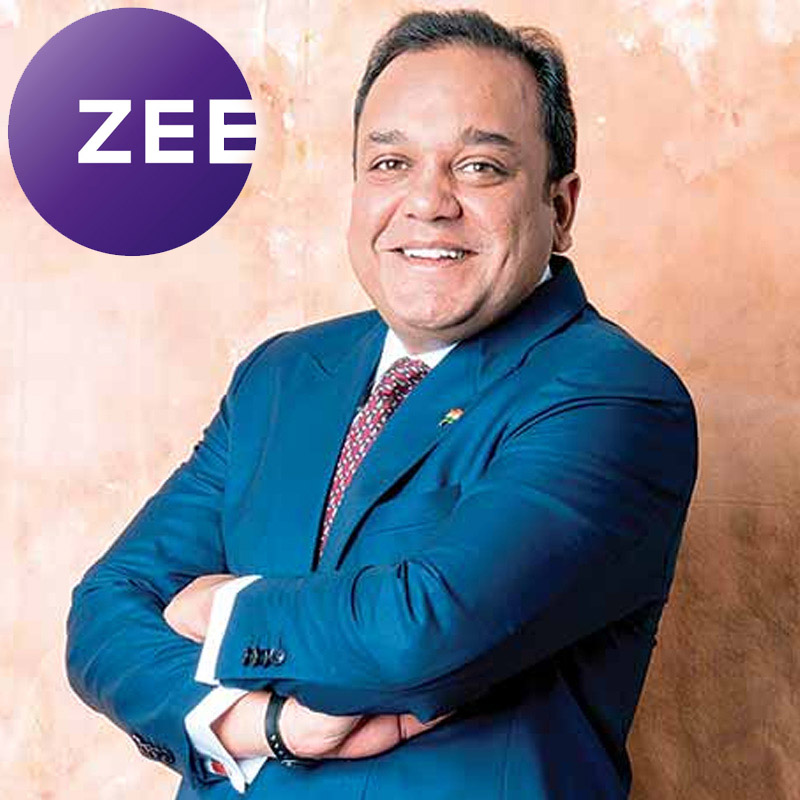
    Mumbai: The Bombay High Court on Tuesday allowed an appeal filed by Invesco Developing Markets Fund, the largest shareholder of Zee Entertainment Enterprises Ltd (Zeel), against a single-judge order granting an interim injunction on holding an EGM to remove Zeel MD and CEO Punit Goenka.

    A division bench of Justices SJ Kathawalla and Milind Jadhav quashed and set aside the single bench order of October 2021.

    “The appeal is allowed. The single bench order is quashed and set aside. We have held that the requisition notice (sent by Invesco to Zee) is neither illegal nor incapable of being set aside,” the court said.

    Senior counsel Aspi Chinoy, appearing for Zee, sought the court to direct for a status quo to be maintained.

    The court then directed for the status quo to be maintained for three weeks.

    The bench also said it has quashed all the observations made by the single bench in its order.

    In September 2021, Invesco had put out a requisition to the Zee board of directors to hold an extraordinary general meeting (EGM) because it felt the company was not running as smoothly as desired.

    The firm sought to remove three directors from Zee’s board, including Goenka.

    When Zee refused to respond to the requisition, Invesco moved an application before the National Company Law Tribunal (NCLT) in Mumbai, which directed Zee to consider the requisition under law.

    Zee then approached the high court, seeking a declaration that the requisition notice by Invesco to hold the EGM was illegal and invalid.

    A single bench of justice Gautam Patel had in October 2021 in an interim order granted an injunction against holding of the EGM.

    Subsequently, Invesco filed an appeal against the interim injunction order on the ground that the high court had no jurisdiction to hear the matter and that it ought to have been heard and decided by the NCLT.

  • Zeel-Invesco case: Bombay HC to continue hearing on 30 Nov

    Zeel-Invesco case: Bombay HC to continue hearing on 30 Nov

    Mumbai: At the Zeel-Invesco hearing held on Monday, the division bench of the Bombay high court decided to continue the hearing on 30 November. On 29 October, the court had granted a temporary injunction against the requisition notice by Invesco.

    Counsel appearing on behalf of Invesco stated that the court’s judgement to give injunction against requisition will have a far-reaching impact. He said “Court cannot injunct a meeting as it is the statutory right of shareholder with one-tenth share capital,” according to a Moneycontrol report.

    The Zeel-Invesco tussle began when the media company’s two top investors Invesco Developing Markets Fund and OFI Global China Fund LLC who combined own ~18 per cent stake in the company had sent a requisition notice to the company on 11 September to call for an extraordinary general meeting of shareholders.

    The investors had also sought the removal of long-standing directors and close associates of the Chandra family from the board. The two independent directors Ashok Kurien and Manish Chokhani have already submitted their resignations.  

    The investors moved to have six nominees appointed to the board of Zeel, which included Surendra Singh Sirohi, Naina Krishna Murthy, Rohan Dhamija, Aruna Sharma, Srinivasa Rao Addepali, and Gaurav Mehta as independent directors of the board for a term up to five consecutive years. The notice was received by Zeel on 12 September, and it informed the stock exchanges on 13 September, adding that the appointments are subject to approval by the ministry of information and broadcasting (MIB).

    Zeel refused to conduct the EGM citing “shareholders interest” and moved to Bombay high court on 2 October seeking to declare the requisition notice as ‘illegal and invalid.’

  • Trai extends deadline for NTO 2.0 implementation to 1 April 2022

    Trai extends deadline for NTO 2.0 implementation to 1 April 2022

    Mumbai: The Telecom Regulatory Authority of India (Trai) has extended the deadline for implementation of the new tariff order (NTO) 2.0 to 1 April 2022. The previous deadline was 1 December.

    Broadcasters will have to publish new reference interconnection offers (RIOs) to Trai by 31 December and simultaneously publish the required information about channel and bouquet offerings and their MRPs on their websites. The broadcasters who have already submitted their RIOs in compliance with NTO 2.0 can revise their RIOs by 31 December.

    The deadline was extended as Trai received representations from many service providers and their associations such as broadcasters, DTH operators, MSOs and DPOs, according to a report by ET. The authority, after considering the concerns expressed by various stakeholders and especially with respect to time frame for migration of subscribers and taking their choice, is of the view that paucity of time should not come in the way of implementation of the new regulatory framework 2020 in seeking informed choices of more than 150 million pay TV consumers.

    DPOs will have to obtain an option for subscription of new bouquets or channels from the subscribers in compliance with the provisions of NTO 2.0 from 1 February 2022 to 31 March 2022.

    DPOs will have to report the distributor retail price (DRP) of pay channels, composition of bouquet of pay channels/free-to-air channels and DRPs of bouquets of pay channels by 31 January 2022 besides simultaneously publishing the information on their websites.

    In June, the Bombay high court in its judgement upheld the NTO 2.0 order by Trai barring the second proviso of the twin conditions. The provision states that a-la-carte rates of pay channels shall not exceed more than three times the average rate of a pay channel of the bouquet of which such pay channel is part. TV broadcasters under the aegis of Indian Broadcasting Digital Foundation (IBDF) had moved to Bombay HC in January challenging the Trai order.

    After the Bombay HC pronounced its judgement, broadcasters escalated the matter to the Supreme Court. The final SC hearing is scheduled on 30 November. Meanwhile, Trai directed broadcasters to comply with the Bombay HC judgement and publish new prices of their pay channels and bouquets that comply with the tariff order.

    Leading broadcasters including Zee Entertainment Enterprises, Star and Disney India, Sony Pictures Networks India, Network18 Broadcast, Sun TV Network, Discovery Communications and WarnerMedia have published their RIOs effective from 1 December. As per NTO 2.0 provisions, Trai mandated a price cap of Rs 12 on pay channels to be included in a bouquet. To comply with this provision, major broadcasters pulled their popular channels from bouquets but also hiked the prices of these channels.