Tag: Bombay HC

  • DAS Phase III stayed in 5 states including Maharashtra as Bombay HC issues restraining order

    DAS Phase III stayed in 5 states including Maharashtra as Bombay HC issues restraining order

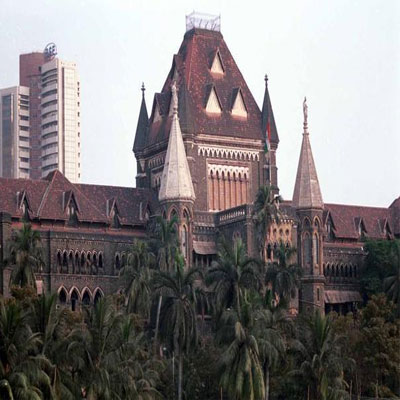
    NEW DELHI: Maharashtra has become the fifth state to join the group of states, which have obtained a High Court restraint on the implementation of digital addressable system (DAS) Phase III.


    The Bombay High Court cited a Supreme Court judgment and noted that a stay granted by a high court on a central notification in one state would be applicable in other states as well.


    The Hyderabad High Court and the Sikkim High Court have already granted stay on implementation of DAS Phase III primarily on the ground of shortage of set top boxes (STBs). In addition, the implementation of DAS in Tamil Nadu remains stayed after a bunch of petitions were admitted from Phase I onwards by the Madras High Court.


    The Hyderabad stay is for eight weeks in both Andhra Pradesh and Telangana, and the Sikkim stay is till 28 March, which is the next date of hearing. 


    Justice R D Dhanuka of the Bombay High Court said the Court will hear the matter on 1 February and gave the Government time to file its reply.


    Citing shortage of seeding of STBs as well as problems in interconnect agreements (ICA), petitioner Nashik Zilla Cable Operator Association (NZCOA) presented copies of the stay orders by other High Courts. Other petitioners were City Cable Operator Association of Nashik and Sai Big Star Welfare Association of Jogeshwari, Mumbai.


    Legal experts told Indiantelevision.com that while the Bombay High Court could use the precedent of other courts and direct a stay, this would only apply to areas under its jurisdiction and not pan-India. 


    Earlier on 23 December, 2015 a bench of the same Court had refused to extend the deadline and held that interim agreements could be entered into until the Telecom Regulatory Authority of India (TRAI) comes out with a model ICA. 


    TRAI has already issued a Consultation Paper on the subject and hopes to finalise a model ICA by mid-January, TRAI sources told this website.


    The extension of DAS does not augur well for the Information and Broadcasting Ministry, which may see a catapulting of such cases as reports pour of just over 50 per cent of seeding of STBs. 


    In most cases, the Courts turned down a plea by TRAI to be impleaded though it was permitted to file applications for this purpose. 


    The directive by the Hyderabad High Court was notable in that Justice Vilas V Afzalpurkar went against an order given by a division bench of which he was a member in the same court relating to Phase III on 20 August, 2013.


    As reported earlier, the Maharashtra Cable Operators Federation had also expressed difficulties in the 13th Task Force meeting held on the eve of the switch-off and had in fact said that seeding pan-India was less than 50 per cent even as the government claimed 76 per cent seeding and said the percentage achievement was 86.25 if Tamil Nadu that has some legal and other issues is excluded. The meeting was told there were only 405 zero seeding areas till the last report.


    The first phase of digitisation covered four metro, Mumbai, New Delhi, Kolkata and Chennai. In the second phase 38 cities were covered with population more than one million. About 630 districts and 7709 urban areas will be covered in DAS Phase III aimed at all urban areas while the fourth phase by 31 December, 2016, this year will cover the rest of the country.
  • Bombay HC to hear Nasik District Cable Operators Federation’s plea on 22 December

    Bombay HC to hear Nasik District Cable Operators Federation’s plea on 22 December

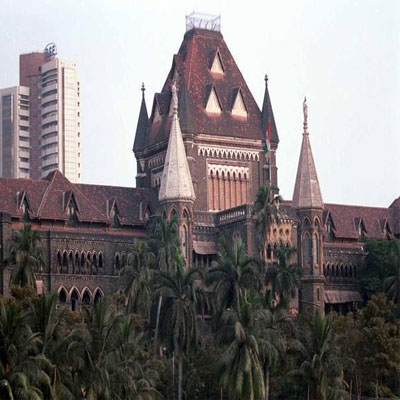
    MUMBAI: Nasik District Cable Operators Federation (NDCOF) has filed a plea in the Bombay High Court in order to get a stay order on cable TV digitisation process. The plea will go for hearing on 22 December, 2015.


    “If Inter Connect Agreement (ICA) under which comes a major part of the digitisation process, is not ready how can we go ahead with Digital Addressable System (DAS)? There are lessons, which Phase I and II of DAS has taught us and we are not ready to face the same issues again. That’s why we have decided to take the legal route,” a member of NDCOF told Indiantelevision.com.


    Now it remains to be seen what happens when the Bombay High Court gives out its verdict on the case on 22 December.

  • Bombay HC dismissed conflict of interest petition against N Srinivasan

    Bombay HC dismissed conflict of interest petition against N Srinivasan

    MUMBAI: Narayanaswami Srinivasan can breathe for a while now. The Bombay High Court has dismissed a public international litigation (PIL) that had challenged the current International Cricket Council (ICC) chairman’s conflict of interest while running the affairs of Board of Control for Cricket in India (BCCI).

    In September, the Cricket Association of Bihar, which had filed a PIL in the Bombay High Court, seeked the appointment of an independent Governance Review Committee that would review the rules and regulations of the cricket body in India.

    The PIL allegedly stated that the BCCI was being used as a platform to serve the personal interests of few people including that of Srinivasan, who has been stood down from his position till the Supreme Court adjudicated on the ongoing hearing on corruption in the Indian Premier League.

    The PIL has been filed by Cricket Association of Bihar secretary Aditya Verma, who has stated that the rules and regulations of the BCCI have also been allegedly tampered with in such a way that the people could use for their own purposes and points out towards   the spot-fixing scandal in the IPL.  Meanwhile, on 10 November the Supreme Court of India raised a question if Srinivasan could be allowed to head the BCCI in case his son-in-law Gurunath Meiyappan was found to be involved in IPL-6 betting and spot-fixing scandal.


  • Bombay HC asks board to reconsider certification of Bhansalis film

    Bombay HC asks board to reconsider certification of Bhansalis film

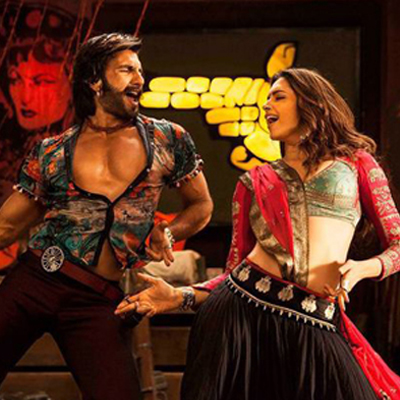
    MUMBAI: The Bombay High Court on Wednesday directed the appellate tribunal of the Central Board for Film Certification (CBFC) to reconsider the U/A certification given to Sanjay Leela Bhansali’s recently released film, Goliyon Ki Rasleela – Ramleela.


    An observation was made by the Division Bench of Justices V M Kanade and M S Sonak that the CBFC did not apply its mind while granting certification to the film. The court was acting on a petition filed by Sandeep Shukla, a member of the Congress and vice-president of Shree Maharashtra Ramleela Mandal. The mandal organises Ramleela every year during Navratri at Azad Maidan. Shukla claimed that the film’s title is misleading and the contents have hurt the religious sentiments of followers of Hindu deity Ram and Hanuman.


    The court asked the CBFC to consider whether the guidelines of the Cinematograph Act were followed before granting certification to the movie. “Utmost care has to be taken by the board in such cases and ensure that the guidelines are followed and that there are no violations,” said the court.


    Although the board tried to convey to the court that the guidelines were followed in their view, the judges were not satisfied and said that there has been non-application of mind. The judges said that the


    board did not apply its mind while granting certification to Bhansali’s movie. They also noted that the CBFC has to be careful in the future while issuing certification to movies.


    The petition was filed against director and producer of the movie Sanjay Leela Bhansali, the Production Company, Eros International Media Limited and the CBFC, which granted the film a U/A certificate on 1 November. The court also directed the CBFC to see if any content of the movie or its title has violated any fundamental rights of citizens as alleged by the petitioner and disposed of the petition.


    According to the petition, the term ‘Ramleela’ has been historically associated with the plays depicting the life of Ram. Since the movie is based on a love story and not on the conventional meaning attributed to ‘Ramleela’, the petitioners claimed that the producers are “deliberately and intentionally” using the term for commercial success.
    “The commercial exploitation of the word ‘Ramleela’ amounts to infringement. The defendants cannot be allowed to misuse the same for their commercial venture,” the petition stated.

  • SC fumes at Bombay HC’s stay on tobacco ads law

    NEW DELHI: The Supreme Court has strongly criticised the Bombay High Court‘s interim order seven years ago staying issuance of ban on advertisements under the Cigarettes and Other Tobacco Products (Prohibition of Advertisement and Regulation of Trade and Commerce, Production, Supply and Distribution) Act 2003.

    “There is total frustration of an Act framed in public interest,” the apex court remarked when counsel Prashant Bhushan sought lifting of the stay on the operation of the law by an interim order seven years ago.

    The Supreme Court expressed surprise that the interim order was continuing for the last seven years. A bench led by Justice G S Singhvi issued notices to the central government and six tobacco traders of Maharashtra on whose lawsuit the Bombay High Court had passed the interim order.

    A non-governmental organisation (NGO) Health for Millions says in a lawsuit that the top court and various high courts have issued specific directions for implementation of provisions of the 2003 Act keeping in mind the larger interests of the society and minors.

    At least one million people die in India every year due to tobacco consumption in its various forms and it is also responsible for 40 per cent of non-communicable diseases, including cancer, cardiovascular diseases and lung disorders.

    But the Bombay High Court ignored these aspects while passing the interim order, Bhushan said, and referred to the Global Adult Tobacco Survey India Report 2010 which stated that about 35 per cent of adults (15 years and above) in India use tobacco in some form or the other.

  • Bombay HC declares Shree Ashtavinayak Cinevision defaulters

    Bombay HC declares Shree Ashtavinayak Cinevision defaulters

    MUMBAI: The Bombay High Court has declared Shree Ashtavinayak Cinevision as defaulters over the non-payment of dues to film financier Raju Shah.

    Shah had moved the court after the cheques issued by the production house bounced. He has reportedly claimed dues of Rs 410 million.

    The court has also directed the company to come clean about its business dealings and various rights related to its latest film Bol Bachchan scheduled to release on 6th July. According to insiders, the film has been acquired by Fox Star Studios for a whopping price of 720 million.

    A trade analyst, on conditions of anonymity, said that the release of the film may not be affected at this juncture since on record the film has already been ‘delivered‘ by the processing lab Reliance MediaWorks Ltd.

    It is a common film industry practice these days when an aggrieved creditor approaches the concerned film lab to block the delivery of the film until his dues are paid.

    The film is directed by Rohit Shetty and stars Ajay Devgn, Abhishek Bachchan (in double role), Asin and Prachi Desai.

  • Plagiarism case: Bombay HC raps CNN-IBN

    NEW DELHI: In a landmark final order in the case between Urmi Juvekar Chiang Vs Global Broadcasting Network and others, the Bombay High Court yesterday ruled that CNN-IBN has breached the confidentiality of Chiang and violated her copyright.

    The court also reprimanded CNN-IBN editor Rajdeep Sardesai for stating in the court that he did not know that one of his team, Ramchandran Srinivasan, had been talking to Chiang about her proposed TV reality show.

    The court, in its ruling, stated: “The claim of the Defendants that they have conceived in-house programme “Summer Showdown” around March-April 2007 as a reality show comprising families in metros dealing with problems related to summer, even if accepted, does not take the matter any further.

    “For, the Defendants have eventually come out with the programme which departs from the theme of the title ‘Summer Showdown’ but is ascribable to the theme of the programme of the Plaintiff titled ‘Work in Progress’.”

    In fact, the court underscored a similar order of the Delhi High Court, which had said that if protection is not granted in such cases to the persons whose original work is violated thus, it would be “catastrophic for the television industry”.

    The channel had countered Chiang’s claim that its show (Summer Showdown) was based on Chiang’s original literary piece for a proposed reality show (Work in Progress), by stating that theirs was not a reality show, but the court said that this statement did not fit the facts.

    CNN-IBN had been advertising in its website, stating that Summer Showdown was indeed their new reality show, and this was given in evidence to the court by Chiang, whose plaint the court upheld on all counts.