Tag: Bombay HC

  • No relief for Arnab Goswami as Bombay HC reserves order

    No relief for Arnab Goswami as Bombay HC reserves order

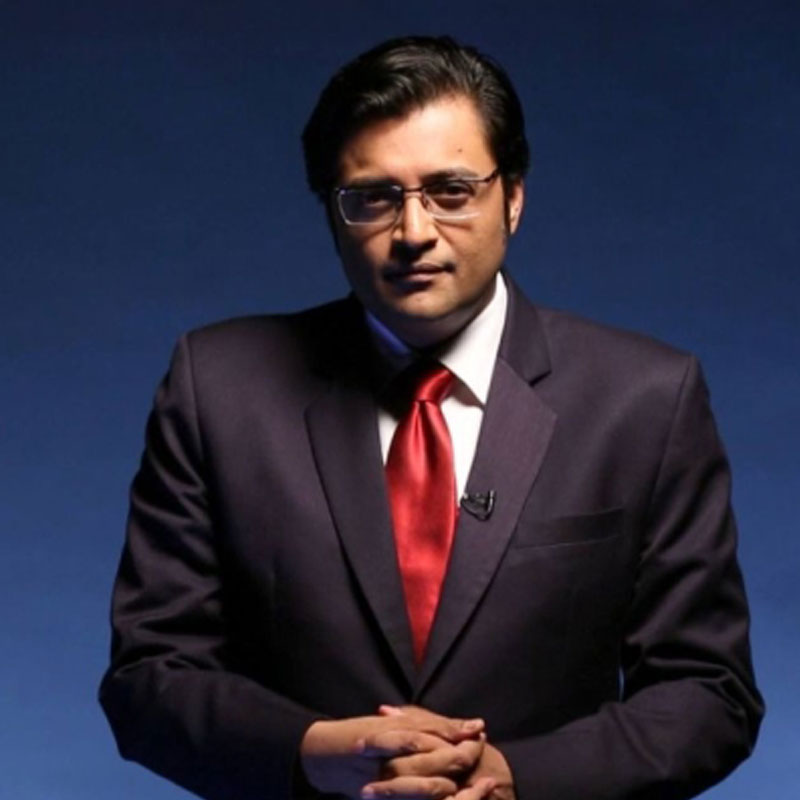
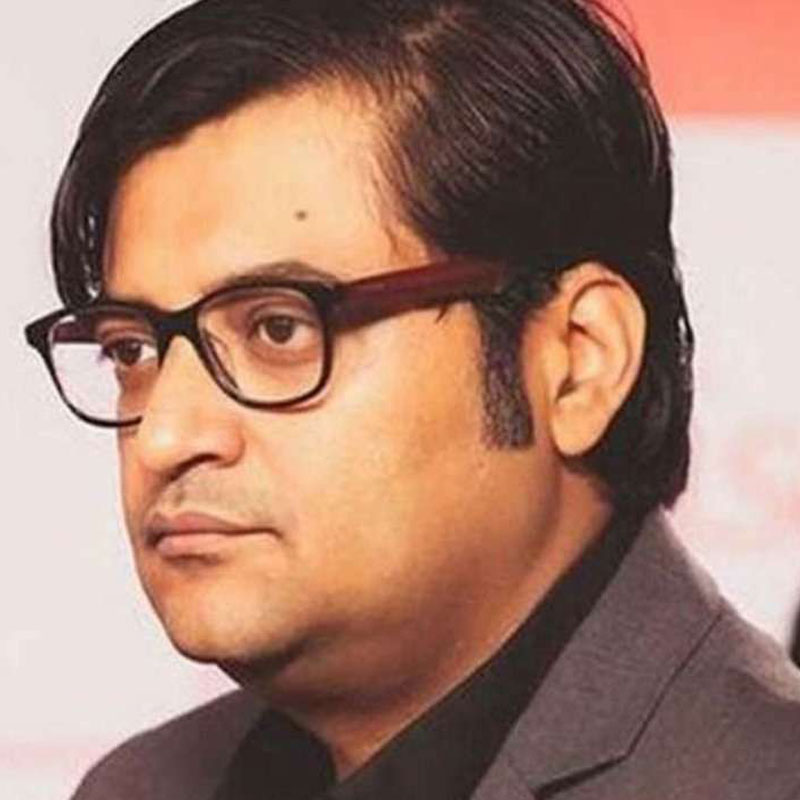
    NEW DELHI: After a six-hour-long special hearing on Saturday, the Bombay high court has reserved its order on Republic TV editor-in-chief Arnab Goswami’s plea seeking interim release from custody in the 2018 abetment to suicide case. The court is expected to release orders in the coming week.

    The bench headed by justice SS Shinde and MS Karnik refused to pass an immediate order of interim relief but clarified that the pendency of the case in the high court will not bar the petitioners from seeking regular bail under section 439 before the concerned court. The decision will have to be given by the concerned court, in case of filing of such a petition by Goswami and other petitioners, within four days. 

    “We can't pass order today. It is already six. Meanwhile we will clarify that pendency of the petition will not bar the petitioner from approaching the sessions court for bail and if such an application is filed, it should be decided within four days,” the bench observed.

    When senior advocate Harish Salve, appearing on behalf of Goswami, pressed for interim bail, the court said that it could not pass an order immediately, and that it needed to consider the compilations and submissions made by the parties involved in the case.

    It was the third consecutive day of hearing of the habeas corpus plea made by Goswami stating that his arrest in a “decisively closed” case was “illegal” and was done with the intent of vendetta by the Maharashtra government and Mumbai police for his critical reportage. 

    Goswami remains in 14-day judicial custody after he was arrested from his Mumbai residence on the morning of Wednesday, 4 November. 
  • Bombay HC denies interim relief to Arnab Goswami

    Bombay HC denies interim relief to Arnab Goswami

    NEW DELHI: Refusing to grant interim relief to Republic TV editor-in-chief Arnab Goswami, the Bombay HC has adjourned the remand hearing for Friday, 6 N0vember 2020. Goswami is currently in 14-day judicial custody in a 2018 case of abetment to suicide. 

    The bench of Justices S S Shinde and M S Karnik observed that they can’t pass an interim order without hearing the complainant and the state. 

    Further, the bench has issued a notice on the petition to the state and also to the complainant Adnya Naik, daughter of the deceased Anvay Naik, an architect by profession. In his suicide note, Naik wrote that he was taking the drastic step because of three people for non-payment of dues to his interior designing firm CDPL. Goswami was named by him in the same note, along with Feroz Shaikh of IcastX/Skimedia and Niteish Sarda of Smartworks.

    In his habeas plea, Goswami alleged that the decisively closed case was reopened “with the sole purpose of misusing power, concocting facts and forcefully arresting the petitioner in a prima facie act of revenge and vengeance for his news coverage which questioned those in power in the state of Maharashtra.”

    Goswami further claimed that he has been wrongfully detained and assaulted in another attempt of political witch hunt and vendetta politics against him and his news channel. 

    The journalist was arrested on Wednesday morning from his Mumbai residence and remanded in 14-day judicial custody on the same evening. 

  • Arnab Goswami moves Bombay HC against his ‘illegal arrest’

    Arnab Goswami moves Bombay HC against his ‘illegal arrest’

    NEW DELHI: Republic TV editor-in-chief Arnab Goswami has filed a petition in Bombay high court against his “illegal arrest” and has sought the quashing of the FIR lodged against him by the Alibaug Police, PTI reported. 

    A division bench of justices SS Shinde and MS Karnik will hear the plea in the afternoon today.

    The journalist was arrested from his Mumbai home in the early hours of Wednesday morning in relation to the 2018 abetment to a suicide case of an interior designer and his mother. The designer had alleged, in a suicide note, that Goswami and two other clients of his had not paid their dues. Two other arrests were also made in this regard. Later in the day, Goswami was sent to 14-day judicial custody.

    Reports also mention that Mumbai police has registered FIR against Goswami, his wife, son and two others for allegedly assaulting a female police official.

    Goswami’s arrest has sparked widespread criticism of the Maharashtra government and the Mumbai police, with many calling it an act of vendetta against him for his journalism. Several celebrities, ministers, journalists, and broadcasting associations have raised questions on the manner in which he was arrested. 

  • Can media reporting hamper due course of law, asks Bombay HC

    Can media reporting hamper due course of law, asks Bombay HC

    NEW DELHI: The Bombay high court has sought written submissions from all parties regarding the adverse effects of media reporting on any investigation and the court’s own jurisdiction in such cases, in the ongoing case of PIL against media trials. The case has been pushed to 6 November for further hearing. 

    Stating that the court wants to give guidelines with respect to interference during investigation prior to the filing of the charge sheet, the bench of chief justice Dipankar Datta and justice GS Kulkarni sought answers on the issue of if the media should report responsibly keeping in mind the facts. 

    Regarding the reporting on ‘accused’, the court asked if trial by media would lead to interference in deciding whether an accused goes for trial or not; accused being on guard or tampering with evidence; tarnishing of reputation in case of an innocent person, et al. 

    It also asked, “Can you guarantee a police officer will not be influenced by media statements like ‘this is not the right track for investigation’ and then start hounding an innocent person?"

    Read our coverage on the Sushant Singh Rajput case 

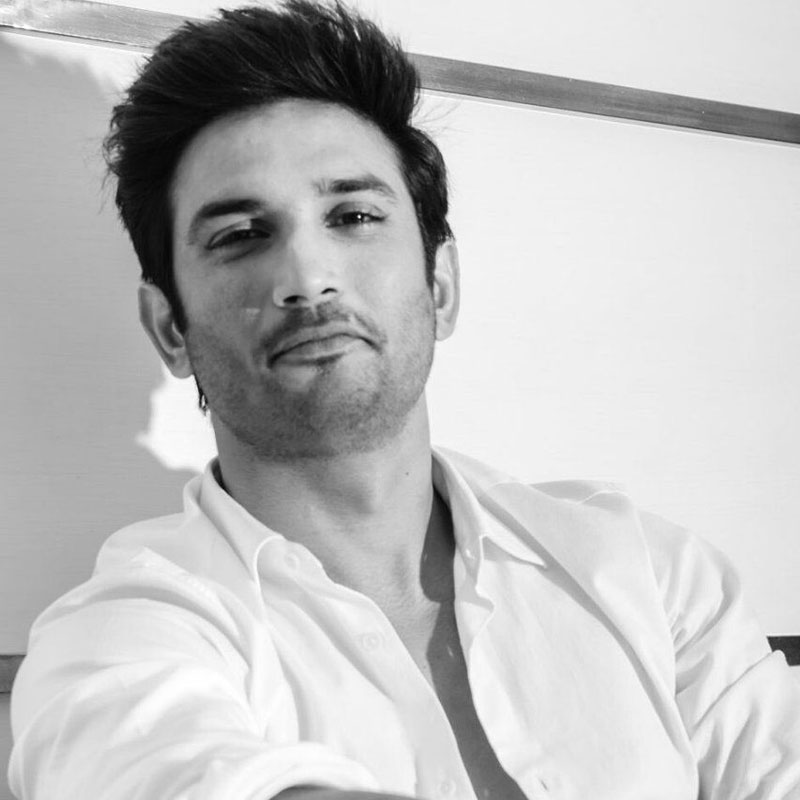
    The court has also directed the parties to answer if the sensationalised reportage in the Sushant Singh Rajput case amounted to a media trial and whether the court can intervene in such matters.  

    The bench noted, “Let us not be blinded by precedents. Come to the bare facts, let us know the boundaries of our own jurisdiction.”

    The court also showed concern for the safety of the witnesses and if media trial can force them to turn hostile. 

    The court also opined that if the media wants to aid in the investigation, it can do so under the provisions of the Code of Criminal Procedure by giving information with the police.

    At its last hearing, the Bombay high court said it may have to lay down guidelines to check the rash of media trials in the country. 
     

  • Media trials: Bombay HC says ‘will have to lay down guidelines’

    Media trials: Bombay HC says ‘will have to lay down guidelines’

    NEW DELHI: The Bombay high court has said that in light of recent events, it may have to lay down guidelines to check the rash of media trials in the country.

    While listening to a tranche of pleas seeking restraining orders against trial by media in the Sushant Singh Rajput case, the division bench of chief justice Dipankar Datta and justice Girish S Kulkarni observed that journalists today have lost their neutrality and the media has become "highly polarised."

    The court's remarks came on the back of clarifications by advocate Ankit Lohia, counsel for Zee News, that the channel was not guilty of the allegations made by the petitioners and that there was no need for government interference in functioning of channels.

    "We are ruled by the rule of law. How do you advocate that people who go around accusing others can find shelter of freedom of press? Journalists back then were responsible and neutral, now the media is polarised. This is not a question of regulation. This is a question of checks and balances. People forget where to draw lines. Do it within lines," responded the chief justice.

    The bench informed the parties that through the arguments, they were initiating a discussion so that the government can take suggestions and perhaps come up with a balanced policy to regulate electronic media.

    "We won't like to stop the media. There are precedents and we are bound by those precedents. But we are dealing with something that is not in precedents, hence we will have to lay down guidelines," the bench said.

    The court also asked the News Broadcasters Federation (NBF) why no suo motu action can be initiated for "irresponsible coverage" of criminal sensitive matters and "media trial" in the case.

    The court is hearing arguments on whether a statutory mechanism is required to regulate the TV news content. The Union government, National Broadcasting Standards Authority and the news channels which are party to the case told the court that the electronic media has a self-regulatory mechanism and the state must not have any control over their content.

    The hearing will continue next week.

  • NTO 2.0 hearing postponed, TRAI assures no action till next hearing

    NTO 2.0 hearing postponed, TRAI assures no action till next hearing

    KOLKATA: The uncertainty regarding the implementation of NTO 2.0 prevails, as the broadcasters’ petition against The Telecom Regulatory Authority of India's (TRAI) move to make them comply with the order by 10 August, went unheard for the second day on Friday due to paucity of time. The case has been listed before the original bench for Monday or Tuesday.

    Earlier, the Bombay high court, suspended all the hearings due to heavy rains on Thursday when the matter was listed for hearing.

    According to the sources close to the development, the bench has not passed any order at Friday’s hearing but has listed it before the original bench comprising of Justice AA Sayed and Justice Anuja Prabhudesai. However, TRAI has reassured no action will be taken till the matter comes up before the original bench. 

    While the legal battle is ongoing for a long-time, TRAI citing a regulatory vacuum released a fresh directive on 24 July irking the broadcasters who have already been battling with the impact of the pandemic. It asked broadcasters must publish details including maximum retail price per month of channels and maximum retail price per month of bouquets of channels, the composition of bouquets and also amended reference interconnected offer (RIO) and other on their website.

  • Bombay high court permits persons above 65 years to work on film, TV sets

    Bombay high court permits persons above 65 years to work on film, TV sets

    MUMBAI: The Bombay high court has quashed Maharashtra government’s order for age limit on set. After constant appeal from the Indian Motion Pictures Producers Association (IMPPA) and Cine And TV Artistes' Association (CINTAA), the high court has finally allowed all people above 65 years of age associated with the entertainment industry to resume work on the sets of films and TV shows.

    A bench of chief justice Dipankar Datta and justice AS Gadkari, while hearing two petitions filed by the Indian Motion Pictures Producers Association (IMPPA) and actor Pramod Pandey, have taken this decision.

    The division bench of judges has allowed all producers, technicians, workers and artists to work. However, they will have to strictly adhere to the advisories which are applicable to all senior citizens as is applicable in case of all other citizens in the state.

    Earlier the high court had questioned the state government on the concerned matter and asked how it can stop senior citizens from working and earning a livelihood.

    The court had, during the hearing, appointed senior counsel Sharad Jagtiani as amicus curiae in the matter. IMPPA and television artist Promod Pande were represented by advocate Ashok Saraogi.

    According to IFTPC chairman TV wing JD Majethia there is certain ambiguity in the order. It is Bombay high court’s judgement but the film and television fraternity will also need to have clarification from Maharashtra government. He adds, “The major challenge in this issue is that insurance companies are not giving insurance cover for people above the age of 60 years. And as per the protocols, every member present on the set needs to have Covid2019 insurance cover. We will reach Maharashtra government for clarity, we will also speak to our lawyers to understand the order and will appeal to the government to  revise copy.”

    Earlier IMPPA President TP Aggarwal had stated that  that for all senior producers, directors, actors and technicians the creative medium is the only source of income and the guideline was not practical and was not fair as in no other profession this condition was imposed. After sending requests many times, the association had to move the high court for demanding the rights of earning one’s livelihood for these senior people from the fraternity.

    Apart from that, Cine And TV Artistes' Association (CINTAA) senior vice president and actor Manoj Joshi had met the governor of Maharashtra Bhagat Singh Koshyari to discuss this issue. CINTAA had also sent letters to chief minister Uddhav Thackeray, minister Subash Desai and former chief minister Devendra Fadnavis.
     

  • Bombay HC restraints 2 TV channels from broadcasting Zeel-owned films

    Bombay HC restraints 2 TV channels from broadcasting Zeel-owned films

    KOLKATA: In the month of July 2020, media giant, Zee Entertainment Enterprises Ltd (ZEEL) moved the Bombay high court to restrain television channels Maha Movie and Manoranjan TV from broadcasting its films namely Jung (1996) and Kartavya (1979) without obtaining a license from ZEEL for the same. The court passed an order asking them to suspend future broadcasting of the movies in any form or through any medium.

    Maha Movie is a television channel owned by Teleone Consumer Products Pvt Ltd and Manoranjan TV is a television channel owned by Creative Channel Advertising and Marketing Pvt Ltd.

    The matter was heard by justice KR Shriram on 16 July 2020 where ZEEL submitted that in the end of June 2020, it learnt that the Teleone Consumer Products Pvt Ltd and Creative Channel Advertising and Marketing Pvt Ltd were broadcasting both the films on their respective television channels without authorisation from ZEEL. Upon collecting data from Broadcast Audience Research Council (BARC), ZEEL learnt that Jung has been broadcasted thirty-seven times and Kartavya thirty-two times on Maha Movie and Jung has been broadcasted forty-two times and Kartavya nine times on Manoranjan TV till 2 July 2020.

    The court held that unauthorised broadcast/exploitation of the suit films on the said TV channels is a violation of the copyright vested in ZEEL. It also added that it was restraining the channels from creating, alienating and/or transferring any rights in Jung to a third party.

    By and under a Film Assignment Agreement executed between Soham Rockstar Entertainment and Zeel, the latter acquired exclusive linear rights, on-demand rights, local cable distribution rights, catch up TV rights, syndication rights, editing rights, promotion rights, air borne rights,

    surface transport rights, commercial establishment rights, dubbing rights, subtitling rights, Doordarshan rights, home video rights, subtitling rights in all languages of the world including Indian languages, and non-exclusive performance rights, merchandising rights, dubbing rights and clip rights in a total of sixty-four films, including the Jung and Kartavya, for a term of 10 years commencing from 19 July 2017 in respect of linear rights, home video rights, local cable distribution rights, subtitling and dubbing rights for Jung; 1st October 2016 in respect of on-demand rights for Jung and Kartavya; 15th September 2016 in respect of home video rights and

    local cable distribution rights for Kartavya, for the entire world, including India and overseas territories.

  • Bombay HC asks TRAI to take instructions on deferment of NTO 2.0

    Bombay HC asks TRAI to take instructions on deferment of NTO 2.0

    MUMBAI: The Bombay High Court has asked the Telecom Regulatory Authority of India (TRAI) to take instructions on deferment of (new tariff order) NTO 2.0 as they did for the 2017 regime before the Madras High Court. According to sources close to the development, the regulatory body has been asked to submit a deferment plan.

    TRAI has to respond at the next hearing scheduled on 27 February. As per the sources, today’s hearing went on for more than two hours and TRAI will continue its argument tomorrow. At first, broadcasters argued for the interim relief which was slightly opposed by TRAI.

    “The court asked why it can’t be deferred for one more month and within which the court can complete the hearing. If this can’t be deferred for one month, then court will decide on the interim relief tomorrow itself,” one of the sources said.  

    TRAI's counsels will take instructions from TRAI on the plan to defer NTO 2.0 just like they voluntarily deferred 2017 NTO before Madras HC.

    At the beginning of 2020, the industry watchdog modified certain provisions (described as impugned provisions) of the new price regime which was implemented last year. TRAI prescribed twin conditions on pricing.

    They were:

    1. The sum of the a-la-carte rates of the pay channels (MRP)forming part of a bouquet shall in no case exceed one and a half times the rate of the bouquet of which such pay channels are a part.

    2. The a-la-carte rates of each pay channel (MRP), forming part of a bouquet, shall in no case exceed three times the average rate of a pay channel of the bouquet of which such pay channel is a part.

    Recently, TRAI asked broadcasters and distribution platform operators (DPOs) to take necessary steps to ensure a smooth rollout of the amended new tariff order from 1 March. Both broadcasters and distribution platform operators (DPOs) had been directed to publish the required information on their website to provide consumers sufficient time to exercise their choice of channels and bouquets before the implementation.

  • Bombay HC to hear petitions against TRAI order

    Bombay HC to hear petitions against TRAI order

    MUMBAI: The Bombay High Court will hear on 26 February a petition filed by the Digital Cable Operators Association of Mumbai (DCOAM) and Maharashtra Cable Operations Foundation (MCOF), challenging the 'arbitrary' rules introduced by the TRAI.

    They challenged before the High Court the network capacity fee (NCF) implemented by TRAI under the NTO-2 regime. The operators’ main contention was with regard to the NCF cap of Rs 160/month fixed by TRAI and additional TV connections and discounts. The petitioners claimed that the NTO would hinder their basic right to do business.

    The court has set aside the matter for hearing for Wednesday.

    Adv Rahul Soman, who appeared for the operators, contended that the TRAI has not fixed an upper limit for extra channels. So, the situation is such that customers can demand any number of channels, which will hamper the cable operators’ business, argued the lawyer.

    A lot of stakeholders, in addition to some individuals, have moved various high courts in the country, challenging the TRAI’s new price regime. They include various broadcasters and bodies like the Indian Broadcasting Foundation (IBF).

    Early this year, TRAI stipulated 200 channels for a NCF of Rs 160. The regulator has also directed the DPOs not to charge more than the stipulated monthly charge of Rs 160 for providing all the available channels.