Tag: Bombay HC

  • Zeel-Invesco case: Bombay HC to pronounce order on 26 Oct

    Zeel-Invesco case: Bombay HC to pronounce order on 26 Oct

    Mumbai: The Bombay high court on Friday reserved its order in a civil suit filed by Zee Entertainment Enterprises Ltd (Zeel) seeking to declare the requisition notice sent by the company’s largest shareholder Invesco.

    The court has adjourned the matter to 26 October for the pronouncement of the order, according to a report by ET.

    Zeel argued before the bench that requisition notice was illegal because the shareholders have not taken prior approval from the ministry of information and broadcasting. They also said that the notice was in violation of various rules and guidelines of the Securities and Exchange Board of India (SEBI), the ministry of information and broadcasting (MIB), and the Competition Commission of India (CCI).

    “Shareholders are saying listing obligations and disclosure requirements regulations are merely guidelines, which is totally incorrect,” argued counsel, on behalf of Zeel. They also stated that a listed company cannot have a board meeting without MD and CEO.

    “Zeel’s board is acting in accordance with the spirit of the Companies Act that is a fiduciary duty towards its shareholders and their best interest,” said the advocate.

    Invesco’s side stated that they have a statutory right to call for an extraordinary general meeting (EGM) and have moved to the National Company Law Tribunal (NCLT). “The tribunal has the power to decide on this case,” it noted, “this is not a stage at which the high court should be troubled.”

    The Zeel-Invesco tussle began when the media company’s two top investors Invesco Developing Markets Fund and OFI Global China Fund LLC who combined own 18 per cent stake in the company had sent a requisition notice to the company on 11 September to call an EGM even after two weeks, the investors moved to NCLT, citing provisions of company law, according to which the company is bound to call for an EGM within a specific number of days if stakeholder demanding it owns more than 10 per cent of the company.

    The investors had also sought the removal of long-standing directors and close associates of the Chandra family from the board. The two independent directors Ashok Kurien and Manish Chokhani have already submitted their resignations. 

    The investors moved to have six nominees appointed to the board of Zeel, which included Surendra Singh Sirohi, Naina Krishna Murthy, Rohan Dhamija, Aruna Sharma, Srinivasa Rao Addepali, and Gaurav Mehta as independent directors of the board for a term up to five consecutive years. The notice was received by Zeel on 12 September, and it informed the stock exchanges on 13 September, adding that the appointments are subject to approval by the MIB.

    Zeel refused to conduct the EGM citing ‘shareholders interest’ and moved to Bombay high court on 2 October seeking to declare the requisition notice as “illegal and invalid.” Meanwhile, Invesco filed a petition with the NCLT to demand their right to call for an EGM. 

  • Bombay HC stays parts of new IT rules

    Bombay HC stays parts of new IT rules

    New Delhi: The Bombay high court has granted an interim stay to the implementation of parts of the Information Technology (IT) Rules, 2021 which require that all online publishers follow a “code of ethics” and norms of conduct.

    According to the court, “prima facie” (on the face of it), sub-clauses 1 and 3 of clause 9 of the Intermediary Guidelines and Digital Media Ethics Code Rules, 2021 violated the petitioners’ constitutional right to freedom of speech and expression under Article 19. Provisions of clause 9 also went beyond the scope of the substantive law (the Information Technology Act of 2000), it added further, according to PTI.

    The court was hearing two petitions filed by digital news portal `The Leaflet’ and journalist Nikhil Wagle which had challenged the new regulations notified by the government in February this year. According to the petitions, the new rules are “vague”, “draconian”, and bound to have a “chilling effect” on the freedom of press and right to free speech guaranteed by the Constitution. The petitioners had also contended that the rules “go beyond the parameters set by the Information Technology Act and limits set under Article 19 of the Constitution”, and sought an interim stay on the implementation of the new IT Rules till the court gives its final decision in the matter.

    Meanwhile, the high court has refused to stay clause 14 that pertains to the setting up of an inter-ministerial committee with powers to regulate online content and deal with grievances and breach of rules, and clause 16 which is about blocking of online content in case of an emergency.

    The Information Technology (Intermediary Guidelines and Digital Ethics Code) Rules, 2021 seek to regulate dissemination and publication of content in cyber space, including social media platforms. The rules notified in February, also recommend a three-tier mechanism for the regulation of all online media. Under the rules, the digital publishers are required to take urgent steps for appointing a grievance officer, if not done, and place all relevant details in the public domain. They also need to constitute self-regulatory bodies through mutual consultation so that the grievances are addressed at the level of publishers or the self-regulating bodies themselves.

    It is significant to note that similar petitions opposing the new rules have been filed in high courts across the country.

  • Bombay HC seeks government’s response over stay on IT media rules

    Bombay HC seeks government’s response over stay on IT media rules

    New Delhi: The Bombay high court has asked the central government to submit a response as to why an interim stay should not be given to the implementation of the Information Technology (IT) Rules, 2021, as demanded by two petitions.

    “File a short affidavit on why interim relief should not be granted,” the HC told the Union government, adjourning the hearing to 13 August.

    The court was hearing two petitions filed by digital news portal `The Leaflet’ and journalist Nikhil Wagle who had challenged the new regulations notified by the government in February this year. According to the petitions, the new rules are “vague”, “draconian”, and bound to have a “chilling effect” on the freedom of press and right to free speech guaranteed by the Constitution.

    The petitions had also contended that the rules “go beyond the parameters set by the Information Technology Act and limits set under Article 19 of the Constitution.”

    It is significant to note that similar petitions opposing the new rules have been filed in high courts across the country. The government has been asked to submit its response by 13 August.

    In a separate case, the government told the Delhi high court on Tuesday, that Twitter was prima facie in compliance with the new IT Rules by appointing a chief compliance officer (CCO), resident grievance officer (RGO) and nodal contact person on permanent basis.

    The Information Technology (Intermediary Guidelines and Digital Ethics Code) Rules, 2021 seek to regulate dissemination and publication of content in cyber space, including social media platforms.

    The rules also recommend a three-tier mechanism for the regulation of all online media. Under the rules, the digital publishers are required to take urgent steps for appointing a grievance officer, if not done, and place all relevant details in the public domain. They also need to constitute self-regulatory bodies through mutual consultation so that the grievances are addressed at the level of publishers or the self-regulating bodies themselves.

  • Bombay HC upholds TRAI’s NTO 2.0 except second provision of twin conditions

    KOLKATA: After a long legal battle between broadcasters and the telecom regulatory authority of India (TRAI), the Bombay High Court on Wednesday pronounced judgment on the amended new tariff order (NTO 2.0) case. 

    The court has upheld the constitutional validity of NTO 2.0 but has partly struck down the second provision of the twin conditions.

    As per the second provision, the a-la-carte rates of each pay channel (MRP), forming part of a bouquet, shall in no case exceed three times the average rate of a pay channel of the bouquet of which such pay channel is a part. The court has mentioned the clause as an arbitrary condition. 

    The Indian Broadcasting Foundation (IBF), along with other broadcasters had filed a writ petition in the Bombay High Court against TRAI in January 2020, soon after the regulations came into place.

    More to follow…

  • Bombay HC questions Mumbai police over TRP scam press conference

    Bombay HC questions Mumbai police over TRP scam press conference

    MUMBAI: After months of media furore, high profile arrests, mudslinging and courtroom drama, we have come back full circle in the TRP manipulation case. Today, the Bombay high court raised a pertinent question – what prompted the Mumbai police to hold a press conference last year over the alleged TV ratings scam. 

    The court was hearing a petition filed by ARG Outlier Media (holding company for Republic TV channels) challenging the criminal proceedings initiated against its channel and employees in the controversial matter. ARG Outlier is seeking, among other reliefs, that the Mumbai police's probe into the TRP scam be transferred to the CBI or any other independent agency.


    "Does the police have an obligation to interact with the press? Why did the commissioner (of police) have to speak to the press?" a bench of justices SS Shinde and Manish Pitale asked.

    The bench was responding to the arguments made by the ARG Outlier Media's counsel, senior advocate Ashok Mundargi.

    Mundargi told the high court that the police had malafide intentions behind holding the press conference in October last year.

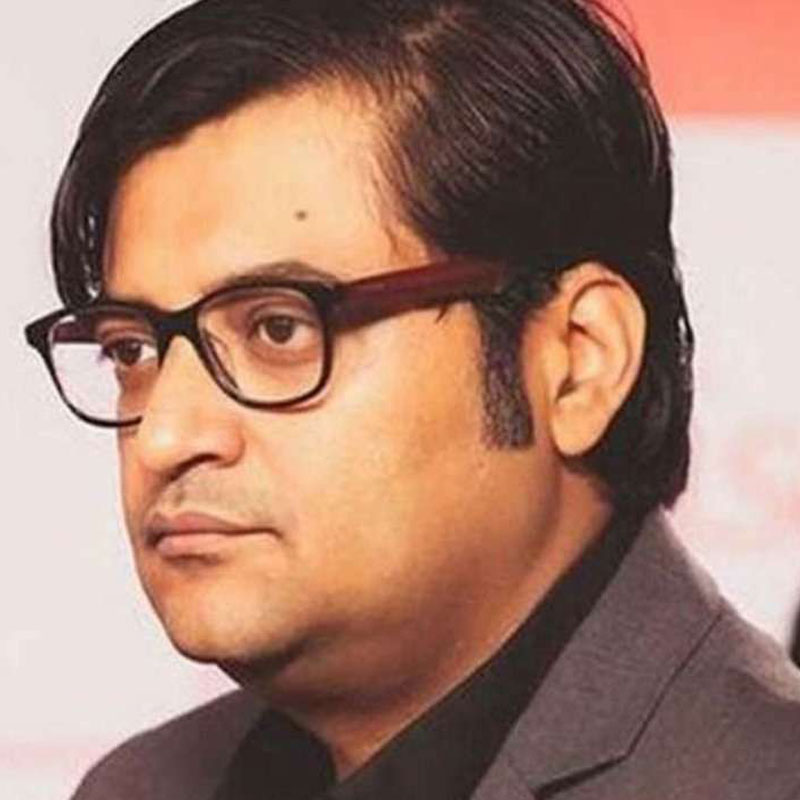
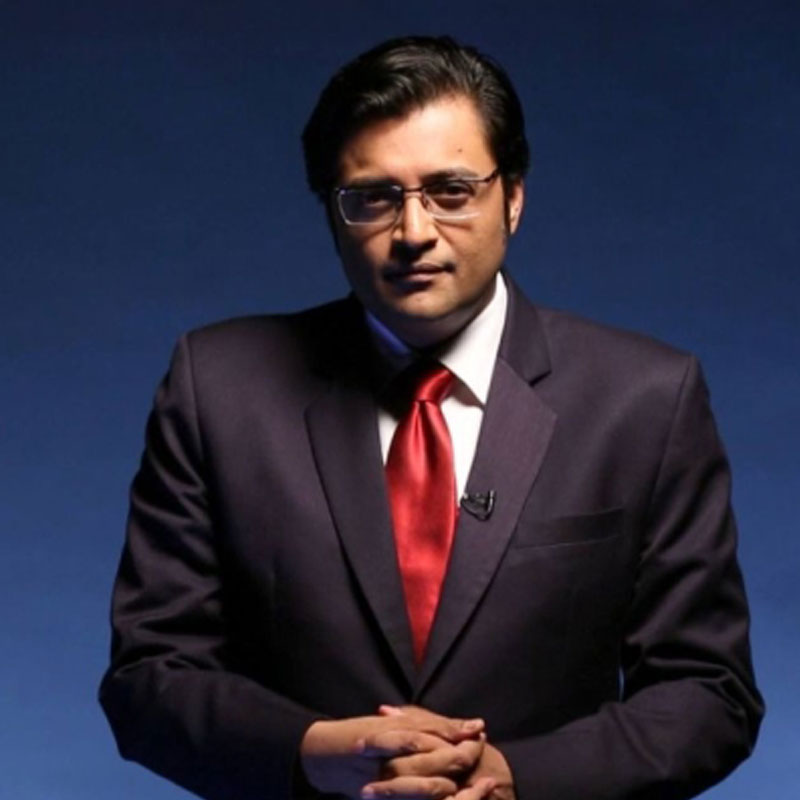
    He also said there was no evidence against Republic TV and its editor-in-chief Arnab Goswami, but the police were trying to name them as accused "by hook or by crook".

    "The police were feeding the press that a particular scam took place. This points out that there was not sufficient material to say whatever was being said," Mundargi argued.

    He also said the police had arrested some employees of ARG Outlier Media and named them as accused persons in their remand applications.

    However, in the charge sheet, the police had named the channel and ARG Outlier Media's employees merely as suspects, he pointed out.

    Mundargi also highlighted that Sachin Waze, who had been handling the probe into the TRP manipulation case, and is now suspended over his alleged involvement in another case, was a controversial officer.

    The high court will continue hearing the final arguments in the case on Wednesday. The Maharashtra government's statement made earlier this month to refrain from taking any coercive action against Goswami and the ARG Outlier Media's employees will remain in force till then.

    The ARG Outlier Media and Goswami approached the Bombay high court last year filing a bunch of petitions seeking several reliefs in the TRP scam.

    They alleged that the whole case was malafide and they had been targeted for Republic TV's reportage in connection with the death of actor Sushant Singh Rajput and the Palghar lynching case last year.

    The Mumbai police in January this year filed two affidavits in the TRP case through commissioner Param Bir Singh and ACP Shashank Sandbhor of the crime branch, saying they had not targeted Republic TV or its employees.

    The police said their probe into the case was not a result of any political vendetta and there was evidence to show that Goswami had connived with senior officials of the Broadcast Audience Research Council (BARC) to rig the TRP of Republic TV.

    Meanwhile, in the Lok Sabha today, minister of state for home G Kishan Reddy stated that the government has no information on the purported WhatsApp chats between Republic TV editor-in-chief Arnab Goswami and former BARC CEO Partho Dasgupta related to confidential and sensitive information, which surfaced during the investigation into the TRP scam by the Mumbai police. The response was in regards to at least six members of Parliament seeking details on the leak.

    Since the chats containing details of the Balakot airstrike came to light, opposition leaders have taken aim at the NDA-led government saying that the leak of sensitive information was a breach of the country’s security. The Congress has sought a joint parliamentary committee probe into what it called a breach of national security.

  • Bombay HC orders Amazon Prime Video to take down Telugu film ‘V’

    Bombay HC orders Amazon Prime Video to take down Telugu film ‘V’

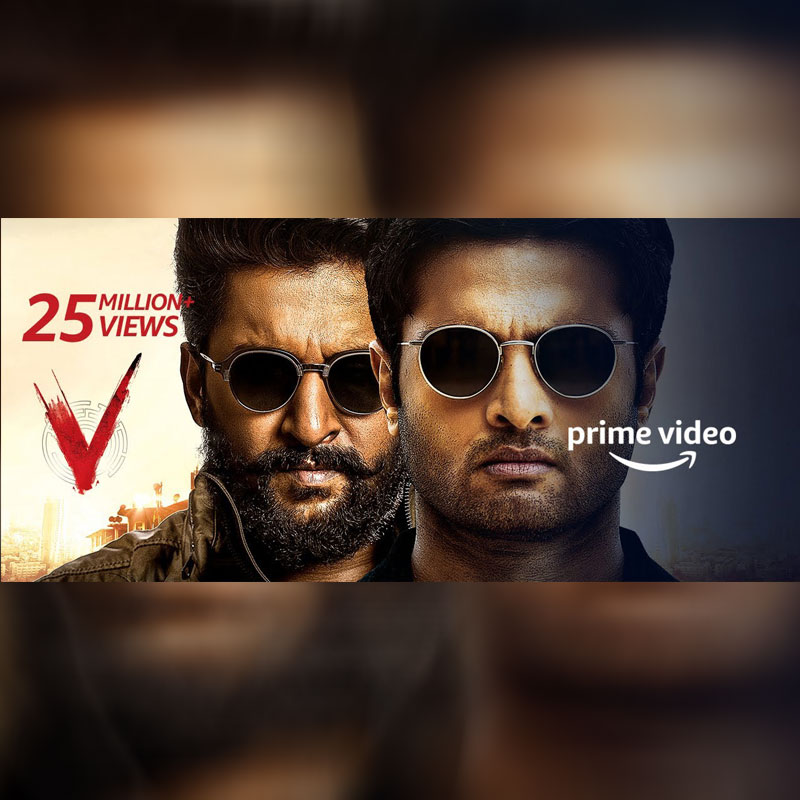
    NEW DELHI: The Bombay high court has directed OTT platform Amazon Prime Video to take down Telugu movie V following a defamation suit filed by a Mumbai-based actor. Sakshi Malik has sought the deletion of a scene in the film in which her portfolio picture was used without her permission. The court has ordered that the film be restrained until the scene in question is deleted.

    V, starring Telugu actor Nani and Aditi Rao Hydari, released on 5 September 2020 and has been removed from the streamer following the high court’s order. A single bench headed by justice GS Patel has asked the makers of the film, Venkateshwara Creations, to take down the telecast of the film in all versions, irrespective of language and subtitles until the said deletion, reported Livelaw. 

    In her complaint, Malik stated she had commissioned a photo portfolio which was later shared on her Instagram account in 2017. The actor accused Venkateshwara Creations of using the picture in the movie V to depict a commercial sex worker.

    The court order read, "It seems to me self-evident that it is not possible to use the image of any person for a commercial purpose without express written consent. If images are to be used without such express consent, they must be covered by some sort of legally enforceable and tenable licensing regime, whether with or without royalty. Simply using another's image, and most especially a private image, without consent is prima facie impermissible, unlawful and entirely illegal. In a given case, it may also be defamatory, depending on the type of use.”

    The actor’s counsel, Alankar Kirpekar and Saveena T Bedi, argued that the actions by the filmmakers resulted in an unauthorised invasion of privacy. The judge said, “The fact that the image has been illicitly used is bad enough. It only makes matters worse when used in a plainly derogatory and demeaning vein.”

    The judge further added that the defendants will have to show the actor and her lawyers the altered portion before the court allows its re-release on Amazon Prime Video. 

  • LCOs fire back at TRAI for ‘conduits’ remark before Bombay HC

    LCOs fire back at TRAI for ‘conduits’ remark before Bombay HC

    KOLKATA: Local Cable Operators (LCOs) appear to be agitated with industry regulator Telecom Regulatory Authority of India (TRAI) for portraying them as ‘conduits’ between the multi-system operators (MSOs) and subscribers. According to sources, TRAI has overlooked the role played by LCOs as last mile owners in a reply to ongoing litigation against NTO 2.0 in the Bombay high court.

    The Maharashtra Cable Operators Federation (MCOF) is of the view that it might lead to subscriber ownership transferred to the MSO. While the TRAI may indicate it is not concerned about LCO’s revenue, it also portrays LCOs as mere recharge operators in the mobile business.

    “TRAI has worsened our situation by making assertive statements going against our interests,” the MCOF said in a memo.

    In another statement, TRAI has conferred the credit for creating infrastructure to the MSOs. Despite putting lakhs of kilometres of a network together, the LCOs may stand to lose over Rs 1,00,000 crore worth of infrastructure due to the incorrect statement, the MCOF asserted.

    According to the federation, TRAI has overlooked the imbalance where benefits flow to broadcasters and MSOs at the cost of LCOs regardless of whether the subscriber pays more or less than pre-NTO days under compulsion to justify its judgemental errors. The unsubstantiated justification for reducing NCF on additional STB completely discounts the fact that most of the STBs are serviced by the LCO who incurs per visit costs that are not billed for.

    The federation has urged the operators to raise their voices and protest the statement to make TRAI file a revised affidavit before the high court.

  • No prima facie evidence against Arnab Goswami in abetment to suicide case: SC

    No prima facie evidence against Arnab Goswami in abetment to suicide case: SC

    NEW DELHI: Detailing the reasons for granting interim bail to Republic TV editor-in-chief Arnab Goswami in its 11 November judgement, the Supreme Court highlighted that the bail will remain in force for four weeks, even after the Bombay high court decides on the journalist-cum-businessman’s plea to quash the FIR against him. The judgment was delivered by a bench of justices DY Chandrachud and Indira Banerjee. 

    Justice Chandrachud said that prima facie, it could not be held that Goswami had abetted the suicide of Anvay Naik. 

    The apex court also lamented the Bombay high court’s order in the matter. “The striking aspect of the impugned judgment of the high court spanning over fifty-six pages is the absence of any evaluation even prima facie of the most basic issue. The high court, in other words, failed to apply its mind to a fundamental issue which needed to be considered while dealing with a petition for quashing under Article 226 of the Constitution or section 482 of the CrPC.”

    The bench upheld that the judiciary should stand as a bulwark against weaponizing criminal law for selective harassment. “Courts must be alive to the need to safeguard the public interest in ensuring that the due enforcement of criminal law is not obstructed. The fair investigation of crime is an aid to it. Equally, it is the duty of courts across the spectrum – the district judiciary, the high courts and the Supreme Court – to ensure that the criminal law does not become a weapon for the selective harassment of citizens."

    Read our coverage in the suicide abetment case

    Goswami had approached the SC after the Bombay high court refused to grant him bail. The top court gave a prima facie view that the preliminary evaluation of FIR did not establish any abetment to suicide charge and granted interim bail to Goswami, saying it will be a "travesty of justice" if personal liberty is curtailed.

    The bench had also ordered the release of two others in the case — Neetish Sarda and Feroz Mohammad Shaikh — on a personal bond of Rs 50,000 each and directed that they shall not tamper with evidence and cooperate in the probe.

    The accused were arrested by Alibaug police in Maharashtra’s Raigad district on 4 November in connection with the suicide of architect-interior designer Anvay Naik and his mother in 2018 over alleged non-payment of dues by companies of the accused.

  • Bombay HC refuses interim bail to Arnab Goswami in abetment case

    Bombay HC refuses interim bail to Arnab Goswami in abetment case

    NEW DELHI: Republic TV editor-in-chief Arnab Goswami, and the two other accused in the 2018 abetment to suicide case, have been denied interim bail by the Bombay high court. However, the accused still have the liberty to approach the sessions court for regular bail. 

    The bench comprising Justice SS Shinde and MS Karnik had a special sitting today to pronounce orders that were reserved on Saturday evening after a six-hour-long hearing. 

    “Rejection of interim application shall not be construed as an impediment to the petitioner seeking alternate remedies. Observations are prima facie in nature confined to the present application only,” the bench said in the order.

    Read our coverage of the 2018 abetment case

    Earlier in the day, Goswami has moved a regular bail application in the Alibaug sessions court seeking his release from judicial custody. Bombay high court has asked the lower court to decide on the bail application within four days of filing.

    Goswami was arrested on the morning of 4 November in a case registered by the Raigad police in 2018 for allegedly abetting the suicide of an interior designer, Anvay Naik and his mother Kumud Naik. He was remanded to judicial custody by CJM Alibag and was kept at a local school which has been designated as a Covid2019 centre for the Alibaug prison. Yesterday, he was shifted to Taloja Jail in Navi Mumbai on allegation of using a mobile phone while in judicial custody.

  • Bombay HC tells Mumbai police not to harass Hansa employees

    Bombay HC tells Mumbai police not to harass Hansa employees

    NEW DELHI: Bombay high court told Mumbai police not to harass Hansa Group’s employees by calling them every day to the crime branch. This was in response to a plea moved by the research agency citing harassment faced by its staff allegedly on account of their reluctance to give false statements against Republic TV in the ongoing TRP scam case.

    Media reports suggest that the bench of justices SS Shinde and MS Karnik have issued notices in the matter and granted the respondents – namely Mumbai police commissioner Parambir Singh and two other officers – liberty to file their reply. The court has also recorded a statement made on behalf of the police that Hansa's employees will only be called in twice a week till the next date of hearing.

    The court will examine the submissions from both sides and added, "…in the interregnum, you cannot call them (Hansa Research) every day. They are complainants, not the accused."

    Hansa Research in its plea alleged that the crime branch officials were pressuring its employees to “retract” a report, based on which Republic TV had claimed it was not among channels named in the TRP scam case. They were repeatedly called to the crime branch and made to wait for hours on end from October 12 onwards. The petition named assistant police inspector (Crime Branch) Sachin Vaze, Mumbai police commissioner Parambir Singh, assistant CP and chief investigating officer Shashank Sandbhor, Maharashtra government and the CBI as respondents.

    Read more news on Hansa Research

    "This is a unique situation where the first informant in the crime is being harassed by the investigating agency and treated like an accused only for a false statement …petitioners are being used by police and media to attack each other," the plea said.

    The petitioners stated that they told crime branch officers repeatedly that they could not confirm or deny the report since they were not aware what the ‘Hansa report’ cited by Republic TV was, as the channel had not sought their permission or informed them about using the report, and only parts of the report were telecast. They said that they will have to see the entire document to ascertain its veracity.

    On 6 October, Hansa Research Group lodged an FIR against its employee Vishal Bhandari after he was found allegedly accepting payments illegally to make certain households watch specific TV channels to fudge TRP. Several arrests have been made in the case.