Tag: Bollywood

  • Mobile Music Industry – Way to go!

    Mobile music has emerged as the most prominent segment in the digital music industry and is a major money making business.

    Today, the definite buzzword with Indians is ‘mobile’. Everyone realizes how quickly the world is going digital and how important it is to keep in pace with the changing times.

    According to the Soundbuzz Music Analysis (Digital and Physical), in 2007, digital music and more specifically mobile music, will surpass physical music in sales in India. To this estimation, IMI general secretary Savio D’Souza says, “In India, Music-to-Music accounts for Rs 100 crore (Rs 1 billion) and physical music to Rs 600 crore. So, I nowhere see mobile music sales surpassing physical music sales.”

    But Universal’s Rajeev Gangal comments, “Not by the end of 2007, but by late 2008 one can expect mobile music sales to exceed, looking at the way the digital segment is booming.”

    The Soundbuzz analysis also states that globally, online and mobile sales will represent more than 60 per cent of all music retail sales by 2009. Ringtones, the dominant digital format in terms of sales, will continue to be so through 2009. “Its all about monetizing it rightly,” adds D’Souza. Moreover, it concludes that Asia will generate more than one third of all digital music sales globally in 2009. Whoa!

    Mobile music consisting of ringtones, caller ringback tones, music clippings ringtones, music video downloads, movies and scene downloads has emerged as the most prominent segment in the digital music industry and is a major money making business today. Gangal further adds, “Physical and digital formats are way away from each other. Some tracks are just meant for the digital market. But as far as revenue from them is concerned, they are neck to neck. There isn’t much gap there.”

    According to the International Federation of Phonographic Industry (IFPI), with the evolution of the mobile handset, mobile music has become a major revenue stream for the music industry globally, running far ahead of revenues from the conventional music distribution channels. Adds D’Souza, “Mobile music has become a major revenue stream for music industry, but mobile music running far ahead in revenues as compared to conventional music distribution channels isn’t true. Globally, the music industry is a $32 billion business, of which mobile music accounts for 10 per cent, say not more than $2 billion.”

    Be it an out-and-out whim or just the exposure to illegal downloads, mobile music is taking over the legal conventional music in India. Statistics prove that where mobile music downloads is growing by over 50 per cent every year; the growth of legal conventional music is more or less pining away.

    The songs from 2006 blockbuster Dhoom 2 were a smash hit on the music downloads front

    Adds Gangal, “If illegal distribution of music through mobiles is also included, the size of the mobile music market may be a lot bigger than conventional music. The biggest hindrance to the conventional music industry is piracy. The mobile music segment sees low piracy levels and hence, the industry is benefited more from the digital segment than the conventional one.”

    Downloadable ringtones, which already make an annual business of $45 million globally, is all set to grow at double-digit levels in the years to come. Ringtones also generate about 40 per cent of the data revenues for India’s big wireless operators such as Bharti Airtel and Reliance Communications.

    India’s entire mobile music market – encompassing monophonic and polyphonic ring tones, true tones, ring back tones and full track mobile downloads – will be worth $800 million by 2009, as predicted by Soundbuzz, which again doesn’t receive a positive nod from D’Souza.

    Today, almost every handset is capable of playing polyphonic or actual music. Cell phones ranging from Rs 2000 – Rs 5000 sell the most in India and thus can avail just the mono or polyphonic tones. Video and song downloads does not come into the picture here. But, mobile music is developing faster due to higher penetration of phones compared to portable players or broadband, and also, due to ease of payment. Almost all operators today have launched an ‘Easy Music’ facility that allows subscribers to choose their favourite music from a huge catalog and download it onto their mobile phones or even iPods at affordable prices. This has helped the mobile music market boom to unexpected levels.

    As regards choice, mobile subscribers have a yen for Bollywood hits, devotional music, but international tracks always remain a priority as well.

    Adds Gangal, “In the mobile music segment, it’s all about hits. Like if we have the rights to Bryan Adams and a person wants to download Bryan Adams songs, then he will definitely turn to our label. The biggest challenge in this segment is to make music available in the three-inch screen as against other forms of distribution. Here, content and quality both matter a lot.”

    Both digital formats have deep content in terms of language and musical genres. Radio on mobile devices as well as Internet radio is also pushing the digital music industry forward.

    Presently, the techno-savvy generation is making use of mobiles in all the possible ways to get the best out of it. By the end of 2007, it is expected that India alone will have around 250 million handsets. Global companies like Nokia, Sony Ericsson, Motorola and Samsung are striving neck-to-neck to come up with handsets loaded with FM radios, MP3 players and a good memory capacity as buyers are showing an edge for such features in their cell phones.

    Sony Ericsson is working and promoting its personal digital assistant phones with MP3 players and the popular Walkman phone line. Around 35 per cent of their Indian handset products feature downloadable music applications and the best-selling Walkman phone accounts for 65 per cent of total revenues. Sony has also expanded its chain of Expression Stores, which feature phones and music download stations.

    Nokia can’t afford to lag in this rat-race. The handset leader has set up college sponsorship deals and collaborated with music companies to buy the rights for free downloadable songs on some of their handsets to encourage the use of digital music. Some of Nokia’s N-series handsets, with a 3,000 song capacity, offer 100 preloaded songs free; just to make a mark, and money of course, in this segment. Most of the major handset makers have tie-ups with music content sites such as Soundbuzz.com andOnMobile.com as well as revenue-sharing deals with local telcos and music companies.

    Comments Hindustan Times (Lucknow) music feature writer Piyush Singh, “India sees a huge potential for digital music. Presently, MP3 songs are heard on PC, phones, web (streaming) etc. About revenue generation, according to me, it is an off-putting task to convince (Indians especially), to buy music online, as music is easily available from peers who might have purchased a CD or downloaded it online using P2P technology.

    “If it is economical for people to download, store and write music on CDs and then transfer it to the cell phones; the search for songs from unpaid sources increases. But if paid sources price the song really low, no one would want to undergo this trouble of downloading-storing-writing. Also, the whole process will then look ‘legal’.”

    Piracy and transfer of music from one handset to another, for instance transferring music clips via Bluetooth, have reached a volume that is three times the legal route. But such illegal downloads also appear as blessings in disguise as it actually helps the mobile music industry to grow. Comments Gangal, “Rich media usually observes a greater volume of transfers via Bluetooth. At the end of the day, everyone gets their share. 70 per cent of it taken away by Telco and the leftover is distributed.”

    Local music companies and content owners often nitpick at the distributors like mobile phone operators and other companies that distribute digital music. They claim that the distributors walk away with a bigger portion of the revenues leaving them with a minimum amount. Says D’Souza, “The accounting of the mobile music business depends on some common denominators taken into consideration and on the parameters against which the market is calculated. Only then can one say how significant the contribution is.

    “In India, the mobile piracy business is about Rs 30 crore. If a ringtone costs Rs 10, 15 per cent of the money goes to the government, around Rs 1.75 comes to the music industry. The rest is split amongst the music companies and content owners. Today, Telco accounts for 80 per cent of the business. This segment is bound to grow no doubt. Which distributors dominate the mobile music market is largely dependent on the end product available and negotiation skills.”

    Talking of the competition penetrating this segment, Gangal gives a final peg, “We don’t really see a lot of competition and this comes as an advantage. It’s all about how you market your product and what strategies you adapt in order to keep selling. In the next five years or so, Universal will definitely witness an average of 400 million number of unit sales in the digital segment and around Rs 200 million in market prices.”

  • Devotional Music: Another money making segment in the Indian music business

    The Indian music scenario keeps changing all the time. Where Bollywood ruled the roost earlier, gradually indi-pop grounded itself and with its buoyant marketing attracted the listeners. The remix trend closely followed making way for lounge and fusion music. Even with such changes dominating the Indian music market, the devotional/religious genre of music has maintained its stability for more than a decade now.

    Times Music AVP – A&R Rajeeta Hemwani says, “To fight stress, everyone turns to God and that is working out well for us. Starting off with chanting of Gayatri mantra 108 times in a single CD, around a decade ago, Times Music broke the barriers of conventional Bhajans which was the only visible religious music on stands. Times Music managed to sell more than a million copies then; after which the demand for religious music, away from Bhajans and kirtans, started showing up.”

    Statistical Count:

    According to IMI’s Savio D’Souza, “Most of the national label target the 40 major cities of India. There are innumerable minor and independent labels that people aren’t aware of. Many of them even produce albums in regional languages. For the major labels, shlokas and mantras sell the most since they cater to the upper middle class of the population. The other labels, who target the lower strata of society, know that bhajans and kirtans on the cassettes sell the most.”

    IMI gets just 5 per cent in revenue and 15 per cent in volume from religious music. Of the total Rs 4 – 5 billion music business in India, religious music accounts to Rs 250 million only and makes up for 10-15 per cent of the market share presently.

    Adds Hemwani, “For Times music, 40-50 per cent of the revenue is generated from religious music. For the past seven to eight years, the demand for devotional music is escalating. Today, it’s more about mantras; like the mantras for peace, for the well being of a new born, for pregnant ladies, for rejuvenation, relaxation and its likes.”

    Today, people demand spiritual over devotional under the religious genre. Sales by genre statistics show that where film music accounts for 70 per cent, religious music has only 4 per cent sales. Distribution of music by genre reveals new film music contributes to 40 per cent followed by old film music, which accounts for 21 per cent and then comes devotional music, accounting to around 10 per cent of the total distribution.

    D’Souza further adds, “As far as value is concerned, today religious music contributes to Rs 250 million. This can by no means become Rs 5 billion.”

    For smaller labels like Sagarika Music Pvt. Ltd. things are very different.

    Adds Sagarika Music director Sagarika Bam, “Religious music falls in two categories, devotional and spiritual. We usually are linked with the niche segment. 20 per cent of our revenue is generated from religious music. With our Bengali and Marathi albums, we account for around 8 per cent of the market in India.”

    The Scope for Independent labels:

    With around 10,000 publishers and approximately 40,000 new titles every year, the domestic market is indeed a large market. Now when many temples and other independent labels are coming up with their own religious music records; a confident, Music Today assistant marketing manager Roli Chaturvedi adds, “These independent labels don’t look threatening as we have been in the market for a long time now and the audience can relate to us better than other labels that are creeping up.”

    Hemwani also comments, “I know, many of these temples and

    small time labels are invading this segment, but one can’t deny the presence of a brand. Cost conscious people would rather purchase music from non-established labels, but people looking out for quality don’t compromise. In fact, when Siddhivinayak came up with their aarti and Shlokas, Times Music marketed it for them.” New devotional releases have to reach the target audience well on time. Hence, not many minor labels with a limited reach are able to sustain their leadership and generate profits.

    Diversity of the Genre:

    About the variety this segment offers, Chaturvedi says, “There are a couple of common mantras that sell the most like the Gayatri mantra and Hanuman Chalisa. But there are so many unexplored mantras that we, as a music label, are trying to come up with. They are exceptional and unconventional shlokas. Majority of people follow the common shlokas, but there are many as well who demand these unconventional shlokas which not many labels are aware of. We are working on offering more and more variety in the exceptional category.”

    Piracy Problems:

    Pirates has not spared even this genre of music. But, there exists a differential pricing policy here. While the target audience for film music is bulky, there is a comparatively low demand for devotional music. Hence, these albums are retailed at higher prices by national labels. Also, the demand for devotional music tends to be more or less festival-oriented. This has a strong bearing on pricing policies. Shares Gupta, “Due to piracy, the recovery cost becomes problematic. For Universal, not more than 10-15 percent of revenue is obtained from religious music after cutting down the money lost due to piracy.”

    Bidding the Money:

    To prove the kind of money this segment is generating, Hemwani adds, “The music industry is creating awareness about such beautiful music present on the stands, so we know that the market share for religious music will either remain stable or increase further. It can by no means decline. In fact, today this is such a prolific segment to make money that Yash Raj Music, which was earlier just ‘Bollywood’, is now doing an album on Sai Baba.” Sagarika Music follows a different pricing strategy altogether as compared to national labels. For them, working on Marathi and other regional language albums is of more importance, as the lower strata of society demands more music in such languages.

  • SET India acquires slate of Bollywood titles from Eros

    SET India acquires slate of Bollywood titles from Eros

    MUMBAI: Sony Entertainment Television has acquired the global satellite rights for a package of films, including blockbuster hit Lage Raho Munnabhai, from leading Bollywood media and entertainment major Eros International.

    The deal gives Sony retain exclusive broadcasting rights to the original version of a slate of titles for five years and includes recent films like Salaam-e-Ishq as well as upcoming releases like Namastey London.

    Sunil Lulla, the director and president for India at Eros International, was quoted in an official statement as saying: “We have a strong relationship with all the leading Indian television networks and are delighted that Eros’ content will now be showcased on Sony Entertainment Television. It is one of the leading channels in India with a global footprint. We also regularly partner with Sony to market and promote our films through its extensive television network.”

    Said Set India CEO Kunal Dasgupta, “Eros is a major player within the Indian film sector and Bollywood films are a critical part of our programming mix. We are delighted to have secured this deal with Eros with whom we have enjoyed a great working relationship for several years.”

    Queried as to the number of titles in the package, Set India COO NP Singh said they comprised some 15-16 movies.

  • Ficci seeks widespread benefits, exemptions for digital cinema

    NEW DELHI: The Federation of Indian Chambers of Commerce and Industry (Ficci) has demanded various benefits for the digital cinema industry, including tax holiday under Income Tax, exemption from MAT and DDT, 100 per cent depreciation benefit, sales tax exemption and customs benefits.

    Topping the list of demands is a 10-year income tax holiday, just as is done in the case of various types of infrastructure development, including creation of trunking, broadband network and tax holidays multiplexes.

    The Ficci document has also strongly stressed the definite need for removal of service tax in the case of this “fledgling industry”,


    It has shown that at various stages, from conversion of analogue images to digital and the time of being actual screening, the players – operators, distributors, rentals for service providers, etc. pay several times.

    “All the services described in the business model above attract a levy of service tax at 12% plus 2% education cess thereon, albeit under different service categories. It is submitted that for an industry in its infancy, a cost of 12.24% of its revenues will have a significant adverse affect on its prospects, if not serve to destroy it altogether,” Ficci has emphasised.

    The document spelling out Ficci’s budgetary wishlist says that digital cinema has tremendous benefits, not the least of which is less burden on the environment, which is the ground on which it has demanded 100 depreciation benefit for the sector.

    The document argues that analogue prints are made from polyester films and are destroyed by burning, which is a huge bio-hazard. Digital prints are mere digital files and can be simply erased from our server’s memory. Hence, film waste removal is taxing on the environment, because polyester films cannot be recycled.


    Ficci has suggested the development of digital cinema infrastructure that would benefit the industry hugely.

    It argues that this will increase box office collections, generate rural employment and curb piracy, as well create savings in foreign exchange and minimize wastage in print.

    “In India”, the document argues, “software piracy has assumed gigantic proportions. Ficci studies estimate that the Indian film industry loses almost 42 per cent revenue due to piracy.

    “In absolute terms this amounts to approximately Rs 2,000 crore on account of piracy. This is money on which the government earns neither Entertainment Tax nor Income Tax.

    “An early and widespread release of movies, enabled by digital cinema will act as an effective deterrent to piracy,” it says.

    Ficci also says that early migrants to the digital cinema system have reported more than 100 per cent increase in revenue collections by way of increased box office collections due to early screening of movies.

    “Needless to mention, this has also translated into enhanced collections of Entertainment and Income Tax,” stressed the document.

    Digital cinema makes niche cinema and regional language films more commercially viable. This will, in turn, generate employment for local artists and technicians and other regional film industry related infrastructural suppliers, holds Ficci.

    It has stressed that digital cinema infrastructure equipment, particularly the digital projector and digital movie compressor, which attract the peak rate of custom duty, be given exemption.

    “Since these items are not manufactured in India and are a very heavy cost burden to the provider these should be treated at par with hi-tech and information technology sector items with customs duty being reduced to nil,” suggests Ficci.

    Ficci has also recommended that the state governments give lease tax exemption to the new industry.

    Considering the way digital cinema infrastructure is poised to revolutionise the films and visual arts exhibition in the country, with multi-fold advantages to all the constituents of the society, (viz. the content owner, the theatre owner, the tax administration, and the general public as the ultimate consumer), it certainly deserves a whole hearted support from the Government of India, Ficci feels.

    “And as elucidated above, a strong Digital Cinema Infrastructure would, in the long run, pay back more than what it is requesting for now.”

  • Zoom adds movies to prime time slot

    Zoom adds movies to prime time slot

    MUMBAI: Zoom, the Times Group’s glamour and lifestyle Hindi entertainment channel, has crafted a movie band called Zoom Theatres. The movie band between 9 p.m to 12 midnight will showcase hits from Bollywood everyday.

    Although the channel began airing movies from last month, it was in the afternoon band and was called Do Se Paanch. The channel has now rescheduled its programmes in the evening time slot.It has also repackaged this slot and called it Zoom Theatres.In the 7 to 9 pm slot in the evening, the channel will air its premier shows and the post 9 pm slot will have the channel air movies like Kabhi Haan Kabhi Naa, Rehna Hai Tere Dil Mein & Joggers Park to Shabd & Chameli. Earlier this slot featured repeats of the premier shows.

    With its latest feature the channel promises to bring the latest in Bollywood from romantic comedies, crossover movies to art films.

  • It’s a ‘Mag’ world!

    Fresh off reading the novel The Devil wears Prada and this writer is fascinated by the world of hi- fashion, hi- gloss magazines. But special interest or niche magazines are not limited to fashion, lifestyle or women’s titles alone. In fact one look at the Indian space and you will find a title for every issue that you might conjure.

    While general news, sports, women and fashion and lifestyle magazines are more popular and catch the reader’s eye, dig a little deeper and you’ll find magazines on interiors, housekeeping, carpentry, auto, health, travel, art and design. And given the average Indian’s penchant for weddings – well even an array of wedding magazines dealing with the latest in bridal fashion and bridal jewellery.

    With so many titles in the market and the niche segment only poised to grow further,Indiantelevision.comdecides to delve further into this largely unexplored market. Such an analysis becomes even more pertinent in the light of declining readership numbers and constant ‘death of the magazine’ refrain.


    The special interest magazine serves two masters and there are plenty of titles in both B2B and B2C segments to choose from. The top four categories in magazine publishing measured and reported (IRS, NRS, TAM) include: general interest, women’s magazines, fashion and lifestyle and business magazines.

    Talking about the B2B sector, Infomedia special magazines general manager publishing Krishna Tewari says, “B2B segment until now has been subscription based and controlled. It is only in recent times that the segment has grown into a more professional, organized sector. The B2C magazines on the other hand have been more visible right from the start but the entry of international publishing houses has ensured better competition amongst the existing players as well.”

    The entry of international titles has only reawakened interest in this segment, despite research studies stating a decline in readership figures. In fact, throughout 2004 and for the most part of 2005, seminars and conferences held on print and publishing sounded a death knell for this industry.

    The move was largely facilitated by the government permit to allow FDI upto 26 per cent in general interest publications and 74 per cent in special interest magazines.

    Magazines have declined in reach from 9 per cent (2005) to 8 per cent (2006) over the last one year. Magazines overall show a decline in the reader base, both in urban and rural India. The reach of magazines has declined from 75 million in 2005 to 68 million in 2006. Magazines have lost 12 per cent of their reach since 2005. It must be remembered of course that this refers only to mainstream magazines. A host of niche titles that continue to be launched regularly are not fielded and their collective readership estimate is outside the purview of the study. (NRS 2006 findings)

    Despite the NRS findings there is still significant scope for growth, as ‘359 million people who can read and understand any language do not read any publication’. (NRS 2006 findings)

    So it is not just affordability that is a constraint, since 20 million of these literate non-readers belong to the upscale SEC A and B
    segments.

    This is the market that international publishers are looking to woo. Here’s a look at some on the already existing players in the field. With the first major titles already in the market many of them are now looking to expand.

    – Worldwide Media Inc, a 50:50 JV between Times Group and BBC formed Worldwide Media Inc. The first launch from its stableTopGear is an auto magazine while the company is also actively looking at women and entertainment segments to further increase their titles roster.

    – Infomedia India Limited has been a major player specializing in this category. The company set up a 51:49 joint venture with Reed Business Information called Reed Infomedia India Pvt Ltd. Reed Business Information is part of the $ 9 billion Reed Elsevier group. Their publishing activities are focused at two broad categories – special interest consumer publishing, B2B and trade publishing. Presently, it publishes 20 titles, out of which eight are consumer magazines and 12 are trade magazines. Chip, Overdrive, AV Maxare some of their flagship brands, amongst others. The publisher also tied up Disney Publishing Worldwide India in December 2006 to launch Disney Adventures, an international tweens and kids’ magazine.

    – Haymarket Publishing of UK entered India in a 50:50 joint venture with Sorabjee Automotive Communications (SAC), publishers of Autocar India and launched its second title Autocar Professional in November 2004.

    – The much awaited titles Conde Nast International’s Indian edition of Vogue and Playboy magazine from the Hefner stables are also set to hit the Indian shores this year.

    Global brands are making a splash and how. But it is also important to see what it is that these brands mean to an Indian readership. Says Starcom managing director, India – West & South Manish Porwal, “Both realistically and perceptually, India is a booming market. Although, if you had to compare the Indian special interest segment with those in the west or even some countries in Asia, you will realize that there are at least seven to 10 magazines in each genre while in India the numbers barely cross three to four. But it is the sign of a maturing audience that brings international publishers to this market.”

    The question of greater choice is also answered by the entry of these niche magazines given increasing interest in specific topics and markets. He says, “What these magazines bring to Indian audiences is a more genuine choice. So if you had to look at the technology segment, you would have magazines for the professional and magazines for the so called dummies.”

    Advertising plays a very important role in the niche market segment. If the fallout of increasing awareness of lifestyle brands led to a boom in the fashion and lifestyle magazine segment or the traveling Indian exerted himself through travel magazines, it is now the turn of markets like the auto sector or fitness and health segment that is leading the charge.

    As an example Porwal states, “One of the reasons international editions of women’s magazines and fashion and lifestyle magazines were launched was due to a burgeoning lifestyle market. “Colour cosmetics, luxury goods and most top end products are now available in India. Designer labels in apparel, beauty products, accessories and home furnishings are the obvious advertisers for many of these magazines.”

    Industry experts, however, say that niche magazines in the US and the UK have a larger circulation base through subscriptions. In comparison, in India, niche magazines have a far smaller circulation base. Given that why aren’t magazines alarmed just yet? Au contraire there are more special interest magazines set to roll out.

    Conde Nast India managing director Alex Kuruvilla rubbishes the pessimism surrounding readership and niche magazines. “There are two approaches to magazine publishing anywhere in the world – you are either a market shaper or you become a market follower. As far as Conde Nast India and Vogue are concerned, we clearly want to be market shapers. Our experience and response in China has only strengthened our belief that there is a huge market for fashion and beauty in India as well and Vogue is certainly the bible on anything to do with fashion.”

    Conde Nast India is a 100 per cent owned company of Conde Nast International a $ 2 billion publishing house. They will publish the first global title Vogue this year. “Some of the other titles in the offering and certainly relevant to India include Glamour, GQConde Nast Traveller, Vanity Fair, Wired and Brides,” says Kuruvilla.

    While excitement is rife over the number of unexplored markets niche magaziens can tap into, one genre that has made quiet inroads into the reader space is Auto Magazines.

    Auto Magazines

    Men’s magazine were the flavor of the month last season. Maxim, M and Men’s Healthlaunched last year nailing this belief. While the auto segment has traditionally been a strong player with magazines like Auto Monitor, Overdrive, Car and Bike and Autocar, the entrance of TopGear and Autocar Professionalhas given a huge fillip to this segment. India has become Asia’s auto hub and the trend is not going unnoticed. Many auto magazine heads agree that the automotive industry is not just about flashy cars. India has an equally vibrant two wheeler- bike and scooter and heavy vehicles industry.

    Porwal explains, “International magazines tend to cultivate particular brands or a special clientele even within advertisers. Some of these advertisers have entered India at the same time as the international magazines themselves and have a long standing, loyal base with them even in the European countries.”

    A look at the Tam Adex data for Sept 05 – August 06 compared to Sept 04 – August 05 shows that the auto genre has seen the highest growth in ad volumes at 48 per cent followed by men’s magazines at 31 per cent. (See table)

    The auto magazine ranks 6th according to the genres evaluated by Tam Adex just behind the other more popular categories.(See table)

    Rank Magazine Genre Ad spends (in mn)
    1 General Interest 3497
    2 Women’s 2002
    3 Fashion, Ent &Lifestyle 1389
    4 Biz & Fin 1102
    5 Infotech 336
    6 Auto 171
    7 Career & Education 124
    8 Travel 104
    9 Men’s 69
    10 Media, Ad, Mktg 54
    11 Sports 39
    12 Scientific,Engg &Sci 36
    13 Healthcare 29
    14 Telecom 8
      Total 8960

    Courtesy:Tam AdEx-Period:Sept ’05-August ’06 Ad spends based on industry estimates

    The launch of luxury vehicles like the Rolls Royce would only be an added impetus. 

    ‘Figuring’ It Out

    Take a look at the TAM AdEX figures for Sept 2005-Aug 2006 which show a 48 per cent growth in ad sales volume in the auto genre. Auto advertisers apart there are many lifestyle and luxury products who want to target the upmarket clientelle A definite thumbs up for the auto magazines who would be the top choice for many of these advertisers to reach across to their target group. (See table)

    Genres Growth in %
    Auto 48
    Men’s 31
    Fashion, Ent, Lifestyle 29
    Women’s 29
    General Interest 26
    Business/Finance 21
    Sports 11
    Scientific, Engg, Science 10

    Source: Tam Adex- Growth in Sep’05 – Aug’06 compared to Sep’04 – Aug’06

    We spoke to two auto magazines – TopGear the newest player in the B2C segment and Auto Car Professional a B2B magazine.

    Talking about the content of TopGear, editor Gautam Sen says, “The profile of the TG reader is almost 99 per cent male, upper class with an average age of around 31 years old and is usually from a multiple vehicles home. This is our core readership and our aim is to better understand and service this readership.”

    TG has been launched with an initial print run of 50,000 to 60,000 in subscription and newsstands, although Sen points out that “as for all magazines in India, the number of magazines occupying news stands is larger.”

    Comparing TG and TG UK he adds that TG UK “doesn’t cover motorsport as much since there are further niche magazines in UK and Europe covering auto sports or even auto components. However, in India we haven’t reached that level of segmentation so TGIndia focuses on this aspect due to reader interest.”

    He is, however, quick to point out that while the ratio of the local content is about 70:30, in terms of “brand, ethos and style” TGstays loyal to its international edition.

    Auto Car Professional on the other hand acts as a “bridge between the suppliers and the customers”, says editor Murali Gopalan. Haymarket publishers operate over 40 titles including Auto Car andAuto Car Professional.

    Speaking about Haymarket’s interest in India, Gopalan says, “The international publisher has certainly looked at a few key areas before entering this segment. The levels of spoken or written English, the media driven market, the free press, the buoyant economy and the synergy with publications have all led to a number of international publishers taking more than an interested look at this market.”

    While the target group for Auto Car Pro remains similar, the magazine is well aware of changing trends. “Since we are a B2B magazine, it does not mean that we are dull or unglamorous. In fact, we realized that the women today are just as interested in vehicles and are working on a ‘Women’s Day Special’ issue come May.”

    So far so good. But many of the international titles available in the market range between Rs 70 to 100. So one of the factors that international titles will have to consider is the very sensitive price factor.

    Says Tewari, “International titles like T3, which is a technology magazine is priced at Rs 100. So is Chip. But you have to take into account that a Chip magazine comes with a dual DVD pack and free licensed software that may not even be available in the country. So the price is justified by the value we provide. You cant compare a niche magazine with the free supplements you receive along with the papers. If something is free, the value is obviously lower.”

    Kuruvilla concurs when he says, “The brand awareness and brand salience of a product like Vogue is very high. So yes we are competitively priced. But then again we are not looking at mass numbers.”

    Vogue is priced at Rs 100 and is targeting the high spending community who, he maintains, spend as much on lifestyle as any other developed country.

    Says Gopalan, “While I may be talking about the B2B model based on revenue, advertising and a very discerning clientele who is ready to pay for his piece of information, the pricing for all niche magazines follows a similar principle – the reader is paying for a high value international brand and not just any magazine.”

    In fact, this is the very change in perception that international publishers have brought to the magazine market. It is no longer about copies but brands.

    Says Madison Media Group CEO Punita Arumugam, “The niche titles are not here in the game to sell in numbers. So don’t expect the niche title to set targets like 5 million copies.”

    Many also argue that apart from high pricing, easy availability of information on the net may deter magazine readers. The question is indeed relevant in European markets where internet penetration and bandwidth is huge.

    Says Sen, “The net provides one with relevant news. A magazine like Top Gear may not provide breaking stories regularly but we do provide topical stories. For instance, with the launch of Chevrolet Aveo U-VA we did provide opinion pieces on how it fared vis-a vis a Hyundai Getz. We also do interesting features like ‘Cars of Tintin’- not exactly the kind of fare newspapers or the net can provide backed with research, analysis and some great looking visuals as well.”

    He adds “Besides the shelf life of a magazine is much higher and with niche magazines very often it becomes a habit and the aim is to get a reader to be loyal to the magazine. Many of our readers have been known to purchase and collect special issues of magazines as a collectors item.”

    Apart from web properties, many of the magazines align themselves to events. TopGear associates itself with the Design awards and also uses the Times Drive supplement to woo the newspaper reader and influence him to subscribe to the magazine. In fact, the Times has increased the number of supplement pages from 4 to 6.

    Adds Arumugam, “Many of the titles coming into India are already established brands in most markets. I would imagine tha a magazine like Vogue doesn’t really have to look at marketing itself. To the consumers they are targeting, they are already a known brand.”

    Trendspotting

    So what does the future scenario look like?

    First up, its important to understand that readership and circulation figures are wrong yardsticks to measure niche magazines because in the first place, niche magazines are not really looking at mass circulation. While readership is more fluctuating for a B2C magazine, the loyal base for a B2B magazine is more pronounced. Given this contradiction, the niche segment itself is divided between these two categories.

    On the other hand, for most international publishers, the costing factor in India is very attractive. Given the low cost of production and nominally high pricing on these niche magazines, publishers are looking at attractive margins.

    Although Porwal cautions that while the advertising share of special interest magazines is likely to be around 5 to 7 per cent, readership figures for this niche segment are even lower. Yet, the market is just about warming up to this genre.

    The Indian Magazine Congress held in November 2006 pointed out that the reach of magazines in UK stood at 83 per cent. By that yard stick, Indian magazines have a lot of growing to do from the present 30 per cent.

    Another revealing figure stated that the UK market has more than 600 publishers for magazines, and in the US, the corresponding figure is more than 2,000. In India, even after so many years, 80 per cent of the advertising revenue in the entire magazine sector goes to only 17 magazines. And those 17 magazines belong to the top four or five categories. So, to that extent, all the other categories are underexploited.

    While a better picture would emerge given correct evaluation for niche magazines, the magazines themselves need to continue giving deeper, credible information irrespective of the genre, and that would help continue writing their success story.

    With increasing saturation of mainstream media, the niche segments will come into their own in the country. So far, the emphasis has been on achieving numbers which has resulted in a one-size-fits-all approach.

    Says Tewari, “In the US there are over 3,000 to 4,000 niche magazines while in India there are barely about 100. The international trend is to satisfy the readers even within the highly fragmented niche genre. So within the auto sector, there will be more niche magazines like car modeling, vintage car magazines, car components… The talk is no longer about niche magazines but super niche magazine. This is the next step that publishers both domestic and international will have to take to generate more readership.

    (Photo Courtesy: Landmark Bookstore, Infiniti Mall, Andheri (West)
    Pictures by Nidhi Jain
     )

  • Prasar Bharati’s film ‘Video Game’ wins Tiger Award at Rotterdam Intl. Film Festival

    Prasar Bharati’s film ‘Video Game’ wins Tiger Award at Rotterdam Intl. Film Festival

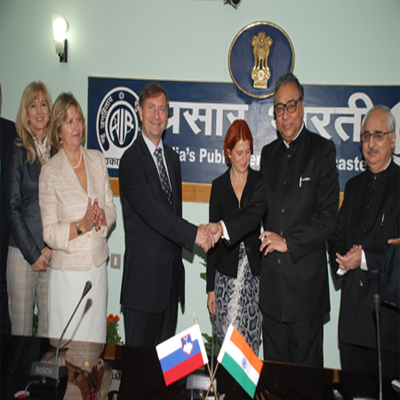
    MUMBAI: The Public Service Broadcasting Trust (PSBT) / Prasar Bharati produced film Videogame, has bagged the Tiger Award at the Rotterdam International Film Festival.

    An official announcement quotes the jury’s citation for Vipin Vijay’s movie Videogame saying:

    “Video Game is yet another illustration that there’s more to the Cinema of India than can be contained with the received wisdom which seeks to encompass it by reference to a dualism opposing Satyajit Ray to Bollywood. Video Game shows a relentless, complex post-modern intelligence as it processes everything within its view, within its memory, within its wide range of cultural references.”

    “Its title is an index to this complexity, as it evokes not only digital game space as an aspect of real, but the pursuit of video within the understanding of a game, replete with strategies, movements, and counter-movements. A new kind of road movie, indeed.”
     

  • Zee to kick off Zee Carnival on 16 February in London

    Zee to kick off Zee Carnival on 16 February in London

    MUMBAI: Zee Network is set to host its annual event Zee Carnival 2007 at the Grand Hall, Olympia in London on 16, 17 and 18 of February.

    Zee Carnival’s main attraction is its catalogue of Bollywood star appearances. Expected to attract about 30,000 people across the three days, the line up consists of Priyanka Chopra and Esha Doel, along with Big Brother winner Shilpa Shetty who will provide a Live interview.

    In addition, Pakistani cricket sensation Shahid Afridi will be present and Himesh Reshmiya will be performing live. Zee’s soap stars including Jay Walia, Bani, Vidhya, Chandini and Nahar Singh and celebrity chef Sanjeev Kapoor will also be present. The carnival will also have about 125 stalls in various zones, inform an official release.

    The network states that the carnival will be highly publicised with “mammoth advertising campaigns including underground advertising all over the UK.”

    Zee Entertainment Enterprises Ltd. senior vice president Ashish Kaul said, “Zee Carnival 2006 was a huge success. This year’s main attraction is the catalogue of Bollywood, television, cricket and musical stars appearance in the event.”
     

  • Max Stardust Awards on 18 February

    Max Stardust Awards on 18 February

    Mumbai: ‘Stardust’ magazine along with Sony’s Hindi movie channel MAX will host the ‘Max Stardust Awards’ on 18 February at the Bandra Kurla Complex.

    The ‘MAX Stardust Awards’ are said to be aimed at ‘generation next’ wave of actors. The awards will promote and encourage new talent. An official release categorically states that over-exposed and established stars do not qualify for nomination in the ‘MAX Stardust Awards’.

    Only young talent and films that have made an impact in 2006 have been nominated for the ‘ MAX Stardust Awards’. The idea is to showcase and recognize the fresh, new faces who will emerge as the superstars of tomorrow.

    MAX Business Head Sneha Rajani said, “MAX has always brought its viewers some of the most glamorous, high-energy entertainment events from the world of Movies. The high voltage MAX Stardust Awards which showcases the best of Bollywood is part of this tradition and has always been appreciated and loved by our viewers in the past. This year too we plan to bring to our viewers a truly spectacular experience.”

    The function will be compact, exclusive and totally television-oriented with limited seating capacity.

    MAX will telecast the Kenstar MAX Stardust Awards on Saturday, 3 March at 9.00 pm.

  • Hungama Mobile, Adlabs showcase Marigold at 3GSM World Congress

    Hungama Mobile, Adlabs showcase Marigold at 3GSM World Congress

     MUMBAI: Hungama mobile and roamware in association with Adlabs Films premiered its soon-to-be-launched co-production Marigold on a mobile platform at the 3GSM World Congress in Barcelona.

    This event is a part of Hungama and Roamware’s Bollywood initiative at 3GSM, which will scale the Hungama digital network from 70 operators in 32 countries to more than 261 operators in over 100 countries.

    The 3GSM World Congress is one of the largest exhibitions for the mobile industry. The event attracted over 60,000 attendees from across the global mobile value chain.
    Marigold, a romantic comedy, is Bollywood superstar Salman Khan’s first Hollywood film .It is targeted for release in April 2007.

    Speaking about the tie up, Hungama managing director and CEO Neeraj Roy said, “With the success of providing Bollywood entertainment, the combination of Hollywood and Bollywood will give a new outlook and experience to the audience.

    From providing music, imagery, video and games we are now preparing to introduce full features and this project of Marigold is a step in the same direction.”

    “Marigold is a perfect example of how Hollywood and Bollywood can co-operate to produce international quality films from India” said co-producer Sidhartha M Jain.

    He further added “we used the best talent from Bollywood such as Shankar-Ehsaan-Loy for music, Anil Mehta as DOP, Nitin Desai for sets and a host of other Indian talent, who worked hand-in-hand with the US and UK crew. This event is ideally suited for such a film”.